
Review · GLASGOW
Glasgow Afternoon Tea Experience
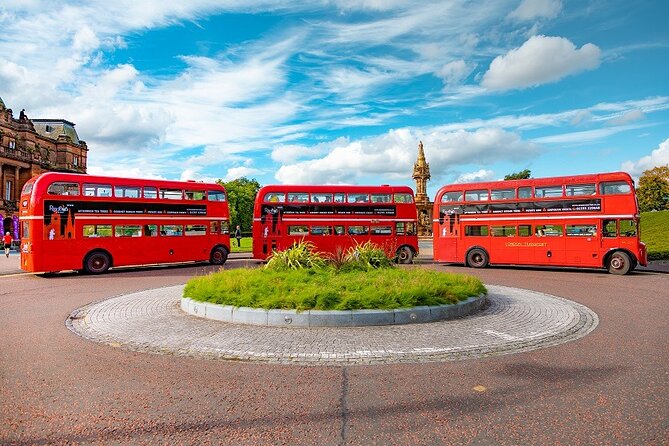
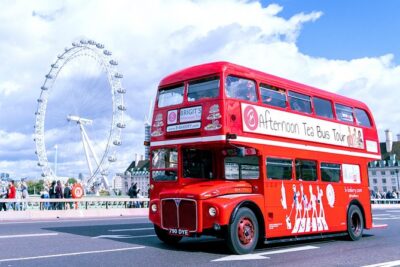
Glasgow’s afternoon tea bus is part sightseeing ride, part cheerful tea party, and part vintage transport throwback. You settle into a 1966 Routemaster, eat your way through sandwiches, warm scones, petit fours, and cupcakes, then watch Glasgow roll past the windows.
I like the easy city overview and the way this outing saves your legs on a busy first day. I also like the friendly crew, especially Helen, who is often praised for her humor and energy. The main catch is simple: this is not a guided sightseeing tour, so you should not expect a running explanation of every landmark.
Quick points to know before booking
- A vintage Routemaster is the star of the show: The bus is part of the experience, with original-style seating and the character of an older vehicle.
- The food is generous: Handmade sandwiches, a warm scone with cream and jam, petit fours, cupcakes, and unlimited tea or coffee are included.
- Helen, Tallulah, and George may be part of the crew: Their humor and friendly service receive especially strong praise.
- The route covers a wide sweep of Glasgow: You pass museums, bridges, the Clyde waterfront, historic buildings, breweries, and university landmarks.
- There is no toilet on board: The ride lasts about 70 to 90 minutes, so plan ahead.
- Seating can be tight: You may share a table, and some seats are more comfortable than others.
What this Glasgow bus tea actually is
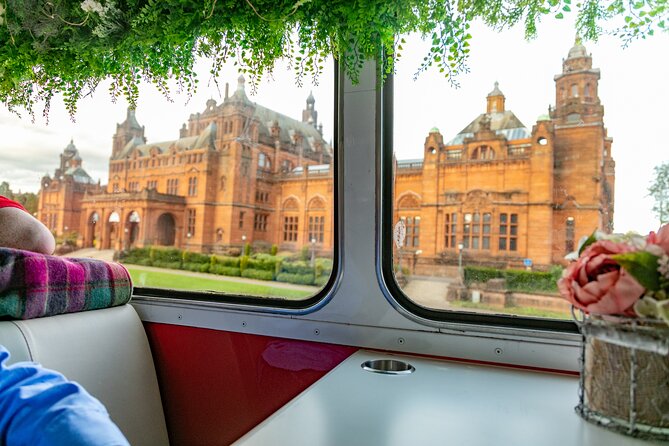
The best way to understand this outing is as afternoon tea served during a moving city ride. It is not a hop-on, hop-off bus, and it is not a traditional historical tour with a guide explaining each building in detail.
The bus leaves from 36 Shuttle Street in central Glasgow and returns there after roughly 90 minutes. During the ride, the crew serves food and drinks while the bus follows a broad route through the city. You get a quick look at major sights without spending the afternoon walking between them.
There may be occasional comments about places along the way, along with music, singing, and the kind of lively banter that makes this feel more like a social outing than a formal tour. Helen is frequently singled out for her comic timing and ability to keep the bus entertained. Tallulah and George are also named as especially good members of the team.
That atmosphere will matter more to you than a detailed account of Glasgow’s architecture. If you want facts, dates, and a carefully structured city introduction, book a proper guided tour separately. If you want a pleasant break with food, views, and a bit of singing, this format makes more sense.
More Afternoon Tea Experiences in the UK:
- London: Afternoon Tea Cruise on the River Thames
★ 4.4 · 3,274 reviews - London: Afternoon Tea Bus Tour – 1960s Routemaster Bus
★ 4.5 · 2,032 reviews - London: Afternoon Tea Bus with a Glass of Prosecco
★ 4.4 · 1,853 reviews
Starting with tea, sandwiches, and scones
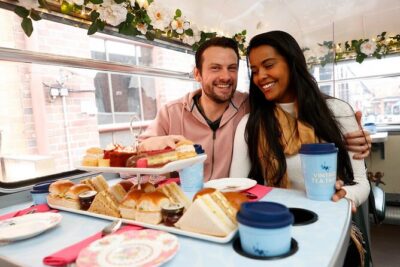
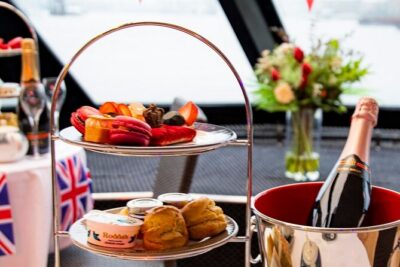
The meal is served at your table as you ride. The included spread consists of handmade sandwich selections, a home-baked warm scone with cream, jam, and strawberry garnish, petit fours, cupcakes, and unlimited tea and coffee.
The scone is the part most likely to make or break your opinion of the meal. Many people particularly enjoy it, describing it as warm and nicely served with cream and preserves. One less favorable experience found the scone dry and bland, while another praised it as the best part of the tea. That tells you something useful: food quality can vary by personal taste, and you should speak to the crew during the ride if something is not right.
The meal is described as plentiful rather than delicate. You are unlikely to leave hungry, especially if you enjoy bread, cakes, and sweet treats. The sandwiches provide the savory part, while the scone, petit fours, and cupcakes push the meal toward indulgence.
Tea and coffee are unlimited, which helps the $61.46 price make more sense. You are paying for the meal, the bus, the staff, and the unusual setting, not simply for a plate of cakes. Other drinks may be available on some outings, but tea and coffee are the clearly included beverages. A souvenir drinks cup is not included.
Food requirements should be given when you book. Vegetarian and gluten-free options are offered, although the products may contain nuts. A particularly useful detail is that the gluten-free tray can be arranged as a proper substitute rather than a token side dish.
Glasgow’s museums and public buildings from the upper deck
The route takes in a useful collection of Glasgow sights, though you generally view them from the bus rather than stop for visits. That makes the outing a good orientation ride, but not a replacement for museum time.
One stop or pass-by is a world-class art museum, described as a place where people gather to learn, share ideas, and view works collected from around the world. The itinerary does not identify the museum by name, so treat this as one of the city’s major cultural institutions rather than a planned museum visit.
George Square is a more recognizable highlight. The square is anchored by the City Chambers, an imposing civic building linked to Glasgow’s industrial wealth and public life. It is one of the city’s most impressive architectural settings, and the bus gives you a chance to take in its scale without first navigating the traffic and crowds on foot.
Glasgow Cathedral is another important sight along the route. It is one of Scotland’s finest medieval buildings and the only medieval cathedral on mainland Scotland to survive the Reformation of 1560 intact. The cathedral itself deserves a separate visit if you have time, since a passing view cannot show you much of the interior.
Beside it, the Necropolis adds a very different mood. This Victorian cemetery was modeled on Père-Lachaise in Paris and contains elaborate monuments, sculpture, and around 3,500 tombs among approximately 50,000 burials. From the bus, you get a sense of its position and scale. You do not get the time needed to explore its paths or read its stories.
From Tennent’s Brewery to Glasgow Cross
The bus also points toward Glasgow’s long brewing and pub traditions. Tennent’s Wellpark Brewery has produced beer since 1885 and remains closely tied to the city’s working culture.
The route includes the Tolbooth Steeple at Glasgow Cross, a seven-storey tower topped by a clock and stone crown. It was once part of a larger Tolbooth complex containing civic offices, a council hall, and a city prison. This is a good example of a sight that benefits from a little background, though the bus format may give you only a brief view rather than a full explanation.
The famous Tennent’s Bar is also listed among the route sights. It is a traditional city pub known for beer, food, and lively conversation. You pass a real part of Glasgow’s everyday social life, not just a polished monument.
That distinction is one of the route’s strengths. You see grand civic buildings and cultural attractions, but also places connected with ordinary city routines. Still, the experience does not give you time to stop for a pint at the bar or tour the brewery.
A few more tea experiences around the UK worth a look
- Edinburgh Afternoon Tea Experience
★ 4.5 · 1,275 reviews - The Kensington Palace Gardens Royal High Tea
★ 4.5 · 934 reviews - Afternoon Tea River Cruise on the Thames
★ 4.0 · 884 reviews - London Afternoon Tea Bus with Panoramic Tour
★ 4.0 · 763 reviews
Glasgow Green, the Doulton Fountain, and the People’s Palace
The ride continues toward Glasgow Green, one of the city’s historic public spaces. Here you see the Doulton Fountain, the largest ceramic fountain ever built. It was a popular attraction at the 1888 International Exhibition, an event that drew more than 5.7 million visitors.
Nearby, the People’s Palace tells the story of Glasgow life through objects, photographs, prints, and film. Its subject is not royal grandeur. It focuses on how local people lived, worked, and spent their free time over the years.
I like this portion of the route because it gives the ride a strong local focus. Glasgow is not only about grand Victorian buildings and major museums. The People’s Palace and Glasgow Green help you think about the city as a place where people made homes, raised families, worked, played, and gathered.
You should note that the bus does not turn this into a museum visit. If the People’s Palace or the Doulton Fountain interests you, return later with time to walk around.
Crossing the Clyde and seeing Glasgow’s modern waterfront
The bus then reaches the River Clyde and a series of modern landmarks. The Kingston Bridge carries the M8 through the city center and is one of Europe’s busiest bridges, handling roughly 150,000 vehicles each day. It is a practical piece of transport infrastructure rather than a pretty monument, but it shows how the city’s road network works.
The Clyde Arc, often called the Squinty Bridge because of its angled crossing, offers a more visually distinctive view. Its curved form links Finnieston and the Scottish Event Campus with Pacific Quay and Glasgow Science Centre.
The Finnieston Crane recalls the city’s industrial and shipbuilding past. This enormous cantilever crane once loaded cargo, including steam locomotives, onto ships bound for other parts of the world. It is no longer used for regular work, but it remains a strong symbol of Glasgow’s engineering era.
The SEC Armadillo and the SSE Hydro bring you into modern event Glasgow. The Armadillo, designed by Foster + Partners, opened in 1997. The Hydro is the large indoor arena beside it. Together, these buildings show how the Clyde waterfront has shifted from heavy industry toward concerts, conferences, science, and public events.
This is one of the most useful sections for first-time visitors. You see how the older industrial city and the newer waterfront fit together, even if the bus does not pause long enough for detailed study.
Whisky, transport, and science along the Clyde
The route includes Glasgow’s first dedicated single malt Scotch whisky distillery in more than a century. It has a visitor experience, café, and specialist whisky shop in the center of Glasgow. The tea bus does not include a distillery tasting, so consider this a landmark to return to rather than a scheduled activity.
Riverside Museum gives the route another strong cultural stop. This award-winning transport museum displays more than 3,000 objects, ranging from skateboards and prams to locomotives, cars, paintings, and even a Stormtrooper. It is one of the better follow-up visits if the bus ride sparks your interest in Glasgow’s transport story.
The Glasgow Tower forms part of the Glasgow Science Centre on the south bank of the Clyde. It is a free-standing tower and one of the area’s most noticeable structures.
Again, these places are viewed as part of a moving route. I would not book the tea bus expecting entrance tickets or extended stops. Instead, use the ride to mark places you may want to revisit during the rest of your Glasgow stay.
Kelvingrove, the University, and the Mitchell Library
The return portion takes in Glasgow’s West End and several of the city’s best-known cultural landmarks.
The Hunterian Art Gallery holds a respected public collection with works ranging from Rubens and Rembrandt to the Scottish Colourists and the Glasgow Boys. It is associated with the University of Glasgow, which dates to 1451 and has links to figures such as Adam Smith, James Watt, and Lord Kelvin.
The university itself is one of Glasgow’s most attractive areas, with a long academic story and impressive buildings. From the bus, you get a broad impression of the setting. You will not receive a full campus tour.
Kelvingrove Museum, opened in 1901, is another major highlight. It is known for its architecture, family-friendly displays, and wide appeal. This is a sensible place to spend several hours on another day, especially if you want art, natural history, and local culture in one building.
The Mitchell Library at Charing Cross completes the cultural sweep. It is a major Glasgow landmark and part of the city library network, with Scottish and international collections available for research, enjoyment, and practical use.
The variety here is impressive for a 70 to 90-minute ride. You see civic buildings, churches, cemeteries, museums, sports venues, industrial structures, and university landmarks. The tradeoff is that none receives much attention.
Seating, comfort, and the vintage bus factor
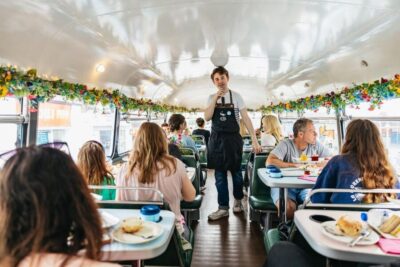
The vintage bus is charming, but it is not as smooth, spacious, or climate-controlled as a modern sightseeing vehicle. Seating can be tight, and you may be asked to share a table, particularly on busy weekend departures.
Some seats have more room than others. One front upper-deck arrangement can require people to squeeze onto a single bench, while other tables may offer more space. If seating matters to you, contact the company before the tour and ask about available arrangements. The booking information warns that the company may need to share tables.
There is no air conditioning. Fans are available, but a hot day can make the bus uncomfortable. On the other hand, the vintage vehicle can feel cozy in cool or rainy weather, and one birthday outing found the bus warm even when it was raining outside.
The bus has been refurbished and maintained, but it remains an older vehicle. You should book it because you like the character of vintage transport, not because you expect the spotless quiet of a new coach. Food can shift when the bus moves, so keep cups and plates secure.
Arrive 10 to 15 minutes early at Shuttle Street. The bus has a limited departure window and cannot wait for late arrivals. There are no paper tickets. Your surname is passed to the bus manager, and you may need to show a voucher on your phone if you used one.
Is $61.46 good value?
At $61.46 per person, this is not the cheapest way to get tea in Glasgow. You can find a lower-priced café meal, and a conventional sightseeing bus may give you more structured information for the money.
The value improves if you want several things at once: a generous afternoon tea, a moving view of Glasgow, a vintage bus, and entertainment from the crew. Unlimited tea and coffee also help, especially if you treat this as a meal rather than a small snack.
I think the price works best for a first day in Glasgow, a birthday, a family outing, or a rainy afternoon when you want to see the city without walking far. It works less well for a visitor focused on historical detail, quiet dining, or precise sightseeing photography.
The maximum group size is 20 people, which keeps the experience fairly small compared with a large coach tour. Still, the shared tables and close seating mean you should be comfortable sitting near other people.
Who should book the Glasgow Afternoon Tea Experience?
Book it if you want:
- A relaxed first look at Glasgow
- A generous tea with both savory and sweet food
- A vintage transport experience
- A social outing with music, jokes, and possible singing
- A way to rest your feet while covering a large area
- A birthday or gift experience
- Gluten-free or vegetarian food arranged in advance
Think twice if you want:
- Detailed commentary at every landmark
- A quiet, formal afternoon tea
- Plenty of personal space
- Air conditioning
- Onboard toilet facilities
- Time to enter and explore the museums and attractions along the route
Children must be at least three years old. Children aged three to nine are charged £20, while those aged 10 and above are charged the adult rate of £43.50 according to the supplied conditions. Anyone under 14 must be with an adult.
Final verdict: book it for fun, not for facts
I would book the Glasgow Afternoon Tea Experience as a lighthearted city introduction, especially near the start of a Glasgow visit. The food is generous, the route covers an impressive range of sights, and the crew can turn a simple bus ride into a memorable social occasion. Helen, Tallulah, and George are names worth watching for if they are working your departure.
I would not book it as your main Glasgow sightseeing tour. The lack of live or recorded guide commentary is made clear, and the route is best understood as a dining experience that tours the city. Pair it with a proper museum visit or historical walking tour, and you get the best of both: a pleasant overview from the bus and deeper time on the ground.
FAQ
How long does the Glasgow Afternoon Tea Experience last?
The tour lasts approximately 90 minutes, with the stated operating time ranging from 70 to 90 minutes depending on conditions.
Where does the bus depart from?
The meeting point is 36 Shuttle Street, Glasgow, G1 1QA. The activity returns to the same meeting point.
Is this a guided sightseeing tour?
No. The company describes it as a dining experience while touring Glasgow, not a guided tour with live or recorded commentary. There may be occasional comments about sights and a singalong.
What food and drinks are included?
The meal includes handmade sandwiches, a warm scone with cream and jam, strawberry garnish, petit fours, cupcakes, and unlimited tea and coffee. A souvenir drinks cup is not included.
Can I request vegetarian or gluten-free food?
Yes. Vegetarian and gluten-free options are available, but you need to provide those requirements when making your reservation. Products may contain nuts.
Is there a toilet on the bus?
No. There is no toilet on board, so plan ahead before departure.
Just added around the UK
- Traditional Afternoon Tea Experience and Baking Class in Stratford-upon-Avon★ 5.0 · 23 reviews
- RHS Garden Wisley and Tea in the Garden Entry Ticket★ 4.0 · 10 reviews
- Afternoon Tea Experience Cooking Class★ 5.0 · 2 reviews
- Royal London Tour with Afternoon Tea at The Rubens at the Palace★ 4.5 · 5 reviews
- Royal Afternoon Tea & Walk at Kensington Palace★ 4.5 · 3 reviews
- Kensington Palace Special Exhibition, Guided Walk & High Tea★ 5.0 · 2 reviews
- Overnight Lake District with Cream Tea and Cruise from London★ 4.5 · 7 reviews
- Harry Potter Tour & Magical Afternoon Tea★ 4.5 · 22 reviews
Afternoon Tea Experiences, compared.
Afternoon Tea Bus Tour – 1960s Routemaster Bus
Read our review →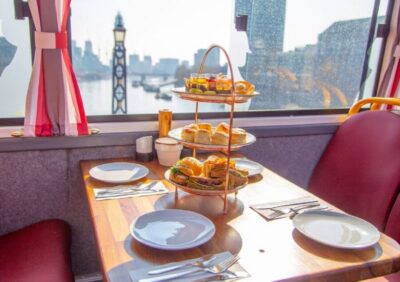

Browse the lists this tour appears in