
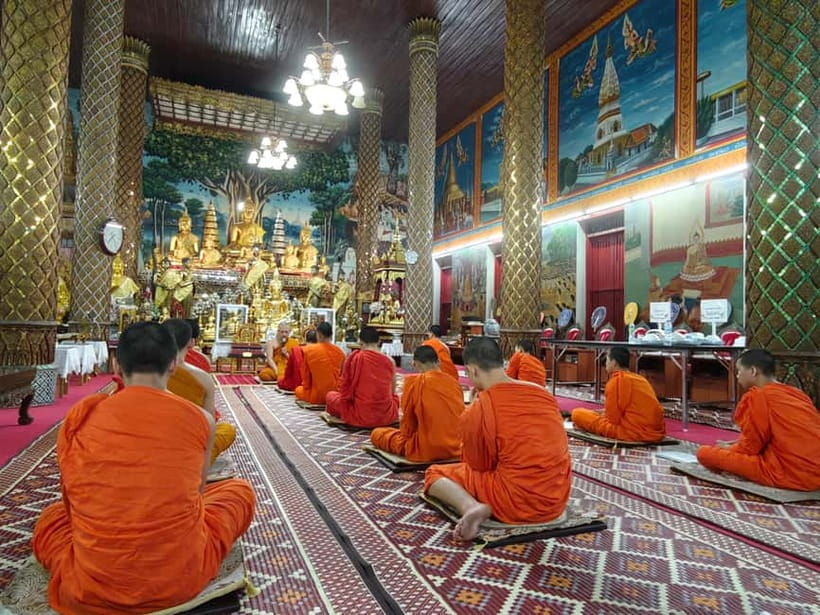
Review · THAILAND
Chiang Mai: Evening Chanting & Meditation
The most meaningful part of this Chiang Mai evening is that you do not simply watch a temple ritual from the doorway. You sit near the monastic community, join the chanting, practice Metta, and share a short meditation. Son, a former monk of 13 years, has guided many sessions and can explain both Buddhist ideas and daily monastic life in plain English.
I like the quiet, personal setting and the chance to hear monks answer questions after the formal practice. I also like the price: at $20, you get a three-hour encounter with chanting, meditation, and Buddhist teaching rather than another quick temple visit. One thing to consider is that the chanting is not presented in English, and the meeting-point information needs your attention because Wat Lok Moli is listed as the guide meeting point while Wat Chai Sri Phoom is the stated temple for the activity.
Key points to know before you book
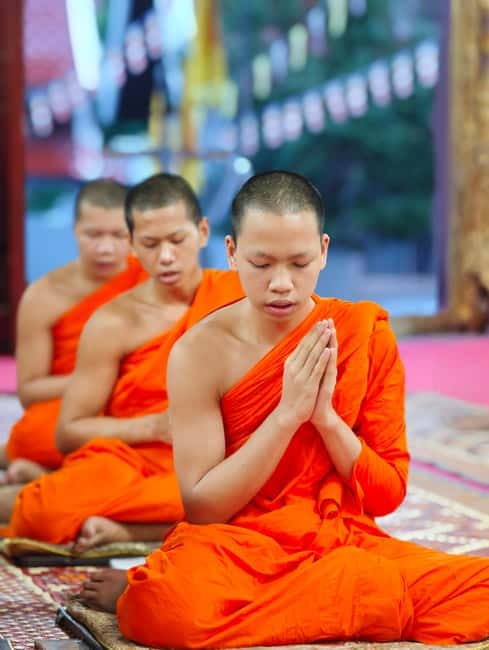
- Chanting lasts about 40 to 50 minutes, with the monks’ voices creating the central experience.
- A 15-minute guided meditation follows, making this suitable for first-time meditators as well as regular practitioners.
- Metta practice sends good wishes to loved ones, people who have died, and all living beings.
- Former monk guides may lead the evening, including Son, Earth, Big, and Paponsonkl, depending on the date.
- The session costs $20 per person and lasts three hours, with no transport, food, or drinks included.
- Dress modestly and arrive 15 minutes early, since this is a working temple rather than a staged performance.
What this Chiang Mai temple evening is really like
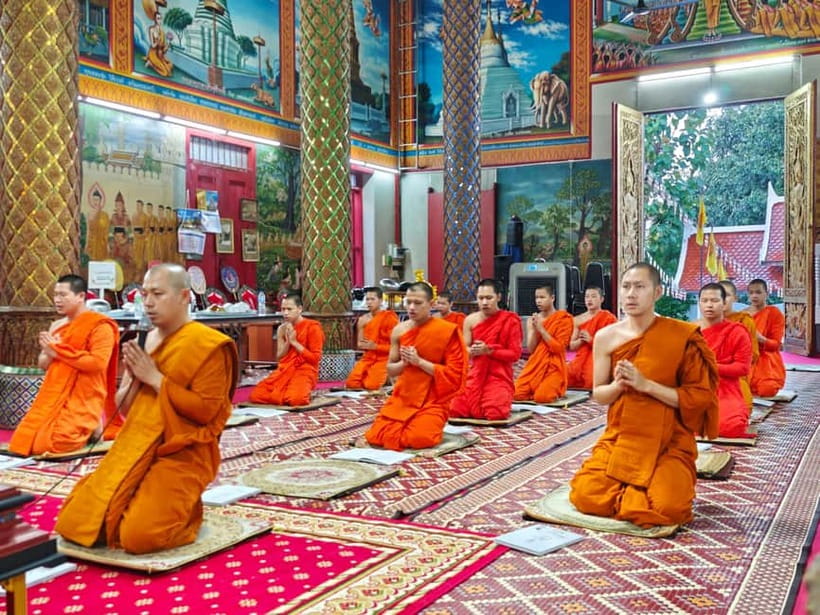
This is a small-group spiritual and cultural experience built around the evening prayer period. You arrive at the temple, settle into the grounds, and prepare for a quiet change of pace after Chiang Mai’s daytime activity.
The evening is not designed as a sightseeing circuit. You will not move from one famous monument to another or fill the time with facts about architecture. Instead, the focus stays on sitting still, listening carefully, and understanding why Buddhist monks chant and meditate together.
That makes the experience a good fit if you want something slower and more reflective. It is also useful if you have visited several temples but still feel unsure about what happens inside them after the usual daytime photo stop.
The exact meeting arrangement deserves care. The activity information names Wat Chai Sri Phoom as the temple setting, while the meeting instructions say to meet the guide in front of Wat Lok Moli. The itinerary also gives A Chef’s Tour Chiang Mai Food Tours as the starting and ending point. Because these details do not perfectly match, check the confirmed location and starting time before you leave your hotel.
A few more tea experiences around the world worth a look
- Furnas in a Private Evening – Tea, Cozido Dinner and Hot Springs
★ 5.0 · 10 reviews - Dubai: Sunset Cruise on Traditional Boat & Emirati High Tea
★ 4.9 · 10 reviews - Cochin: Full-day Backwater Tour with Lunch and Evening Tea
★ 4.8 · 9 reviews
Arriving early and settling into the temple
Plan to arrive at least 15 minutes early. That extra time is not just a rule to follow. It lets you find the guide, put your phone on silent, adjust your clothing, and let your mind slow down before the chanting begins.
You should wear comfortable clothing that covers the shoulders and knees in a respectful way. Bring water, but do not expect a meal or drink to be provided. Smoking and flash photography are not allowed, which is sensible in a quiet religious setting.
The opening moments may feel simple. You sit, breathe, and take in the evening air. Yet this pause matters because the rest of the activity asks you to listen without constantly checking your phone or looking for the next sight.
If you are used to guided tours that start with a long introduction, you may appreciate the restraint here. The setting does some of the work. The temple grounds, the evening breeze, and the approach of the prayer session help create a calmer mood before anyone explains Buddhist philosophy.
Joining 40 to 50 minutes of evening chanting
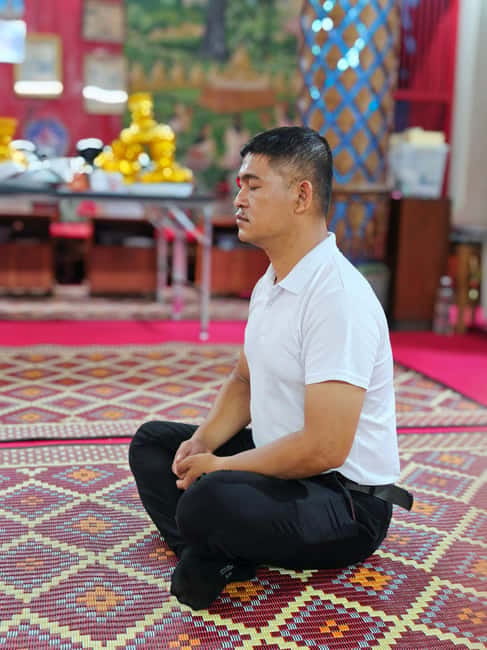
The main ritual lasts roughly 40 to 50 minutes. Resident monks chant sacred texts in a steady, sonorous rhythm, and you have the chance to sit with them and participate rather than remain only an observer.
You should not expect an English translation of every line. One practical criticism of the experience is that an English version of the chant would help visitors follow the words. The value comes more from the sound, rhythm, and shared attention than from understanding each sentence.
If you close your eyes, the chanting can feel physical as well as musical. The repeated voices create a steady pattern that gives your mind something simple to follow. For some people, this is the most powerful part of the evening. For others, the unfamiliar language may make the ritual feel less accessible at first.
Your guide helps bridge that gap. Son, who previously spent 13 years as a monk, has been especially useful at explaining the meaning behind the practice. Other guides named for this experience include Earth, Big, and Paponsonkl. The guide may change, but the strongest part of the format is the chance to ask questions in clear English or Thai.
Respect the tone of the room. Flash photography is forbidden, and you should avoid treating the chanting as a photo opportunity. A phone in your pocket and a quiet posture will serve you better than a bright screen.
The 15-minute meditation and Metta practice
When the chanting ends, the group moves into a short silent meditation. The guided portion lasts about 15 minutes, long enough to give you a real taste of stillness without demanding a major time commitment.
The guide helps you settle your attention and quiet some of the mental noise that follows a busy day. You do not need prior meditation experience. In fact, the session may be most useful if you have tried meditation before but found it hard to know what to do once you sit down.
Back problems are listed as a reason this activity may not suit you. You should take that seriously, since sitting still on a temple floor or in a traditional posture can be uncomfortable. The information also says the activity is not suitable for wheelchair users, so accessibility should be checked before booking.
Metta, often translated as loving-kindness, forms another important part of the evening. You extend wishes for well-being to people you love, those who have passed away, and all beings. The exercise gives the meditation a clear emotional direction. Instead of trying only to empty your mind, you practice goodwill.
I find this part especially approachable for first-time visitors. You do not need to understand every point of Buddhist philosophy to wish safety, peace, and happiness for others. It gives you a simple practice you can remember after leaving Chiang Mai.
Same place, a different pot:
- Kyoto: Tea Ceremony in a Traditional Tea House in Kiyomizu
★ 4.9 · 3,519 reviews - London: Afternoon Tea Cruise on the River Thames
★ 4.4 · 3,274 reviews - Kyoto: Tea Ceremony Ju-An at Jotokuji Temple
★ 4.9 · 3,207 reviews - Afternoon Tea Bus Tour in Dublin
★ 5.0 · 2,791 reviews
Listening to monks and asking direct questions
After the formal chanting and meditation, the evening becomes more conversational. Senior monks and lay practitioners may share guidance with younger monks and with the people attending. You may also have time to ask about Buddhist teachings, temple life, meditation, and Thai culture.
This is where the guide’s personal background can make a real difference. Son is described as a former monk and a long-term Buddhist practitioner, and his explanations connect formal ideas with ordinary life. Paponsonkl has also guided visitors through the chants, meditation, and the story of Buddha.
The question period can last much longer than the formal meditation. One evening included around two and a half hours of conversation after the practice, so the advertised three-hour duration may be a broad guide rather than a strict minute-by-minute schedule. If you have a flight, dinner reservation, or another timed activity, leave room for a longer discussion or confirm the expected finish time.
This is not a lecture where you must sit silently until the guide finishes. The personal questions are part of the appeal. You can ask what it is like to be a monk, how chanting fits into daily practice, or how Buddhist ideas apply outside the temple.
At the same time, the experience depends in part on your guide and on how much conversation the monastic community can offer that evening. If you want a tightly timed tour with a fixed script, this may feel loose. If you prefer thoughtful conversation, that flexibility is a benefit.
Why the $20 price can be good value
At $20 per person, this is inexpensive for a three-hour guided cultural experience in Chiang Mai. You are paying for access, interpretation, and context, not for transport or food.
The strongest value comes from the former-monk perspective. A normal temple visit gives you architecture, statues, and a few signs. This evening helps explain the practice taking place around you. You can hear the chanting, learn why Metta matters, and ask questions that a standard sightseeing stop rarely allows.
The price is less attractive if you want a broad tour of Chiang Mai’s temples. You will spend most of the time in one religious setting, seated and listening. There is no meal, no beverage, and no transport to or from the temple. You need to arrange your own way there and back.
For someone curious about Buddhism, meditation, or Thai religious life, I think the cost is fair. It can also be a good choice for a repeat visitor who has already covered the main sights and wants a more personal evening.
Who will get the most from this experience
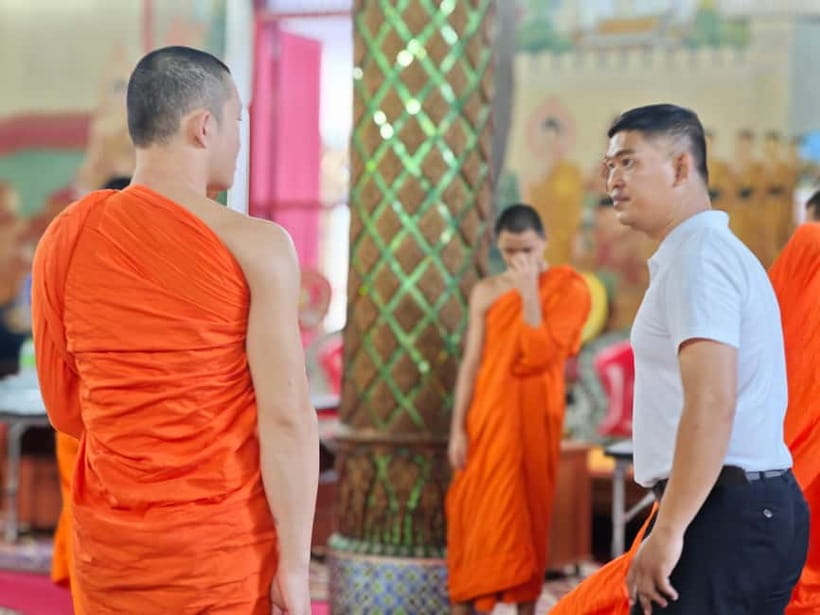
You are likely to enjoy this if you:
- Want to understand Buddhist practice beyond taking temple photographs
- Prefer a quiet evening to a food tour or nightlife
- Are curious about meditation but want clear guidance
- Like asking questions and hearing personal stories
- Can sit quietly for extended periods
- Appreciate a small-scale activity with a flexible discussion period
The experience is open to adults and children aged 10 and older, but it is not suitable for children under 10. Younger children may find the long quiet periods difficult, and the temple setting calls for patience and respectful behavior.
It is also a good match for solo visitors. The structure gives you something to focus on, while the discussion afterward creates a natural chance to interact with the guide and the monks. Couples and older children may also value the shared reflection.
You should think twice if you want constant movement, easy wheelchair access, or a fully translated ritual. The chanting is not presented as an English-language performance, and sitting comfortably may be difficult if you have back problems.
Practical details that affect your evening
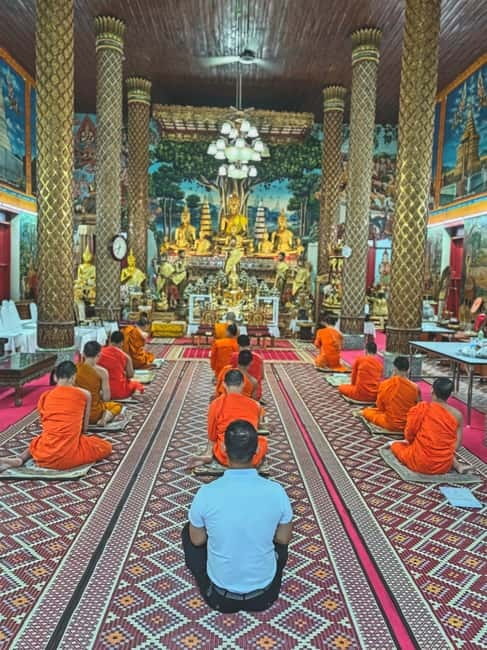
The tour lasts three hours, although the discussion may run longer in some cases. Starting times vary, so check availability when you book.
English and Thai are the stated guide languages. Guides have included Son, Earth, Big, and Paponsonkl. Son’s background as a former monk is particularly useful if you want more than a surface-level explanation, but the assigned guide may not always be the same person.
Transportation is not included. You need to make your own way to the confirmed meeting point, and you should verify whether your session begins at Wat Lok Moli, Wat Chai Sri Phoom, or another stated location. Do not assume the temple and meeting point are identical.
You can cancel up to 24 hours before the activity for a full refund, and the reserve-now, pay-later option keeps you from paying at the time of booking. Those terms are helpful if your Chiang Mai plans are still changing.
The activity has an overall rating of 4.5 from 69 reviews, with praise focused on the guides’ warmth, Buddhist explanations, the meditation, and the chance to speak with monks. The one clear improvement raised was an English version of the chant. That is a fair point and worth remembering when you set expectations.
How to prepare for a respectful visit
Dress modestly, arrive early, and keep your phone silent. These are simple steps, but they make a major difference in a working temple where people are practicing rather than performing for visitors.
Bring water and wear clothing that lets you sit comfortably. You may want a light layer for the evening, although no special equipment is listed.
Try to arrive with a few questions in mind. You might ask about monastic daily life, the purpose of chanting, or how Metta is practiced outside the temple. A thoughtful question can turn the final discussion into the most useful part of your evening.
Most important, allow yourself to listen without needing to understand every word. The ritual has value in its sound, rhythm, and shared silence. The guide’s explanation then gives you a way to place that experience in context.
Should you book Chiang Mai Evening Chanting and Meditation?
Book it if you want a calm, sincere introduction to Buddhist practice and you are happy to spend much of the evening seated and listening. The combination of 40 to 50 minutes of chanting, a 15-minute meditation, Metta practice, and open conversation gives you far more context than a quick temple stop.
I would especially recommend it to curious first-time visitors and to anyone who values personal stories. A guide such as Son can explain what the monks are doing and connect the practice to everyday life.
Skip it if you need a fully translated ceremony, have serious difficulty sitting, or want a sightseeing tour with several stops. Also confirm the meeting location before booking. For the right visitor, though, $20 buys a quiet and thoughtful evening that can stay with you long after the temple doors close.
FAQ
Where does the chanting and meditation experience take place?
The activity is described as taking place at Wat Chai Sri Phoom in Chiang Mai Province. The meeting instructions say the guide will wait in front of Wat Lok Moli, and the location may change, so confirm the final meeting details before going.
How long does the activity last?
The stated duration is three hours. The chanting typically lasts 40 to 50 minutes, followed by a 15-minute guided meditation and discussion.
How much does the experience cost?
The price is $20 per person.
Is transportation included?
No. Transportation to and from Wat Chai Sri Phoom is not included.
Is food or drink included?
No. Meals and beverages are not included. You should bring water.
What languages are available?
The live tour guide languages are English and Thai.
Who leads the experience?
Guides named for this activity include Son, Earth, Big, and Paponsonkl. Son is described as a former monk who spent 13 years in monastic life.
Do I need meditation experience?
No previous meditation experience is stated as a requirement. The activity includes a guided 15-minute meditation session.
What should I wear?
Wear comfortable, modest clothing that respects the temple’s traditions. Arrive at least 15 minutes early and silence your mobile device before the session.
Can children or wheelchair users join?
Children under 10 are not permitted. The activity is also listed as unsuitable for wheelchair users and people with back problems.
Can I cancel the booking?
Yes. You can cancel up to 24 hours in advance for a full refund. A reserve-now, pay-later option is also available.
Just added around the world
- Yogyakarta: Prambanan Tour, Sukuh Temple & Tea Plantation★ 5.0 · 3 reviews
- Xi’an Chinese Calligraphy Workshop: Ink Art & Tea Tasting★ 5.0 · 4 reviews
- Yokohama : Tea Ceremony with Sweets and Souvenir★ 5.0 · 5 reviews
- Washington, D.C.: Tea Around Town Bus Tour with Landmarks★ 3.4 · 7 reviews
- Tea Route: Lake, Forest, Tea Plantation & 3 Course Lunch★ 3.6 · 7 reviews
- Wadi Rum: 2-Hour Jeep Tour with Bedouin Tea★ 5.0 · 11 reviews
- Walking Tour: Yanaka,Nezu& Sendagi: Tea Ceremony & Old Tokyo★ 5.0 · 3 reviews
- Visit local home for music and tea ceremony near Disney★ 4.9 · 13 reviews
Thailand Tea Experiences, compared.
Chiang Rai: 7 Major Sites, Golden Triangle & Tea Plantation
Read our review →
Best Places in Chiang Rai White, Blue, Big Buddha, Tea Plantation
Read our review →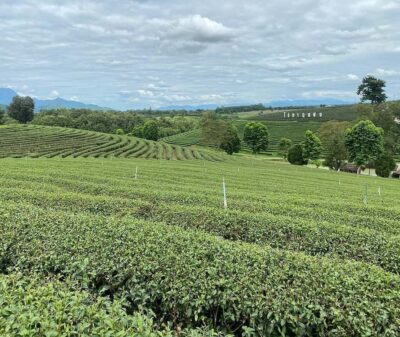
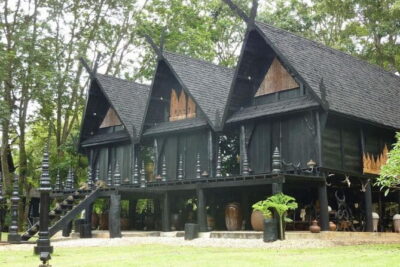
From Chiang Rai: 3 Temples, Golden Triangle Tour, Tea Plantation
Read our review →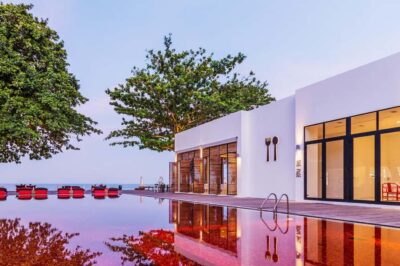
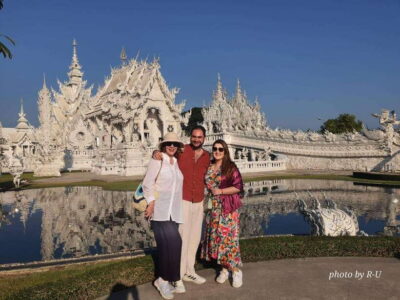
7 Wonders of Chiang Rai: Temples, Tea, and Golden Triangle
Read our review →
Browse the lists this tour appears in