
Review · CHINA
Xi’an Chinese Calligraphy Workshop: Ink Art & Tea Tasting
Xi’an’s old name was Chang’an, and this workshop gives you a hands-on link to that past: not by staring at an exhibit, but by putting brush to paper. You’ll learn basic strokes, write useful and meaningful characters, and enjoy tea in a calm scholar-style setting.
I like the small group of no more than eight, which gives Yunyun room to correct your brush technique. I also like the practical keepsakes: you choose a painted fan or traditional scroll, and you receive personalized bookmarks. The main consideration is the pace. Three hours of careful writing may feel long if you want a quick craft stop, and children under 12 cannot join.
Key points to know before booking
- Yunyun teaches in English, explaining both brush technique and the story behind Chinese characters.
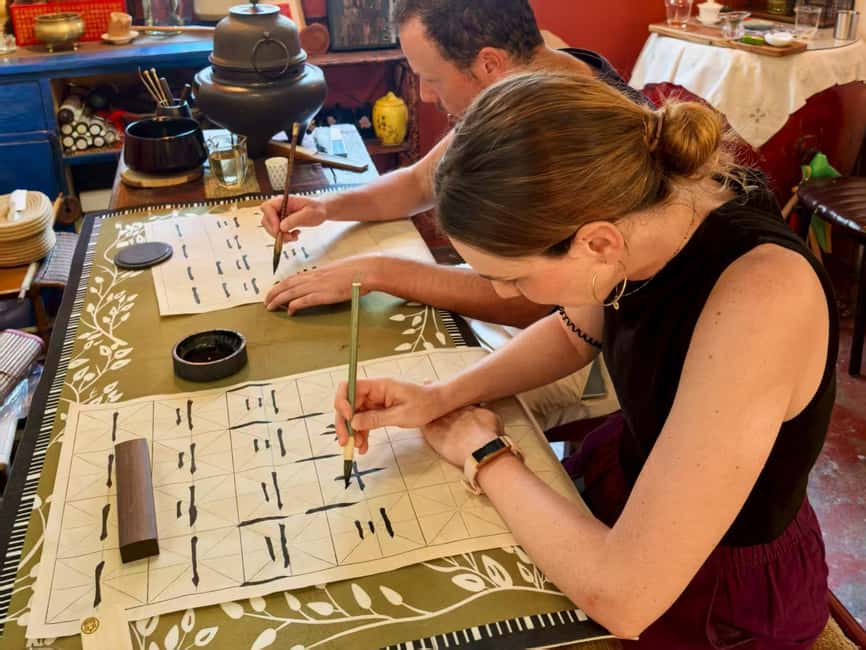
- You practice from the simplest marks upward, including 一, 十, 大, 小, 米, 永, 龙, 武, and 爱.
- Your Chinese name becomes part of the lesson, giving you something personal to practice.
- Tea and local snacks are included, adding a social side to the art session.
- You choose one main keepsake, a painted folding fan or a traditional scroll, plus personalized bookmarks.
- The setting is small and calm, with space for up to eight participants and wheelchair access.
Why Chinese calligraphy makes a good Xi’an activity
Xi’an is famous for imperial sites, city walls, and the Terracotta Army. Those are essential stops, but they can also leave you looking at China’s past from a safe distance. Calligraphy changes the balance. You hold the brush, make the stroke, and see how much meaning can sit inside a simple line.
The workshop introduces Chinese characters as both writing and visual form. A mark such as 一 means one. 十 means ten. 大 and 小 mean big and small. These are not hard words to understand, but the brush makes them less simple than they first appear. Pressure, direction, spacing, and the order of the strokes all matter.
You also work with characters tied to larger ideas. 米 means rice, 永 means forever, 龙 means dragon, 武 relates to martial spirit, and 爱 means love. This gives the lesson a useful range. You are not only copying decorative symbols. You are learning words that connect to daily life, values, and Chinese cultural imagery.
I like this approach because it gives beginners a clear path. You are not expected to produce a museum-worthy work in your first session. You begin with basic marks, then build toward characters and a finished object. That structure helps you see progress, even if your first few strokes look more like startled grasshoppers than elegant script.
More Tea and Calligraphy Classes in China:
- Beijing Culture: Tea Ceremony, Heritage Instrument & Calligraphy
★ 5.0 · 57 reviews - Beijing Culture Event: Tradition Music, Tea Ceremony, Calligraphy
★ 5.0 · 11 reviews - Beijing Hands-On Culture Tour: Tea, Instrument, Calligraphy
★ 5.0 · 6 reviews
Meeting Yunyun and settling into the tea room
The instructor is Yunyun, and the class is taught in English. Her style is patient and friendly, with clear explanations suited to people who know little or nothing about Chinese writing. That matters here. Calligraphy can seem mysterious when an instructor simply demonstrates beautiful characters without explaining how they are built.
The meeting point is Room 0102, Unit 1, Building 7, No. 6 Xiamaling, Beilin District, Xi’an, Shaanxi Province. The Chinese address is 西安市碑林区下马陵6号第7幢1单元0102室垣里私厨. Save the Chinese address on your phone, since it may be more useful for local directions than an English version.
The class is limited to eight people. That is a useful size for this kind of activity. You need enough personal help to hold the brush correctly, adjust your hand, and understand why one stroke looks different from another. A crowded room would make that harder.
The atmosphere is designed to feel like a traditional scholar’s room, with tea and local snacks worked into the session. One description of the experience places the tea portion in a charming hotel tea room. Either way, expect the setting to support quiet concentration rather than loud group entertainment.
Your first brush strokes and the logic of Chinese characters
The first stage focuses on tools and basic technique. You work with ink, paper, a brush, and an inkstone. These materials are all supplied, so you do not need to bring special equipment or know the difference between one type of brush and another.
A good calligraphy lesson starts with control, not speed. You learn how to hold and guide the brush, how much ink to use, and how a stroke begins and ends. The brush can create a thin line, a broad mark, or a changing shape depending on pressure. Small adjustments become visible on the paper, which makes this a surprisingly focused activity.
The practice characters are well chosen for beginners. 一 is a single horizontal stroke. 十 adds a crossing line. 大 and 小 introduce different shapes and proportions. 米 gives you a more complex form, while 永 is often useful for practicing a range of stroke types.
You will also practice characters such as 龙, 武, and 爱. These have clear appeal as souvenirs, but the lesson gives them context instead of treating them as random decoration. Yunyun also teaches you how to write your name in Chinese characters, which is likely to be one of the most memorable parts for many people.
Do not expect your name to be a direct letter-for-letter translation. Chinese names use characters with sounds and meanings, and the instructor helps you connect your name with suitable Chinese characters. The exact result will depend on your name and the way it is rendered, so treat the process as a cultural introduction rather than an official name registration.
Three thousand years of writing in a single lesson
The workshop also covers the development of Chinese characters across roughly 3,000 years. You get a basic look at how early forms changed into the characters used today, along with stories about their cultural role.
This history section gives your brush practice more meaning. A character is not just a shape to copy. It comes from a long writing tradition in which form, order, and balance all matter. Even a short explanation can help you understand why calligraphy is treated as an art rather than ordinary handwriting.
The time available does not make this an academic course in Chinese history or paleography. You will not leave able to identify every stage of character development. The value is simpler: you gain a framework for looking at Chinese writing, then use that framework while making your own marks.
For a first encounter, that is enough. The workshop connects the history of Chang’an and Xi’an with a physical activity you can remember long after you have left the city.
More Tea Tastings in China:
- Tea Tasting and Pairing Concept Workshop
★ 5.0 · 57 reviews - Biking Real Shanghai& Tea Tasting Experience
★ 4.5 · 45 reviews - Shanghai 3-Hour Afternoon Tea Tasting and Dessert Tour
★ 4.9 · 15 reviews - Private Shanghai City and Zhujiajiao Combo Tour with Boating, Tea Tasting, Lunch
★ 5.0 · 15 reviews
Tea, local snacks, and a slower pace
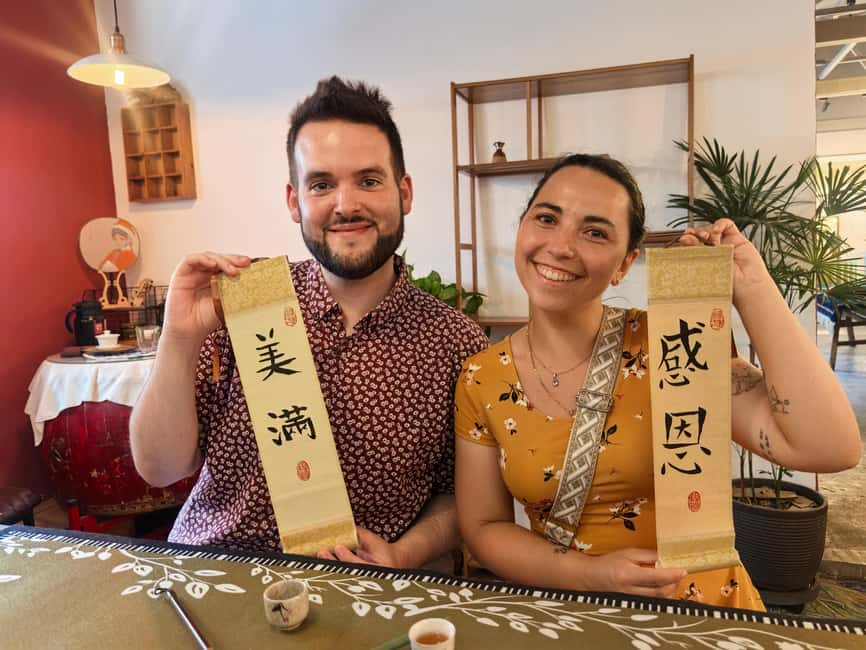
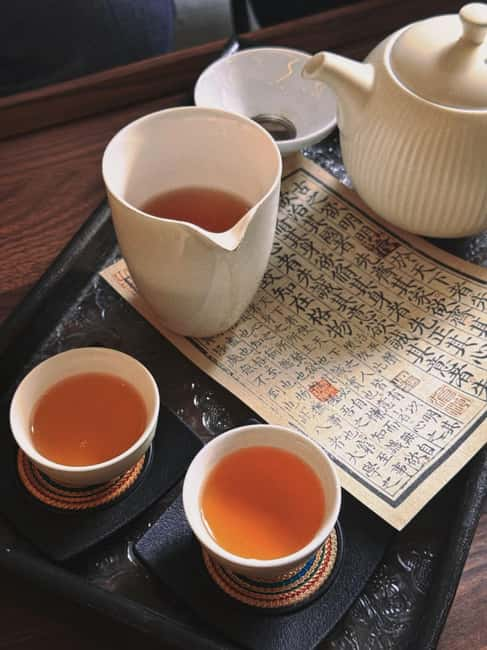
Tea is not just a short drink break here. It helps shape the mood of the workshop and gives you another way to experience a traditional Chinese custom. Tea service and local snacks are included in the price.
You can expect the tea portion to fit between periods of explanation and practice. This helps break up the concentration required for brushwork. It also gives your small group a chance to pause, talk, and look at the characters you have made.
The tea component is not presented as a separate formal tea ceremony with a long list of rules. The supplied details describe tea tasting and tea learning as part of the broader calligraphy session. If you are booking mainly for a specialist tea ritual, this may not be enough on its own. If you want tea paired with another cultural activity, it adds good value.
I especially like this combination for an afternoon when you need a break from sightseeing. Calligraphy asks you to slow down. Tea reinforces that change of pace. After busy streets and major attractions, a few quiet hours with paper, ink, and a cup of tea can feel like a useful reset.
Making your fan, scroll, and bookmarks
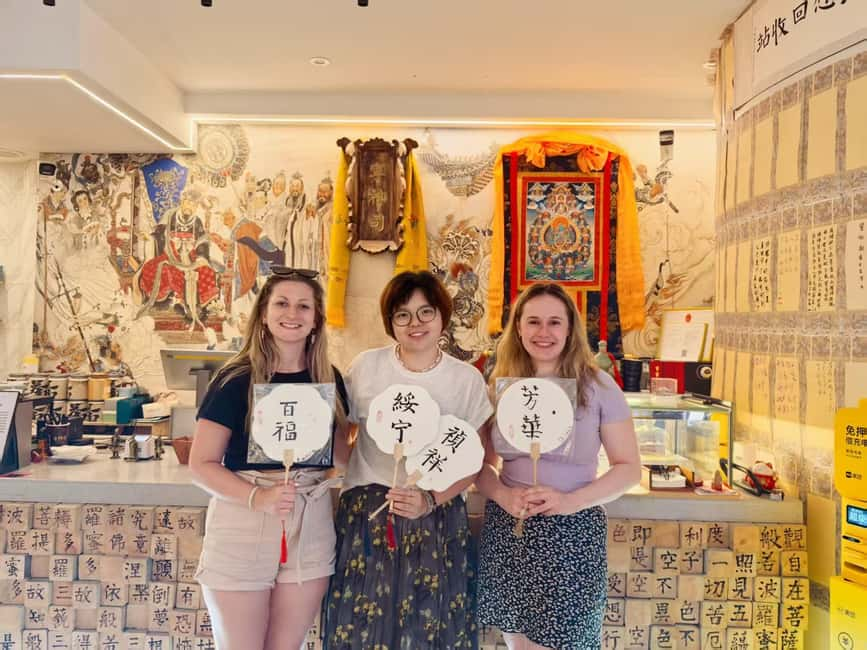
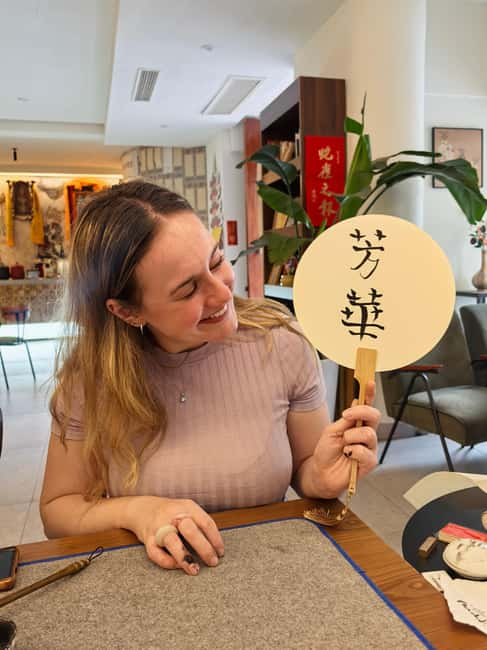
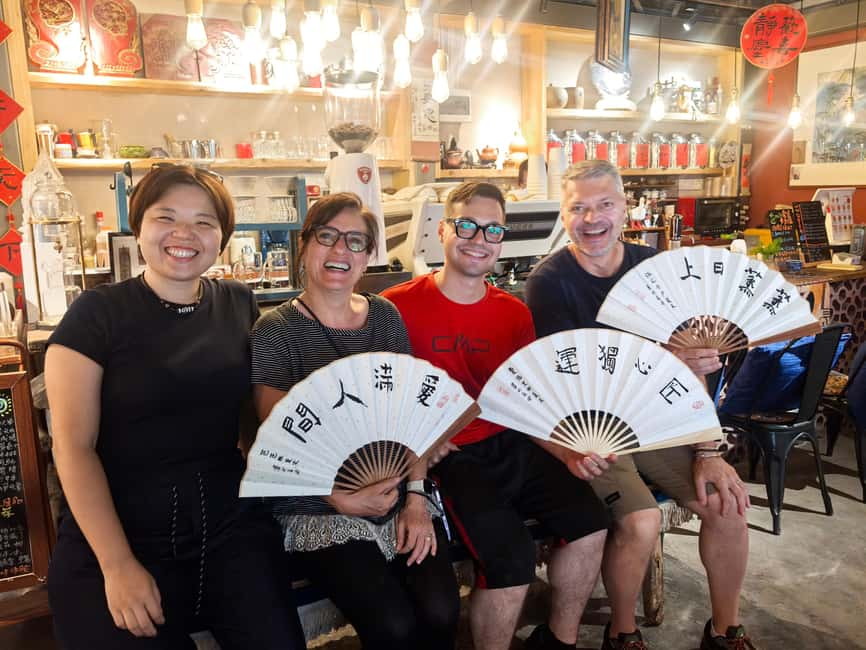
The final creative stage turns practice into a souvenir. You choose between a painted folding fan and a traditional scroll painting. Your selected words or sentences are then written onto the item, creating a personalized piece to take home.
The fan is likely the more practical choice if you want something easy to pack or display casually. A scroll may appeal more if you want a traditional wall piece. The activity does not specify the full range of designs or sizes, so you should choose based on the format you prefer rather than expecting a particular image or finish.
You also receive personalized bookmarks. These are smaller and easier to use during your trip or pack in your luggage. They give you an extra keepsake even if your larger piece is not perfectly balanced.
Keep your expectations sensible. You are learning a demanding art in one three-hour session, not training as a professional calligrapher. The value of the final piece comes from the personal connection and the memory of making it. A slightly uneven stroke is part of the story, not a defect that ruins the souvenir.
What the $55 price includes
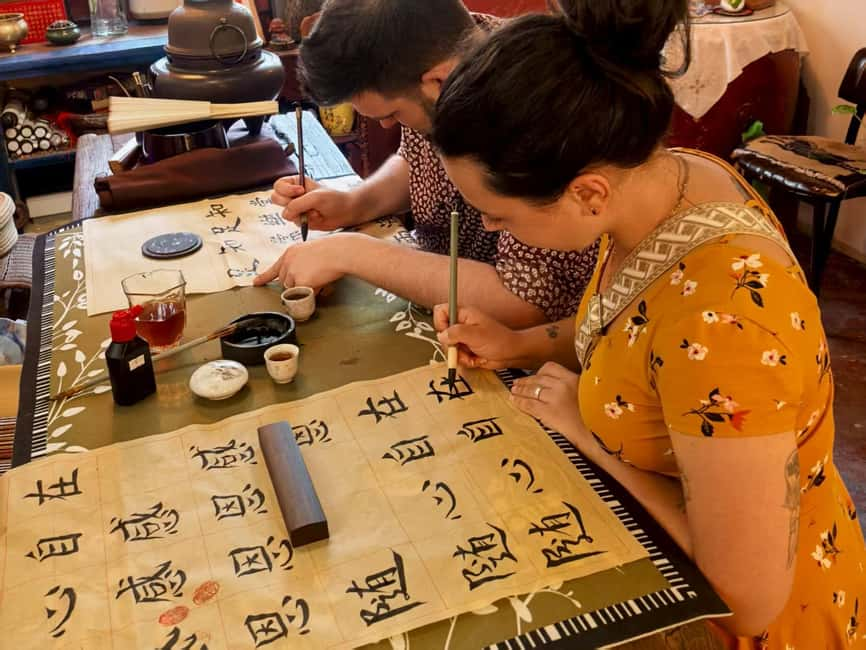
The price is $55 per person. That covers three hours of English instruction, tea, local snacks, ink, paper, an inkstone, other writing materials, personalized bookmarks, and your choice of a painted folding fan or traditional scroll painting.
I consider that a fair price for a small-group cultural workshop. You are not paying only for a demonstration. The fee includes direct instruction, consumable materials, refreshments, and a finished item. The maximum group size of eight also gives the price more weight, since personal help is important when you are learning brush control.
The value is strongest if you care about taking part rather than simply collecting a souvenir. You can buy decorative calligraphy elsewhere, but that does not give you the story behind the characters or the chance to write your own name. The experience also works well for couples, families with older children, and friends who want an activity with a clear result.
The price may feel high if you are comparing it with a brief museum visit or a casual tea. In that case, remember that this fills three hours and includes all materials. It is best viewed as a guided cultural class with a keepsake, not as a quick tourist stop.
Who should book this workshop
This is a strong choice for first-time visitors who want an activity connected to Chinese culture but do not have a background in art. You do not need to read Chinese or know how to hold a brush before arriving.
It also suits people who enjoy mindful, hands-on activities. The work is quiet and deliberate. You will spend time watching, copying, adjusting, and trying again. That makes it a better match for someone who likes crafts and learning than for someone who wants constant movement.
Families can book it if all participants are at least 12. The age rule matters because the class requires patience and controlled brushwork. Younger children cannot join this activity.
Small groups of friends should find the format comfortable. You can compare characters, help each other choose a fan or scroll, and still receive individual instruction. Wheelchair access is available, which makes this one of the more practical indoor cultural activities in Xi’an for people who need accessible facilities.
A few practical limits to keep in mind
The meeting point is a specific room inside a building, not a major public attraction. Give yourself enough time to locate Room 0102, and keep the Chinese address available on your phone. The supplied information does not include transportation arrangements, so you need to make your own way there.
Starting times vary by availability. Check the schedule that applies to your date before building the workshop into a busy sightseeing day. Three hours is long enough that you should avoid placing it between two tightly timed attractions.
Instruction is in English. That is helpful for international visitors, but the experience is not presented as a Chinese-language class. You will learn characters, meanings, and writing technique, but your main teaching language remains English.
You can cancel up to 24 hours in advance for a full refund, and you can reserve now while paying later. Those terms help if your Xi’an plans are still changing. Wheelchair access is listed, but the information does not describe every part of the route or room, so contact the provider if you need specific accessibility details.
Should you book the Xi’an calligraphy workshop?
Book it if you want a personal souvenir, patient English instruction, and a quiet cultural activity that goes beyond sightseeing. Yunyun’s clear teaching style, the small group, tea service, and practice with your own name make the session approachable for complete beginners.
Choose the fan if packing and display matter most. Choose the scroll if you want a more traditional wall decoration. Either way, the strongest reason to book is the process: you learn why the characters look as they do, then make something with your own hand.
Skip it if you want a fast activity, a formal advanced calligraphy course, or a dedicated tea ceremony. For most visitors who can spare three hours and appreciate a thoughtful hands-on experience, the $55 price is reasonable and the format makes a welcome change from Xi’an’s major sights.
FAQ
How long does the Xi’an Chinese calligraphy workshop last?
The workshop lasts three hours.
How much does the experience cost?
The price is $55 per person.
Is the workshop taught in English?
Yes. The instructor is Yunyun, and the listed language for the activity is English.
What calligraphy characters will I practice?
You may practice characters including 一 for one, 十 for ten, 大 for big, 小 for small, 米 for rice, 永 for forever, 龙 for dragon, 武 for martial, and 爱 for love.
Can I learn to write my name in Chinese?
Yes. The workshop includes instruction on writing your name in Chinese characters.
What is included in the price?
Tea service with local snacks, all writing materials, professional calligraphy instruction, personalized bookmarks, and your choice of a painted folding fan or traditional scroll painting are included.
What keepsake can I make?
You can choose between a painted folding fan and a traditional scroll painting. You also receive personalized bookmarks.
Is the workshop suitable for children?
Children under 12 cannot join the activity.
How many people can join the group?
The workshop is a small-group experience limited to eight participants.
Is the activity wheelchair accessible?
Yes. The activity is listed as wheelchair accessible.
Where is the meeting point?
The meeting point is Room 0102, Unit 1, Building 7, No. 6 Xiamaling, Beilin District, Xi’an City, Shaanxi Province, China. The Chinese address is 西安市碑林区下马陵6号第7幢1单元0102室垣里私厨.
More Workshops in China
- Beijing: Dumpling Making Workshop with Meal and Tea
★ 4.7 · 69 reviews - Beijing: Temple Of Heaven+Tai Chi Class+Tea Ceremony
★ 5.0 · 8 reviews - 3 hours Xi’an Mahjong Class with Local Tea
★ 5.0 · 2 reviews - Kyoto: 45-Minute Tea Ceremony Lesson Experience
★ 4.3 · 2,378 reviews
More Food and Drink Tours in China
- Unlock Chinese Tea: Culture, Science, Tasting & Hands-on Brewing
★ 5.0 · 12 reviews - Tea Tasting & Brewing Experience
★ 5.0 · 10 reviews - 3-hour Morning/Afternoon Tea Tasting on Maliandao Street & Dimsum
★ 5.0 · 7 reviews - Puer Tea Picking and Tasting | 6 Hour Morning Trip
★ 5.0 · 7 reviews
Just added around China
- Xi’an Noodle Making and Tea Tasting Experience★ 5.0 · 6 reviews
- Half-day Tour: Largest Tea Plantation & Amazing Xianggong Hill★ 5.0 · 9 reviews
- Xi’an Calligraphy & Tea Ceremony – Dive into Ink & Brush Artistry★ 5.0 · 4 reviews
- Full-day Tour: Spectacular Sunrise, Tea Plantation & Sunset★ 5.0 · 3 reviews
- 3 hours Xi’an Mahjong Class with Local Tea★ 5.0 · 2 reviews
- Shanghai Mahjong Experience in Local Tea Bar★ 5.0 · 4 reviews
- Unlock Chinese Tea: Culture, Science, Tasting & Hands-on Brewing★ 5.0 · 12 reviews
- Chinese Tea Ceremony Experience★ 5.0 · 3 reviews
Tea & Calligraphy Classes, compared.
Tea Ceremony, Calligraphy, and Kimono Experience
Read our review →
An Amazing set of Cultural experience: Kimono, Tea Ceremony and Calligraphy
Read our review →
Beijing Culture: Tea Ceremony, Heritage Instrument & Calligraphy
Read our review →
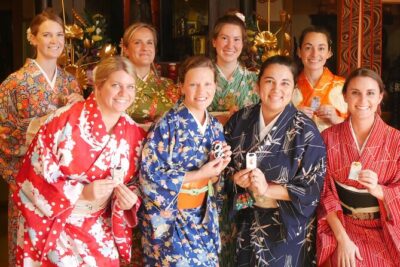
Cultural Activities :Kimono, tea ceremony, Calligraphy and Amulet
Read our review →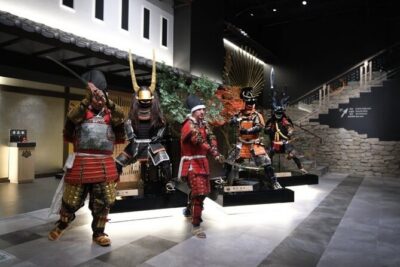
Samurai dress-up and shows, plus Tea Ceremony & Calligraphy
Read our review →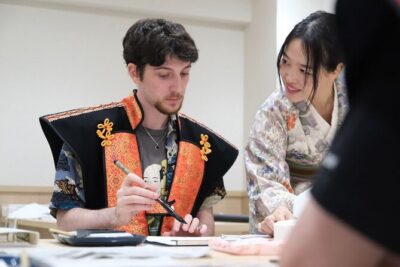
Premium Kimono Dressing, Tea Ceremony, Calligraphy, Samurai show
Read our review →Browse the lists this tour appears in