
Review · JAKARTA
Volcano, Hot Spring, Tea Factory, rice fields and Coffee Tour
Tangkuban Perahu gives this long day its punch. From Jakarta, you head into West Java to see sulfur fumes rising from an active volcano, then continue through rice fields and tea country before ending with a soak at Sari Ater. It is a big slice of rural West Java in one outing.
I like the mix of working countryside and natural sights. You are not only looking at a volcano from a viewpoint. You can meet farmers, see how rice is grown, visit a working tea factory, and taste local fruit. I also like the private vehicle and personal guide, especially for families. Guides named Neti and Erni, with driver Affandi, have handled recent outings with care and patience.
The tradeoff is simple: this is a very long day, with plenty of road time. The 10 to 12 hours include the journey from Jakarta, so you should book it for variety and access, not for a slow, restful pace. Lunch is not included, and luwak coffee costs an extra $3 per person.
Key points at a glance
- Tangkuban Perahu volcano: Spend about an hour near an active crater, where sulfur fumes rise from the ground.
- Subang farm country: Walk beside rice fields, meet farmers, and learn how paddy becomes a staple food in Indonesia.
- Working tea production: Tour a government tea factory and follow black tea from leaf to finished product.
- Luwak coffee stop: Learn how one of Indonesia’s most expensive coffees is produced, with tasting available for $3.
- Sari Ater hot spring: Soak your feet or use a pool filled with warm sulfur water from the volcanic area.
- Private, full-day format: You travel only with your own group in an air-conditioned vehicle, with pickup from Jakarta.
Why this Jakarta day trip works
This is not a quick city excursion. It is a road trip into West Java, where each stop gives you a different look at the region. You see volcanic ground, farms, plantations, village life, food production, and mineral water in one day.
That range is the main reason I would consider booking it. Many Jakarta day trips focus on one major sight. This one gives you several short visits, so it suits you if you want a broad introduction rather than a single deep visit.
The private setup also matters. Your group has its own vehicle, guide, and driver instead of being folded into a large coach party. That gives you a better chance to ask questions, adjust your pace within reason, and keep family needs in view. The tour has received a 4.8 rating from 25 bookings, with 96 percent recommending it. The most consistent praise centers on punctual pickup, kind guides, and careful driving.
Still, keep your expectations realistic. Jakarta traffic and the distance to the volcano and plantations make this a road-heavy day. A small child may enjoy the variety, but long stretches in the vehicle can be tiring. One family specifically found the guide wonderful with a three-year-old, yet also pointed out the amount of driving.
More Tea Factory Tours in Indonesia:
- Jakarta :Volcano, HotSpring, Tea Factory, RiceField, &Coffee
★ 5.0 · 21 reviews - Sunrise Sunan Ibu,Kawah Putih,Volcano,Tea factory,Hot spring
★ 5.0 · 5 reviews - Uva Halpewatte Tea Factory Tour in Ella Sri Lanka
★ 5.0 · 653 reviews
Tangkuban Perahu and the smell of sulfur
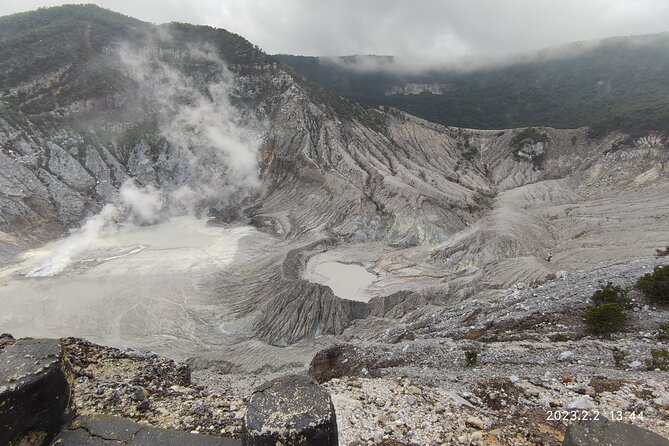
Your first major stop is Tangkuban Perahu, an active volcano in West Bandung Regency. You spend about an hour here, with admission included.
The name means upside-down boat. Local legend connects the shape of the volcano to a boat turned over, which gives the site a memorable story beyond its geology. The practical attraction is the volcanic activity you can see and smell. Sulfur fumes rise from the crater, creating a sharp reminder that this is still an active volcanic area.
I like this stop because it is direct and sensory. You do not need a long hike or a technical explanation to understand what makes the place special. The fumes, crater, and mountain air do the work quickly.
The one-hour visit is enough for a look and photographs, but it is not a full mountain trek. If you want extended walking, this schedule may feel brief. Also note the health warning: the tour is not recommended for people with altitude sickness. Anyone sensitive to sulfur smells should take the stop at a comfortable pace and follow the guide’s advice.
Rice fields and village life in Subang
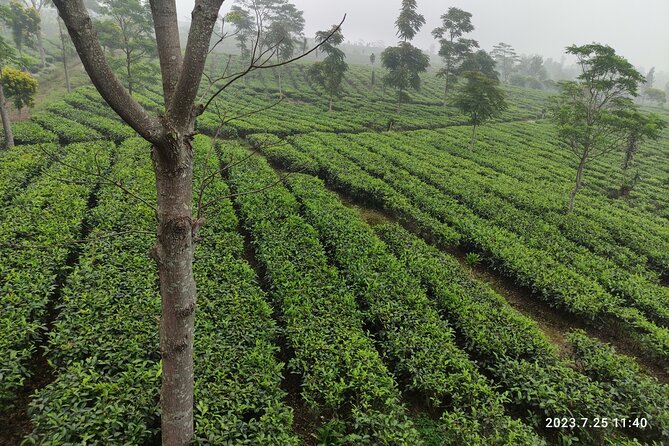
After the volcano, the route takes you through rice fields, rubber plantations, tea plantations, and local villages. At a Subang farm stop, you spend about 20 minutes meeting farmers and seeing paddy plants in the fields.
This is a short visit, but it adds meaning to the scenery. Rice is a central food in Indonesia, and the guide explains how the plant becomes part of daily meals. You can get closer to the farmers, see local activity, and take in the open views along the village.
I would not book this tour expecting a long farm workshop. Twenty minutes gives you an introduction rather than a detailed lesson. Weather, planting schedules, and farm activity may affect what you see. Even so, this stop helps connect the countryside to everyday Indonesian life, which is more useful than simply passing fields from a car window.
The road sections between stops are part of the experience here. You will see the changing countryside through the vehicle, with farmland and plantations replacing Jakarta’s urban setting. Bring patience, especially if you are traveling with children.
A local fruit stop with Subang pineapple
The fruit market stop lasts about 15 minutes. You can buy and taste fruit grown in West Java, with pineapple listed as the special local item, along with other seasonal choices.
This is a small stop, yet it works well after the rice fields. You get a taste of local produce instead of only looking at crops in the ground. It is also a chance to buy fruit if you want a simple snack during the day.
Because the visit is short and the market selection can be seasonal, do not expect a large food tour. The tour includes the stop, but any purchases are your responsibility. If you have a favorite fruit or want to bring home something fresh, ask the guide what is available that day.
More Coffee Stops in Indonesia:
- Istanbul Highlights: Guided Tour with Turkish Tea or Coffee
★ 5.0 · 278 reviews - Melbourne City Cruise with Tea, Coffee, and Commentary
★ 4.3 · 189 reviews - Coffee – Wine – Tea Da Lat’s Agricultural Treasures Tour
★ 4.8 · 63 reviews - Explorer Border road and Nature ( Tea and Coffee )
★ 4.7 · 21 reviews
Seeing black tea made at Kebun Teh Ciater
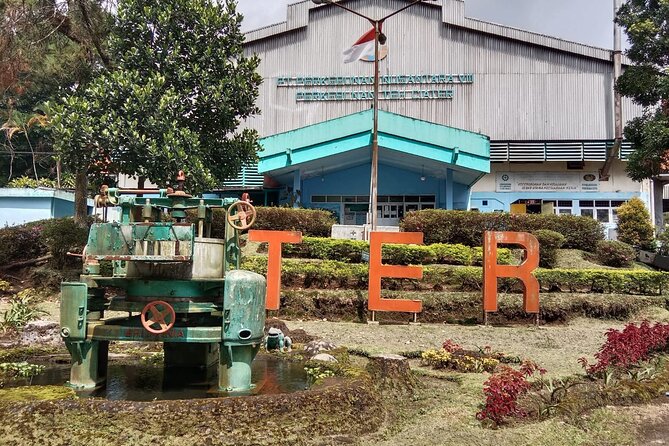
Kebun Teh Ciater in Subang combines a tea plantation visit with a tour of a government tea factory. You spend about an hour learning how black tea is made, from freshly picked leaves through the production stages. Tea and the factory tour are included.
This is one of the most useful parts of the day for anyone who drinks tea but has never seen how it is produced. Inside the factory, you can follow the process step by step. Outside, the plantation gives you views across the valley and a better sense of where the raw material begins.
The factory visit also gives the day some working purpose. You are not only stopping for a pretty view. You are seeing an actual production process connected to the surrounding plantation.
The time is limited, so the visit is an overview rather than a technical course in tea grading or processing. Still, an hour is enough to make the cup of tea in front of you feel less anonymous. Wear shoes suitable for walking around the plantation, since the visit includes time outdoors.
The luwak coffee explanation at KLC Cafe
At KLC Cafe and Resto, you learn about a traditional Indonesian coffee project. The focus is luwak coffee, one of the world’s most expensive coffees. The stop lasts about an hour and includes an explanation of how the coffee is produced.
The tasting is not included in the tour price. It costs $3 per person, so budget for it if trying luwak coffee is one of your reasons for booking.
This stop is best approached as a lesson and tasting opportunity, not as a full café break. You get context about the coffee and how it reaches the cup. The experience adds a distinctly Indonesian food story to the volcano and plantation visits.
If you are not interested in coffee, the stop may feel less essential than the volcano or hot spring. If you are curious about unusual local products, the small extra fee is reasonable. I would ask what the tasting includes before ordering additional drinks or food.
Cooling off at Sari Ater hot springs
The final major stop is Sari Ater, one of West Java’s popular hot spring areas. Warm sulfur water flows from the volcanic region and contains minerals. You can soak your feet in a pool or use the hot spring pool for a longer rest.
After a day of driving and short walks, this is a sensible ending. A foot soak may be enough if you want a quick pause. If you prefer more time in the water, the pool offers a fuller hot spring visit, though the scheduled stop is about 45 minutes.
Do not treat this as a spa day. The tour allows less than an hour, and the hot spring is one stop in a packed route. The point is to relax briefly before returning to Jakarta, not to spend an afternoon at the springs.
The sulfur content may create a noticeable smell. That is part of the volcanic setting, but it may not suit everyone. Bring whatever personal bathing items you need, since the supplied information only confirms transportation, water, entrance fees, and the stated tour inclusions.
What the $130 price gives you
At $130 per person, this is not the cheapest way to see rural West Java. The value depends on how much you would otherwise pay for a private car, driver, guide, fuel, parking, and admission fees.
The price includes:
- Pickup
- Private transportation
- An air-conditioned vehicle
- Driver and guide service
- Parking fees
- Entrance tickets
- Bottled water
- Tea factory tour and tea drink
For a private full-day trip from Jakarta, that package can make sense, especially if you are traveling with family or a small group. Group discounts are available, so the per-person cost may improve when more people share the vehicle.
You still need to pay for lunch and the $3 luwak coffee tasting. The long duration also means you should value convenience. If you dislike arranging several separate stops, finding a driver, and handling tickets yourself, the organized format earns its price.
If your main goal is only Tangkuban Perahu, a shorter volcano visit may be better value. If you want the volcano, tea, coffee, farms, fruit, and hot springs in one day, the cost is easier to justify.
Guides, vehicles, and the pace of the day
Pickup is offered from Jakarta, and the trip uses private transportation. The vehicle is air-conditioned, which matters on a full day that moves between city roads, villages, plantations, and the mountain area.
The driver and guide are a major part of the experience. Past outings have included guides such as Neti and Erni, with Affandi named as a careful driver. You should not assume a particular person will be assigned, but the company has shown that family-friendly service is possible. One small child was especially attached to guide Neti, and another family appreciated the guide and driver’s attention to their needs.
The schedule includes six stops, but not all are equal in length. Tangkuban Perahu and the tea factory receive about an hour each. The coffee visit also takes about an hour. The rice fields and fruit market are quick visits, while Sari Ater gets about 45 minutes.
That pattern creates variety, but it also keeps you moving. I would wear comfortable shoes, carry a light layer for the volcano area, and bring patience for the return drive. Water is supplied, but lunch is not, so plan to ask the guide about a meal stop or bring enough cash for food.
Who should book this West Java tour
I would recommend this day trip if you want:
- A private outing rather than a large group tour
- A first look at West Java beyond Jakarta
- A volcano visit combined with farms and food production
- A family-friendly guide and vehicle setup
- A broad schedule with several different stops
- A short hot spring visit at the end of the day
It is less suitable if you want long walks, a relaxed schedule, or several hours at one attraction. It may also be uncomfortable for anyone with altitude sickness or strong sensitivity to sulfur smells.
Families can do well with this format because the guide and driver can respond to children’s needs more easily than a fixed coach group. Still, parents should prepare for the driving time. Coffee fans, tea drinkers, and people interested in Indonesian agriculture will get more from the day than someone looking only for a scenic mountain photograph.
Should you book it?
Book this tour if you want an efficient, private introduction to the countryside around Bandung and Subang from Jakarta. The strongest reason to go is the range: one day takes you from an active volcano to rice farms, tea production, luwak coffee, local fruit, and sulfur hot springs.
Skip it if long road journeys wear you down or if you want a slow visit with plenty of time at each stop. At $130, the tour makes its best case for families and small groups who value a private vehicle, included admissions, and a guide who can manage the details. Free cancellation is available up to 24 hours before the start time, which gives you some flexibility if plans change.
FAQ
How long does the tour take?
The full experience lasts approximately 10 to 12 hours, including travel between Jakarta and the West Java stops.
Is pickup from Jakarta included?
Yes. Pickup is offered, and the tour uses private transportation in an air-conditioned vehicle.
Is this a private tour?
Yes. Only your group participates in the activity.
Is lunch included?
No. Lunch is not included in the tour price.
Does the tour include luwak coffee tasting?
The luwak coffee explanation is part of the visit, but tasting costs an additional $3 per person.
Are entrance tickets included?
Yes. Entrance tickets, parking fees, and the tea factory tour with tea drink are included.
Can I swim at Sari Ater hot spring?
You can soak your feet in the warm sulfur water or use the hot spring pool. The scheduled visit lasts about 45 minutes.
Is the tour suitable for people with altitude sickness?
The tour is not recommended for people with altitude sickness. You should also consider your comfort around sulfur fumes at the active volcano and hot spring.
More Hot Spring Trips in Indonesia
- Jakarta: Volcano, Tea/Rice Fields, Hot Spring, Local Food
★ 4.9 · 515 reviews - Active Volcano, Rice Field, Hot Spring, Fruit market, Tea Plantation with Lunch
★ 5.0 · 513 reviews - Bandung: White Crater, Scenic Tea Plantations & Hot Spring
★ 4.9 · 122 reviews - Bandung: Volcano Crater, Onsen Hot Springs, Mud Bath & Tea
★ 4.9 · 38 reviews
Just added around Indonesia
- Yogyakarta: Prambanan Tour, Sukuh Temple & Tea Plantation★ 5.0 · 3 reviews
- Volcano, Hot Spring, Mud Bath & Tea plantation all included★ 5.0 · 5 reviews
- Private Half-Day Tea Village Discovery with lunch in Yogyakarta★ 5.0 · 3 reviews
- Full-Day Adventure: Tea Plantation & the Mystical Dieng Plateau★ 5.0 · 6 reviews
- TULA Wellness Taiwan Tea Ceremony★ 5.0 · 3 reviews
- Tea Tree Spa at Holiday Inn Resort Baruna Bali★ 5.0 · 2 reviews
- Taman Safari and Tea Plantation Tour at Puncak★ 5.0 · 2 reviews
- Private Trip Malang/Surabaya : Tour Tea Plantation Wonosari★ 5.0 · 5 reviews
Tea Factory Tours, compared.
Uva Halpewatte Tea Factory Tour in Ella Sri Lanka
Read our review →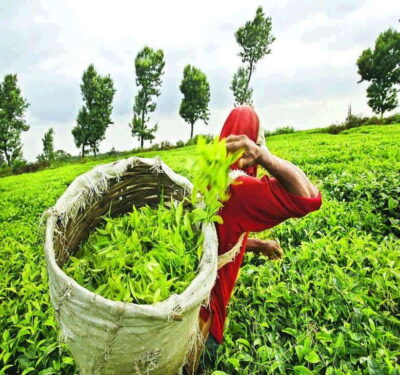
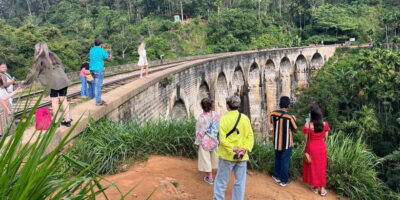
Tea Factory, Train, and Nine Arch Day Tour with Pickup
Read our review →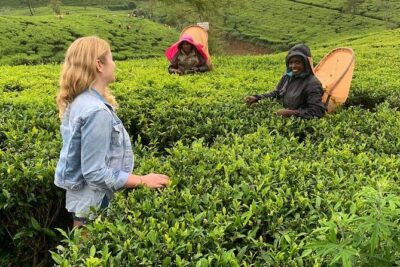

Ella Private Day Trip with Train Ride & Tea Factory-All Inclusive
Read our review →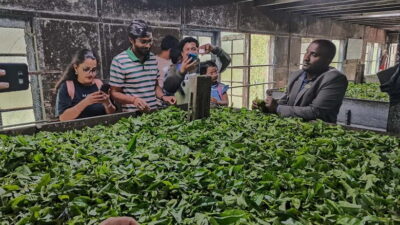
Nuwaraeliya Tea Factory and WaterFall Tour’s With DMJ Tours
Read our review →
9 Arches Bridge, Little Adam’s Peak, Tea Factory
Read our review →Browse the lists this tour appears in