
Review · LONDON
Twinings 2-Hour Tea Tasting Masterclass in London
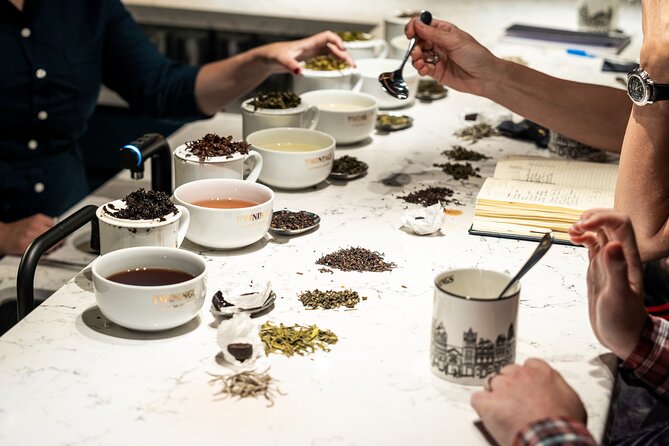
Twinings’ two-hour masterclass turns a familiar drink into a proper sensory lesson. You trace tea from leaf to cup, learn how it reached Britain, and taste six major tea categories while practicing the professional slurp. The small-group format makes room for questions, and guides such as Alessandra, Liam, Rachel, Rosie, and Angelo bring plenty of personality.
I like the mix of clear history and hands-on tasting, rather than a simple talk followed by a cup of tea. I also like the chance to compare white, yellow, green, oolong, black, and pu’erh teas side by side. The main consideration is that this is a tasting class, not a traditional afternoon tea, so you should not expect sandwiches, cakes, or a full meal.
Key points to know before booking
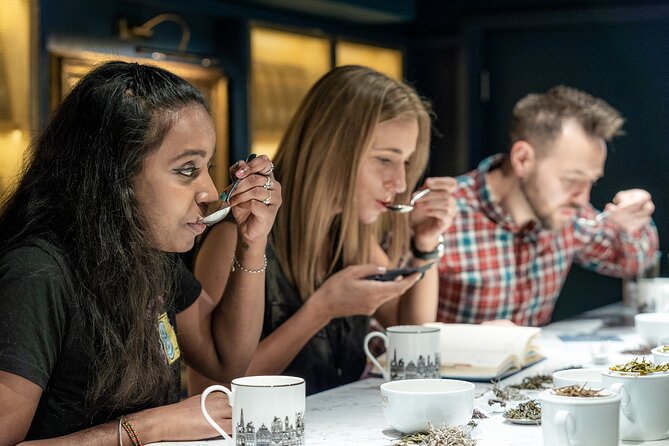
- Six tea categories: Taste white, yellow, green, oolong, black, and pu’erh teas in one sitting.
- A true small-group class: The advertised maximum is five people, although one past session had six.
- Practical tasting skills: Learn to assess appearance, aroma, flavor, mouthfeel, and aftertaste.
- Guides with different strengths: Alessandra, Liam, Rachel, Rosie, and Angelo have each led engaging sessions.
- Central London setting: Meet at Twinings, 216 Strand, near Temple, with the class ending at the same place.
- Good timing for a busy day: Two hours gives the subject room without making the class feel drawn out.
Six teas, one lively lesson
The heart of the experience is a guided tasting of six tea categories: white, yellow, green, oolong, black, and pu’erh. These are not six flavored blends designed to please everyone. They represent different styles of tea, giving you a useful way to compare how processing changes the leaf and the finished drink.
You will taste each sample and think about more than simple like or dislike. The class teaches you to notice appearance, aroma, flavor, mouthfeel, and aftertaste, five useful terms that help turn vague impressions into clear observations.
That matters because tea can be subtle. A green tea and a black tea may come from the same broad plant family, yet their color, scent, texture, and finish can feel completely different. Tasting them in sequence gives you a better sense of those contrasts than ordering separate cups at random.
The tasting also includes the professional method of slurping. It may feel a little theatrical at first, but it spreads the tea across your palate and helps you notice its character. You are given examples of words to describe what you taste, so you do not need to arrive with a trained palate or a large tea vocabulary.
The class is interactive rather than purely instructional. You taste, smell, describe, and compare as the teacher guides you. That makes the session work for someone who already loves loose-leaf tea, but also for someone who normally reaches for one familiar breakfast blend.
More Tea Tastings in London:
- Private Tea Ceremony and Sake Tasting in Kyoto Samurai House
★ 5.0 · 163 reviews - Charleston: Wadmalaw Island Wine Tasting and Tea Garden Trip
★ 4.9 · 94 reviews - Tea Tasting and Pairing Concept Workshop
★ 5.0 · 57 reviews
From tea plant to London cup
The class begins with the tea plant’s journey from bud to cup. You learn where tea comes from, how it is produced, and how different processing methods create different categories.
The production section gives the tasting its structure. Without it, six samples could blur together. With it, you have a reason to pay attention to color, scent, texture, and finish. You are not simply sampling six drinks. You are learning how a leaf changes as it is handled and prepared.
The British part of the lesson explains when tea arrived in Britain and how it became tied to British culture. That context is especially fitting inside Twinings, a company with a long connection to the country’s tea trade.
I like this balance. The class is not limited to brand promotion, and it is not a dry lecture about dates and business. The guide links tea production to the way people drink it, which makes the subject easier to remember.
Several guides are named in the feedback: Alessandra, Liam, Rachel, Rosie, and Angelo. Their styles differ, but the consistent theme is an engaging, approachable lesson. Alessandra is praised for handling questions with ease and for keeping the session personal, even when only one person had booked. Liam is described as lively and passionate, while Rachel is noted for being both entertaining and clear.
Rosie brings humor and interaction to the class, and Angelo focuses strongly on tea industry history and the sensory side of tasting. You may not know which guide will lead your session, but the teaching team appears to treat the class as a conversation rather than a script.
What the Twinings setting adds
The meeting point is 216 Strand, Temple, London WC2R 1AP. The activity starts and ends there, so you do not have to cross the city between the lesson and the tasting.
The class takes place at the Twinings shop, with one account describing a clean, stylish basement bar area. The setting gives the activity a sense of place without requiring a separate museum visit. You are learning about tea in a shop tied directly to the subject, then have time to look at the products with a better understanding of what you have tasted.
The location is near public transportation, which makes it a practical addition to a central London day. You should still allow enough time to find 216 Strand and arrive before the class begins, especially if you are fitting it between other bookings.
The shop also adds a useful final step. One person noted receiving a discount on products after the class, and another appreciated having time to shop after learning what to look for. Since the discount is mentioned in the experience details but not described with exact terms, treat it as a possible benefit rather than a guaranteed saving on a particular purchase.
Why the two-hour length works
Two hours is a good fit for this subject. Tea production, British tea culture, six samples, and guided sensory practice all need more time than a quick demonstration, but the class does not need half a day.
The timing lets you settle into the process. You can hear the background, taste each category, discuss what you notice, and learn the tasting vocabulary without racing from one sample to the next.
I also like that the class seems to keep moving. Several descriptions point to a session that was informative but never dull, with humor and conversation helping the history sections along. That matters if you are bringing a family member who likes tea but does not normally choose educational activities.
The two-hour format is also useful for trip planning. You can schedule it as a focused late morning or afternoon activity, then continue sightseeing nearby. The class ends back at the starting point, so you are not left trying to find a second meeting place.
More Food and Drink Tours in London:
- Tea and Doughnuts: Historic Walking Food Tour of Southwark
★ 4.6 · 14 reviews - Arashiyama Bamboo, Temple, Monkeys, or Secret Sake Brewery
★ 4.8 · 886 reviews - Jakarta: Volcano, Tea/Rice Fields, Hot Spring, Local Food
★ 4.9 · 515 reviews - SF’s Chinatown: Tea & Dim Sum Food Tour – Includes full meal, 3hr
★ 5.0 · 153 reviews
Is the small group worth the price?
The listed price is $69.45 per person. That is a noticeable cost for a tasting, especially since the experience does not include a meal. Its value comes from the instruction, setting, and range of samples rather than from the amount of tea consumed.
The advertised maximum is five people, which is a real advantage. A small class gives you more opportunity to ask why a tea smells a certain way, how processing affects the cup, or what makes one sample different from another. One session was even delivered to a single participant, showing that a small booking may still receive focused attention.
There is a small inconsistency in the supplied details: one account described a group of six, while the official maximum is five. I would expect an intimate class, but I would not book on the assumption that you will always have exactly five or fewer people.
For the right person, the price is reasonable. You are paying for an expert-led lesson, six tea styles, sensory coaching, and access to a historic Twinings setting. If you only want a quick hot drink, it is not good value. If you want to understand tea and leave with better tasting skills, it offers more than a standard shop visit.
The product discount mentioned after class may add value, especially if you already plan to buy tea. Still, compare the experience price on its own. The discount should be a bonus, not the main reason to book.
Who will enjoy this class most
You do not need to be a serious tea specialist. The class suits beginners because the teacher supplies the vocabulary and explains how to taste. It also works for dedicated tea drinkers who want to compare categories they may not usually order.
Families can make good use of it. One session worked especially well across three generations, and the interactive format gives each person something to do. A parent or grandparent who loves tea can enjoy the flavor comparisons, while younger visitors can take part in the smell and taste exercise.
It is also a thoughtful birthday gift. One person booked it for a fiancé, who particularly enjoyed trying teas they had never heard of. The subject is specific enough to feel different from a standard sightseeing tour, but easy enough for a mixed group.
The experience can also suit people who do not think of themselves as tea drinkers. The lesson covers how tea is grown and made, and the tasting lets you discover which styles appeal to you. You may leave with a new favorite, or simply a better idea of why certain teas taste the way they do.
Who may want something else
Do not choose this class if you are mainly seeking a classic London afternoon tea. There is no supplied menu of pastries, cakes, or sandwiches. The listed tasting menu is tea only, with six categories as the main feature.
It may also be less appealing if you dislike structured tasting. You will be asked to smell, taste, slurp, and describe the samples. That is part of the fun, but it requires more attention than sitting down with a mug and chatting.
The class is held in English. Since the discussion covers production, history, and sensory terms, strong enough English to follow an interactive lesson will help.
Finally, the small size means availability may be limited. The experience is booked an average of 28 days ahead, so I would not leave it until the final days of a London visit if the timing matters to you.
Practical planning details
You receive confirmation at booking, and the ticket is mobile, so you can keep the reservation on your phone. The meeting point is 216 Strand, Temple, London WC2R 1AP, and the activity returns there at the end.
The class is offered in English. Service animals are allowed, and the location is near public transportation. The experience provider is R Twinings Ltd.
Cancellation is flexible if you plan ahead. You can cancel up to 24 hours before the start time for a full refund. Cancellations or changes made less than 24 hours before the start time are not accepted for a refund, and the cut-off uses London local time.
I would schedule this on a day when you are already visiting central London. Arrive with enough time to locate the shop, and avoid placing a tight timed attraction immediately afterward. The session normally lasts about two hours, but your day will feel calmer if you leave a little breathing room.
What you take away
The best result is not simply that you have tasted six teas. You learn how to approach tea with more care.
After the class, you should be better able to compare a tea’s appearance, aroma, flavor, mouthfeel, and aftertaste. You also gain a basic understanding of how tea moves from plant to finished drink, why categories differ, and how tea became part of British life.
That knowledge changes ordinary shopping. Instead of choosing a packet only by its name or box design, you can think about the style you enjoyed, the scent you noticed, and the finish you preferred. The class also gives you better questions to ask when buying tea at Twinings or elsewhere.
The history adds another layer. Tea is not just a drink on this tour. It is a product shaped by farming, trade, production, and British habit. Learning that inside the Twinings shop gives the lesson a direct connection to London.
Should you book the Twinings tea masterclass?
Book it if you want a compact, hands-on London experience that goes beyond sightseeing. The strongest reasons are the six contrasting tea categories, the small class size, and the chance to learn a practical tasting method from guides such as Alessandra, Liam, Rachel, Rosie, or Angelo.
I would especially recommend it for tea lovers, curious beginners, families, and anyone looking for a gift activity. The 98 percent recommendation rate and 4.9 rating from 105 reviews support the impression of a well-run class, but the better reason to book is the clear fit between the format and the subject.
Skip it if you want a meal, a grand afternoon tea room, or a short casual stop. At $69.45, this is an educational tasting rather than a cheap cup of tea. For anyone who wants to understand why tea tastes different from one category to the next, it is a well-focused way to spend two hours in London.
FAQ
Where does the Twinings tea masterclass start?
It starts at 216 Strand, Temple, London WC2R 1AP, United Kingdom.
Where does the activity finish?
The class ends back at the meeting point at 216 Strand.
How long does the tea masterclass last?
The experience lasts approximately two hours.
Which teas are included in the tasting?
You taste six categories: white, yellow, green, oolong, black, and pu’erh.
Is the activity offered in English?
Yes, the masterclass is offered in English.
How many people can join the class?
The advertised maximum is five participants.
Is the ticket available on a mobile phone?
Yes, the experience includes a mobile ticket.
Are service animals allowed?
Yes, service animals are allowed.
What is the cancellation policy?
You can cancel at least 24 hours before the start time for a full refund. Cancellations or changes made less than 24 hours before the start time are not accepted for a refund.
More 2-Hour Experiences in London
- Skipton: 2-Hour Afternoon Tea Cruise
★ 4.8 · 508 reviews - Sydney Harbour: 2-Hour Morning Yacht Cruise with Morning Tea
★ 4.8 · 42 reviews - 2 Hours Mochi &Nerikiri Making & Matcha Class in Bunkyo
★ 5.0 · 21 reviews - Wadi Rum: 2-Hour Jeep Tour with Bedouin Tea
★ 5.0 · 11 reviews
Just added around London
- Royal Afternoon Tea & Walk at Kensington Palace★ 4.5 · 3 reviews
- Kensington Palace Special Exhibition, Guided Walk & High Tea★ 5.0 · 2 reviews
- Royal London Tour with Afternoon Tea at The Rubens at the Palace★ 4.5 · 5 reviews
- Overnight Lake District with Cream Tea and Cruise from London★ 4.5 · 7 reviews
- Harry Potter Tour & Magical Afternoon Tea★ 4.5 · 22 reviews
- London: Afternoon Tea Experience at The Clipper Lounge★ 5.0 · 2 reviews
- Official National Gallery Highlights Tour and Afternoon Tea★ 3.5 · 10 reviews
- Bubble Tea Making Experience in London★ 4.0 · 2 reviews
Tea Tastings, compared.
Private Tea Ceremony and Sake Tasting in Kyoto Samurai House
Read our review →
Wadmalaw Island Wine Tasting and Tea Garden Trip
Read our review →
Matcha Experience with of Japanese Tea Tasting in Tokyo
Read our review →
World Teas & Turkish Tea Brewing, Tasting Workshop
Read our review →
Browse the lists this tour appears in