
Review · TOKYO
Matcha Experience with of Japanese Tea Tasting in Tokyo
The best part of this Tokyo experience is that you do not just drink matcha and take a few photos. Chisei, who farmed tea in Kyoto for six years, explains how tea is grown and processed, then guides you through several varieties. You finish by whisking your own matcha.
I like the small five-person limit, which gives you room to ask questions. I also like the homemade sweets from Rina, Chisei’s wife, and the unusual chance to eat tea leaves with ponzu. The main consideration is that the setting is a sports bar inside Henn Na Hotel, not a traditional tea house, and the tasting is generous for only 90 minutes.
Key points at a glance
- Former tea farmer as your guide: Chisei explains cultivation and processing from firsthand experience.
- Six-tea comparison: Taste sencha, kabusecha, gyokuro, deep-steamed sencha, genmaicha, and hojicha side by side.
- Matcha-making practice: Use a bamboo whisk to prepare ousucha, the thin style of matcha.
- Homemade Japanese sweets: Rina prepares treats chosen to pair with Japanese black tea and other teas.
- Tiny class size: The session accepts no more than five people, making questions and conversation easy.
- More than matcha: You also try Japanese black tea, two matcha types, matcha lattes, and hojicha latte.
A former tea farmer puts matcha in context
Matcha is easy to find in Tokyo. You can order it in a café, buy it in a department store, or eat it in a dessert. What is harder to find is a clear explanation of how Japanese teas differ before you sip them.
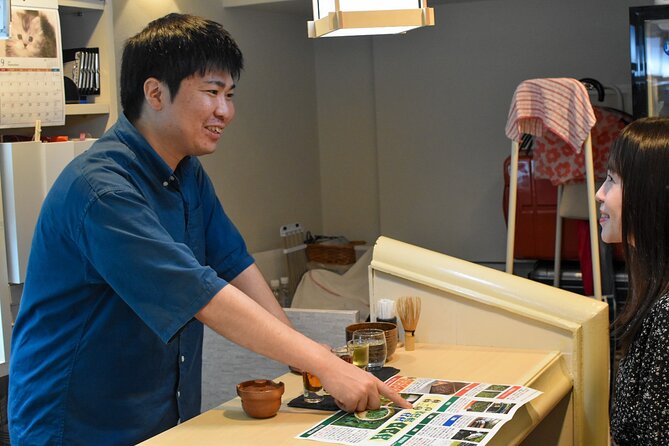
That is the purpose of this class. Chisei draws on six years of tea farming in Kyoto to explain cultivation, processing, and preparation. You are not simply told that one tea is stronger or sweeter. You get a chance to look at the leaves, notice their shape and color, and taste what those growing and processing choices do to the cup.
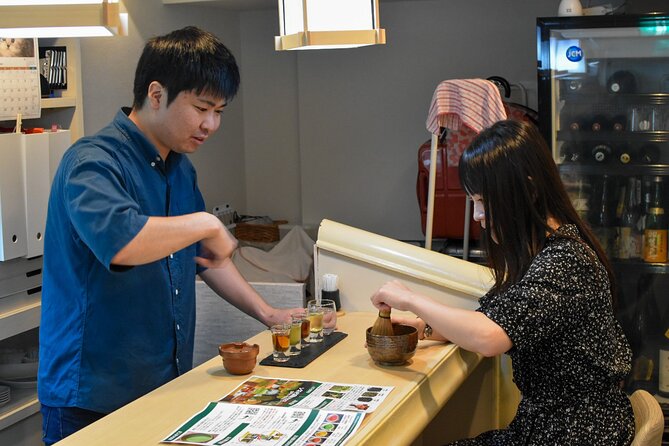
I especially like this approach for first-time tea drinkers. You do not need a working knowledge of Japanese tea to take part. At the same time, people who already know sencha or gyokuro will have plenty to ask about. One particularly strong part of the class is Chisei’s use of diagrams and pictures to explain how the teas are made.
The atmosphere is personal rather than polished and theatrical. Chisei and Rina host the session together, and the five-person maximum means you are unlikely to get lost at the back of a large demonstration. Past participants have praised Chisei’s patient answers and clear teaching, as well as Rina’s homemade sweets.
More Matcha Experiences in Tokyo:
- Matcha Making Class in Tokyo with Authentic Japanese Sweets Set
★ 5.0 · 744 reviews - Tokyo: Matcha Making Experience with Mochi Sweets in Asakusa
★ 4.9 · 388 reviews - Asakusa Cultural Walk & Matcha Making Tour
★ 5.0 · 245 reviews
What happens during the 90-minute tasting
The experience lasts about an hour and a half, so the pace is active. You move from an introductory drink to a structured comparison of teas, then to sweets, matcha preparation, and lattes.
The exact order gives the class a useful rhythm. First you taste. Then you learn what you are tasting. Finally you make something yourself. That keeps the session from turning into either a lecture or a simple beverage sampler.
1. A seasonal welcome drink
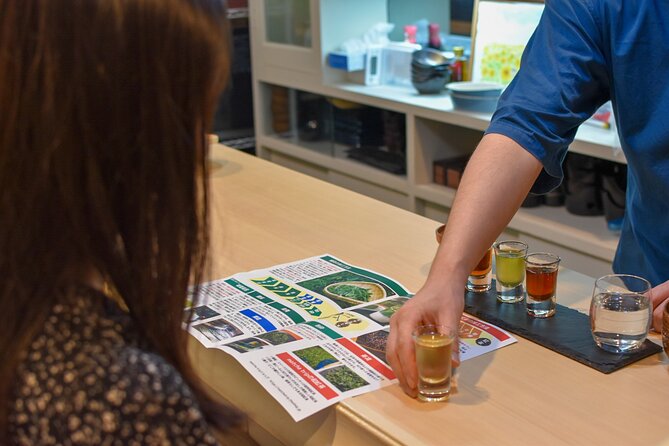
The class begins with a seasonal welcome drink. While you enjoy it, Chisei introduces the teas on the program and explains what you will be tasting.
This opening matters because Japanese tea names can become confusing quickly. Sencha, kabusecha, gyokuro, deep-steamed sencha, genmaicha, and hojicha all come from tea leaves, yet they can taste quite different. A short introduction helps you listen for those differences instead of treating every cup as another version of green tea.
The welcome drink is also a practical start in warm weather. One past participant specifically appreciated receiving a cold drink during a heat wave. The information provided does not specify what the seasonal drink will be, so you should expect that part to change.
2. Six teas compared side by side
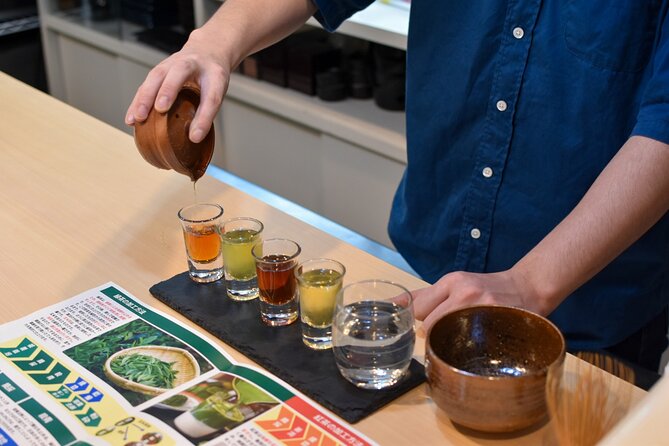
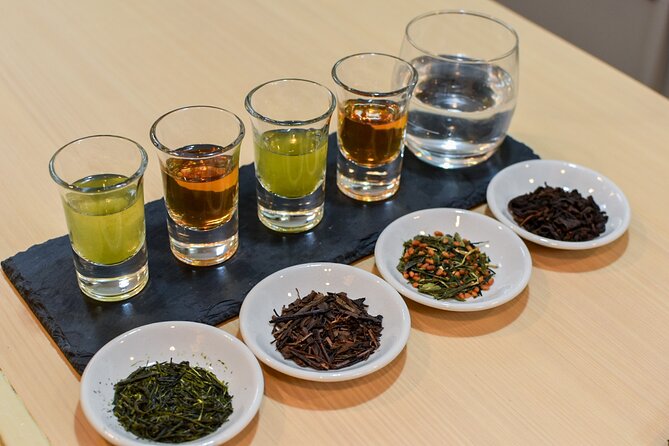
The core of the session compares six Japanese teas:
- Sencha
- Kabusecha
- Gyokuro
- Deep-steamed sencha
- Genmaicha, or brown rice tea
- Hojicha, or roasted green tea
The instructor first has you look at the dry leaves. Their color and shape offer clues about how the tea was grown and processed. Then the teas are prepared in ways intended to show their best qualities, and you consider color, fragrance, and taste.
This is where the class offers its best value. A standard café visit might give you one cup of matcha or hojicha, but it will not usually show you why gyokuro tastes so different from genmaicha. Here, the comparison is the point.
Kabusecha and gyokuro are especially useful to taste together because both are associated with shading before harvest. Deep-steamed sencha gives you another way to think about processing. Hojicha changes the conversation again: roasting produces a warmer, less grassy style. Genmaicha adds roasted brown rice to the tea, creating a familiar, nutty profile.
The tea names are not the only lesson. Chisei explains how cultivation choices and production methods shape the final drink. That makes the tasting useful after you leave Tokyo, since you will have a better idea what to order or buy.
The program description lists eight types of Japanese tea in total, while the tasting schedule identifies six teas in the main comparison, followed by Japanese black tea and matcha. The included items also mention seven varieties, two matcha types, and several lattes. The practical takeaway is simple: expect a broad tasting, not just one matcha bowl.
More Tea Tastings in Tokyo:
- Tokyo: Matcha Tasting and Making Experience
★ 4.9 · 21 reviews - Authentic Japanese tea tasting: sencha, matcha and gyokuro
★ 5.0 · 12 reviews - Authentic Japanese tea tasting session: sencha, matcha, gyokuro
★ 5.0 · 11 reviews - Private Tea Ceremony and Sake Tasting in Kyoto Samurai House
★ 5.0 · 163 reviews
Japanese black tea and sweets made at home
After the green tea comparison, you try Japanese black tea with homemade sweets prepared by Rina. Japanese black tea is not the first drink many people associate with the country, so this part helps widen your idea of Japanese tea culture.
The sweets are not an afterthought. They give you a way to see how tea changes with food. A bold or fragrant tea can taste different alongside a sweet biscuit or Japanese treat, and the pairing gives the session a welcome break after several cups of unsweetened tea.
Rina’s homemade sweets have received some of the strongest praise connected with this experience. One participant called them the best sweets of a Japan trip, while another highlighted the cookies and tea-leaf dish. Those comments point to a real strength: the food is personal and homemade, not a packaged snack added only to fill space.
There is also a small surprise here. The class may let you eat tea leaves with ponzu. That is an unusual use of the leaf and a memorable way to understand that brewed tea does not contain everything the leaf has to offer. Since food preparation can change, you should treat this as a possible part of the session rather than a guaranteed menu item.
If you have allergies, Chisei has been noted for asking about allergy conditions proactively. Still, you should share any dietary needs when booking or before the class. The supplied details do not provide a full ingredient list or promise substitutions.
Whisking your own ousucha
The final traditional step is making ousucha with a bamboo tea whisk. Ousucha is the thinner style of matcha commonly associated with a basic tea preparation.
Chisei demonstrates the process, then you make your own bowl. This is more useful than simply watching a formal ceremony because your hands learn the basic actions. You leave knowing how to use a whisk rather than only knowing how the finished drink looks.
The activity is presented as a matcha ceremony lesson, but you should set your expectations correctly. This is a compact class for general visitors, not a long study of every rule in a formal tea school. The emphasis is on understanding tea and learning a practical preparation method.
That suits most people visiting Tokyo. You get the cultural meaning of matcha without committing half a day to a highly formal ritual. The five-person limit should also make it easier to see the demonstration and get help with your own bowl.
A useful benefit is that the method can be repeated at home. The class is designed to leave you able to make matcha after returning to your own kitchen. Chisei also sells tea products, and some participants have bought matcha, gyokuro, or bowls to continue the habit. Any purchases are separate from the class price.
Matcha lattes and hojicha for a modern finish
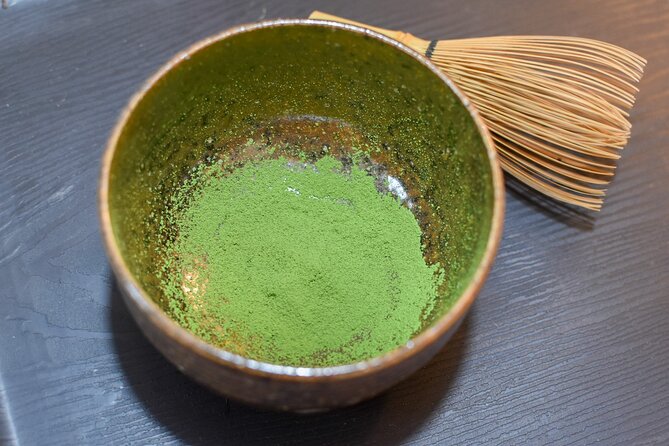
The tasting ends with matcha latte and hojicha latte options. The included information refers to two types of matcha and three kinds of matcha latte, along with hojicha latte.
These drinks are a smart addition for anyone who finds straight matcha too intense. A latte shows how the tea works in a sweeter, creamier format, while hojicha offers a roasted flavor that can appeal to people who do not enjoy grassy green tea.
For serious tea drinkers, the latte section may feel less important than the leaf comparison. For a mixed group, it is useful. One person can prefer a delicate green tea, another can favor roasted hojicha, and someone else can leave with a new favorite matcha latte.
The variety also makes this class suitable for people who say they do not like matcha. You are not asked to spend 90 minutes drinking one strong, bitter cup. The session presents several styles and flavor profiles, so you can find out what you actually enjoy.
Why the small group changes the experience
The maximum group size is five people. That is a major part of the value, not a minor booking detail.
In a large demonstration, you might hear a polished explanation but have little chance to ask about brewing, cultivation, or the difference between two teas. Here, the format allows for conversation. Past participants have described Chisei as patient and encouraging when answering detailed questions, which is useful if you are curious about farming or production rather than just tasting.
The small format also works well for couples, families, or a few friends. You can compare reactions as you taste, yet the session remains intimate. There is no indication that the class is private by default, so you may share it with other people unless your booking arrangement says otherwise.
The tradeoff is that a small class can feel more like a workshop than a grand cultural show. If you want a formal tea ceremony with elaborate robes, architecture, and strict etiquette, this is probably not the right choice. If you want to understand tea and practice making it, the informal format is a better fit.
Location, timing, and the setting in Taito City
The meeting point is matcha tripJapan at Henn Na Hotel in Taito City, Tokyo. The listed address is 3 Chome 19 8 Kotobuki, with the class held on the second floor at Sports Bar Leaf. The activity ends back at the same meeting point.
It is near public transportation, which helps when you are fitting the class into a busy Tokyo day. You should allow enough time to find the hotel and the second-floor venue, especially since the meeting point is not described as a dedicated tea house. A mobile ticket is accepted, and booking confirmation is provided at the time of reservation.
The sports bar setting is the main atmospheric compromise. It may feel less traditional than a tea room, garden, or old wooden house. On the other hand, the venue provides a practical indoor space for a tasting class, and the focus here is the instruction, the tea, and the hosts.
The session lasts only 90 minutes, so it pairs easily with sightseeing in Taito City or nearby parts of Tokyo. Since the activity returns to its starting point, you do not need to plan around a distant drop-off.
Is $57.98 a fair price?
At $57.98 per person, this is not the cheapest way to drink tea in Tokyo. You can buy a cup of matcha for far less. The question is what you are paying for.
The price covers instruction from a former tea farmer, a guided comparison of several Japanese teas, homemade sweets, matcha-making practice, and matcha and hojicha latte samples. You are also paying for a small group, with no more than five people, and for the chance to ask questions directly.
That makes the price reasonable if you want a hands-on cultural class rather than a café stop. It is less compelling if you only want a quick matcha drink or if you already have strong experience with Japanese tea and do not need guidance.
The broad selection also improves the value. You are not locked into one style, and the class may help you avoid buying an expensive tea that does not suit your taste. If you purchase tea or equipment afterward, remember that those items are additional.
Free cancellation is available up to 24 hours before the scheduled start. Cancellations or changes made inside that window are not refunded or accepted, so check your Tokyo plans before booking.
Who should book this tea class?
I would recommend it to you if you want a clear introduction to Japanese tea, especially if you like learning through comparison. It is also a good choice for couples or small groups with different levels of interest, since the range includes traditional teas, matcha, and modern lattes.
It suits curious beginners particularly well. You do not need to know the difference between gyokuro and sencha before arriving. Chisei’s farming background gives the class useful substance, while the tasting and sweets keep it relaxed.
Tea fans will appreciate the chance to compare shaded teas, roasted tea, deep-steamed sencha, and Japanese black tea in one sitting. People with strict dietary needs should ask about ingredients in advance, since the class includes homemade sweets and the available details do not list every component.
I would skip it if your priority is a formal tea ceremony in a historic setting. The sports bar venue is functional, and the class is educational and hands-on rather than ceremonial in a grand sense.
Should you book the Matcha Experience?
Book this experience if you want to understand what is in your cup, not just photograph a bowl of green tea. Chisei’s six years as a Kyoto tea farmer, the small group, the six-tea comparison, and the chance to whisk your own matcha give the class real substance.
The homemade sweets from Rina and the tea leaves with ponzu add personal touches you are unlikely to get from a standard café visit. The setting is not traditional, and $57.98 is more than the cost of a drink, but the session offers a compact lesson, tasting menu, and practical skill in one package.
For a first or second visit to Tokyo, I consider it a strong choice for an authentic, friendly look at Japanese tea culture.
FAQ
Where does the matcha experience take place?
The class meets at matcha tripJapan, inside Henn Na Hotel at 3 Chome 19 8 Kotobuki in Taito City, Tokyo. The activity is held on the second floor at Sports Bar Leaf.
How long does the experience last?
The experience lasts approximately 90 minutes.
How many people can join the class?
The maximum group size is five people.
Who teaches the tea class?
Chisei teaches the class. He previously farmed tea in Kyoto for six years. Rina, his wife, helps host the experience and prepares homemade sweets.
Which Japanese teas are included?
The program includes sencha, kabusecha, gyokuro, deep-steamed sencha, hojicha, genmaicha or brown rice tea, and Japanese black tea. The experience also includes matcha.
Do I get to make my own matcha?
Yes. You make ousucha, a thin style of matcha, using a bamboo tea whisk.
Are food and drinks included?
Yes. The experience includes multiple Japanese teas, matcha, matcha latte and hojicha latte options, plus homemade sweets.
Is the experience accessible by public transportation?
Yes. The meeting point is near public transportation.
Can I cancel for a full refund?
Yes, if you cancel at least 24 hours before the experience start time. Cancellations or changes made less than 24 hours before the start are not refunded or accepted.
More Food and Drink Tours in Tokyo
- Experience all of Japanese culture and Japanese food experience classes “origami, udon, Japanese food, green tea, calligraphy” in 4 hours
★ 5.0 · 105 reviews - Tokyo Sushi Making Class : Sake Ceremony & Matcha Experience
★ 5.0 · 44 reviews - Kimono and Tea Ceremony in Asakusa Private Food Tour With Guide
★ 5.0 · 4 reviews - Arashiyama Bamboo, Temple, Monkeys, or Secret Sake Brewery
★ 4.8 · 886 reviews
Just added around Tokyo
- Yokohama : Tea Ceremony with Sweets and Souvenir★ 5.0 · 5 reviews
- Walking Tour: Yanaka,Nezu& Sendagi: Tea Ceremony & Old Tokyo★ 5.0 · 3 reviews
- 2 Hours Mochi &Nerikiri Making & Matcha Class in Bunkyo★ 5.0 · 21 reviews
- Private Kimono and tea ceremony at local home near Tokyo Disney★ 5.0 · 6 reviews
- Private Mochi・Matcha sweets Making Class Near Shibuya Area★ 5.0 · 22 reviews
- Tokyo Sweets Tour: Hidden Gems & Matcha at an Old Tea House★ 5.0 · 6 reviews
- Giant Sushi Cooking Class: Make a 1.5m Sushi Roll in Tokyo★ 5.0 · 9 reviews
- Tokyo Tea Ceremony Class at a Traditional Tea Room★ 5.0 · 2 reviews
Matcha Experiences, compared.
World Heritage Kyoto & Nara Uji Authentic Matcha Experience
Read our review →
Matcha Making Class in Tokyo with Authentic Japanese Sweets Set
Read our review →
Tea Museum Tickets and Matcha Grinding Experience
Read our review →
Matcha Making Class in Osaka with Authentic Japanese Sweets Set
Read our review →
Tea Ceremony Meditation – Make Matcha with Tea Master
Read our review →
Matcha Making Experience with Mochi Sweets in Asakusa
Read our review →
Browse the lists this tour appears in