
Review · INDIA
Authentic Samosa & Masala Chai making Class
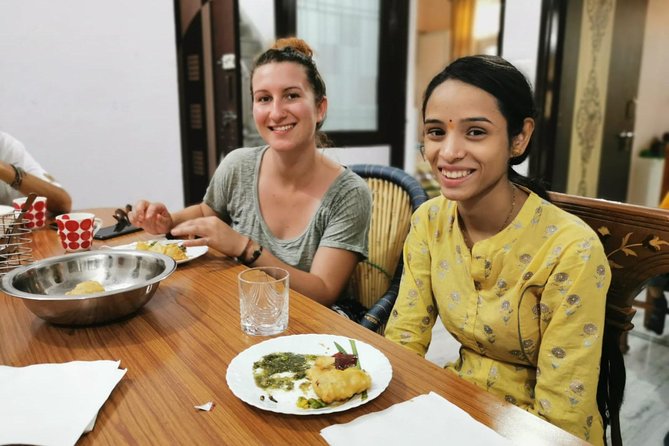
The best part of this Jaipur experience is that the cooking happens in a family home, not a formal cooking school. You learn to make samosas, green chutney, and masala chai from the beginning, with the hosts explaining the spices, herbs, and techniques as you work.
I like the hands-on format, especially for anyone who has tried making samosas and struggled with them before. I also like the small maximum group of eight, which should give you room to ask questions and get help with shaping, filling, and cooking.
The main point to consider is the location. The class is in south Jaipur, away from the city center, and private transportation is not included. You will need to arrange your own way to Kunsh Villas, so allow extra time for the journey.
Key points at a glance
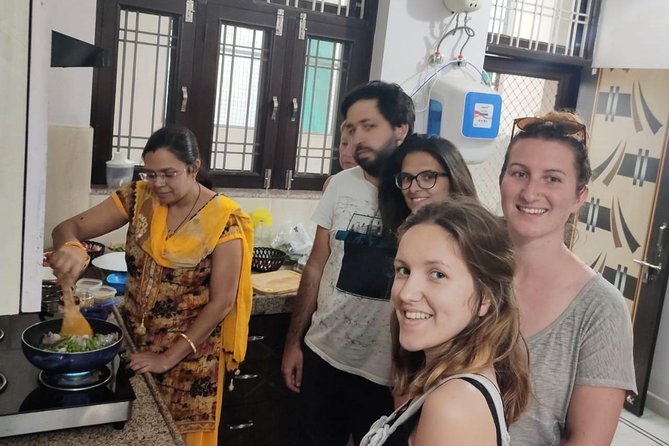
- Cook in a Jaipur family home: The class takes place where the hosts have lived for years, giving the meal a personal setting.
- Make samosas from scratch: Learn the dough, filling, shaping, and cooking process rather than simply watching a demonstration.
- Prepare green chutney: The sauce is made as part of the class, adding a useful second recipe to take home.
- Learn masala chai: Spices and tea preparation are covered alongside the savory dishes.
- Small group of up to eight: The size should make it easier to ask questions and receive practical cooking help.
- About two and a half hours for $25: The price is reasonable for a hands-on class with food, drinks, and local conversation included.
Cooking samosas in a lived-in Jaipur home
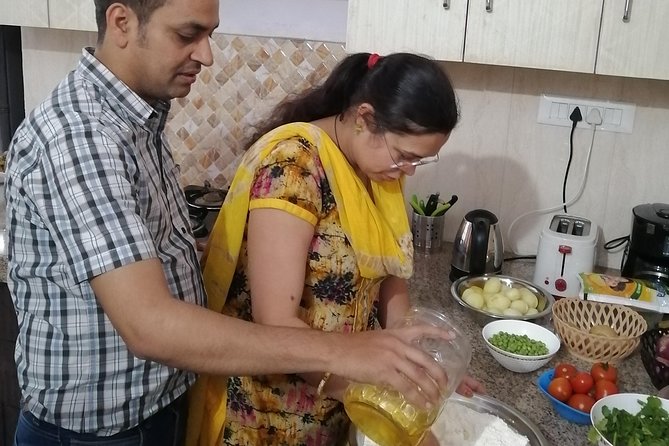
This is a food class with a strong sense of place. Instead of entering a restaurant kitchen or a studio designed for tourists, you go to a family home in the south part of Jaipur. The hosts have lived there for years, and they use the setting to explain not only recipes but also parts of Indian daily life and food culture.
That difference matters. A formal cooking school may offer polished instruction, but a home setting can make the experience feel more relaxed and personal. You are likely to spend less time watching a performance and more time asking practical questions about ingredients, preparation, and how the food fits into Indian meals.
The class is vegetarian throughout. That keeps the menu focused and makes it suitable for people who specifically want to learn Indian vegetarian snacks. You should still tell the host about allergies or dietary restrictions before the class. It is your responsibility to check the ingredients being used, though dietary needs can be accommodated if requested in advance.
More Workshops in India:
- Chai Master Class in an Authentic Indian Home with Food
★ 5.0 · 26 reviews - Chai Master Class – Savor Food in an Indian Family Home
★ 5.0 · 17 reviews - Kyoto: 45-Minute Tea Ceremony Lesson Experience
★ 4.3 · 2,378 reviews
The first lesson: spices, herbs, and ingredients
The class begins with an introduction to the ingredients used in the recipes. This is a useful start because samosas and masala chai depend on the balance of spices as much as on the basic cooking steps.
You will be introduced to the herbs and spices before the main preparation begins. The hosts also use this time to answer questions about Indian food culture, which gives you a chance to connect the ingredients with familiar dishes and cooking habits.
I would pay close attention here, especially if you want to repeat the recipes at home. Ask about substitutions, how strongly to season the filling, and which ingredients are essential. The supplied information does not provide a full ingredient list, so this is the right moment to make your own notes.
The hosts describe Indian food culture as more than 5,000 years old. That is broad cultural context rather than a formal history lesson, but it helps explain why spices, snacks, tea, and shared food play such an important role in everyday life.
Making the samosa dough and filling
The central project is the vegetarian samosa. You learn to prepare it from scratch, which means the class goes beyond buying ready-made pastry and filling it.
The practical challenge is usually the pastry. If the dough is too dry, it can be difficult to shape. If it is too soft, the samosa may not hold its form during cooking. The hands-on format lets you practice these small but important details with help from the hosts.
You should expect to work through the process rather than simply receive a finished recipe. The class covers the cooking techniques used for the samosas, and the small group size should make it easier to see how the dough is handled and how the filling is placed.
One particularly useful point is that the class can help correct mistakes you may have made at home. A published experience note came from two people who had tried making samosas before but had not had much success. After practicing the process in class, they felt more prepared to try again at home. That makes this a good choice if you want technique, not just a pleasant snack.
The exact filling ingredients are not specified, so do not expect to arrive knowing every dish detail in advance. Instead, think of the class as a chance to learn a method that you can later adapt.
Green chutney made from the beginning
The chutney is not an afterthought. You prepare the green sauce from the start as part of the class, giving you a second recipe to remember.
Green chutney brings freshness and spice to a fried samosa, and learning to make it helps you understand how Indian snacks are served. It also gives you a useful home recipe because chutney can be paired with other vegetarian snacks and meals.
I would ask the host how long the chutney keeps and what changes when you make it less spicy. Those details are not provided in advance, but they are exactly the sort of practical questions that make a cooking class worthwhile.
The pairing of samosa and chutney is one of the strongest parts of the menu. You are not simply learning one item in isolation. You are preparing the snack and the sauce that completes it.
Same place, a different pot:
- Munnar Tea Trail Tour with Factory Experience ( By Munnar Info)
★ 5.0 · 458 reviews - Village Vibes: Cansaulim Coastal E-Bike & Japanese Tea Tour
★ 5.0 · 292 reviews - Munnar Tea valley Tour ( By Munnar Info)
★ 5.0 · 83 reviews - Tea planation walking In Munnar- (by Munnar Info)
★ 5.0 · 53 reviews
Masala chai and a pause at the table
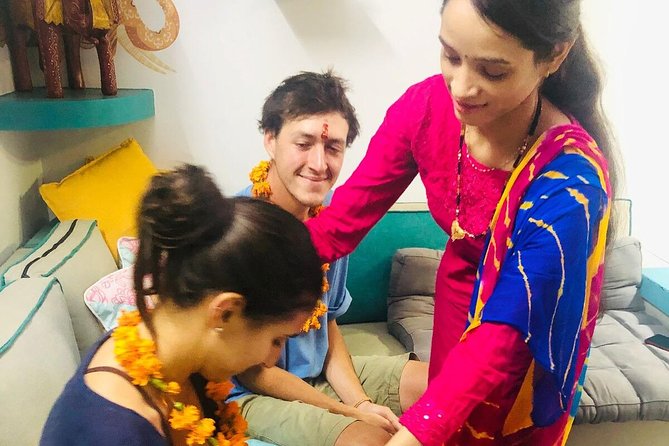
Masala chai is the drink component of the class. You learn how the tea and spices come together, alongside the savory cooking.
This part should appeal to anyone who wants a simple Indian recipe that can become part of a daily routine. Chai is familiar to many visitors, but preparing it yourself gives you a better sense of the spice balance and cooking method.
Coffee and tea are included, and purified bottled water is available. The information does not specify the exact chai spice blend, sweetness level, or milk method, so ask questions during the preparation if you want to recreate it accurately.
The class also includes Mathari, a vegetarian snack, in addition to samosas, chutney, and drinks. The menu therefore offers more than one finished item, although the samosa remains the main hands-on focus described for the class.
A small group makes the cooking easier
The maximum group size is eight people. That is not a private class, but it is still small enough to feel more personal than a large demonstration.
A group of this size matters when you are shaping dough or trying to understand a cooking technique. You should be able to watch the host, then try the step yourself without being lost in a crowd. It also gives the class a social side, since you are sharing food and conversation in a home.
The hosts describe themselves as modern and open-minded. They welcome questions, so this is a good setting if you want to ask about Indian lifestyle, vegetarian cooking, or the role of snacks and tea in daily life.
A home class can also feel less predictable than a standard commercial activity. The atmosphere may be informal rather than highly staged. For some people, that is the point. If you prefer a strict timetable, printed recipes, and professional kitchen equipment, you may find the setting more basic than expected.
What the $25 price includes
At $25 per person, the class offers reasonable value if you want to participate rather than only eat. You receive about two and a half hours of instruction, hands-on preparation, vegetarian food, green chutney, Mathari, tea or coffee, and purified bottled water.
The value comes from the time and access. You are paying for instruction in a private home, the chance to practice the recipes, and conversation about Indian food culture. A short snack stop would cost less, but it would not teach you how to make the food yourself.
The price does not include private transportation. That is the main extra cost to plan for, especially if you are staying in central Jaipur. The meeting point is Kunsh Villas, D-42, Surya Nagar, Taro Ki Koot, near the B2 Bypass on Tonk Road, in Taron Ki Koont, Jaipur, Rajasthan 302029.
The class ends back at the meeting point. If you are arranging a taxi or ride service, plan your return from the same address rather than assuming the host will take you elsewhere.
Getting to the meeting point in south Jaipur
The address is specific, but the class does not include transportation. You should confirm the route and allow time to reach the south Jaipur neighborhood before the start time.
This is one reason I would avoid scheduling the class too tightly between major sightseeing plans. Jaipur traffic and road distances can affect your timing, and arriving late could cut into the preparation time. The booking confirmation is provided at the time of booking, so keep the exact meeting details available.
Mobile ticketing makes the activity easy to carry with you, but it does not replace checking the address carefully. Show the meeting information on your phone and confirm that your driver has the complete location, including the nearby B2 Bypass and Tonk Road references.
If you want a different date or time, you can contact the host directly to ask. Custom menus and private classes may also be possible if arranged in advance, but they should not be assumed as part of the standard booking.
Who will enjoy this class most
I would recommend this experience to anyone who wants to learn a recipe they can use after returning home. It suits couples, friends, solo visitors, and families who enjoy cooking together and asking questions.
It is especially useful if you have attempted samosas before and found the dough or shaping difficult. The class gives you the chance to practice with guidance instead of relying on a written recipe alone.
Vegetarians will find the menu straightforward, and people seeking vegetarian Indian food will appreciate that the entire meal is meat-free. People with allergies or dietary restrictions can ask for adjustments, but they should communicate those needs before the class and confirm the ingredients directly with the host.
This may not be the best pick if your main goal is a broad survey of many Indian dishes. The menu is centered on samosas, chutney, chai, and Mathari. It is focused rather than extensive, which is useful for learning but less suitable if you want a large cooking syllabus.
Booking, cancellations, and practical planning
Confirmation is provided at the time of booking, and the class accepts a maximum of eight participants. Free cancellation is available if you cancel at least 24 hours before the start time.
A cancellation within 24 hours is not refundable, and changes made during that period are not accepted. The cut-off follows local Jaipur time, so check the timing carefully if you are booking from another time zone.
I would contact the host before the class with any food concerns, requests for a custom menu, or interest in a private session. Early communication is particularly important for dietary adjustments.
Should you book the Jaipur samosa class?
Book it if you want personal instruction in a home setting, a manageable two-and-a-half-hour schedule, and recipes you can try again at home. The combination of samosa technique, green chutney, and masala chai gives you a useful little menu for $25.
The strongest reason to choose it is the hands-on practice. You are not just tasting Jaipur snacks. You are learning how to prepare them, with room to ask questions and correct the small mistakes that often ruin homemade samosas.
Think twice if south Jaipur is inconvenient or if you expect private transportation, a professional teaching kitchen, or a long list of dishes. For everyone else, this is a focused and fairly priced food experience that connects a practical recipe with life in a Jaipur home.
FAQ
Where does the samosa and masala chai class take place?
The class takes place in a family home at Kunsh Villas, D-42, Surya Nagar, Taro Ki Koot, near the B2 Bypass on Tonk Road, Taron Ki Koont, Jaipur, Rajasthan 302029, India.
How long does the cooking class last?
The class lasts approximately 2 hours and 30 minutes.
What food will I learn to prepare?
You will learn to make vegetarian samosas, green chutney, and masala chai. Vegetarian Mathari is also included among the snacks.
Is the class vegetarian?
Yes. All food prepared for the class is vegetarian.
Is transportation included?
No. Private transportation is not included. The activity begins and ends at the listed meeting point.
How many people can join the class?
The activity accepts a maximum of eight participants.
Can I cancel for a full refund?
Yes, if you cancel at least 24 hours before the experience start time. Cancellations made less than 24 hours in advance are not refundable, and changes during that period are not accepted.
Just added around India
- Varanasi: Sunrise walking tour with Chai & Arti Ceremony★ 4.4 · 9 reviews
- Varanasi: Sunrise Boat Ride with Masala Tea – Arti Ceremony★ 4.5 · 4 reviews
- Heritage Tour : Private Boat, Havelis, City Walk & High Tea★ 5.0 · 6 reviews
- Full Day Food Tour Of Delhi with a chef. Includes Tea Tasting★ 5.0 · 20 reviews
- The Old Delhi Sundowner – Kite Flying and High Tea★ 5.0 · 4 reviews
- Tea Tasting Session at India’s oldest tea boutique Sancha Tea/Aap Ki Pasand★ 5.0 · 4 reviews
- High Tea At The Atrium Restaurant, Imperial Hotel, New Delhi★ 5.0 · 16 reviews
- Tea Farm Tourism★ 5.0 · 8 reviews
Workshops, compared.

Matcha Making Class in Tokyo with Authentic Japanese Sweets Set
Read our review →
Traditional English Scone Making and Tea Workshop
Read our review →
Matcha Making Class in Osaka with Authentic Japanese Sweets Set
Read our review →London Traditional English Scone Making and Tea Workshop
Read our review →
Tea Ceremony Workshop in Tokyo by the Experienced Instrucor
Read our review →
Browse the lists this tour appears in