
Review · KYOTO
Kyoto: 45-Minute Tea Ceremony Lesson Experience
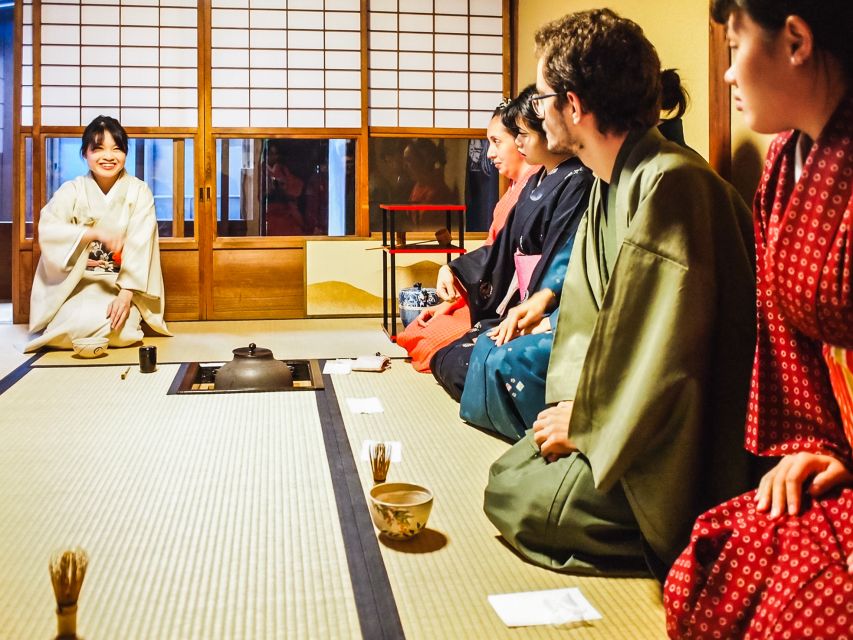
The most interesting part of this 45-minute Kyoto tea ceremony is that it teaches the formal version of the ritual rather than a quick tourist demonstration. You sit on tatami, watch a licensed Urasenke tea master prepare matcha, then make tea yourself while learning why each movement matters.
I like the calm setting near Kinkakuji Temple, and I like the chance to taste two kinds of Japanese green tea with traditional sweets. The main thing to consider is the pace: 45 minutes goes quickly, especially if you arrive late or choose the kimono option.
- Learn by doing: Watch the full preparation, then whisk your own matcha.
- Urasenke instruction: Your host belongs to Japan’s largest tea ceremony school.
- Two tea flavors: Compare green teas and see how preparation affects taste.
- Three formats: Choose a private, public, or candlelight ceremony.
- Kimono add-on: Arrive 20 minutes early to dress and take photos.
- Kinkakuji location: The tea house is one minute from the temple gate and bus stop.
A Formal Tea Lesson Near Kinkakuji
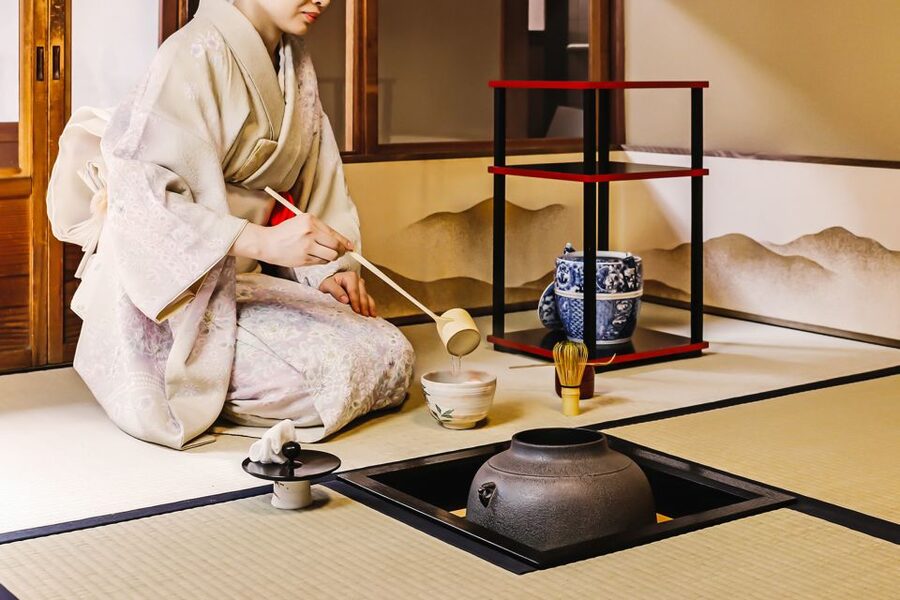
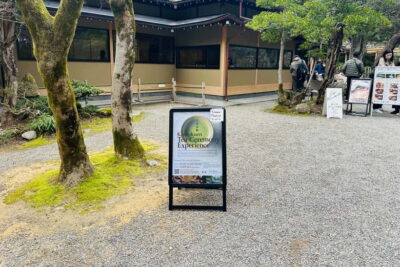
Tea Ceremony Koto is close to Kyoto’s famous Kinkakuji, the Golden Pavilion. Enter through the sliding door with the orange curtain, next to the bicycle parking area if you are coming from the temple.
The location is practical for a day built around Kinkakuji. The Kinkakuji-Michi city bus stop is about a minute away, and buses 204 and 205 connect the area with Kitaoji Subway Station and JR Enmachi in roughly 10 to 15 minutes.
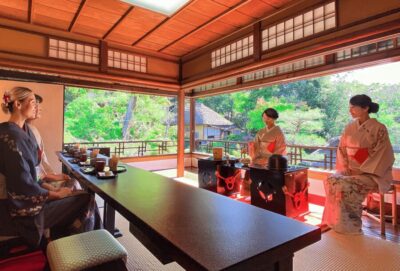
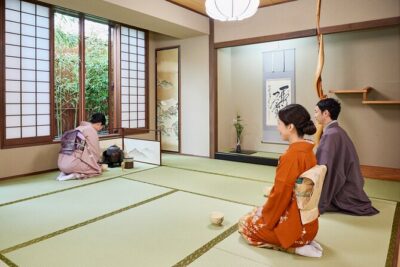
The room uses tatami, the traditional woven floor mat. You sit in the Japanese style, though chairs can be provided if sitting on the floor is difficult. There is no dress code, so you can arrive in ordinary sightseeing clothes. Comfortable clothing is sensible, especially if you plan to add a kimono.
The host teaches in English and Japanese. Some instruction is detailed and formal, which is part of the point. This is not a quick photo stop with a cup of matcha added at the end. You are expected to learn basic manners and follow the rules of the ceremony.
Watching the Tea Master Prepare Matcha
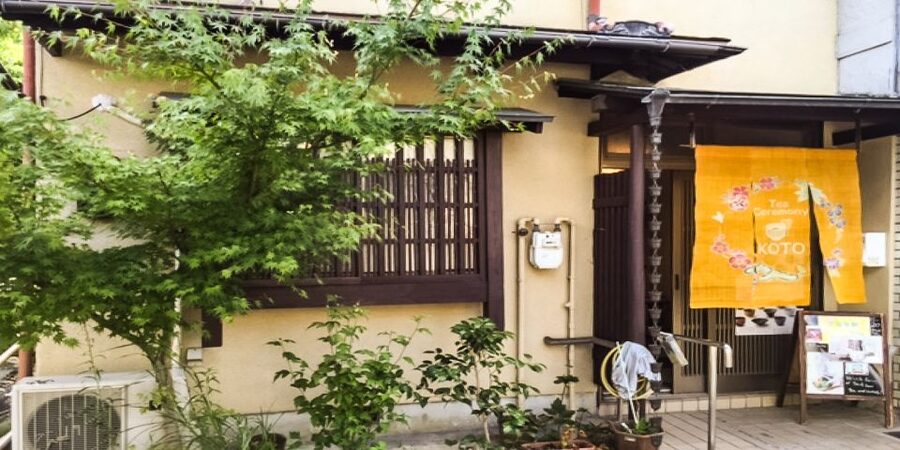
The session begins with a demonstration. Your host carries out the ceremonial preparation of powdered green tea, showing the order of the actions and the careful handling of the bowl, scoop, whisk, and tea.
The movements are precise, but they are not empty decoration. The host explains the history and spiritual role of tea ceremony, along with the purpose behind the gestures. You also learn how different preparation methods change the flavor of the tea.
This is where the lesson earns its low price. At about $22 per person, you are not simply paying for a sweet and a cup of tea. You receive a short cultural lesson from a licensed teacher connected with Urasenke, the largest school of tea ceremony in Japan.
The English instruction is generally easy to follow. One past session with a host named Joseph was praised for being friendly and helpful, while other sessions are led by female tea masters. Since the teacher sets the mood, you should expect a serious, respectful tone rather than a loud or playful show.
More Tea Ceremony Experiences in Kyoto:
- Kyoto: Tea Ceremony in a Traditional Tea House in Kiyomizu
★ 4.9 · 3,519 reviews - Kyoto: Tea Ceremony Ju-An at Jotokuji Temple
★ 4.9 · 3,207 reviews - Kyoto: Table-Style Tea Ceremony at a Kyo-Machiya
★ 4.9 · 1,211 reviews
Making Your Own Tea on Tatami
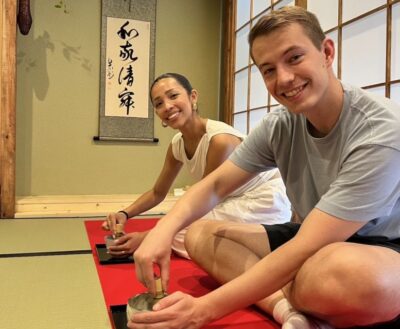
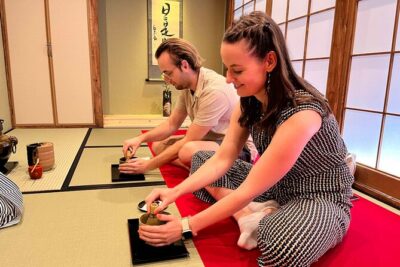
After watching the demonstration, you get to prepare matcha yourself. The host guides you through the process and explains what to say and how to handle the tea properly.
This hands-on part is the heart of the experience. You quickly see why tea ceremony is treated as an art. A small change in whisking, water, or method affects the texture and taste, and the teacher explains those differences as you work.
You do not need previous knowledge. The lesson is designed for people beginning to study Japanese tea culture, but you should pay attention to the basic rules. Tea Ceremony Koto asks participants to watch a short guide about what not to do before arriving. That preparation matters because the ceremony follows Japanese customs rather than a simplified routine designed only for foreign visitors.
The no-video rule also fits the setting. You may take photos after the ceremony, but video recording is not allowed. This keeps phones from taking over the room and lets you focus on the demonstration. If you want photos in a kimono, save them for the closing portion.
Matcha, Sweets, and the Taste of Ceremony
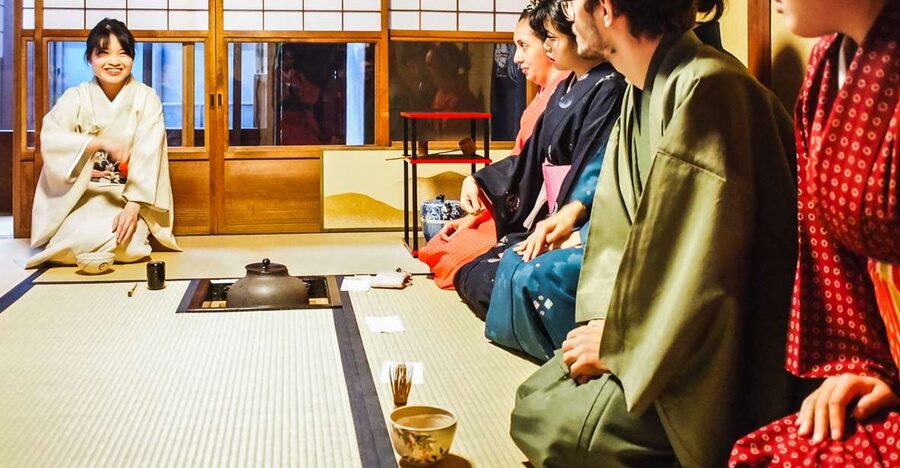
The booking includes two flavors of Japanese green tea and traditional Japanese sweets. The sweets are not just a snack. In a tea ceremony, their sweetness helps prepare your mouth for the slightly bitter taste of matcha.
If you normally avoid matcha, give this a fair try. The quality and preparation can make the tea smoother and more pleasant than the powdered green tea served in a casual café. One participant who usually disliked matcha found the tea notably smooth and sweet.
You will also learn how to drink the tea according to ceremony etiquette. The point is not to pretend that you have become a tea master in 45 minutes. The point is to understand the small acts of respect that shape the occasion.
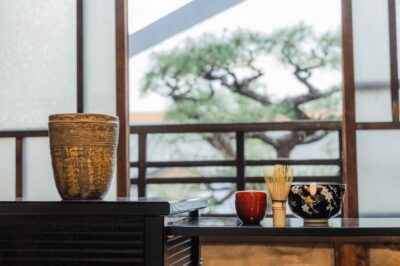
The serving bowls and other objects receive attention, too. The pottery, textiles, and clothing are part of the visual language of the room. The teacher may explain the ceramics used for drinking, giving you a better sense of how tea ceremony joins food, craft, dress, and movement.
Choosing Private, Public, or Candlelight
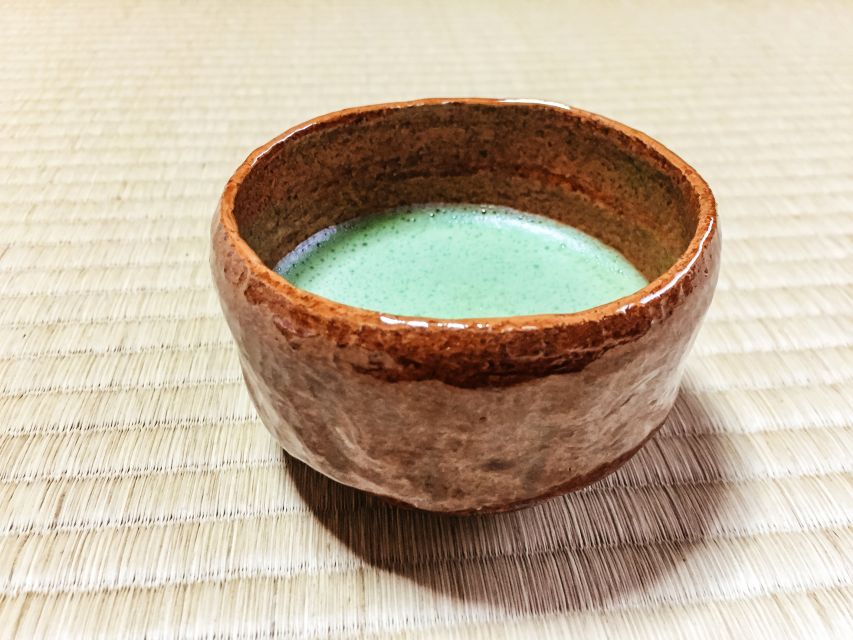
You can select the atmosphere that suits your group.
A private ceremony gives you and your party the room to yourselves. This is the best choice if you want more direct attention, have children or older family members who may need extra help, or prefer a quiet occasion for two.
The public ceremony places you with a small group. It is a more sociable choice and resembles the way Japanese beginners might learn together. You may have less individual time with the teacher, but the shared format keeps the cost low and gives the session a friendly classroom feel.
The candlelight ceremony takes place after sunset and uses traditional candlelight. This changes the mood considerably. The room becomes quieter and more atmospheric, and the ceremony feels closer to an old Kyoto setting than a daytime lesson in a busy sightseeing schedule.
Candlelight also works well with the kimono add-on. Families have used this combination for a special evening, and couples may prefer it for a more intimate setting. Do remember that the tea ceremony itself remains serious and quiet. Candlelight adds atmosphere, not a theatrical performance.
The taxi detail is worth planning around. Calling a taxi immediately after the session can be difficult because local taxi companies may not answer right away. A large taxi stand is in front of the activity location and usually opens around 5:30 p.m., so plan your onward transport rather than relying on a last-minute phone call.
More Workshops in Kyoto:
- Private Kyoto Sushi Cooking Class & Tea Ceremony with Emika
★ 5.0 · 66 reviews - Sencha-do the Japanese Tea Ceremony Workshop in Kyoto
★ 5.0 · 21 reviews - Nerikiri and Matcha Making Class in Kyoto
★ 5.0 · 13 reviews - Matcha Making Class in Tokyo with Authentic Japanese Sweets Set
★ 5.0 · 744 reviews
Adding a Kimono and Nishijin Textiles
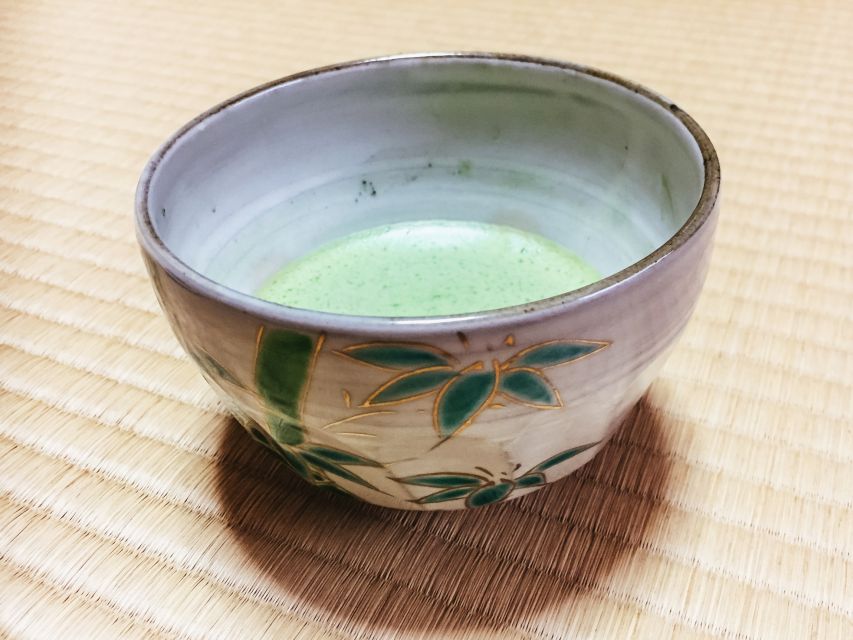
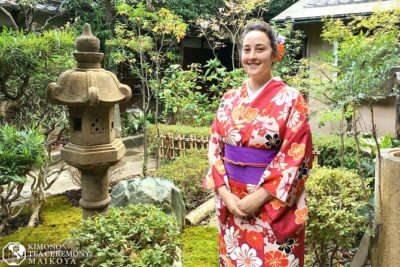
A kimono is optional and must be reserved in advance. If you choose it, arrive 20 minutes before the tea ceremony begins. The host helps you put it on, and you have time to take photos during the closing portion.
The dressing adds visual impact, but it also takes time. Because the main class lasts only 45 minutes, arriving early is essential. You cannot count on adding a kimono when you arrive because the clothing appointment needs to be arranged ahead of time.
After the ceremony, you can see examples of kimonos and woven textiles from Nishijin, Kyoto’s famous textile district. This gives the clothing more context. You are not just putting on a costume for a picture. You are seeing the kind of textile craft associated with Kyoto’s traditional culture.
The add-on is especially useful if you want a keepsake photo. Hosts have taken pictures for participants, and photos are permitted even though video is not. Hair setting is not included, so arrange that separately if it matters to you.
How the Timing Affects the Experience
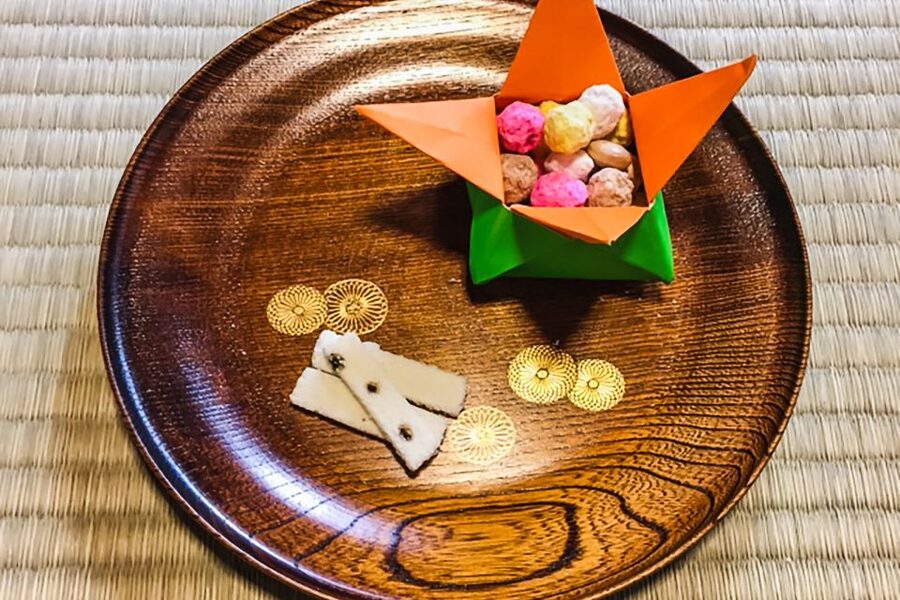
Forty-five minutes is enough to learn the basic flow, prepare your own tea, taste the drinks and sweets, and ask a few questions. It is not enough for a slow, extended tea gathering with long pauses.
That short format is helpful on a packed Kyoto day. You can visit Kinkakuji before or after the lesson without giving up half a day. It also keeps the cost down. At $22, the price is unusually friendly for a formal cultural activity led by a licensed teacher.
The tradeoff is that the beginning and ending can feel brisk. If you are changing into a kimono, taking photos, and asking many questions, the clock moves fast. Arrive early, especially for the kimono option, and keep your questions focused.
Late arrival is risky. Some hosts have allowed people who arrived three to seven minutes late to join, but you should not plan on that courtesy. Missing the opening demonstration means missing the explanation of the ceremony’s basic rules.
Who Will Appreciate This Tea Ceremony
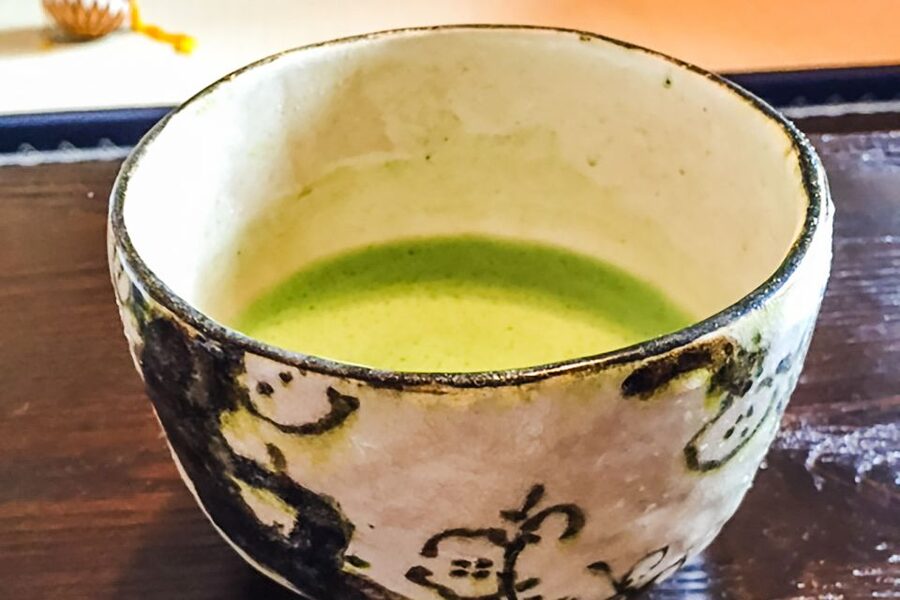
This experience suits you if you want to understand Japanese culture rather than simply take a picture holding a tea bowl. The teacher explains the history, spirit, etiquette, tools, and preparation, giving the ceremony a clear framework.
It also works well for first-time visitors to Japan. You do not need to know Japanese, and English instruction is available. The host demonstrates each step before asking you to take part.
Families can choose a private group for closer support. Older relatives may request chairs if sitting on tatami is uncomfortable. Children who can remain quiet and follow instructions may enjoy the hands-on part, though the formal atmosphere may not suit very young children who need to move around.
The experience is less suitable if you want a casual, chatty tasting or a fast photo session. The teacher expects respect for the ritual. You should be ready to sit quietly, listen, and follow directions.
It is also a good pick for anyone who has already visited temples and gardens and wants a different side of Kyoto. Instead of looking at traditional culture from outside, you learn a small part of it through your own actions.
Booking, Arrival, and Practical Tips
The entrance is through the sliding door with the orange curtain. From Kinkakuji Temple, look beside the bicycle parking area near the gate. From the Kinkakuji-Michi bus stop, the walk is about one minute.
Book the kimono in advance and arrive 20 minutes early. For the regular session, arrive with enough time to find the entrance and settle before the lesson starts.
You can cancel up to 24 hours before the start for a full refund, and the reserve-now, pay-later option gives you some flexibility while arranging your Kyoto schedule. Starting times vary, so check availability for the day you want.
Before visiting, read the supplied etiquette guidance and watch the short instructional videos about what not to do. That small bit of preparation will make the lesson more comfortable and help you avoid accidental mistakes.
Plan transport after the session. The nearby taxi stand is useful, but it generally opens around 5:30 p.m. If you finish earlier, use the city bus or arrange your next stop before you arrive.
Should You Book Tea Ceremony Koto?
Book it if you want a traditional, hands-on lesson at a low price, especially if Kinkakuji is already part of your Kyoto plans. The strongest features are the licensed Urasenke instruction, the chance to make your own matcha, and the clear explanation of why each gesture matters.
Choose the private option for personal attention, the public option for a small shared class, or candlelight for a quieter evening mood. Add the kimono if photographs and clothing are important to you, but arrive early and remember that dressing is not included in the 45-minute lesson itself.
Skip it if you want a loose, entertainment-first activity or dislike sitting quietly on tatami. For everyone else, this is a useful and affordable way to learn what lies behind the familiar bowl of matcha.
FAQ
How long does the tea ceremony experience last?
The tea ceremony lesson lasts 45 minutes.
How much does the experience cost?
The listed price is $22 per person. A kimono can be selected as an additional paid option.
Is the tea ceremony taught in English?
Yes. Instruction is available in English and Japanese.
Can I make my own matcha?
Yes. You first watch the tea master prepare matcha, then make tea yourself while learning the correct methods and manners.
What is included?
The experience includes two flavors of Japanese green tea and traditional Japanese sweets.
Is a kimono included?
No. A kimono is an optional add-on that must be reserved in advance. You should arrive 20 minutes early if you select it.
Can I take photos or record video?
Photos are allowed, especially after the ceremony. Video recording is not allowed.
Can I sit on a chair instead of the tatami?
Yes. If sitting on the floor may be difficult, inform the supplier so chairs can be provided.
How do I reach the meeting point?
The tea house is a one-minute walk from the Kinkakuji-Michi city bus stop and about a one-minute walk from the gate of Kinkakuji Temple. Buses 204 and 205 take about 10 to 15 minutes from Kitaoji Subway Station or JR Enmachi.
Just added around Kyoto
- Whisk Your Own Matcha: A Zen Matcha Experience at Temple★ 3.6 · 7 reviews
- Uji Walking Tour – Byodo-in temple and Tea Ceremony from Kyoto★ 3.5 · 3 reviews
- Traditional Tea Ceremony in Kyoto★ 4.5 · 3 reviews
- Kyoto: Authentic Tea Ceremony in a Small Group★ 5.0 · 7 reviews
- Tea ceremony at Kyoto’s Zen Temple Teahouse★ 5.0 · 2 reviews
- Tea Ceremony in 150 Years Old Townhouse with Tables and Chairs★ 5.0 · 22 reviews
- Silent Beauty of Kyoto Zen Walk and Tea Experience★ 5.0 · 2 reviews
- Tea Ceremony Experience in Traditional Kyoto Townhouse★ 5.0 · 19 reviews
Tea Ceremony Experiences, compared.
Tea Ceremony in a Traditional Tea House in Kiyomizu
Read our review →
Browse the lists this tour appears in