
Review · THAILAND
7 Wonders of Chiang Rai: Temples, Tea, and Golden Triangle
Chiang Rai’s most memorable sights do not all fit one mold. In a single day, you move from the glittering White Temple to the shadowy Black House, then on to tea fields and the meeting point of Thailand, Laos, and Myanmar. It is an unusually varied introduction to the province.
I like the mix of art, religion, rural culture, and regional history. I also like the small group size, limited to 10 people, and the fact that Thai lunch, drinking water, transport, and insurance are included. The tradeoff is the pace: with seven major stops and a return around 6:30 to 7 p.m., this is a full day with plenty of time in a van.
Key points to know before booking
- Three very different art sites: Compare the White Temple, Blue Temple, and Black House rather than treating them as interchangeable temple stops.
- A long northern Thailand day: Pickup runs from 8 to 8:30 a.m., with the tour ending around 6:30 to 7 p.m.
- Tea with mountain views: Choui Fong Tea Plantation offers a calmer break, fresh tea, and tea-based desserts.
- Extra admission fees apply: The four optional admissions total 530 baht if you pay for all of them.
- The Golden Triangle is more than a photo stop: The nearby House of Opium Museum gives useful context about the old opium trade.
- Best for curious adults: The schedule suits people who want variety and can manage a long day with repeated walking and sightseeing.
Why this Chiang Rai day trip works
At $41 per person, this tour offers a lot of coverage for one day. You get pickup and drop-off within 3 kilometers of central Chiang Rai, an English-speaking guide, a Thai lunch buffet, drinking water, and travel insurance. The small group format should also make it easier to hear explanations and keep the day moving.
The advertised price does not include admission to four stops. Wat Rong Khun costs 100 baht, Baan Dam Museum costs 80 baht, Long Neck Karen Village costs 300 baht, and the House of Opium costs 50 baht. Paying for everything adds 530 baht, so keep cash or a card handy. You may skip any attraction and its fee, but skipping several stops changes the value of the day.
The schedule is carefully packed. There is roughly 30 minutes of driving at the start, then a series of visits, lunch, and an 80-minute return drive. That layout lets you see far more than you could easily arrange by local transport in one day, but it leaves little room for lingering.
A few more tea experiences around the world worth a look
- Kyoto: Tea Ceremony in a Traditional Tea House in Kiyomizu
★ 4.9 · 3,519 reviews - London: Afternoon Tea Cruise on the River Thames
★ 4.4 · 3,274 reviews - Kyoto: Tea Ceremony Ju-An at Jotokuji Temple
★ 4.9 · 3,207 reviews
Wat Rong Khun and its dazzling white details
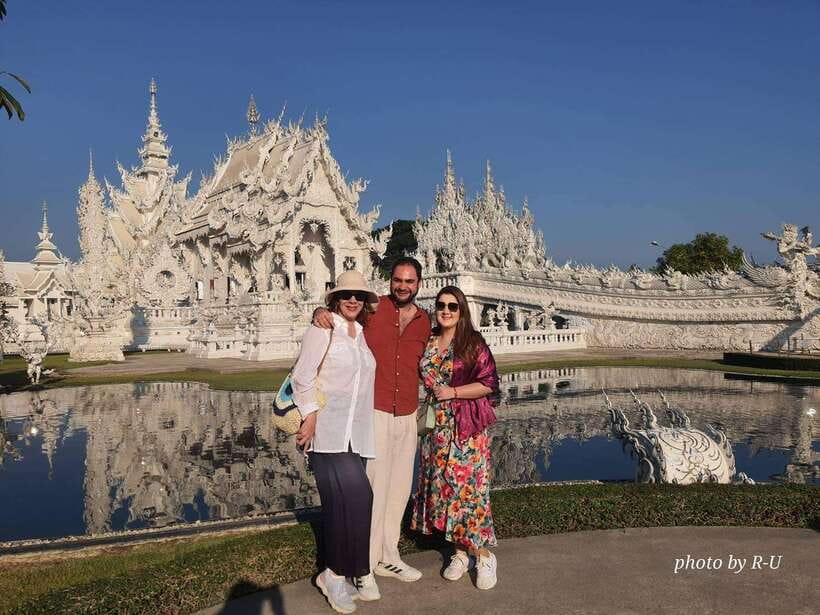
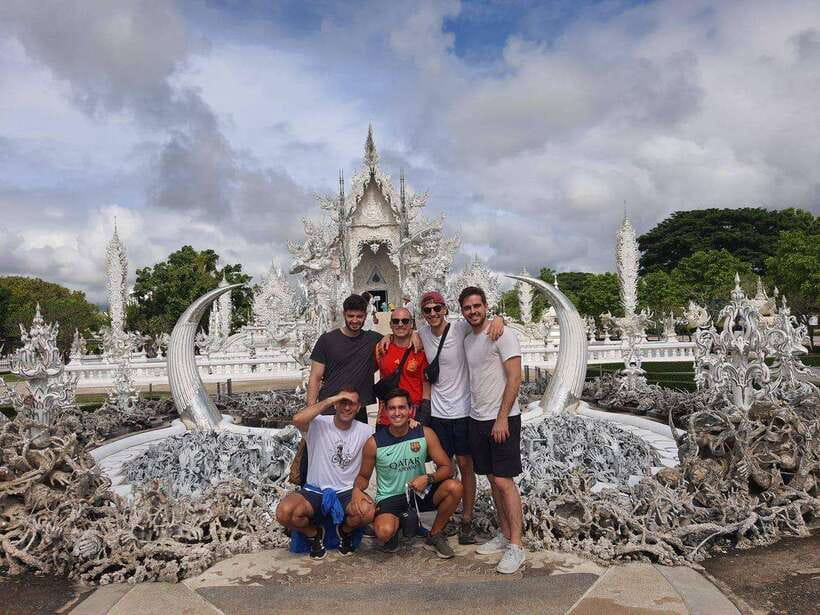
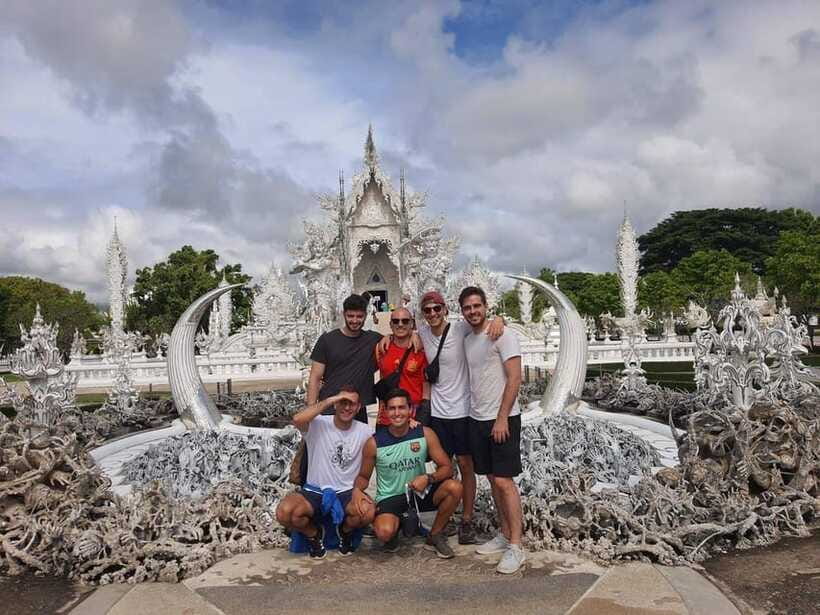
The first major stop is Wat Rong Khun, better known as the White Temple. Created by Thai artist Chalermchai Kositpipat, it is a modern work rather than an ancient temple complex.
The building’s white surface and mirrored glass catch the sunlight. The effect is bright, ornate, and slightly theatrical. The design uses Buddhist ideas about purity, but the interior murals also bring in modern images and pop culture references. That contrast is part of the appeal: you are not looking at a quiet old shrine but at a contemporary artist’s interpretation of spirituality.
You have about an hour here, enough time for the guided visit, photos, and a closer look at the details. The white structures can be hard on the eyes in strong sun, so sunglasses and comfortable shoes are useful. The 100-baht entrance fee is not included.
This is likely the most instantly recognizable stop of the day, but it can also be the most crowded-feeling and visually intense. If you prefer understated historic buildings, give yourself permission to appreciate the craftsmanship without expecting a traditional temple experience.
Wat Rong Suea Ten, the Blue Temple
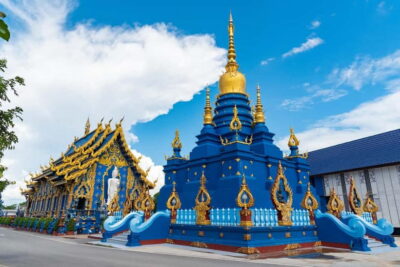
The Blue Temple, or Wat Rong Suea Ten, changes the mood completely. Its deep blue walls and gold details create a stronger, more dramatic interior than the White Temple’s pale surfaces.
Inside, a large white Buddha is the main focus. Detailed murals surround it, while the building’s design draws from modern versions of northern Thailand’s Lanna style. The name Suea Ten translates as Dancing Tiger, linked to local stories about tigers that once lived in the area.
The stop lasts about 30 minutes, including a short break, guided sightseeing, and photos. That is enough for a focused visit, though not enough for a slow study of every mural. The Blue Temple is a good example of why this tour works as a pair of contrasting art stops. The White Temple plays with light and purity. The Blue Temple feels more enclosed, colorful, and theatrical.
No entrance fee is listed for this stop, but respectful temple behavior still matters. Dress comfortably and follow any local instructions about entering the religious area.
Baan Dam Museum and its darker vision
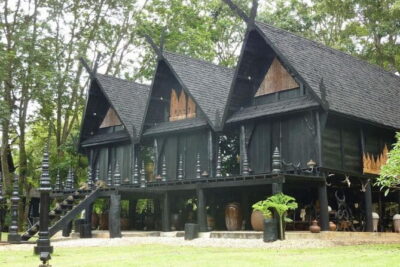
Baan Dam Museum, or the Black House, is not a temple. It is an art complex created by Thawan Duchanee, and its subject is the darker side of human life.
Buildings and displays use animal bones, skins, horns, and other natural materials. The result can feel stark and unsettling. That is intentional. The complex asks you to think about death, mortality, and the balance between light and darkness rather than offering a pretty collection of buildings for quick photos.
You have about an hour here, which gives the guide time to explain the ideas behind the site. Some people will find it fascinating; others may find the displays uncomfortable. This is an important distinction when choosing the tour. The Black House is not a soft cultural stop, and its visual style may not suit young children or anyone sensitive to animal-related exhibits.
Admission costs 80 baht per person. The fee is small, but it is worth knowing that you are paying for an art museum, not a standard religious attraction.
Same place, a different pot:
- Afternoon Tea Bus Tour in Dublin
★ 5.0 · 2,791 reviews - Kyoto: 45-Minute Tea Ceremony Lesson Experience
★ 4.3 · 2,378 reviews - London: Afternoon Tea Bus Tour – 1960s Routemaster Bus
★ 4.5 · 2,032 reviews - London: Afternoon Tea Bus with a Glass of Prosecco
★ 4.4 · 1,853 reviews
Meeting the Long Neck Karen community
The Long Neck Karen Village is scheduled for about 45 minutes. You can learn about the community’s way of life, watch weaving, and look at handcrafted souvenirs.
The brass neck rings worn by some women are presented as a tradition linked to beauty and cultural identity. The rings create the appearance of a longer neck, though the visual effect comes from the arrangement around the shoulders and neck rather than the bones stretching. The stop gives you a chance to ask questions through the guide and support handmade goods.
This is also the most sensitive stop on the route. A short visit cannot explain every part of the community’s history or present situation. Approach it with respect, ask before taking close photographs, and treat the people you meet as individuals rather than as a display. The 300-baht admission is not included and is the largest single extra cost of the day.
If you prefer cultural visits with plenty of time for conversation, 45 minutes may feel brief. If you want a short introduction alongside other major sights, it fits the schedule.
Thai lunch and a practical mid-day break
Lunch takes about 45 minutes at a local restaurant and is served as a Thai buffet. This is included in the tour price, along with drinking water.
A buffet works well on a tight schedule because you can choose what suits you and avoid waiting for separate dishes. Still, the meal is a fixed part of a group itinerary, so you should not expect a long, leisurely restaurant visit. Use the break to eat, recharge, and prepare for the afternoon’s longer drive and outdoor stops.
If you have dietary restrictions, the supplied information does not specify available options. It is sensible to ask the provider before booking if food is a major concern.
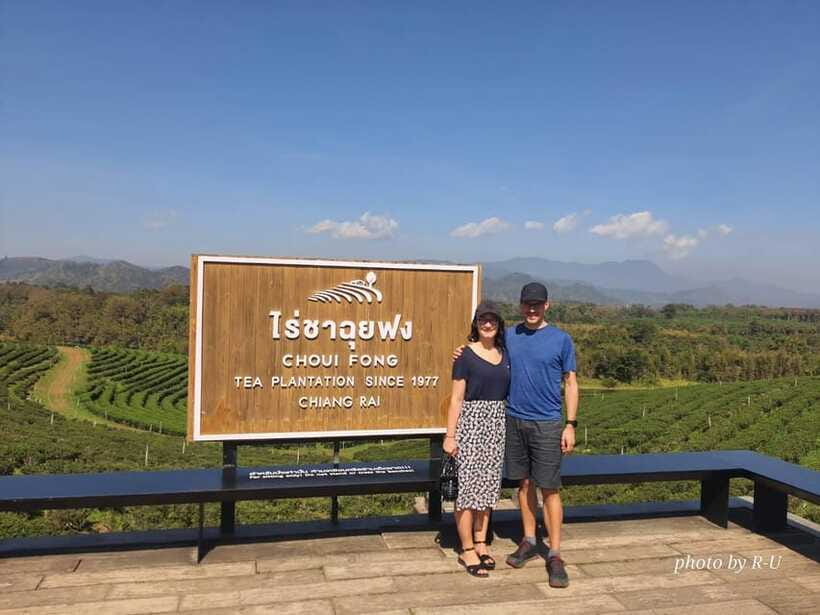
Choui Fong Tea Plantation and a slower hour
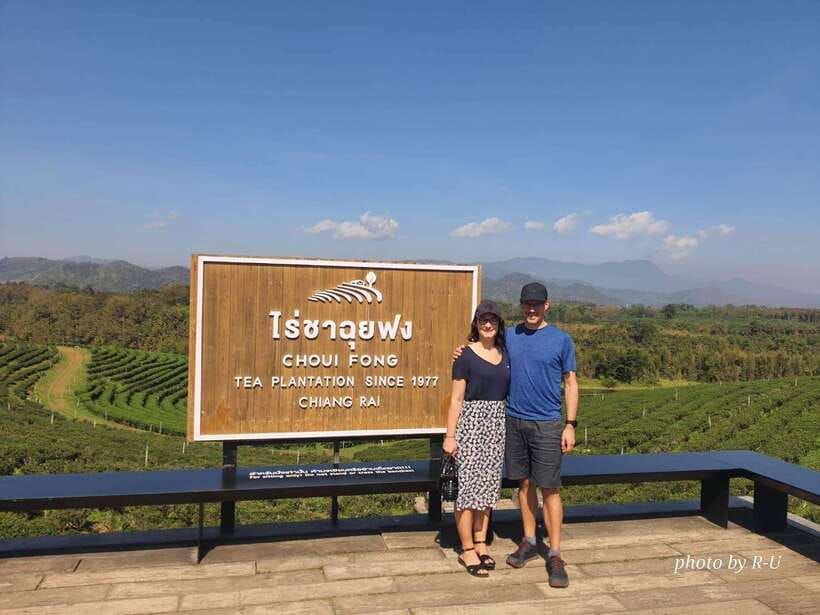
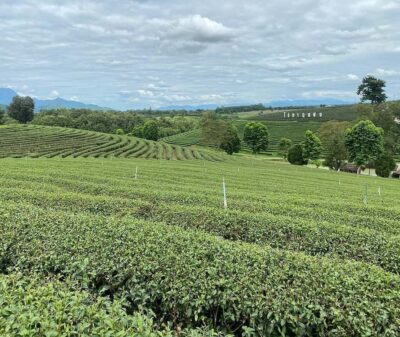
After the morning’s temples and museums, Choui Fong Tea Plantation provides a welcome change of pace. The tea fields spread across rolling green hills, and you can walk among the neatly trimmed rows during the 40-minute stop.
The plantation explains how tea is grown and offers fresh tea and tea-based desserts at its café. The panoramic views make this one of the most relaxed photo stops of the day. It is also a useful reminder that northern Thailand is not only about temples and border history.
Forty minutes gives you time for photos, a short walk, and a drink or dessert, but it is not enough for a long plantation visit. If you want to sit with your tea and take in the view, keep an eye on the guide’s meeting time. The point here is a pleasant pause, not a full tea workshop.
The Golden Triangle at the Mekong and Ruak rivers
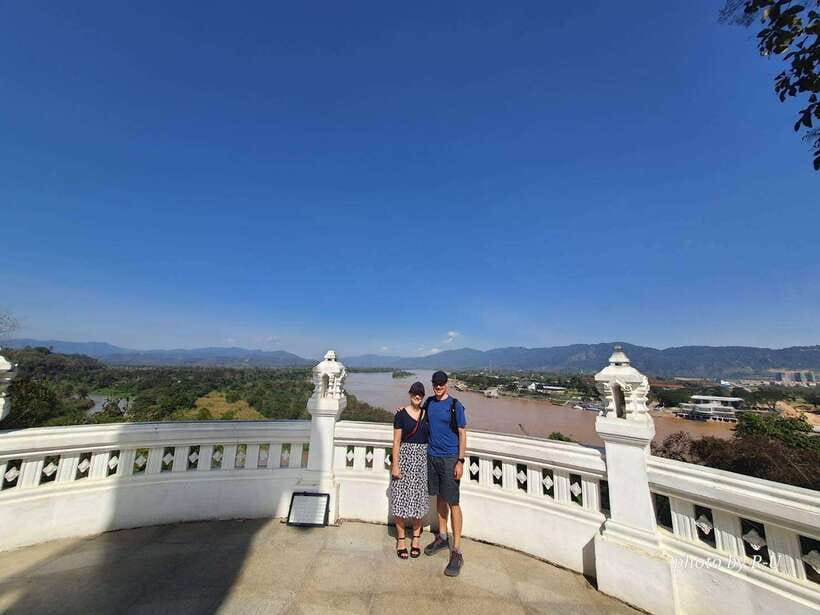
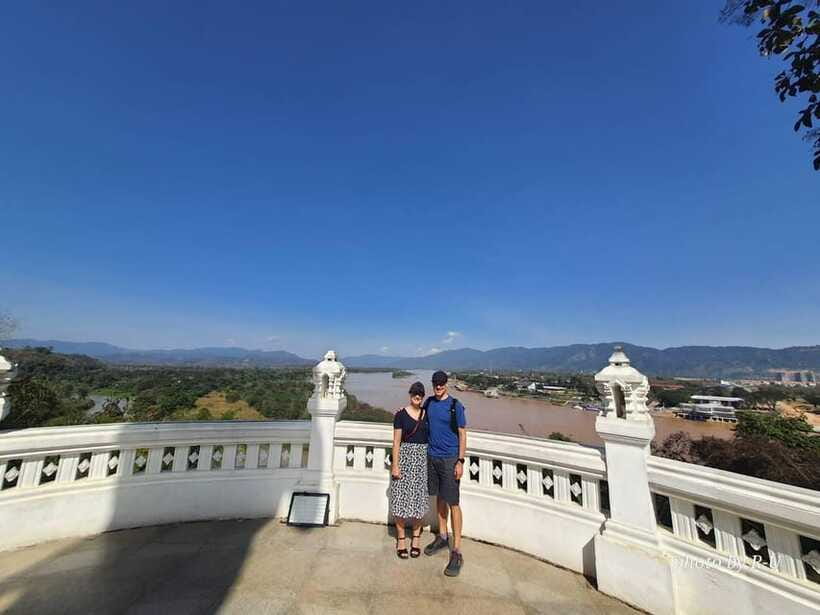
The Golden Triangle is where Thailand, Laos, and Myanmar meet. At the viewpoint, you can look toward the Mekong and Ruak rivers and consider the region’s position at the crossroads of three countries.
The area was once strongly associated with the opium trade. Today, the visit is quieter and more focused on scenery and regional history. The 30-minute stop includes free time, a guided explanation, and photos.
Do not expect a long border excursion. You remain on the Thai side, and this is a viewpoint visit rather than a crossing into Laos or Myanmar. Its value comes from the setting and the explanation of how the area changed over time.
For me, the Golden Triangle works best when paired with the House of Opium Museum. The viewpoint shows you where you are. The museum explains why the place matters.
House of Opium Museum: a useful historical finish
The House of Opium Museum is a smaller museum near the Golden Triangle. Its displays cover opium cultivation, smuggling, pipes, tools, and the effects of the trade on local communities.
The exhibits also explain wider efforts to combat the trade. That makes this stop more than a collection of old objects. It gives context to the Golden Triangle and helps you understand why the name carries such weight in Southeast Asian history.
You have about 40 minutes for the guided visit, walking, photos, free time, and possible shopping. The 50-baht entrance fee is extra. The museum is compact, so the visit should feel manageable even late in a long day, though your attention may be fading by this point.
If you only choose one of the optional museums, this is the one I would prioritize for historical context. The Black House is stronger as an art experience, while the House of Opium connects directly to the border region you have just seen.
Transport, timing, and the real cost
Pickup is available from hotels within 3 kilometers of Chiang Rai city center. Be ready in the hotel lobby between 8 and 8:30 a.m. The return is usually between 6:30 and 7 p.m., after an approximately 80-minute van ride from the final area.
The van is the practical reason this day works. The attractions are spread across Chiang Rai Province, and arranging all of them independently would require more transport planning. The downside is clear: you spend a meaningful part of the day on the road, and the final ride may feel long.
The group is limited to 10 participants, which is a useful middle ground. You get the efficiency of a shared tour without the scale of a large coach group. An English-speaking guide accompanies the day and provides explanations at the cultural and historic stops.
Bring comfortable shoes, a camera, cash, and a credit card. Baby strollers and bicycles are not allowed, and alcohol and drugs are prohibited. The tour is not suitable for babies under one year or people over 80, and the supplied information also lists an upper limit of 95 years.
Do not plan to return to Chiang Mai the same day. The late finish and driving time make that impractical. This tour works best if Chiang Rai is your base for the night.
Who should book this tour?
You should book it if you want a broad first look at Chiang Rai and prefer having transport and a guide handle the logistics. It suits adults and older children who enjoy modern temple art, museums, tea, cultural encounters, and border history in one packed day.
You may want a slower private tour if you dislike fixed schedules, want long meals, or hope to photograph each site without pressure. The Long Neck Karen Village and Black House also require a thoughtful approach, so consider how comfortable you are with those stops.
The value is strongest when you visit most of the included attractions and pay the extra admissions. At $41, the combination of transport, lunch, guide, water, and insurance is strong for a full day. Just budget for up to 530 baht more if you choose every paid stop.
Book this tour if variety matters more than a relaxed pace. Skip it if you want to focus deeply on one temple, spend hours at the tea plantation, or avoid a long van day. For a first visit to Chiang Rai, it gives you a clear sense of the province’s art, culture, countryside, and complicated border past.
FAQ
How long does the Chiang Rai tour last?
The activity lasts one full day. Pickup is between 8 and 8:30 a.m., and the tour usually returns between 6:30 and 7 p.m.
Where is hotel pickup available?
Pickup and drop-off are available from locations within 3 kilometers of Chiang Rai city center.
Is lunch included?
Yes. A Thai lunch buffet and drinking water are included in the tour price.
Are entrance fees included?
No. Wat Rong Khun costs 100 baht, Baan Dam Museum costs 80 baht, Long Neck Karen Village costs 300 baht, and the House of Opium costs 50 baht per person. Visiting and paying for each attraction is optional.
What language does the guide speak?
The live tour guide speaks English.
How large is the tour group?
The tour is limited to 10 participants.
Can I visit Chiang Mai after the tour?
Returning to Chiang Mai on the same day is not recommended because the tour ends between 6:30 and 7 p.m. and includes a long return drive.
What should I bring?
Bring comfortable shoes, a camera, cash, and a credit card.
Can I cancel the booking?
You can cancel up to 24 hours in advance for a full refund. The reserve-now-and-pay-later option lets you book without paying immediately.
Just added around the world
- Yogyakarta: Prambanan Tour, Sukuh Temple & Tea Plantation★ 5.0 · 3 reviews
- Xi’an Chinese Calligraphy Workshop: Ink Art & Tea Tasting★ 5.0 · 4 reviews
- Yokohama : Tea Ceremony with Sweets and Souvenir★ 5.0 · 5 reviews
- Washington, D.C.: Tea Around Town Bus Tour with Landmarks★ 3.4 · 7 reviews
- Tea Route: Lake, Forest, Tea Plantation & 3 Course Lunch★ 3.6 · 7 reviews
- Wadi Rum: 2-Hour Jeep Tour with Bedouin Tea★ 5.0 · 11 reviews
- Walking Tour: Yanaka,Nezu& Sendagi: Tea Ceremony & Old Tokyo★ 5.0 · 3 reviews
- Volcano, Hot Spring, Mud Bath & Tea plantation all included★ 5.0 · 5 reviews
Thailand Tea Experiences, compared.
Chiang Rai: 7 Major Sites, Golden Triangle & Tea Plantation
Read our review →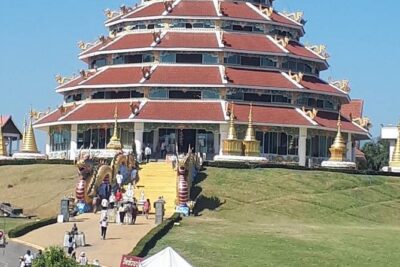
Best Places in Chiang Rai White, Blue, Big Buddha, Tea Plantation
Read our review →
From Chiang Rai: 3 Temples, Golden Triangle Tour, Tea Plantation
Read our review →
Browse the lists this tour appears in