
Review · SOUTH KOREA
Boseong Tour : Green Tea Field, Mountain & Lake Trail (Private)
Boseong’s tea fields are only the beginning. This full-day private outing from Gwangju pairs the famous green hills of Daehan Dawon with a tea ceremony, a quiet lake walk, a naturally fermented vinegar park, and Mt. Obongsan’s old stone-hauling route. It gives you a much fuller picture of the region than a quick plantation stop.
I especially like the mix of scenery and local culture. You taste green tea ice cream, learn how Korean tea is prepared, eat a regional lunch, and see how flat stones once used in underfloor heating were quarried. I also like the private format, since guide Veronica has time to adjust the day to your interests.
The main consideration is the length. This is about 10 hours, with roughly 70 minutes each way between Gwangju and Boseong, plus another 40-minute transfer between the tea museum and Haepyeong Lake. The price of $190 per person is easier to justify for a couple, family, or small group that values private transport and a flexible guide.
Key points at a glance
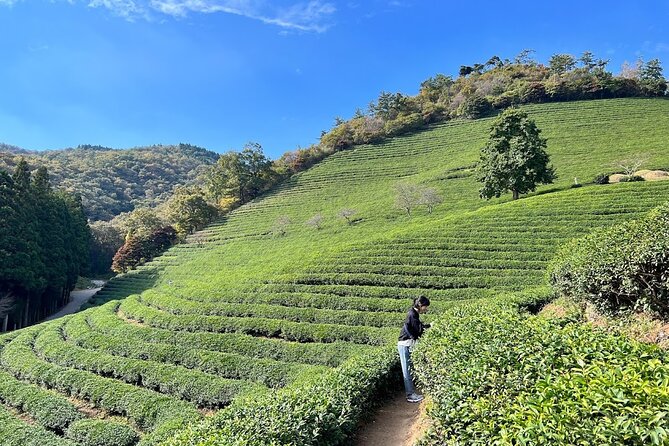
- Daehan Dawon tea fields: Walk uphill through Boseong’s famous rows of tea bushes to a viewpoint, then try green tea ice cream.
- Hands-on Korean tea ceremony: The Korea Tea Museum includes instruction on preparing and drinking tea, plus green tea tasting.
- A local lunch with choices: The usual meal is grilled pork patties flavored with green tea powder and rice, with cockle bibimbap or pasta available for vegetarians.
- A 3.9-kilometer lake trail: Haepyeong Lake brings cedar, bamboo, maple, cherry trees, stone towers, and a peaceful forest walk.
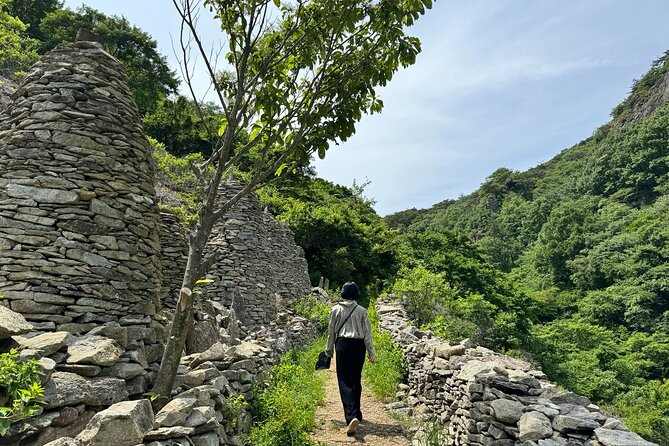
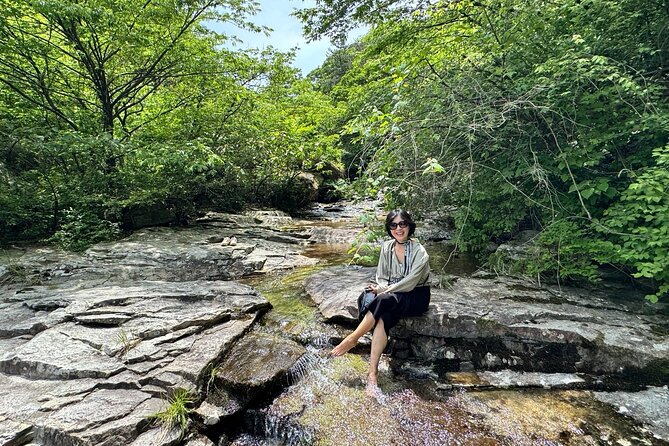
- Mt. Obongsan’s stone cart route: Choose a short hike to a waterfall or continue toward the peak along a route tied to Korea’s traditional Ondol heating system.
- Private sightseeing from Gwangju: Your group has its own transport and guide, which matters on a long day covering several spread-out sites.
Why Boseong works so well as a day trip from Gwangju
Boseong is known across Korea for green tea, and the setting explains why. Tea plantations cover the rolling hills, creating long bands of carefully planted bushes that look especially striking from the upper paths. The tea fields remain green throughout the year, so you are not limited to one short viewing season.
The trip starts at 9:30 a.m. in Gwangju. The drive to Boseong takes about 70 minutes, so the morning transfer is long enough to make a private vehicle useful. You avoid arranging several local connections and can spend the day moving directly between sites.
This is not a simple tea-farm excursion. The day moves from agriculture to food, then to Korean tea customs, forest walking, local industry, and mountain heritage. That variety keeps the schedule interesting, but it also means you should expect a full day rather than a slow, single-site visit.
More Private Experiences in the world:
- Private Abu Dhabi Sheikh zayed mosque with Louver Museum & Emirates Place Tea
★ 5.0 · 173 reviews - Private Tea Ceremony and Sake Tasting in Kyoto Samurai House
★ 5.0 · 163 reviews - Tea Ceremony Experience in a Private Tea Room in Shibuya
★ 4.9 · 125 reviews
Daehan Dawon, Boseong’s famous tea hills
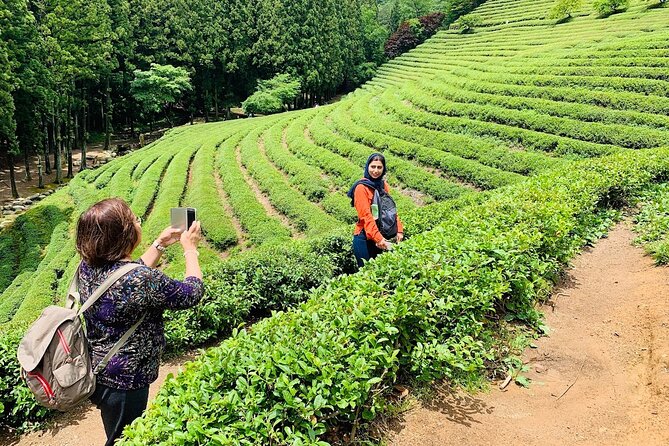
The first major stop is Daehan Dawon, the best-known tea plantation in Boseong. The farm is valued not only for its size but also for its sweeping views over layered rows of tea bushes. From the lower paths, you see the plants close up. As you climb toward the observatory, the view opens across the rounded hills.
Plan on about two hours here. The walk is scenic, but it is not completely flat. The route to the upper viewpoint requires an uphill stroll, so sensible shoes and a moderate level of fitness will make the stop more enjoyable. You do not need to be a serious hiker, but this is more than stepping out of a vehicle for a photo.
I like that the visit includes time to walk rather than simply pause at a roadside viewpoint. You can notice the tidy planting patterns, breathe the fresh hill air, and see why Boseong tea has become a local symbol. At the end, green tea ice cream gives you a sweet, cool taste of the area. It is a simple treat, but a good one after the climb.
The plantation is likely the most photogenic part of the day. It can also be the most popular stop, so do not expect solitude at every viewpoint. The private guide helps by explaining what you are seeing and giving your group room to set its own pace.
Lunch in Boseong-eup, with a local specialty
Lunch takes about an hour and 10 minutes in Boseong-eup. The standard meal is grilled pork patties made with green tea powder, served with rice. This is a useful chance to try a dish tied directly to the region instead of settling for a generic meal near a tourist attraction.
If you want another local flavor, cockle bibimbap is available as an alternative. Vegetarians can request lotus-leaf-wrapped steamed rice or Italian pasta, depending on the arrangement. Since food preferences can shape the experience, tell the guide early if you need a change from the regular menu.
The lunch stop is included in the tour price, which makes the $190 cost easier to assess. You are not paying for transport alone, since the day also covers food, admission fees, tea ice cream, a tea ceremony with tasting, and a vinegar drink. Alcohol is not included.
Learning Korean tea at the Korea Tea Museum
After lunch, the Korea Tea Museum provides the cultural center of the day. The museum opened in 2010 and explains the path from tea cultivation to production with graphic panels, photographs, and dioramas. It gives useful context after you have already seen the plants in the fields.
The best part is the tea ceremony room. You learn how Korean tea is prepared and served, then take part in a hands-on ceremony and green tea tasting. This turns tea from a crop you photograph into a daily practice with its own manners and rhythm.
Allow about an hour and 10 minutes. The museum will appeal most to you if you enjoy food traditions, craft, and small cultural details. If you only want outdoor scenery, this is the more structured portion of the day, but it adds meaning to the plantation visit.
Guide Veronica is particularly well regarded for clear English, warmth, and a strong grasp of Korean history. Her role matters here because a tea ceremony is easier to appreciate when someone explains what you are doing rather than leaving you to watch from the side. The private format also allows time for questions.
A few more tea experiences around the world worth a look
- Kyoto: Tea Ceremony in a Traditional Tea House in Kiyomizu
★ 4.9 · 3,519 reviews - London: Afternoon Tea Cruise on the River Thames
★ 4.4 · 3,274 reviews - Kyoto: Tea Ceremony Ju-An at Jotokuji Temple
★ 4.9 · 3,207 reviews - Afternoon Tea Bus Tour in Dublin
★ 5.0 · 2,791 reviews
Nokcha-ro and the lake view
A brief 20-minute stop at Nokcha-ro provides a different view of Boseong’s tea country. Here, you can see tea fields together with a lake, rest, and take in the setting without another long walk.
This is a short pause, not a major attraction. Think of it as a visual break between the museum and the longer nature section. It also helps the day keep a comfortable rhythm: climb at Daehan Dawon, sit for lunch and tea, pause at Nokcha-ro, then walk around Haepyeong Lake.
Haepyeong Lake’s 3.9-kilometer forest trail
Haepyeong Lake is where the tour becomes quieter. The trail around the water covers about 3.9 kilometers, or 2.4 miles, and passes stone towers, cedar trees, bamboo, maple trees, and cherry trees. The route is described as easy, but the distance still takes time, especially if you stop for photographs or enjoy the surroundings at a relaxed pace.
I like this part because it shows a gentler side of Boseong. The tea plantation delivers broad views and famous scenery. The lake path gives you shade, water, trees, and a chance to slow down. You can refresh yourself in the forest instead of spending the entire day moving from one major sight to another.
The trail is scheduled for about an hour and 10 minutes. That timing suggests you will cover only part of the route or walk at a brisk pace, so ask the guide how the day’s timing will work for your group. The full 3.9-kilometer circuit may require a different pace than the listed stop time.
Along the trail, you reach Choroo Vinegar Park. The park produces naturally fermented grain vinegar, and its café serves distinctive vinegar drinks. The beverage is included, making this a worthwhile pause for anyone curious about Korean fermentation. It is also a nice contrast to the tea tasting earlier in the day.
Do not expect a large amusement park or a long guided production tour. The appeal is the combination of a pleasant walk, an unusual local product, and a well-designed café setting. If you enjoy trying regional drinks and seeing small-scale food traditions, this stop adds real character.
Mt. Obongsan and the old Ondol stone route
The final major activity is Mt. Obongsan. The mountain is linked to Goodeuljang, flat stone used in Ondol, the underfloor heating system found in traditional Korean homes. Stone was quarried here from the 1940s through the 1980s, and the area once supplied about 70 percent of the nation’s Goodeuljang production.
The most unusual detail is how the stone was moved. Carts drawn by cows carried the quarried slabs down the mountain. The old cart route remains visible, and you follow it uphill toward a waterfall or the peak.
You can choose the shorter walk to the waterfall, about 15 minutes, or continue toward the summit, about 40 minutes. The mountain route includes rocky ridges, rock formations, stone pagodas, and waterfalls. It is not simply a final scenic stroll, so you should have moderate physical fitness and wear shoes suited to uneven ground.
This stop gives the day a strong sense of place. You are not only looking at trees and rocks. You are walking through a working site tied to housing, labor, transport, and traditional Korean technology. That connection makes Mt. Obongsan more memorable than a standard viewpoint.
The schedule allows about an hour and 10 minutes here. A summit walk, photographs, and a waterfall visit may require careful timing, so your guide will need to match the route to your group’s pace. If you are tired after the lake trail, choose the shorter option. The day is better when you enjoy the walk rather than treat the peak as a test.
What the private format is worth
At $190 per person, this is not a budget bus outing. The cost includes private transport, admissions, lunch, green tea ice cream, the tea ceremony and tasting, and a vinegar drink. You also have a guide for a long day in an area that is spread across several locations.
The value improves when two or more people share the experience and care about flexibility. A solo visitor pays more for the private arrangement, but the private format may still be worthwhile if you want a direct trip from Gwangju and personal attention from a guide such as Veronica.
The schedule is also easier to adjust privately. Past experiences with Veronica describe her as friendly, helpful, efficient, and willing to accommodate interests, including extra attention to Korean food. That kind of flexibility is useful when you want to linger at the tea fields, ask more questions at the museum, or choose the shorter mountain route.
There are limits. The day includes long drives, and four of the six main sections are fairly time-specific. If you prefer to spend an entire afternoon at one plantation or take a very slow hike, this schedule may feel busy.
Practical details before you book
Start with comfortable walking shoes. Daehan Dawon includes an uphill path, Haepyeong Lake covers 3.9 kilometers, and Mt. Obongsan has rocky sections. Bring water and clothing suited to the forecast, since the experience requires good weather and includes substantial outdoor time.
Pickup is offered, and the tour begins at 9:30 a.m. Private transportation is included. The group is limited to your own party, which is useful for families, couples, and friends who want to avoid a large coach schedule.
The tour requires moderate physical fitness. Service animals are allowed, and the meeting area is near public transportation. Confirmation arrives at booking. You can cancel for a full refund up to 24 hours before the start time, but changes or cancellations inside that window are not accepted. If poor weather causes cancellation, you are offered another date or a full refund.
Who should choose this Boseong tour
I would choose this experience if you are staying in Gwangju and want Boseong’s tea fields plus a broader look at the region. It suits you especially well if you enjoy walking, local food, tea customs, and small cultural sites more than a quick checklist of famous views.
It also works well for a mixed-interest group. One person can enjoy photography at Daehan Dawon, another can focus on food and tea, and everyone gets a choice between a shorter or longer mountain walk. A private guide can explain the regional details without forcing the whole group into a fixed public schedule.
You may want another option if you dislike long road transfers, have difficulty walking uphill or on rocky routes, or want an unhurried day at one location. The 10-hour schedule is rewarding, but it asks for energy.
FAQ
Where does the tour start?
The tour starts from Gwangju Metropolitan City, with a listed start time of 9:30 a.m.
How long does the experience last?
The tour lasts about 10 hours.
How long is the drive from Gwangju to Boseong?
The drive from Gwangju to Boseong takes about 70 minutes.
Is transportation private?
Yes. Private transportation is included, and only your group participates.
What food is served for lunch?
The standard lunch is grilled pork patties with green tea powder and rice. Cockle bibimbap is another option, and vegetarian choices include lotus-leaf-wrapped steamed rice or Italian pasta.
Is the tea ceremony included?
Yes. The Korea Tea Museum visit includes a tea ceremony class and green tea tasting.
How strenuous are the walks?
You should have moderate physical fitness. The Haepyeong Lake Trail covers 3.9 kilometers, while the Mt. Obongsan walk can take about 15 minutes to the waterfall or about 40 minutes to the peak.
Should you book it?
Book this tour if you want more than the standard Boseong tea-field photo stop. Daehan Dawon is the visual highlight, but the tea ceremony, regional lunch, lake trail, vinegar drink, and Ondol stone route give the day substance.
The best reason to choose it is the combination of private transport and personal guiding, especially if Veronica leads your group. The main tradeoff is the price and the long schedule. For a small group that wants nature, food, and Korean culture in one well-filled day from Gwangju, $190 per person is a fair premium for the time and inclusions.
Just added around the world
- Yogyakarta: Prambanan Tour, Sukuh Temple & Tea Plantation★ 5.0 · 3 reviews
- Xi’an Chinese Calligraphy Workshop: Ink Art & Tea Tasting★ 5.0 · 4 reviews
- Yokohama : Tea Ceremony with Sweets and Souvenir★ 5.0 · 5 reviews
- Washington, D.C.: Tea Around Town Bus Tour with Landmarks★ 3.4 · 7 reviews
- Tea Route: Lake, Forest, Tea Plantation & 3 Course Lunch★ 3.6 · 7 reviews
- Wadi Rum: 2-Hour Jeep Tour with Bedouin Tea★ 5.0 · 11 reviews
- Walking Tour: Yanaka,Nezu& Sendagi: Tea Ceremony & Old Tokyo★ 5.0 · 3 reviews
- Visit local home for music and tea ceremony near Disney★ 4.9 · 13 reviews
South Korea Tea Experiences, compared.

Small Group Seoul Highlight Tour opt. Hanbok & Tea Ceremony
Read our review →
West & South Jeju: Hallasan Trail, Waterfall, Tea Field Tour
Read our review →
Korean Green Tea Tour – from Boseong to Gangjin (Private)
Read our review →
Busan: Join a Tea Ceremony & Create a Calligraphy Memento
Read our review →
Private Full-Day Guided Tour in Seoul with Lunch, Tea and Dinner
Read our review →
Full-day Hadong, Gwangyang, Cherry blossom, Green Tea Fields Private Tour
Read our review →Browse the lists this tour appears in