
Review · SOUTH KOREA
Korean Green Tea Tour – from Boseong to Gangjin (Private)
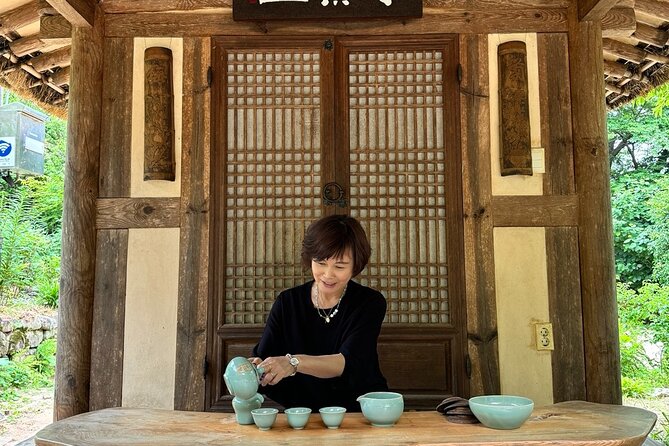
The best thing about this full-day tour is its range. In one long outing, you see Boseong’s famous hilltop tea fields, learn how Korean tea is made, then continue to quieter Gangjin, where tea culture reaches back more than 1,000 years. I especially like the tea ceremony in Boseong and the visit to Baegundong Hermitage Garden, two stops that give the day more meaning than a simple photo trip.
I also like that private transport connects places that would be awkward to reach on your own. Guides including Veronica and Vicky have been praised for explaining tea clearly and adjusting the day to suit the group. The main drawback is the pace: nine to ten hours includes a lot of driving, and lunch is not included, so this is a full day rather than a relaxed half-day escape.
Key points at a glance
- Three Korean tea styles: Taste leaf tea, powdered green tea, and traditional rice cake tea.
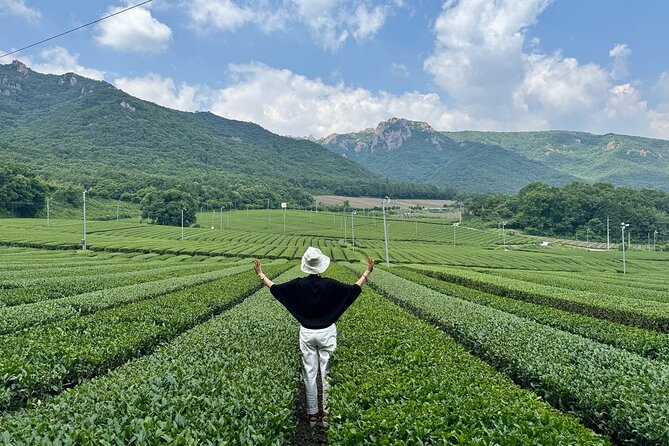
- Boseong’s famous tea hills: Walk through Daehan Dawon and see the rolling rows that made the region famous.
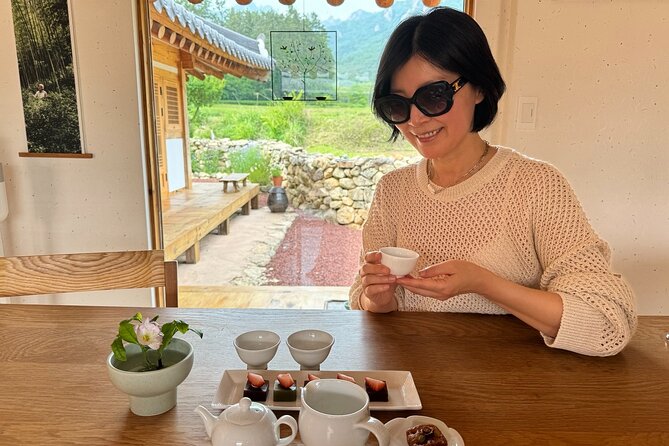
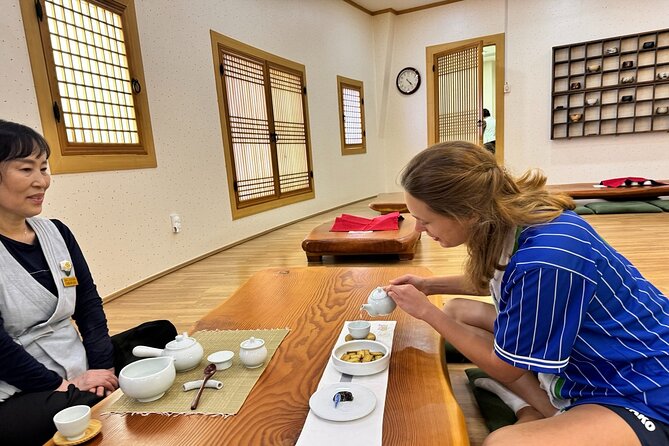
- A hands-on tea ceremony: Learn Korean tea customs in Boseong rather than only looking at tea fields.
- Gangjin’s quieter tea story: Visit a region with more than 1,000 years of tea culture and links to Korea’s first tea brand.
- Private door-to-door transport: The route begins in Gwangju and includes the long drives between Boseong, Gangjin, and Gwangju.
- A useful guide makes a difference: Veronica and Vicky have been praised for tea expertise, local restaurant advice, and help with transport questions.
Why this Boseong and Gangjin route is worth your day
This experience is built around a simple idea: see three important tea sites and taste three forms of Korean green tea. That sounds straightforward, but the route gives you three different ways to understand tea. Boseong shows the farming and public face of Korean tea. Gangjin adds older traditions, private gardens, and the story of early tea commerce.
You begin in Gwangju at 9:30 am. The drive to Boseong takes about 70 minutes, so the day starts with a useful stretch of road before the first major stop. From Boseong to Gangjin, allow around 50 minutes, then about 70 minutes to return to Gwangju. Private transport matters here. You are not trying to connect rural tea farms by bus or work out several separate taxi rides.
The cost is $195 per person. That is not a low-cost sightseeing outing, especially since lunch is separate. Still, the price includes private transportation, admission fees, the tea ceremony, matcha affogato, and historical rice cake tea. For a small group that values a guide and wants to cover both counties in one day, the fee can make sense. For someone mainly seeking a quick view of Boseong’s tea hills, it is more than you need.
More Private Experiences in the world:
- Private Abu Dhabi Sheikh zayed mosque with Louver Museum & Emirates Place Tea
★ 5.0 · 173 reviews - Private Tea Ceremony and Sake Tasting in Kyoto Samurai House
★ 5.0 · 163 reviews - Tea Ceremony Experience in a Private Tea Room in Shibuya
★ 4.9 · 125 reviews
Daehan Dawon, Boseong’s signature tea fields
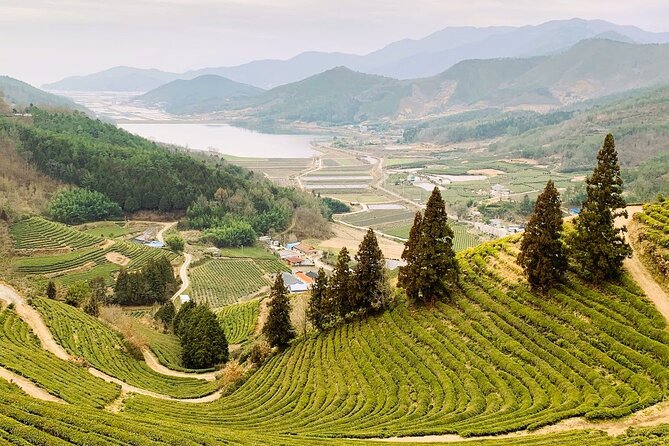
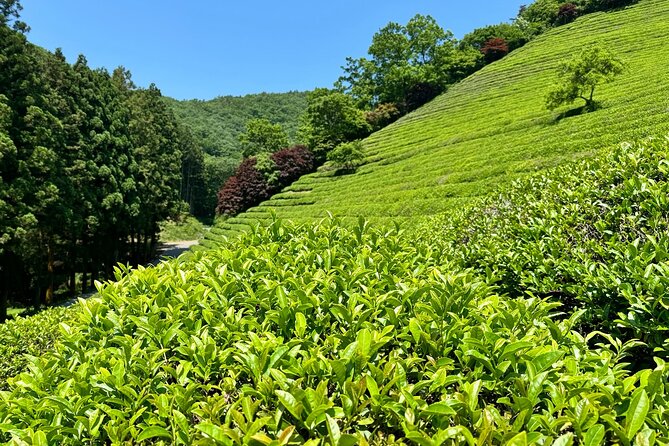
Your first major stop is Boseong Green Tea Field Daehan Dawon, with about 90 minutes to explore. Boseong sits in South Jeolla Province, where the soil and climate suit tea growing. The farm is known for broad slopes covered in carefully planted tea rows, giving you the classic Boseong view seen in many photographs of Korean tea country.
This is the place for walking and wide views. The rows rise and curve across the hills, so bring shoes that feel secure on paths and allow yourself time to look beyond the nearest plants. The scenery is the visual high point of the morning, but the guide adds useful context about how tea is grown and why Boseong became Korea’s best-known tea area.
The tour information describes the tea as organically grown. That detail matters if you care about farming methods, but the visit is not presented as a technical farm workshop. You should expect a scenic tea-field visit with explanation, not a full lesson in cultivation or harvesting.
Daehan Dawon can also be the busiest-feeling stop on the route because it is Boseong’s best-known tea attraction. The private format helps you use your time well, but this is still the most public and recognizable part of the day. If your main goal is solitude, the later Gangjin stops should appeal more.
Lunch in Boseong-eup, with the bill kept separate
After the first tea field, you stop in Boseong-eup for about an hour. Lunch is not included, and the guide offers a choice of local dishes that you select and pay for at the restaurant.
The listed options include stir-fried nakji, or Korean octopus, along with other local dishes. This arrangement gives you some control over what you eat and how much you spend. It also lets the guide direct you toward popular local food rather than leaving you to guess from a menu in an unfamiliar town.
Keep the timing in mind. One hour is enough for a focused meal, but not for a slow restaurant visit. If you want a long lunch with several shared dishes, the schedule may feel tight. Alcoholic drinks are also not included.
Tea Museum, where the plant becomes a culture
The Korea Tea Museum gives you about an hour indoors. It explains the tea plant, the six types of tea that can be made from it, and the development of Korean tea production and drinking customs.
This stop helps make sense of the tastings later. Many visitors recognize green tea but know little about the difference between leaf tea, powdered tea, and tea made with rice cake. The museum gives you a framework before the day moves into more hands-on experiences.
I would treat this as an educational pause rather than a dramatic sightseeing stop. If you prefer outdoor views to museum displays, the hour may feel less exciting than Daehan Dawon. Still, it prevents the tour from becoming a sequence of pretty fields with no explanation of what you are seeing.
A few more tea experiences around the world worth a look
- Kyoto: Tea Ceremony in a Traditional Tea House in Kiyomizu
★ 4.9 · 3,519 reviews - London: Afternoon Tea Cruise on the River Thames
★ 4.4 · 3,274 reviews - Kyoto: Tea Ceremony Ju-An at Jotokuji Temple
★ 4.9 · 3,207 reviews - Afternoon Tea Bus Tour in Dublin
★ 5.0 · 2,791 reviews
Nokcha-ro and the Choroknip tea farm view
The next stop lasts about 40 minutes at Nokcha-ro, at Choroknip tea farm, operated by Boseong Jeda. The tea house terrace provides a view across the rolling fields below.
This is a short stop, but it offers a different angle from Daehan Dawon. At the first farm, you spend more time among the tea rows. Here, the point is the broad view from the terrace and the chance to pause with a tea-related treat. Matcha affogato, powdered green tea served with green tea ice cream, is included in the experience.
The affogato is a playful contrast to the more formal tea ceremony. It also gives you a taste of how Korean green tea appears in modern desserts. The portion and exact serving details are not specified, so think of it as one included tasting rather than a full snack break.
Gangjin Dawon and a quieter tea region
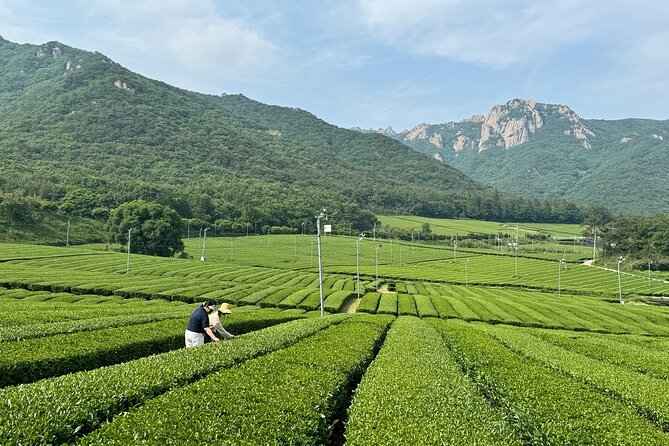
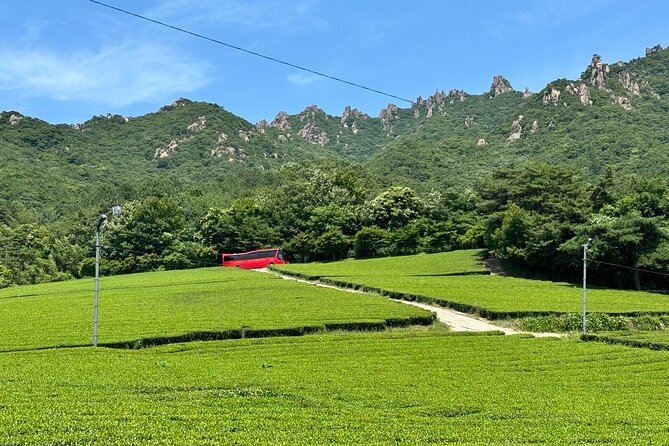
From Boseong, the route continues to Gangjin Dawon near the foot of Mount Wolchulsan. You have about 30 minutes here. The tea field has been cultivated for green tea production since 1980 by Osulloc, one of Korea’s major tea producers.
The short visit works as a contrast with Boseong. Boseong is the famous name, with large scenic fields and a well-established visitor route. Gangjin feels less familiar to international visitors, yet its tea story reaches much further back. The current fields are relatively recent, but tea culture in Gangjin has more than a thousand years of history.
Do not expect a second Daehan Dawon on the same scale. This stop is brief and works best as part of the larger story. You see the setting, learn why Gangjin matters, and then move to the places where its older traditions become clearer.
Baegundong Hermitage Garden and the old tea connection
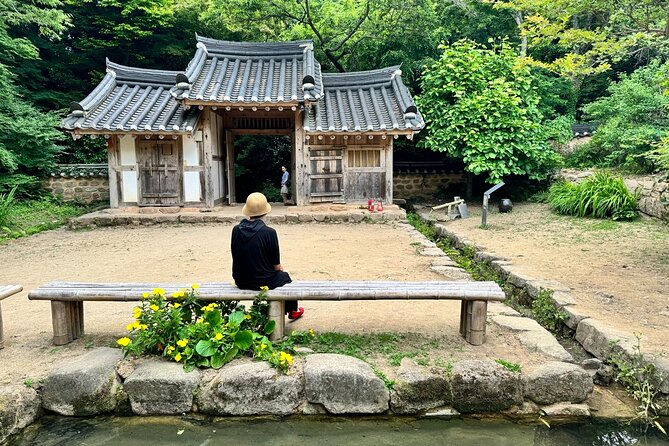
Baegundong Hermitage Garden was built in the late 17th century during the Joseon Dynasty. You have about 40 minutes to walk through the garden and take in how the site was planned around its natural setting.
The garden is one of the more distinctive stops because it links tea to place, design, and retreat. It is not simply another field. The layout was chosen to work with the surrounding terrain, and the setting gives you a quieter view of Gangjin’s cultural past.
This is also where the day moves away from commercial tea production. You get a sense of tea as part of study, hospitality, and private life. Forty minutes is enough for an introduction, but not enough for a long, unhurried garden visit. If gardens are a major interest, you may wish the schedule allowed more time here.
Baegun Tea House and the story of Korea’s first tea brand
The final stop is in Seongjeon-myeon at Baegun Tea House, for about 40 minutes. The tea house honors Baegun Okpan Tea, described as Korea’s first tea brand, created in the 1920s by Lee Han-young.
Lee Han-young was a descendant of one of Jeong Yak-yong’s disciples. Jeong Yak-yong, a major Joseon scholar, spent time in exile in Gangjin. That connection gives the final stop a strong historical thread: tea is tied not only to farms, but also to scholarship, local identity, and the people who kept the tradition alive.
Here you taste historical rice cake tea, a form of tea quite different from the leaf tea and powdered tea earlier in the day. The name refers to tea prepared in a cake-like form, and the tasting gives you a practical way to understand how Korean tea traditions developed beyond the familiar cup of loose leaves.
The stop is especially useful for anyone who wants more than the standard Boseong photograph. Gangjin’s tea culture is less obvious at first, but the garden and tea house explain why the region deserves a place on a tea-focused itinerary.
What your private guide adds
The route is possible to piece together by car, but the guide is a major part of its value. The strongest praise has gone to Veronica and Vicky, who have been described as clear and well informed about tea production, tasting, and local history.
Veronica has also been praised for choosing restaurants and suggesting places that are easy to miss without local help. One detailed account describes her as flexible, willing to listen to what the group wanted to see, and helpful with transport problems beyond the planned tour. That matters on a long rural day, where small changes can affect the whole schedule.
You should confirm which guide is assigned when booking if a particular guide matters to you. The supplied information names both Veronica and Vicky in connection with the experience, but it does not promise one specific guide for every departure.
The private format means only your group participates. That gives you more room to ask questions, set the pace within reason, and talk openly about food or tea preferences. It does not remove the fixed travel times or make this a fully custom tour, but it is more personal than a large coach outing.
Timing, comfort, and practical limits
This is a nine to ten-hour day. The countryside visits are broken up by driving, museum time, lunch, and tastings, but you should still be comfortable spending several hours in a vehicle.
The travel estimates are about 70 minutes from Gwangju to Boseong, 50 minutes from Boseong to Gangjin, and 70 minutes from Gangjin back to Gwangju. Those figures explain both the tour’s appeal and its main limitation. You cover two important tea regions in one day, but some of your time is necessarily spent on the road.
The activity requires good weather. If poor weather cancels it, you are offered another date or a full refund. Confirmation is provided at booking, and service animals are allowed. Most people can participate, and the meeting point is near public transportation, although the tour begins at 9:30 am.
Free cancellation is available up to 24 hours before the start time. Changes or cancellations inside that window are not accepted for a refund.
Who should book this tea tour?
I would choose this experience if you are based in Gwangju and care about Korean food, tea, rural scenery, or cultural history. It is especially suitable if you do not want to rent a car or manage transport between Boseong and Gangjin.
It also suits first-time visitors who want an explanation of Korean tea rather than a quick stop at a famous field. The ceremony, museum, matcha affogato, and rice cake tea provide variety. You are not only looking at tea plants.
You may want to skip it if you have limited time in the region, dislike long drives, or only want the best-known Boseong viewpoint. In that case, a shorter Boseong visit could be more efficient. Lunch costs extra, and the $195 price is easiest to justify for a private group that values the guide’s time and local connections.
Final verdict: a strong full-day choice for tea lovers
Book this tour if you want to connect Korea’s tea farms with the people, gardens, products, and customs behind them. Boseong supplies the famous views, while Gangjin gives the day its older and less expected story.
The strongest reasons to go are the private transport, the three styles of tea, and the guide-led context. The main tradeoff is the long day and the cost. If those fit your plans, this is a thoughtful way to see southern Korea beyond the usual city route, with enough tasting and history to make the scenery mean something.
FAQ
Where does the tour start?
The tour starts from Gwangju Metropolitan City, with a scheduled start time of 9:30 am.
How long does the experience last?
The tour lasts approximately nine to ten hours.
How much driving is involved?
The drive from Gwangju to Boseong takes around 70 minutes. Boseong to Gangjin takes about 50 minutes, and Gangjin to Gwangju takes about 70 minutes.
Is lunch included?
No. Lunch is taken in Boseong-eup, and you choose and pay for your meal at the restaurant.
What tea experiences are included?
The tour includes a Korean tea ceremony in Boseong, matcha affogato made with powdered green tea and green tea ice cream, and historical rice cake tea in Gangjin.
Is this a private tour?
Yes. Only your group participates, and private transportation is included.
What happens if the weather is poor?
The experience requires good weather. If it is canceled because of poor weather, you can choose a different date or receive a full refund.
Just added around the world
- Yogyakarta: Prambanan Tour, Sukuh Temple & Tea Plantation★ 5.0 · 3 reviews
- Xi’an Chinese Calligraphy Workshop: Ink Art & Tea Tasting★ 5.0 · 4 reviews
- Yokohama : Tea Ceremony with Sweets and Souvenir★ 5.0 · 5 reviews
- Washington, D.C.: Tea Around Town Bus Tour with Landmarks★ 3.4 · 7 reviews
- Tea Route: Lake, Forest, Tea Plantation & 3 Course Lunch★ 3.6 · 7 reviews
- Wadi Rum: 2-Hour Jeep Tour with Bedouin Tea★ 5.0 · 11 reviews
- Walking Tour: Yanaka,Nezu& Sendagi: Tea Ceremony & Old Tokyo★ 5.0 · 3 reviews
- Visit local home for music and tea ceremony near Disney★ 4.9 · 13 reviews
South Korea Tea Experiences, compared.

Small Group Seoul Highlight Tour opt. Hanbok & Tea Ceremony
Read our review →
West & South Jeju: Hallasan Trail, Waterfall, Tea Field Tour
Read our review →
Boseong Tour : Green Tea Field, Mountain & Lake Trail (Private)
Read our review →
Busan: Join a Tea Ceremony & Create a Calligraphy Memento
Read our review →
Private Full-Day Guided Tour in Seoul with Lunch, Tea and Dinner
Read our review →
Full-day Hadong, Gwangyang, Cherry blossom, Green Tea Fields Private Tour
Read our review →Browse the lists this tour appears in