
Review · TEA EXPERIENCES
Hong Kong: MingCha Tea Tasting and Pairing Workshop
The most interesting part of this Hong Kong workshop is how tea becomes a full sensory exercise. You study dry leaves, smell them before and after brewing, listen to the pour, feel the leaves, and taste how each tea changes over five or six brews.
I like the hands-on brewing practice, because you do more than watch a tea master work. I also like the food pairings, especially the idea of matching tea with rose honey toast rather than treating snacks as an afterthought.
The main consideration is the location. MingCha is inside a working factory building in Chai Wan, not a polished street-front tearoom, so allow a few extra minutes to find the green parking-lot entrance and the correct lift.
Key points to know before booking
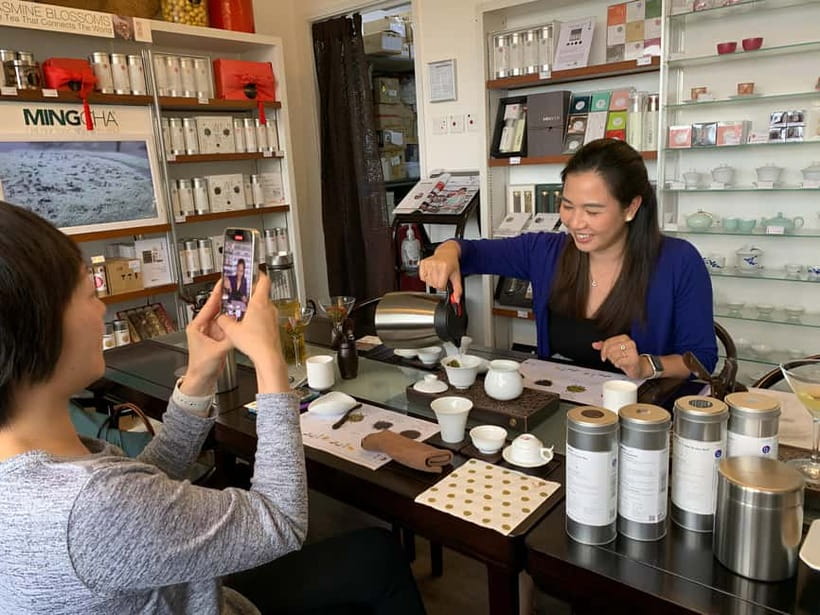
- Four premium Chinese teas: The session usually covers several tea families, such as green, scented green, red, oolong, white, or puer tea.
- Repeated brewing: Each tea may be brewed five or six times, helping you notice how aroma, body, and finish shift.
- Gaiwan practice: You learn traditional gungfu-style brewing and prepare tea for yourself and others.
- Food pairing: Snacks such as rose honey toast show how texture and sweetness can change the way tea tastes.
- Chai Wan location: The tea house is about a five-minute walk from Chai Wan MTR Station, Exit C.
- Small-group format: Sessions allow up to 20 people and are offered in English, Cantonese, and Mandarin.
Why this tea workshop is different from a standard tasting
A basic tea tasting can become a parade of cups: sip, nod, move on. MingCha takes a more useful approach by teaching you what to notice and why the tea tastes the way it does.
You begin with the tea leaf itself. Its shape, color, size, and texture offer clues about the plant and the production method. You then smell the dry leaves before hot water changes them. That first aroma can be quiet, grassy, floral, roasted, woody, or earthy.
After brewing, the leaves tell a second story. They open, soften, and release new scents. You taste the tea more than once, rather than judging it from a single cup. This matters because many Chinese teas change noticeably from the first infusion to later rounds.
The session also brings in sound and touch. You hear water moving through the small brewing vessels and handle the leaves and equipment. These details may sound minor, but they slow you down and help turn tea from a drink into a craft.
More Tea Tastings in the world:
- Private Tea Ceremony and Sake Tasting in Kyoto Samurai House
★ 5.0 · 163 reviews - Twinings 2-Hour Tea Tasting Masterclass in London
★ 5.0 · 105 reviews - Charleston: Wadmalaw Island Wine Tasting and Tea Garden Trip
★ 4.9 · 94 reviews
Meeting Vivian Mak’s approach to Chinese tea
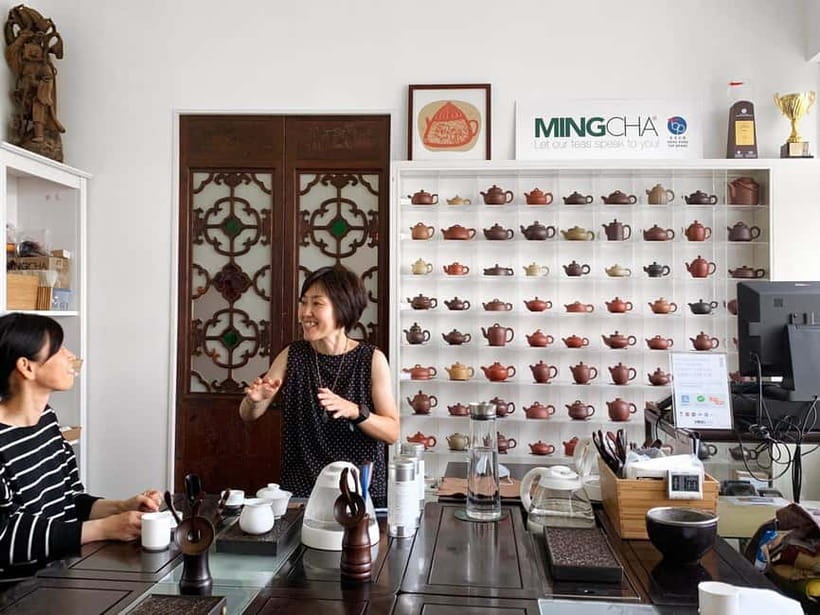
MingCha Tea House was founded by Vivian Mak, an artist and designer who moved into the tea business. That background helps explain the workshop’s attention to presentation, sensory detail, and unusual food matches.
You may meet Vivian herself or work with members of her tea team, including Vanessa, who has led sessions with her. The hosts explain tea in a way that works for a beginner, while still giving experienced tea drinkers useful points to consider.
The teaching covers tea’s botany, classification, growing conditions, harvesting, and production. You learn that the final flavor is not caused by one factor alone. Climate, harvest timing, leaf handling, oxidation, roasting, drying, and storage all shape the result.
This is valuable because tea labels can feel confusing. Green, white, oolong, red, and puer teas are not simply different plants. They are often different styles of processing, with the plant, growing region, harvest, and production method all affecting the cup.
The workshop also places Chinese tea in a cultural setting. You hear stories about where teas come from and how they are made, while keeping the focus on what you can see, smell, and taste in front of you.
Four tea families in about 90 minutes
The workshop lasts roughly one and a half hours, so the pace is active. The stated format includes four premium handcrafted teas, with the selection commonly drawn from green, scented green, red, oolong, white, and puer varieties.
You should not expect every session to feature all six styles. The point is comparison, not a giant catalogue. A green tea beside an oolong, for example, gives you a clear sense of how processing changes aroma and body.
A scented green tea may bring floral notes over a fresher base. A red tea, the style often called black tea outside China, can taste fuller and warmer. White tea may show a softer profile, while oolong can range from floral and light to roasted and rounded. Puer tea offers another direction, with aged or earthy qualities depending on the tea.
The exact line-up can change. One account of the experience described three artisan tea samples, while the activity format lists four premium teas and the wider tasting description allows four or five. If the number of teas matters to your decision, confirm the current selection when booking.
The repeated infusions are more important than the raw number of teas. Five or six brews per tea give you a chance to notice the cup becoming lighter, sweeter, drier, or more aromatic. You also learn that a tea can be interesting even when the first sip does not immediately impress you.
Learning to brew with a gaiwan
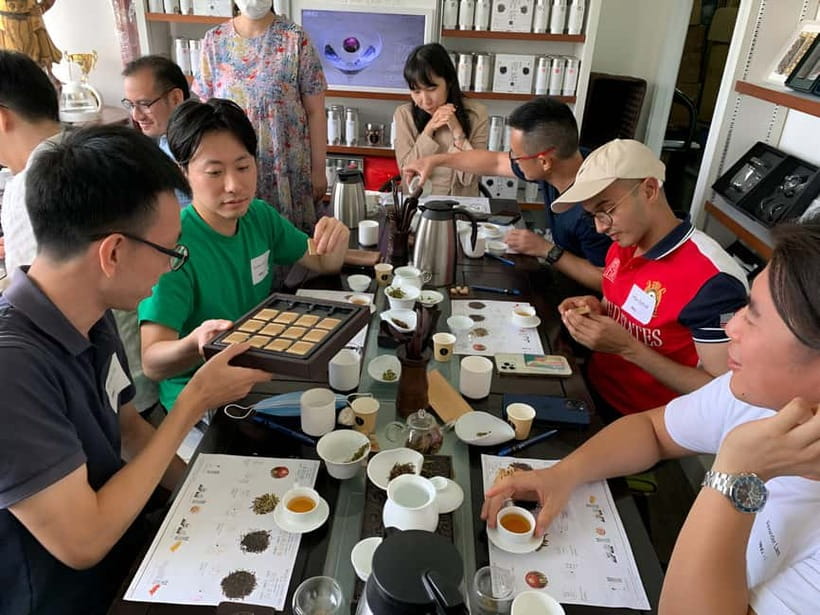
The practical brewing lesson is the strongest reason to choose this workshop over a simple sit-down tasting. You use a gaiwan, the traditional lidded bowl used to steep and pour tea, and practice the gungfu method.
This approach uses a relatively small vessel, controlled water, and short infusions. You learn how to place the leaves, add water, manage the lid, and pour without losing too much tea or oversteeping the leaves.
The lesson is not just about copying hand movements. It gives you a way to control the strength of your tea at home. You begin to see why water temperature, steeping time, leaf quantity, and the number of infusions matter.
The practice also makes the session social. You brew for yourself and for other people, which helps you get comfortable with the equipment. You can ask questions while working instead of trying to remember a demonstration later.
You will not leave as a tea professional after 90 minutes, but you should leave with a practical method. That is a better souvenir than another packet of information. A gaiwan may look delicate and unfamiliar at first, yet the guided practice makes it less intimidating.
More Food and Drink Tours in the world:
- Jakarta: Volcano, Tea/Rice Fields, Hot Spring, Local Food
★ 4.9 · 515 reviews - SF’s Chinatown: Tea & Dim Sum Food Tour – Includes full meal, 3hr
★ 5.0 · 153 reviews - Experience all of Japanese culture and Japanese food experience classes “origami, udon, Japanese food, green tea, calligraphy” in 4 hours
★ 5.0 · 105 reviews - Cairo Food Tour in local places & Egyptian Mint Tea
★ 4.5 · 102 reviews
Tea and snacks that change the taste
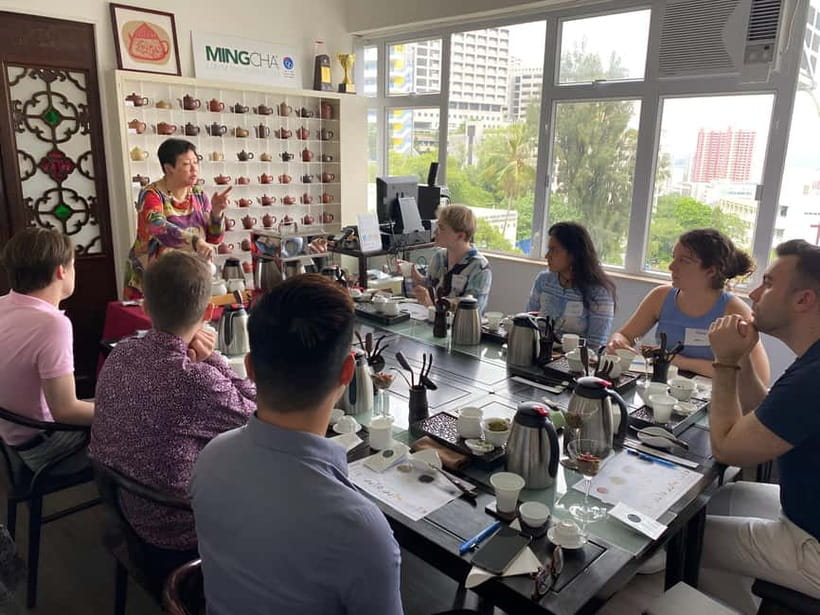
MingCha’s food pairing is one of the workshop’s more unusual features. The snacks are chosen to work with the tea, not simply to fill the table between tastings.
Rose honey toast is a featured example. Its crisp texture and gentle floral sweetness can draw out different qualities in the tea. A tea that seems sharp on its own may taste rounder with food. A floral tea may seem more obvious beside a lightly sweet snack.
This is a useful lesson for home entertaining. You are not just told that tea pairs with food. You see how sweetness, texture, and aroma affect the next sip. The hosts also introduce combinations that you might not think to try on your own.
The food portion is still a tasting, not a meal. Additional food and drinks are not included, so do not book this as a substitute for lunch or dinner. The pairing works best as a focused part of the workshop.
If you are not especially excited by tea, the food component may help keep the experience lively. One of the strongest accounts of the session described it as useful even for someone who began with only mild interest in tea. That makes this a sensible choice for mixed groups.
Finding MingCha in Chai Wan
The tea house is in Fortune Factory Building, Block B, 15/F, Unit B2. The setting may surprise you: the building entrance is a green parking lot rather than an obvious shopfront.
From Chai Wan MTR Station, Exit C, the walk takes about five minutes. At the building, walk into the parking-lot entrance and turn left. Look for Block B, marked by a stainless steel sign.
Walk into Block B, turn left again, and find the passenger lift. Press 15/F. When you leave the lift, you should see a brown door. The doorbell is on the right.
This is not difficult once you know the sequence, but it is easy to waste time looking for a street-level tea shop. I would save the address and arrive a little early, especially if you are meeting a group or attending a fixed start time.
The industrial setting has a practical advantage: it feels like you are visiting a working tea business rather than a tourist display. The tradeoff is that the arrival lacks the immediate charm of a traditional tea room.
Language, group size, and the pace of the session
The workshop is conducted in English, Cantonese, and Mandarin. That makes it useful for mixed-language groups, although the exact language balance may depend on the session and the host present.
The maximum group size is 20 people. That is not a private lesson, but the hands-on format gives the session more participation than a lecture. If the room is full, expect a shared experience rather than extended one-to-one coaching.
The 1.5-hour schedule is enough for an introduction without taking over your day. You cover tea production, sensory tasting, brewing, and food pairing in one sitting. The pace may feel brisk if you want long conversations about every tea.
One account described an experience lasting closer to three hours. The official duration is approximately 1.5 hours, so plan around the shorter time and treat any longer session as possible variation, not a guarantee.
A rainy day is a good time to book this activity. The workshop takes place indoors and gives you a calm, structured break from Hong Kong’s streets. It also offers more substance than simply sitting in a café with a cup of tea.
Is $63 a fair price?
At $63 per person, this is not a bargain tea stop. You are paying for instruction, several premium teas, repeated brewing, equipment practice, and food pairing rather than just the beverage.
The value is strongest if you want to understand Chinese tea and use what you learn later. The gaiwan lesson alone gives the session a practical edge, while the production discussion helps you make sense of tea shops and menus during the rest of your trip.
The price is less compelling if you only want a quick cup or a large snack. The included food is complementary tasting food, not a full spread, and drinks or food beyond the pairing cost extra.
I would compare it to the price of a guided cultural class, not to the cost of afternoon tea. For a tea enthusiast, the repeated infusions and hands-on brewing justify the fee. For a casual drinker, the decision depends on how much you value learning.
The five-star rating attached to the experience matches its clearest strengths: strong teaching, useful brewing instruction, and hosts such as Vivian and Vanessa who make the material entertaining as well as clear. Still, the changing tea selection and possible difference in session length are good reasons to confirm the current format.
Who should book this experience?
I would recommend it to anyone who already enjoys tea and wants a better grasp of Chinese styles. You will have plenty to compare, and the brewing practice gives experienced drinkers a chance to refine their technique.
It also suits beginners. You do not need a vocabulary of tea terms before arriving. The workshop starts with basic observation and builds toward more precise tasting and brewing.
Culture seekers will appreciate the way the class connects plants, production, place, and daily practice. It is not a broad tour of Hong Kong, but it offers a focused look at an important part of Chinese culture.
This is also a good choice for couples, friends, and families with mixed levels of interest. The snacks and hands-on work prevent the session from feeling like a lecture. Someone who is not a serious tea drinker can still take part in the sensory exercises and food matching.
I would skip it if your schedule is extremely tight, if you want a full meal, or if you are looking for a traditional street-side tea house in a historic district. The factory-building location and fixed workshop format may not match that expectation.
Should you book MingCha Tea House?
Book this workshop if you want more than a tasting flight. You will learn how Chinese tea is made, practice gungfu brewing with a gaiwan, taste repeated infusions, and see how snacks can change the cup.
The best reason to go is the combination of teaching and practice. You leave with a clearer sense of what you are drinking and a method you can try at home. The main cautions are the $63 price, the industrial-building setting, and some uncertainty over the exact number of teas and total session length.
For tea lovers and curious beginners, that is a fair trade. If you only want a quick refreshment, spend the money elsewhere.
FAQ
How long does the MingCha Tea Tasting and Pairing Workshop last?
The workshop lasts approximately 1.5 hours. One account described a longer session, but the stated duration is 1.5 hours.
How much does the experience cost?
The price is $63 per person.
How many teas will I taste?
The activity includes a tasting of four premium handcrafted teas. The selection may include green, scented green, red, oolong, white, and puer teas. The exact number and types can vary.
Is food included?
Yes. Complementary snacks are included as part of the tea pairing. Rose honey toast is one example. Additional food and drinks outside the pairing are not included.
Do I get to brew tea myself?
Yes. You practice traditional gungfu-style brewing with a gaiwan and learn how to prepare tea for yourself and others.
Where is MingCha Tea House located?
It is in Fortune Factory Building, Block B, 15/F, Unit B2. The building is about a five-minute walk from Chai Wan MTR Station, Exit C.
What languages are available?
The workshop is conducted in English, Cantonese, and Mandarin.
Can I cancel the booking?
You can cancel up to 24 hours in advance for a full refund. A reserve-now, pay-later option is also available.
More Workshops in the world
- Kyoto: 45-Minute Tea Ceremony Lesson Experience
★ 4.3 · 2,378 reviews - London: Traditional English Scone Making and Tea Workshop
★ 5.0 · 702 reviews - London Traditional English Scone Making and Tea Workshop
★ 5.0 · 271 reviews - Tea Ceremony Workshop in Tokyo by the Experienced Instrucor
★ 5.0 · 189 reviews
Just added around the world
- Yogyakarta: Prambanan Tour, Sukuh Temple & Tea Plantation★ 5.0 · 3 reviews
- Xi’an Chinese Calligraphy Workshop: Ink Art & Tea Tasting★ 5.0 · 4 reviews
- Yokohama : Tea Ceremony with Sweets and Souvenir★ 5.0 · 5 reviews
- Washington, D.C.: Tea Around Town Bus Tour with Landmarks★ 3.4 · 7 reviews
- Tea Route: Lake, Forest, Tea Plantation & 3 Course Lunch★ 3.6 · 7 reviews
- Wadi Rum: 2-Hour Jeep Tour with Bedouin Tea★ 5.0 · 11 reviews
- Walking Tour: Yanaka,Nezu& Sendagi: Tea Ceremony & Old Tokyo★ 5.0 · 3 reviews
- Visit local home for music and tea ceremony near Disney★ 4.9 · 13 reviews
Tea Tastings, compared.
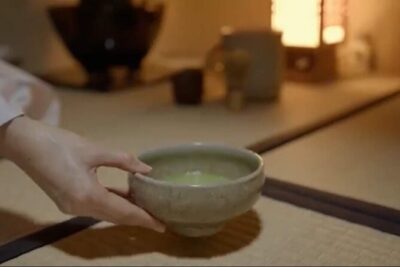
Private Tea Ceremony and Sake Tasting in Kyoto Samurai House
Read our review →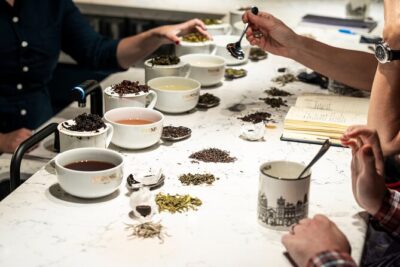
Twinings 2-Hour Tea Tasting Masterclass in London
Read our review →
Wadmalaw Island Wine Tasting and Tea Garden Trip
Read our review →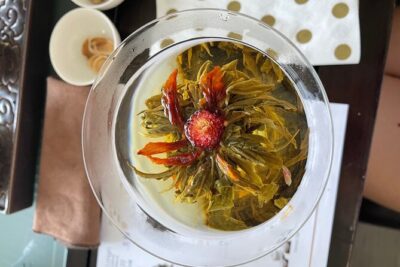
Matcha Experience with of Japanese Tea Tasting in Tokyo
Read our review →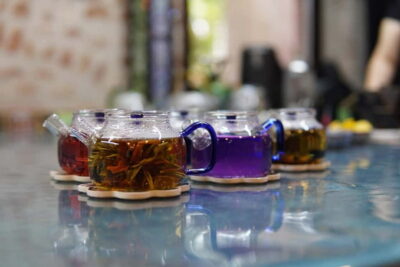
World Teas & Turkish Tea Brewing, Tasting Workshop
Read our review →Browse the lists this tour appears in