
Review · TAIPEI
Pineapple Pastry with Egg Yolk, Longan Cake, High Mountain Oolong Tea. Taiwan Traditional Dessert Experience-D (Taipei Cooking Class)
Taiwan’s most useful edible souvenir gets a hands-on upgrade here. You’ll prepare pineapple pastry with salted egg yolk, make an old-style longan cake, and pair both with oolong tea from high mountain farms. The class takes place Monday afternoon in a small Taipei kitchen.
I like the small maximum of 10 people, which should leave room for questions and practical help. I also like that you take your pastries home and receive the recipes after class. The main drawback is the limited schedule: this experience runs only on Mondays from 2:30 to 5 p.m.
Key points to know before booking

- Three-part Taiwanese food experience: Make pineapple pastry, prepare longan cake, and taste high-mountain oolong tea.
- Salted egg yolk adds the local twist: The filling brings a salty, savory note to the sweet pineapple pastry.
- Small class size: A maximum of 10 people makes this more personal than a large demonstration.
- Language help is built in: Teaching is available in Chinese, English, and Japanese.
- Useful take-home value: Your finished pastries go home with you, and recipes are provided after class.
- Monday afternoon only: Plan around the 2:30 to 5 p.m. schedule at CookingFun Taiwan.
Making Taiwan’s pineapple pastry from the filling up
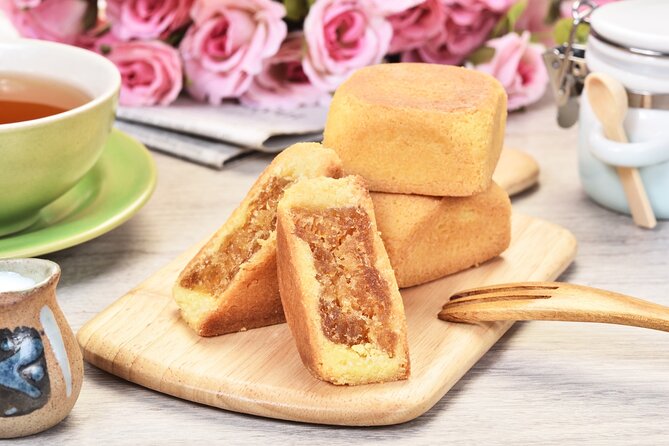
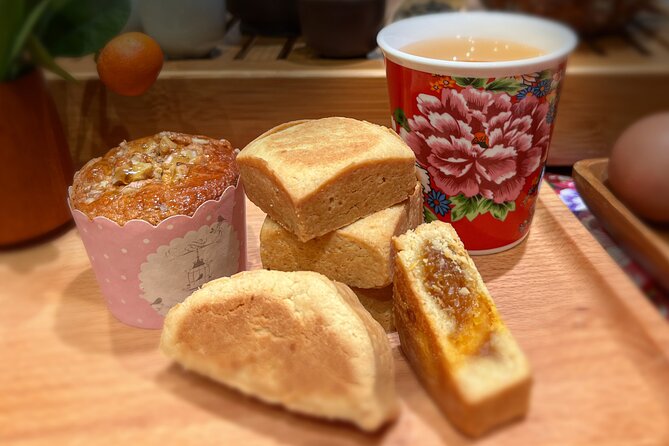
The star of this class is pineapple pastry with salted egg yolk, one of Taiwan’s best-known food gifts. Instead of simply buying a box at a department store, you learn how the filling comes together and how the salty egg yolk changes the pastry’s flavor.
The sweet and salty contrast is the point. Pineapple provides a fruity sweetness, while salted egg yolk adds a savory, aromatic note. That combination makes the pastry more interesting than a basic fruit tart, and it gives you a better sense of why this snack is so popular in Taiwan.
The class description specifically says you begin by preparing the pineapple filling. That matters because the filling is the heart of the pastry. You are not only shaping a finished product or watching an instructor work. You get a look at the process behind a familiar Taiwanese souvenir.
You should also expect the finished pastries to be practical rather than purely decorative. After the course, you may take home the pineapple pastries you made. That makes this a useful choice if you want something to share with family or friends after returning from Taipei.
The exact number of pastries is not stated, so do not book this expecting a guaranteed large box. The clear benefit is the chance to make your own and understand the ingredients. For many people, that hands-on part is worth more than another tasting stop.
More Cooking Classes in Taipei:
- Xiao Long Bao, Beef Noodles & Boba Tea Cooking Class in Taipei
★ 5.0 · 159 reviews - Xiao Long Bao, Chicken vermicelli with mushroom and sesame oil, Tofu strips salad, Bubble milk tea. Taiwan Traditional Delicacies Experience-A (Taipei Cooking Class)
★ 5.0 · 79 reviews - Xiao Long Bao & Boba Tea Cooking Class in Taipei
★ 5.0 · 28 reviews
The older flavor of longan cake
Longan cake gives the class a second dessert with a different character. Longan, also known as Fuyuan, is associated with traditional Taiwanese food culture and is described as a nourishing dessert ingredient. The course presents it as one of Taiwan’s old-fashioned sweets.
You can expect the longan cake to provide a contrast to the pineapple pastry. The pineapple pastry has fruit, pastry, and salted egg yolk. Longan cake brings a more traditional flavor profile and helps show that Taiwanese desserts are not limited to the familiar pineapple cake sold in souvenir shops.
The description connects longan with warming the blood and keeping warmth. Those ideas belong to traditional food beliefs, so I would treat them as cultural context rather than a medical promise. The value here is learning how an ingredient can carry both flavor and meaning in Taiwan’s food traditions.
This part may appeal most to people who want more than the standard tourist snack. Pineapple pastry is widely recognized, but longan cake gives you a chance to try something less familiar and learn about an older style of Taiwanese dessert.
The details of the longan cake preparation are not provided, so the class may be best for you if you enjoy learning by doing without needing a tightly specified step-by-step menu in advance. The recipe is distributed after the course, giving you a way to revisit the dish at home.
High-mountain oolong with a Taipei afternoon snack
Tea is not an afterthought here. The class includes high-mountain oolong selected from tea-growing areas more than 1,000 meters above sea level.
Taiwan has many mountain areas surrounded by mist and clouds, with relatively short average sunshine. The course explains that these conditions help enrich tea leaves with catechin. You will taste the oolong alongside the two desserts, where its refreshing, aromatic sweetness is meant to balance the salty egg yolk and longan cake.
That pairing is one of the most appealing parts of the experience. You are not just making two sweets and then leaving. The tea gives you a reason to slow down and think about how Taiwanese flavors work together. The gentle sweetness of oolong can cut through the pastry’s richness, while its aroma gives the afternoon a calmer finish.
The provided information does not specify the tea farm, cultivar, brewing method, or number of cups. I would not choose this class if you are seeking a detailed tea ceremony or a specialist tasting. Choose it if you want a simple introduction to Taiwanese tea culture connected to food.
A small kitchen class with multilingual teaching
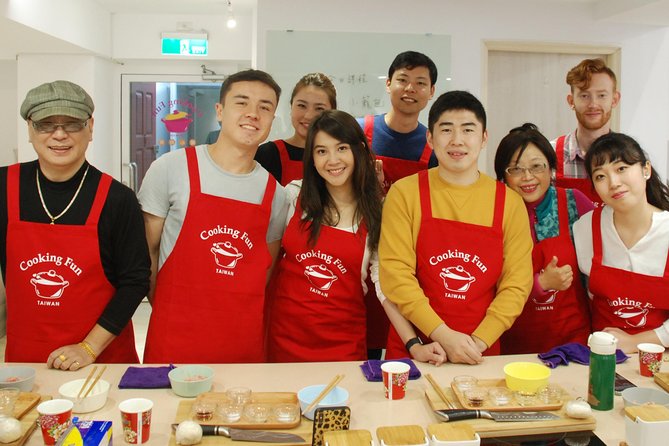
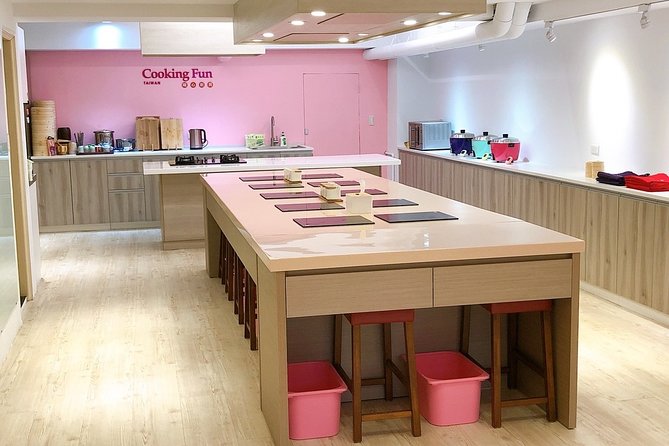
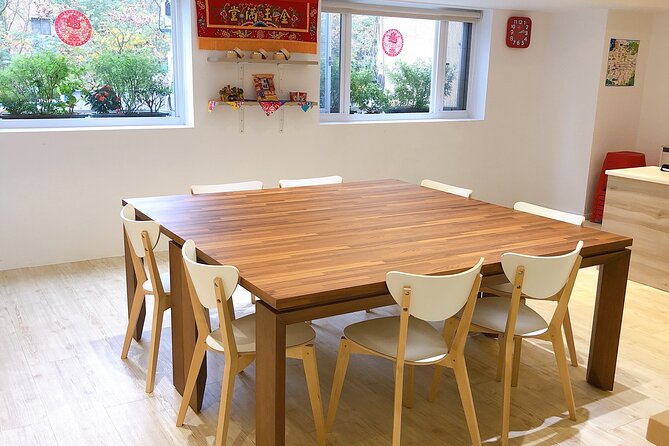
The class takes place at CookingFun Taiwan, also called 暖心廚房, at 2F, No. 5, Lane 290, Guangfu South Road, in Taipei’s Da’an District.
The maximum group size is 10 people. That is small enough to make a real difference during cooking. If you need clarification about a technique, want to check your pastry, or have a question about an ingredient, a small group usually gives the instructor more room to help than a large workshop.
Teaching is offered in Chinese, English, and Japanese. That is useful for international visitors, especially because pastry work often depends on small instructions about texture, timing, or handling. The available language support also makes this suitable for mixed-language groups.
One family specifically found the instructor kind and said the translator helped bridge the language gap. The class team also praised the group’s teamwork, which suggests the format works well for people cooking together rather than working entirely alone.
No instructor names are provided, so you should not expect to book a particular named teacher. You can expect instruction from the CookingFun Taiwan team, with language assistance available in the three listed languages.
More Dessert Stops in Taipei:
- Matcha Making Class in Tokyo with Authentic Japanese Sweets Set
★ 5.0 · 744 reviews - Matcha Making Class in Osaka with Authentic Japanese Sweets Set
★ 5.0 · 509 reviews - Tokyo: Matcha Making Experience with Mochi Sweets in Asakusa
★ 4.9 · 388 reviews - Kyoto: Japanese Traditional Sweets Making and Tea Ceremony
★ 4.4 · 314 reviews
Why the 2:30 to 5 p.m. timing works
The class lasts about two and a half hours, from 2:30 to 5 p.m. That is a useful length for a Taipei afternoon. You can spend the morning sightseeing, have lunch, and then turn a usually passive snack break into a scheduled food activity.
The timing also leaves room for the three parts of the experience: preparing the pineapple filling and pastry, making the longan cake, and tasting the tea with the finished sweets. The class is not a quick demonstration, but it also does not take up an entire day.
The fixed schedule is the main planning issue. This experience is available only on Mondays. If your Taipei stay is short, check your dates first before building other plans around it. A Monday afternoon booking can work well, but it offers no flexibility for a Tuesday or weekend itinerary.
The meeting point is also the end point, so you return to the same location rather than being taken elsewhere. The venue is near public transportation, which helps with arrival and departure, though the supplied information does not name the nearest station or provide travel times.
Is the $70 price a good value?
At $70 per person, this is not the cheapest way to taste pineapple pastry. You can buy Taiwanese pastries for much less in shops. The price makes more sense when you count the instruction, the hands-on preparation, the longan cake, the high-mountain oolong, the small group size, the take-home pastries, and the recipes.
I see the value in the combination. You are paying for an activity and a cultural lesson, not just food. The take-home pastries also give the class a practical souvenir, while the recipes let you try the dishes again after your trip.
The value is strongest for couples, families, and small groups who enjoy cooking together. It is also a good fit if you want a food activity that explains familiar Taiwanese products instead of simply presenting them at a tasting counter.
The value is weaker if you mainly want a large quantity of food, a full meal, or a formal tea lesson. The available information does not promise a meal, a take-home tea supply, or an advanced pastry certificate. Go for the process and the cultural connection.
Preparing for allergies, dietary needs, and comfort
Tell the provider about vegetarian needs, dining taboos, or food allergies when you make the reservation. Do not wait until the class begins. This is especially important because the recipes include pineapple pastry with salted egg yolk, and the full ingredient list is not supplied.
The class allows service animals. It is also near public transportation. No further accessibility information is provided, so you should contact CookingFun Taiwan directly if you need details about stairs, seating, kitchen access, or other mobility concerns.
The activity requires good weather under its operating policy. If poor weather causes a cancellation, you are offered another date or a full refund. This may seem unusual for an indoor cooking class, so keep the policy in mind when arranging a tightly packed Taipei itinerary.
Booking, cancellation, and group planning
Confirmation is provided when you book, and the experience uses a mobile ticket. You should be able to keep the booking details on your phone rather than print a voucher.
The class has a minimum number of participants. If that minimum is not reached, you are offered another date or experience, or a full refund. A maximum of 10 people keeps the class small, but it also means popular Mondays may fill early. The experience is booked an average of 16 days ahead, so reserve before your arrival if this class is important to your plans.
Free cancellation is available up to 24 hours before the start time for a full refund. Cancellations or changes made less than 24 hours before the class are not accepted for a refund. The cut-off is based on Taipei local time, so check the clock carefully if you are changing plans from another time zone.
Who will enjoy this class most
I would recommend this experience to you if you enjoy food with a story and prefer making something to simply buying it. Families can share the work, couples can cook side by side, and friends can turn the afternoon into a team activity.
It also suits visitors who want a manageable introduction to Taiwanese baking and tea. You do not need a full day, and the small group size should make the class less intimidating for first-time cooks.
The class may be less suitable if you need a flexible schedule, dislike sweet foods, or want a full savory meal. It may also disappoint you if you expect a named pastry chef, a formal tea ceremony, or extensive technical baking instruction, since none of those details are promised.
The strongest feature is the mix of familiar and less familiar flavors. Pineapple pastry gives you a famous Taiwanese souvenir, while longan cake takes you toward an older dessert tradition. The oolong ties the two together without turning the afternoon into a complicated tasting course.
Should you book the Taiwan Traditional Dessert Experience D?
Book it if you have a free Monday afternoon in Taipei and want a small, practical food class with something to take home. The $70 price is reasonable when you value instruction, tea, recipes, and the shared cooking time, not just the finished pastries.
I would be especially comfortable recommending it to families and small groups because the class encourages teamwork and offers teaching in Chinese, English, and Japanese. Just confirm dietary needs in advance and remember that the schedule is narrow.
Skip it if your itinerary cannot accommodate Monday at 2:30 p.m., or if you are looking for a full meal or advanced pastry training. For the right schedule, this is a pleasant way to connect three pieces of Taiwanese food culture: pineapple pastry, traditional longan cake, and high-mountain oolong.
FAQ
When does the cooking class take place?
The class is available every Monday from 2:30 p.m. to 5 p.m.
How long does the experience last?
The experience lasts approximately 2 hours and 30 minutes.
Where is the meeting point?
Meet at CookingFun Taiwan, 2F, No. 5, Lane 290, Guangfu South Road, Da’an District, Taipei City.
What languages are used for teaching?
Teaching is available in Chinese, English, and Japanese.
Can I take food home after the class?
Yes. You may take home the pineapple pastries you make during the course.
Are recipes provided?
Yes. Recipes are distributed after completing the course. To prepare them, you need to provide the names of your partners.
What is the cancellation policy?
You can cancel at least 24 hours before the start time for a full refund. Cancellations or changes made less than 24 hours before the experience are not accepted for a refund.
More Workshops in Taipei
- Xiao Long Bao, Pork thick soup, Bubble milk tea. Taiwan Traditional Light Meals Experience-B (Taipei Cooking Class)
★ 5.0 · 24 reviews - Street Food Cooking Class in Taipei : Gua Bao/Lu Rou Fan/Boba Tea
★ 5.0 · 22 reviews - Xiao long bao, Pork thick soup, Bubble milk tea. (Taiwan Cooking Class)-B
★ 5.0 · 18 reviews - Xiao Long Bao, Chicken vermicelli with mushroom and sesame oil, Tofu strips salad, Bubble milk tea. Taiwan Traditional Delicacies Experience-A (Taipei Cooking Class)
★ 5.0 · 8 reviews
Just added around Taipei
- Xiao Long Bao, Chicken vermicelli with mushroom and sesame oil, Tofu strips salad, Bubble milk tea. Taiwan Traditional Delicacies Experience-A (Taipei Cooking Class)★ 5.0 · 5 reviews
- Xiao Long Bao, Chicken vermicelli with mushroom and sesame oil, Tofu strips salad, Bubble milk tea. Taiwan Traditional Delicacies Experience-A (Taipei Cooking Class)★ 5.0 · 8 reviews
- Xiao long bao, Pork thick soup, Bubble milk tea. (Taiwan Cooking Class)-B★ 5.0 · 18 reviews
- Taiwanese Baking Class with Oolong Tea Tasting in Taipei★ 5.0 · 4 reviews
- Street Food Cooking Class in Taipei : Gua Bao/Lu Rou Fan/Boba Tea★ 5.0 · 22 reviews
- Taiwan Traditional Delicacies Experience, Xiao Long Bao, Chicken vermicelli with mushroom and sesame oil, Tofu strips salad, Bubble milk tea.★ 5.0 · 6 reviews
- Sip & Savor: Maokong Tea & Shenkeng Stinky Tofu Private Day Tour★ 4.5 · 9 reviews
- Taipei Fresh Market Tour and Colorful Bubble Tea Making★ 5.0 · 6 reviews
Dessert Tours, compared.

Matcha Making Class in Tokyo with Authentic Japanese Sweets Set
Read our review →
Matcha Making Class in Osaka with Authentic Japanese Sweets Set
Read our review →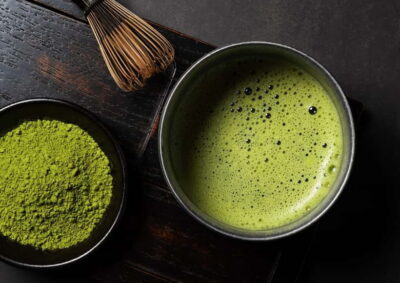
Matcha Making Experience with Mochi Sweets in Asakusa
Read our review →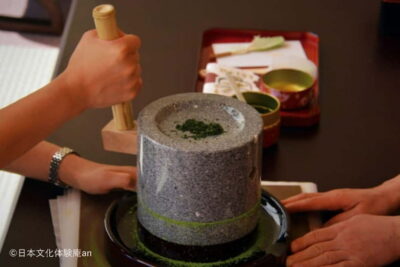
Japanese Traditional Sweets Making and Tea Ceremony
Read our review →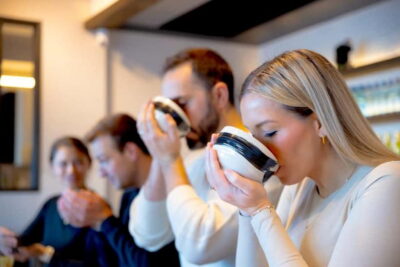
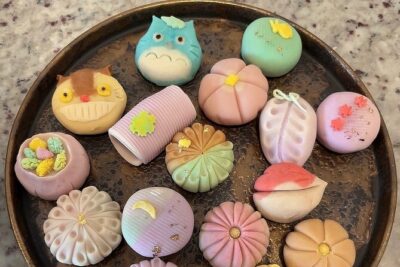
Make Traditional Nerikiri Sweets & Matcha experience in Shibuya
Read our review →
Japanese Traditional Sweets Making and Tea Ceremony
Read our review →
Browse the lists this tour appears in