
Review · TOKYO
Tokyo Morning Japanese Tea and Meditation Experience in Japan
Japanese tea is usually served in a cup and finished in a few quiet sips. This one-hour Tokyo experience takes a more hands-on route: you use one Shizuoka sencha to make five different tea menus, including ice-brewed tea, roasted leaves, and edible tea leaves. It turns a familiar drink into a small lesson in farming, flavor, and attention.
I like the very small group size, capped at five, and the fact that you prepare the tea yourself rather than simply watching an instructor pour it. I also like the morning schedule, the English guidance, and the included tea-leaf souvenir. The main drawback is its short length: if you want a long tea ceremony with formal clothing, elaborate utensils, or a historic teahouse setting, this is not that experience.
Key points to know
- One tea, five preparations: Use sencha from the Ryuso, or Dragon Claw, area of Shizuoka in several different ways.
- You do the work: Brew, taste, roast, and handle the tea yourself instead of receiving a prepared cup.
- A quiet start in central Tokyo: Choose the 7:30 or 9:00 morning session for a calm break before a full day of sightseeing.
- Small group format: The maximum is five people, which gives the session a personal feel and leaves room for questions.
- English guidance included: You can follow the explanations and instructions without needing Japanese.
- Tea souvenir included: You leave with tea leaves, giving you a way to repeat part of the experience later.
Five ways to understand one Shizuoka sencha
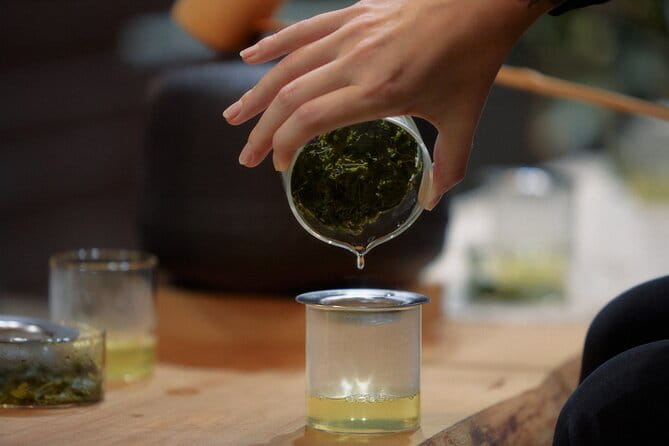
The clever idea here is simple: the session uses a single-origin Japanese green tea and changes the preparation. You are not sampling five unrelated teas. You are seeing how water, heat, roasting, and the tea leaf itself affect what you taste.
The sencha comes from Ryuso in Shizuoka Prefecture, a less familiar tea-growing area described as the Dragon Claw region. That detail gives the session a clear sense of place. Instead of treating Japanese tea as a generic souvenir, the experience connects your cup to a particular growing area and to the work of tea farmers.
You may brew tea with hot water, use ice water for a slower extraction, eat the leaves, and roast them. Two other menu preparations are part of the five-menu format, though the available details do not specify exactly what they are. The important point is that the session asks you to pay attention to the leaf in several forms, not just drink the liquid.
That approach is useful for first-time tea learners. Matcha receives most of the attention abroad, but sencha is an everyday Japanese tea with its own methods and character. This experience gives you a broader look at Japanese tea without requiring you to commit to a long formal ceremony.
A few more tea experiences around Tokyo worth a look
- Great Ocean Road Tour Plus Koalas, Forest Walk and Morning Tea
★ 4.5 · 1,068 reviews - Morning Sightseeing Cruise: 10:30am-12pm (90min)
★ 4.5 · 973 reviews - Great Ocean Road, 12 Apostles, Rainforest & Morning Tea-Melbourne
★ 5.0 · 568 reviews
A morning meeting in Sendagaya

The meeting point is Shun Sudo WallArt at 3-5-18 Sendagaya, Shibuya, Tokyo 151-0051. The activity begins and ends at this same location, so there is no transfer between stops and no private transportation to arrange.
The address puts the experience in central Tokyo, near public transportation. Still, I would allow enough time to find the exact entrance, especially for the early 7:30 session. Tokyo mornings can be quiet, and a wall-art meeting point may not be as instantly obvious as a large station landmark.
You receive confirmation when you book, and the ticket is mobile. That is handy for a short activity. Keep the confirmation ready on your phone, and check the meeting address before leaving your hotel. Since the session is only about an hour, arriving late could mean missing part of the instruction.
There are two start times each day: 7:30 a.m. and 9:00 a.m. The earlier option suits you if you want tea before breakfast or plan to spend the rest of the day sightseeing. The later option still gives you a head start on Tokyo, while avoiding quite such an early alarm.
Why the small group matters
The maximum group size is five. That is a meaningful advantage for an activity based on hand preparation. You are likely to have enough space and time to carry out each step yourself, rather than watching from the back while an instructor does everything.
The format also supports questions. Tea preparation can look easy until you start measuring water, handling wet leaves, or deciding how much roasting is enough. With only a few people, the English-speaking guide can explain what you are doing as you go.
The trade-off is that this is not a large, theatrical cultural show. You should expect a focused session rather than a grand performance. Its appeal is participation and concentration, not spectacle.
The guide is available in English, which makes the session suitable for visitors who want more context than a translated menu can provide. You can learn about the tea, the growing area, and the methods used to prepare it. The experience also touches on the work of tea farmers, including the careful picking of leaves in the fields. That farming detail adds weight to what might otherwise be a pleasant but fairly brief tasting.
Brewing tea as a morning meditation
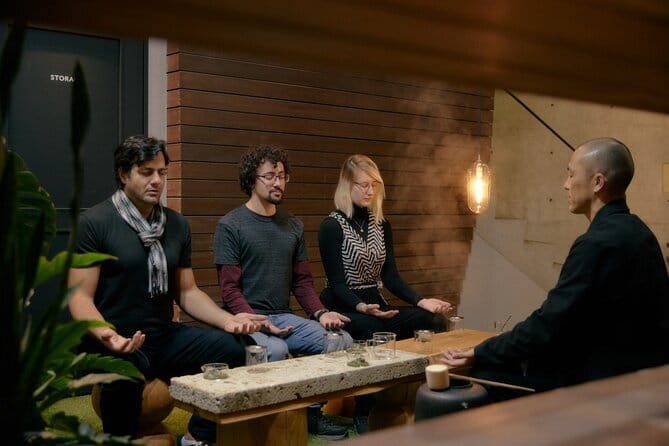
The experience describes itself as a morning meditation, and that makes sense in a practical way. You are asked to slow down, brew the tea, taste it, and notice how the same leaves change. The activity does not depend on rushing from one sight to another.
Tokyo is a large, energetic city. A quiet hour with a small group can reset your pace before you head to another neighborhood, museum, market, or shopping area. You do not need prior meditation experience. The tea preparation itself provides the structure.
I would keep your expectations realistic. This is not described as a long guided meditation with a separate meditation teacher or a detailed religious lesson. The calm comes from the process of making and tasting tea. If you enjoy practical activities that encourage you to focus, that should work well. If you want a formal Zen ceremony, you may find the format more casual than expected.
The sensory side is central. You handle the leaves, watch them change, smell the roasted tea, taste the brewed liquid, and eat part of the tea itself. Using the same tea in several forms makes the differences easier to notice. You do not need a trained palate. Curiosity is enough.
Same place, a different pot:
- Matcha Making Class in Tokyo with Authentic Japanese Sweets Set
★ 5.0 · 744 reviews - Kimono Tea Ceremony at Tokyo, Asakusa Maikoya
★ 5.0 · 638 reviews - Tokyo: Traditional Tea Ceremony with a Tea Master
★ 5.0 · 528 reviews - Dynamic Tokyo: Tokyo Tower, Tea Experience, Bay Cruise Day Tour
★ 4.5 · 521 reviews
Eating and roasting the tea leaves

Eating tea leaves may be the most memorable part for many people because it challenges the usual idea of tea as a drink. After brewing, the leaves are not automatically discarded. This experience shows you that they can have another role.
Roasting the leaves adds another change in flavor and texture. The exact roasting equipment and recipe are not specified, so I would not expect a full cooking class. Think of it as a guided tea preparation with small food elements, not a meal-making workshop.
Snacks are included, but the tour is still only about an hour. You should not book it as a substitute for breakfast or lunch. If you have dietary restrictions, ask the provider before booking because the available information does not list the snack ingredients or allergy arrangements.
The five menus make the price easier to assess. You are not paying for a single cup and a short explanation. You are paying for several guided preparations, the tea, snacks, a small-group format, English instruction, and tea leaves to take home. At $39.25 per person, that is a reasonable price for a compact cultural activity in central Tokyo, especially if you value participation over sightseeing from a distance.
It is less attractive if you mainly want to drink a high-end tea without doing anything yourself. In that case, a tea shop may be cheaper and simpler. Here, the hands-on method is the point.
A closer look at the tea-growing connection
The tea comes from a rare region called Ryuso, translated as Dragon Claw. The experience uses this origin to connect your tasting with the people and land behind the leaves.
That matters because tea can become an abstract symbol of Japan. You see matcha sweets everywhere, but it is easy to forget that tea begins in fields and depends on careful picking and processing. The session gives you a short introduction to that chain, including the skill involved in selecting tea leaves.
You will not get a full agricultural tour of Shizuoka. The activity takes place in Tokyo and lasts about an hour. Still, the origin story gives you something specific to remember. Afterward, you can think about sencha not as one standard flavor, but as a product shaped by region, handling, water, and heat.
The single-origin approach also makes the session more coherent. If five different teas were served, it would be difficult to know whether the changes came from the tea itself or the preparation. Here, the basic ingredient stays the same while the method changes.
The souvenir and what it adds
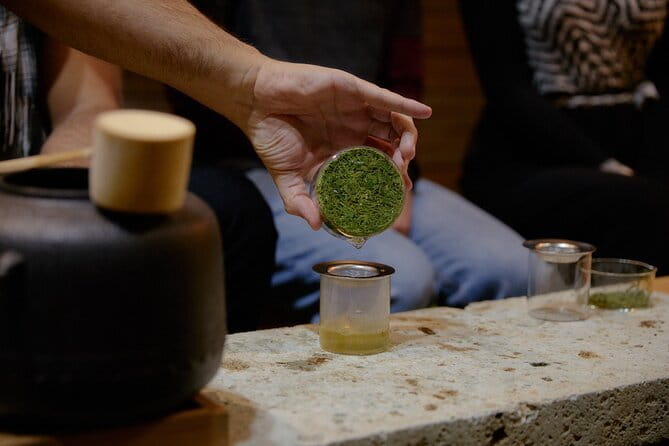
Tea leaves are included as a souvenir. That is a useful extra rather than a decorative token. You can use the leaves later and try to repeat one of the brewing methods at home.
The souvenir also helps extend a short experience. An hour passes quickly, but the leaves give you a physical reminder of the session and the Ryuso growing area. If you enjoy buying edible souvenirs, this is more practical than carrying home another small ornament.
Do not assume the souvenir includes special brewing equipment or a full recipe book. The available details confirm the tea leaves, but not extra tools or written instructions. If you want to recreate every one of the five menus, pay attention during the explanation and ask questions while you are there.
Who will enjoy this Tokyo tea session
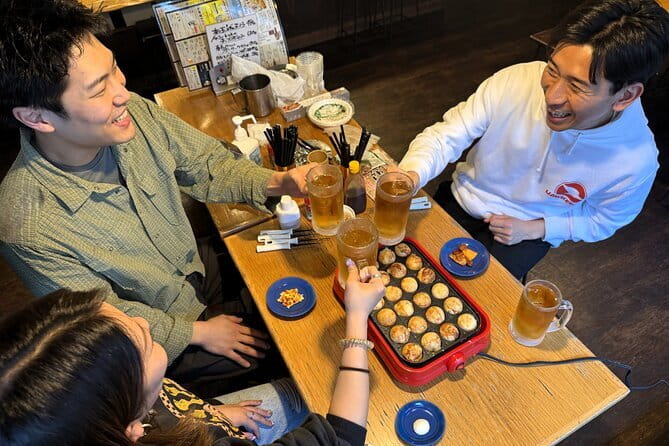
I would recommend this experience to you if you want a compact cultural activity with real participation. It suits solo visitors, couples, and small groups who like food and drink experiences but do not want a large class.
It is also a good choice for someone who already knows a little about Japanese tea and wants to move beyond matcha. The session may give you a new appreciation for sencha, especially through ice brewing, leaf eating, and roasting.
Families may also find the unusual preparations interesting, but the information provided does not set a minimum age or describe child-specific activities. If you are booking for children, confirm the age policy first.
The experience is less suitable for you if you need a substantial meal, want a long ceremony, or prefer an itinerary packed with sightseeing. There are no listed transport transfers or additional Tokyo attractions. The value comes from the focused tea lesson.
Because the group is small, it may appeal to visitors who find large demonstrations impersonal. On the other hand, a maximum of five means availability can be limited. It is booked, on average, 36 days ahead, so I would reserve early if one of the two morning times fits your plans.
Practical details before you book
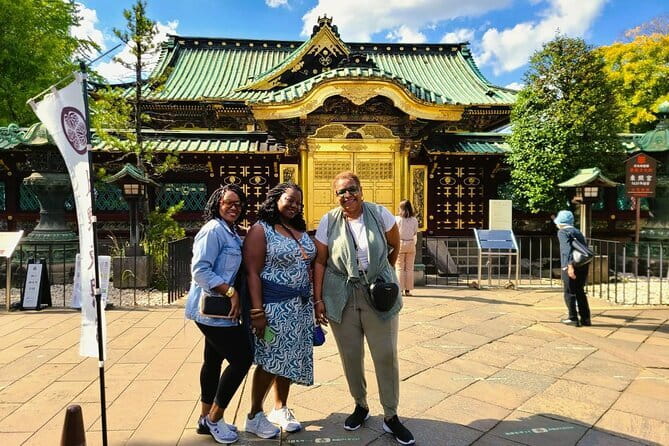
The price is $39.25 per person. The package includes approximately one hour of drinking and eating tea, snacks, English guidance, and a tea-leaf souvenir. Private transportation is not included, but the meeting point is near public transportation.
Service animals are allowed. The activity ends back at the starting point, which makes planning the rest of your morning easier. You do not need to arrange a separate return trip.
Free cancellation is available if you cancel at least 24 hours before the local start time. Cancellations or changes made within 24 hours are not accepted for a refund. Since the sessions are short and limited to five people, check your Tokyo schedule carefully before committing.
Should you book the Ryuso tea experience?
Book it if you want to understand Japanese tea by making it yourself. The strongest features are the small group, the five preparations from one sencha, the English guidance, and the connection to tea farming in Shizuoka.
Skip it if you are looking for a formal, extended tea ceremony or a full breakfast. This is a compact, hands-on lesson in a central Tokyo location. At $39.25, it offers good value for a quiet hour, several tastings, and a useful souvenir, but its appeal depends on your willingness to participate rather than simply receive a polished performance.
FAQ
How long does the Japanese tea experience last?
The experience lasts approximately one hour.
What time does the activity start?
It is offered twice each morning, at 7:30 a.m. and 9:00 a.m.
Where does the experience meet?
The meeting point is Shun Sudo WallArt, 3-5-18 Sendagaya, Shibuya, Tokyo 151-0051, Japan. The activity ends back at the same location.
Is English guidance available?
Yes. A guide is available in English.
What is included in the price?
The experience includes the one-hour tea activity, snacks, and a souvenir of tea leaves. Private transportation is not included.
How many people can join the activity?
The activity has a maximum of five participants. You receive confirmation at booking, and the ticket is mobile.
Just added around Tokyo
- Yokohama : Tea Ceremony with Sweets and Souvenir★ 5.0 · 5 reviews
- Walking Tour: Yanaka,Nezu& Sendagi: Tea Ceremony & Old Tokyo★ 5.0 · 3 reviews
- 2 Hours Mochi &Nerikiri Making & Matcha Class in Bunkyo★ 5.0 · 21 reviews
- Private Kimono and tea ceremony at local home near Tokyo Disney★ 5.0 · 6 reviews
- Private Mochi・Matcha sweets Making Class Near Shibuya Area★ 5.0 · 22 reviews
- Tokyo Sweets Tour: Hidden Gems & Matcha at an Old Tea House★ 5.0 · 6 reviews
- Giant Sushi Cooking Class: Make a 1.5m Sushi Roll in Tokyo★ 5.0 · 9 reviews
- Tokyo Tea Ceremony Class at a Traditional Tea Room★ 5.0 · 2 reviews
Morning, compared.
Magnetic Island: Guided Bus Tour with Morning Tea
Read our review →
Half Day Sea Kayak Tour from Batemans Bay with Morning Tea
Read our review →

Sydney Harbour: 2-Hour Morning Yacht Cruise with Morning Tea
Read our review →
Brisbane Bus Tour: Max 10 people | Half Day | Morning tea inc.
Read our review →
Varanasi: Sunrise walking tour with Chai & Arti Ceremony
Read our review →
Bowral Honey Farm Tour, Honey Tasting & morning Tea
Read our review →
Puer Tea Picking and Tasting | 6 Hour Morning Trip
Read our review →Browse the lists this tour appears in