
Review · TOKYO
Dynamic Tokyo: Tokyo Tower, Tea Experience, Bay Cruise Day Tour
Tokyo is a huge city, and this nine-hour day tour gives you a useful first look without asking you to decode the rail map on your first morning. You move from the Imperial Palace and Senso-ji to a matcha session, buffet lunch, a boat ride, and Tokyo Tower. It is a lot, but the mix keeps the day moving.
I especially like two things here: the tea and garden visit, which gives the day a real cultural center, and the range of viewpoints. You see Tokyo from a palace garden, a temple street, a coach window, the water, and 150 meters above the ground. The main drawback is pace. You will be on the move all day, and the Imperial Palace stop and river cruise may feel short to anyone who prefers slow sightseeing.
Key points at a glance
- A broad first-day overview: Cover major sights in central Tokyo without arranging several separate tickets or routes.
- A hands-on matcha stop: Prepare your own tea in Asakusa, with a video and explanation, rather than watching only a formal demonstration.
- A strong guide can make the day: Guides praised by name include Mina, Aki, Hiro, Yokosan, Izumi, Makoto, and Kik Koo.
- Lunch is more than a quick refuel: The included international buffet lasts about 70 minutes and comes with coffee or tea.
- Tokyo Tower is included: The ticket covers the 150-meter Main Observatory, but not the 250-meter Special Observatory.
- Expect a full schedule: Wear easy walking shoes, allow for traffic delays, and do not plan a tight evening reservation.
Why this tour works for a first day in Tokyo
At about $99.10 per person, this is not the cheapest way to see Tokyo, but it bundles transport, a guide, lunch, a cruise, and Tokyo Tower admission. If you tried to recreate the day yourself, you would still pay for the tower and boat, then spend time arranging connections and deciding how much time to give each stop.
I see the tour as an orientation day rather than a deep visit to any one sight. You get the broad outline of Tokyo: imperial tradition, Buddhist worship, old shopping streets, Japanese tea, modern waterfront development, and the city skyline. Afterward, you will know which neighborhoods deserve a return visit.
The coach matters more than it might seem. Tokyo’s sights are spread out, and the day includes a crossing of Rainbow Bridge along with drives through major districts. The tour can use an environmentally friendly hybrid bus, though that vehicle may change because of maintenance or other practical issues.
The group can reach up to 40 people, though some departures have been much smaller. In general, odd-numbered parties may share seats with other people. That is normal for a scheduled coach tour, but it is worth knowing if you are expecting a private outing.
A few more tea experiences around Tokyo worth a look
- Kimono Tea Ceremony at Tokyo, Asakusa Maikoya
★ 5.0 · 638 reviews - Tokyo: Traditional Tea Ceremony with a Tea Master
★ 5.0 · 528 reviews - Tea Ceremony Workshop in Tokyo by the Experienced Instrucor
★ 5.0 · 189 reviews
Imperial Palace grounds and the view of Nijubashi
The first stop is the Imperial Palace area, with about 30 minutes to admire the view of Nijubashi Bridge and the former Edo Castle foundations. The East Garden is associated with the old castle grounds and offers moats, stonework, plants, and quiet paths in the middle of the capital.
This is mainly a photo and orientation stop. You do not get a long palace visit, and the palace itself is not presented as an open interior attraction. I would keep expectations modest here. The value is in seeing the setting of Japan’s imperial center and hearing how Edo Castle relates to modern Tokyo.
Thirty minutes can feel tight, especially if the coach has had trouble reaching the area. Traffic controls or restrictions near the Imperial Palace can affect the departure point or operation, and the order of stops can change. If the palace grounds are high on your personal list, plan a separate visit on another day.
Senso-ji, Nakamise, and old Tokyo in Asakusa
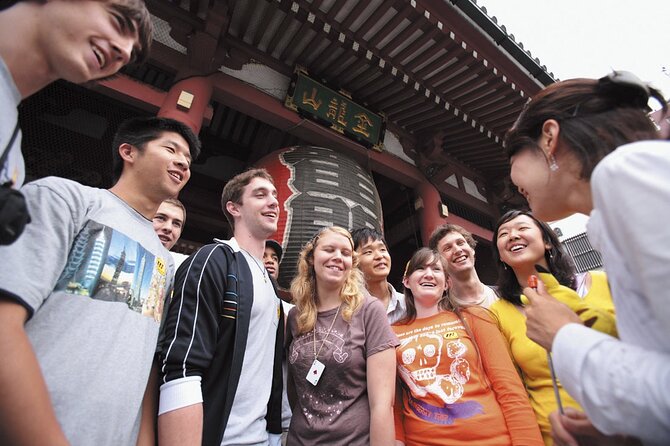
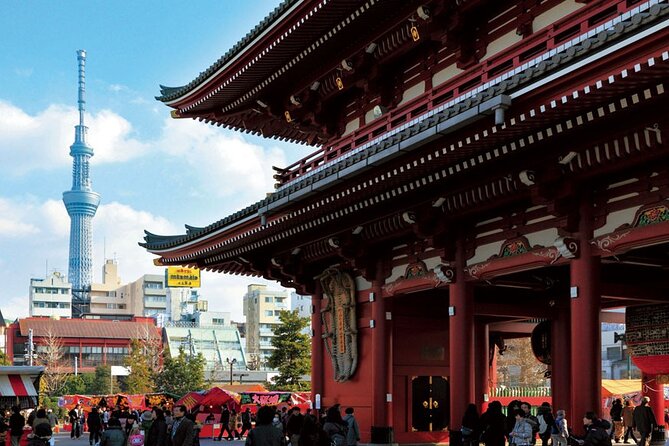
Asakusa provides the strongest old-Tokyo contrast of the day. You have about an hour around Senso-ji, Tokyo’s oldest temple, reached through the famous Kaminarimon Gate and its large thunder god figure. Nakamise, the approach to the temple, is lined with food stalls, souvenirs, handicrafts, and other small purchases.
This is one of the places where you should stay alert to the meeting time. There is plenty to see, but the shopping street can pull you along faster than expected. You can look for traditional snacks, small gifts, and temple items, though much of the merchandise is aimed at sightseers rather than serious shoppers.
Senso-ji is an active Buddhist temple, not simply a pretty backdrop. Take a moment to notice the incense, the gates, the pagoda, and the way people approach the temple. Your guide can add useful context about temples, shoguns, and the emperor, which helps turn a quick stop into a more meaningful introduction.
Some people find the shopping portion too commercial, and I understand that complaint. Still, as a first taste of Tokyo, Asakusa gives you more character than another drive past a modern office district. You may wish for extra free time here, but the schedule has several major stops still ahead.
The matcha session and the garden setting
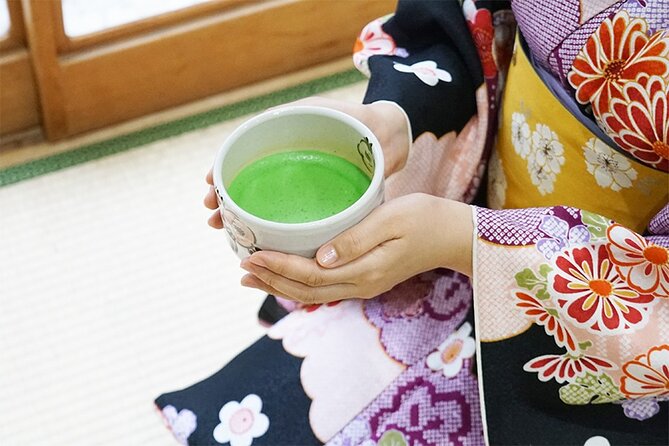
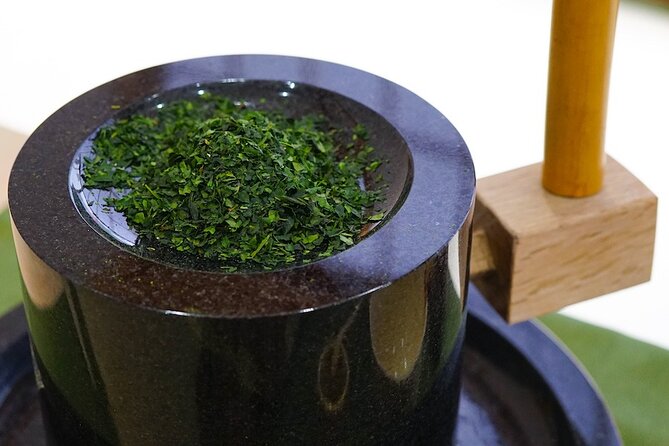
The tea experience is one of the best reasons to choose this particular tour. It takes place at a matcha experience shop in Asakusa, where you watch a video about preparing green tea and then make your own. This is not a formal tea ceremony conducted in silence by a tea master, so book it for participation and explanation rather than ceremony alone.
That distinction matters. The session gives you a practical look at matcha preparation and the care involved in the process. It also places the activity in a garden setting with bonsai and preserved Edo-era architecture. Several guests considered this the highlight of the day, sometimes preferring it to Tokyo Tower.
The garden adds weight to the stop. A garden visit can easily become a quick photo break on a packed itinerary, but the bonsai and older structures give you a closer look at Japanese design and patience. One particularly notable bonsai tree is described as 525 years old.
You may have some time to walk through the garden before or after the tea session, although the group may remain together more closely than you would on an independent visit. If you want a long, quiet garden stroll, this will not replace a dedicated garden tour. As a compact cultural activity, though, it is memorable and easy to fit into a busy day.
Same place, a different pot:
- Matcha Making Class in Tokyo with Authentic Japanese Sweets Set
★ 5.0 · 744 reviews - Tokyo: Matcha Making Experience with Mochi Sweets in Asakusa
★ 4.9 · 388 reviews - Asakusa Cultural Walk & Matcha Making Tour
★ 5.0 · 245 reviews - Mt. Fuji & Lake Kawaguchiko Ropeway Panorama Full-Day Tour
★ 4.6 · 236 reviews
Buffet lunch at the Sheraton Grande Tokyo Bay Hotel
Lunch is scheduled for about 70 minutes at the Sheraton Grande Tokyo Bay Hotel. The meal is a Western-style international buffet with coffee or tea included. Details described by past participants include Japanese barbecue-style meats and vegetables, with pork and beef mentioned along with dessert.
The hotel setting gives you a comfortable pause after the morning’s walking and sightseeing. I like that lunch is substantial rather than a rushed sandwich stop. You can eat at your own pace within the allotted time and return to the coach ready for the afternoon.
There is one important limitation: vegetarian requests cannot be accommodated because the meal is buffet-based. If you need a specific diet, ask before booking rather than assuming the buffet will solve the problem.
The stop is also practical for families. Children aged four and five incur a meal charge of ¥2,700 at the restaurant, while children aged zero to five can join without a bus seat unless booked at the child rate. Those details can affect the real cost of a family booking.
The boat ride from Hinode Pier
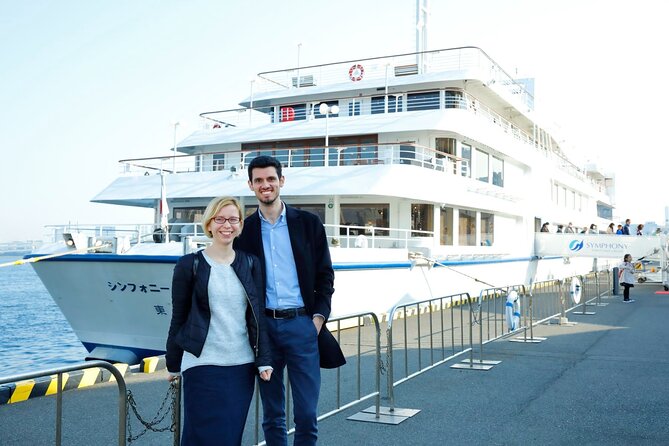
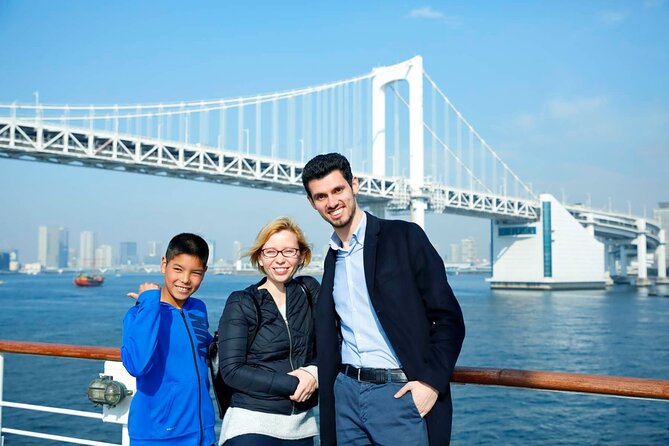
The water portion is designed as a change of view. The cruise runs for about an hour in the schedule, with the stated cruise time from 3:00 to 3:50 p.m., and includes one coffee or tea. The route passes under 12 bridges as you travel toward the Asakusa area, with Tokyo’s waterfront architecture and bridges spread along the river.
I find the boat useful because it lets you rest while still sightseeing. After a morning of temple paths and shopping streets, sitting down and watching the city slide past is welcome. It also shows how Tokyo’s waterways connect older neighborhoods with newer waterfront districts.
Keep your expectations realistic. This is not a detailed harbor excursion with constant commentary about every building. Some people find the cruise less engaging than the tea stop or tower. In bad weather, the boat may stay close to shore, and one hot-weather departure had weak air conditioning.
The schedule may change if an earlier boat is available, which can create extra time around Asakusa. That is a nice bonus, but do not count on it. Treat the cruise as a scenic break rather than the main reason to book the day.
Tokyo Tower and the 150-meter view
Tokyo Tower is the grand finish. The included ticket takes you to the Main Observatory at 150 meters, where you get a 360-degree view across the metropolitan area. A transparent floor section offers a direct look down, provided you are willing to step onto it.
The tower works well at the end because it pulls the day together. From above, you can see how large and tightly packed Tokyo really is, and the earlier coach ride begins to make more sense. You have spent the day moving across the city, then get a final visual reminder of its scale.
The included ticket does not cover the Special Observatory at 250 meters. You can pay the additional admission yourself if it is open and you want the higher view. For most visitors, the Main Observatory already supplies the key experience, so I would not treat the extra charge as essential.
The stop lasts about 45 minutes. That is enough for the main viewing level and photos, but not enough for a leisurely tower visit, shopping, and a long wait. The schedule may also be affected by traffic earlier in the day.
How good guides shape the experience
The strongest part of this tour may be the guide. Names praised in the feedback include Mina, Aki, Hiro, Yokosan, Izumi, Makoto, and Kik Koo. The consistent pattern is clear English, historical explanation, humor, help with logistics, and personal attention.
A good guide turns coach time into useful sightseeing. You may hear about Tokyo’s history, learn how the imperial system relates to earlier rulers, pick up basic Japanese counting, and get help understanding the transit system. One guide even took photos for members of the group and learned their names.
This matters because the schedule is too tight for you to research every place in advance. At Senso-ji, the guide can explain what you are seeing. On the coach, you can connect the palace, Ginza, the National Diet area, Rainbow Bridge, and the waterfront instead of viewing them as unrelated landmarks.
Guide quality can vary on any scheduled departure, so I would not book solely because one named guide was praised. Still, the evidence points to guiding as a major strength of the experience, not a minor extra.
Timing, walking, and the meeting point
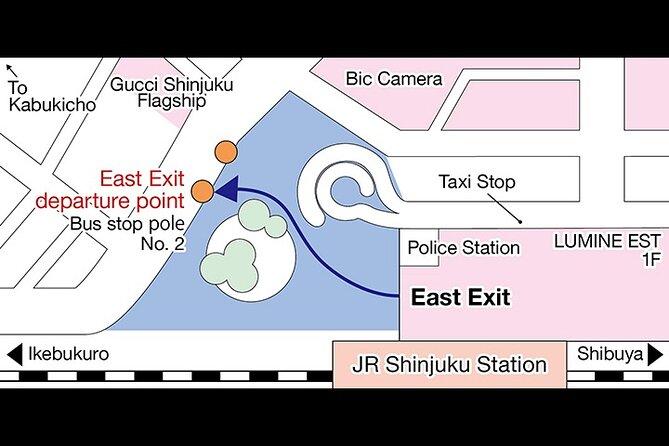
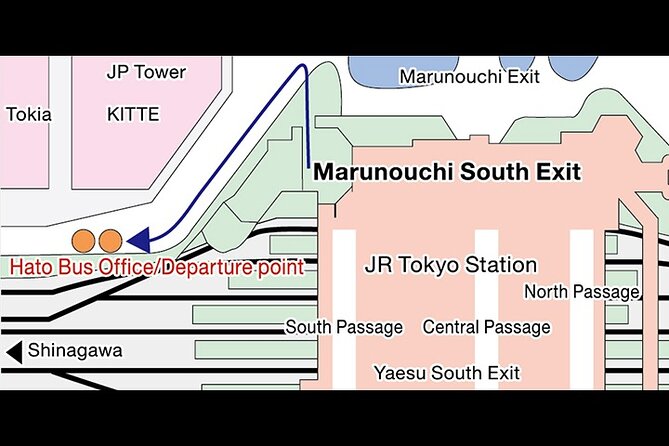
The tour begins and ends at Tokyo Station, near the Marunouchi South Entrance. Finding the exact departure point may take extra care. The bus station or ticket area can be confusing, and directions that mention a nearby landmark may not be precise enough on their own. Arrive early and verify the location in advance.
You need moderate physical fitness. The day combines coach boarding, temple paths, garden walking, shopping streets, stairs, and getting on and off the boat. Wear shoes that are easy to walk in, and do not assume the bus will carry you from door to door at every stop.
Traffic is the great unknown. Tokyo roads can slow the coach, and the tour may finish later than the advertised approximate duration. Do not schedule a tight dinner reservation, airport transfer, or long-distance train immediately afterward.
The tour is available as a mobile ticket, and confirmation is sent within 48 hours of booking subject to availability. If you choose a pay-later option, make sure you have the actual tour confirmation and meeting instructions before setting out. One booking problem involved a name missing from the departure list, so checking those details is sensible.
Free cancellation is available up to 24 hours before the start time. Changes or cancellations inside that window are not accepted for a refund.
Who should book it
I would choose this tour if you have limited time in Tokyo, want a guided introduction, or feel uneasy arranging several distant sights on your own. It suits first-time visitors, families, and anyone who prefers a planned day with lunch and admissions handled in advance.
I would skip it if you want long visits at each attraction, dislike coach tours, need a strictly vegetarian lunch, or care most about a formal tea ceremony. Independent visitors can spend longer at Senso-ji, explore the Imperial Palace gardens at their own pace, and replace the river cruise with a neighborhood that interests them more.
At about $99.10, the value is strongest when you use every included piece: the guide, coach, lunch, cruise, and Tokyo Tower. The tea session and garden make it more distinctive than a basic landmark circuit. The day is busy, but it gives you a clear first map of Tokyo and several ideas for where to return.
FAQ
How long does the Tokyo tour last?
The experience lasts approximately nine hours, though traffic and other conditions can make the ending later than scheduled.
Where does the tour start and finish?
It starts at Tokyo Station and ends near the Marunouchi South Entrance at Tokyo Station.
Is lunch included?
Yes. The tour includes a Western-style international buffet lunch with coffee or tea at the Sheraton Grande Tokyo Bay Hotel.
Can vegetarian meals be arranged?
No. The buffet cannot accommodate requests for vegetarian meals according to the tour details.
What Tokyo Tower admission is included?
The ticket includes the Main Observatory at 150 meters. The Special Observatory at 250 meters requires an additional fee paid by you.
Is the tea activity a formal tea ceremony?
No. It is a hands-on matcha experience where you watch a preparation video and make your own tea. It is not presented as a formal tea ceremony.
Is the cruise always on the open bay?
Not necessarily. Depending on weather, the boat may remain near the shore. The cruise includes one serving of coffee or tea.
Just added around Tokyo
- Yokohama : Tea Ceremony with Sweets and Souvenir★ 5.0 · 5 reviews
- Walking Tour: Yanaka,Nezu& Sendagi: Tea Ceremony & Old Tokyo★ 5.0 · 3 reviews
- 2 Hours Mochi &Nerikiri Making & Matcha Class in Bunkyo★ 5.0 · 21 reviews
- Private Kimono and tea ceremony at local home near Tokyo Disney★ 5.0 · 6 reviews
- Private Mochi・Matcha sweets Making Class Near Shibuya Area★ 5.0 · 22 reviews
- Tokyo Sweets Tour: Hidden Gems & Matcha at an Old Tea House★ 5.0 · 6 reviews
- Giant Sushi Cooking Class: Make a 1.5m Sushi Roll in Tokyo★ 5.0 · 9 reviews
- Tokyo Tea Ceremony Class at a Traditional Tea Room★ 5.0 · 2 reviews
Cruises & Boat Tours, compared.
Afternoon Tea Sightseeing River Cruise in Oxford
Read our review →
Oxford: Sightseeing River Cruise with Afternoon Tea
Read our review →
Adelaide: River Torrens Popeye Devonshire Tea Cruise
Read our review →
Melbourne City Cruise with Tea, Coffee, and Commentary
Read our review →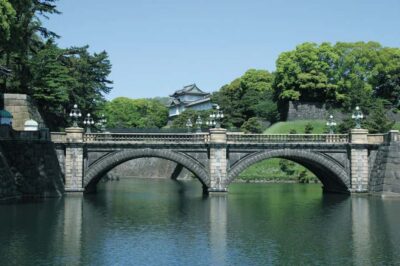
Full-Day Tour w/Tea Experience,Buffet Lunch & Cruise
Read our review →
Browse the lists this tour appears in