
Review · KENYA
Agro-Tourism Tea Workshop in Nandi Hills
The best part of this experience is that it follows tea from freshly picked leaf to finished drink in one day. You begin among the tea fields of Nandi Hills, watch the harvest being weighed, visit a working factory, and finish with a tasting. It is a useful, hands-on way to understand one of Kenya’s major products.
I like the direct contact with the tea pluckers and the chance to see their speed and precision at close range. I also like that lunch, private transport, the farm visit, factory entry, and taxes are included, so the $137.46 price covers more than a simple countryside outing.
The main drawback is the length. This is a roughly 10-hour day, with an early meeting window between 5:00 and 9:00 AM, and the listing does not provide a detailed transport schedule from Iten. You should be ready for a full day rather than a quick plantation stop.
Key points at a glance
- Tea from field to cup: Follow harvesting, weighing, transport, factory production, and tasting in a single day.
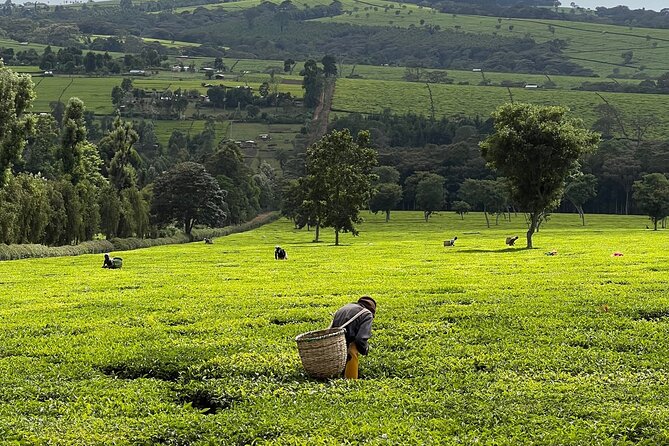
- Nandi Hills setting: See a tea-growing part of Kenya known for its highland scenery and calm rural atmosphere.
- Real working life: Meet tea pluckers and watch a repetitive job that demands speed, stamina, and accuracy.
- Modern weighing process: See how harvested tea is measured after collection, including recently updated equipment.
- Private day out: Your group travels by private transport, with the activity ending back at the Iten meeting point.
- Lunch and factory visit included: The price covers the main practical costs, though personal purchases are extra.
Why this tea workshop feels different
Many farm visits stop at a field and offer a cup at the end. This one is built around the complete chain of production. You see where the tea begins, how it is collected, how the weight is recorded, how it reaches the factory, and how the leaves become a finished product.
That order matters. When you taste the tea later, you have already watched the work behind it. The cup is no longer an anonymous hotel drink. You have seen the careful picking, the loads being measured, and the factory machinery that handles the leaves.
The setting also adds something important. Nandi Hills is not simply a backdrop for photographs. It is the place where the tea is grown and processed, and the workshop gives you a reason to spend time there. The day combines agriculture, local work, scenery, and food without turning the experience into a standard sightseeing loop.
The experience is offered by The Safari Side and begins at The Swiss Side ItenFriends Bar in Iten. Since this is a private activity, only your own group participates. That makes it easier to ask questions, pause when something catches your attention, and keep the day focused on your interests.
More Tea Making Classes in Kenya:
- Matcha Making Class in Tokyo with Authentic Japanese Sweets Set
★ 5.0 · 744 reviews - London: Traditional English Scone Making and Tea Workshop
★ 5.0 · 702 reviews - Matcha Making Class in Osaka with Authentic Japanese Sweets Set
★ 5.0 · 509 reviews
Starting in Iten and heading toward Nandi Hills
Your day begins at the listed meeting point in Iten. The opening time is given as 5:00 AM to 9:00 AM from Monday through Sunday, so confirm your exact start time when booking. A start near the early end of that window may make sense for the harvest portion, but the precise schedule is not provided.
Private transportation is included. This is valuable because the day includes more than one setting: the farm, the cottage for lunch, and one of Nandi County’s 19 tea factories. You do not need to arrange separate transport between those stops.
The route links Iten with Nandi Hills and the tea-growing area. The activity returns to the original meeting point, which simplifies the end of the day. You can plan around a known starting and finishing place rather than trying to arrange a one-way ride from the factory.
The meeting point is near public transportation, but this is still a private tour. Near does not mean that public transport is part of the experience, so I would treat the included vehicle as the main way to get around.
Watching the tea harvest up close
The first major section explains how tea harvesting is carried out. You then meet tea pluckers and watch them work. This is one of the most useful parts of the day because it shows the human skill behind a product that is often treated as a simple grocery item.
Tea plucking is repetitive, but the work is not casual. The description emphasizes the workers’ proficiency and resilience. You will see a task that depends on steady rhythm and careful selection, not just speed. The workshop gives you time to notice that distinction.
This encounter also adds a human element to the farm visit. You are not only looking at rows of tea plants. You are seeing the people who make the first stage of production possible. The experience is strongest if you approach this part with attention and respect, rather than treating the pluckers as background for photographs.
The supplied information does not specify how long you spend in the fields, what equipment you use, or whether you pluck tea yourself. Do not assume a hands-on harvesting lesson. Expect an explanation and an opportunity to observe the work at close range.
The weighing stage and a modern change
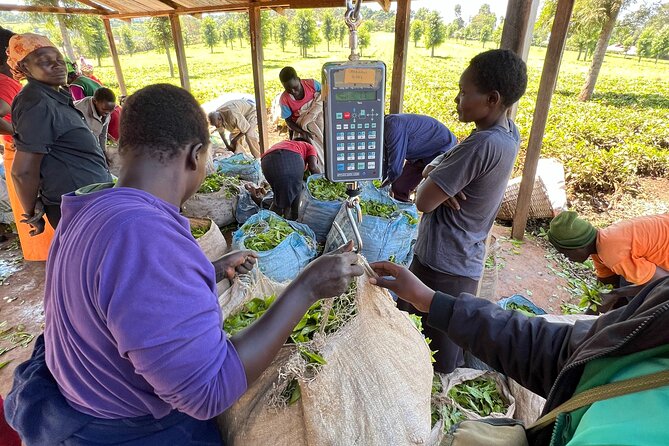
After harvesting, you witness the tea being weighed. This step may seem less scenic than the fields, but it is central to understanding how the crop moves from individual workers to the next stage of production.
The weighing process has recently been modernized. That detail gives the workshop a useful present-day angle. You are not seeing only an old agricultural routine preserved for visitors. You are also seeing how a long-established industry is updating one of its basic systems.
Watch how the freshly collected tea is handled and recorded. The weighing stage connects the field work with transport and factory processing. It also helps explain why the harvest is measured before it leaves the farm.
The available information does not say what type of equipment is used or how the system changed. The value is in seeing the step itself and learning where it fits in the chain. If you are interested in farming, supply systems, or the practical side of food production, this part deserves more attention than its brief description might suggest.
More Workshops in Kenya:
- Kyoto: 45-Minute Tea Ceremony Lesson Experience
★ 4.3 · 2,378 reviews - London Traditional English Scone Making and Tea Workshop
★ 5.0 · 271 reviews - Tea Ceremony Workshop in Tokyo by the Experienced Instrucor
★ 5.0 · 189 reviews - Xiao Long Bao, Beef Noodles & Boba Tea Cooking Class in Taipei
★ 5.0 · 159 reviews
Lunch at the cottage
After the morning activities, you return to the cottage for lunch. The meal is included in the price, which is helpful on a long day with an early start. You will not need to stop the program to find a restaurant or pay for a separate meal.
The cottage also provides a natural change of pace. The morning is focused on harvesting and weighing, while lunch gives you a pause before the factory visit. It is a small detail, but the break matters during a 10-hour activity.
The exact menu is not specified, so I would not book this expecting a particular dish or a formal culinary program. Lunch is part of the day’s practical structure rather than a separately described food experience.
Personal expenses are not included. Bring money if you want to buy anything extra, though the provided details do not identify specific optional purchases. The safest approach is to regard the included lunch as covered and any personal spending as your own responsibility.
Inside one of Nandi County’s tea factories
The afternoon includes a visit to one of the 19 tea factories in Nandi County. This is where the workshop shifts from field work to industrial production.
At the factory, you learn how tea leaves become a finished product. The supplied description does not list each machine or processing stage, so the exact factory route may depend on the day’s operations. Still, the important point is clear: you are seeing production at the place where the harvested leaves are transformed, not simply viewing a display prepared for visitors.
This stop gives the morning’s weighing process a clear purpose. The leaves do not remain on the farm. They move onward, enter a larger production system, and are prepared for use as tea. You get to connect the quiet work of plucking with the organized process of manufacturing.
Factory visits can be less picturesque than the fields. They may involve machinery, noise, and a more practical setting. That is not a flaw, but it changes the mood. If you want only scenic views, the factory may feel like the less attractive half of the day. If you want to understand tea as an industry, it is essential.
The tour includes the factory visit and all fees and taxes. That makes the $137.46 price easier to assess, since you are paying for a full private day with several connected stops rather than a short plantation walk.
Ending with a Kenyan tea tasting
The day closes with a tea tasting. This is a fitting finish because you have already followed the leaves through the earlier stages of production.
A tasting gives you a chance to think about what changed between the field and the cup. You have seen the leaf harvested, weighed, transported, processed, and prepared. The final drink becomes a way to bring those steps together.
The information does not specify how many teas you taste, whether food is paired with them, or how the tasting is led. Keep your expectations focused on tasting the finished product and learning about it, rather than assuming a formal tea course.
For anyone who already enjoys chai or Kenyan tea, this final stop may be the most personal part of the day. One of the strongest accounts of the experience came from a tea fan who valued the chance to understand and see the process behind a favorite drink. That is the right reason to book it: curiosity about where tea comes from, not just the promise of a pleasant beverage.
What the $137.46 price covers
At $137.46 per person, this is not a budget farm stop. The value depends on using the full day.
The price includes private transportation, all fees and taxes, the farm visit, lunch, and the tea factory visit. Those inclusions remove several costs that can add up when arranging a rural outing independently. You also receive a private experience rather than joining a large shared group.
The day’s value is strongest for two or more people who want a dedicated vehicle and a guided route between Iten and Nandi Hills. You are paying for access to several parts of the tea process, not only for a view of the plants.
The price may feel high if you are mainly looking for photographs or a quick tasting. You could spend less on a shorter local activity if the production process is not important to you. But if you want agriculture, local work, a factory, transport, and lunch combined, the package is easier to justify.
Personal expenses are not covered. Since the details do not state that tea purchases or other souvenirs are included, budget separately for anything you may want to buy.
Timing, group size, and practical planning
Plan for approximately 10 hours. The early meeting window means you should confirm the exact departure time instead of assuming a late-morning start. A full-day schedule also means this activity fits best on a day with no evening appointment or tight onward connection.
Because the tour is private, only your group takes part. This is useful for families, couples, friends, and small groups who prefer a flexible pace. It can also make the educational parts more comfortable, since you can ask questions without competing with a large crowd.
The activity is available Monday through Sunday during the stated operating period, from October 4, 2023, through June 18, 2026. A mobile ticket is offered, which makes entry and booking simpler.
Good weather is required. If poor weather forces cancellation, you are offered another date or a full refund. The activity also requires a minimum number of participants, and if that minimum is not reached, you are offered another date, another experience, or a full refund.
For a full refund when canceling yourself, cancel at least 24 hours before the start time. Changes or cancellations made within 24 hours are not accepted for a refund. Confirmation is normally received at booking, though reservations made within four hours of departure are confirmed as soon as possible, subject to availability.
Who should book this day
I would choose this workshop if you enjoy seeing how everyday products are made. It suits anyone interested in farming, Kenyan food culture, rural work, or the practical steps behind a familiar drink.
It is also a good match for visitors based in or around Iten who want more than running, hiking, or safari activities. One private itinerary combined this tea workshop with a safari, bike rides, hikes, and other visits, showing how well the day can fit into a wider stay in the area.
Tea drinkers have an obvious reason to go. If you regularly drink chai or Kenyan tea, the tasting has more meaning after the field and factory visits. You will leave with a better sense of the labor and production behind the cup.
I would hesitate to book it if you dislike early starts, long days, or organized transport between several stops. It is not designed as a short, unhurried garden visit. It is a full production story, and that means committing most of a day.
Should you book the Nandi Hills tea workshop?
Book it if you want an authentic look at Kenyan tea production and prefer a private, all-day outing with the major costs handled. The strongest features are the meeting with tea pluckers, the modern weighing stage, the factory visit, and the final tasting.
Skip it if your main goal is a brief scenic stop or if you need a tightly timed itinerary. The $137.46 cost is reasonable only when you value the full chain from harvest to cup, along with private transportation and lunch.
For the right person, this is more than a tea tasting. It is a clear, well-ordered look at the work, systems, and people behind one of Kenya’s most familiar drinks.
FAQ
Where does the tea workshop start?
The activity starts at The Swiss Side ItenFriends Bar in Iten, Kenya.
Where does the experience end?
The activity ends back at the meeting point in Iten.
How long does the tea workshop last?
The experience lasts approximately 10 hours.
What time does the activity operate?
It operates Monday through Sunday, with listed start times between 5:00 AM and 9:00 AM.
Is transportation included?
Yes. Private transportation is included.
Is lunch included?
Yes. Lunch at the cottage is included.
What happens if the weather is poor?
If poor weather causes the activity to be canceled, you will be offered another date or a full refund.
Just added around Kenya
- Excursion to Kiambethu Tea Farm★ 5.0 · 6 reviews
- Purple Tea Farm Tour from Nairobi City – Specialty Tea Tasting★ 4.5 · 12 reviews
- Riara tea farm tour with lunch and tea tasting from Nairobi★ 5.0 · 3 reviews
- Kiambethu Tea Farm Tour & Lunch From Nairobi★ 5.0 · 7 reviews
- Tea Farm Experience at Riara Tea Farm And Factory Tour★ 5.0 · 11 reviews
- Day tour to Kiambethu tea farm in Limuru from Nairobi★ 4.5 · 2 reviews
- Tea Farm Experience at Riara Tea Farm And Factory Tour★ 4.8 · 2 reviews
- Tea Farm Tour From Nairobi (Kiambethu).★ 4.9 · 10 reviews
Tea Making Classes, compared.

Matcha Making Class in Tokyo with Authentic Japanese Sweets Set
Read our review →
Traditional English Scone Making and Tea Workshop
Read our review →
Matcha Making Class in Osaka with Authentic Japanese Sweets Set
Read our review →
Matcha Making Experience with Mochi Sweets in Asakusa
Read our review →London Traditional English Scone Making and Tea Workshop
Read our review →

Nara:Authentic Tea Ceremony(Max 5 ppl) -Master Matcha Making
Read our review →Browse the lists this tour appears in