
Review · TOKYO
Asakusa Cultural Walk & Matcha Making Tour
Asakusa is at its best when you move beyond the big red gate and take part in its everyday rituals. This three-hour walk combines temples, old shopping streets, street snacks, matcha preparation, and a hands-on lunch, with a small group capped at seven people.
I like the mix of quiet cultural instruction and good food. You learn how to pray and draw a temple fortune, then make your own okonomiyaki on a hot grill. I also like the personal touch from guides such as Aoi, Mai, Yuki, Hana, and Mihori, who have helped with photos, translation, local suggestions, and restaurant questions. The main drawback is that Asakusa can be very crowded, especially around Sensoji, and the tour cannot handle gluten-free requests or guarantee an allergy-free meal.
Key points to know before booking
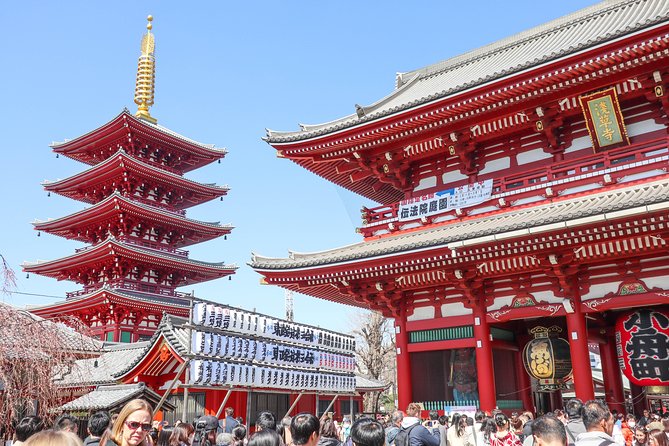
- A compact Asakusa introduction: See Kaminarimon, Nakamise Shopping Street, Sensoji Temple, and Asakusa Shrine in about three hours.
- Hands-on food experiences: Sample Japanese sweets, prepare matcha, and cook okonomiyaki or monja-yaki for lunch.
- Small group size: The maximum is seven people, though some departures may feel almost private if few people book.
- Guides add practical help: Guides have taken photos, explained customs, translated at restaurants, and suggested things to do elsewhere in Japan.
- Good value for a first Tokyo day: The $90.86 price includes food samples, lunch with one drink, a guide, tour photos, and the matcha activity.
- Plan for heat and crowds: Summer is hot and humid, and Sensoji may be packed in late spring or during busy periods.
Why this Asakusa tour works well
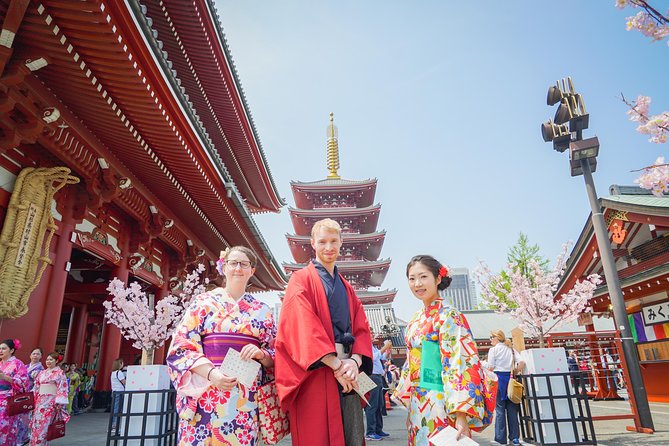
Asakusa gives you a different view of Tokyo. It is not only temples and souvenir stalls. This is one of the city’s older districts, where grand religious sites sit beside narrow shopping streets, traditional sweets shops, restaurants, and long-running local customs.
The tour keeps moving, but not so quickly that you only collect photographs. You have time to try snacks, ask questions, learn a few temple customs, and sit down for lunch. That balance matters if you are new to Japan and want an introduction that feels more useful than a simple sightseeing walk.
The small maximum of seven is another strong point. A guide can answer individual questions more easily than on a large coach tour. Some departures have had only two participants, creating a private-tour feel without the cost of booking a private guide.
At $90.86 per person, this is not a cheap walking tour. Still, the price covers several food samples, lunch and one drink, matcha preparation, a certified guide, and photos. If you would otherwise pay separately for a food tour, a temple guide, and a tea activity, the package makes reasonable sense.
More Matcha Experiences in Tokyo:
- Matcha Making Class in Tokyo with Authentic Japanese Sweets Set
★ 5.0 · 744 reviews - Tokyo: Matcha Making Experience with Mochi Sweets in Asakusa
★ 4.9 · 388 reviews - Tokyo: Matcha and Kimono Experience
★ 4.7 · 219 reviews
Meeting the guide near Kaminarimon
The meeting point is Kaminarimon Police Box at 1-chōme-3-1 Asakusa, Taito City. The start time is 11:00 a.m., and the tour returns to this same area.
That location is useful because Kaminarimon is one of Asakusa’s easiest landmarks to identify. It also puts you close to the main sights from the start. You should arrive with enough time to find the police box and settle in before the group sets off.
The activity lasts about three hours. That is long enough to see the main sights and eat lunch, but short enough to fit into a day that also includes the Tokyo Skytree area, Ueno, or another part of the city. I especially like this timing for your first full day in Tokyo, when a guided introduction can help you understand local customs and get your bearings.
Nakamise Shopping Street and Japanese sweets
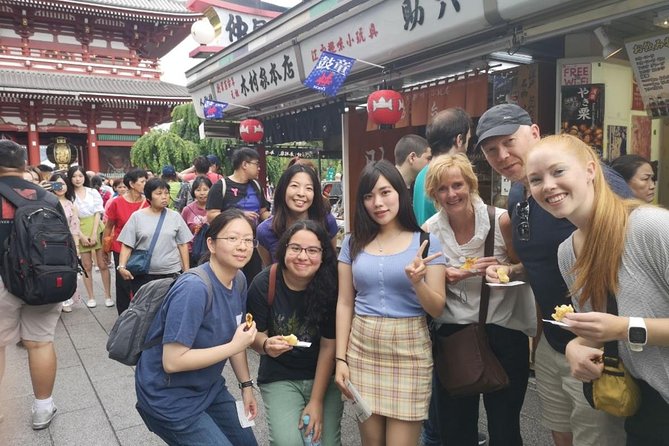
The first major stop is Nakamise Shopping Street, the approach to Sensoji. The street leads toward the temple and is lined with shops selling souvenirs, small gifts, snacks, and traditional sweets.
You will sample Japanese treats here. That tasting is more useful with a guide because you can ask what you are eating and how it fits into local food culture. Do not expect a full meal at this stage. Think of it as a series of small introductions before lunch.
You also get time to look at the shops. The area can feel heavily geared toward souvenirs, but that does not make it worthless. It is a good place to compare small crafts, sweets, and keepsakes before deciding what is worth carrying home.
The tradeoff is crowding. Nakamise can be packed, and walking slowly while browsing may be difficult during busy periods. Families with teenagers may appreciate the food stops and shopping, while anyone hoping for a quiet old-town stroll should set expectations lower.
Kaminarimon and the visual entrance to Asakusa
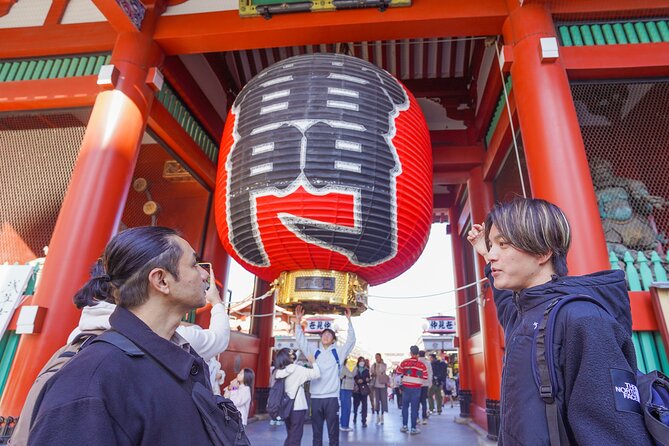
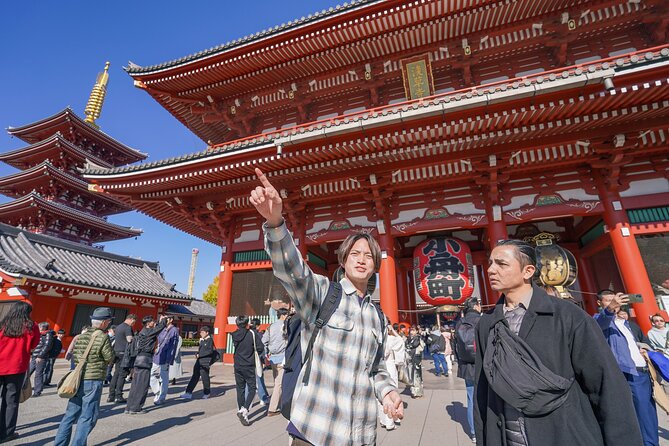
Kaminarimon means Thunder Gate, and it is the grand entrance to the Sensoji complex. The giant lantern and strong red structure make it one of Tokyo’s most recognizable sights.
The scheduled visit here is brief, about 15 minutes. That is enough for an explanation, photographs, and a first look at how the temple approach is organized. Your guide can also place the gate in the context of the surrounding streets rather than treating it as an isolated photo stop.
The short time is sensible. Kaminarimon is a starting point, not a complete attraction by itself. The real value comes from understanding where you are and then following the route toward Nakamise and the temple grounds.
More Tea Making Classes in Tokyo:
- Matcha Making Experience in Shinjuku
★ 4.5 · 12 reviews - 【NEW】Matcha Making Experience and Matcha Comparison in Tokyo
★ 5.0 · 7 reviews - London: Traditional English Scone Making and Tea Workshop
★ 5.0 · 702 reviews - Matcha Making Class in Osaka with Authentic Japanese Sweets Set
★ 5.0 · 509 reviews
Sensoji Temple and the customs behind a visit
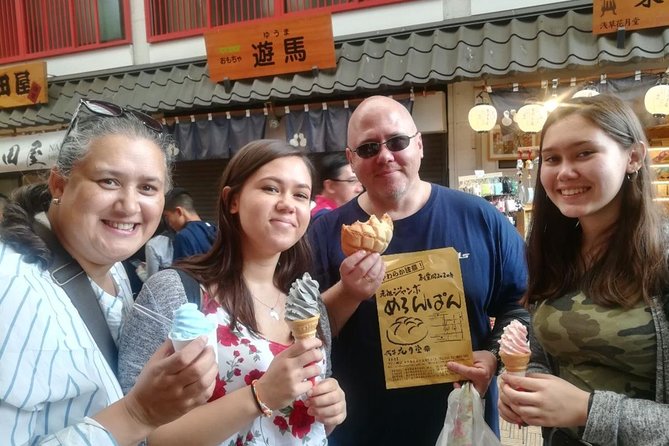
Sensoji is the main cultural anchor of the tour. You have about 30 minutes to see the temple and learn what people do there.
This is where a guide adds real value. You are shown practical customs such as praying, drawing a fortune, and using the incense burner. One common ritual involves fanning the smoke toward yourself because it is associated with healing. You also learn how to approach the temple respectfully instead of wandering in, taking a picture, and leaving without understanding what is happening.
The temple itself can be crowded, particularly in late May and during other busy periods. That affects how long you can pause and how easy it is to hear the guide. If you want a calm, detailed study of every building, 30 minutes will feel short. If you want a clear first lesson in visiting a Japanese temple, the stop works well.
The cultural explanation is one of the tour’s strongest features. Several guides, including Mai, Meg, Yuki, Hana, and Mihori, have been praised for clear English, patient explanations, and answers about Japanese customs. You should still ask questions while you have the chance. A small group makes that much easier.
Asakusa Shrine beside the temple
The route continues to Asakusa Shrine, next to Sensoji. You have another 30 minutes here, which gives the guide room to explain the difference between the temple and the shrine.
That distinction is useful for first-time visitors. Japan’s religious sites can look confusing when you are seeing them for the first time, and a local guide can point out differences in practice and setting. The shrine stop also gives you a little breathing room after the busy approach to Sensoji.
The two sites work well together because you can compare them in one visit. You are not spending half a day traveling between separate attractions, and the guide can connect the customs you have just seen with the wider culture of Asakusa.
Matcha preparation and tasting
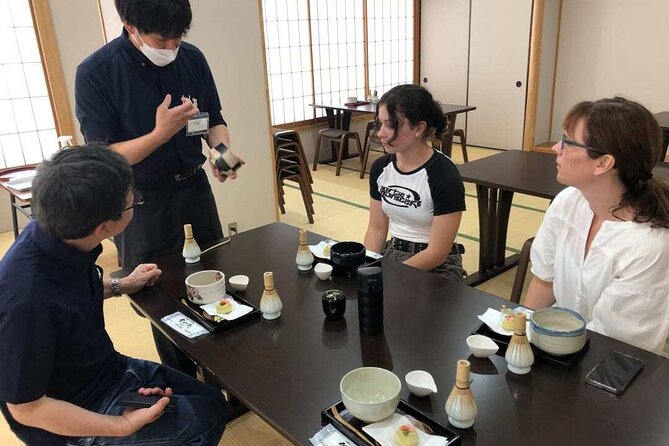
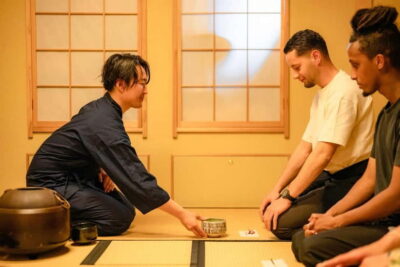
The matcha activity is more than a cup of green tea handed to you at the end of a walk. You learn about matcha preparation and take part in making and tasting it.
That hands-on element is important. You are not simply watching a ceremony from behind a rope. You get a chance to understand the care involved in preparing the tea, which makes the experience more memorable and gives you something to talk about when you return home.
The activity has received especially strong praise from people who enjoyed the unusual combination of temple customs and food preparation. It also breaks up the walking. After the streets and temple grounds, sitting down for tea gives the tour a calmer rhythm.
If you are expecting a formal, extended tea ceremony, keep in mind that the activity is one part of a three-hour tour. It is best viewed as an accessible introduction rather than a specialist tea study. The advantage is that you can try it without giving up an entire afternoon.
Okonomiyaki or monja-yaki for lunch
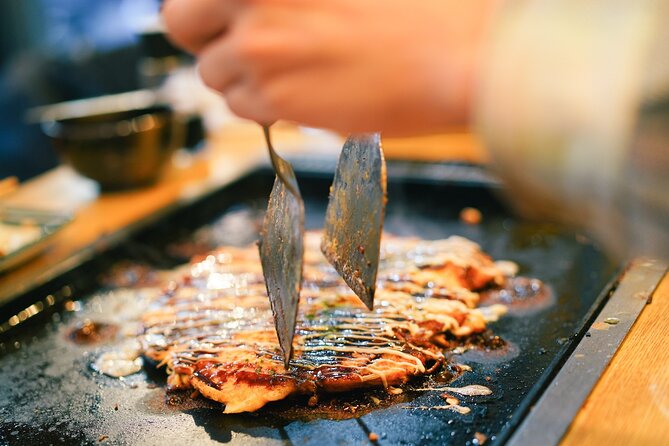
The final meal is the tour’s most playful stop. You eat okonomiyaki or monja-yaki, along with one drink, and take part in preparing the food at the restaurant.
Okonomiyaki is a savory pancake cooked on a hot grill. Monja-yaki is a softer, more spoonable grilled dish. The exact choice may depend on the restaurant or the arrangements for your departure, so ask the guide if you have a strong preference.
Cooking your own lunch gives you a better sense of how these dishes are eaten than simply ordering one from a menu. It is also a social finish, especially for families and small groups. Teenagers may find this part more engaging than a long temple explanation, and adults get a chance to ask food questions while eating.
One practical point matters here: vegetarian food is available, but the tour is not vegan and cannot accommodate gluten-free requests. The food is prepared in kitchens outside the tour company’s control, so allergy-free preparation cannot be guaranteed. Substitutions may not always be possible, though the guide may try to make up for a missed item at another stop.
The route beyond the listed stops
The tour description also includes a rickshaw ride through Asakusa and a visit connected with Kappabashi Kitchen Street. These details help explain the broader shape of the experience: you are not only walking between the temple and lunch, but seeing the district through its traditional food and craft culture as well.
The stop information gives the clearest detail about Kaminarimon, Nakamise, Sensoji, and Asakusa Shrine. Exact timing for the rickshaw and Kappabashi portion is not specified, so I would treat those elements as part of the planned experience but avoid building your entire day around a precise route.
That is a useful distinction when comparing tours. If Kappabashi cookware shops are your main goal, you may want a separate visit with more time. If you want a broad introduction to Asakusa with several different activities, the combination is appealing.
Guides, photos, and the personal touch
The guide can make or break a short cultural tour. Here, the guide’s role goes beyond pointing out buildings.
Aoi has been praised for her kindness, cultural explanations, and photographs. Mai has helped with restaurant customs and made the tea and okonomiyaki activities approachable. Yuki has been noted for strong English and useful suggestions for the rest of a Japan trip. Hana has helped with reservations and translation, while Mihori has been praised for explaining Sensoji and recommending fresh rice crackers.
You should not assume you will receive a particular guide, since assignments can change. Still, the pattern is clear: this tour depends on a friendly guide who can translate customs into plain language. Tour photos are included, which is helpful if you want pictures of the group without asking strangers to take them.
There has been at least one short-notice cancellation, so I would avoid scheduling this as the only important activity on your final day. The stated cancellation policy allows a full refund if you cancel at least 24 hours before the start time. Changes or cancellations inside that window are not accepted for a refund.
Weather, crowds, and what to bring
Tokyo summers can be hot and humid. Bring water and wear a hat, especially because part of the tour takes place outdoors around the temple and shopping streets.
Comfortable walking shoes are sensible, even though the tour includes seated food and tea activities. You should also leave room in your schedule for crowds. Sensoji and Nakamise may be slow to navigate, and a busy day can make the route feel less relaxed.
The tour is near public transportation, and most people can take part. The information provided does not describe special accessibility arrangements, so anyone with mobility concerns should confirm details before booking.
Who should book this experience?
I would choose this tour if you want a first look at Tokyo that mixes sights with participation. It suits couples, families, first-time visitors, and anyone who prefers learning through food rather than listening to a long lecture.
It is especially useful near the beginning of a Japan trip. The temple customs, food guidance, and neighborhood suggestions can help you feel more at ease during the rest of your visit.
I would think twice if you need strict dietary control, dislike crowds, or want a quiet photography tour. The gluten-free restriction is firm, and the food is prepared in outside kitchens. You should also choose another activity if your main interest is an extended tea ceremony or a detailed study of temple architecture.
Should you book the Asakusa Cultural Walk?
Book it if you want a well-rounded three-hour introduction to Asakusa, with a small group, hands-on matcha, local snacks, and a cooked lunch. The $90.86 price is fair when you use all the inclusions, especially the meal, tea activity, guide, and photos.
The best reason to choose it is the variety. You move from Kaminarimon and Nakamise to temple customs, then from matcha preparation to a hot griddle lunch. That mix keeps the pace lively and gives you more than a list of famous sights.
Skip it if your priorities are a specialized food tour, a gluten-free meal, or a slow and private temple visit. For most first-time visitors who want a friendly cultural orientation without committing to a full day, this is a sensible Asakusa choice.
FAQ
How long does the Asakusa Cultural Walk and Matcha Making Tour last?
The tour lasts approximately three hours.
What time does the tour begin?
The tour starts at 11:00 a.m.
Where does the tour meet?
The meeting point is Kaminarimon Police Box at 1-chōme-3-1 Asakusa, Taito City, Tokyo 111-0032, Japan.
Where does the tour finish?
The activity ends back at the meeting point.
What food is included?
The tour includes Japanese snack and sweet samples, plus lunch consisting of okonomiyaki or monja-yaki and one drink.
Is a vegetarian meal available?
Yes, a vegetarian menu is available.
Can the tour accommodate vegan or gluten-free diets?
The tour is not vegan and cannot accommodate gluten-free requests. Allergy-free preparation and all dietary substitutions cannot be guaranteed.
How many people can join the tour?
The maximum group size is seven participants.
Can I cancel for a full refund?
Yes, you can cancel for a full refund if you cancel at least 24 hours before the local start time. Cancellations or changes made less than 24 hours in advance are not refunded.
More Walking Tours in Tokyo
- Tokyo Walking Tour : Sumo, Sushi, Tea, Temples and Tokyo Tower
★ 5.0 · 21 reviews - Walking Tour: Yanaka,Nezu& Sendagi: Tea Ceremony & Old Tokyo
★ 5.0 · 3 reviews - Great Ocean Road Tour Plus Koalas, Forest Walk and Morning Tea
★ 4.5 · 1,068 reviews - Great Ocean Road 12 Apostles & Rainforest Walk with Morning Tea
★ 4.5 · 549 reviews
Just added around Tokyo
- Yokohama : Tea Ceremony with Sweets and Souvenir★ 5.0 · 5 reviews
- Walking Tour: Yanaka,Nezu& Sendagi: Tea Ceremony & Old Tokyo★ 5.0 · 3 reviews
- 2 Hours Mochi &Nerikiri Making & Matcha Class in Bunkyo★ 5.0 · 21 reviews
- Private Kimono and tea ceremony at local home near Tokyo Disney★ 5.0 · 6 reviews
- Private Mochi・Matcha sweets Making Class Near Shibuya Area★ 5.0 · 22 reviews
- Tokyo Sweets Tour: Hidden Gems & Matcha at an Old Tea House★ 5.0 · 6 reviews
- Giant Sushi Cooking Class: Make a 1.5m Sushi Roll in Tokyo★ 5.0 · 9 reviews
- Tokyo Tea Ceremony Class at a Traditional Tea Room★ 5.0 · 2 reviews
Tea Making Classes, compared.

Matcha Making Class in Tokyo with Authentic Japanese Sweets Set
Read our review →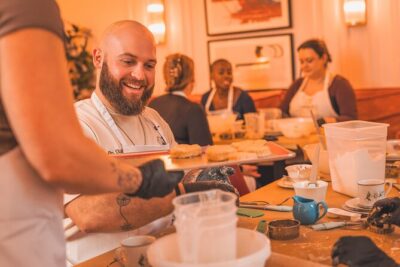
Traditional English Scone Making and Tea Workshop
Read our review →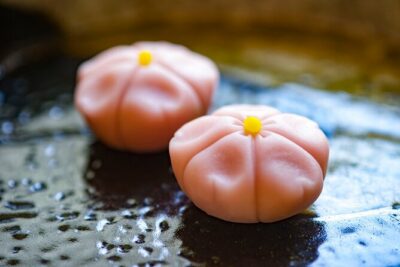
Matcha Making Class in Osaka with Authentic Japanese Sweets Set
Read our review →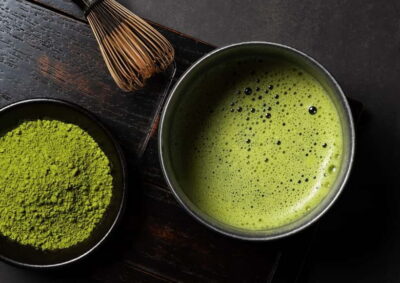
Matcha Making Experience with Mochi Sweets in Asakusa
Read our review →London Traditional English Scone Making and Tea Workshop
Read our review →
Nara:Authentic Tea Ceremony(Max 5 ppl) -Master Matcha Making
Read our review →
Browse the lists this tour appears in