
Review · CHENGDU
Experience Chengdu: Private Tea-Making Day Tour of Mengdingshan Tea Plantation
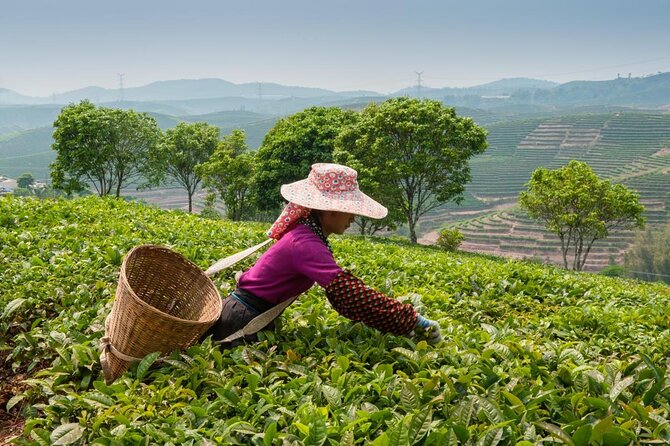
Mengdingshan gives you something Chengdu’s city sights cannot: a hands-on look at how tea moves from a hillside bush to your cup. You’ll pick delicate leaves, visit the processing area, taste tea, and take home what you make. The mountain terraces and old tea traditions give the day a calm, local feel.
I like the private format, which lets your guide shape the pace and explain unfamiliar steps without a large group crowding around you. I also like the generous package: lunch, admission, transport, tea tasting, and your finished tea are included. The main drawback is the long drive, about two hours each way, so this is a full day rather than a quick outing.
Key points at a glance
- Two hours each way from Chengdu: The ride is part of the day, with your guide explaining local sights and tea customs along the way.
- Hands-on tea making: You do more than watch. You pick leaves, learn processing methods, and brew and taste tea.
- Meet a local farmer: The plantation visit connects the polished idea of Chinese tea with the people who grow and prepare it.
- Lunch at a local restaurant: A Chinese meal breaks up the drive and gives the outing a useful taste of everyday food.
- Private, flexible touring: Only your group participates, and past guides such as Jenny and Coral have been praised for fluent English and warm local insight.
- Tea to take home: Your finished product becomes a practical souvenir, not just another photograph.
Why Mengdingshan makes a worthwhile day trip
Tea is not simply a drink in China. It is tied to farming, hospitality, craft, and old regional customs. At Mengdingshan, you get to see those links in one place instead of hearing a short explanation during a city tea tasting.
The mountain is associated with some of China’s earliest tea cultivation, dating to the Western Han period. The tour presents this past through the plantation itself, the terrace fields, and the farmer who guides you through the work. That is more useful than memorizing dates in a museum because you can connect the story to actual plants, leaves, tools, and brewing.
I also appreciate the setting. The tea terraces offer open green views and a slower rhythm than Chengdu’s busy streets. You walk among the bushes, pause for demonstrations, and handle the leaves yourself. If you want a day that feels rural without giving up private transport or an English-speaking guide, the combination works well.
Still, you should set your expectations correctly. This is a working plantation visit, not a luxury spa day or a polished food-and-drink show. The experience depends on weather, seasonal conditions, and the particular plantation used that day.
More Tea Plantation Tours in China:
- Half-Day Hangzhou Yunxi Bamboo Forest and Tea Plantation Experience
★ 5.0 · 22 reviews - Half-day Tour: Largest Tea Plantation & Amazing Xianggong Hill
★ 5.0 · 9 reviews - Hangzhou West Lake and Tea Plantation Half Day Tour
★ 5.0 · 4 reviews
Leaving Chengdu at 9 a.m.
The day begins with private hotel pickup at 9:00 a.m. You ride in a comfortable, air-conditioned vehicle, which matters on a road trip lasting roughly two hours in each direction. You avoid the trouble of arranging separate transport to a rural mountain area, and your guide can talk with you during the ride.
The drive is not dead time. Your guide shares information about the region and its tea-making traditions, while the scenery changes as you leave Chengdu behind. Since this is a private outing, you can ask questions about the places you pass or request a little quiet if you want to watch the view.
The two-hour journey is also the clearest tradeoff. You spend about four hours on the road, plus the plantation visit and lunch. I would not schedule this on a day when you have an evening train, flight, or tightly timed Chengdu attraction.
Past departures have included guides named Jenny and Coral, both praised for fluent English and strong local knowledge. One guide came from a farming family in the area and had prepared carefully to explain the tea process. Guide assignments can change, but these details give you a fair idea of the personal, conversational style this tour aims for.
A local lunch before the tea terraces
Lunch comes at a nearby local restaurant before you walk through the plantation. The meal includes Chinese dishes, and one account described it as a tasty Sichuan home-cooked meal. The exact menu is not specified, so you should treat this as a regional lunch rather than a fixed tasting menu.
This timing makes practical sense. You have a long ride behind you, and a proper meal gives you a break before the outdoor part of the day. It also lets your guide point out local food customs and answer questions in a relaxed setting.
Food is part of the value here, but do not book the outing solely for a gourmet meal. The tea work is the main event. Lunch supports the day and adds local flavor, rather than serving as its central attraction.
If you have food restrictions, ask about them when booking or before departure. The supplied tour details do not list vegetarian, allergy, or special-diet arrangements.
Walking through Mengdingshan’s tea terraces
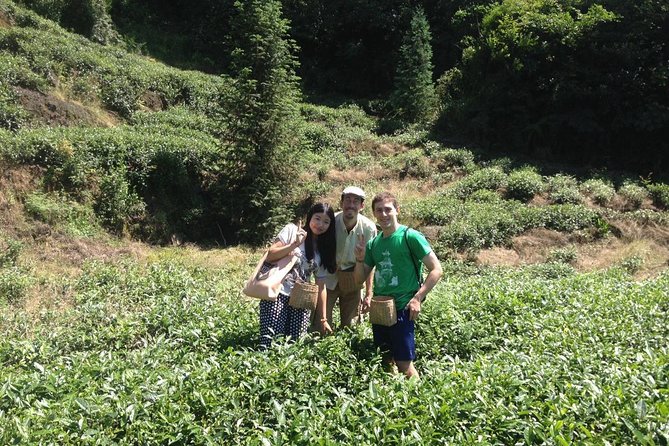
After lunch, your guide leads you toward the tea fields and introduces you to a plantation farmer. You walk among rows of tea bushes on the mountain terraces, with the guide pointing out different kinds of plants.
The farmer connection is important. It gives the visit a human scale. Instead of seeing tea as a packaged souvenir in a shop, you meet someone involved in the growing and preparation of the leaves. Your guide translates and explains the methods, so you can follow the conversation and understand what you are seeing.
The terrain also adds a small physical element. You are walking through plantation fields rather than sitting in a tea house, and the tour is subject to suitable weather. Wear comfortable shoes and bring protection from sun or rain, although the supplied details do not specify the exact walking distance or equipment provided.
The terraces are likely to be the most scenic part of the day. You get time to look across the planted slopes, take photographs, and notice the simple work behind a familiar beverage. For many people, this quiet mountain setting will be more memorable than another indoor tasting room.
More Private Experiences in China:
- One-Day Hangzhou Dragon Well Tea Culture & West Lake Private Tour
★ 5.0 · 98 reviews - Leshan Buddha + Panda Base or Old Tea House Private Day Tour
★ 5.0 · 19 reviews - Private Hangzhou Day Tour to West Lake, Lingyin Temple, Tea Village, Old Pagoda
★ 5.0 · 17 reviews - Half-day Private Mahjong course in Local Tea House
★ 5.0 · 16 reviews
Picking the leaves yourself
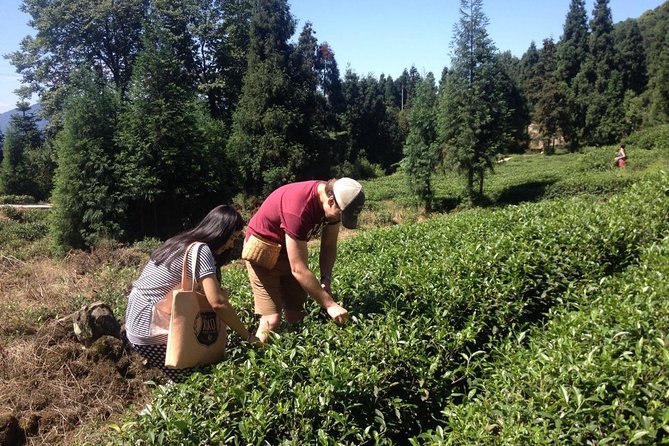
The farmer begins with a leaf-picking demonstration. Then you try it yourself, selecting delicate leaves from the bushes. This is a small task, but it changes how you see the finished product.
Tea leaves are easy to regard as a finished commodity. Picking them by hand shows the care and judgment involved before any heating, shaping, drying, or brewing takes place. Your guide can explain the process as you work, while the farmer demonstrates the practical technique.
The activity is suitable for most people, and the tour information says most participants can take part. You do not need previous tea-making experience. The private setting also helps because you can take your time rather than hurry to keep up with a group.
Seasonal conditions may affect what you see. The tour is subject to favorable weather, and the details do not promise a specific harvest date or a particular type of tea leaf. If you are visiting mainly to pick fresh spring tea, ask about conditions before booking.
Turning fresh leaves into tea
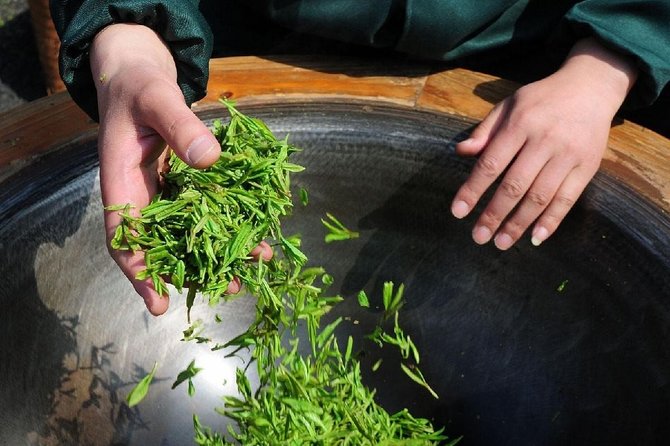
After harvesting, you head to the factory or processing area to learn how the leaves become drinkable tea. The tour includes instruction in making several kinds of tea, along with processing your freshly picked leaves.
This is the most educational part of the day. You see that tea is not one single product. Different methods produce different types, flavors, and appearances. The guide translates the farmer’s explanations and helps connect each step to the cup you taste later.
The wording of the experience promises tea making and tea tasting, but it does not provide a detailed list of the tea varieties or machines used. That is worth keeping in mind if you are a serious tea specialist looking for a technical factory tour. For a curious visitor, the hands-on format should be enough to make the process clear and memorable.
You also get a tangible result. Your final tea product goes home with you as a souvenir. That is more satisfying than receiving a prepacked item with no connection to your day. You can later brew it and remember the mountain, the farmer, and the work that went into preparing it.
Tasting tea in the place it is made
The tasting gives you a chance to connect the leaves and processing methods with the finished drink. Your guide can help explain what you are sampling and how brewing changes the experience.
Tea tasting is included, but this is not described as a formal professional tasting with a published flight or tasting notes. I would approach it as an informal introduction. You are learning through your senses after seeing the farming and preparation firsthand.
Some departures have included tea flowers as well as tea sipping. That detail suggests the day can include small seasonal surprises, though it should not be treated as a guaranteed feature.
The tasting also makes the take-home tea more useful. You will have tried tea at its source and can later experiment with your own brewing. If you already enjoy Chinese tea, you may value the chance to compare the plantation product with teas you know from Chengdu shops or restaurants.
What the private format is really worth
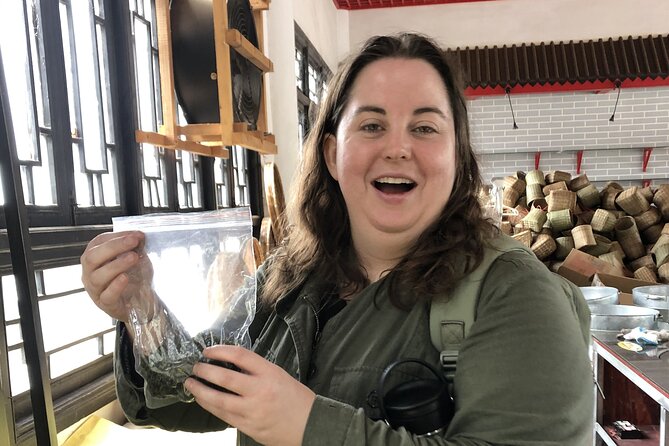
The listed price is $240 per person. That is a serious price for a day trip, but the cost covers a private air-conditioned vehicle, a local English-speaking guide, hotel pickup and return, plantation admission, lunch, tea making, tasting, and tea to take home.
The value improves when two or more people share the experience, especially because group discounts are available. A private vehicle and guide can be expensive to arrange independently, and rural transport to Mengdingshan would add both cost and planning work.
I would see the price as reasonable for a small private group that wants a structured, English-supported day outside Chengdu. It is less appealing if you only want a scenic drive or a quick cup of tea. In that case, a city tea house would be simpler and cheaper.
The private arrangement also gives the day a personal quality. You are not placed with strangers, and only your own group participates. That suits couples, families, friends, and anyone who prefers to ask plenty of questions.
Weather, flexibility, and the backup plan
The tour operates subject to favorable weather. If poor conditions force a cancellation, you are offered an alternative date or a substitute tour of equal value. This is useful because mountain weather can affect walking conditions and the quality of the outdoor visit.
There has also been an occasion when earthquake damage required a different plantation. The change did not prevent the day from going ahead, but it shows that the exact site can sometimes depend on local conditions. If seeing one specific plantation is essential to you, confirm the current arrangement before departure.
The tour runs about six to eight hours, although the two-hour drive each way means the schedule can feel like a full day. Plan for flexibility rather than expecting a minute-by-minute program.
Free cancellation is available if you cancel at least 24 hours before the start time. Changes or cancellations made within 24 hours are not refunded, and the cut-off follows local time.
Who will enjoy this day most
I would recommend the tour to you if you want to get beyond Chengdu’s main attractions and connect with the countryside. It suits anyone curious about food production, Chinese tea culture, farming, photography, or hands-on activities.
Families may like the leaf picking and simple factory work, while couples can enjoy the quiet mountain setting and private transport. Tea drinkers will get the most from the tasting and take-home product, but you do not need to know anything about tea beforehand.
The outing is also a good fit if you want an English-speaking guide who can explain local life during the drive and lunch. Previous guides such as Jenny and Coral were praised for friendly conversation and clear explanations, though the specific guide for your date is not guaranteed.
I would hesitate if you have limited time in Chengdu, dislike long car rides, or want a highly technical tea-production course. The tour gives you a broad, personal introduction rather than an advanced industry seminar.
Should you book the Mengdingshan tea tour?
Book it if you want a private countryside day with real participation. The best parts are the farmer-led walk, picking your own leaves, learning how they are processed, and carrying home tea you helped make. Lunch and transport remove much of the practical hassle.
Think twice if the $240 price feels high for a day built around one activity, or if four hours in a vehicle sounds tiring. The long journey is the cost of reaching the mountain setting.
For me, the strongest reason to choose this tour is its combination of access and simplicity. You do not just look at tea terraces from a roadside stop. You meet a farmer, work with the leaves, taste the result, and return to Chengdu with a better understanding of what is in your cup.
FAQ
How long does the Mengdingshan tea tour take?
The experience lasts approximately six to eight hours. The drive from Chengdu to Mengdingshan takes about two hours each way.
What time does the tour begin?
Private hotel pickup begins at 9:00 a.m.
Is hotel pickup and drop-off included?
Yes. The tour includes pickup and return to your hotel in Chengdu in a private, air-conditioned vehicle.
Is lunch included?
Yes. Lunch at a local Chinese restaurant is included in the tour price.
Do I get to take tea home?
Yes. The package includes tea making, tea tasting, and tea to take home. You process freshly picked leaves and keep your final tea product.
What happens if the weather is poor?
The tour is subject to favorable weather. If it is canceled because of poor weather, you can choose an alternative date or a substitute tour of equal value.
Just added around China
- Xi’an Chinese Calligraphy Workshop: Ink Art & Tea Tasting★ 5.0 · 4 reviews
- Xi’an Noodle Making and Tea Tasting Experience★ 5.0 · 6 reviews
- Half-day Tour: Largest Tea Plantation & Amazing Xianggong Hill★ 5.0 · 9 reviews
- Xi’an Calligraphy & Tea Ceremony – Dive into Ink & Brush Artistry★ 5.0 · 4 reviews
- Full-day Tour: Spectacular Sunrise, Tea Plantation & Sunset★ 5.0 · 3 reviews
- 3 hours Xi’an Mahjong Class with Local Tea★ 5.0 · 2 reviews
- Shanghai Mahjong Experience in Local Tea Bar★ 5.0 · 4 reviews
- Unlock Chinese Tea: Culture, Science, Tasting & Hands-on Brewing★ 5.0 · 12 reviews
Tea Plantation Tours, compared.
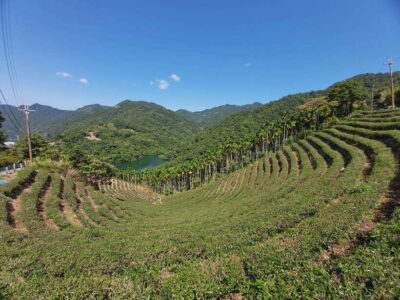
Thousand Island Lake and Pinglin Tea Plantation
Read our review →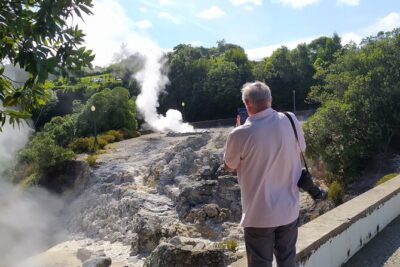
Furnas Volcano & Tea Plantation With Traditional Lunch, East Tour
Read our review →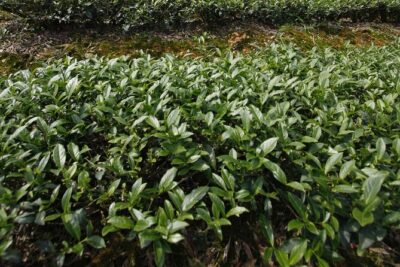
Thousand Island Lake and Pinglin Tea Plantation from Taipei
Read our review →
Furnas: Volcano Wonders, Tea Plantation & Waterfall Tour
Read our review →
Chiang Rai: 7 Major Sites, Golden Triangle & Tea Plantation
Read our review →
Mauritius: Tea and Sugar Plantation Guided Tour with Lunch
Read our review →
Browse the lists this tour appears in