
Review · CHINA
Xi’an Noodle Making and Tea Tasting Experience
Biangbiang noodles are the star here: wide, chewy ribbons made by hand, then served as part of a relaxed courtyard meal. I like the mix of hands-on cooking and local conversation, plus the chance to practice the famously difficult 56-stroke Biang character. The tea tasting and optional Mahjong add a useful glimpse into everyday culture.
The main drawback is the fixed four-hour format. If you want a quick cooking class, this will feel long. The meeting point can also be a little hard to spot, so take advantage of Jeffrey’s offer to meet you on the street and walk you in.
Key points at a glance
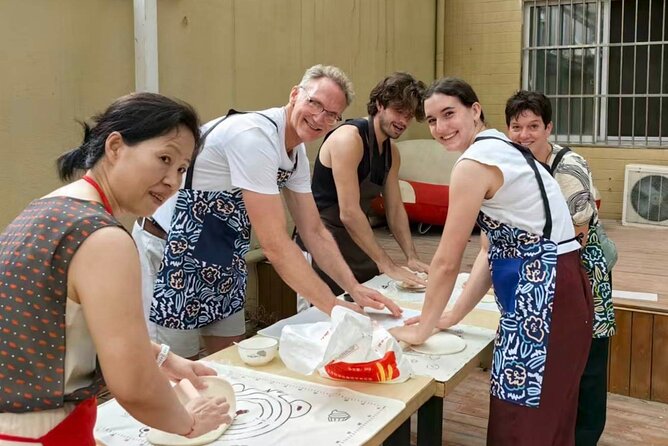
- Make Biangbiang noodles from scratch: Learn the basic process behind Xi’an’s broad, springy noodles and eat the finished result.
- Practice a 56-stroke character: Try calligraphy with the famously complex Biang character, a memorable cultural challenge.
- Taste Chinese tea: Sip fragrant teas while talking with local hosts about life in Xi’an.
- Play Mahjong if you wish: The game is optional, so you can join in or keep the focus on food and conversation.
- Share a private-group dinner: Only your own group takes part, with regional dishes, handmade noodles, and traditional music.
- Plan extra time for the meeting point: The activity begins and ends at Tiedan Chicken Soup Sliced Noodles on Chang An Xi Lu.
Why Biangbiang noodles are the right way to meet Xi’an
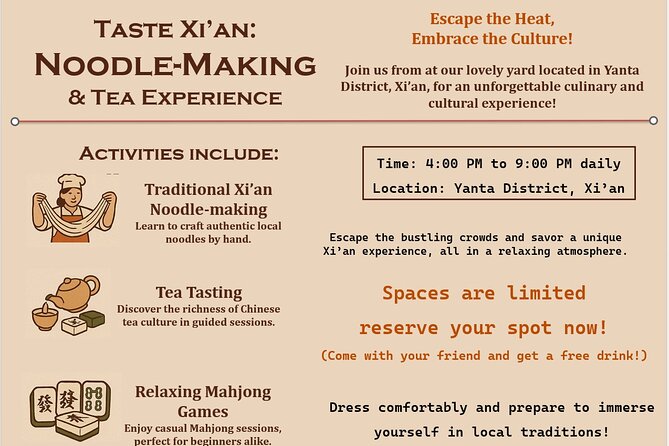
Xi’an is known for food with character, and Biangbiang noodles may be the best edible introduction. The noodles are broad, thick, and chewy rather than delicate. Making them yourself gives you a clearer sense of the work behind the bowl than simply ordering them in a restaurant.
This four-hour experience puts cooking at the center, but it is not only a kitchen lesson. You also get tea, calligraphy, Mahjong, conversation, music, and a sit-down meal. That mix makes the afternoon feel more like a visit with local hosts than a standard demonstration where you watch someone else do all the work.
I particularly like that the meal comes at the end. You work with the dough, take part in the preparation, and then sit down to eat handmade noodles with regional dishes. Your effort has a clear payoff, and the dinner gives the afternoon a natural finish.
The cooking is best understood as a cultural activity, not professional chef training. The information provided does not promise advanced techniques or a formal recipe book. If you want restaurant-level instruction, check your expectations. If you want to handle the food, learn a local specialty, and enjoy the result, the format makes sense.
More Tea Tastings in China:
- Tea Tasting and Pairing Concept Workshop
★ 5.0 · 57 reviews - Biking Real Shanghai& Tea Tasting Experience
★ 4.5 · 45 reviews - Private Shanghai City and Zhujiajiao Combo Tour with Boating, Tea Tasting, Lunch
★ 5.0 · 15 reviews
Finding the courtyard on Chang An Xi Lu
The meeting point is Tiedan Chicken Soup Sliced Noodles at 5WRR+C4M, Chang An Xi Lu, Yan Ta Qu, Xi’an, Shaanxi, 710063. The activity ends at the same location, which keeps the logistics simple and avoids a second drop-off point at the end of the meal.
The address is specific, but the experience takes place in a courtyard setting that may not be obvious from the main street. Jeffrey contacted one family through WhatsApp the day before and arranged to meet them on the street before walking them to the location. I would use that practical help. Confirm your meeting details in advance and keep your phone available.
The tour is near public transportation, but no specific station or route is provided. That means you should not assume the final approach will be self-explanatory. A mobile ticket is accepted, and booking confirmation arrives at the time of booking.
The activity is private, so only your group participates. That matters if you prefer to ask questions freely, work at your own pace, or share the meal with family and friends rather than strangers. Group discounts are available, though the supplied information does not give the discount amount.
Rolling, stretching, and shaping the noodles
The cooking portion focuses on Biangbiang noodles made from scratch. You can expect to work with the dough and learn how the wide noodles are formed before they are cooked and served.
The most appealing part is the physical nature of the lesson. This is not just a tasting with a short explanation. You get to take part in turning basic ingredients into the noodles that anchor the final meal. The broad shape and chewy texture also make Biangbiang noodles different from the thinner noodles many people already know.
The exact recipe, ingredients, and cooking equipment are not specified, so do not book this expecting a detailed technical syllabus. The value is in the activity itself and in the setting around it. You are learning one of Xi’an’s recognizable foods while sitting with local hosts and talking about daily life.
The class should suit families and mixed-age groups well, especially because the afternoon has several activities rather than one long cooking block. Younger participants may enjoy the dough work and the oversized character practice. Adults who care more about food culture will likely appreciate the connection between the noodle-making and the shared meal.
The 56-stroke Biang character
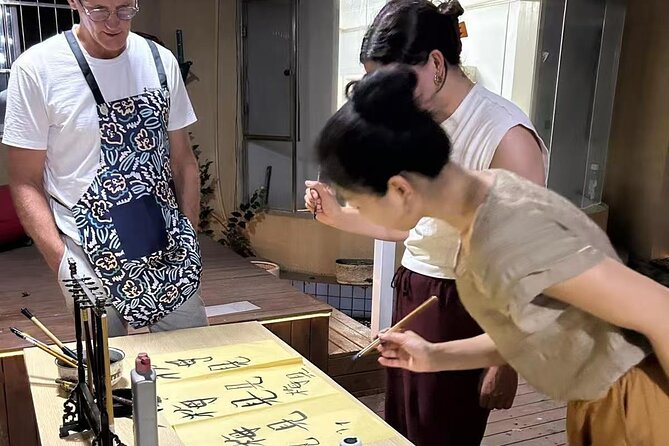
After or alongside the cooking, you get to try calligraphy with the Biang character. It is famous for its complexity, with 56 strokes, making it a playful challenge even if you have no calligraphy background.
I like this part because it connects the name of the dish to a visual memory. You are not only eating Biangbiang noodles. You are also attempting the character associated with them, using brush and ink in a traditional writing exercise.
Do not worry about producing museum-quality calligraphy. The point is to try the strokes and understand why this character has such a reputation. It also gives the experience a nice change of pace after handling dough.
The description does not promise a finished artwork, a calligraphy lesson at a particular skill level, or materials to take home. Think of it as a short cultural activity within the larger workshop. If writing Chinese characters is important to you, it may be worth asking the host how much time is set aside for it.
More Food and Drink Tours in China:
- Shanghai 3-Hour Afternoon Tea Tasting and Dessert Tour
★ 4.9 · 15 reviews - Unlock Chinese Tea: Culture, Science, Tasting & Hands-on Brewing
★ 5.0 · 12 reviews - Tea Tasting & Brewing Experience
★ 5.0 · 10 reviews - 3-hour Morning/Afternoon Tea Tasting on Maliandao Street & Dimsum
★ 5.0 · 7 reviews
Tea, local conversation, and a slower afternoon
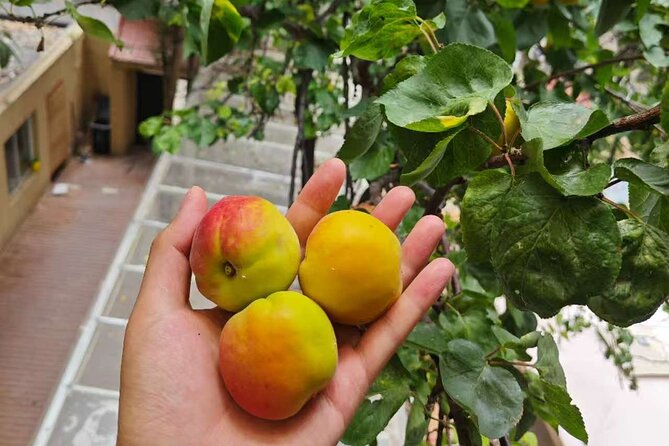
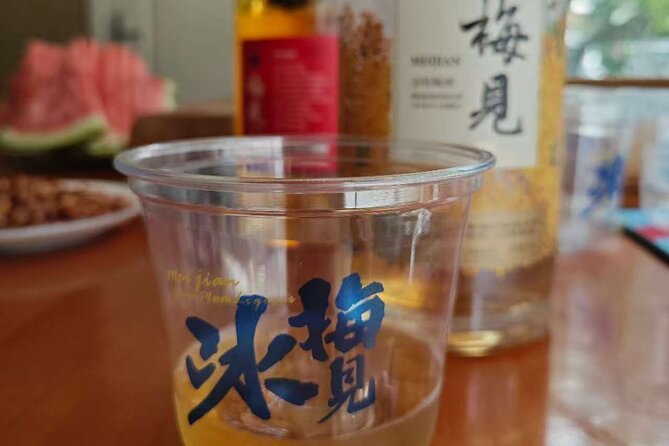
The tea tasting provides the quiet middle of the experience. You sip fragrant Chinese teas while chatting with your hosts about local life. This is one of the strongest reasons to choose this workshop over a basic noodle class.
Food classes can sometimes feel rushed, with one task after another and little room for conversation. Tea changes the pace. It gives you time to ask questions and notice how hospitality works in a home-style setting.
The hosts named for this experience are Jeffrey and Cristiano. The available details show that Jeffrey communicates before the activity and can help with the walk from the street to the courtyard. Their role appears to extend beyond cooking instruction, since the afternoon also includes conversation, tea, and games.
The exact teas are not listed, so you should not expect a named tea flight or formal tasting notes. Still, the tea element adds context to the meal and gives you something to do while the various parts of the workshop come together.
Mahjong is optional, not a requirement
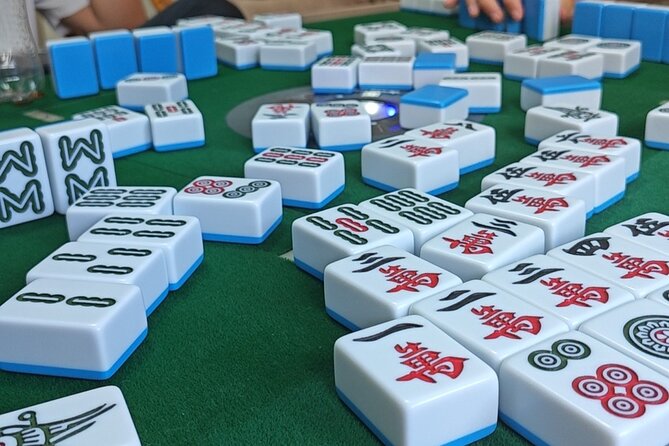
Mahjong is included as an optional activity. That small detail makes the schedule more flexible. If you have always wanted to see how the game works, you can try it. If games are not your thing, you can stay with the tea, conversation, or cooking.
The information does not specify the rules, language of instruction, or length of the Mahjong session. I would treat it as an informal introduction rather than a full lesson. You may learn a few basics, watch a round, or simply use the time to talk with the hosts.
For a private group, the optional setup works well. One person can play while another keeps sipping tea or chatting. Families and friends with different interests do not have to follow a single activity every minute.
The handmade dinner with music
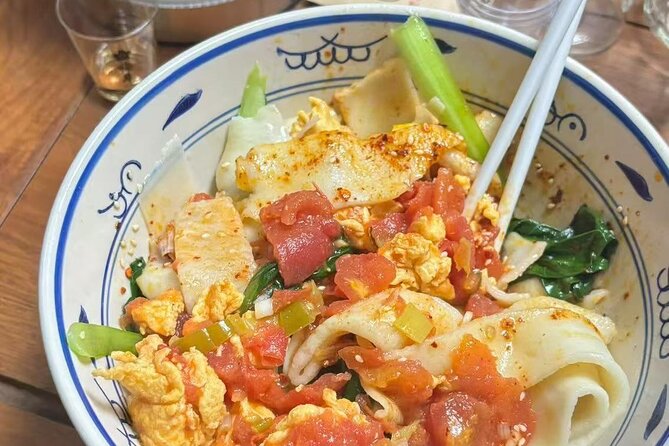
The workshop ends with a meal of your handmade noodles and regional dishes. Traditional music accompanies the dinner, giving the final portion a more social feel than simply eating what you cooked and leaving.
This is where the $69.90 price needs to be judged. You are paying for about four hours, private participation, instruction, cultural activities, tea, and a meal, not just a bowl of noodles. For a small group that wants a personal afternoon, that can be fair value.
The price is harder to justify if you only want to learn a quick recipe. Xi’an has plenty of inexpensive food, and a restaurant meal alone will cost far less. The value here comes from the time with the hosts and the range of activities wrapped around dinner.
The exact regional dishes are not listed, so the final menu may vary. You should expect handmade noodles to be central, with additional local dishes served alongside them. Traditional music is part of the meal setting, but no specific performers or instruments are identified.
The arrangement also means you do not have to find a restaurant afterward. Since the activity returns to the meeting point, you finish where you began and can make your next plan from there.
Who will get the most from this Xi’an workshop

I would recommend this for several kinds of visitors:
- Families: The dough work, calligraphy, tea, and optional Mahjong keep the afternoon varied.
- Food-focused visitors: You get to make and eat a signature Xi’an noodle.
- First-time visitors to China: Tea, calligraphy, games, and shared food offer a compact introduction to several local customs.
- Small private groups: Only your own party participates, which makes the schedule more personal.
- People who enjoy conversation: The hosts are part of the experience, not just instructors at the front of a classroom.
It may be less suitable if you want a highly technical cooking course, a short activity under two hours, or a tightly scheduled sightseeing tour. The experience is built around time, conversation, and participation.
The four-hour length also matters if you have a packed Xi’an sightseeing plan. Do not place this between two attractions with strict entry times. Give yourself room to reach the meeting point and enjoy the meal without watching the clock.
Booking timing, cancellation, and practical details
This activity is booked an average of 41 days ahead, which suggests that you should reserve early if your Xi’an dates are fixed. The private format may be especially appealing on popular travel dates, when small-group activities can fill.
You receive confirmation at booking, and a mobile ticket is available. Service animals are allowed. The experience requires a minimum number of participants, so if that minimum is not met, you will be offered another date or experience, or receive a full refund.
Free cancellation is available when you cancel at least 24 hours before the local start time. Changes or cancellations inside that 24-hour window are not accepted for a refund. Keep the local time rule in mind if you are booking from another country.
The activity begins and ends at the same meeting point. No hotel pickup is stated, so plan to reach the Chang An Xi Lu location on your own unless the host gives you different instructions. The direct WhatsApp contact described by Jeffrey is useful, but you should still rely on your official booking details for the final meeting information.
Should you book the Xi’an noodle and tea experience?
I would book this if you want a private, food-centered afternoon with more substance than a restaurant visit. Making Biangbiang noodles, attempting the 56-stroke character, tasting tea, and sharing dinner creates a memorable set of activities without requiring a full day.
The strongest reason to go is the combination of cooking and personal contact with Jeffrey and Cristiano. The family-friendly pace, optional Mahjong, and street-to-courtyard help also make it a practical choice for a first visit to Xi’an.
I would skip it if your main aim is a fast recipe lesson or if $69.90 feels high for a meal and workshop. But for four hours of hands-on food preparation, tea, calligraphy, games, conversation, a private setting, and dinner, the price can be reasonable, especially for a group using the available discount.
FAQ
Where does the Xi’an noodle-making experience begin?
It begins at Tiedan Chicken Soup Sliced Noodles, located at 5WRR+C4M, Chang An Xi Lu, Yan Ta Qu, Xi’an, Shaanxi, 710063.
Where does the activity end?
The activity ends back at the meeting point.
How long does the experience last?
It lasts approximately four hours.
Is the activity private?
Yes. Only your group participates.
What food will I make?
You will make Biangbiang noodles from scratch and eat them as part of a dinner with regional dishes.
Is Mahjong required?
No. Mahjong is optional.
What is the cancellation policy?
You can cancel at least 24 hours before the local start time for a full refund. Cancellations or changes made less than 24 hours before the start time are not accepted for a refund.
Just added around China
- Xi’an Chinese Calligraphy Workshop: Ink Art & Tea Tasting★ 5.0 · 4 reviews
- Half-day Tour: Largest Tea Plantation & Amazing Xianggong Hill★ 5.0 · 9 reviews
- Xi’an Calligraphy & Tea Ceremony – Dive into Ink & Brush Artistry★ 5.0 · 4 reviews
- Full-day Tour: Spectacular Sunrise, Tea Plantation & Sunset★ 5.0 · 3 reviews
- 3 hours Xi’an Mahjong Class with Local Tea★ 5.0 · 2 reviews
- Shanghai Mahjong Experience in Local Tea Bar★ 5.0 · 4 reviews
- Unlock Chinese Tea: Culture, Science, Tasting & Hands-on Brewing★ 5.0 · 12 reviews
- Chinese Tea Ceremony Experience★ 5.0 · 3 reviews
Tea Tastings, compared.
Private Tea Ceremony and Sake Tasting in Kyoto Samurai House
Read our review →
Twinings 2-Hour Tea Tasting Masterclass in London
Read our review →
Wadmalaw Island Wine Tasting and Tea Garden Trip
Read our review →
Matcha Experience with of Japanese Tea Tasting in Tokyo
Read our review →
World Teas & Turkish Tea Brewing, Tasting Workshop
Read our review →Browse the lists this tour appears in