
Review · CHINA
Xi’an Calligraphy & Tea Ceremony – Dive into Ink & Brush Artistry
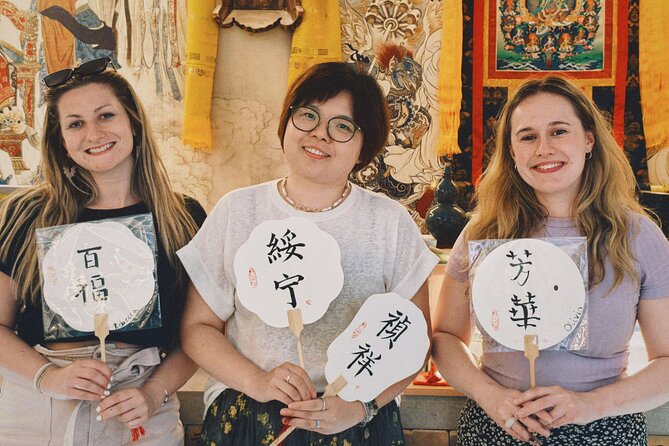
Chinese calligraphy is the heart of this Xi’an experience. Instead of standing behind a guide at a historic site, you sit down with ink, paper, and brush and make something yourself. Yunyun, a Xi’an travel planner with more than 20 years of calligraphy practice, guides you from simple strokes to meaningful characters such as dragon, love, and martial.
I like the small group size, limited to six people, because you can ask questions and get help with your brush. I also like the useful keepsakes: a painted folding fan, personalized bookmarks, and a traditional scroll painting. The main consideration is the pace. Three hours of careful brush practice may feel long if you want only a quick cultural demonstration.
Key points
- A real hands-on lesson: You write with brush, ink, paper, and inkstone rather than simply watching a demonstration.
- A 3,000-year story: An interactive character wall shows how Chinese writing changed from oracle-bone forms to modern script.
- Three personal artworks: You create a folding fan, bookmarks with your Chinese name, and a scroll painting.
- A calm opening ritual: Jasmine tea, snacks, and incense set the tone before the writing begins.
- A very small class: The maximum is six people, giving Yunyun time to guide beginners.
- A practical hot-weather choice: The session takes place indoors, useful during Xi’an’s intense summer heat.
Why calligraphy makes a good Xi’an afternoon
Xi’an is famous for the Terracotta Warriors, city walls, and imperial history. This activity takes a quieter route into Chinese culture. You learn how writing itself carries ideas about family, love, strength, home, and balance.
That matters because Chinese characters are not just marks to copy. Many began as pictures or symbolic forms. Seeing how a character changed over thousands of years gives you a better sense of why brush order, line weight, and spacing matter.
The experience is also a break from sightseeing on foot. One person who took the session during very hot weather, around 40 degrees, found the indoor setting especially useful. Start time is 2:00 pm, so it fits well after a morning at the city wall or a museum, though you should allow time to reach the meeting point at 15 An Ju Xiang in Beilin District.
Yunyun brings both local experience and an international outlook from visiting more than 50 countries. The supplied information describes her as a native Xi’an travel planner, and the feedback specifically praises her clear English, friendly manner, and willingness to answer questions. One participant also noted that she used pictures and maps when explaining other parts of Xi’an, suggesting that you can ask broader city questions if time allows.
More Tea and Calligraphy Classes in China:
- Beijing Culture: Tea Ceremony, Heritage Instrument & Calligraphy
★ 5.0 · 57 reviews - Beijing Culture Event: Tradition Music, Tea Ceremony, Calligraphy
★ 5.0 · 11 reviews - Beijing Hands-On Culture Tour: Tea, Instrument, Calligraphy
★ 5.0 · 6 reviews
Jasmine tea and incense before the brush
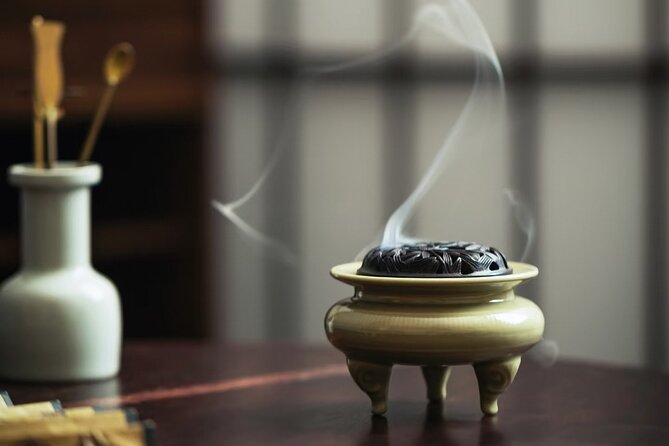
The session begins in a calligraphy studio arranged to recall the working atmosphere of ancient Chinese scholars. You receive jasmine tea and snacks, and an incense ritual helps mark the change from ordinary sightseeing to focused practice.
This opening is short, about 20 minutes, but it gives the activity a proper frame. Tea is not simply a drink here. It slows the pace and prepares you to pay attention to small details, which is exactly what brush writing demands.
I appreciate this start because it avoids throwing beginners straight into technical instruction. You have time to settle in, meet the instructor, and understand that the class is about more than producing a souvenir.
The incense element may not appeal to everyone, especially if you are sensitive to smoke or prefer a purely practical art lesson. Still, it is part of the traditional atmosphere described for the activity, and the tea and snacks are included in the $69 price.
From oracle bones to modern characters
Next comes a 25-minute look at the development of Chinese writing. An interactive character wall traces forms from ancient oracle bones through later stages to modern script.
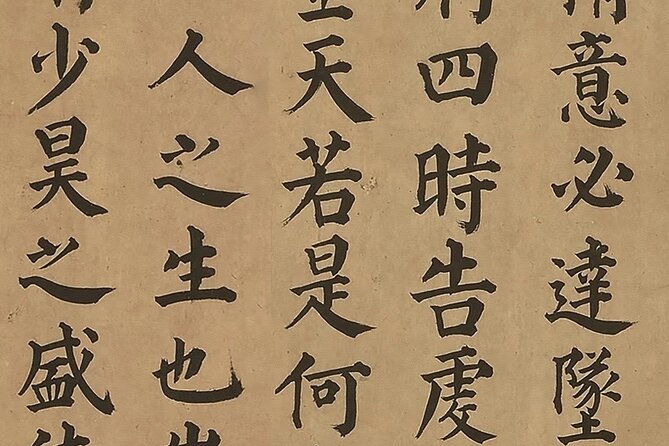
The example of 家, meaning home, is especially useful. Rather than asking you to memorize an abstract symbol, Yunyun shows how a character can hold a visual and cultural idea. Characters such as 龙 for dragon, 武 for martial, and 爱 for love connect the writing lesson with Chinese thought and everyday meaning.
This section gives the later brush practice a purpose. You begin to see why a character is shaped as it is, rather than treating it as a collection of lines. For someone visiting China who cannot read Chinese, that context can make signs, names, and artworks feel less mysterious.
The drawback is that 25 minutes goes quickly. If you want a full academic history of Chinese writing, this is not that. It is a clear introduction designed to support the practical lesson that follows.
Learning brush control one stroke at a time
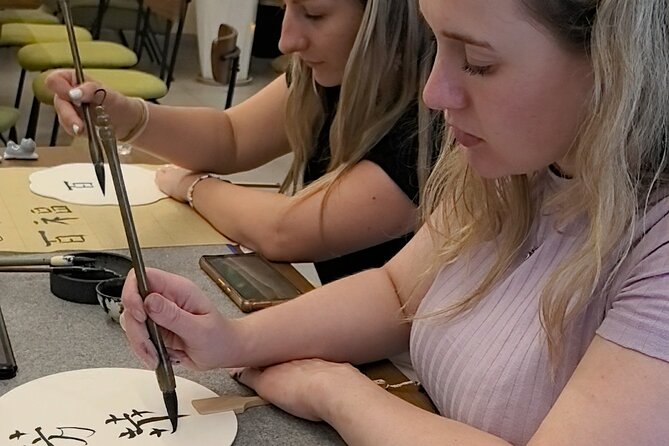
The longest teaching section lasts about 70 minutes. At your own practice station, you learn how to hold and control the brush, beginning with basic strokes and gradually combining them into characters.
The sequence includes simple forms such as 一, 十, 大, 小, 米, and 永. This is a sensible progression. A horizontal line looks easy until you try to keep its pressure, direction, and finish under control. Short characters let you see improvement without requiring advanced skill.
永 is often useful for practice because its structure introduces several types of brush movement. Here, it forms part of a broader beginner lesson rather than a standalone technical study. Yunyun’s role is important: she can correct your hand position, explain the movement, and help you repeat a stroke until it feels more natural.
You do not need prior calligraphy experience. The activity is built around learning from the first strokes, and most people can participate. Still, bring patience. Brush writing is slower than using a pen, and the goal is not to produce perfect museum-quality work in one afternoon.
I like that the lesson moves from technique to meaning. After the basic forms, you work with characters tied to ideas such as dragon, martial, and love. You can ask about the meaning behind the characters and choose words that feel personal.
More Tea Ceremony Experiences in China:
- Traditional Chinese Tea Ceremony Experience
★ 4.7 · 74 reviews - Chinese Tea ceremony in Beijing Hutong courtyard
★ 4.7 · 26 reviews - Shanghai: Song Dynasty Tea Ceremony Experience
★ 5.0 · 10 reviews - Beijing: Temple Of Heaven+Tai Chi Class+Tea Ceremony
★ 5.0 · 8 reviews
Making your own folding fan
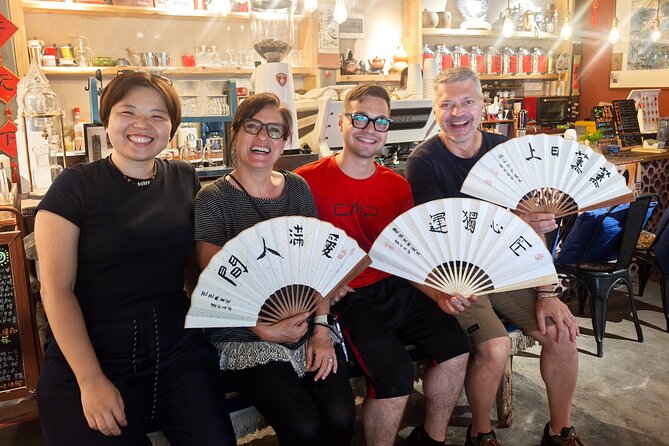
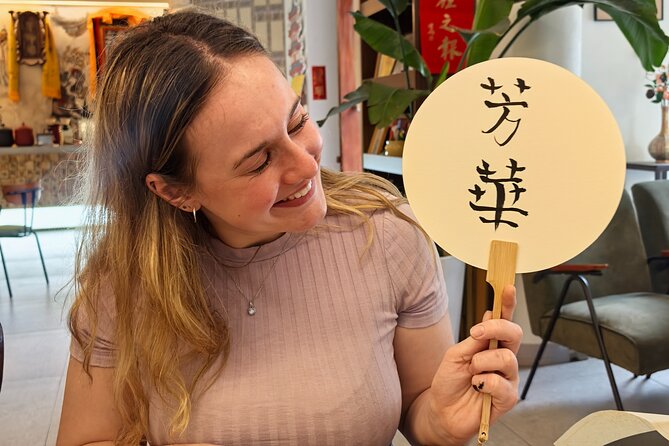
The final creative session takes about 75 minutes and is where the lesson becomes a souvenir. You design and paint a folding fan using selected Chinese characters.
This is more personal than buying a finished fan in a shop. You decide what to place on it, then use the brush skills from the earlier practice. The result will reflect your level, and that is part of its value. Slightly uneven lines show that you made it yourself.
A fan also makes a practical keepsake. It is light, easy to pack, and connected to the brush tradition you have just studied. You might choose a character with a personal meaning, or follow Yunyun’s suggestions if you are unsure.
The session is not a free-form art class with unlimited materials listed in every direction. The supplied details specifically promise a painted folding fan, so expect guided creation rather than a large studio workshop. That focus helps keep the three-hour schedule manageable.
Bookmarks and a traditional scroll painting
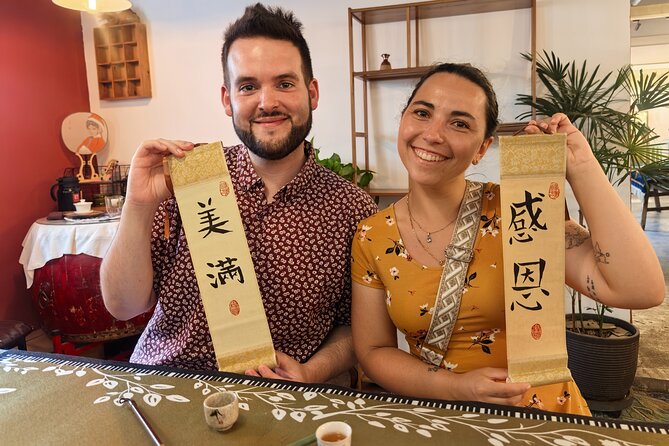
You also make personalized bookmarks featuring your Chinese name. This is a nice touch for visitors who want a connection to their time in Xi’an without carrying a large object home.
The bookmarks are simpler than the fan, but they give you another chance to apply the strokes. They may also be easier to complete if your brush work is still developing. Because your name is part of the design, ask Yunyun about the characters and their pronunciation as you work.
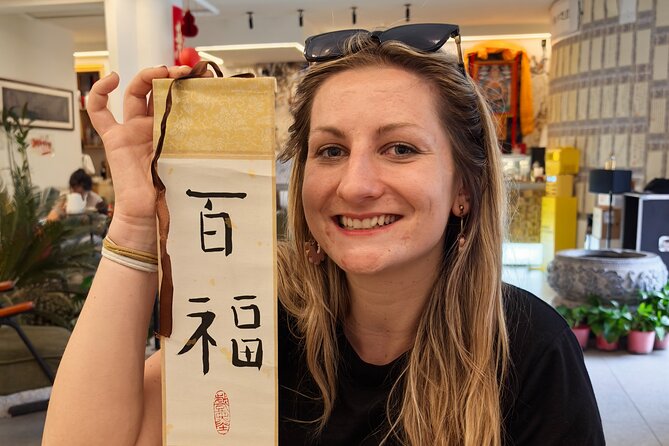
The third takeaway is a traditional scroll painting. Together, the fan, bookmarks, and scroll give you three different formats for the same basic skills. One is portable and decorative, one is personal and useful, and one connects more directly with Chinese painting traditions.
All writing materials are included: ink, paper, and an inkstone. You do not need to bring art supplies. Wear something you can sit comfortably in for several hours, and take care around wet ink since the activity involves making original work rather than simply observing.
What the $69 price covers
At $69 per person, this is not a bargain if you compare it with a short tea tasting or a basic sightseeing walk. It is a stronger value if you want instruction, cultural background, refreshments, and several finished artworks in one sitting.
The price includes the jasmine tea and snacks, an instructor, all writing materials, and the three listed takeaways. It also buys you a small group setting, with no more than six participants. That ratio matters in calligraphy because beginners benefit from individual correction.
You are paying for time as much as objects. The activity lasts roughly three hours to three hours and 20 minutes, including the tea ritual, writing history, practice, and art-making. A fan and scroll bought separately might cost less or more depending on quality, but they would not carry the memory of your own lesson.
The best value comes if you enjoy making things. If you would rather spend the afternoon seeing major monuments, the price may feel high for an indoor craft session. If you want a slower, more personal connection to Chinese culture, the combination makes more sense.
Who will enjoy this experience most
This is a good match for first-time visitors who want more than photographs. You do not need to read Chinese or have artistic ability. The progression starts with basic marks and gives you clear projects to complete.
Families may like the tangible results, though the supplied information does not specify a minimum age. If you are booking for children, confirm that the planned session suits their age and attention span. Three hours of seated brush work can be demanding for younger participants.
It also suits couples, solo visitors, and small groups who prefer conversation with an instructor. The maximum of six makes it easier to ask about characters, Chinese customs, or Xi’an itself without competing with a large class.
For anyone visiting Xi’an in extreme heat, the indoor format is a practical advantage. The start time also gives you a way to fill the middle of the day, when walking outside may be unpleasant. The activity does require suitable weather, however, so check the operator’s arrangements if conditions are poor.
Practical details before you book
The meeting point is 15 An Ju Xiang, Beilin District, Xi’an, Shaanxi, postal code 710001. The activity ends back at the same location. It is near public transportation, but the information provided does not specify a particular station or route, so check your map and allow time to find the studio.
Mobile tickets are accepted, and confirmation is provided when you book. The starting time is 2:00 pm. Plan to arrive ready for a full afternoon rather than treating this as a short drop-in lesson.
The cancellation terms are friendly if your plans are uncertain. You can receive a full refund by canceling at least 24 hours before the local start time. Changes or cancellations inside that window are not accepted for a refund, and poor weather may lead to another date or a full refund.
The small class size is one of the strongest practical features. A group of fewer than six gives you a better chance to receive help with brush position and character formation. It also keeps the tea and incense opening from feeling like a staged show for a crowd.
How this compares with ordinary sightseeing
A standard Xi’an tour gives you monuments, dates, and photographs. This activity gives you a slower look at how Chinese culture is written and practiced. It will not replace the Terracotta Warriors or city wall, but it can add a human scale to your visit.
You leave with objects you made rather than only items you bought. That does not mean every piece will be perfect. In fact, the uneven parts are likely to be the most personal reminder of the afternoon.
The teaching style also appears suited to questions. Yunyun is described as friendly, funny, kind, and willing to respond to requests. Her English is described as excellent, which is important for explaining the difference between copying a shape and controlling a brush.
One caution: the public rating is based on only four written ratings, so treat the perfect score as encouraging rather than conclusive. The comments consistently praise Yunyun’s explanations, warmth, and English, but a small sample cannot tell you how every participant will respond to the pace or art projects.
Should you book the Xi’an calligraphy class?
Book it if you want an indoor cultural activity with genuine participation, a small group, and keepsakes you create yourself. It is especially useful on a very hot Xi’an afternoon, or after you have had enough of large historic sites and want something calmer.
Skip it if your schedule is packed with major sights or you dislike seated craft lessons. The $69 cost makes the most sense when you value the instruction, tea ritual, cultural explanation, and three-hour creative session, not just the finished fan.
For most curious beginners, I see this as a thoughtful addition to a Xi’an itinerary. Yunyun’s long practice, clear English, and personal approach give the session a strong foundation, while the fan, bookmarks, and scroll give you something real to take home.
FAQ
How long does the Xi’an calligraphy and tea ceremony last?
The experience lasts approximately three hours to three hours and 20 minutes.
What time does the activity begin?
It begins at 2:00 pm.
Where does the experience start?
It starts at 15 An Ju Xiang, Beilin District, Xi’an, Shaanxi, China, postal code 710001.
Where does the activity end?
It ends back at the same meeting point.
How many people can join the experience?
The maximum group size is six participants.
Are materials included?
Yes. Ink, paper, and an inkstone are included, along with the materials needed for the calligraphy projects.
What do I take home?
You create a painted folding fan, personalized bookmarks, and a traditional scroll painting.
Can I cancel for a full refund?
Yes. You must cancel at least 24 hours before the local start time for a full refund. Changes or cancellations made less than 24 hours before the experience are not accepted for a refund.
Just added around China
- Xi’an Chinese Calligraphy Workshop: Ink Art & Tea Tasting★ 5.0 · 4 reviews
- Xi’an Noodle Making and Tea Tasting Experience★ 5.0 · 6 reviews
- Half-day Tour: Largest Tea Plantation & Amazing Xianggong Hill★ 5.0 · 9 reviews
- Full-day Tour: Spectacular Sunrise, Tea Plantation & Sunset★ 5.0 · 3 reviews
- 3 hours Xi’an Mahjong Class with Local Tea★ 5.0 · 2 reviews
- Shanghai Mahjong Experience in Local Tea Bar★ 5.0 · 4 reviews
- Unlock Chinese Tea: Culture, Science, Tasting & Hands-on Brewing★ 5.0 · 12 reviews
- Chinese Tea Ceremony Experience★ 5.0 · 3 reviews
Tea & Calligraphy Classes, compared.
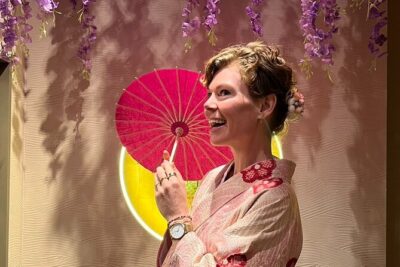
Tea Ceremony, Calligraphy, and Kimono Experience
Read our review →
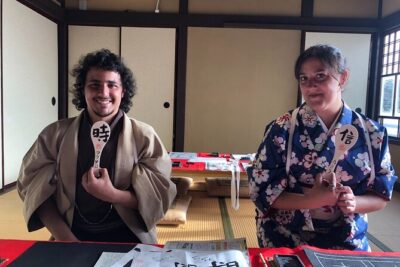
An Amazing set of Cultural experience: Kimono, Tea Ceremony and Calligraphy
Read our review →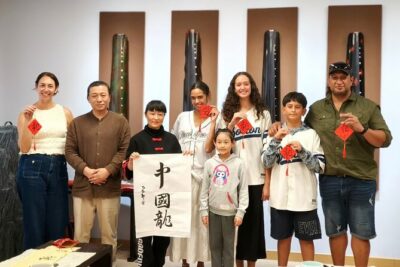
Beijing Culture: Tea Ceremony, Heritage Instrument & Calligraphy
Read our review →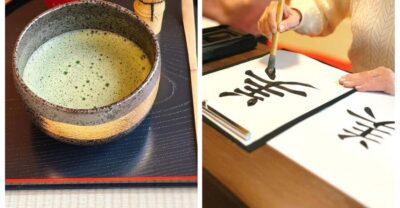
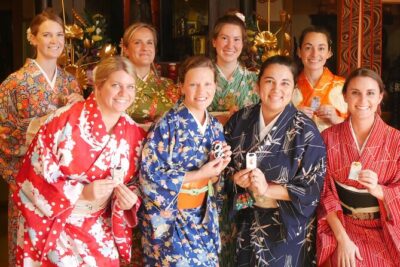
Cultural Activities :Kimono, tea ceremony, Calligraphy and Amulet
Read our review →
Samurai dress-up and shows, plus Tea Ceremony & Calligraphy
Read our review →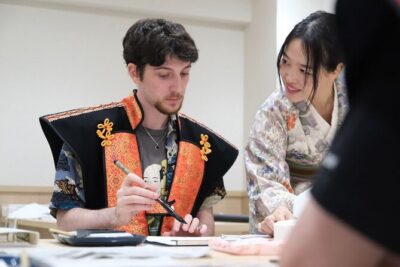
Premium Kimono Dressing, Tea Ceremony, Calligraphy, Samurai show
Read our review →Browse the lists this tour appears in