
Review · MOROCCO
Marrakech: Cultural Bicycle Tour with Pastry and Tea
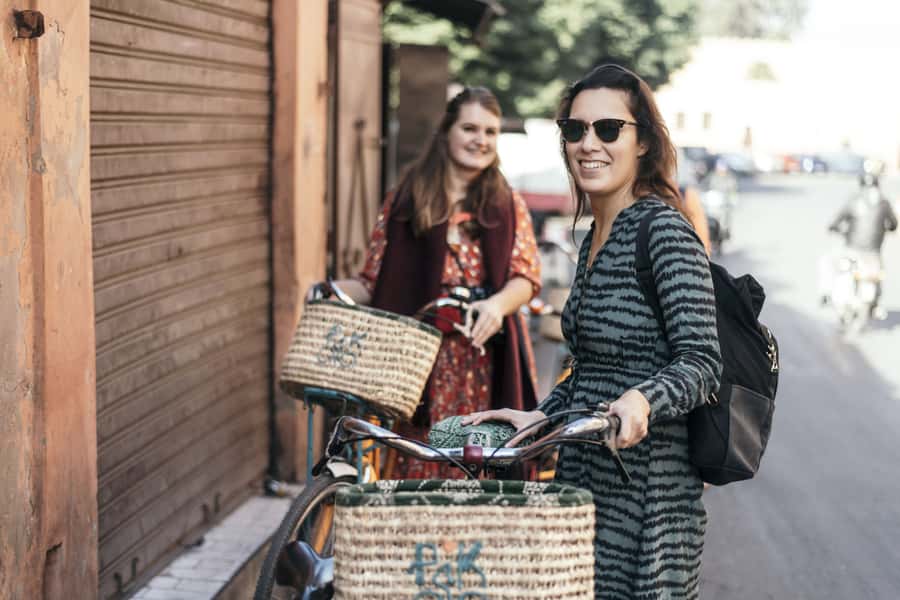
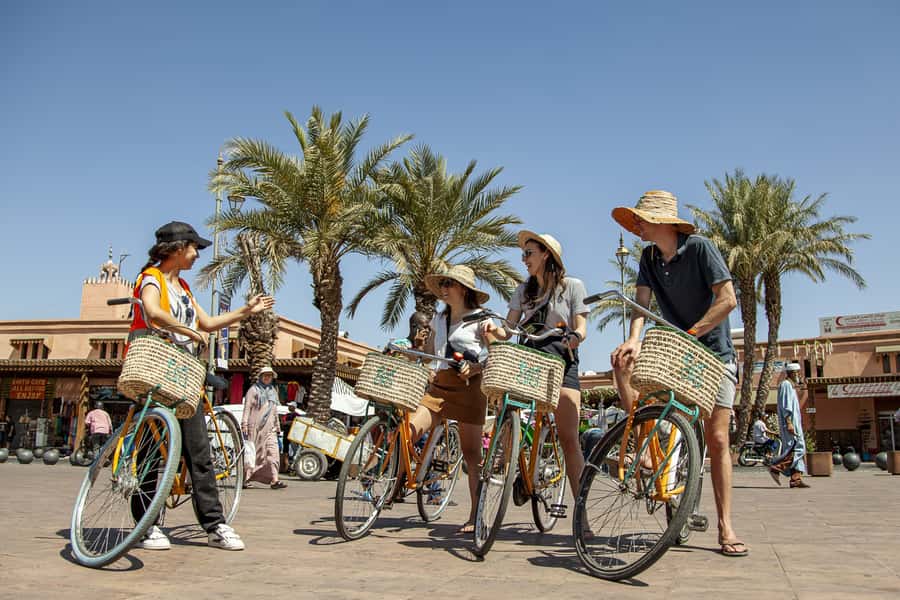
Marrakech makes far more sense from a bicycle seat. This three-hour cultural ride slips through narrow medina lanes, local workshops, a bakery, palace gardens, and the newer districts that many visitors never connect with the old city. Guides such as Rabab, Hamid, Yassir, and Kenza bring the stops to life with stories about ordinary Moroccan life, not just monuments.
I like two things especially: the visit to a community bakery, where bread comes from a clay oven and has a daily role far beyond food, and the stop at a zellige tile workshop. I also like that Pikala trains Moroccan young people as guides and supports local businesses. The main drawback is clear: Marrakech traffic is not gentle. You need to be a confident cyclist and ready to share tight streets with mopeds, donkeys, carts, pedestrians, and other bikes.
Key points to know before you book
- Bread, tiles, and hammams: The tour explains daily customs through real local places, rather than relying only on monuments.
- A useful city contrast: You ride from the old medina and souks to Gueliz and Hivernage, where broad roads, cafés, and hotels show another side of Marrakech.
- Traffic takes focus: The route is generally easy and flat, but the first hour can feel tense in narrow lanes and crowded crossings.
- Strong local guiding: Guides including Hamid, Rabab, Sayid, Yassir, and Kenza are praised for clear English, patience, humor, and careful group control.
- Good value at $34: Water, fruit, suncream, local entrance fees, Moroccan pastries, juice, tea, and a café stop are included.
- Best for confident riders: Comfortable bikes are supplied, and a tandem has helped at least one older participant, but basic road awareness is essential.
Why this bike ride shows the real Marrakech
Many first visits to Marrakech focus on Jemaa el-Fna, the souks, and the Koutoubia Mosque. Those places matter, but they can leave you with a picture of the city built mostly from shop fronts and famous views.
Pikala Bikes takes a different route. You still pass major sights, including Koutoubia and the Royal Palace area, but the heart of the ride is ordinary life: how bread is baked, how tiles are cut, how a hammam works, and how the old city meets the newer one.
That approach gives you useful context. A public bathhouse is not simply a place to wash. A bakery is not just a quick snack stop. Zellige tiles are not only pretty decoration. Each visit helps explain how Moroccan homes, neighborhoods, work, and social life fit together.
The social purpose adds value, too. Pikala trains Moroccan youth to guide visitors, giving you a local voice and giving young people practical work experience. At $34 per person, the price is modest for three hours of guiding, bike use, refreshments, and several local stops.
A few more tea experiences around the world worth a look
- Kyoto: Tea Ceremony in a Traditional Tea House in Kiyomizu
★ 4.9 · 3,519 reviews - London: Afternoon Tea Cruise on the River Thames
★ 4.4 · 3,274 reviews - Kyoto: Tea Ceremony Ju-An at Jotokuji Temple
★ 4.9 · 3,207 reviews
Starting at Pikala Bikes and meeting your guide
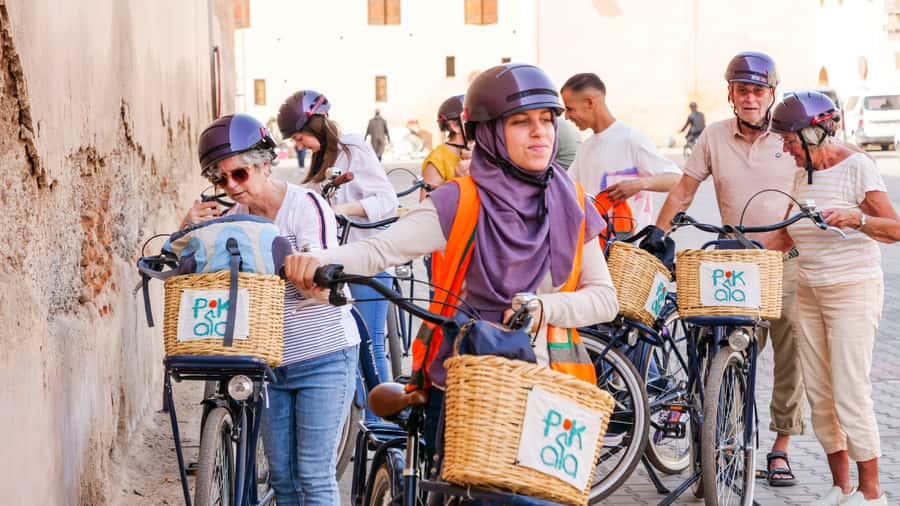
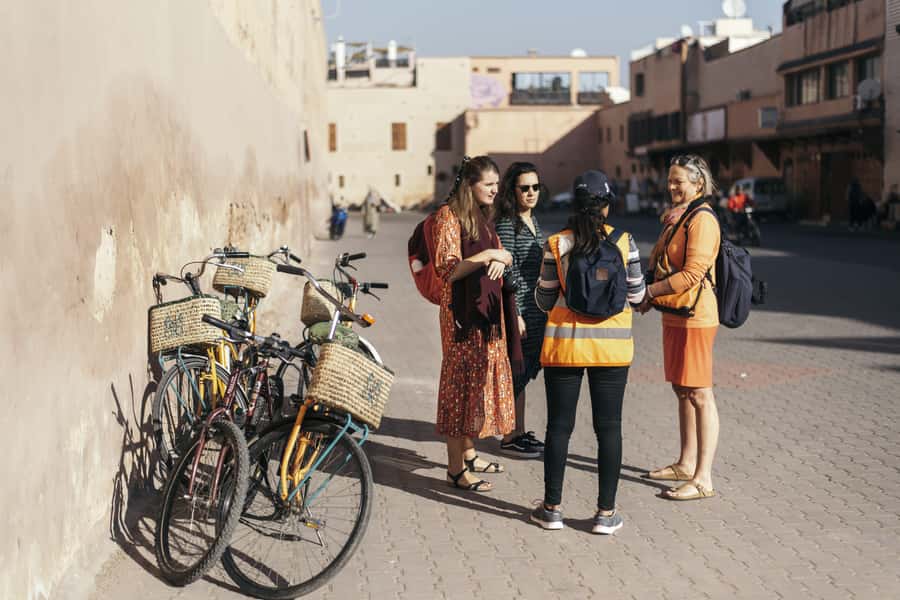
The tour begins at the Pikala Bikes headquarters. You meet your English- or French-speaking guide there, get set up with a bicycle, and receive an introduction to the ride.
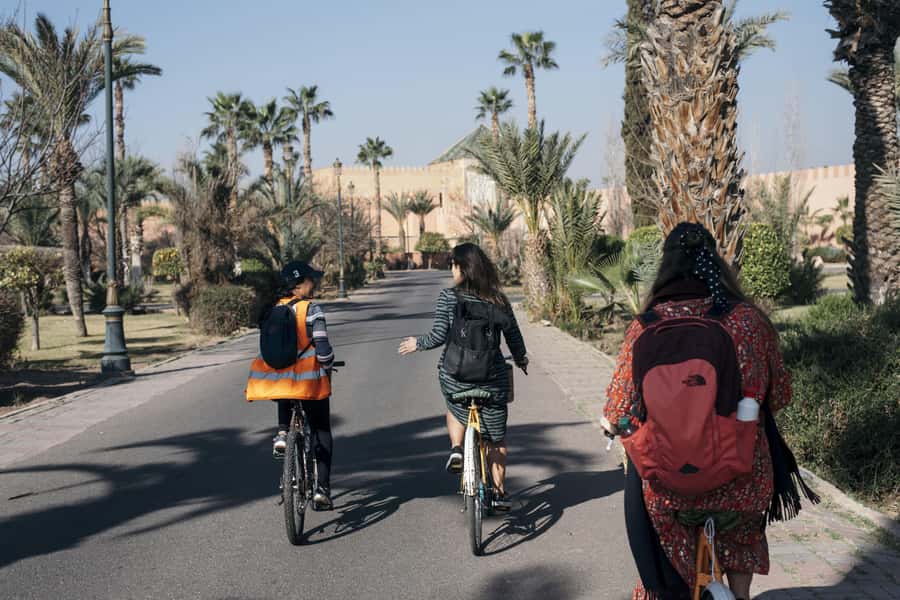
The bikes are described as solid, with comfortable saddles, though some riders find them a little heavy to handle. The route is not presented as a fast athletic ride. It is a slow city trip with frequent stops, time for explanations, and regular checks to keep the group together.
That does not mean it is effortless. Your attention belongs on the road, especially in the medina. One guide may stop to explain a building, then look back repeatedly while leading the group through a crossing. This careful style matters in Marrakech, where traffic often feels less rule-bound than what you may know at home.
Wear casual clothes that let you move easily. Long skirts and dresses can catch on a bicycle or make mounting awkward. Suncream is included, and water and fruit are supplied, but comfortable clothing and sensible shoes still make the ride easier.
Sidi Bel Abbas and the first medina lanes
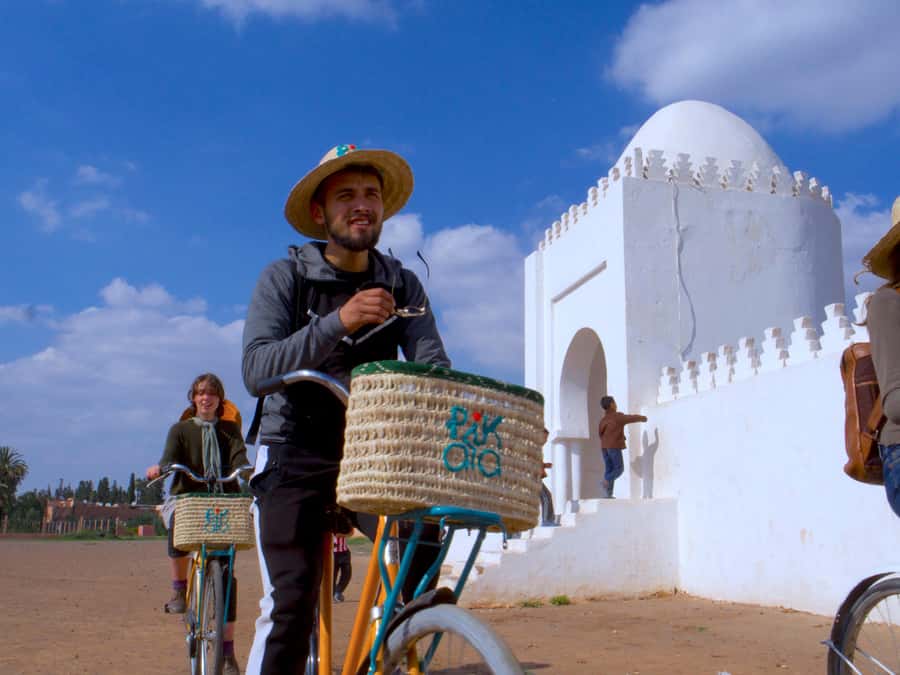
An early stop is the Zawiya of Sidi Bel Abbas. You pause for photographs and an explanation of the site before continuing through the old city.
The value here is not only the building itself. A zawiya is connected with religious and community life, so the stop helps place Marrakech’s streets in their cultural setting. Your guide can explain what you are seeing and how such places relate to local traditions.
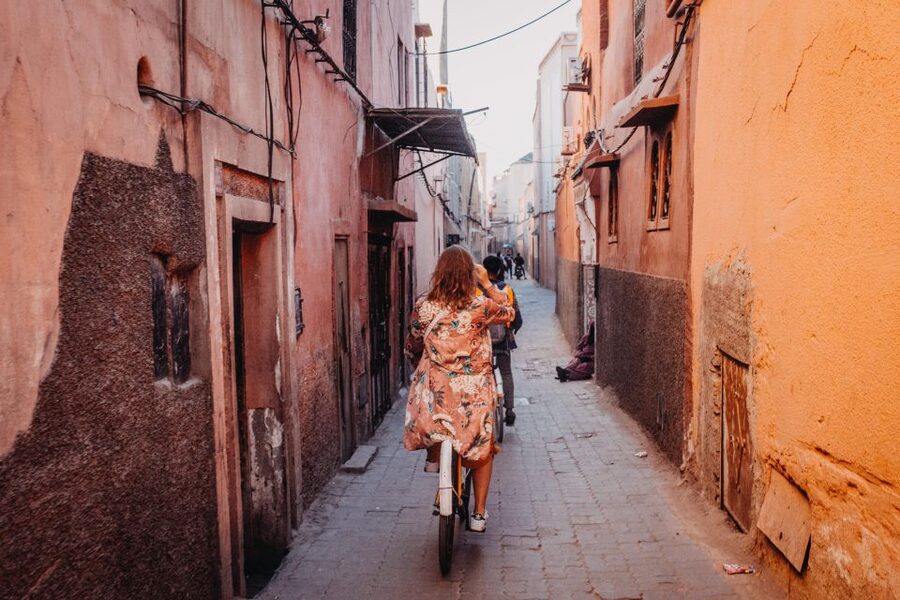
After this, the route moves into the tighter lanes. This is where the ride becomes an adventure rather than a simple sightseeing circuit. Pedestrians, mopeds, donkeys with carts, and tourist groups may all share the same space. The pace is controlled, but you need to watch ahead, keep your hands steady, and follow your guide’s signals.
If you are comfortable riding in busy towns, you will likely adjust. Several riders describe the first part as nerve-wracking, then say it became easier once they understood the flow. If you rarely cycle or feel uneasy around traffic, this is the part to consider carefully.
Bread from a clay oven at a local bakery
The bakery visit is one of the strongest stops on the route. You step into a local bakery, see bread baked in a clay oven, and taste it while hearing why bread matters in Moroccan daily life.
This is the kind of stop I value on a city tour. You are not just looking at an old wall and hearing a date. You are seeing a working custom tied to meals, households, and neighborhood routines. Fresh bread also gives the ride a welcome sensory moment, with warmth, smell, and a taste you can connect to what you have been told.
The stop is short, around ten minutes, so expect an introduction rather than a full cooking class. It works best as a window into daily life. You will not spend long enough to study every stage of production, but you will leave with a better idea of why bread has such a central place in Moroccan culture.
Same place, a different pot:
- Afternoon Tea Bus Tour in Dublin
★ 5.0 · 2,791 reviews - Kyoto: 45-Minute Tea Ceremony Lesson Experience
★ 4.3 · 2,378 reviews - London: Afternoon Tea Bus Tour – 1960s Routemaster Bus
★ 4.5 · 2,032 reviews - London: Afternoon Tea Bus with a Glass of Prosecco
★ 4.4 · 1,853 reviews
Zellige craftsmanship and the work behind the patterns
The route includes a visit to artisans who make Moroccan zellige tiles. These small geometric pieces decorate palaces, mosques, courtyards, and homes, but their finished patterns can hide the labor involved.
At the workshop, you see the craft close up and learn about its history. The point is not simply to admire a colorful wall. It is to understand that Moroccan decorative design depends on skilled hands, repeated shapes, careful arrangement, and long practice.
This stop is especially useful if you have admired tilework in the medina without knowing how it was made. Your guide can connect the workshop to the architecture around you, so the city’s patterned surfaces begin to look less like background decoration and more like the work of individual craftspeople.
The timing is brief, so do not expect a long shopping session or a detailed hands-on lesson. The strength is direct contact with a living craft.
Place des Ferblantiers and the palace district
The bicycle then reaches Place des Ferblantiers, where you have about twenty minutes for a break, photographs, and a closer look around. It is a useful pause after the narrow medina lanes, giving you room to stretch and take in the setting.
The route also passes the public gardens around the Royal Palace, Dar El-Makhzen. You view the palace from outside and hear about its place in Morocco’s monarchy and history. Since the palace itself is not entered, keep your expectations realistic. This is an exterior view and a lesson in the importance of the area, not a palace tour.
That limitation is not a problem if you want context rather than access. The gardens and surrounding streets show how royal spaces sit beside the working city. The contrast between formal royal architecture and nearby commercial lanes is one of the route’s better visual changes.
Several short stops labeled as tucked-away sights are spread through this section. The exact view can vary with the guide and conditions, but the design of the route is clear: you are being led to places you might not find by yourself, without turning every stop into a major attraction.
The hammam as a social institution
The traditional hammam visit gives the tour one of its most useful cultural explanations. You learn about the rituals of the Moroccan public bathhouse and its social role in everyday life.
Do not confuse this with booking a spa treatment. The experience is about understanding the hammam tradition, not having a full bathing session. Your guide explains how the space is used and why it has long mattered to local communities.
This is a good example of what Pikala does well. A visitor can easily pass a hammam without realizing what happens inside or how important it is. A short visit turns an ordinary doorway into a subject connected with cleanliness, routine, family life, and social contact.
The stop is also a reminder to listen and observe respectfully. You are entering a place with a purpose beyond tourism. Follow the guide’s instructions, avoid treating it like a photo prop, and allow the explanation to lead the visit.
Machwar Al-Barani, Koutoubia, and a look at faith
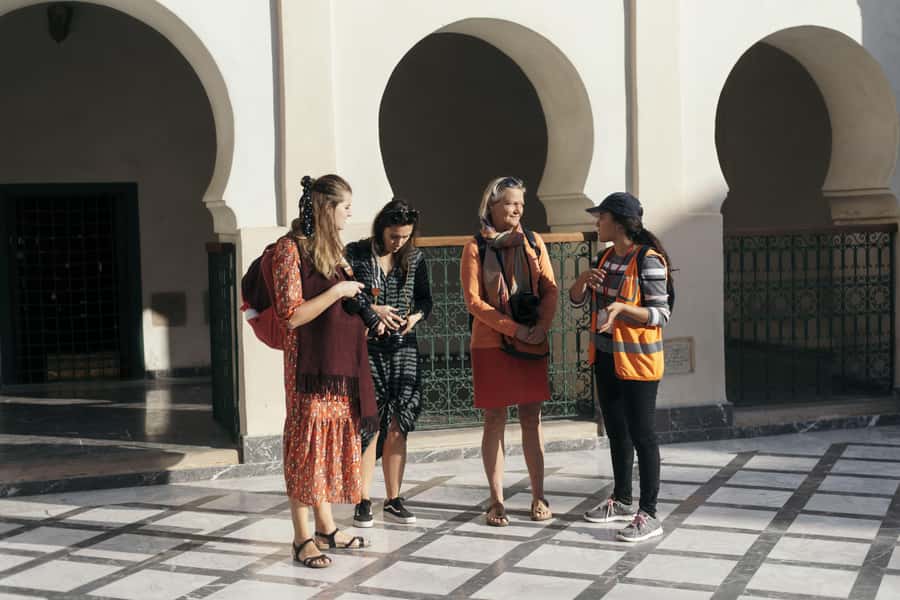
Another pause takes place around Machwar Al-Barani, followed by a pass near the Koutoubia Mosque. The mosque is one of Marrakech’s best-known landmarks, but the guide’s explanation adds more than a standard photograph can.
The route also includes the Church of the Holy Martyrs. Seeing a mosque and a church within the same city ride gives you a wider view of Marrakech’s religious and civic story. The stop is described as a photo and sightseeing pause, not an interior visit.
One guide used the mosque stop to explain Muslim beliefs and practices. That kind of conversation can be more helpful than a quick monument fact, especially if you are trying to understand how religion fits into Moroccan public life.
The ride does not pretend to cover every part of Marrakech’s past in three hours. Instead, it selects a few places and links them to questions about faith, monarchy, work, and daily routines.
Leaving the old city for Gueliz and Hivernage
The biggest change in scenery comes when the bicycles leave the medina and move through modern Marrakech, including Gueliz and Hivernage.
Here you see wide boulevards, trendy cafés, luxury hotels, and a more open street plan. After the tight lanes of the souks, the extra space can feel easier, though some riders initially find the traffic more intimidating because vehicles move faster and the roads are broader.
This part is important because Marrakech is not only an old walled city. Gueliz shows the modern side of the Red City, while Hivernage brings a more polished hotel and café district. The ride lets you compare the two parts without treating one as more authentic than the other.
I like this contrast because it answers a question many first-time visitors have: how does a city with centuries-old lanes function as a modern place? Cycling between the districts gives you a physical sense of the change. The city shifts from alleys and workshops to boulevards and contemporary businesses in a short space of time.
Mint tea, juice, pastries, and the Pikala Café finish
The tour ends at Pikala Café, where you have around twenty minutes for tea, coffee, local snacks, Moroccan pastries, and juice. Mint tea and spiced cookies are especially welcome after the ride.
Water, fruit, and suncream are included during the tour, along with the café refreshments and free entry to the local stops. Hotel pickup and drop-off are not included, so you need to make your own way to the Pikala Bikes headquarters at the start and return from there afterward.
The café stop is more than a final drink. It gives you time to ask questions, continue chatting with the guide, and let the city settle into place. One useful detail from the experience is that the café is part of Pikala, so you can learn more about the organization’s work and its support for local youth and businesses.
How hard is the cycling?
The route is mostly flat, and the pace is gentle. There are regular stops, and the guides work to keep the group together. That makes the tour manageable for a reasonably fit cyclist who is comfortable starting and stopping often.
The challenge is not hills or speed. It is traffic awareness. You may need to avoid pedestrians, mopeds, donkeys, carts, tourist groups, and other cyclists in tight spaces. The first hour through the souks and medina is the most demanding part.
A confident cyclist will probably find the route exciting rather than exhausting. A nervous cyclist may still enjoy it, but should understand that this is not a protected cycle path or a quiet countryside ride. One older participant used a tandem with her mother, which suggests the team can be flexible in some situations, but you should discuss any specific need with Pikala before booking.
Morning timing may help. One rider found a 9:30 a.m. departure calmer because the roads were less crowded. Availability changes, so check the starting time offered when you book.
Who gets the most from this $34 experience?
I would choose this tour early in a Marrakech visit if you want a city orientation with real cultural content. It helps you understand where the medina sits, how the newer districts differ, and which daily customs to notice during the rest of your stay.
It suits:
- Confident cyclists who enjoy city riding
- First-time visitors wanting more than the main sights
- Families with older children or active adults
- People interested in crafts, food, religion, and everyday life
- Visitors who value a social enterprise with local youth training
- Anyone who prefers a small-group, conversational tour
I would hesitate if you dislike traffic, have difficulty balancing on a bicycle, or want a quiet sightseeing experience. The route can feel hairy in places, even when the guide is attentive.
The value is strong. For $34, you get three hours, a bicycle, a local guide in English or French, water, fruit, suncream, bakery and cultural stops, a café finish, and local snacks. The cost also covers entrance to the included stops. You are paying for access and interpretation, not simply bicycle rental.
Should you book Pikala’s cultural bicycle tour?
Book it if you want to see Marrakech through working neighborhoods, local customs, and the transition from old medina to modern Gueliz. The bakery, zellige workshop, hammam explanation, and café finish give the route more substance than a standard city ride.
Skip it if you are not a confident cyclist or if busy streets make you anxious. The guides take safety seriously, but they cannot remove Marrakech traffic from the experience.
For most active visitors, this is one of the better ways to get your bearings and understand daily life. Choose a quieter morning departure when possible, wear practical clothes, keep your eyes on the road, and let the guide handle the route.
FAQ
Where does the bicycle tour start?
The tour starts at the Pikala Bikes headquarters.
How long does the tour last?
The scheduled duration is three hours. One participant experienced a tour of about three and a half hours, so allow a little flexibility.
What languages are available?
Live guiding is available in English and French.
What is included in the price?
The tour includes bicycles, water, fruit, suncream, free entrance to the local stops, juice, Moroccan pastries, and tea or other refreshments at a cultural café.
Is hotel pickup included?
No. Hotel pickup and drop-off are not included. You need to reach Pikala Bikes for the start.
Do I need to be a confident cyclist?
Yes. You should be comfortable cycling around pedestrians, mopeds, donkeys, carts, and other vehicles, especially in the medina and souks.
What should I wear?
Wear casual, comfortable clothing. Long dresses and skirts can be awkward or unsafe on a bicycle.
Can I cancel the booking?
You can cancel up to 24 hours in advance for a full refund. A reserve-now, pay-later option is also available.
Just added around the world
- Xi’an Chinese Calligraphy Workshop: Ink Art & Tea Tasting★ 5.0 · 4 reviews
- Yokohama : Tea Ceremony with Sweets and Souvenir★ 5.0 · 5 reviews
- Yogyakarta: Prambanan Tour, Sukuh Temple & Tea Plantation★ 5.0 · 3 reviews
- Washington, D.C.: Tea Around Town Bus Tour with Landmarks★ 3.4 · 7 reviews
- Tea Route: Lake, Forest, Tea Plantation & 3 Course Lunch★ 3.6 · 7 reviews
- Wadi Rum: 2-Hour Jeep Tour with Bedouin Tea★ 5.0 · 11 reviews
- Walking Tour: Yanaka,Nezu& Sendagi: Tea Ceremony & Old Tokyo★ 5.0 · 3 reviews
- Visit local home for music and tea ceremony near Disney★ 4.9 · 13 reviews
Morocco Tea Experiences, compared.
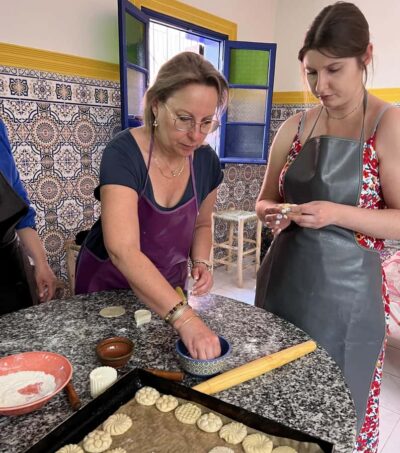
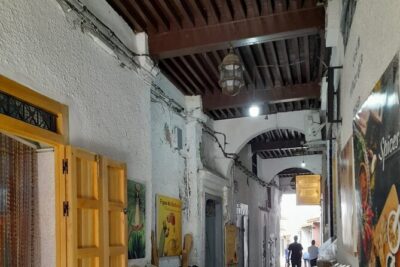
Tangier Private Tour with a Local Writer (Includes Tea & Sweet)
Read our review →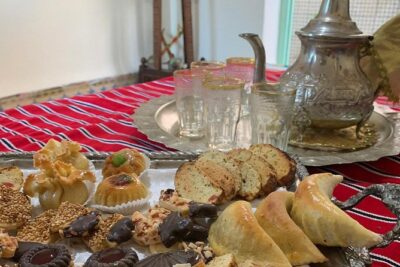
Moroccan Hands on traditional pastries & Tea class in Marrakech
Read our review →
Argan Forest, tea time at a Berbers family & Visit of an Argan cooperative.
Read our review →
Walk to the cascade and marabout of Sidi Mbark & for a tea to Kaouki
Read our review →
Agadir/Taghazout: Sandboarding & Sunset Tea with Fire Show
Read our review →
Sunset Sandboarding & Mint Tea in Timlaline Dunes
Read our review →Browse the lists this tour appears in