
Review · MOROCCO
Moroccan Hands on traditional pastries & Tea class in Marrakech
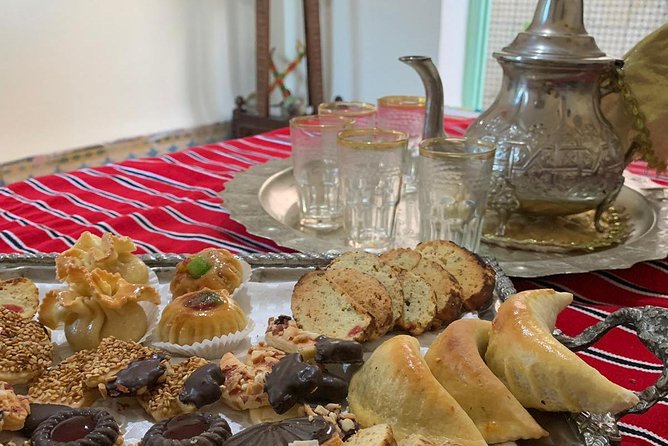
Moroccan pastry is best understood at a kitchen table, not behind a glass bakery case. In a private home near Rue Bab Doukkala, Chef Khmisa guides you through traditional sweets, mint tea, and the family-style ritual of serving both together. I like the home setting and the chance to use ordinary kitchen items rather than industrial equipment. I also like that you finish with warm pastries, tea or coffee, recipes, and a box to take away.
The main thing to consider is the class level. You may make only two pastries, and some ingredients are prepared before you arrive. That makes the class easy and relaxed, but it may disappoint you if you want a demanding pastry course with several complex recipes. Confirm the time carefully, too, since one booking went wrong after a guest and host disagreed about the scheduled start.
Key points at a glance
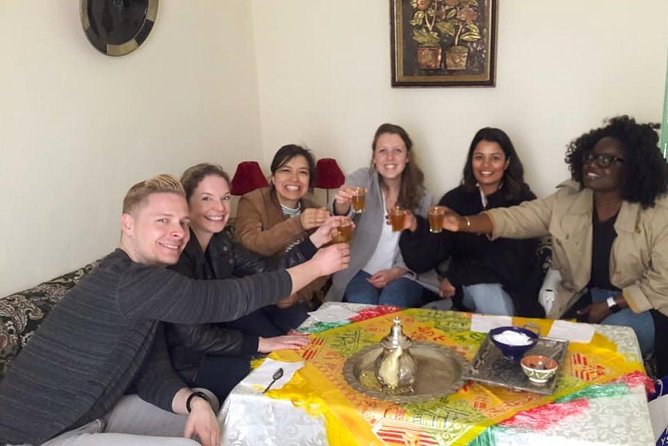
- A private-home setting: Meet Chef Khmisa and her family in a Marrakech medina home rather than in a formal cooking school.
- Two traditional pastries: The class may include corne de gazelle, ghriba, and other Moroccan sweets, depending on the session.
- Mint tea technique: You learn how to prepare Moroccan mint tea and serve it with fresh baking.
- A three-hour format: The pace allows time for preparation, baking, tasting, and conversation about Morocco.
- Take-home value: You receive recipes and a box of pastries, useful if you want to repeat the class at home.
- Small group size: The maximum is 10 people, though the actual class may be smaller.
A Marrakech pastry class built around home cooking
The most appealing part of this experience is its sense of place. You are not simply shown a tray of Moroccan sweets and handed a printed recipe. You visit a local private home, meet the cook and her family, and learn how pastries fit into the everyday Moroccan custom of serving tea or coffee.
That setting matters. Moroccan hospitality is closely tied to the offer of a drink and something sweet. A pastry class gives you a practical way to understand that custom. You learn the food, but you also see how it is presented and enjoyed.
The provider is Marrakech Cooking Class With Chef Khmisa. The class is offered at different times, which is useful if you are fitting it around sightseeing in the medina. The listed meeting point is on Rue Bab Doukkala, Marrakesh 40000, and the class ends back at the same meeting point. Hotel pickup is not included, so you need to make your own way there.
The experience lasts about three hours. That is long enough for more than a quick demonstration, yet short enough to fit into a morning or afternoon without taking over your day.
More Tea Making Classes in the world:
- London: Traditional English Scone Making and Tea Workshop
★ 5.0 · 702 reviews - London Traditional English Scone Making and Tea Workshop
★ 5.0 · 271 reviews - Nara:Authentic Tea Ceremony(Max 5 ppl) -Master Matcha Making
★ 5.0 · 119 reviews
What happens when you arrive at Rue Bab Doukkala
Your class begins at Rue Bab Doukkala, near public transportation. The supplied details do not give a precise landmark, building description, or walking route, so I would pay close attention to the confirmation message and any location instructions before setting out.
This is especially important because the only serious complaint about the experience involved timing and confusion over the start hour. The host’s response said the guest arrived one hour late after misunderstanding the time, while the guest said the operator tried to change the scheduled time. The practical lesson is simple: check the time zone, read the confirmation carefully, and make sure you and the host agree on the meeting time before the day of the class.
Once you meet your host, expect the tone to be informal. This is meant to feel like a home visit, not a large commercial kitchen. You share tea or coffee, meet the family, and settle into the pastry work.
The maximum group size is 10 people. That is small enough to keep the class manageable, though it does not guarantee one-on-one attention throughout. If the group reaches its limit, you may spend parts of the lesson watching while another person mixes or shapes the dough.
The pastry work: simple tools, precise hands
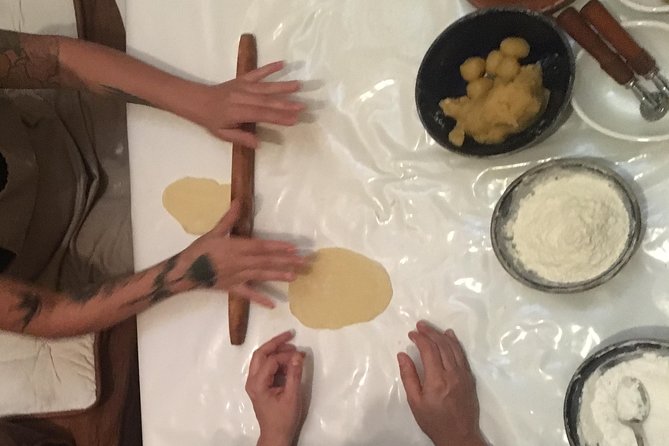
Chef Khmisa presents Moroccan pastry as a craft of careful technique rather than expensive equipment. The class uses items you can find at home, which is one of its strongest practical features. You are not expected to reproduce the recipe with a professional mixer, specialty oven, or commercial decorating tools.
That approach makes the class useful after your holiday. You can take the recipes home and try them in your own kitchen. The lesson is less about copying a restaurant pastry and more about learning the basic methods behind the sweets.
The listed examples include corne de gazelle and ghriba. Corne de gazelle, or gazelle horn, is a delicate pastry associated with Moroccan baking. Ghriba is a crumbly cookie-style sweet. They offer different lessons in texture and shaping, so making both gives you a better sense of how Moroccan pastries vary.
The precise selection may change. One useful tip from the class feedback is to decide beforehand which Moroccan cookies or pastries interest you most, then ask the chef if she can show you how to make them. The description promises a variety of Moroccan pastry, but one participant made two types and expected more. If you are hoping to prepare a long list of recipes, ask in advance what the day’s menu will be.
You should also adjust your expectations about how hands-on the work will be. Some ingredients may already be measured and prepared before you begin. That keeps the three-hour session moving and reduces the chance of mistakes, but it can make the course feel basic if you already bake often.
For a first introduction, that simplicity is a benefit. You can focus on combining ingredients, shaping the sweets, and learning the small tricks that affect the final result. For an experienced baker, the value lies more in the Moroccan recipes and home setting than in advanced pastry technique.
Corne de gazelle, ghriba, and the value of family recipes
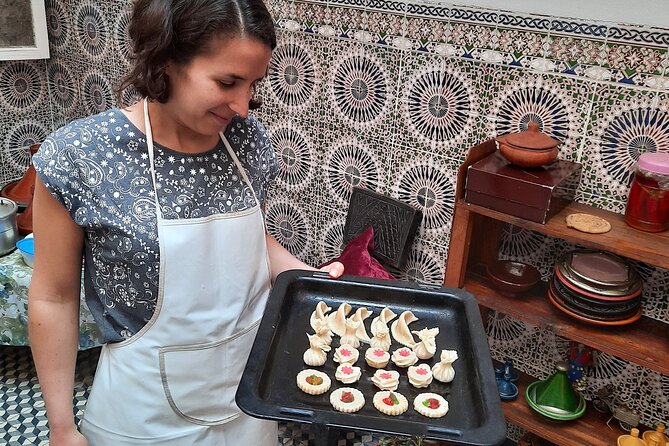
The class promises traditional recipes rather than a generic international baking lesson. You learn sweets that are part of Moroccan food culture, including corne de gazelle and ghriba, and you receive a recipe to help you repeat the results.
The exact recipes are described as family recipes. That is important because Moroccan pastry often depends on small choices: how thinly dough is rolled, how filling is shaped, how much sweetness is used, and how the finished pastry is handled after baking. A printed ingredient list alone would not explain those details.
At the same time, you should not expect a formal lecture on Moroccan culinary history. The focus is practical. You mix, shape, bake, and taste. Conversation about your Morocco trip and cooking advice comes toward the end, when you can ask questions in a relaxed setting.
One participant described the class as making two quite different cakes or pastries and praised the English spoken by the cook and guide. Another found the atmosphere warm and home-like, with pastries good enough to bring back to France. These details point to the class’s strongest appeal: you get a friendly introduction to Moroccan baking without needing previous skill.
The class may be less satisfying if you want detailed instruction on every stage of several recipes. The available feedback includes a complaint that the prepared quantities made the work feel suitable for a young child. That criticism is fair to consider. This is a casual cultural cooking activity, not a professional pastry qualification.
More Dessert Stops in the world:
- Kyoto: Japanese Traditional Sweets Making and Tea Ceremony
★ 4.4 · 314 reviews - Osaka: Japanese Traditional Sweets Making and Tea Ceremony
★ 4.7 · 118 reviews - Marrakech: Moroccan Pastries and Tea Class with a Local
★ 4.7 · 84 reviews - Nagoya: Japanese Traditional Sweets making and Tea Ceremony
★ 4.9 · 76 reviews
Mint tea is part of the lesson, not just a drink
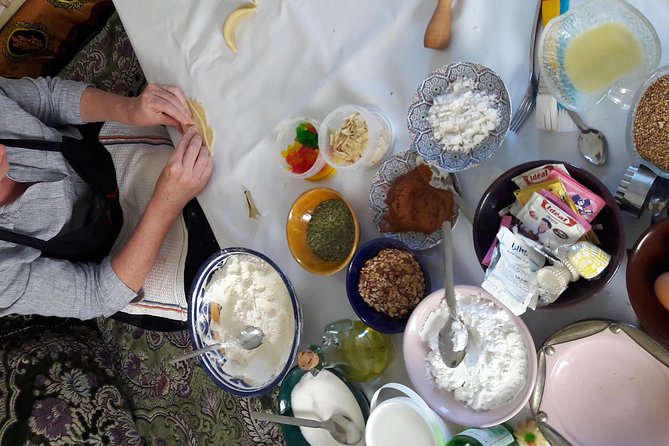
Mint tea gives the class its wider Moroccan context. You do not simply bake sweets and receive a beverage at the end. You also learn how to make your own Moroccan mint tea and enjoy it with the pastries.
Tea service is a social ritual in Morocco, and pairing it with homemade sweets helps explain why these pastries matter. Fresh baking tastes different when served warm beside a glass of tea or a cup of coffee. The class makes space for that pause, rather than treating the food as a rushed sample.
The description does not specify every step of the tea method or the exact ingredients. You can expect instruction in preparing Moroccan mint tea, but ask questions if you want to understand quantities, steeping time, or serving technique in detail.
This part may be especially useful if you have already visited Marrakech’s markets and tea shops but want to take a small piece of the custom home. The tea lesson is simple enough to repeat, and the pastries give you something to serve with it.
Tasting warm pastries and taking a box home
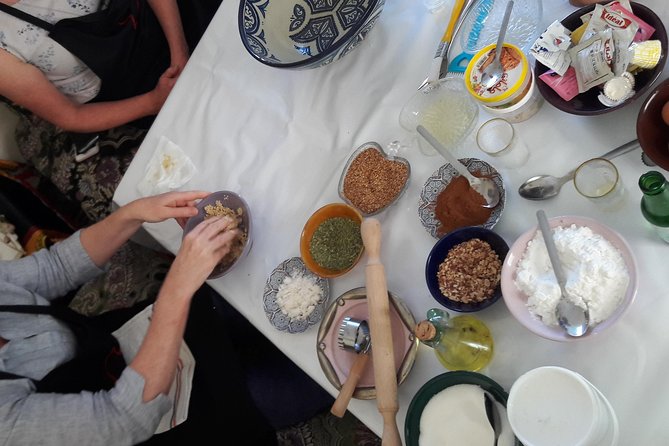
At the end of the baking session, you taste what you have prepared with tea or coffee. This is more than a photo opportunity. It lets you compare the texture of a fresh pastry with the version you may later find in a shop.
You also receive a box of pastries to take home. That improves the value of the class, especially if you are staying in Marrakech for several days and can enjoy them later. If you are flying soon, the box may also make a pleasant edible souvenir, though the supplied information does not specify how long the pastries keep or whether special packaging is available.
Recipes are included as well. They are perhaps the most lasting part of the experience. A pastry disappears quickly, but a workable recipe lets you recreate the class for family and friends.
The host also offers culinary advice and recommendations about your Morocco trip. That final conversation can be useful if you want to ask about food, cooking, or places to eat, though the activity should not be booked as a general sightseeing tour. Its main purpose is baking and tea.
Price, group size, and overall value
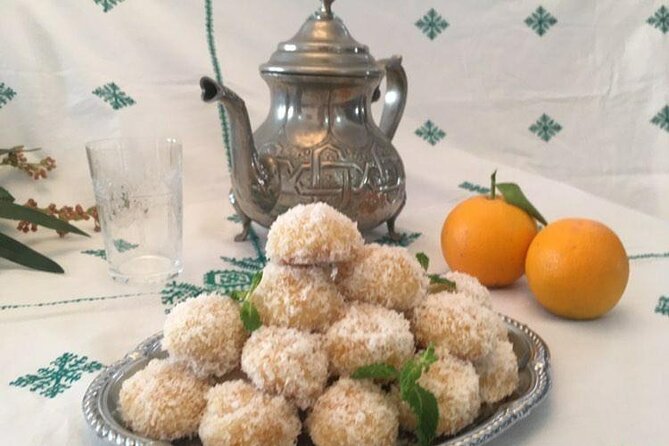
At $40.65 per person, the class sits in the moderate range for a three-hour food activity in Marrakech. You are paying for instruction, ingredients, tea or coffee, pastries, recipes, a take-home box, and access to a private-home setting.
The price makes the most sense if you value personal contact and the meal ritual as much as the number of recipes. You are not buying a large menu or a full cooking day. You are paying for a focused introduction to Moroccan pastries, plus the chance to meet a local host in her home.
The current score is 4.6 out of 5 from 33 ratings, with 94 percent recommending the activity. That overall response matches the experience’s strengths: the warm setting, fresh baking, mint tea, and friendly English-speaking instruction receive the clearest praise.
Still, value depends on your expectations. If you want to learn five or six detailed recipes, the price may feel high for a class where some ingredients are prepared ahead of time. If you want two traditional pastries, a social tea ritual, and something edible to take home, the price is easier to justify.
The maximum group size of 10 keeps the activity from becoming a huge bus tour. I would still ask about the expected group size if close personal instruction matters to you.
Who should book this experience
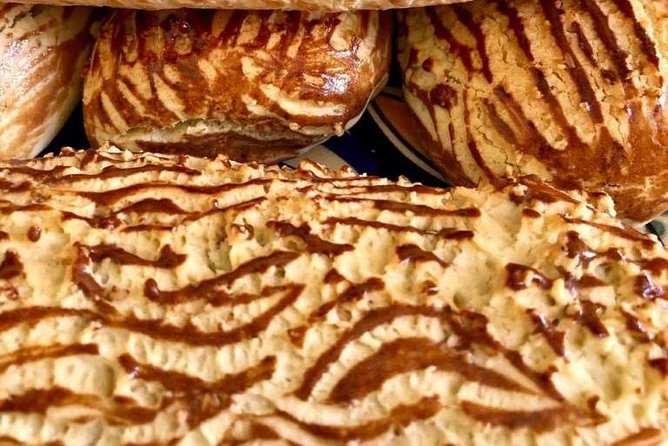
I would recommend this class to first-time visitors who want a gentle introduction to Moroccan food customs. It suits couples, families, and small groups looking for a short activity that does not require advanced cooking skills.
It also works well for people who enjoy meeting local residents in a home setting. The family atmosphere is a central part of the experience, so you should be comfortable with a less formal class and some conversation about your trip.
Families with children may find the straightforward preparation approachable. The complaint that the work was very easy also suggests that younger participants can take part without struggling. Adults seeking advanced baking instruction may want to confirm the menu and preparation method before booking.
The class is a good fit for anyone who wants to bring home a recipe and a box of Moroccan sweets. It is less suitable if you are mainly interested in a full savory meal, a market tour, or a long technical pastry workshop.
Practical details before you book
Choose your time slot with care. The experience offers different start times, but you should rely on the confirmed time, not only the hour you first noticed while booking. Arrive promptly at Rue Bab Doukkala, and keep the confirmation available in case you need to check the meeting details.
The activity ends where it begins. There is no hotel pickup, so plan your route to the medina meeting point. The location is near public transportation, which helps, but no exact transport instructions are supplied.
Confirmation is sent within 48 hours, subject to availability. The activity requires a minimum number of participants, and poor weather can also lead to cancellation. In either case, you are offered another date or a full refund.
You can cancel for a full refund up to 24 hours before the start time. Changes or cancellations made less than 24 hours before the class are not accepted for a refund. Gratuities are optional and not included.
Should you book the Marrakech pastry class?
Book it if you want a friendly home visit, simple hands-on baking, Moroccan mint tea, and pastries to enjoy later. The strongest parts are the family setting, the warm tasting at the end, and the chance to learn recipes using normal household equipment.
Before booking, confirm the start time and ask which pastries will be prepared. That one step can prevent the main practical problem and help you decide if two relatively simple recipes meet your expectations.
Skip it if you want an advanced pastry course, many recipes, or a full Moroccan meal. For a relaxed three-hour introduction to sweets and tea, though, the price is reasonable and the format offers a personal side of Marrakech that a standard bakery visit cannot provide.
FAQ
How long does the Moroccan pastry and tea class last?
The experience lasts approximately three hours.
Where does the class begin?
It begins at Rue Bab Doukkala, Marrakesh 40000, Morocco.
Where does the activity end?
The activity ends back at the meeting point.
Is hotel pickup included?
No. Hotel pickup is not included.
What pastries might I learn to make?
The class may include Moroccan pastries such as corne de gazelle and ghriba, along with other traditional sweets.
Do I learn how to make Moroccan mint tea?
Yes. The class includes instruction in making Moroccan mint tea.
Are food and drinks included?
Yes. Coffee and or tea, Moroccan pastries, and pastries for tasting are included.
Do I receive recipes?
Yes. A recipe is included with the experience.
How many people can join the class?
The maximum group size is 10 people.
Can I cancel for a full refund?
Yes. You can cancel at least 24 hours before the start time for a full refund. Cancellations or changes made less than 24 hours before the start time are not refunded.
More Workshops in the world
- Kyoto: 45-Minute Tea Ceremony Lesson Experience
★ 4.3 · 2,378 reviews - Tea Ceremony Workshop in Tokyo by the Experienced Instrucor
★ 5.0 · 189 reviews - Xiao Long Bao, Beef Noodles & Boba Tea Cooking Class in Taipei
★ 5.0 · 159 reviews - Experience all of Japanese culture and Japanese food experience classes “origami, udon, Japanese food, green tea, calligraphy” in 4 hours
★ 5.0 · 105 reviews
Just added around the world
- Yogyakarta: Prambanan Tour, Sukuh Temple & Tea Plantation★ 5.0 · 3 reviews
- Xi’an Chinese Calligraphy Workshop: Ink Art & Tea Tasting★ 5.0 · 4 reviews
- Yokohama : Tea Ceremony with Sweets and Souvenir★ 5.0 · 5 reviews
- Washington, D.C.: Tea Around Town Bus Tour with Landmarks★ 3.4 · 7 reviews
- Tea Route: Lake, Forest, Tea Plantation & 3 Course Lunch★ 3.6 · 7 reviews
- Wadi Rum: 2-Hour Jeep Tour with Bedouin Tea★ 5.0 · 11 reviews
- Walking Tour: Yanaka,Nezu& Sendagi: Tea Ceremony & Old Tokyo★ 5.0 · 3 reviews
- Volcano, Hot Spring, Mud Bath & Tea plantation all included★ 5.0 · 5 reviews
Tea Making Classes, compared.
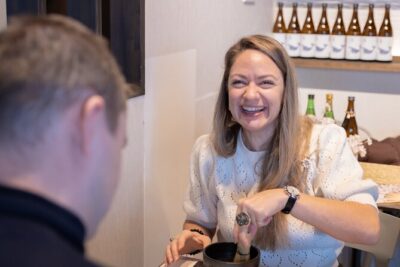
Matcha Making Class in Tokyo with Authentic Japanese Sweets Set
Read our review →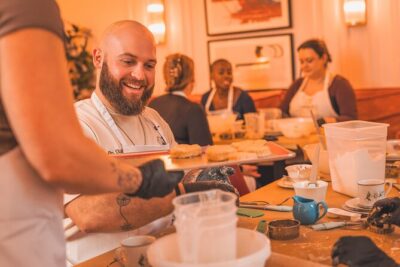
Traditional English Scone Making and Tea Workshop
Read our review →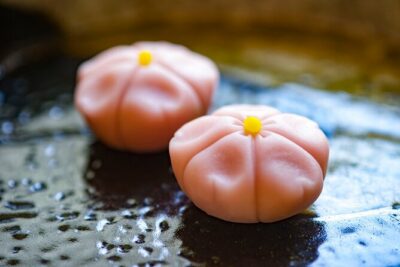
Matcha Making Class in Osaka with Authentic Japanese Sweets Set
Read our review →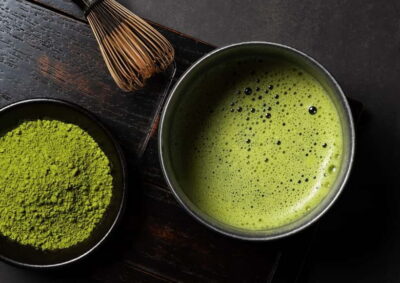
Matcha Making Experience with Mochi Sweets in Asakusa
Read our review →London Traditional English Scone Making and Tea Workshop
Read our review →
Nara:Authentic Tea Ceremony(Max 5 ppl) -Master Matcha Making
Read our review →Browse the lists this tour appears in