
Review · JAPAN
Calligraphy and Matcha in a Warm Kumamoto Home
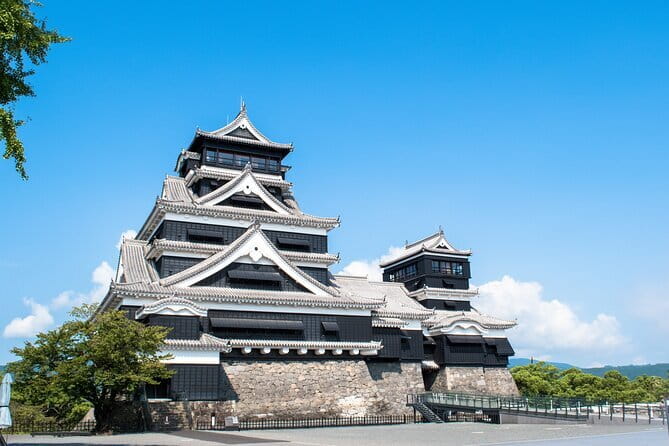
The special part of this Kumamoto experience is the setting: you leave the usual sightseeing route and enter Tommy’s home, about a 10-minute walk from Kumamoto Castle. There, she and her husband, Taka, guide you through calligraphy and a relaxed matcha gathering in a small group of no more than four.
I like the personal artwork you take home, and I like the chance to ask questions over tea rather than rush from one cultural stop to the next. The main consideration is pace: this is a quiet three-and-a-half-hour experience for people who enjoy careful instruction, not a quick photo opportunity.
Key points to know before booking
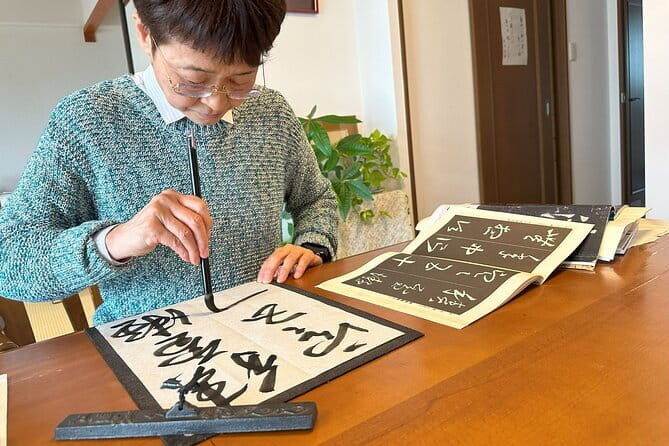
- A private home near Kumamoto Castle: The activity takes place in a residence reached from the Shinmachi tram stop.
- Calligraphy with a finished keepsake: You practice on rice paper, then make a final piece as a hanging scroll.
- Your choice of kanji: You select a favorite word from provided examples and write your name in kanji using phonetic equivalence.
- A small group of four or fewer: The format allows Tommy to give individual guidance and correct your technique.
- Matcha served at a table: The final 30 minutes feature matcha and traditional sweets in a BONTEMAE-style tea experience.
- A flexible start time may be possible: The listed start is 9:30 a.m., but you can discuss an adjustment with the guide after booking.
A Japanese cultural lesson inside Tommy’s home
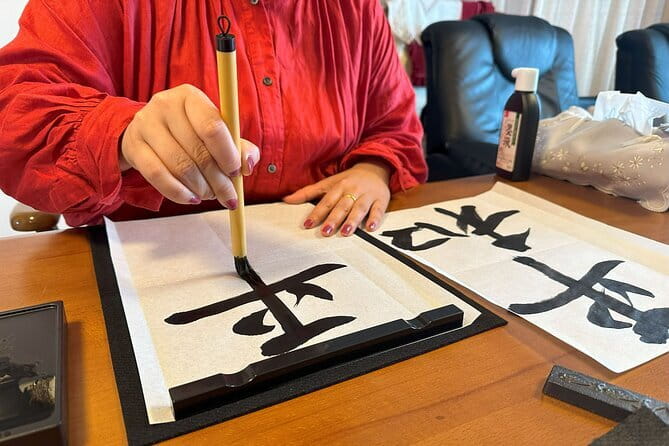
Many Kumamoto activities keep you in public spaces. This one changes the mood by bringing you into a private residence near the castle. That matters because Japanese arts often make more sense when you have time to slow down, watch closely, and ask simple questions.
Tommy is described as a qualified instructor with experience in calligraphy, tea ceremony, and flower arrangement. Her husband, Taka, may also be part of the welcome and tea session. The home setting gives the experience a personal feel, but you should also understand what that means: this is not a polished stage show with a large staff and a fixed script.
The program is best for you if you can enjoy about three hours in a quiet room. If you prefer a fast-moving tour with several sights, the length may feel excessive. If you like learning by doing, the time is useful. You get to watch, practice, receive corrections, and try again.
The group limit is four people. That is one of the strongest features here. Calligraphy looks simple until you hold the brush and try to control the ink. Personal guidance can help you avoid turning every character into a wobbly mystery.
More Tea and Calligraphy Classes in Japan:
- Osaka: Tea Ceremony, Calligraphy, and Kimono Experience
★ 4.9 · 130 reviews - Experience all of Japanese culture and Japanese food experience classes “origami, udon, Japanese food, green tea, calligraphy” in 4 hours
★ 5.0 · 105 reviews - An Amazing set of Cultural experience: Kimono, Tea Ceremony and Calligraphy
★ 5.0 · 69 reviews
Meeting at Shinmachi and walking toward the castle area
The official meeting point is at 2 Chome Shinmachi, Chuo Ward, Kumamoto, near the Shinmachi tram stop. The listed start time is 9:30 a.m. From there, the residence is about a 10-minute walk from Kumamoto Castle.
Transportation to the venue is not included, so plan your route to the meeting point. The location is near public transportation, which makes the start practical if you are staying in central Kumamoto. The activity ends back at the meeting point, so you are not left guessing where to go afterward.
After booking, communicate with Tommy about the exact meeting arrangements. The start time may be adjusted within the guide’s available time range. One useful detail from previous bookings is that Tommy has offered or provided hotel pickup in some cases, but you should not treat that as a standard inclusion. The confirmed meeting point remains Shinmachi unless you arrange something else directly.
This short walk is part of the transition. You move from Kumamoto’s sightseeing rhythm into a more private setting. Since the visit is held in a home, timely communication matters more than it would on a large bus tour.
10:00 a.m. to 12:30 p.m.: learning the shape of Japanese calligraphy
The calligraphy portion begins with an introduction to the history of the art. You are not simply handed a brush and told to copy a character. The opening gives you a basic sense of why the form, order, and movement of each stroke matter.
Next comes a demonstration on rice paper. Watch the brush angle, the pressure, and the rhythm of the strokes. Japanese calligraphy is not only about producing a readable character. The way the character is made is part of the result.
You then choose a favorite kanji from examples provided by the instructor. This keeps the choice manageable, especially if you cannot read Japanese. You also write your name in kanji using phonetic equivalence, giving you a second piece of personal involvement in the lesson.
That name detail is especially useful for visitors who want something connected to their own identity rather than a generic souvenir. You are not expected to arrive knowing which characters to choose. The examples and guidance give you a starting point.
The practice stage takes place on rice paper. You can expect to make mistakes. That is part of the point. Brushwork feels different from writing with a pen, and the paper responds quickly to excess ink or uneven pressure. Tommy’s role is to show you examples, guide your hand and choices, and help you improve before the final version.
The relaxed setting should make this easier. You are not performing for a crowd, and the group is capped at four. You can take a little time with each character and ask for help without holding up a large party.
Making a hanging scroll to take home
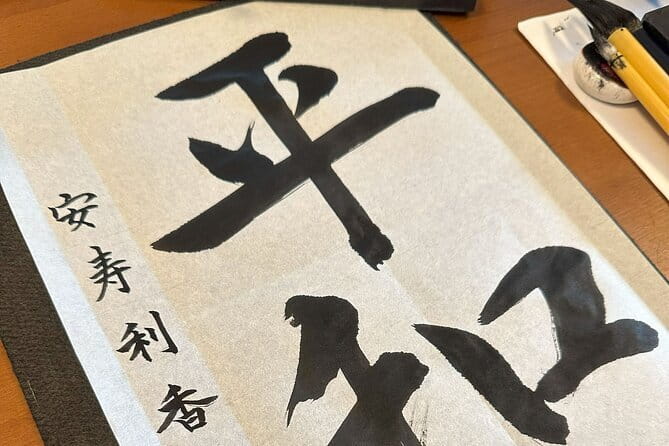
The final calligraphy piece becomes a hanging scroll. This is more meaningful than leaving with loose practice sheets, since the finished work can be displayed as a memento of your time in Kumamoto.
The included supplies cover the calligraphy session, and hanshi is provided for practice copying. The listing also includes the hanging scroll itself, so you do not need to arrange materials or pay an extra fee for the main keepsake.
Do not expect a museum-quality piece made by a professional hand. It is your work, with all the charming evidence of a first attempt. That is exactly why this souvenir has value. You choose the word, write your name, and produce a final version after instruction.
The practical question is how much concentration you want to give the task. Three hours can sound long for one craft, but the schedule includes an introduction, demonstration, practice, corrections, and the final scroll. If you enjoy hands-on arts, the time should feel purposeful. If you mainly want a quick cultural stamp in your itinerary, it may not be the best match.
More Matcha Experiences in Japan:
- World Heritage Kyoto & Nara Uji Authentic Matcha Experience
★ 5.0 · 1,573 reviews - Kyoto: Arashiyama Bamboo Forest, Monkeys, Matcha & Temple Tour
★ 5.0 · 759 reviews - Matcha Making Class in Tokyo with Authentic Japanese Sweets Set
★ 5.0 · 744 reviews - Kyoto: Tea Museum Tickets and Matcha Grinding Experience
★ 4.9 · 739 reviews
12:30 to 1:00 p.m.: matcha and sweets at the table
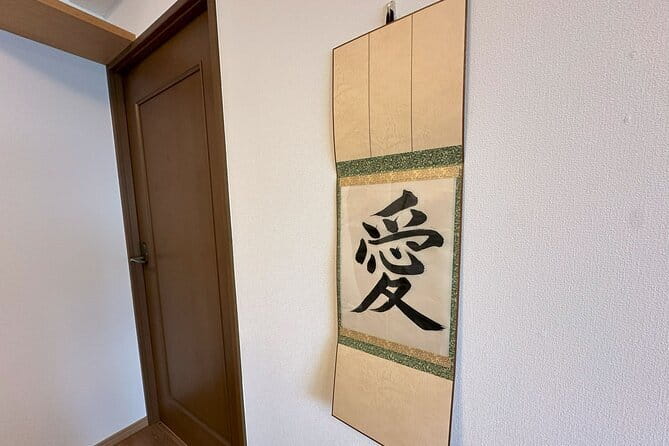
The final half-hour is a simple matcha tea experience in BONTEMAE style. You sit at a table, enjoy matcha with traditional sweets, and talk with the hosts.
This is not presented as a full formal tea ceremony on the floor. The table setting makes it easier for many people, and it keeps the ending conversational. You can ask about calligraphy, tea, daily life, or the choices behind your finished artwork.
The tea portion also gives the experience a natural finish. After concentrating on brushwork, you have time to look at your scroll and let the pace settle. The included snacks, matcha, and sweets are part of the price.
One practical point: Tommy has asked about allergies in advance when preparing snacks for some bookings. You should still tell her about any dietary concerns after booking. The supplied information confirms that snacks are included, but it does not specify the full menu or substitutions.
What the $162.40 price includes
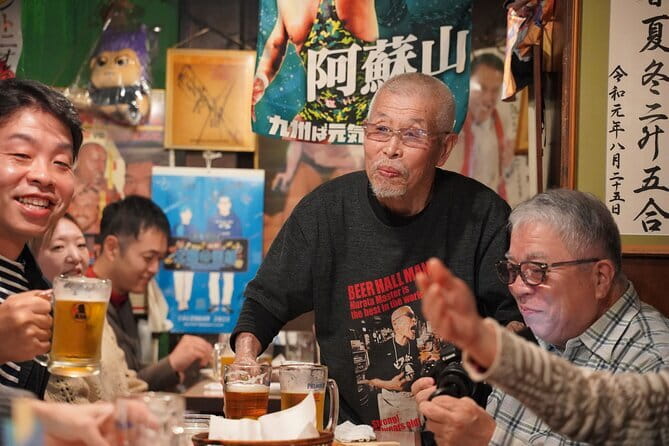
At $162.40 per person, this is not a budget activity. The value depends on what you want from a cultural experience.
The fee includes the instructor’s time, the calligraphy lesson, equipment rental, hanshi for practice, the final hanging scroll, matcha, sweets, snacks, and the guide fee. You are paying for personal instruction and a small group, not only for tea and paper.
The group maximum of four is important to the price. A larger class could offer a lower cost, but it would likely give you less direct help with brush control and the final piece. Here, the guide can spend time looking at your work and showing you how to improve.
You also avoid the cost and effort of buying supplies yourself. You do not need to figure out which paper, brush, ink, or mounting format to use. The main souvenir is built into the program.
Still, value is personal. If you are already planning to visit several temples, gardens, and cultural museums in Japan, this may feel expensive for a single morning. If you want a private, hands-on activity with a keepsake and conversation in a local home, the price is easier to justify.
Who will enjoy this most
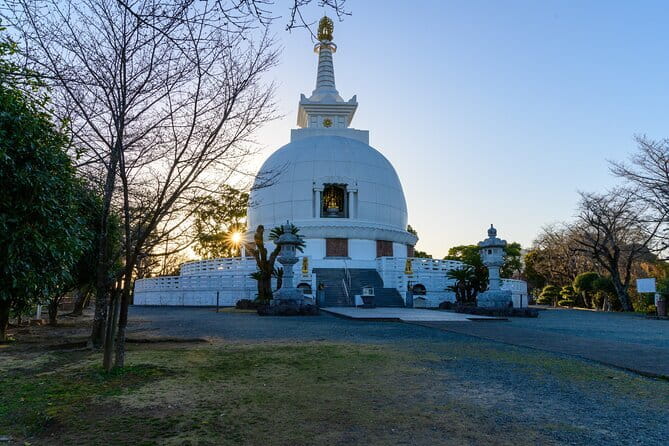
I would recommend this to intellectually curious people who like quiet instruction and want more than a quick introduction. You do not need prior calligraphy experience. The program provides examples, a demonstration, practice sheets, and guidance.
It also suits couples and small families who want a calm shared activity. The small group means you can work at your own pace, though the total limit is four people, not an unlimited private booking for any size party.
You should have enough patience to sit and practice for a substantial part of the morning. Calligraphy rewards attention, and the lesson is designed around the process rather than instant results.
The tea portion will appeal to anyone who likes conversation and cultural exchange. It is less suitable if you want a grand ceremonial production, a large historical presentation, or a program packed with sightseeing stops.
The general participation note says most people can take part. The supplied details do not give a full accessibility description for the home, so ask Tommy directly about any mobility needs before booking.
How this fits into a Kumamoto day
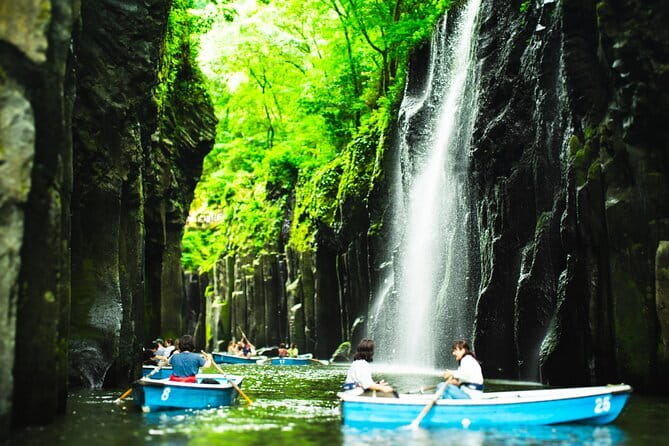
The activity ends around 1:00 p.m., though the finish may vary slightly. That leaves you the rest of the afternoon for Kumamoto Castle, nearby sights, lunch, or a slower walk through the city.
Because the meeting point is near the castle area, this works well on a day when you are already exploring central Kumamoto. You could schedule the calligraphy session first, then continue sightseeing after lunch. The morning start is early enough to give you a full day afterward.
Do not book it on a morning when you need to catch a train immediately after the expected end. The end time is approximate, and a private conversation or a little extra time with the final artwork could run slightly late.
The activity is also a good counterweight to a busy sightseeing schedule. After several crowded attractions, a quiet home lesson can reset the pace. The tradeoff is that you give up a half-day of sightseeing to do it.
Booking, changes, and practical details
Confirmation is provided at booking. Since the guide may adjust the start time within the available range, communicate after booking rather than assuming every detail is fixed beyond the listed 9:30 a.m. start.
The experience accepts mobile tickets. Transportation to the venue is not included, and the standard start and finish point is the Shinmachi meeting point.
Free cancellation is available if you cancel at least 24 hours before the start time. Cancellations made less than 24 hours before the experience are not refunded, and changes inside that period are not accepted. The cutoff follows Kumamoto local time.
A small group makes this a good choice for direct instruction, but it also means availability can be limited. The experience is booked, on average, about 17 days ahead, so I would not leave it until the last day of your Kumamoto stay.
Should you book Calligraphy and Matcha in a Warm Kumamoto Home?
Book it if you want a personal cultural activity, a finished hanging scroll, and time to talk with a local host. The strongest reasons are the small group, the hands-on instruction, and the private-home setting near Kumamoto Castle.
Skip it if you want a formal tea ceremony, a quick one-hour lesson, or a lower-cost activity. The $162.40 price is fair only if you value individual attention and the included artwork.
For the right person, this is a thoughtful morning rather than a checklist stop. Bring curiosity, patience, and a willingness to make imperfect brushstrokes. The result is a souvenir you create yourself, followed by matcha and a quiet conversation in Kumamoto.
FAQ
Where does the experience begin?
The meeting point is at 2 Chome Shinmachi, Chuo Ward, Kumamoto, 860-0004, Japan, near the Shinmachi tram stop.
What time does the experience start?
The listed start time is 9:30 a.m. The guide may be able to adjust the start within her available time range after you communicate with her.
Where does the calligraphy session take place?
The activity is held at a residence about a 10-minute walk from Kumamoto Castle.
How long does the experience last?
The total duration is approximately three hours and 30 minutes. The expected schedule runs from 9:30 a.m. until about 1:00 p.m., though the ending may vary slightly.
What will I make during the calligraphy lesson?
You choose a favorite kanji from provided examples, write your name in kanji using phonetic equivalence, and create a final hanging scroll to take home.
Is matcha included?
Yes. The program includes matcha, traditional sweets, and snacks during a simple table-based BONTEMAE tea experience.
How many people can join?
The maximum group size is four people.
Can I cancel for a full refund?
Yes, if you cancel at least 24 hours before the experience start time. Cancellations or changes made less than 24 hours before the start are not accepted for a refund.
Just added around Japan
- Yokohama : Tea Ceremony with Sweets and Souvenir★ 5.0 · 5 reviews
- Whisk Your Own Matcha: A Zen Matcha Experience at Temple★ 3.6 · 7 reviews
- Walking Tour: Yanaka,Nezu& Sendagi: Tea Ceremony & Old Tokyo★ 5.0 · 3 reviews
- Visit local home for music and tea ceremony near Disney★ 4.9 · 13 reviews
- Yokohama: Sushi & Gyoza Cooking with Matcha & GreenTea Experience★ 5.0 · 3 reviews
- Trip to Kamakura & Enoshima: Shrines, Seaside, Temples &Tea★ 5.0 · 11 reviews
- Kyoto tea town for matcha lovers★ 5.0 · 16 reviews
- Uji: Private immersion into Kyoto’s tea and reglious culture★ 5.0 · 17 reviews
Tea & Calligraphy Classes, compared.
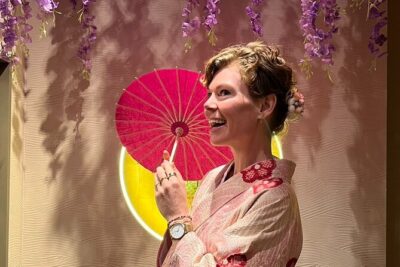
Tea Ceremony, Calligraphy, and Kimono Experience
Read our review →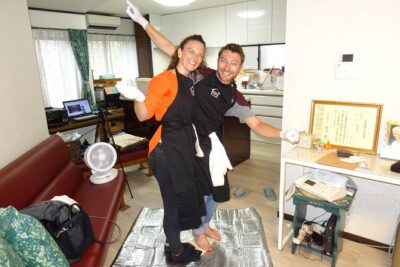
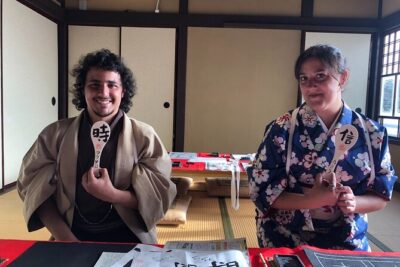
An Amazing set of Cultural experience: Kimono, Tea Ceremony and Calligraphy
Read our review →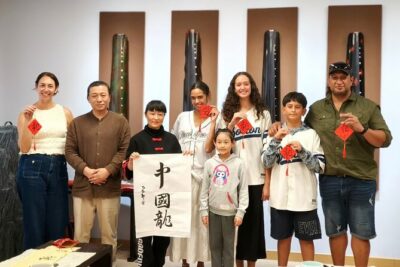
Beijing Culture: Tea Ceremony, Heritage Instrument & Calligraphy
Read our review →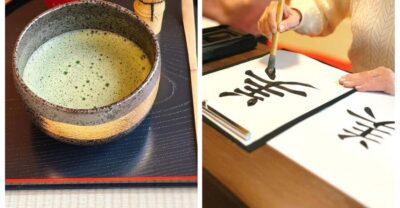
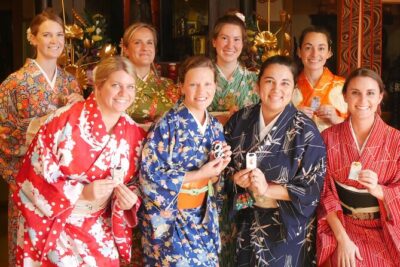
Cultural Activities :Kimono, tea ceremony, Calligraphy and Amulet
Read our review →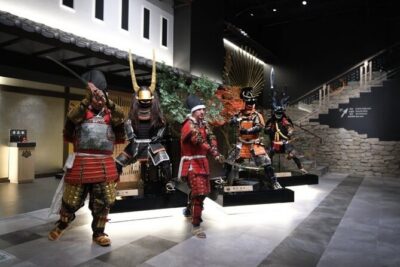
Samurai dress-up and shows, plus Tea Ceremony & Calligraphy
Read our review →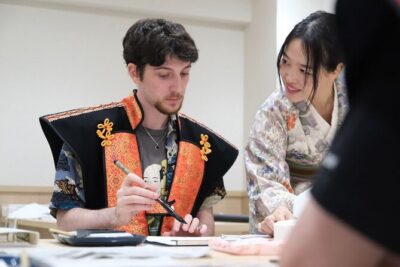
Premium Kimono Dressing, Tea Ceremony, Calligraphy, Samurai show
Read our review →Browse the lists this tour appears in