
Review · HIROSHIMA
An Amazing set of Cultural experience: Kimono, Tea Ceremony and Calligraphy
Miyajima is famous for its torii gate and deer, but this kimono, tea, and calligraphy session gives you a quieter way to connect with the island. At Tokujuji Temple, you dress in traditional clothing, prepare matcha, learn the basic manners of tea ceremony, and practice Japanese writing.
I like two things in particular: the staff help you choose and put on the kimono, and they take many photos during the session. The small group size, with no more than eight people, also gives the activities a calm, personal feel. The main consideration is price: at $132.14 per person, this is not a quick photo rental. You are paying for several guided activities in one sitting.
Key details to know before booking
- The meeting point is five minutes from the Miyajima ferry port, along the way toward Tokujuji Temple.
- You take part in three activities: kimono dressing, a tea ceremony with handmade matcha, and calligraphy practice.
- The advertised duration is about 1 hour 30 minutes, though the route information also lists two hours, so allow roughly two hours.
- Photos are a major part of the experience, including family and group pictures in the temple grounds.
- The group is capped at eight people, which matters when you are learning movements and asking questions.
- Morning and afternoon start times make it easier to fit this around Miyajima’s other sights.
Why this Miyajima cultural session works so well
This is not simply a costume change followed by a few snapshots. The structure gives you a small taste of three Japanese arts that use very different skills.
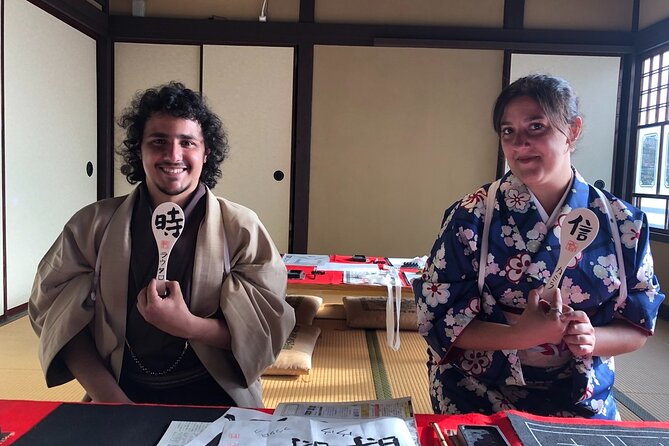
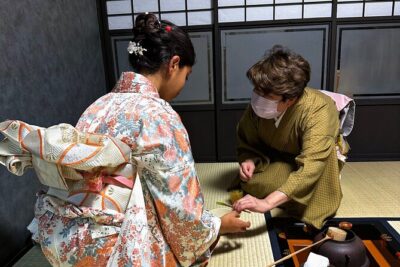
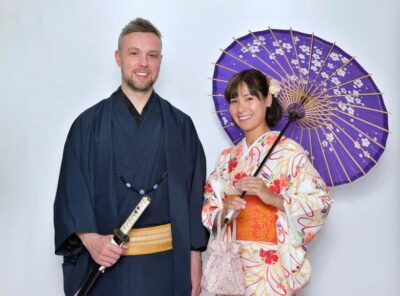
The kimono portion is visual and social. You choose from the available garments in your size, then the staff help arrange the layers, obi, cords, socks, sandals, and hair accessories. You do not need to know how to dress yourself. That help is important because traditional clothing can look simple but involves careful wrapping and tying.
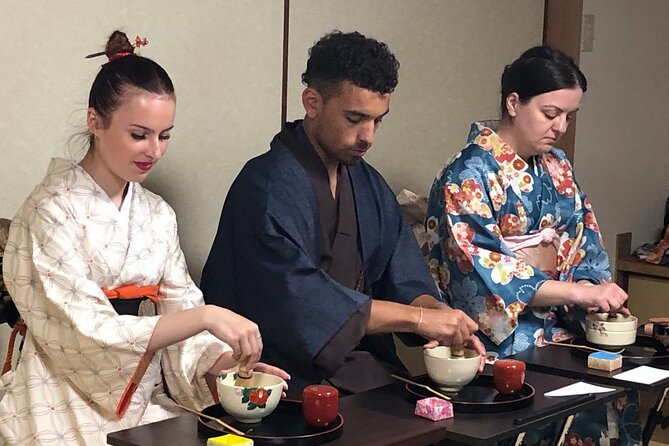
The tea ceremony asks you to slow down. You first watch the host, then prepare your own matcha while learning the gestures and manners that give the ceremony its shape. The activity is participatory, but it is not rushed or turned into a stage show.
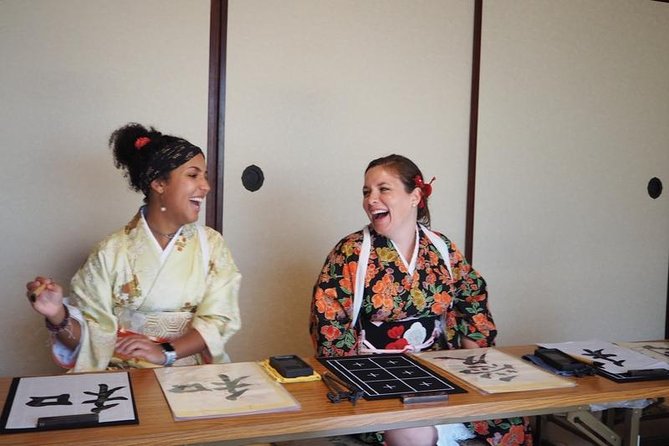
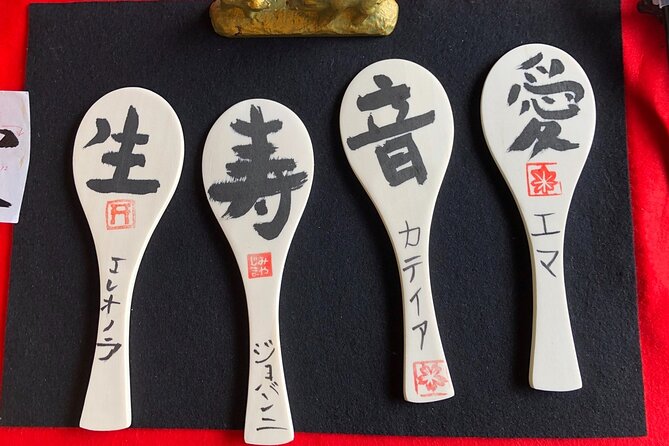
Calligraphy changes the pace again. You practice Japanese characters and may also write your name. Several people found this harder than expected, which is part of the fun. Your finished work can be placed on a wooden spoon and wrapped as a keepsake, giving you something more personal than a standard souvenir.
More Kimono Tea Ceremonies in Japan:
- Kimono Tea Ceremony at Kyoto Maikoya, NISHIKI
★ 5.0 · 911 reviews - Kimono Tea Ceremony at Tokyo, Asakusa Maikoya
★ 5.0 · 638 reviews - Kyoto: Kimono Tea Ceremony at Orizuruya Gion
★ 4.9 · 618 reviews
Reaching Okeiko Japan from the Miyajima ferry
The meeting point, Okeiko Japan Miyajima, is at 741-1 Miyajimachō in Hatsukaichi, Hiroshima. From the ferry port, it is about a five-minute walk toward Tokujuji Temple.
That short walk makes the activity easy to add to a day on Miyajima. You do not need to arrange a separate transfer once you arrive on the island. The activity begins and ends at the same meeting point, so you can continue sightseeing afterward without working out a second pickup location.
I would still leave a little extra time before your start. Miyajima’s ferry arrival area can be busy, and you may want to find the building without hurrying in formal clothing. The meeting point is near public transportation, and the location is straightforward once you orient yourself from the port.
Choosing a kimono and getting dressed
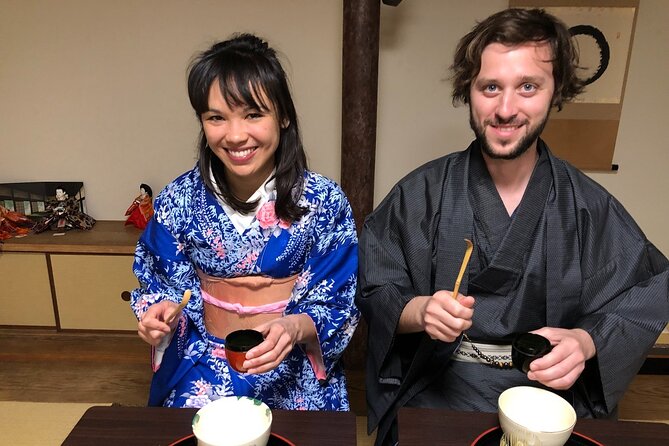
The session begins with the most photogenic part: selecting a kimono. The staff help you choose from the garments available in your size, then dress you properly and add the finishing pieces.
The exact selection depends on size and availability, so you should not expect every color or pattern to be open to every participant. Still, the assistance is one of the strongest reasons to book this rather than simply renting a kimono on your own. You get help with the outfit and do not have to work out the complicated parts yourself.
The dressing process also makes the activity suitable for people who have never worn Japanese clothing. Children from age six can participate, and the staff have helped a range of ages and body sizes. One useful point from the experience itself is that size availability has been handled well, but it is still sensible to provide accurate booking details if asked.
Once dressed, you have time for photographs. The staff take pictures throughout the session, including in the temple grounds. This is especially useful for families and couples because nobody has to remain behind the camera. The photos are part of the memory-making value here, not an afterthought.
There has been some uncertainty around how photos are shared, including at least one report of trouble with the app. If receiving the images is important to you, ask about the current delivery method when you arrive. The staff have indicated they are considering alternatives, but the specific system can change.
What happens during the tea ceremony
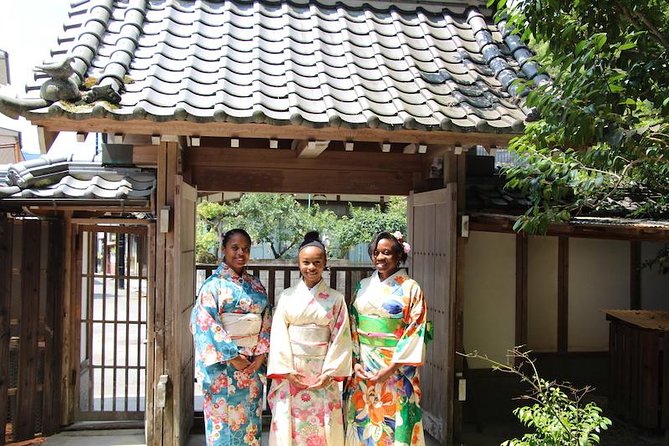
The tea ceremony is the heart of the cultural portion. You begin by watching the host perform the steps, then prepare your own matcha after receiving an explanation in English.
You learn that the ceremony is not simply about drinking green tea. Small movements, the way you handle the bowl, and the order of actions all matter. You do not need to memorize a long set of rules, but you will come away with a better sense of why the ritual feels deliberate and quiet.
The chance to whisk your own matcha makes this more useful than a demonstration alone. You can see how much effort goes into creating the froth, and you get a direct feel for the tools and motions. The tea bowls used during the session are made by local artisans, adding a connection to regional craft.
The setting helps. Tokujuji is a Zen temple, and the grounds provide a peaceful place for the ceremony and photographs. This is not a formal religious service, so you can approach it as a cultural lesson. At the same time, you should treat the setting respectfully and follow the hosts’ instructions.
The tea may not suit every taste. Matcha has a strong, grassy flavor, and the point is to prepare and experience it rather than receive a sweet café drink. If you already enjoy matcha, you will likely appreciate the hands-on part even more.
More Tea and Calligraphy Classes in Japan:
- Osaka: Tea Ceremony, Calligraphy, and Kimono Experience
★ 4.9 · 130 reviews - Experience all of Japanese culture and Japanese food experience classes “origami, udon, Japanese food, green tea, calligraphy” in 4 hours
★ 5.0 · 105 reviews - Osaka: Private Tea Ceremony and Calligraphy Experience
★ 5.0 · 50 reviews - Cultural Activities :Kimono, tea ceremony, Calligraphy and Amulet
★ 5.0 · 44 reviews
Calligraphy that feels harder than it looks
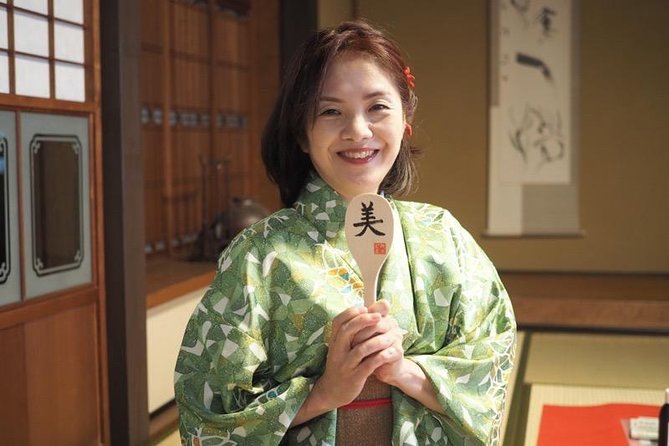
Calligraphy is the most active section after the tea ceremony. You practice Japanese characters, and the lesson may also include writing your name.
At first, the strokes can seem easy. Then the brush meets the paper, and the balance of pressure, direction, and spacing becomes much less obvious. That small challenge is useful because it gives you respect for how much control skilled calligraphers have.
The activity is designed for beginners, not for people who already read or write Japanese. You do not need prior knowledge of kanji. The purpose is to try the form, understand that characters are built from individual strokes, and enjoy the process.
A particularly nice detail is the chance to place your efforts on a wooden spoon and have them wrapped as a souvenir. That turns a practice exercise into a small object you can take home. It also gives children a clear result at the end of the lesson.
If you are hoping for a long calligraphy workshop, this will feel brief. The session combines three subjects, so none of them receives the full attention of a specialist class. For most people visiting Miyajima, though, that variety is the appeal.
A small group makes the lessons easier
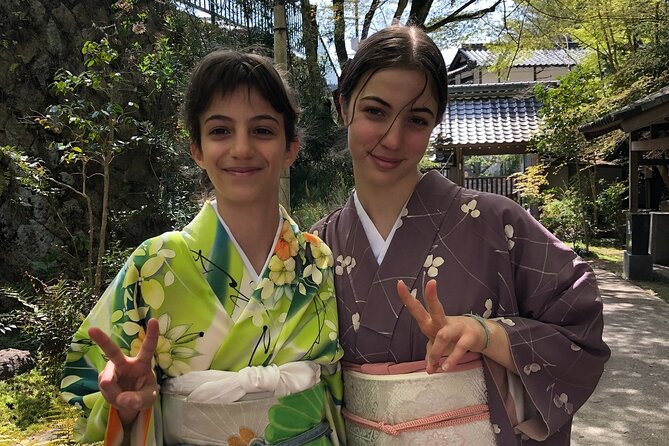
The maximum group size is eight. That number is large enough to create a friendly shared activity, but small enough for the staff to help with clothing, tea tools, and writing.
You can ask questions without needing to compete with a large crowd. The staff also have time to take individual and group photos. Several sessions have included families, couples, friends, and men as well as women. The kimono portion is not limited to one type of participant.
The warm, relaxed manner of the hosts is another major strength. People who arrive tired from a busy Japan itinerary can sit and settle in, and the staff have made room for early arrivals when conditions were uncomfortable outside. That kind of welcome matters during a packed sightseeing day.
English explanations are available and have been clear enough for participants to follow the tea and calligraphy instructions. The experience is still built around demonstration and action, so you are not listening to a long lecture.
Timing your visit around Miyajima
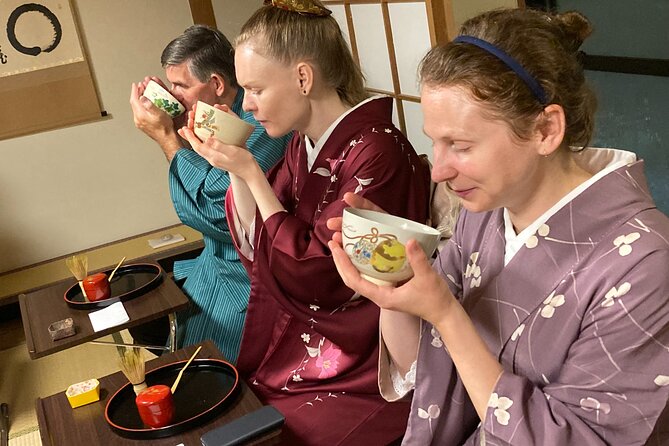
Morning and afternoon start times give you useful flexibility. You can schedule the session before exploring the island, or use it as a quieter middle section between the ferry, temple visits, and other sights.
The listed duration is slightly inconsistent. The main description gives approximately 1 hour 30 minutes, while the itinerary information lists two hours. I would plan on about two hours from arrival to finish, especially if you want photographs and do not want to rush.
Because the session ends at the same place where it starts, you can continue around Miyajima afterward. You might visit the island’s main sights before the activity and then enjoy the cultural session later, or reverse that order. The best choice depends on your ferry schedule and how much time you have on the island.
The experience is booked, on average, 38 days ahead. That suggests planning ahead is wise, especially if you need a particular morning or afternoon time. Free cancellation is available until 24 hours before the start time. Changes or cancellations inside that window are not accepted for a refund.
Is $132.14 per person good value?
At $132.14 per person, this belongs in the special-activity part of your Japan budget. It is more expensive than visiting a temple or attending a short demonstration, but it includes several elements that would cost time and effort to arrange separately.
You are paying for assistance with formal clothing, the kimono accessories, guided tea preparation, matcha, a calligraphy lesson, a temple setting, and photographs. The small group limit also matters. A cheaper activity may give you one photo opportunity, but not the same combination of instruction and personal help.
I would consider it good value if you care about cultural context and want a souvenir made during the session. It is less convincing if your main goal is only to wear a kimono for ten minutes. In that case, a simpler rental may fit your plans and budget better.
The price also makes more sense for families, couples, or friends who want shared photos. Since the staff take pictures throughout, you can appear in the full group rather than relying on strangers to take one quick image.
Who should book this experience?
This suits first-time visitors who want a structured introduction to Japanese customs without committing to a full-day class. It also works well for families with children aged six and up, provided they can manage the formal clothing and patient pace.
You should book it if you enjoy making things, asking questions, and trying activities that are new to you. The tea and calligraphy sections are hands-on, and the kimono dressing gives the session a strong visual element.
It is also a good choice after an emotionally heavy visit to Hiroshima. The temple setting and slower rhythm offer time for quiet reflection without making the session solemn or difficult.
You may want to skip it if you dislike posed photographs, formal clothing, or activities where careful movements matter. You should also check your schedule closely, since the combination of ferry travel and island sightseeing can make a short booking feel longer than expected.
Final verdict: book it if you want more than a kimono photo
I would book this experience if you want a personal, beginner-friendly introduction to Japanese culture on Miyajima. The best features are the kind staff, the careful kimono dressing, the chance to prepare your own matcha, and the many photos taken in the temple grounds.
The main tradeoff is cost, along with the uncertainty over whether the session takes 90 minutes or closer to two hours. Allow the longer time and decide if three connected activities justify the price.
For a simple costume rental, choose something else. For a calm cultural session that gives you skills, photos, and a wrapped calligraphy souvenir, Okeiko Japan offers a well-rounded stop near the ferry port.
FAQ
Where does the experience take place?
It takes place at Okeiko Japan Miyajima, at 741-1 Miyajimachō, Hatsukaichi, Hiroshima 739-0588, Japan.
How far is the meeting point from the ferry port?
The meeting point is about a five-minute walk from the Miyajima ferry port, toward Tokujuji Temple.
How long does the experience last?
The advertised duration is approximately 1 hour 30 minutes. The itinerary information also lists two hours, so allow about two hours in your schedule.
What activities are included?
You learn how to wear a kimono, take part in a tea ceremony, prepare your own matcha, and practice Japanese calligraphy.
Are photographs taken during the session?
Yes. The staff take photographs during the experience, including photographs in the temple grounds.
Is the activity suitable for children?
The minimum age is six years old.
How many people can join?
The activity has a maximum of eight participants.
Are morning and afternoon times available?
Yes. Morning and afternoon start times are offered.
Does the activity start and finish at the same location?
Yes. The activity ends back at the Okeiko Japan Miyajima meeting point.
What is the cancellation policy?
You can cancel at least 24 hours before the local start time for a full refund. Cancellations or changes made less than 24 hours before the start time are not accepted for a refund.
More Tea Ceremony Experiences in Japan
- Kyoto: Tea Ceremony in a Traditional Tea House in Kiyomizu
★ 4.9 · 3,519 reviews - Kyoto: Tea Ceremony Ju-An at Jotokuji Temple
★ 4.9 · 3,207 reviews - Kyoto: 45-Minute Tea Ceremony Lesson Experience
★ 4.3 · 2,378 reviews - Osaka: Tea Ceremony Experience
★ 4.9 · 1,426 reviews
Just added around Japan
- Yokohama : Tea Ceremony with Sweets and Souvenir★ 5.0 · 5 reviews
- Whisk Your Own Matcha: A Zen Matcha Experience at Temple★ 3.6 · 7 reviews
- Walking Tour: Yanaka,Nezu& Sendagi: Tea Ceremony & Old Tokyo★ 5.0 · 3 reviews
- Visit local home for music and tea ceremony near Disney★ 4.9 · 13 reviews
- Yokohama: Sushi & Gyoza Cooking with Matcha & GreenTea Experience★ 5.0 · 3 reviews
- Trip to Kamakura & Enoshima: Shrines, Seaside, Temples &Tea★ 5.0 · 11 reviews
- Kyoto tea town for matcha lovers★ 5.0 · 16 reviews
- Uji: Private immersion into Kyoto’s tea and reglious culture★ 5.0 · 17 reviews
Kimono & Tea Ceremonies, compared.
KYOTO Tea Ceremony with kimono near by Imamiya Jinjya Shrine
Read our review →
Kimono and Tea Ceremony Experience at Cultural Asset
Read our review →
Browse the lists this tour appears in