
Review · HIROSHIMA
Cultural Activities :Kimono, tea ceremony, Calligraphy and Amulet
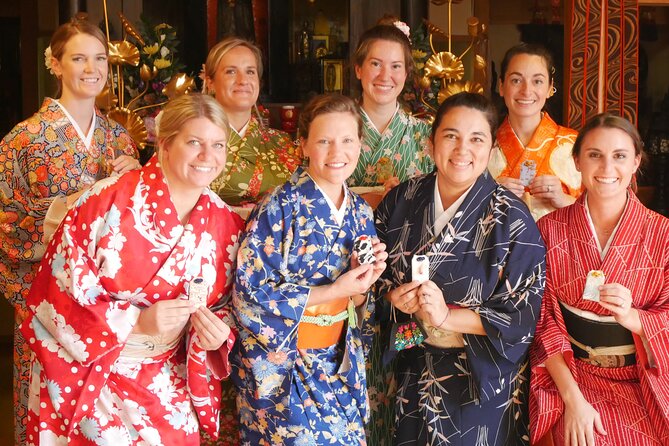
Miyajima is best known for its great torii gate and shrine, but this two-hour cultural lesson takes you into a quieter corner of the island. At roughly half an hour each, you’ll practice calligraphy, take part in a tea ceremony, and make a small amulet while dressed in a kimono and traditional apron.
I especially like the hands-on mix. You are not just watching a demonstration: you write your name, prepare tea, and create something to take away. I also like the setting, a centuries-old Soto Buddhist temple with gardens and a story tied to the protection of children and pregnancy. The main consideration is the price, $171.73 per person, which is a serious sum for two hours, even with the clothing, instruction, photos, and three activities included.
Key points to know before booking
- Three activities in about two hours: Calligraphy, tea ceremony, and amulet making each receive roughly 30 minutes.
- Kimono included: You wear a provided kimono and traditional apron during the lessons.
- A real temple setting: Tokuju-ji dates back about 300 years and belongs to the Soto school of Buddhism.
- Personal keepsake: You learn to write your name in Japanese and make an amulet.
- Photos are included: Teachers take pictures during the activities and send them by email.
- Small-group format: The maximum is 10 people, and children must be at least six and accompanied by an adult.
Why this Miyajima activity feels different
Miyajima has plenty of places where you can take a quick photo in rented clothing. This activity gives the outfit a purpose. You wear the kimono through several lessons, so it becomes part of the day rather than a five-minute costume stop.
The format also works well if your time on the island is tight. In one booking, you cover three customs that would otherwise require separate arrangements. You leave with a new written skill, an understanding of tea ceremony movements, and a handmade amulet.
That compact schedule has a tradeoff. None of the activities can be studied at great length. If calligraphy is your main interest, you may want more practice time. If you want a broad introduction to Japanese customs, the quick pace is useful.
The teachers also take photographs as the lessons unfold and send them to you by email. That matters because the kimono, tea utensils, brushwork, and temple garden make this a very photogenic experience, and you do not have to spend the whole lesson taking pictures yourself.
More Kimono Tea Ceremonies in Japan:
- Kimono Tea Ceremony at Kyoto Maikoya, NISHIKI
★ 5.0 · 911 reviews - Kimono Tea Ceremony at Tokyo, Asakusa Maikoya
★ 5.0 · 638 reviews - Kyoto: Kimono Tea Ceremony at Orizuruya Gion
★ 4.9 · 618 reviews
Arriving at Tokuju-ji Temple on Miyajima
The meeting point is Okeiko Japan Miyajima at 741-1 Miyajimachō, Hatsukaichi, Hiroshima 739-0588. The activity begins and ends there, and the location is near public transportation.
The temple itself gives the class much of its character. Tokuju-ji was founded about 300 years ago and belongs to the Soto school, one of Japan’s Buddhist traditions. Its main Buddha is Kinseki Jizo, a figure associated here with protection for children and pregnancy.
The temple’s local story tells of an older couple who prayed to Jizo for a child. They later had a healthy son and built the temple in thanks. That story gives the amulet lesson more meaning than a generic craft class. You are making an object connected to the religious setting around you, not simply decorating a souvenir.
Miyajima’s religious buildings can also blur the neat line between Buddhist and Shinto traditions. The temple has elements that, in another setting, you might expect to find at a Shinto shrine because the island’s religious life has long brought the two traditions into close contact. You do not need prior knowledge to take part, but this setting gives the teachers useful context to explain.
The temple visit is listed as about 20 minutes with admission included. The larger program lasts about two hours, so your time includes the three lessons, changing into clothing, photographs, and movement between activities.
Wearing a kimono for all three lessons
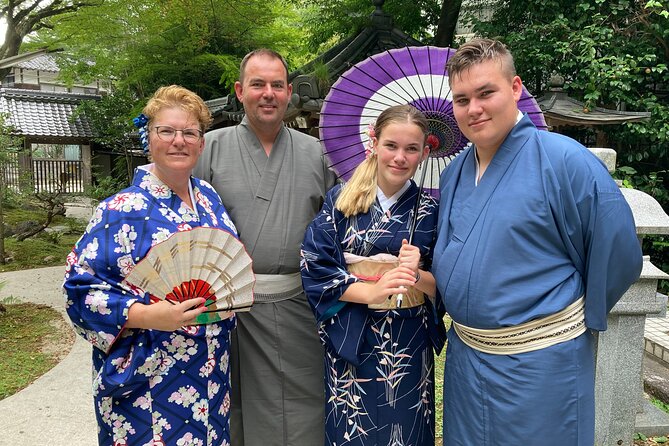
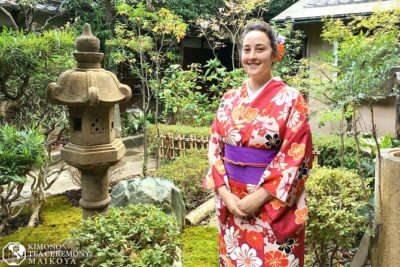
The kimono is not an optional extra for one photograph. You wear the provided kimono and traditional apron during the activities, which makes the experience feel connected from start to finish.
The apron is a practical touch. Tea preparation and calligraphy involve movement and materials, so the added layer helps keep the kimono suitable for the lessons. It also gives the outfit a different look from a simple sightseeing rental.
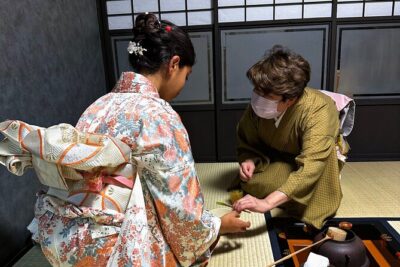
You should think of the clothing as part of the cultural instruction, not a fashion session. The point is to sit, move, hold utensils, and work with care while dressed in traditional clothing. The photos taken by the teachers capture those moments in the garden and during the lessons.
The supplied information does not specify how many designs or colors are available, so you should not book this expecting a particular style. The key benefit is that the clothing is provided and used throughout the program.
Writing your name in Japanese
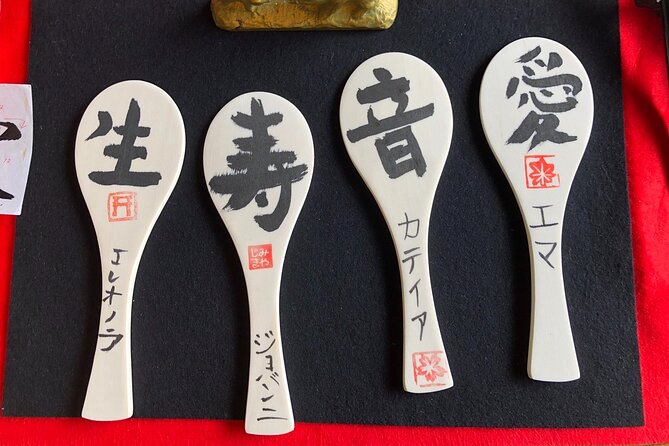
The calligraphy lesson gives you a personal result to work toward: your name in Japanese. That is more engaging than copying a random character because you can connect the brushwork to your own identity.
You will need to pay attention to brush handling, ink, and the order of the strokes. Japanese calligraphy rewards control rather than speed. In about half an hour, the goal is a first taste of the discipline, not polished professional work.
I like this part for families and couples because each person can produce something different. It also gives you a simple way to remember the class after returning home. The lesson is likely to appeal most if you enjoy quiet, focused activities.
Do not expect a long language lesson. The available details promise instruction in writing your name, but they do not describe an extended study of Japanese reading or grammar. Think of it as a cultural introduction with a personal piece of calligraphy at the end.
More Tea and Calligraphy Classes in Japan:
- Osaka: Tea Ceremony, Calligraphy, and Kimono Experience
★ 4.9 · 130 reviews - Experience all of Japanese culture and Japanese food experience classes “origami, udon, Japanese food, green tea, calligraphy” in 4 hours
★ 5.0 · 105 reviews - An Amazing set of Cultural experience: Kimono, Tea Ceremony and Calligraphy
★ 5.0 · 69 reviews - Osaka: Private Tea Ceremony and Calligraphy Experience
★ 5.0 · 50 reviews
Preparing matcha and taking part in the tea ceremony
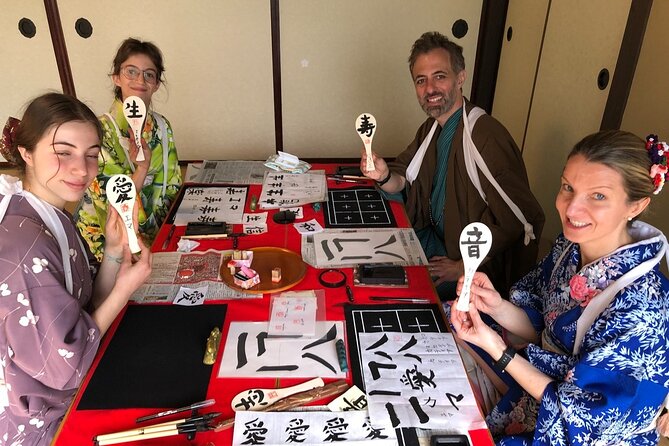
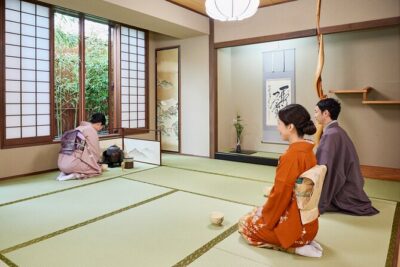
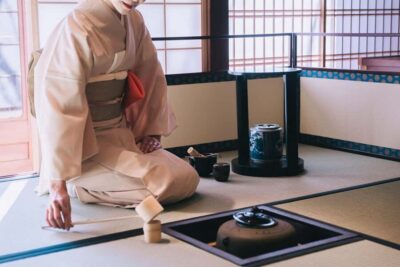
The tea ceremony is the most formal part of the program. You learn how to prepare matcha and perform the basic ceremony, rather than simply drinking a cup served to you.
That difference matters. Japanese tea ceremony places value on careful gestures, order, and attention to the moment. Even a short lesson can show you why the bowl, whisk, tea, and movements are treated with such care.
The activity is also a good match for the kimono. Sitting and handling the tea utensils lets you experience the clothing in a traditional setting instead of wearing it only for photographs.
The lesson lasts roughly 30 minutes, so it is an introduction rather than a full tea-school course. If you want a highly technical study of tea ceremony, this may feel brief. If you want to understand the basic process and take part yourself, the timing keeps the lesson approachable.
Making an amulet connected to the temple
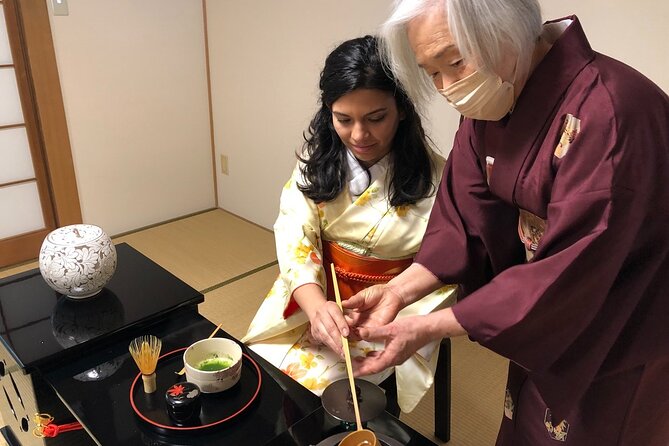
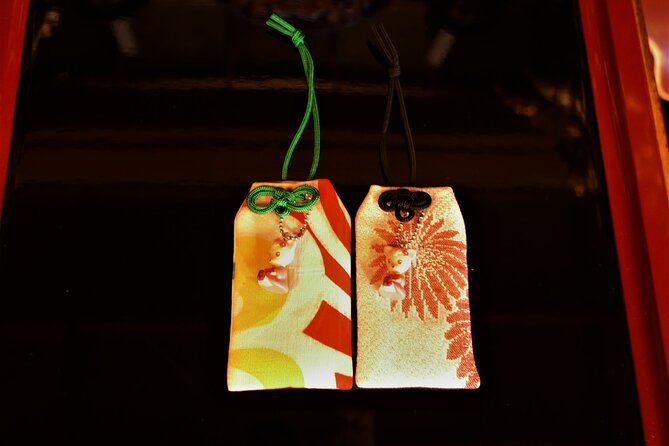
Amulet making is the least common of the three activities. You do not simply buy a finished charm at a shop. You learn something about how an amulet is made and create one during the class.
This part connects especially well with Kinseki Jizo and the temple’s story of protection. The result gives you a physical reminder of the lesson and the religious setting.
The exact materials and design are not specified, so you should avoid expecting a particular style. What is clear is that the activity is included in the cultural program and that it is not widely offered in many places in Japan.
For many people, this may be the most memorable section because it combines craft, belief, and place. It also gives the schedule a good balance: calligraphy is focused, tea is ceremonial, and the amulet activity is practical and creative.
Photos, group size, and the pace of the class
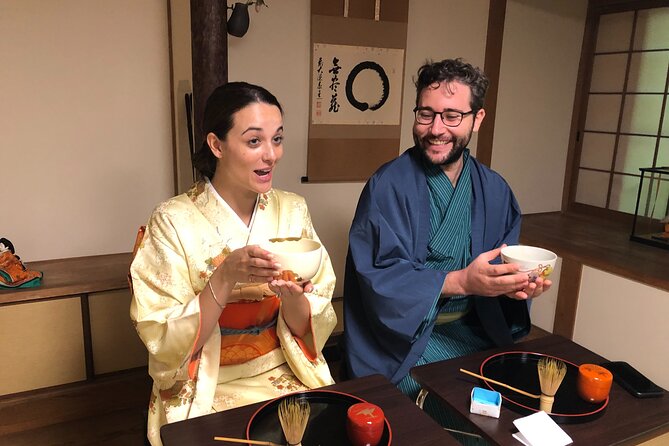
The maximum group size is 10 people. That is small enough to make personal instruction possible, though the actual number on your date can be lower. One booking can also become a private session if no one else is scheduled, as happened for a mother and daughter arriving from a cruise ship.
The teachers take photos during the lessons and email them afterward. This is a useful inclusion, especially if you are traveling with someone and want pictures of both people taking part. It also means you can keep your phone away during the tea ceremony and calligraphy.
The pace is brisk. The program includes changing into a kimono, three activities, a temple visit, and photos within approximately two hours. You will get a taste of several traditions, but you will not have long stretches for unplanned wandering or extended practice.
I would arrive early. One person who arrived ahead of time was able to put on the kimono and have pictures taken in the garden before the main lessons began. That extra margin can help you settle in without feeling rushed, though the activity’s formal duration remains about two hours.
Who will get the most from this experience
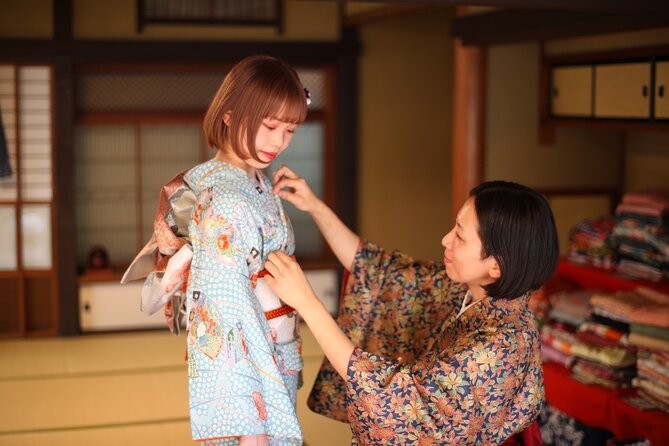
This is a strong choice if you want an organized introduction to Japanese culture during a short Miyajima visit. It suits couples, families, first-time visitors to Japan, and anyone who prefers doing an activity to simply looking at historic buildings.
Children can participate from age six, but they must be accompanied by an adult. The mix of dressing up, writing, tea, and craft gives younger participants several ways to stay involved. The adult should be ready to help keep the schedule moving and follow the teachers’ instructions.
The program also suits cruise passengers and anyone making a day trip to Miyajima. The fixed location and two-hour format make it easier to fit into a larger day, though you should allow enough time to reach the meeting point and return to your other plans.
It may not suit you if you want a long, scholarly study of one tradition. The experience favors variety. You get three short lessons instead of one extended workshop.
Is $171.73 good value?
At $171.73 per person, this is not a bargain activity. You are paying a premium for a package that combines clothing, instruction, temple access, three cultural activities, and photographs.
The value improves if you would otherwise book several separate experiences. A kimono session, calligraphy class, tea ceremony, and amulet workshop could take much longer to arrange, and the temple setting adds a sense of place that a generic classroom would not provide.
The price is easier to justify for someone who values participation and keepsakes. You write your own name, make an amulet, wear a kimono, and receive photos by email. If you mainly want a quick picture in traditional clothing, there are likely less expensive ways to do that, though no cheaper alternative is specified here.
I would compare the cost with your priorities rather than judge it by duration alone. Two hours can be excellent value when your Miyajima schedule is crowded and you want several meaningful activities in one booking. It feels less compelling if your main aim is simply sightseeing or if you already have a separate tea ceremony and calligraphy class planned.
Practical details and cancellation
Confirmation is provided at booking, and a mobile ticket is available. The activity ends back at the meeting point, which keeps the basic logistics simple.
Most people can participate, and the activity is near public transportation. The minimum age is six, with an adult required for children. The maximum group size is 10.
Free cancellation is available if you cancel at least 24 hours before the start time. Cancellations or changes made less than 24 hours ahead are not accepted for a refund. The cutoff follows local time in Japan.
Should you book this Miyajima cultural experience?
I would book it if you want to do more than see Miyajima’s famous sights and you like the idea of learning through several short activities. The temple setting, kimono, and teacher-taken photographs give the session a clear sense of place, while the calligraphy and amulet provide personal keepsakes.
I would skip it if $171.73 feels high for a two-hour program or if you want deep instruction in one discipline. The best match is someone who values variety, a small group, a traditional setting, and a well-organized introduction to Japanese customs.
For families, couples, cruise passengers, and first-time visitors with limited time, this is one of the more efficient ways to add hands-on culture to a Miyajima day.
FAQ
How long does the cultural activity last?
The experience lasts approximately two hours. The calligraphy, tea ceremony, and amulet-making lessons each take roughly half an hour, with time also used for the temple setting, clothing, and photographs.
Where does the activity start and finish?
It starts and ends at Okeiko Japan Miyajima, located at 741-1 Miyajimachō, Hatsukaichi, Hiroshima 739-0588, Japan.
Is a kimono provided?
Yes. A kimono and traditional apron are provided for you to wear during the lessons.
What activities are included?
You learn to write your name in Japanese, take part in a tea ceremony, and make an amulet. The experience takes place at Tokuju-ji Temple.
Can children participate?
Yes. The minimum age is six, and children must be accompanied by an adult.
What happens if I need to cancel?
You can cancel for a full refund up to 24 hours before the experience start time. Cancellations or changes made less than 24 hours before the start time are not accepted for a refund.
More Tea Ceremony Experiences in Japan
- Kyoto: Tea Ceremony in a Traditional Tea House in Kiyomizu
★ 4.9 · 3,519 reviews - Kyoto: Tea Ceremony Ju-An at Jotokuji Temple
★ 4.9 · 3,207 reviews - Kyoto: 45-Minute Tea Ceremony Lesson Experience
★ 4.3 · 2,378 reviews - Osaka: Tea Ceremony Experience
★ 4.9 · 1,426 reviews
Just added around Japan
- Yokohama : Tea Ceremony with Sweets and Souvenir★ 5.0 · 5 reviews
- Whisk Your Own Matcha: A Zen Matcha Experience at Temple★ 3.6 · 7 reviews
- Walking Tour: Yanaka,Nezu& Sendagi: Tea Ceremony & Old Tokyo★ 5.0 · 3 reviews
- Visit local home for music and tea ceremony near Disney★ 4.9 · 13 reviews
- Yokohama: Sushi & Gyoza Cooking with Matcha & GreenTea Experience★ 5.0 · 3 reviews
- Trip to Kamakura & Enoshima: Shrines, Seaside, Temples &Tea★ 5.0 · 11 reviews
- Kyoto tea town for matcha lovers★ 5.0 · 16 reviews
- Uji: Private immersion into Kyoto’s tea and reglious culture★ 5.0 · 17 reviews
Kimono & Tea Ceremonies, compared.
KYOTO Tea Ceremony with kimono near by Imamiya Jinjya Shrine
Read our review →
Kimono and Tea Ceremony Experience at Cultural Asset
Read our review →
Browse the lists this tour appears in