
Review · YOKOHAMA
Yokohama: Sushi & Gyoza Cooking with Matcha & GreenTea Experience
The best part of this Yokohama experience is the setting: you move from a tatami tea room into a private home kitchen, with host Yuka guiding you through matcha, sushi rolls, and handmade gyoza. It feels closer to being welcomed into daily Japanese life than attending a large cooking demonstration.
I like the small group size, capped at six, and the choice of three cultural activities before cooking. I also like the practical personal touches: Yuka meets you at Odoriba Station, speaks English well, and has even brought umbrellas when rain was expected. The main consideration is the short walk from the meeting point to her home, plus the fact that the activity takes you away from central Yokohama.
Key Points
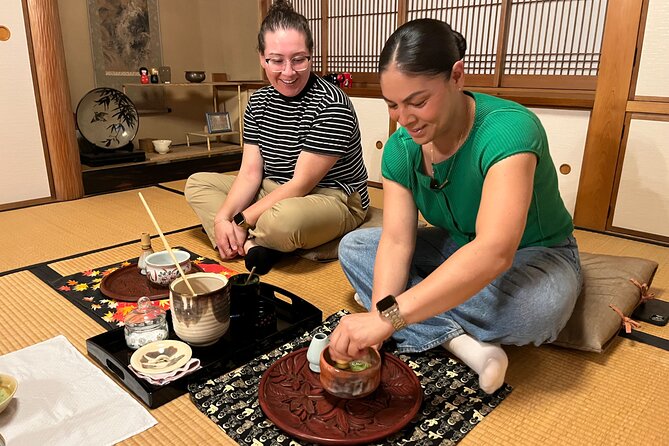
- Private tea room: Spend the opening hour in a traditional chashitsu-style room with tatami, tea, and Japanese sweets.
- Three cultural choices: Try matcha, draw manga with traditional tools, or simply relax with tea and sweets.
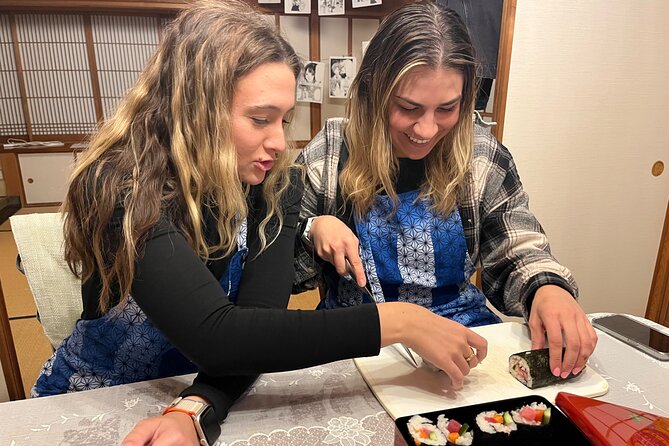
- Hands-on cooking: Make sushi rolls and fold handmade gyoza with Yuka’s guidance.
- Small group setting: The maximum is six people, though some bookings may be much smaller.
- Personal welcome: Meet at Odoriba Station, then walk about ten minutes to Yuka’s home.
- Strong value for food lovers: The $71.53 price covers roughly two and a half hours of cooking and cultural time in an intimate setting.
A Quiet Start in Yokohama’s Odoriba Neighborhood
Your meeting point is Odoriba Station at 10:30 am. Yuka meets you there and walks with you to her home, which is about ten minutes away through a residential area.
That short walk matters. You are not being taken straight from a station into a commercial cooking studio. Instead, the experience shifts gradually from public transport to a quieter neighborhood and then into a Japanese home. If you have a heavy suitcase, limited walking ability, or a tight schedule afterward, keep this transfer in mind.
Yuka’s welcome is one of the strongest parts of the experience. She has been praised for her kindness and thoughtful preparation, including bringing umbrellas when bad weather was expected. That sort of small gesture can make a real difference, especially if you are unfamiliar with the area or worried about finding the meeting point.
The home is described as traditional, and the group size is limited to six. In practice, this gives the activity a personal feel. You are not standing at the back of a room while an instructor works several steps ahead. You can ask questions, watch the folding and rolling techniques closely, and receive help when your first gyoza looks less like a neat crescent and more like a small, edible accident.
More Matcha Experiences in Japan:
- World Heritage Kyoto & Nara Uji Authentic Matcha Experience
★ 5.0 · 1,573 reviews - Kyoto: Arashiyama Bamboo Forest, Monkeys, Matcha & Temple Tour
★ 5.0 · 759 reviews - Matcha Making Class in Tokyo with Authentic Japanese Sweets Set
★ 5.0 · 744 reviews
The Tatami Tea Room Comes First
The first portion takes place in a serene Japanese tea room, or chashitsu. You sit on tatami and have time to settle into the quieter rhythm of the house before cooking begins.
This opening hour gives the experience its cultural character. A standard cooking class can teach you how to prepare food, but this one also gives you a look at the way tea, sweets, space, and hospitality work together in a Japanese home.
You can choose one of three options:
- A simple tea ceremony introduction with matcha tasting
- Manga-style illustration using traditional drawing tools
- Relaxation time with Japanese sweets and tea
The choices make this activity easier to match to your interests. If you want a taste of Japanese tea culture, choose the matcha option. If you are curious about Japanese pop culture and like making things with your hands, the manga activity gives you a different creative outlet. If you prefer a quiet morning, you can simply enjoy the room, tea, and sweets without adding another task.
The matcha option is not presented as a long, formal ceremony. It is a simple introduction with tasting, which is useful if you want cultural context without committing to a highly structured ritual. A creamy matcha latte is available if the sharper flavor of traditional matcha is not for you.
That flexibility is valuable. Matcha can be earthy and bitter, and not everyone enjoys it on a first try. Having a milder alternative means you can still take part without forcing yourself to finish a drink you dislike.
Choosing Matcha, Manga, or Quiet Time
The three choices are not minor add-ons. They shape the mood of the first part of your visit.
Matcha and Japanese tea customs
The tea option suits you if you want to understand how matcha fits into Japanese hospitality. You can taste the tea, enjoy sweets, and spend time in the tea room before the cooking starts.
Because the activity is in a private home, the setting may feel more relaxed than a formal tea ceremony staged for a large audience. You should expect an introduction rather than a full ceremonial performance. That makes it a good fit for first-time visitors who want a clear, approachable look at tea culture.
More Cooking Classes in Japan:
- Private Kyoto Sushi Cooking Class & Tea Ceremony with Emika
★ 5.0 · 66 reviews - Osaka Japanese Cooking And Matcha Class near Osaka Castle
★ 5.0 · 22 reviews - Home Made Onigiri and Matcha Cooking Class in Hiroshima
★ 5.0 · 11 reviews - Giant Sushi Cooking Class: Make a 1.5m Sushi Roll in Tokyo
★ 5.0 · 9 reviews
Manga-style illustration
The drawing option offers a change of pace. You use authentic tools and receive guidance based on Yuka’s own artwork and inspiration.
This choice may suit families, creative adults, or anyone who wants a break from food-focused activities. It also gives you something different to do in a tea room, where the quiet surroundings can help you pay attention to the process.
The available information does not specify exactly what you will draw or whether you take the finished work home, so you should think of this as a guided cultural activity rather than a guaranteed art souvenir.
Tea, sweets, and stillness
You can also skip the extra activity and simply relax. That is a sensible choice if your day in Yokohama is already full of walking, sightseeing, and train rides.
The tea room gives you a chance to notice details that are easy to miss in a busy tour: the tatami floor, the calm arrangement of the room, the pace of serving tea, and the way a private home differs from a restaurant or museum. You also have a natural setting for photos, as long as you follow the host’s lead and respect the household.
From Sliding Doors to Sushi Rolls
After the tea-room portion, sliding doors open to the kitchen. The change from quiet sitting room to hands-on food preparation is one of the activity’s most appealing features.
You make sushi rolls, or maki, using fresh ingredients. The emphasis is on doing the work yourself, not simply watching Yuka prepare lunch. You can expect guidance through the process of assembling and rolling the sushi, with the small group format making it easier to receive individual help.
Sushi rolling looks simple until you try to keep the filling in place and create an even shape. That is part of the fun. You learn through the physical process, and your finished roll becomes both lunch and a souvenir of the morning.
The class is especially useful for anyone who has eaten plenty of sushi but has never made it. You start to see the care involved in portioning ingredients, positioning the filling, and applying the right pressure. Those small movements are difficult to understand from a restaurant counter alone.
The cooking portion also gives you time to talk with Yuka. The experience is not only about technique. It is a chance to ask questions about food and daily life in Japan while doing something practical together.
Folding Gyoza Without Losing the Filling
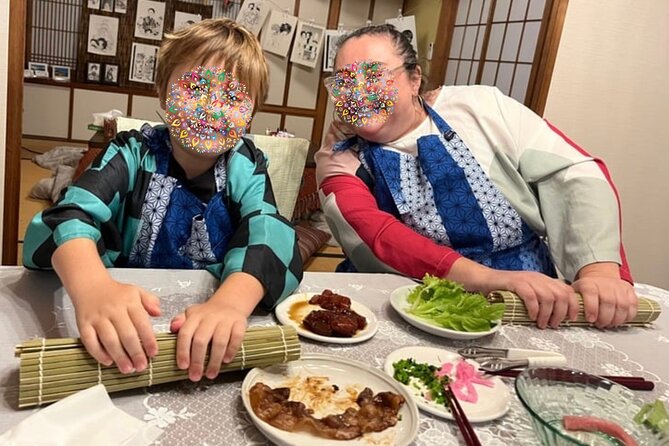
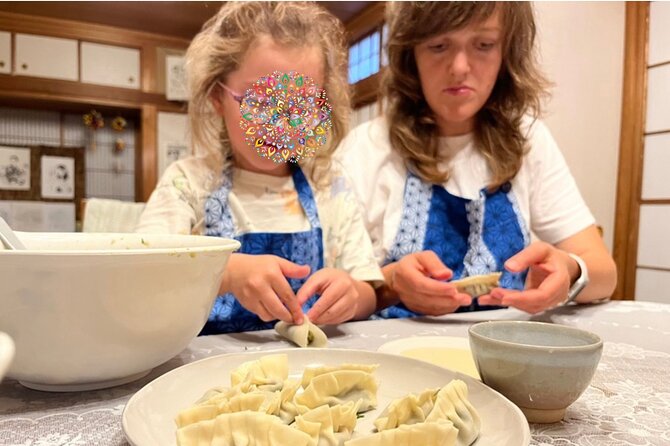
The second dish is handmade gyoza. You fold the dumplings and cook them with Yuka’s help.
Gyoza are a good choice for a group class because the folding process is social and forgiving. Everyone can work at the same table, compare shapes, and improve with each attempt. Your first dumpling may be uneven, but by the last one you should have a better sense of how to seal the wrapper.
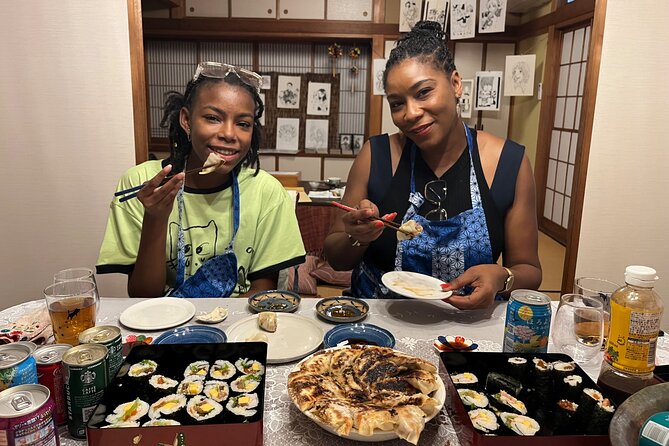
The activity gives you the satisfaction of making a dish from start to finish. You are not simply eating a prepared sample. You shape the dumplings, learn how they are cooked, and then taste the result.
The supplied details do not list the exact filling or cooking method, so you should not expect a fixed menu beyond sushi rolls and handmade gyoza. The important point is that both dishes are prepared with your participation and personalized guidance.
For many people, the gyoza section will be the most useful skill to take home. Sushi rolls require ingredients and equipment that may not be easy to reproduce on an ordinary evening. Gyoza wrappers and fillings are also practical to make again, especially once you understand the folding technique.
Why the Small Group Size Matters
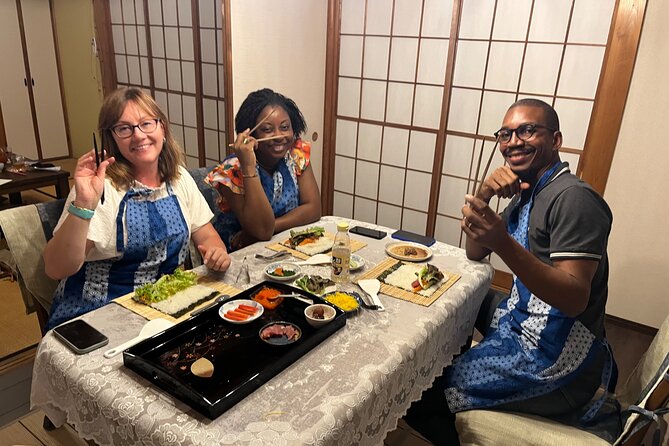
The maximum group size is six, which is unusually helpful for a home-based cooking activity. You have more room to ask questions and less chance of missing a key step.
One booking was for only two people, showing that the experience can be very intimate. You should not assume every date will be private, but the group limit still keeps the class personal compared with a large commercial workshop.
A small group also affects the social side. You are sharing a table, cooking together, and spending time in someone’s home. If you want a lively, highly social class with dozens of people, this is not the right format. If you prefer close instruction and a calm pace, the size is a major advantage.
Yuka’s English ability is another practical plus. The available feedback describes her as speaking English well and guiding the full process clearly. Language comfort matters when you are learning small physical movements such as folding dumplings or rolling sushi.
What the $71.53 Price Covers
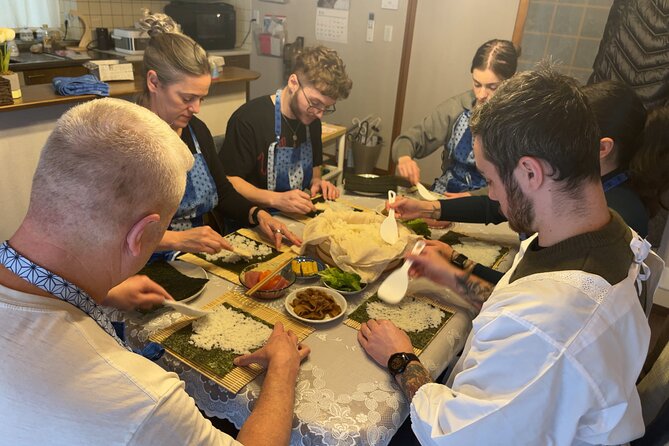
At $71.53 per person, this is not the cheapest meal-related activity in Yokohama. You are paying more than the cost of buying sushi and gyoza at a casual restaurant.
But the comparison is not quite fair. The price includes about two and a half hours of time, instruction, food preparation, tea, sweets, a private home setting, and a cultural activity of your choice. You also receive the value of a small group and direct time with the host.
I see the price as reasonable if you care about the setting and the personal welcome. It is less compelling if your only goal is to eat Japanese food cheaply. A restaurant gives you a faster and less expensive meal. This activity gives you skills, conversation, and access to a style of home life you would not normally see during a regular sightseeing day.
The value is strongest for first-time visitors who want more than a food tasting. It also suits repeat visitors who have already seen major sights and want a slower, more local-feeling activity.
Timing, Transport, and the Half-Day Commitment
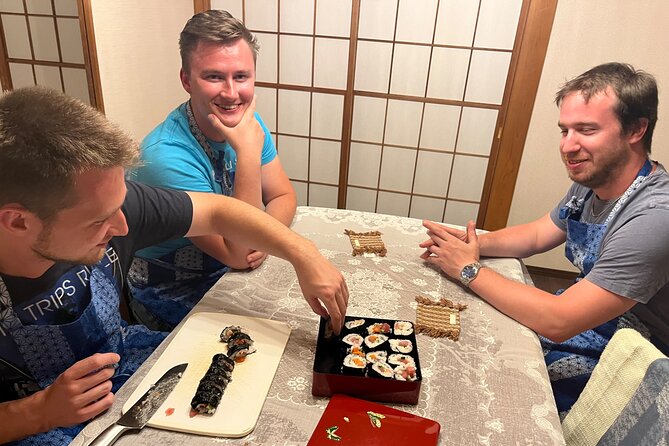
The activity begins at 10:30 am and lasts approximately two hours and thirty minutes. It ends back at the meeting point, so plan on finishing around 1 pm, allowing for the stated duration.
Odoriba Station is the starting point in Izumi Ward, Yokohama. You will need to reach the station on your own, then meet Yuka before walking to the house. Since the activity is not in the center of the city, check your train route and allow enough time to arrive before 10:30 am.
The location can be a benefit or a drawback. The residential setting supports the feeling of visiting an actual home, but it is less convenient if your Yokohama plans are centered around Minato Mirai, Chinatown, or the waterfront. I would place this activity on a morning when you are comfortable spending time in the Odoriba area rather than trying to squeeze it between distant attractions.
The mobile ticket is convenient. You can keep the booking details on your phone, and confirmation is provided at the time of booking. Service animals are allowed, and the meeting point is near public transportation.
Free cancellation is available if you cancel at least 24 hours before the start time. Changes or cancellations made inside that window are not accepted for a refund, so keep the local start time in mind when making plans.
Who Will Enjoy This Most
I would recommend this experience to several kinds of visitors:
- Food-focused visitors who want to make sushi and gyoza rather than simply order them
- First-time Japan visitors seeking an approachable introduction to tea, sweets, home life, and cooking
- Couples and small groups who value a quiet, personal setting
- Families with creative interests who may prefer manga drawing to a formal tea activity
- Repeat visitors to Yokohama looking for something outside the main sightseeing areas
- Photographers and memory keepers who want pictures in a traditional tea room and with their finished dishes
It may be less suitable if you dislike sitting on tatami, want a fast activity, or have no interest in cooking. The experience also asks you to travel to Odoriba and walk about ten minutes to the house, so convenience is not its main selling point.
The class is also not ideal for someone seeking a formal, elaborate tea ceremony. The tea portion is simple and introductory, with matcha latte available as a gentler alternative.
Practical Tips for a Smooth Visit
Arrive at Odoriba Station before 10:30 am, not at the last minute. The group walks from the station to the house, so being late could affect the whole schedule.
Wear something comfortable for cooking and sitting. Specific clothing rules are not provided, but practical clothes make it easier to work in the kitchen and spend time on tatami.
Bring your phone for the mobile ticket and photos. The tea room and finished dishes offer natural photo opportunities, though you should ask before photographing private areas or the host.
If rain is in the forecast, carry a compact umbrella if you have one. Yuka has shown thoughtfulness about wet weather, but it is still sensible to arrive prepared.
Think about your cultural choice before you arrive. Matcha suits tea lovers, manga drawing suits creative visitors, and quiet tea time suits anyone who wants the calmest version of the experience.
Should You Book This Yokohama Cooking Experience?
Book it if you want a personal morning built around Japanese home cooking and hospitality, not just a meal. Yuka’s warm welcome, strong English, small groups, and thoughtful attention to details such as rainy-weather umbrellas add real value.
The biggest reasons to hesitate are the trip to Odoriba, the ten-minute walk to the house, and the price compared with eating at a restaurant. You should also know that the tea ceremony is a simple introduction rather than a long formal ritual.
For food lovers, couples, families, and visitors who enjoy quiet cultural activities, this is a strong choice. You leave with sushi and gyoza skills, time in a traditional tea room, and a better sense of how food and hospitality fit into everyday Japanese life.
FAQ
Where does the experience begin?
It begins at Odoriba Station, at 1 Chome-1 Nakatahigashi, Izumi Ward, Yokohama, Kanagawa 245-0013, Japan.
What time does the activity start?
The start time is 10:30 am.
How long does the experience last?
It lasts approximately two hours and thirty minutes.
Where does the activity end?
It ends back at the meeting point.
How far is the host’s home from the meeting point?
The walk from the meeting point to the host’s traditional home takes about ten minutes.
What dishes will I make?
You will make sushi rolls, also called maki, and handmade gyoza.
What can I choose to do in the tea room?
You can choose a simple matcha tea experience, manga-style illustration, or relaxation time with Japanese sweets and tea. A matcha latte is available for those who prefer a milder flavor.
What is the cancellation policy?
You can cancel at least 24 hours before the start time for a full refund. Cancellations or changes made less than 24 hours before the start time are not accepted for a refund.
Just added around Japan
- Yokohama : Tea Ceremony with Sweets and Souvenir★ 5.0 · 5 reviews
- Whisk Your Own Matcha: A Zen Matcha Experience at Temple★ 3.6 · 7 reviews
- Walking Tour: Yanaka,Nezu& Sendagi: Tea Ceremony & Old Tokyo★ 5.0 · 3 reviews
- Visit local home for music and tea ceremony near Disney★ 4.9 · 13 reviews
- Trip to Kamakura & Enoshima: Shrines, Seaside, Temples &Tea★ 5.0 · 11 reviews
- Kyoto tea town for matcha lovers★ 5.0 · 16 reviews
- Uji: Private immersion into Kyoto’s tea and reglious culture★ 5.0 · 17 reviews
- Uji and Wazuka Matcha Farm Half Day Private Guided Tour★ 5.0 · 21 reviews
Matcha Experiences, compared.

World Heritage Kyoto & Nara Uji Authentic Matcha Experience
Read our review →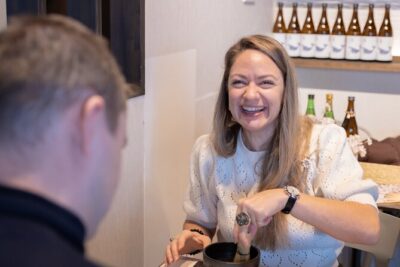
Matcha Making Class in Tokyo with Authentic Japanese Sweets Set
Read our review →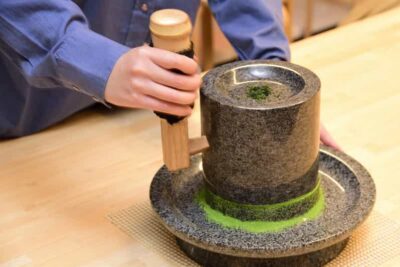
Tea Museum Tickets and Matcha Grinding Experience
Read our review →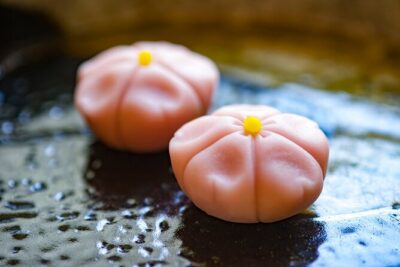
Matcha Making Class in Osaka with Authentic Japanese Sweets Set
Read our review →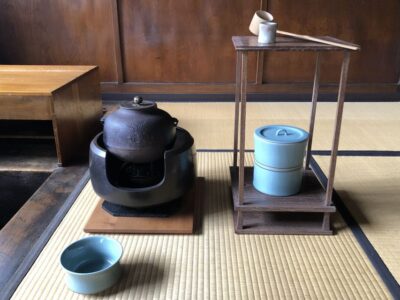
Tea Ceremony Meditation – Make Matcha with Tea Master
Read our review →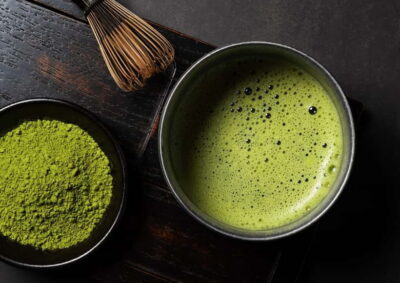
Matcha Making Experience with Mochi Sweets in Asakusa
Read our review →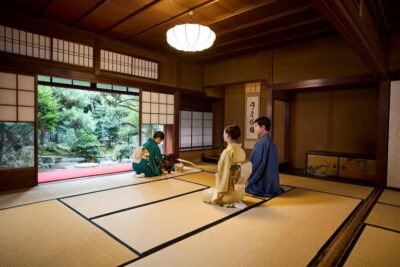
Browse the lists this tour appears in