
Review · KYOTO
Scenic Green Tea Fields of Hidden Kyoto & Local Tea Exp (Private)
Kyoto’s best tea country lies beyond the usual temple circuit, where Wazuka’s tea fields climb the hills in neat green waves. This private outing combines those rural views with Byodoin’s famous Phoenix Hall, a local tea stop, and the heart-shaped window at Shoju-in. Guide Daiki adds the history, tea lore, and easy conversation that make the long drives feel worthwhile.
I like the flexible private setup, especially the pinpoint pickup and the choice of a roomy van for groups or a convertible Mini Cooper for one person. I also like the balance between famous Byodoin and quieter places such as Ishitera and Ujitawara. The main drawback is the amount of driving, plus extra admission and tea costs, so this suits you best if you want countryside access rather than a quick city tour.
Key points to know before booking
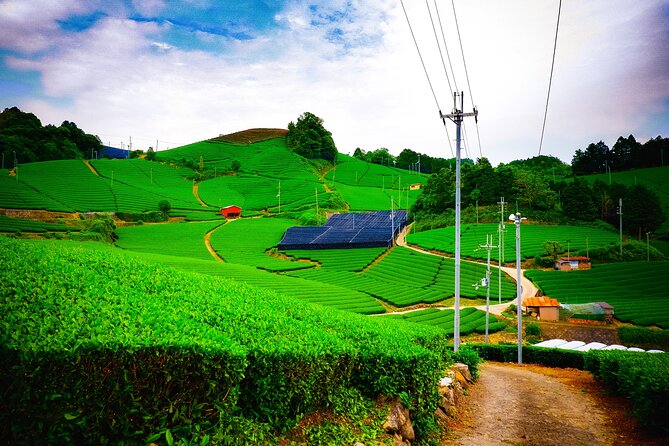
- Wazuka is the visual highlight: Hillside tea rows create some of Kyoto’s most striking rural views.
- Daiki leads with local context: Expect explanations about tea, temples, Japanese history, samurai, monks, and ninja traditions.
- Byodoin gives the day a major cultural anchor: The Phoenix Hall appears on Japan’s 10-yen coin.
- A private car opens up places trains cannot reach easily: Pickup and drop-off can be set at different locations.
- The tour works for solo visitors and groups: One person rides in a convertible Mini Cooper, while two to six people use an air-conditioned Nissan van.
- Budget for extras: Byodoin costs ¥600, Shoju-in costs ¥1,000, and your own tea or coffee is not included.
Why Kyoto’s tea country is worth the half-day
Central Kyoto can feel temple-heavy. You move from one famous gate to the next, often among crowds and shops aimed at quick visits. This tour changes the pace. It takes you south and east into tea-growing country, where the main attraction is not a single grand building but the careful pattern of farms spread across the hills.
The tea fields are planted in clean, geometric rows. From the right viewpoints, they seem to rise toward the sky. The scenery changes with the season, but the fields remain attractive even in winter, when their evergreen color gives the countryside a calm, ordered look.
You also get a useful mix of famous and lesser-known stops. Byodoin is one of Japan’s essential temple visits. Wazuka and Ujitawara feel much more rural. Shoju-in adds a small temple experience with a memorable architectural detail rather than another large tourist complex.
The outing begins at 1:00 pm and lasts about five and a half hours. That afternoon timing works well if you want a slower morning in Kyoto, though it limits the number of stops. This is not a rapid checklist tour. The roads and distances are part of the experience.
More Tea Plantation Tours in Kyoto:
- Cycling Tour at Uji’s Matcha Green Tea Fields and Heritage
★ 5.0 · 10 reviews - Matcha Green Tea Plantation and Matcha Factory Visit
★ 5.0 · 6 reviews - From Taipei: Thousand Island Lake and Pinglin Tea Plantation
★ 4.7 · 519 reviews
Byodoin Phoenix Hall and the Buddhist Pure Land
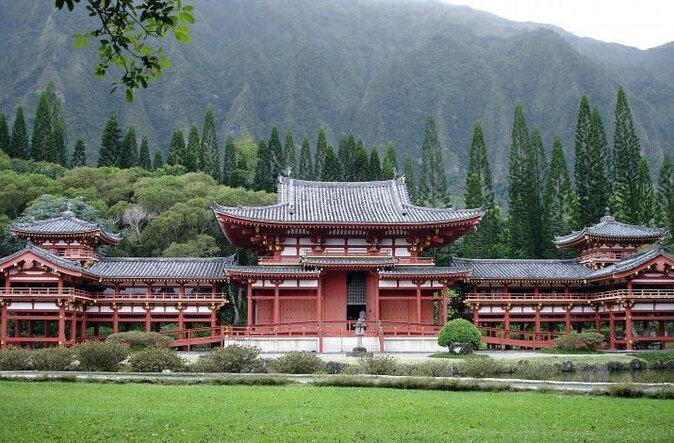
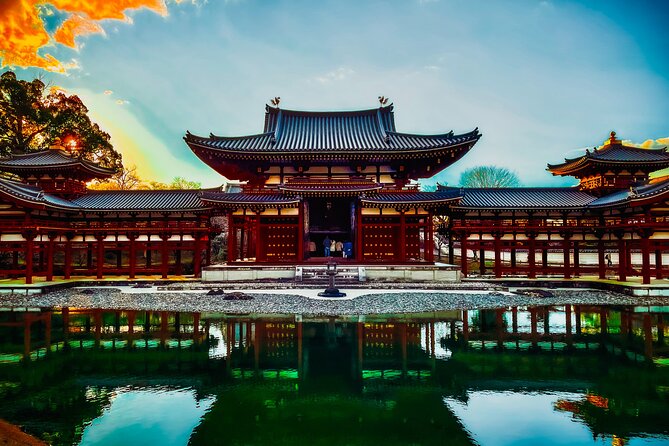
The first stop is Byodoin Temple, with about two hours here. The centerpiece is Phoenix Hall, one of Japan’s most recognizable buildings. Its image appears on the Japanese 10-yen coin, so you may already know its elegant shape without realizing it.
The hall represents the Buddhist Pure Land, or paradise on Earth. Its symmetrical form sits across the water, creating the kind of view that explains why this temple has remained famous for centuries. The site also gives Daiki a strong starting point for explaining the relationship between religion, power, architecture, and tea culture in Japan.
Two hours allows time to see more than the coin image. You can take in the temple grounds, study the building from different angles, and visit at a pace that suits your group. The admission fee is separate and listed at ¥600 per person.
Byodoin is also the busiest and most familiar stop on the route. If you have already visited it, you may find the later tea fields more rewarding. If it is new to you, it gives the tour a strong cultural foundation before the countryside portion begins.
Wazuka tea, matcha desserts, and buying local leaves
At Wazuka-cha Cafe, you have about an hour to taste local tea and matcha-based sweets. The focus is on tea supplied by local farmers, with an emphasis on Wazuka’s quality and direct connection to the growing area.
The tour presents Wazuka tea as even purer and more authentic than the already famous Uji tea. I would treat that as a point of local pride rather than a strict scientific ranking, but the practical benefit is clear: you are tasting tea close to where it is grown and processed.
This stop is useful if you want more than a pretty photograph. You can compare the flavor of high-grade green tea with matcha desserts, then buy tea to take home. The price advantage is one of the tour’s better financial perks, with premium tea reported at roughly one-half to one-third of city prices.
Your own tea, coffee, and food purchases are not included. That keeps the base price simple, but you should allow extra money if tasting and shopping are important to you.
Ishitera and Ujitawara, where the fields become the main event
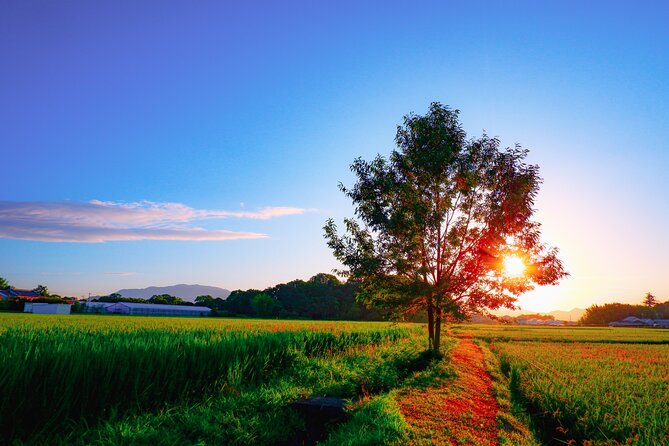
The Ishitera Tea Plantation stop lasts about 30 minutes. This is the pure scenery portion of the day. The planted hills are the subject, and the best use of your time is to look, walk a short distance, and take photographs.
The tour describes the view as tea fields reaching to the sky. That is a fair description of the visual effect. Rows of tea bushes curve over the slopes, producing a pattern that is very different from Kyoto’s stone lanes and wooden townhouses.
Another 30-minute stop takes you through Ujitawara-cho, one of Japan’s major tea-producing areas. It is also linked with the development of Japanese green tea and matcha. You stop at a beautiful farm where you can walk in the tea field and take photographs.
This is where private transport matters most. These farms are not simply the next station on a central Kyoto rail line. The vehicle gets you into the rural areas efficiently, and Daiki can explain what you are seeing along the way.
The walking is short, but you should still wear shoes suited to uneven ground and stairs. The tour notes that some walking and stair use are required. The countryside roads may also be winding, so anyone prone to motion sickness should plan accordingly.
More Private Experiences in Kyoto:
- Private Tea Ceremony and Sake Tasting in Kyoto Samurai House
★ 5.0 · 163 reviews - Private Kyoto Sushi Cooking Class & Tea Ceremony with Emika
★ 5.0 · 66 reviews - Kyoto: Private Tea Ceremony with a Garden View
★ 4.9 · 61 reviews - Kyoto Private Tea Ceremony with Tea Master at Home
★ 5.0 · 58 reviews
Shoju-in and the heart-shaped window

The final major stop is Shoju-in, also called Seijuin in the tour information. The temple is in Kyoto’s southern countryside, about an hour from central Kyoto. You get roughly an hour and a half here, including the drive and visit.
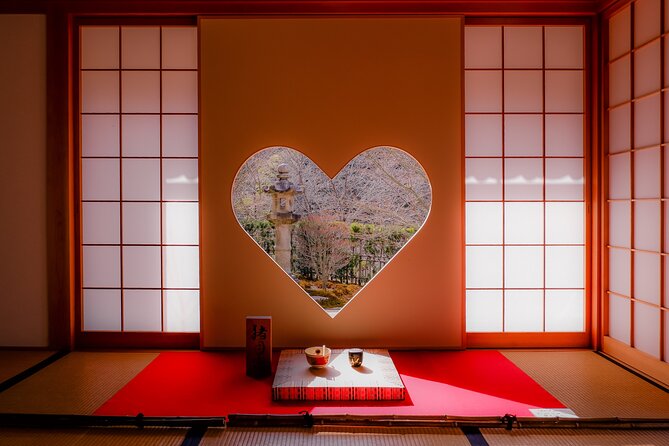
The star feature is the heart-shaped window in the tea room. It is a simple detail, but it gives the temple a distinct identity and makes for an appealing final photo. The setting also offers a quieter look at rural temple life than you get at Byodoin.
Shoju-in admission costs ¥1,000 per person. That fee is not included, so remember to add it to the advertised group price.
This stop may be the most dependent on your personal taste. If you enjoy small temples, traditional rooms, and quiet views, it can be a lovely finish. If you mainly want tea fields, the extra drive may feel long. The route can change because of closures, road conditions, crowds, or seasonal options, so the exact order is not guaranteed.
Daiki’s guiding style makes the long drives useful
Daiki is the guide most closely associated with this experience. His role is not limited to driving between viewpoints. He explains Japanese history and culture, with connections among monks, samurai, ninja traditions, and the development of tea.
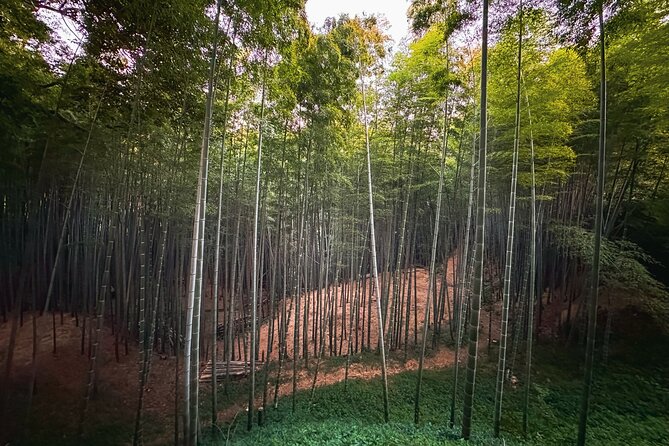
That matters because the tour includes several periods of road time. You pass through countryside with bamboo and tall Japanese red cedars, and the drive helps connect Kyoto’s urban temples with the farming communities outside the city. Daiki’s energy and patience are particularly useful if you want time for photographs or have many questions.
The private format also allows some flexibility. Past outings have included different drop-off points, a nearby restaurant at the end, bonus shrines, and extended routes in the wider Kyoto, Nara, and Osaka area. Those additions are not guaranteed on this specific five-and-a-half-hour plan, so treat them as examples of possible flexibility, not promised inclusions.
The standard experience includes fuel and highway fees. That is important for a rural route because the price does not suddenly grow from tolls or fuel charges during the drive.
Vehicle choices, group size, and comfort
For two to six people, the tour uses an air-conditioned Nissan van. This is the sensible choice for families or small groups, especially when you want room for bags and a comfortable ride through the countryside.
A solo visitor rides in a convertible Mini Cooper. That gives the experience a more unusual feel, particularly on the rural roads. It is also a good fit if the appeal is not just the temples but the journey through tea country itself.
The price is $250.38 per group, for up to six people. For six people, that works out to about $42 per person before admissions and personal purchases. For two people, the per-person cost is much higher, but you are paying for a private vehicle, a dedicated guide, fuel, highway fees, and pickup rather than joining a fixed bus route.
For one person, the value is harder to judge. The Mini Cooper makes the outing distinctive, but the total price is still the full group rate. Solo visitors who care strongly about tea fields and private transport may consider it worthwhile. Budget-conscious solo visitors may prefer public transport and a shorter local tea visit.
Pickup is offered across a wide area from two major cities, and the starting and ending points can be different. Confirm your exact pickup details when booking, since the published start time is 1:00 pm but the practical meeting arrangement depends on your location.
What the tour does especially well
The strongest part of this experience is access. You get to rural tea farms, small temples, and mountain roads without arranging several separate trains, buses, and taxis. That saves time and gives you a view of Japan that is difficult to reach from central Kyoto alone.
The second strength is the guide-led context. Tea can easily become a tasting and shopping stop with little explanation. Here, the farms connect to Japanese religion, politics, rural life, and older stories about monks and ninja. Daiki’s enthusiasm is a major part of that value.
The third strength is the day’s variety. Byodoin supplies a major historic monument. Wazuka provides tea. Ishitera and Ujitawara deliver photographs and farm scenery. Shoju-in gives you a small temple with a memorable window.
The main weakness is that the route covers a lot of ground. If you want a slow, silent afternoon in one village, this tour may feel too active. You also need to pay separately for two temple admissions and your own refreshments. The tour has a 4.9 rating and 97 percent recommendation rate from 32 ratings, but those numbers should not hide the basic tradeoff: this is a driving tour with several stops, not a relaxed stay in a single tea village.
Who should book this private Kyoto outing?
I would recommend it to you if you have already seen the central Kyoto highlights or want a break from them. It is particularly well suited to small groups who can share the cost, photographers who want tea-field views, and anyone interested in how tea connects with Japanese culture.
Families may appreciate the private vehicle and flexible pace, though the walking and stairs still require reasonable mobility. Solo visitors get the fun of the Mini Cooper and a personal guide, but should compare the cost carefully.
I would skip it if your schedule is tight, if you dislike long drives, or if you want a tour focused only on matcha tasting. I would also avoid booking it on the assumption that every outing will include extra shrines, dinner, or an extended night visit. Those are possible additions from other arrangements, not part of the stated five-and-a-half-hour plan.
Free cancellation is available up to 24 hours before the start time. After that point, the payment is not refunded, and late changes are not accepted.
FAQ
How long does the tea country tour last?
The experience lasts approximately five hours and 30 minutes. It begins at 1:00 pm.
What is included in the price?
The price includes an air-conditioned Nissan van for two to six people or a convertible Mini Cooper for one person. Fuel and highway fees are included, along with pickup and drop-off arrangements.
Are temple admission fees included?
No. Byodoin admission is ¥600 per person, and Shoju-in admission is ¥1,000 per person.
Can I be picked up and dropped off at different places?
Yes. Pinpoint pickup and drop-off are offered, and the starting and ending locations can be different.
Is tea or coffee included?
No. Tea, coffee, and personal refreshments are not included. The tour includes a stop at Wazuka-cha Cafe, where you can purchase drinks, matcha desserts, and tea.
Is this a private tour?
Yes. Only your group participates. The vehicle accommodates up to six people, while solo visitors use the Mini Cooper option.
Should you book it?
Book this tour if tea farms, rural roads, and local cultural context appeal to you as much as famous temples. The best value comes when two to six people share the private vehicle cost and want access to places that are awkward to reach independently.
The tour is less suitable if you want a compact city outing or a bargain matcha tasting. For the right group, though, Wazuka’s hillside fields, Byodoin’s Phoenix Hall, Shoju-in’s heart-shaped window, and Daiki’s flexible guiding make this a strong way to see a quieter side of Kyoto.
Just added around Kyoto
- Whisk Your Own Matcha: A Zen Matcha Experience at Temple★ 3.6 · 7 reviews
- Uji Walking Tour – Byodo-in temple and Tea Ceremony from Kyoto★ 3.5 · 3 reviews
- Traditional Tea Ceremony in Kyoto★ 4.5 · 3 reviews
- Kyoto: Authentic Tea Ceremony in a Small Group★ 5.0 · 7 reviews
- Tea ceremony at Kyoto’s Zen Temple Teahouse★ 5.0 · 2 reviews
- Tea Ceremony in 150 Years Old Townhouse with Tables and Chairs★ 5.0 · 22 reviews
- Silent Beauty of Kyoto Zen Walk and Tea Experience★ 5.0 · 2 reviews
- Tea Ceremony Experience in Traditional Kyoto Townhouse★ 5.0 · 19 reviews
Tea Plantation Tours, compared.
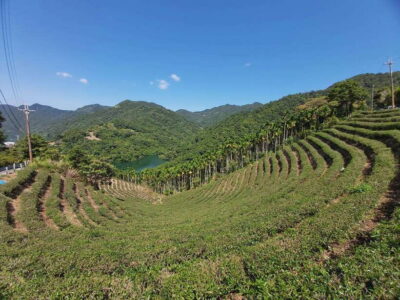
Thousand Island Lake and Pinglin Tea Plantation
Read our review →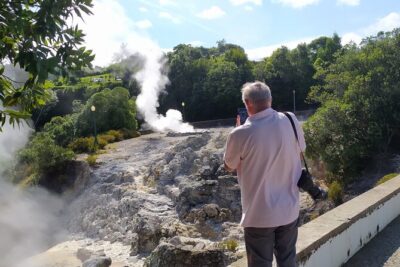
Furnas Volcano & Tea Plantation With Traditional Lunch, East Tour
Read our review →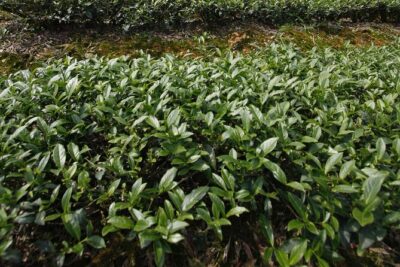
Thousand Island Lake and Pinglin Tea Plantation from Taipei
Read our review →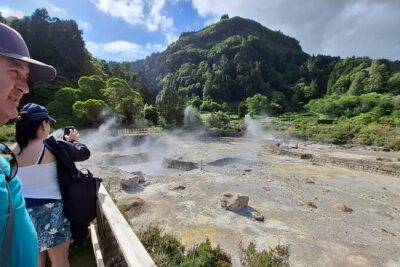
Furnas: Volcano Wonders, Tea Plantation & Waterfall Tour
Read our review →
Chiang Rai: 7 Major Sites, Golden Triangle & Tea Plantation
Read our review →
Mauritius: Tea and Sugar Plantation Guided Tour with Lunch
Read our review →
Browse the lists this tour appears in