
Review · KYOTO
Kyoto: Authentic Tea Ceremony in a Small Group
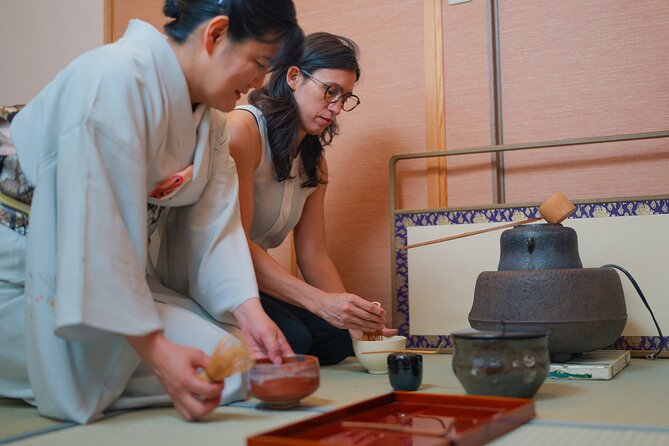
Kyoto’s best tea experiences are not always the grandest ones. This one takes place in a small, carefully designed tea room in Uzumasa, where a miniature garden, elegant utensils, and a calm setting do most of the talking. You watch the Urasenke method, learn why each object matters, and prepare your own bowl of matcha.
I like the private group format, limited to six people, and the attention given to the sweets and tea. The Kyoto wagashi comes from a long-established shop, and the matcha is selected from Marukyu Koyamaen. I also like that you wear a traditional haori and get more than a quick cup of green tea.
The main drawback is the price: $586.38 per group is a serious outlay for about one hour. It makes the most sense for a full group of six, or for visitors who care more about a polished cultural experience than a low-cost introduction.
Key points at a glance
- A private tea room in Uzumasa: Your group alone takes part, with no mixed party of strangers.
- Premium matcha and Kyoto wagashi: The tea comes from Marukyu Koyamaen, paired with sweets from a long-established Kyoto shop.
- A look at the Urasenke method: You first watch the graceful preparation before making your own bowl.
- Traditional haori provided: You wear a kimono-style jacket during the experience.
- Garden, utensils, and culture together: The setting explains chanoyu through objects, design, and hospitality, not just taste.
- One-hour format: It fits neatly into a busy Kyoto day, though the short duration leaves little room for a slow, extended ceremony.
A quiet tea room away from central Kyoto’s crowds
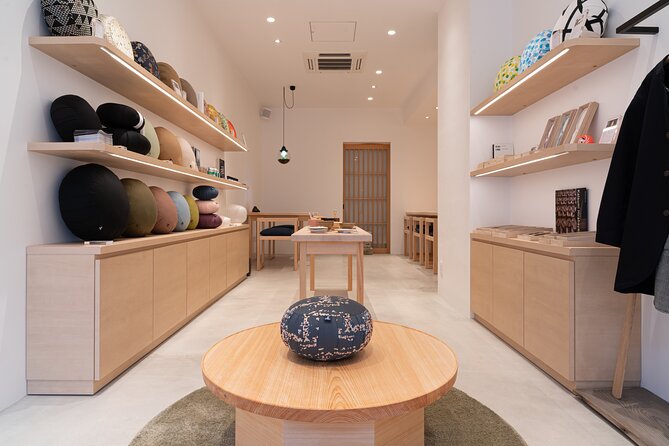
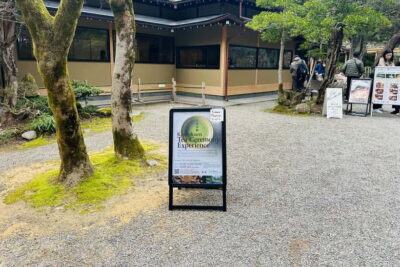
Chanoyu The KYOTO Uzumasa is at 19 Kita 1F, Uzumasa Izumishikibucho, in Kyoto’s Ukyo Ward. The experience begins and ends at this address, which is near public transportation. You do not get transportation as part of the booking, so allow time to reach the tea room on your own.
Uzumasa has a different feel from the packed lanes around Gion and some of Kyoto’s major temple sites. That matters here. A tea ceremony depends on attention, and it is easier to focus when you are not stepping straight from a crowded street into a room full of noise and movement.
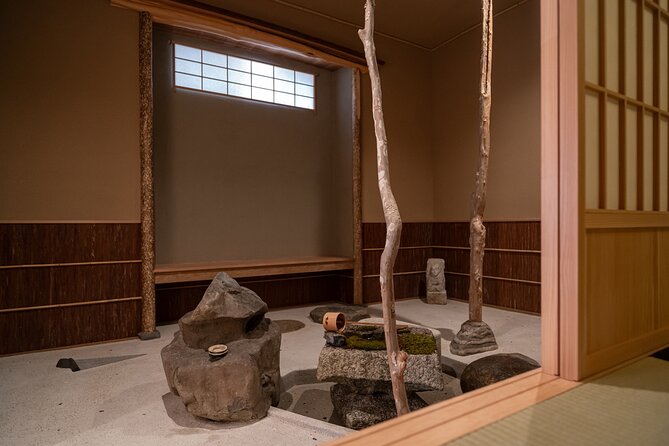
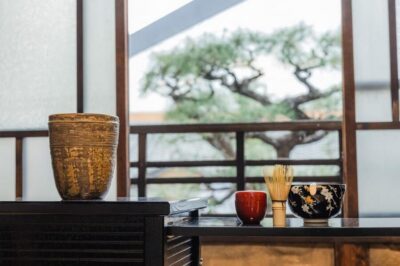
The entrance leads into a stylish interior and then toward a carefully arranged garden and tea room. The garden is described as a miniature display within the tea-room setting, giving you something to study before the tea begins. Do not expect a large strolling garden. The appeal is detail and composition, not scale.
I like this opening because it sets the tone without demanding much time. You are not being marched through several attractions. You are given one small place to notice: the garden, the room, the utensils, and the arrangement of the sweets.
More Tea Ceremony Experiences in Kyoto:
- Kyoto: Tea Ceremony in a Traditional Tea House in Kiyomizu
★ 4.9 · 3,519 reviews - Kyoto: Tea Ceremony Ju-An at Jotokuji Temple
★ 4.9 · 3,207 reviews - Kyoto: 45-Minute Tea Ceremony Lesson Experience
★ 4.3 · 2,378 reviews
Wearing a haori and settling into the ceremony
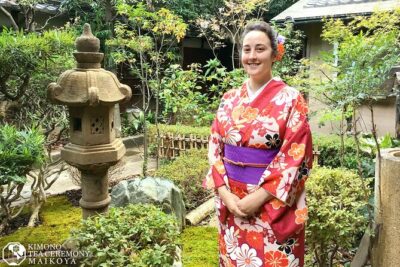
A traditional haori, a kimono-style jacket, is provided for you to wear. This is a small touch, but it helps mark the experience as something different from an ordinary café visit. It also makes the setting feel more complete without requiring you to rent a full kimono or arrange formal clothing in advance.
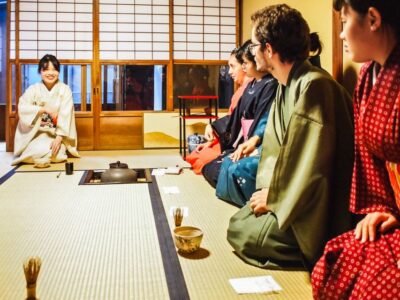
The activity is private for your group of up to six people. That is one of its strongest practical features. If you are a couple, family, or small circle of friends, you can ask questions and move at the group’s own pace within the one-hour schedule. You are not sharing the room with a large class.
The tradeoff is cost. At $586.38 for the group, the price works out to about $97.73 each if six people attend. For two people, it is roughly $293.19 per person. That is expensive beside a casual matcha tasting, but more reasonable if you fill all six places and want a private setting with a cultural explanation and hands-on activity.
The host’s name is not provided, so you should not book this expecting a named celebrity tea master. The focus is the room, the hospitality, the equipment, and the teaching.
Watching the Urasenke tea procedure
The ceremony begins with an explanation of chanoyu, the Japanese tea ceremony, and its cultural background. You learn about the meaning of tea utensils and the role they play in the ritual. This is important because the objects are not simply tools for making a drink. Their shape, placement, and use help express the host’s care.
You then watch the Urasenke tea procedure. Urasenke is one of the major schools of Japanese tea practice, and the movement is deliberate and graceful. The point is not speed. Each action has a place, from handling the utensils to preparing the bowl.
I find this order helpful for first-time participants. Seeing the process before trying it yourself gives you a basic map. You can watch the host’s hand movements, notice the sequence, and then make your own bowl with less uncertainty.
The short duration also shapes the experience. In roughly an hour, you cannot study every branch of tea culture or see a full formal ceremony with all its seasonal layers. What you get is a focused introduction, with enough background to understand what you are seeing rather than simply copying motions.
Kyoto sweets and premium matcha
The first serving combines traditional Kyoto sweets with matcha. The sweets are supplied by a long-established Kyoto wagashi shop, and the matcha is selected from Marukyu Koyamaen, a respected producer known for high-grade Japanese tea.
The pairing is more than a snack. Wagashi is often sweet enough to prepare your palate for matcha’s bitter, grassy edge. That contrast is part of the experience. The sweet gives you a way into the tea, while the tea keeps the confection from becoming cloying.
Several of the strongest comments about this experience focus on the taste of the matcha. People who had tried green tea before still found this preparation unusually smooth and memorable. The sweets also receive repeated praise, especially when paired with the calm room and garden.
Keep your expectations sensible. Premium matcha does not mean sweet or mild in the way a flavored latte might be. Matcha has a distinct character, and your reaction may depend on how much you already enjoy green tea. The value here comes from the full pairing and explanation, not just the ingredient label.
You receive another traditional sweet later, with the bowl of matcha you prepare yourself. That second serving gives the workshop a clear rhythm: observe first, then take part.
A few more tea experiences around Kyoto worth a look
- Kyoto: Table-Style Tea Ceremony at a Kyo-Machiya
★ 4.9 · 1,211 reviews - Kimono Tea Ceremony at Kyoto Maikoya, NISHIKI
★ 5.0 · 911 reviews - Kyoto: Kimono Tea Ceremony at Orizuruya Gion
★ 4.9 · 618 reviews - Kyoto: Tea Ceremony in 100-year-old Kyo-Machiya Townhouse
★ 4.8 · 546 reviews
Making your own bowl of matcha
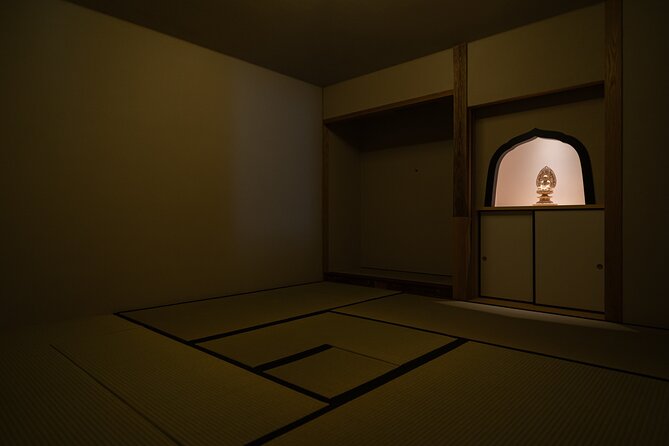
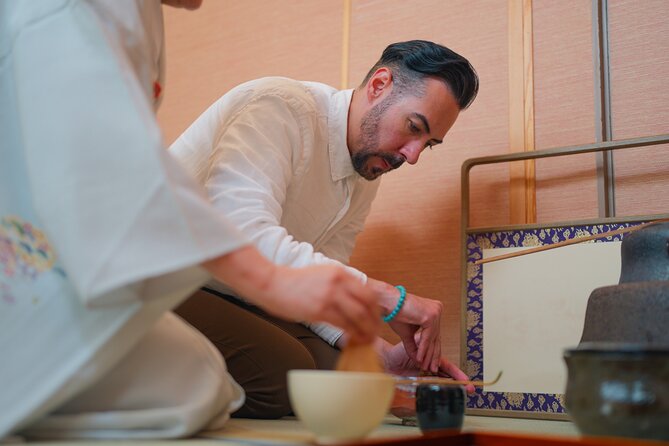
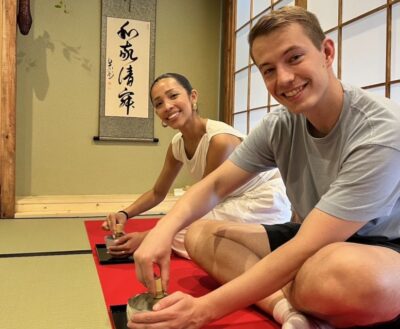
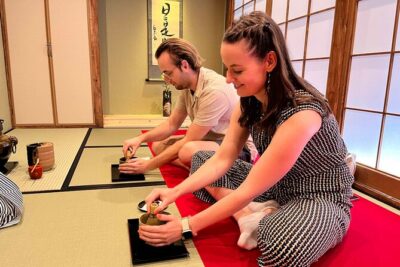
After watching the host, you whisk your own matcha. This is the hands-on part of the activity and one reason it offers more than a standard tea tasting.
You are not expected to arrive with experience. The procedure is explained, and the setting is designed for beginners as well as people already interested in Japanese tea. Your bowl will not need to look like a master’s work. The point is to understand the motion, feel the texture change, and enjoy the result.
Making matcha also gives you a better sense of the care behind the ceremony. Water, powder, whisk, bowl, and movement must work together. The tools are simple, but the result depends on attention. That lesson is easy to miss when someone else prepares the tea in front of you.
This is where the private format earns some of its cost. With only your own group present, you can take part without feeling like you are holding up a large class. Still, the one-hour schedule means the instruction is likely to remain introductory rather than highly technical. Book it to gain a personal connection to the practice, not to become a tea expert in one sitting.
Why the garden and utensils matter
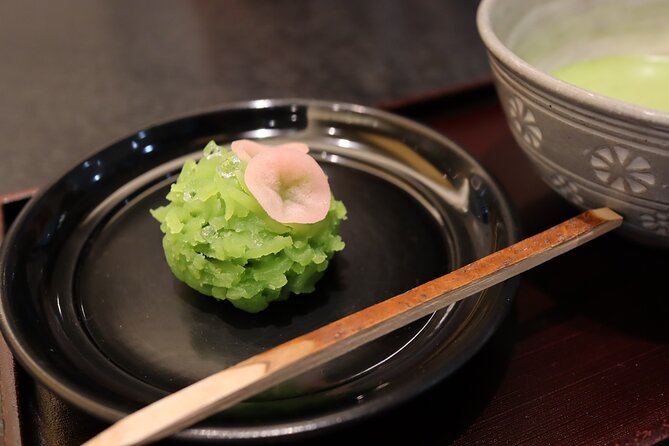
The garden is not a separate sightseeing stop. It is part of the tea-room design, and you are invited to appreciate it as part of the setting. Its small scale makes it something to inspect closely. Look for the relationship between the room, the garden, and the objects used during the ceremony.
The utensils also receive direct explanation. That gives the activity substance. Without context, a tea bowl or whisk can look like a decorative prop. With an explanation, you begin to see how the equipment supports the host’s welcome and the guest’s attention.
The tea ceremony is often described as the Way of Tea, or chado. That idea places value on hospitality, respect, preparation, and presence. You do not need to know the philosophy in advance. The experience gives you a short, practical introduction through the setting and the actions.
I especially like that this is not framed as merely drinking matcha. You learn why the tea is made in a particular way and how the ceremony connects food, objects, architecture, and manners. That makes the hour more worthwhile for anyone who wants cultural context along with a pleasant activity.
Is $586.38 good value for one hour?
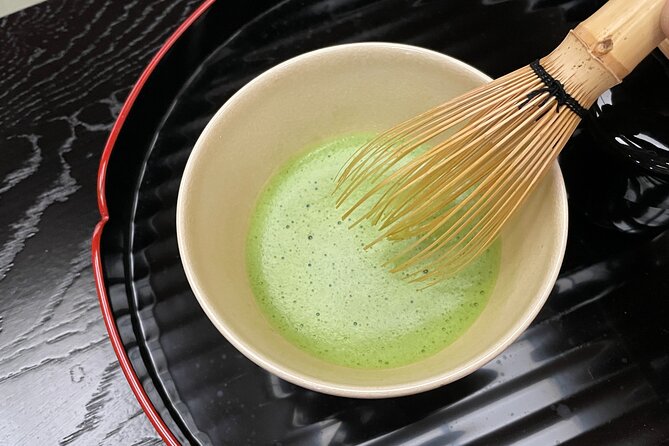
The answer depends heavily on your group size. For six people, the cost is about $97.73 per person. For a couple, it is a luxury purchase, at about $293.19 each. The booking price is per group, not per person, so bringing more people changes the value considerably.
The package includes the sweets, matcha, haori, garden viewing, utensil introduction, cultural explanation, tea demonstration, and your own preparation. It does not include transportation. Those inclusions make the price easier to understand, but they do not make it inexpensive.
I would compare it with what you want from Kyoto. If you only want to taste matcha, find a less formal tea stop. If you want a private room, high-quality ingredients, a traditional presentation, and a guided introduction to chanoyu, this experience offers a more complete hour.
The small group limit is also useful for families and friends who prefer not to join a large class. It gives you a shared memory without the formality of arranging a private tea master independently.
Who should book this tea ceremony?
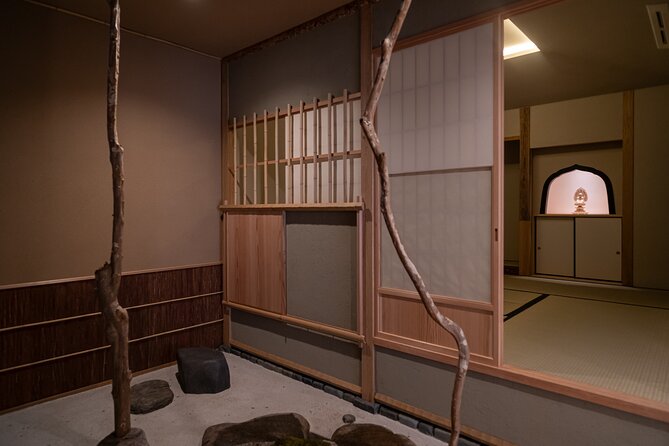
This suits first-time visitors who want a clear and friendly introduction to Japanese tea culture. You receive enough explanation to understand the ceremony, but you do not need prior knowledge.
It also suits people who care about design and atmosphere. The refined room, miniature garden, haori, utensils, and sweets all contribute to the experience. If you enjoy noticing small details, you will have plenty to look at during the hour.
Food-focused visitors should take note of the ingredient choices. The Kyoto wagashi and Marukyu Koyamaen matcha are central parts of the activity, not afterthoughts. If you are curious about how Japanese sweets and tea work together, this is a strong fit.
I would hesitate to recommend it to budget-conscious visitors, people looking for a long ceremony, or anyone who expects transportation to be included. The price is high, and the activity is compact.
Free cancellation is available if you cancel at least 24 hours before the start time. Cancellations made later are not refunded, and changes within that same period are not accepted. Confirmation arrives when you book, and mobile tickets are supported.
Should you book Chanoyu The KYOTO Uzumasa?
Book it if you can fill several places in the group and want a polished, private introduction to Kyoto tea culture. The best features are the quiet tea room, carefully chosen matcha and sweets, hands-on whisking, and explanations of the Urasenke procedure and utensils.
Skip it if your priority is a cheap cup of matcha or a lengthy ceremony. At one hour, this is a compact experience, but it uses that hour well. For the right visitor, the cost buys focus, privacy, and a thoughtful look at the Way of Tea rather than just another stop for a drink.
FAQ
Where does the tea ceremony take place?
It takes place at Chanoyu The KYOTO Uzumasa, at 19 Kita 1F, Uzumasa Izumishikibucho, Ukyo Ward, Kyoto, Japan, postal code 616-8101.
How long does the experience last?
The tea ceremony lasts approximately one hour.
Is transportation included?
No. Private transportation is not included. The activity begins and ends at the tea-room meeting point, which is near public transportation.
How many people can join the private activity?
The private activity is for your group only, with up to six people.
What food and drink are included?
The experience includes Kyoto sweets and matcha. A second traditional sweet is served with the matcha you prepare yourself.
What type of matcha is used?
The experience uses matcha selected from Marukyu Koyamaen.
Do I get to make matcha myself?
Yes. After watching the Urasenke tea procedure and receiving an explanation, you whisk your own bowl of matcha.
Is traditional clothing provided?
Yes. You are provided with a traditional haori, a kimono-style jacket, to wear during the experience.
What cultural subjects are explained?
You receive a brief explanation of chanoyu’s history and cultural origins, along with an introduction to the traditional utensils used in the ceremony.
Can I cancel for a full refund?
Yes, if you cancel at least 24 hours before the experience’s start time. Cancellations made less than 24 hours in advance are not refunded.
Just added around Kyoto
- Whisk Your Own Matcha: A Zen Matcha Experience at Temple★ 3.6 · 7 reviews
- Uji Walking Tour – Byodo-in temple and Tea Ceremony from Kyoto★ 3.5 · 3 reviews
- Traditional Tea Ceremony in Kyoto★ 4.5 · 3 reviews
- Tea ceremony at Kyoto’s Zen Temple Teahouse★ 5.0 · 2 reviews
- Tea Ceremony in 150 Years Old Townhouse with Tables and Chairs★ 5.0 · 22 reviews
- Silent Beauty of Kyoto Zen Walk and Tea Experience★ 5.0 · 2 reviews
- Tea Ceremony Experience in Traditional Kyoto Townhouse★ 5.0 · 19 reviews
- Kyoto Private Tea Ceremony at a Japanese Inns★ 5.0 · 12 reviews
Tea Ceremony Experiences, compared.
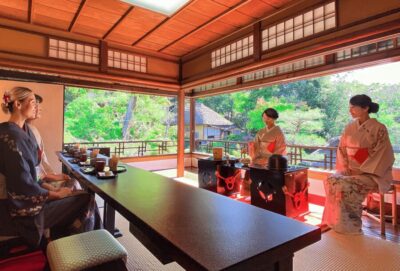
Tea Ceremony in a Traditional Tea House in Kiyomizu
Read our review →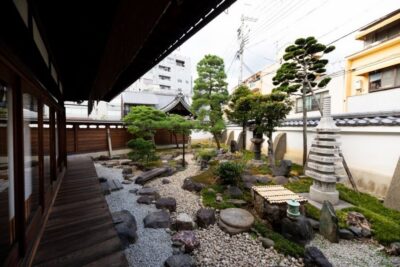
Browse the lists this tour appears in