
Review · CHINA
Half-day Tour: Largest Tea Plantation & Amazing Xianggong Hill
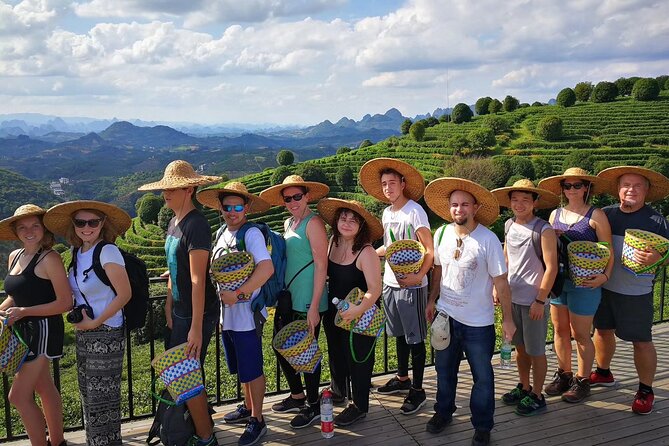
Yangshuo’s best half-day pairing is a hands-on tea visit followed by a hilltop panorama. At Seven Fairies Peak, you pick tea leaves, carry a bamboo basket, and sit down for a traditional tea service. Then Xianggong Hill gives you the big Li River view.
I like the small-group format, capped at 15 people, and the fact that private transport handles the steep rural roads. I also like the flexible morning or afternoon departure, which is useful if you have only a short stay in Yangshuo.
The main drawback is the pace. Six hours covers two major stops, but tea picking, the hill climb, and transport leave little room for lingering. Xianggong Hill also requires walking uphill, so bring sensible shoes and expect some effort.
Key points to know before you book
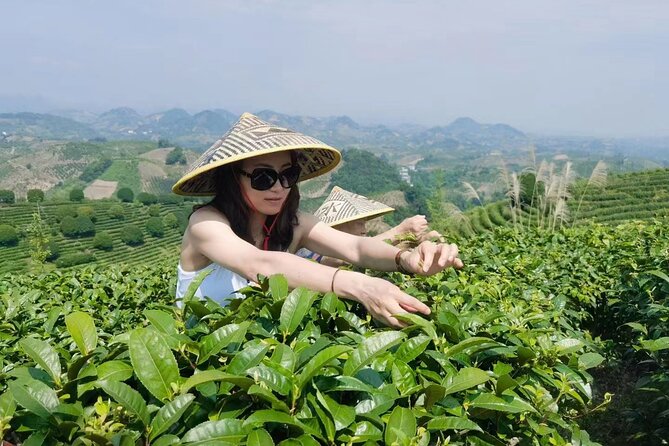
- Tea picking is hands-on: You wear a reed hat, carry a small bamboo basket, pick leaves, and learn how tea is made.
- Xianggong Hill supplies the grand finale: The summit looks over the Li River valley, villages, orchards, and the famous pointed peaks around Yangshuo.
- You have two departure choices: Morning and afternoon tours run daily, so you can fit this around other Yangshuo plans.
- Guiding is a real strength: Anna, David, and Daniel are among the guides associated with the experience, with English-language support and help with timing and transport.
- Kumquat picking is seasonal: A 20-minute fruit-picking stop is offered during harvest season and skipped at other times.
- The price includes the main costs: At $107 per person, private transport, entrance fees, guiding, tea activities, and the ceremony are included. Lunch and gratuities are not.
Two Yangshuo sights in one well-planned half-day
This tour works because the two stops feel different. The tea plantation gives you an activity with local culture attached to it. Xianggong Hill gives you the classic Yangshuo view, the one made for a camera and a quiet pause.
You leave from the meeting point at 108 West Street in central Yangshuo, or arrange pickup from your downtown Yangshuo hotel. A private car or bus takes you into the hills. That matters here. The tea plantation and Xianggong Hill are not a simple stroll from West Street, and having transport arranged saves you from piecing together taxis and local rides.
The group can reach 15 people, though the format is intended to feel more personal than a large coach outing. The exact vehicle depends on the group size. Air conditioning was specifically appreciated during one customized outing, which is useful in Yangshuo’s warm months.
The tour lasts about six hours. You can choose a morning or afternoon departure, but check the selected start time carefully when booking. This is not an open-ended day tour. The schedule is built to get you back to Yangshuo after the two main stops.
More Tea Plantation Tours in China:
- Half-Day Hangzhou Yunxi Bamboo Forest and Tea Plantation Experience
★ 5.0 · 22 reviews - Experience Chengdu: Private Tea-Making Day Tour of Mengdingshan Tea Plantation
★ 4.5 · 7 reviews - Hangzhou West Lake and Tea Plantation Half Day Tour
★ 5.0 · 4 reviews
Seven Fairies Peak and the tea-growing experience
The first major stop is Seven Fairies Peak Tea Plantation, described as the highest place in Yangshuo. The drive up is part of the appeal. You leave the town streets behind and pass quiet villages, orchards, and hill country.
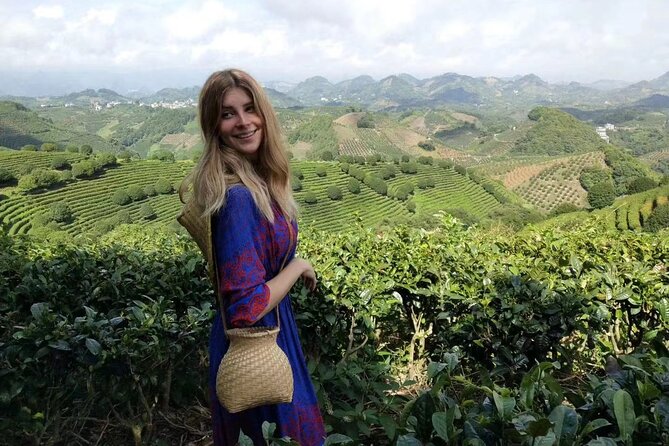
The visit is more active than a standard tea tasting. You put on a Chinese reed hat, take a small bamboo basket, and walk among the tea rows. You can pick your own leaves, which gives the visit a simple physical rhythm: look, reach, pick, and carry.
I like this part because it gives you something to do with your hands. You are not simply shown a plantation from a viewing area. The hat and basket are practical props, but they also help you understand how tea gathering is presented as part of local rural life.
The experience is not a full farming course, and you should not expect hours of independent exploration. It is a guided introduction designed to fit into a half-day. The value comes from the combination of scenery, participation, and explanation.
At harvest time, you also get about 20 minutes to pick local kumquats. This is a seasonal extra, not a guaranteed part of every departure. If kumquats are not in season, the stop is skipped. That is worth knowing if fruit picking is one of the reasons you are interested.
Tea making, tasting, and customs at the lodge
After the plantation walk, you return to the lodge for traditional tea making and a tea service. This is where the guide can connect the activity to Chinese tea customs rather than leaving you with a quick taste and a souvenir purchase.
The supplied information does not specify the exact tea varieties or the length of the ceremony, so I would treat this as an introduction rather than a specialist tasting. You will learn about preparation and customs, then taste the tea in a more relaxed setting.
Several guides connected with the tour receive particularly warm praise. Anna is described as personable, helpful, and easy to connect with. David is noted for waiting during a pickup problem and sharing useful information about the area and tea. Daniel has led the plantation visit, explained the local area, and arranged comfortable transport for small groups.
Guide quality can shape this tour. Tea picking itself is pleasant, but the explanation turns it into something more meaningful. An English-speaking guide can also help you understand what you are tasting and how the ceremony fits into local custom.
You should still keep expectations realistic. This is not advertised as a formal tea education course, and there is no lunch included. If you need a substantial meal, eat before departure or plan one afterward.
The scenic drive to Xianggong Hill
The road from the tea plantation to Xianggong Hill continues through rural Yangshuo. You may see quiet villages, different kinds of orchards, and the distinctive limestone peaks that make this part of Guangxi so recognizable.
The private vehicle is especially useful during this middle section. You can watch the countryside instead of worrying about directions, transfers, or finding the next entrance. The route may be adjusted if traffic, weather, landslides, or other conditions interfere, but the operator says the planned attractions remain the goal when possible.
This is also where the tour’s compact timing becomes clear. You are fitting a high plantation visit, tea activity, and mountain viewpoint into a single outing. The drive is scenic, but it is still transport time. If you want long photo stops in every village, this is not the right format.
More Half-Day Trips in China:
- Half-day Private Mahjong course in Local Tea House
★ 5.0 · 16 reviews - Half-Day Hangzhou Private Tour with Green Tea Village and Lingyin Temple
★ 5.0 · 3 reviews - Half-Day Hangzhou Jiuxi Stream and Tea Plantation Experience
★ 5.0 · 2 reviews - Half-Day Hangzhou Tianzhu Buddhist Mountain Hiking Tour with Green Tea Village
★ 5.0 · 2 reviews
Climbing Xianggong Hill for the Li River panorama
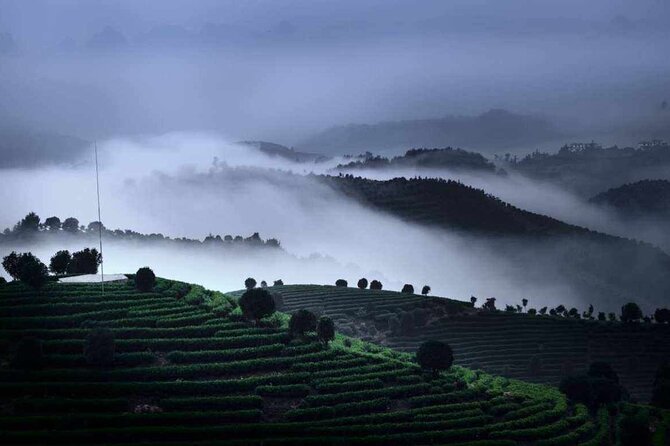
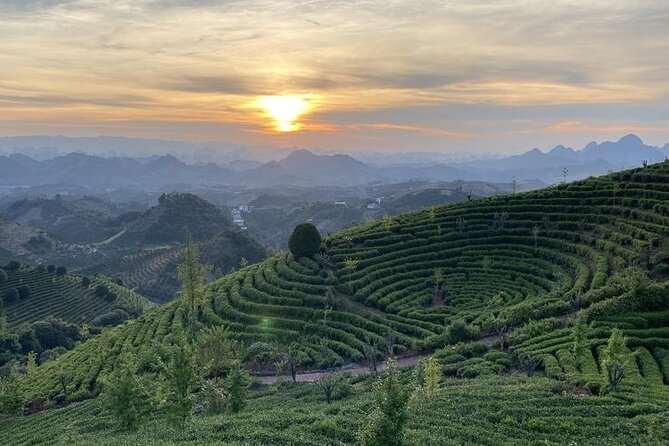
Xianggong Hill is the visual reward. From the top, you look across the Li River valley toward layers of limestone peaks, villages, orchards, and open countryside. The view changes with the conditions. Sunlight and shadow can move across the peaks, clouds may gather below, and late light can bring a rosy glow.
On a lucky day, you might even see a rainbow. That is weather-dependent, of course, and no mountain viewpoint can promise a particular sky. The important point is that Xianggong Hill is worth visiting for the broad view rather than for a long list of facilities or attractions.
You walk uphill to reach the viewpoint. The tour notes do not provide a distance or exact climb time, so I would not assume it is effortless. Comfortable shoes are required advice, not a throwaway suggestion. High heels are specifically discouraged, and sun protection is sensible because the exposed viewpoint can feel hot.
The hill is best understood as a short scenic walk with a major payoff at the top. If you have limited time in Yangshuo, it gives you the classic river-and-peaks scene without committing a full day to a more demanding hike.
Try to keep your camera ready during the approach, not only at the summit. The view from the top is the main event, but the changing angles along the way can be attractive too. Your guide can help with timing and may point out features in the valley.
Morning or afternoon: which departure makes sense
The morning departure is the safer choice if you want cooler conditions for walking and a better cushion in your schedule. It also leaves the rest of your day available for West Street, a meal, cycling, or another Yangshuo activity.
The afternoon departure is useful if you arrive late, prefer a slower morning, or want the possibility of softer light at Xianggong Hill. The information does not promise a sunset tour, so do not book it expecting a particular sunset view. Check the exact departure time and season before assuming how much late-day light you will have.
Either option has a trade-off. Morning light may be clearer or gentler for the hill climb, while afternoon conditions may offer warmer color. Weather in the mountains is changeable, so the best choice is usually the one that fits your schedule and energy level.
What the $107 price really covers
At $107 per person, this is not the cheapest way to see a hill viewpoint. You are paying for more than admission, though. The price includes private transportation, entrance fees, an English-speaking guide, the reed hat and bamboo basket, tea picking, tea making, and the tea ceremony.
That package can be good value if you want both cultural activity and sightseeing without arranging separate rides. The private vehicle is the key cost-saving convenience in terms of time and effort. You also avoid the uncertainty of buying several tickets and negotiating local transport during a short stay.
The value is weaker if you only want the Xianggong Hill viewpoint. In that case, a simpler transport arrangement may suit you better, though the tour adds the tea plantation and guide. It is also not designed as a food tour. Lunch, personal purchases, and tips are extra.
The small-group cap helps justify the price. You are not joining a huge bus party, and the guides can offer more direct help with pickup, the tea activity, and the walk. Group discounts are available, but the exact reduction is not provided, so check the price for your party before booking.
Who will enjoy this tour most
I would recommend this experience to a first-time Yangshuo visitor who wants a clear introduction to two signature experiences. It is also a good fit if you have only one or two days in the area and want to use six hours efficiently.
You will likely enjoy it if you like:
- Gentle outdoor activity rather than a strenuous hike
- Rural scenery and mountain roads
- Hands-on cultural visits
- Guided sightseeing in English
- Small groups and arranged transportation
- Photo stops with wide views
Families and older people should consider the uphill walk and outdoor conditions carefully. The operator asks you to assess the health of older participants, and that is sensible. The tour can help with practical problems, but each person is responsible for managing their own safety during the outing.
It is less suitable if you dislike scheduled tours, want a long tea workshop, or prefer to spend a whole day at one site. The half-day format is efficient, but it does not allow unlimited time at either the plantation or the hill.
What to bring and what to expect on the day
Wear walking shoes with a good grip. You will walk through tea rows and climb to the Xianggong Hill viewpoint, so sandals with poor support or high heels are a bad match.
Bring suncream, a hat or sunglasses, and clothing suited to the forecast. The tour specifically advises checking the weather before departure. A small bottle of water and a phone or camera are practical additions, though the supplied details do not state that water is provided.
Keep valuables with you. The operator asks you not to smoke, spit, or leave rubbish in the vehicle, and it accepts no responsibility for lost property. These are ordinary rules, but they matter when you are moving between several rural stops.
Weather, traffic, landslides, vehicle problems, and other uncontrollable events can force changes in the order of the stops or affect what you see. If an attraction cannot be completed because of such a problem, the operator says it will work on a solution or refund relevant tickets, while other resulting costs remain your responsibility.
Free cancellation is available if you cancel at least 24 hours before the local start time. Changes or cancellations inside that window are not accepted for a refund.
Should you book the tea plantation and Xianggong Hill tour?
Book it if you want a well-organized six-hour introduction to Yangshuo with both participation and scenery. The tea picking, tea service, private transport, and Xianggong Hill view make a stronger package than visiting the viewpoint alone.
I would especially choose it for a first visit, a short stay, or a party that values an English-speaking guide. Anna, David, and Daniel are names associated with warm, helpful guiding, though the specific guide for your departure is not guaranteed.
Skip it if your priority is a slow, specialist tea visit, a full meal, or a long mountain walk. For everyone else, the tour offers a sensible balance: rural culture first, broad Li River views second, and a return to Yangshuo before the day disappears.
FAQ
How long does the tour last?
The tour lasts approximately six hours, including transportation between Yangshuo, the tea plantation, and Xianggong Hill.
Are morning and afternoon departures available?
Yes. There are two departures daily, one in the morning and one in the afternoon. Check the departure time when booking.
Is hotel pickup included?
Pickup is offered from downtown Yangshuo hotels. The listed meeting point is 108 West Street in Yangshuo City.
What is included in the price?
The price includes private transportation, entrance fees, an English-speaking guide, a reed hat, a bamboo basket, tea picking, tea making, and a tea ceremony.
Is lunch included?
No. Lunch is not included. Personal expenses and tips for guides and drivers are also extra.
How large can the group be?
The tour has a maximum of 15 participants. Group discounts are available.
Just added around China
- Xi’an Chinese Calligraphy Workshop: Ink Art & Tea Tasting★ 5.0 · 4 reviews
- Xi’an Noodle Making and Tea Tasting Experience★ 5.0 · 6 reviews
- Xi’an Calligraphy & Tea Ceremony – Dive into Ink & Brush Artistry★ 5.0 · 4 reviews
- Full-day Tour: Spectacular Sunrise, Tea Plantation & Sunset★ 5.0 · 3 reviews
- 3 hours Xi’an Mahjong Class with Local Tea★ 5.0 · 2 reviews
- Shanghai Mahjong Experience in Local Tea Bar★ 5.0 · 4 reviews
- Unlock Chinese Tea: Culture, Science, Tasting & Hands-on Brewing★ 5.0 · 12 reviews
- Chinese Tea Ceremony Experience★ 5.0 · 3 reviews
Tea Plantation Tours, compared.
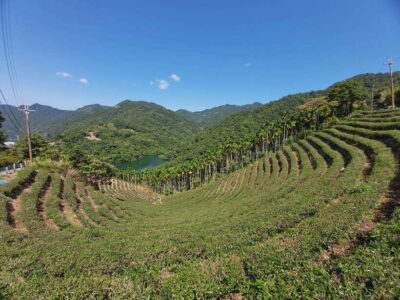
Thousand Island Lake and Pinglin Tea Plantation
Read our review →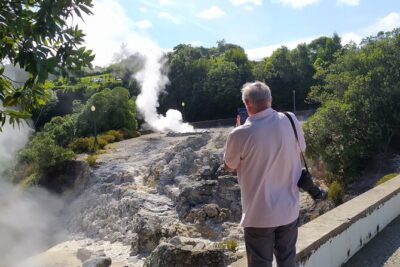
Furnas Volcano & Tea Plantation With Traditional Lunch, East Tour
Read our review →
Thousand Island Lake and Pinglin Tea Plantation from Taipei
Read our review →
Furnas: Volcano Wonders, Tea Plantation & Waterfall Tour
Read our review →
Chiang Rai: 7 Major Sites, Golden Triangle & Tea Plantation
Read our review →
Mauritius: Tea and Sugar Plantation Guided Tour with Lunch
Read our review →
Browse the lists this tour appears in