
Review · BEIJING
Beijing Hands-On Culture Tour: Tea, Instrument, Calligraphy
The most unusual part of this Beijing experience is that you do not just watch Chinese traditions from the edge of the room. You brew tea, pluck the strings of a Guqin, write with brush and ink, and put on Hanfu for photos. It is a compact introduction to several art forms in one sitting.
I especially like the small group of no more than 10 people, which gives you a better chance to receive real help rather than a quick demonstration. I also like the mix of calm activities and hands-on practice: tea and calligraphy slow the pace, while learning a full Guqin melody gives the session a clear challenge.
The main consideration is travel time. The cultural session is advertised as about 2.5 hours, with three hours allowed for the full activity, and transportation to the private art center is not included. Plan your route carefully and arrive 10 minutes early, especially if you need help finding the venue.
Key points at a glance
- Play a complete Guqin melody: A Guqin master guides you through the finger positions and rhythm instead of keeping the instrument behind a glass case.
- Taste three kinds of Chinese tea: Brew red, green, and floral teas during a six-step tea ritual.
- Create your own calligraphy: Use real brush and ink to write your name or a word such as peace or blessing.
- Try Hanfu and take photos: Traditional clothing rental and a photo session are included, so bring your camera.
- Learn in a cool private art center: The air-conditioned setting offers a quiet break from Beijing’s busy streets.
- Get personal help in English: The guide explains history, symbols, and etiquette as well as translating instructions.
A hands-on introduction to Chinese culture
Many Beijing visitors see culture through major sights: palace halls, temple roofs, old courtyards, and museum displays. Those places matter, but they do not always explain how a tradition feels in your hands. This session takes a different route. You learn by making, tasting, wearing, and listening.
The activity brings together six parts of a cultural lesson: tea, music, calligraphy, ritual, clothing, and photography. That range is the chief reason to book it. You do not spend three hours on one narrow craft, yet each activity lasts long enough to give you a basic feel for it.
The setting is a certified private art center rather than a large public attraction. That matters if you want a quieter experience with less waiting and fewer distractions. The group limit of 10 should also make it easier to ask questions and get help with unfamiliar movements.
The tone is welcoming to different ages. A family with children aged 9 and 14 enjoyed the full session, and another family brought children and adults ranging from 11 to 40. The mix of activities helps here. Younger participants can focus on playing the instrument and dressing up, while adults may prefer the tea ritual, calligraphy, or cultural explanations.
More Tea and Calligraphy Classes in Beijing:
- Beijing Culture: Tea Ceremony, Heritage Instrument & Calligraphy
★ 5.0 · 57 reviews - Beijing Culture Event: Tradition Music, Tea Ceremony, Calligraphy
★ 5.0 · 11 reviews - Beijing:Learn Calligraphy & Enjoy Kung Fu Tea Ceremony
★ 5.0 · 2 reviews
Tea ritual with three different flavors
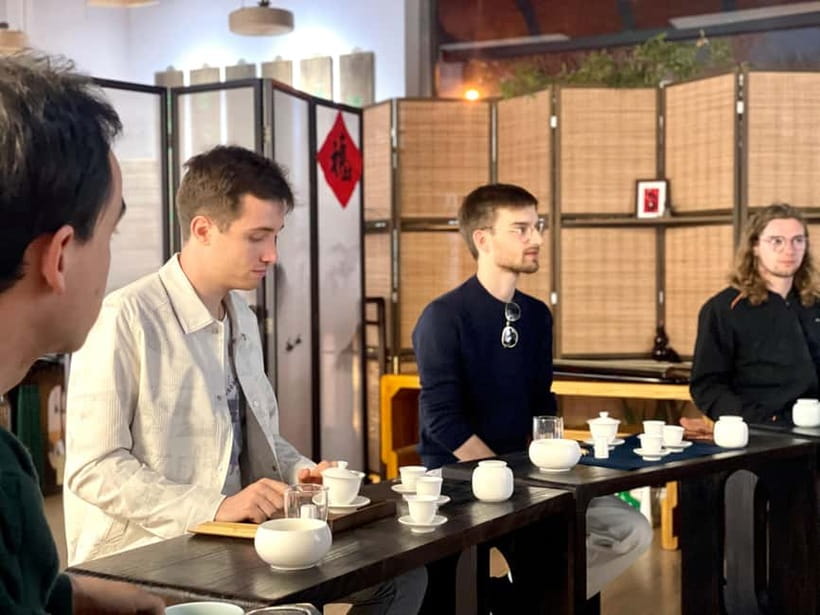
The tea lesson begins with a six-step ritual led by a tea specialist. You brew three types of tea: red, green, and floral. The value is not just in getting a cup to drink. You are asked to notice how aroma, taste, and preparation change from one tea to the next.
Tea ceremonies can seem mysterious when you only watch them. The small movements, the order of pouring, and the care given to the leaves have meaning, but a fast demonstration can leave you unsure what to notice. Here, the practical format gives you a reason behind each step.
I would pay attention to the contrast between the teas rather than trying to decide which one is best. Red tea, green tea, and floral tea offer different scents and drinking styles, and the guide connects those differences to Chinese traditions. Water and tea are included, though meals and other drinks are not, so do not arrive expecting lunch.
This is also one of the calmer parts of the session. If Beijing sightseeing has left you tired, sitting down with a warm cup and following a set ritual gives you a useful pause. It is participatory without being strenuous.
Learning the Guqin, one finger at a time
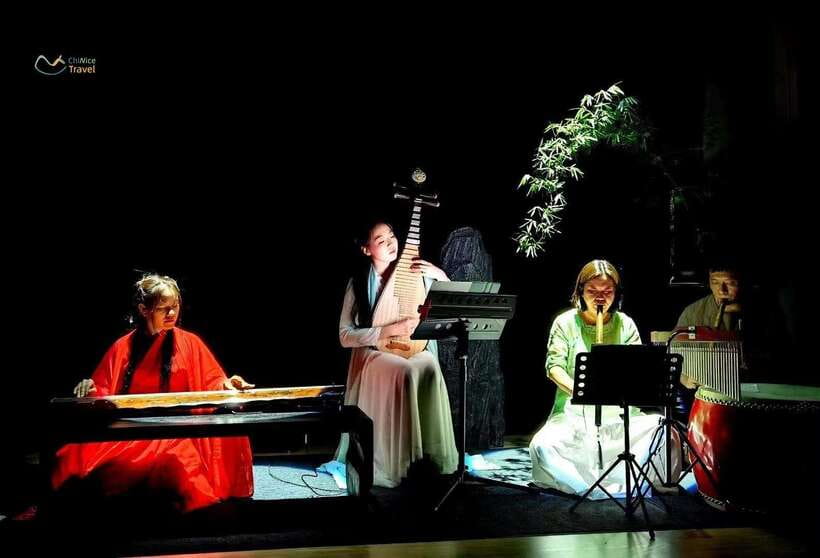
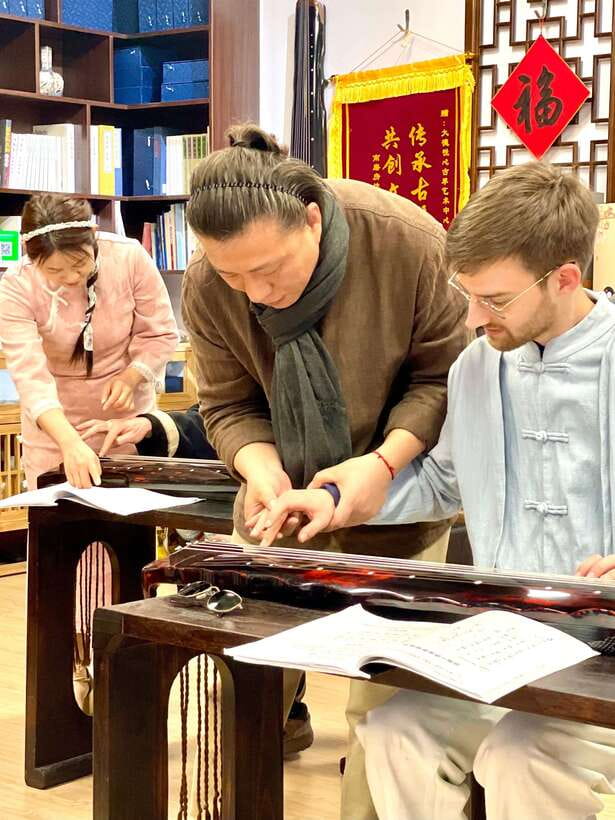
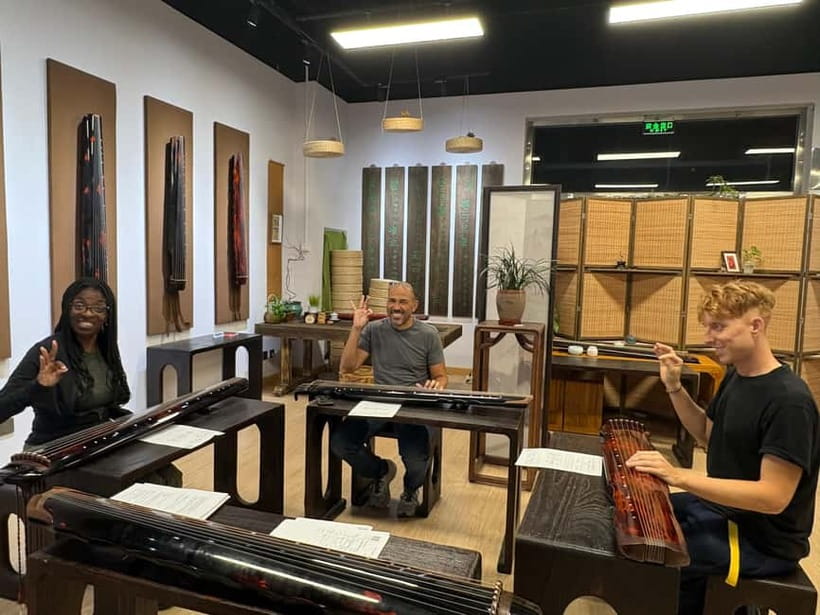
The Guqin is the musical centerpiece. It is an ancient Chinese seven-string instrument associated with scholars and traditional culture. You receive instruction from a Guqin performer, then try to play a full ancient melody yourself.
That promise is more substantial than a photo opportunity beside an instrument. The teacher guides you step by step until you can find the rhythm and produce the notes. You should not expect concert-level playing after one lesson, but you will have the satisfaction of making a real piece of music rather than simply watching a professional perform.
The sound is quiet, low, and mellow. It does not have the bright, immediate effect of some other traditional instruments. That restrained sound suits the pace of the session and helps explain why the Guqin has long been linked with reflection and calm.
This part may require patience. Beginners have to coordinate finger placement, timing, and listening at the same time. The small group helps, since the instructor can correct your hand position and keep you moving. If you are shy about performing, remember that everyone is learning, and the activity is designed for first-timers.
The guide also provides cultural context instead of treating the Guqin as a novelty. You learn why the instrument matters, not just how it looks. That makes the lesson more useful after you leave Beijing, since you can recognize the instrument and understand its place in Chinese artistic life.
Brush, ink, and your own Chinese characters
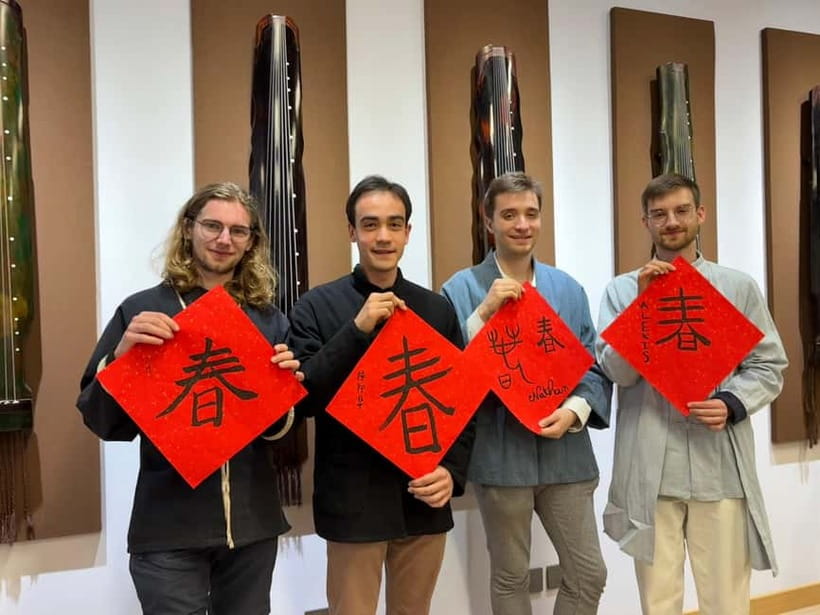
The calligraphy lesson introduces the development of Chinese writing before you pick up a brush. You can write your name or choose a meaningful character such as peace or blessing.
Calligraphy is often presented as a finished art, with perfect black strokes on white paper. This activity lets you see the work behind that result. Holding the brush, controlling the ink, and following the order of the strokes makes the writing feel less like decoration and more like a disciplined form of movement.
Do not worry if your first attempt looks uneven. That is part of the point. The guide helps you understand how the characters are formed, and you leave with something personal rather than a mass-produced souvenir.
This may be the most relaxing section for many people. The steady strokes require concentration, but there is no need to rush. It also suits visitors who want a keepsake with meaning. A character you selected and wrote yourself carries more memory than a name printed on a gift-shop item.
The activity is guided in English, so you can ask what your chosen word means and how it is written. If you already know the Chinese characters for your name, you can use them. If not, the option to write a word such as blessing keeps the task simple.
More Workshops in Beijing:
- Beijing: Dumpling Making Workshop with Meal and Tea
★ 4.7 · 69 reviews - Beijing: Temple Of Heaven+Tai Chi Class+Tea Ceremony
★ 5.0 · 8 reviews - Kyoto: 45-Minute Tea Ceremony Lesson Experience
★ 4.3 · 2,378 reviews - Matcha Making Class in Tokyo with Authentic Japanese Sweets Set
★ 5.0 · 744 reviews
Hanfu dressing and a chance to take photos
Hanfu rental is included, along with a photo session. The clothing adds a visual side to the experience and gives you photographs that look different from the usual Beijing sightseeing record.
You should wear comfortable clothes underneath. The dressing session is not a separate historical costume lecture, based on the information provided, so think of it as a practical way to connect with traditional clothing and create photos during the visit.
Bring your camera. The included photo session means you do not need to rely only on quick phone snapshots from your family or travel companion. It is a useful extra for solo visitors, couples, and families who want a picture of everyone together.
There is also a nice link between the clothing and the other activities. Tea, music, writing, and dress are presented as parts of Chinese culture rather than isolated photo props. The session does not ask you to become an expert in any one subject. Instead, it gives you several small points of contact.
What the English guidance is really worth
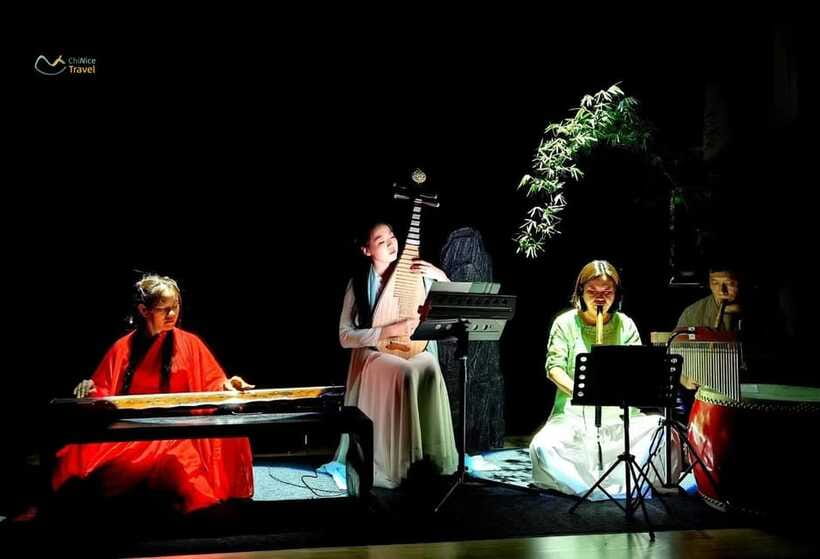
The instructors speak Chinese and English, and the English guidance is important. These activities depend on details that are easy to miss if you only copy someone’s movements. The cultural guide explains ritual, symbolism, and background while the specialists teach the practical steps.
The guide is described as a storyteller as well as a translator. That distinction matters. You are not simply told where to place a cup or brush. You get help linking the action to Chinese history, philosophy, and everyday meaning.
An English-speaking cultural guide also makes the experience easier for families and first-time visitors. One family received help from Sylvia at a metro entrance, which made locating the art center less stressful. Since transportation is not included, ask about meeting or arrival directions before the day of your session rather than leaving the route to chance.
The activity is wheelchair accessible. The venue is air-conditioned, which is a practical advantage in Beijing’s hot summer or cold winter. You get a comfortable indoor setting instead of another long outdoor stop.
Is the $15 price good value?
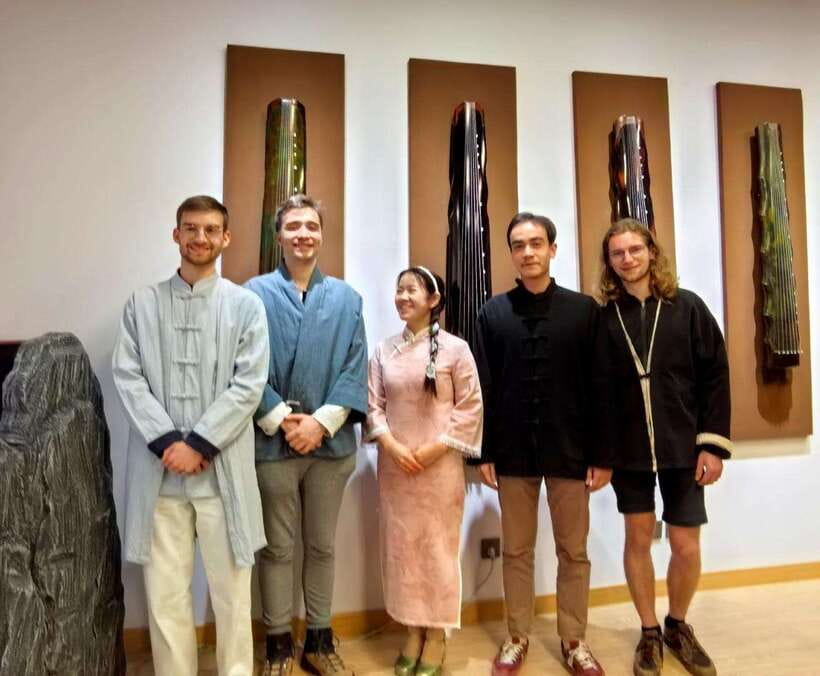
At $15 per person, this is priced well below many private cultural lessons, especially when you count the number of included elements. You get tea and water, instruction, Hanfu rental, photography, a Guqin class, a professional guide, and original souvenirs.
Price alone should not make the decision. The real value depends on what you want from the session. If you are looking for a formal concert, a full tea-school course, or advanced calligraphy tuition, this short format will feel introductory. If you want a low-cost way to try several traditions in one afternoon, the combination is unusually practical.
The included souvenirs add a personal touch, but the strongest value comes from the activities themselves. You leave with a melody attempted, characters written, and tea prepared by your own hands. Those small skills give you something to remember beyond a photograph.
Meals and personal purchases are not included. That is easy to manage because the session lasts only a few hours, but plan food separately if this falls across lunchtime. Transportation is also extra, and the exact starting time depends on availability.
Free cancellation is available up to 24 hours before the activity for a full refund. You can also reserve and pay later, which helps if your Beijing schedule is still changing.
Who will enjoy this most?
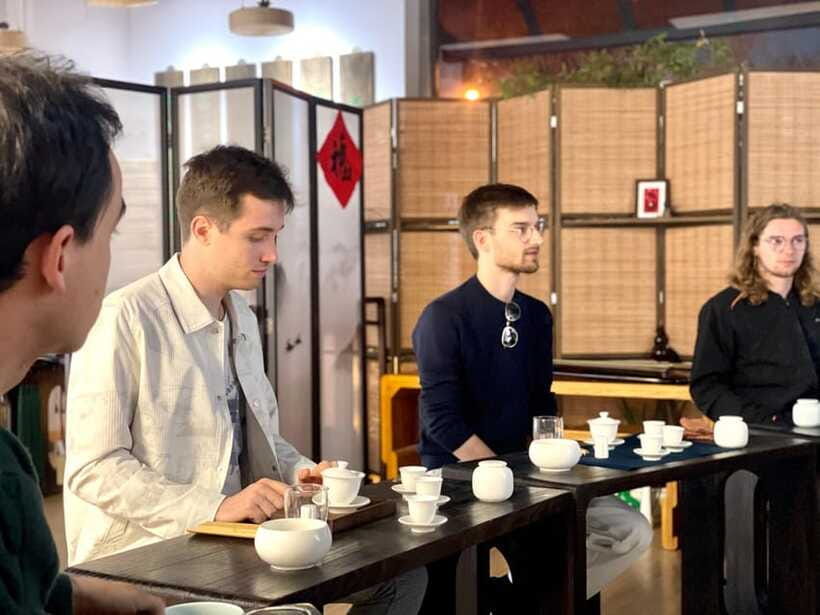
I would recommend this for first-time visitors who want more than sightseeing but do not have time for separate lessons in tea, music, and calligraphy. It is also a strong choice for families because the activities change often enough to keep different ages interested.
Couples and friends can enjoy the shared tasks, while solo visitors should find the small group easier than a large demonstration. You are likely to meet other people, but the group limit keeps the setting personal.
The experience suits people who enjoy learning by doing. If you prefer to sit back and watch a polished performance, the Guqin section may feel demanding and the calligraphy may feel slow. The point is participation, not passive entertainment.
It also works well as a quieter break between major Beijing sights. The air-conditioned art center, limited group size, and seated activities give you a change from crowded streets and long walks. Just leave enough time for the journey to the venue.
Timing and practical planning
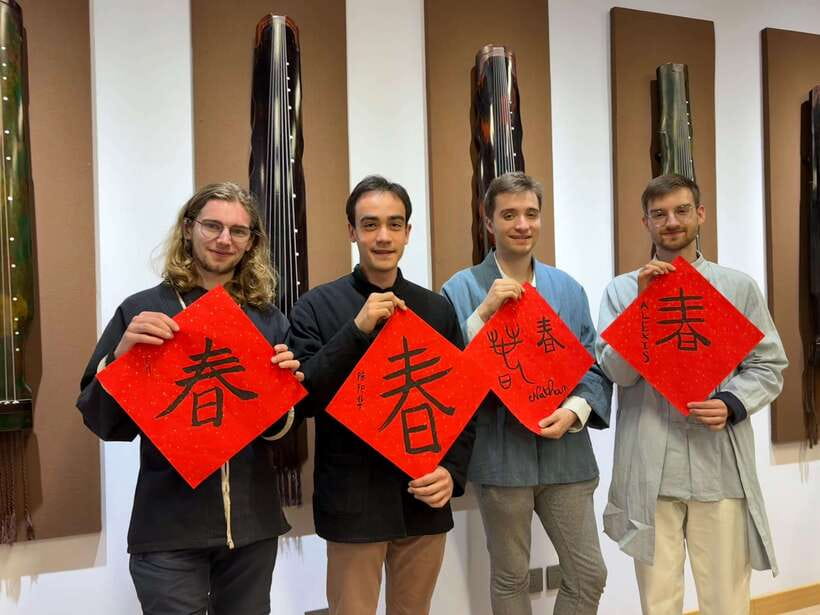
The activity is listed as three hours, while the main cultural program is described as 2.5 hours. Treat it as a three-hour commitment so you have room for arrival, preparation, dressing, photographs, and transitions between activities.
Arrive 10 minutes early. You may need time to change into Hanfu, settle in, and get ready for the first lesson. Comfortable clothing will make the dressing session easier.
The meeting location is not paired with transportation. You need to reach the private art center on your own, and the booking price does not cover travel to or from the venue. Use the directions supplied after booking and contact the organizer if the route is unclear. Sylvia has helped participants from a metro entrance, but you should confirm the current arrangement rather than assume it is automatic.
The session is available in Chinese and English. Wheelchair access is provided. Bring a camera, and mention any allergies in advance if relevant, since the tea portion involves several types of tea.
Should you book the Beijing culture session?
Book it if you want a friendly, low-cost introduction to several Chinese traditions and are willing to take part rather than simply watch. The strongest reasons are the small group, English instruction, included Hanfu photos, and the rare chance to play a Guqin melody yourself.
Think twice if your schedule is so tight that reaching an off-site art center will be stressful, or if you want advanced training in one art form. This is a sampler with real practice, not a specialist course.
For most families, first-time visitors, and curious adults, I think the $15 price makes sense. You get a calm indoor setting, several personal keepsakes, and a better feel for Chinese culture than a quick performance alone can provide.
FAQ
How long does the experience last?
The activity is listed as three hours, with the main cultural program described as about 2.5 hours. Arrive 10 minutes early for preparation.
What activities are included?
You learn a Chinese tea ritual, brew three types of tea, take a Guqin class, practice traditional calligraphy, wear Hanfu, and take photographs.
Is the activity available in English?
Yes. Instruction and cultural guidance are available in Chinese and English.
Is transportation included?
No. You must arrange transportation to and from the private art center yourself.
Is the experience suitable for children?
The activity is open to all ages, and children aged 9 and 14 have taken part with their family. The small group format and hands-on activities make it suitable for families.
Can I cancel for a full refund?
Yes. You can cancel up to 24 hours in advance for a full refund. You can also reserve now and pay later.
Just added around Beijing
- Beijing: Mutianyu Great Wall and Tea House Private Tour★ 5.0 · 11 reviews
- Traditional Chinese Tea Ceremony Experience★ 5.0 · 7 reviews
- Private Beijing Spiritual Tour with Lunch and Tea Ceremony★ 5.0 · 2 reviews
- Private Tour: Tiananmen Area Night Walk with Lao She Teahouse Show★ 5.0 · 3 reviews
- Beijing Culture Event: Tradition Music, Tea Ceremony, Calligraphy★ 5.0 · 11 reviews
- Temple of Heaven Private Tour and Tea Tasting at Maliandao Tea Street★ 5.0 · 2 reviews
- Private Tour to the Temple of Heaven and Tea tasting at the Maliandao Tea city★ 5.0 · 3 reviews
- 3-hour Morning/Afternoon Tea Tasting on Maliandao Street & Dimsum★ 5.0 · 7 reviews
Tea & Calligraphy Classes, compared.
Tea Ceremony, Calligraphy, and Kimono Experience
Read our review →
An Amazing set of Cultural experience: Kimono, Tea Ceremony and Calligraphy
Read our review →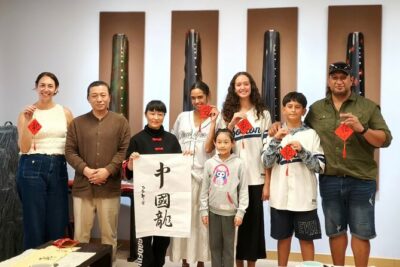
Beijing Culture: Tea Ceremony, Heritage Instrument & Calligraphy
Read our review →
Cultural Activities :Kimono, tea ceremony, Calligraphy and Amulet
Read our review →
Samurai dress-up and shows, plus Tea Ceremony & Calligraphy
Read our review →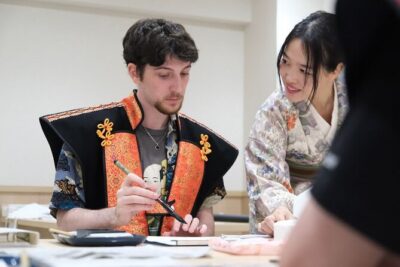
Premium Kimono Dressing, Tea Ceremony, Calligraphy, Samurai show
Read our review →Browse the lists this tour appears in