
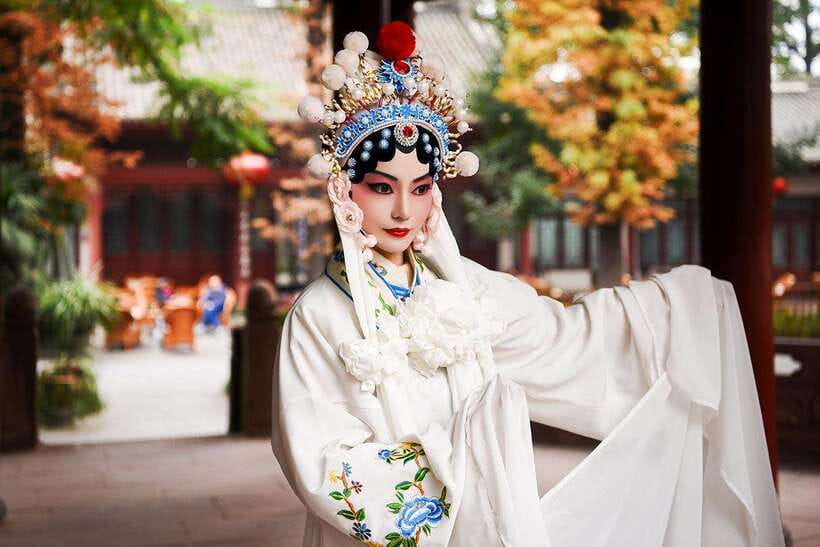
Review · CHENGDU
Chengdu: Sichuan Opera Show ShufengYayun & Covered Bowl Tea
Sichuan opera saves its biggest surprises for the stage: a performer can change a painted face in a blink, follow it with fire breathing, then send the evening back into song and instrumental music. At Shufeng Yayun, you watch this 80-minute program in an old theater near Qingyang Palace, rather than in a modern concert hall.
I like the covered bowl tea, which gives you a small taste of everyday Sichuan culture while you watch. I also like the mixed program, with puppets, shadow play, huqin music, rolling lights, and opera scenes instead of one long dramatic story. The main thing to weigh is that seats are assigned randomly within your ticket section, and the costume option is only a try-on unless you pay extra for makeup and photography.
Key points to know before booking
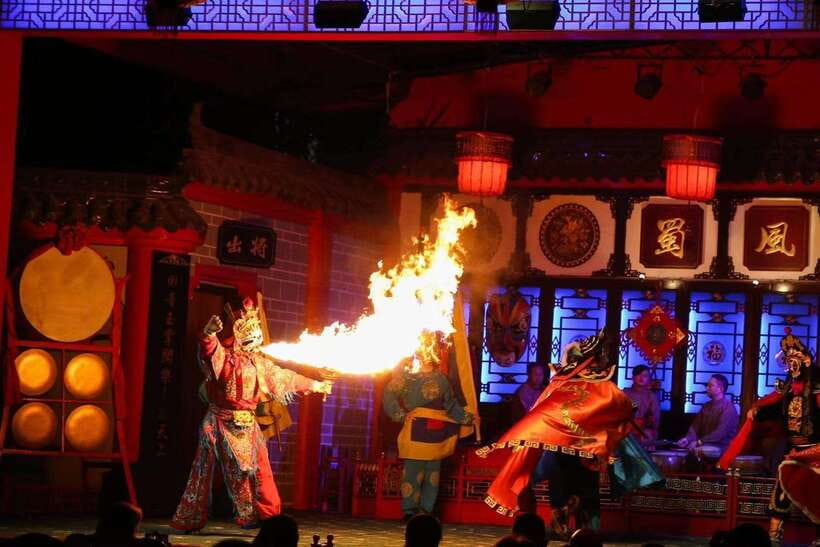
- Face-changing and fire breathing: The final part of the program brings two famous Sichuan stage skills together.
- Covered bowl tea included: Every ticket includes one cup of gaiwan tea and sunflower seeds for the table.
- An 80-minute cultural sampler: Music, puppetry, shadow play, opera, and stage tricks keep the pace moving.
- Historic setting: The old theater sits by Qingyang Palace on Chengdu’s Qintai Ancient Path.
- Ticket sections matter: Yipin, Erpin, and Sanpin seats include different extras, but placement is random within each color-coded area.
- Arrive early: Collect your ticket at the Municipal Cultural Park entrance and reach the Old Theater 15 minutes before the 8:00 p.m. start.
Why this Chengdu show works for a first Sichuan opera experience
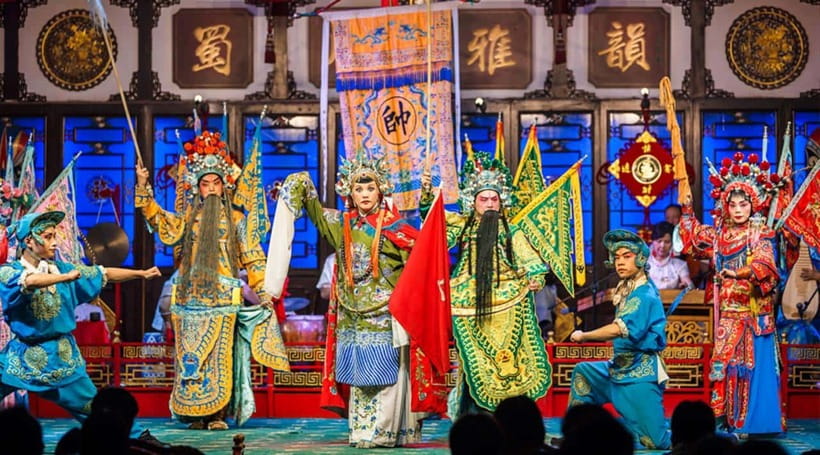
Sichuan opera can be difficult to approach if you expect a simple play with translated dialogue. The appeal here is visual and musical. You can enjoy the painted faces, costumes, movements, instruments, and stage tricks even if you do not understand Chinese.
The show is built as a sequence of short acts. That matters. You are not asked to follow one complicated plot for 80 minutes. Instead, you get a sampler of Western Sichuan folk arts and classical Chinese opera, with each section offering a different sound or visual style.
I see this as a good evening choice after a day around Chengdu. The performance begins at 8:00 p.m. and lasts about 80 minutes, so it fits neatly into a dinner-and-show plan. You should still allow extra time for finding the ticket booth, collecting your seat assignment, and walking to the theater.
The venue, Shufeng Yayun, was established in 1998 and is located among the older buildings of Qingyang Palace. It has long been connected with Sichuan opera and local folk performance. Its position near Qingyang Palace, Du Fu Thatched Cottage, and Wuhou Shrine also makes it a useful cultural stop if you are already exploring western Chengdu.
A few more tea experiences around China worth a look
- Private Tour: Tiananmen Area Night Walk with Lao She Teahouse Show
★ 5.0 · 3 reviews - 3-Hour Private Hutong Walking Tour with Drum Show at Drum Tower and Tea Tasting
★ 5.0 · 3 reviews - Samurai Show, Tea Ceremony, Japanese Traditional Activities
★ 5.0 · 56 reviews
Getting from Qintai Road to the Old Theater
The meeting point is not the theater door itself. You first go to the ticket booth at the entrance of the Municipal Cultural Park, located in the middle of Qintai Road. You use your phone number to obtain the ticket and choose your seat there.
After collection, the Old Theater is about a one-minute walk away. Read the address and transport instructions sent by email before setting out. This is one of those small Chengdu details that can save you from wandering around a historic complex looking for the right doorway.
I would arrive at least 30 minutes before the performance, even though the official requirement is 15 minutes early. That gives you time to find the cultural park entrance, deal with ticket collection, and walk to the Old Theater without turning the start of the show into a race.
On-site staff can help guide you to your seat, and assistance is available in Chinese and English. The activity is listed as wheelchair accessible. If you need help, ask at the ticket booth or theater entrance rather than trying to solve the layout on your own.
Covered bowl tea makes the waiting time part of the experience
Your ticket includes one cup of gaiwan tea, also called covered bowl tea, plus a plate of sunflower seeds per table. The gaiwan has three parts: a bowl, a lid, and a saucer. The lid is used to hold back the leaves and control the tea as you drink.
This is not simply a free drink added to a ticket. It gives you a small lesson in Sichuan social custom. The motion of holding the saucer and using the lid is part of the experience, and it lets you take part in a local tea tradition before the curtain rises.
The tea is served by ticket section, but the supplied information does not specify the exact tea variety. I would treat it as a cultural tasting rather than a formal tea class. If you want more food or drinks, the on-site menu is available for an additional charge.
The sunflower seeds are a useful little touch. They suit the relaxed theater setting and give your hands something to do during the performance. Just remember that additional food and beverages are not included in the $34 price.
What happens during the 80-minute performance
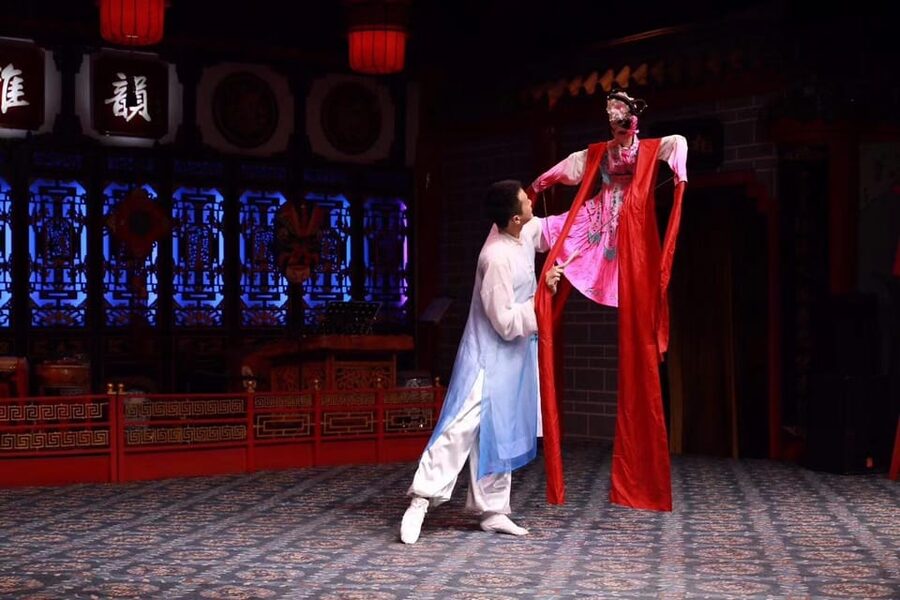
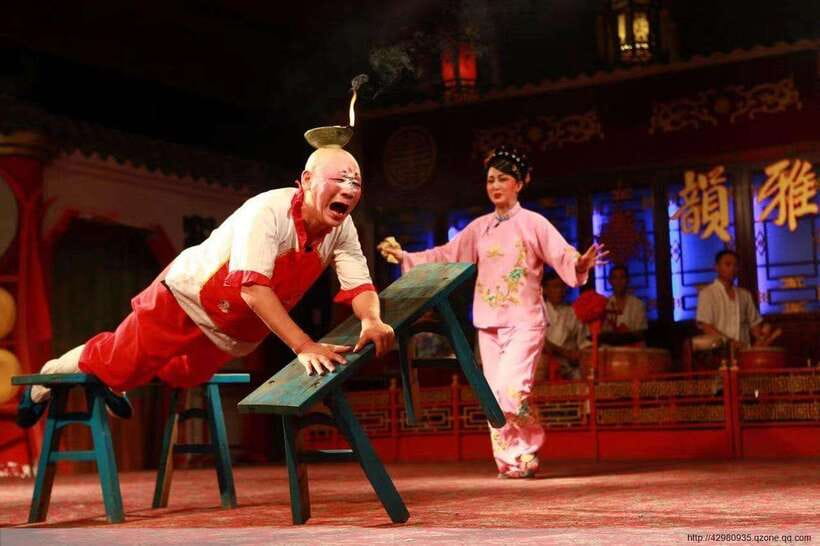
The exact order can change, and the program on the night takes priority. The listed sequence gives you a good sense of the evening.
Same place, a different pot:
- One-Day Hangzhou Dragon Well Tea Culture & West Lake Private Tour
★ 5.0 · 98 reviews - Traditional Chinese Tea Ceremony Experience
★ 4.7 · 74 reviews - Beijing: Dumpling Making Workshop with Meal and Tea
★ 4.7 · 69 reviews - Beijing Culture: Tea Ceremony, Heritage Instrument & Calligraphy
★ 5.0 · 57 reviews
Opening drums and gongs
The show begins with Nao Tai, an opening drum and gong performance. This is a direct way to announce the theater and set the rhythm. Expect a strong start rather than a quiet introduction.
One-act play
A short one-act performance follows. Since the language is Chinese, you may not catch every detail of the story, but the acting, costumes, gestures, and music still give you useful clues.
Huqin music
The huqin is a traditional Chinese string instrument. This section slows the pace and shifts attention from stage movement to sound. It helps show that Sichuan opera is not only about face-changing.
Folk music and Penna
The program also includes a folk music segment listed as Penna. The supplied information does not explain the exact instrument or format, so you should expect a traditional music performance rather than a detailed demonstration.
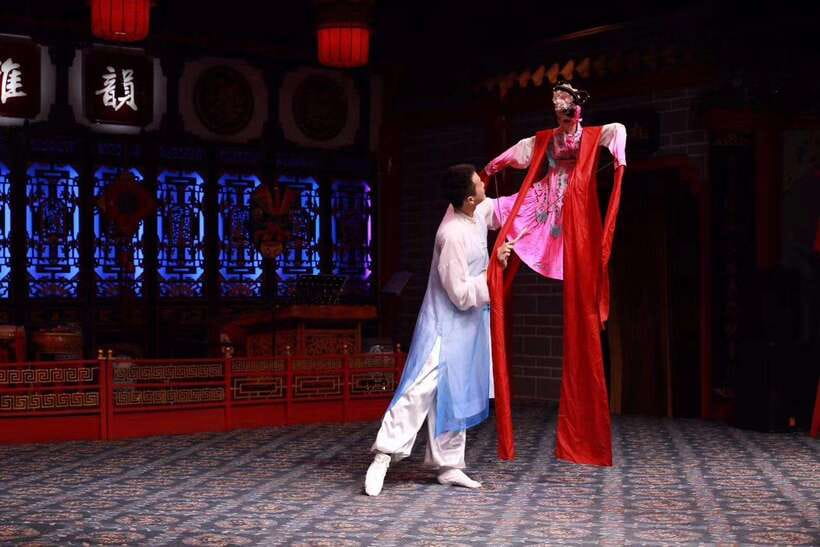
Puppetry
The puppet show changes the scale of the evening. After live actors and musicians, the puppets bring another form of Chinese stage craft into the program. This variety is one of the show’s practical strengths for first-time viewers.
Selected Sichuan opera scenes
These scenes give you the clearest look at the acting tradition itself. Sichuan opera uses strong visual signals, stylized movement, music, and painted faces. You might not follow all the dialogue, but you can still read the mood through movement and costume.
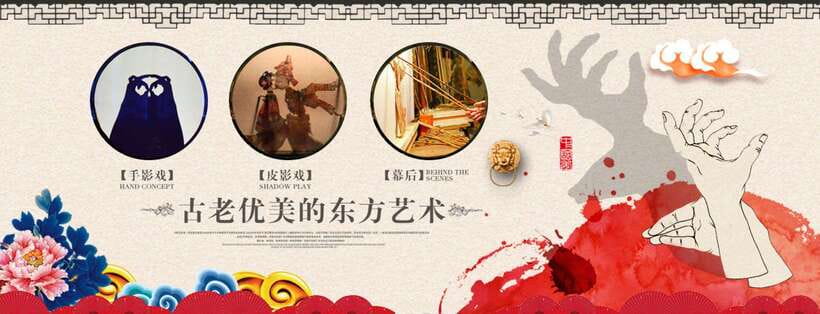
Hand shadow play
The hand shadow section is a compact, old-fashioned form of theater. It is also a reminder that Chinese performance traditions are not limited to large costumes and loud music.
Rolling lights
Rolling lights bring another stage skill into the program. The performance is designed as a sequence of changing acts, so the show keeps offering a new visual idea instead of staying with one format for too long.
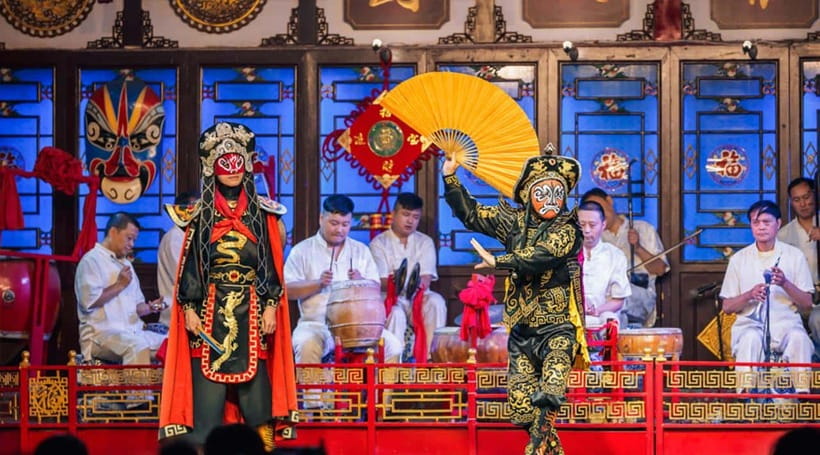
Fire breathing and face-changing
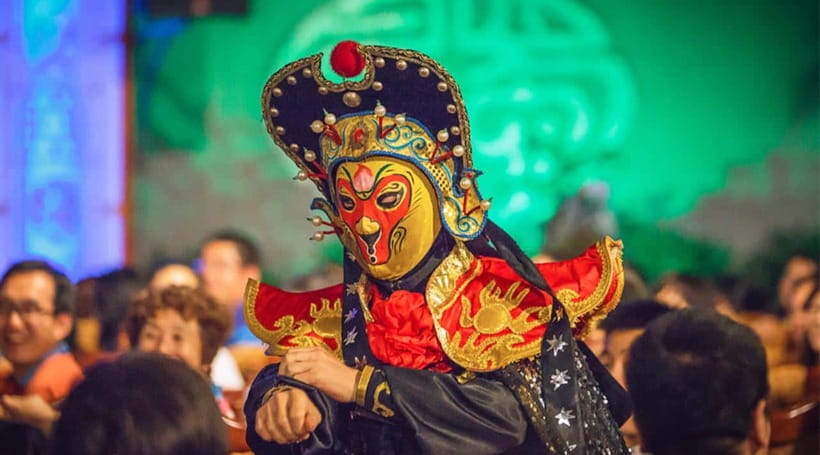
The closing section combines two of Sichuan opera’s best-known attractions. Fire breathing supplies the spectacle, while face-changing depends on speed and precision. The painted face shifts rapidly, often so quickly that you find yourself watching the performer’s hands and head for a clue.
This is the part many people most want to see, but I would not judge the whole evening only by the finale. The music, puppetry, tea service, and shadow play make the program a broader look at local stage culture.
Choosing between Yipin, Erpin, and Sanpin
The seats are divided into three ticket areas shown on the venue’s seating chart. Yipin is marked in red, Erpin in green, and Sanpin in blue. Seats are randomly assigned within the area you book, so you cannot count on selecting a particular chair.
Every section includes one cup of covered bowl tea and a plate of sunflower seeds per table. The difference comes mainly from the extra benefit attached to each class.
Yipin, the red area, includes one of three options: a premium costume experience, a fruit platter, or massage and ear cleaning with a dessert. The costume benefit is for trying on the clothing only. It does not include makeup, hairstyling, a photographer, a special background, or edited photographs.
Erpin, the green area, includes one of four options: massage, ear cleaning, a dessert, or a souvenir. Sanpin, the blue area, offers the same type of choice: massage, ear cleaning, a dessert, or a souvenir.
Because the extras are complimentary additions tied to the ticket, availability and on-site arrangements may determine how your chosen option works. Ask staff when you collect your ticket if you are unsure which benefit applies.
The $34 price is reasonable if you value the full evening package: an 80-minute show, tea, snacks, and one selected extra. If your only goal is the closest possible view of face-changing, pay close attention to the seating chart and class differences before booking. Since exact seats are random within each zone, a higher class does not mean you can request a specific chair.
The costume option is not the same as a photo session
Trying on traditional opera clothing can be fun, especially if you want a hands-on part of the evening. It gives you a quick sense of the weight, color, and appearance of stage dress.
But the included Yipin costume experience is only for trying on the costume. Professional makeup, hairstyling, photography, a customized background, and at least 10 edited photos cost extra.
If you want that full setup, arrive at least one hour before the performance. The additional fee must be confirmed with staff and paid directly at the venue. Do not book the standard costume inclusion expecting a finished portrait session.
The same practical rule applies to the other extras. Massage, ear cleaning, dessert, fruit, and souvenirs are additions to the show, not reasons to overlook the performance schedule. I would choose the benefit that fits your evening rather than treating it as the main attraction.
Who will enjoy this most
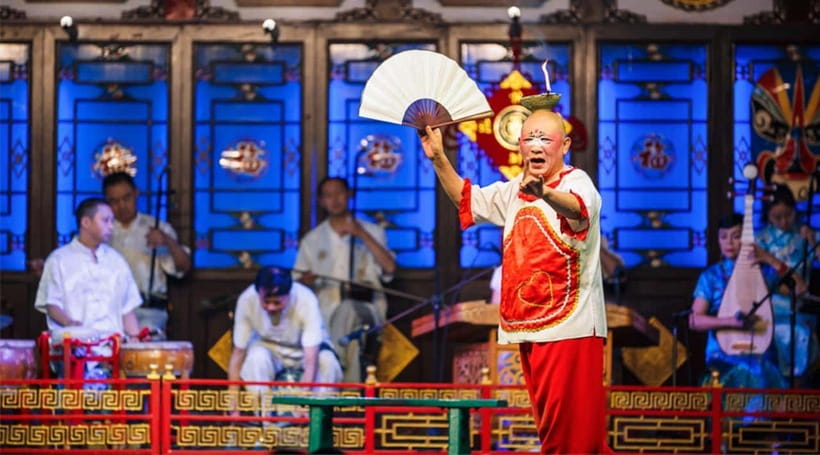
I would recommend this show to you if you want a compact introduction to Chengdu’s performing arts. It works especially well if you are new to Chinese opera, since the program mixes several short forms and does not depend entirely on spoken language.
Families may appreciate the quick changes between puppetry, shadow play, music, and stage effects. The interactive elements and face-changing also give younger viewers something visual to watch, although the supplied information does not specify a minimum age.
It suits people with an interest in traditional arts, too. You get a connection to Sichuan opera, huqin music, folk performance, and tea culture in one sitting.
I would be more cautious if you want a full-length opera with a single story, detailed English explanation, or a formal tea ceremony. The host or greeter languages are Chinese and English, but the show itself is a traditional performance, not an English-language theater production.
The small-group option may appeal if you prefer a less crowded arrangement, though the available information does not state the exact group size. Wheelchair access is listed, which is useful, but you should still ask staff for guidance at the ticket booth if you have specific seating needs.
How the value compares with a simple theater ticket
At $34 per person, you are paying for more than an 80-minute stage program. The package includes the tea, sunflower seeds, and one extra linked to your seating section. That makes it a fair value for someone who wants an evening activity with a cultural setting and small hospitality touches.
The value is strongest in Yipin if you actually want the costume try-on or massage and ear cleaning with dessert. It is also strong in Erpin and Sanpin if you would use the massage, ear cleaning, dessert, or souvenir.
The value is weaker if you will skip the tea, do not care about the extras, and only want a particular seat. Since the seats are randomly assigned within each zone, you are buying access to an area rather than a guaranteed exact view.
The show’s format also helps the price. You are not paying for one narrow specialty. You see drums, acting, huqin, folk music, puppets, selected opera scenes, hand shadows, rolling lights, fire breathing, and face-changing. That range makes the ticket easier to justify for a first visit.
Simple booking and timing advice
Free cancellation is available up to 24 hours before the experience for a full refund. You can also reserve now and pay later, which is useful if your Chengdu schedule is still shifting.
Check the availability calendar for the starting time, though the stated performance begins at 8:00 p.m. Plan around the full arrival process rather than treating the listed 80 minutes as the entire commitment.
Keep the email with the address, transport details, and ticket collection instructions easy to open on your phone. At the Municipal Cultural Park booth, provide the phone number connected to the booking, collect the ticket, then walk to the Old Theater.
If you plan to add professional opera makeup and photography, arrive one hour early. For the standard show, 15 minutes early is the minimum, but I prefer more time because the ticket booth and theater are separate locations.
Should you book Shufeng Yayun?
Book it if you want an easy, visually striking introduction to Sichuan opera with tea and several traditional art forms in one evening. The face-changing and fire breathing are the headline acts, but the puppetry, shadow play, huqin music, and old theater setting give the experience more substance.
Skip it if you want a quiet tea tasting, a full translated drama, or a guaranteed front-row seat. Also check the costume terms carefully: the included try-on is not a professional portrait session.
For most first-time visitors to Chengdu, I think the balance is good. At $34, you get a manageable 80-minute program, a covered bowl tea, a local theater setting, and a choice of useful extras. Arrive early, read the seating chart, and let the rapid face-changing provide the evening’s final surprise.
FAQ
How long does the Sichuan opera experience last?
The performance lasts approximately 80 minutes.
What time does the show start?
The show starts at 8:00 p.m. You should arrive 15 minutes earlier.
Where do I collect my ticket?
Collect your ticket at the booth at the entrance of the Municipal Cultural Park, located in the middle of Qintai Road. You use your phone number there to obtain the ticket and choose your seat.
How far is the theater from the ticket booth?
The Old Theater is about a one-minute walk from the ticket booth.
Is covered bowl tea included?
Yes. Each ticket includes one cup of lid-covered gaiwan tea and a plate of sunflower seeds per table.
Are the seats assigned?
Seats are randomly assigned within the relevant Yipin, Erpin, or Sanpin seating area.
Is the costume experience a full photo session?
No. The costume benefit included with the Yipin ticket is for trying on the costume only. Makeup, hairstyling, photography, a customized background, and edited photos require an additional payment.
Can I cancel the booking?
You can cancel up to 24 hours in advance for a full refund. Reserve-now-and-pay-later booking is also available.
Just added around China
- Xi’an Chinese Calligraphy Workshop: Ink Art & Tea Tasting★ 5.0 · 4 reviews
- Xi’an Noodle Making and Tea Tasting Experience★ 5.0 · 6 reviews
- Half-day Tour: Largest Tea Plantation & Amazing Xianggong Hill★ 5.0 · 9 reviews
- Xi’an Calligraphy & Tea Ceremony – Dive into Ink & Brush Artistry★ 5.0 · 4 reviews
- Full-day Tour: Spectacular Sunrise, Tea Plantation & Sunset★ 5.0 · 3 reviews
- 3 hours Xi’an Mahjong Class with Local Tea★ 5.0 · 2 reviews
- Shanghai Mahjong Experience in Local Tea Bar★ 5.0 · 4 reviews
- Unlock Chinese Tea: Culture, Science, Tasting & Hands-on Brewing★ 5.0 · 12 reviews
Show, compared.
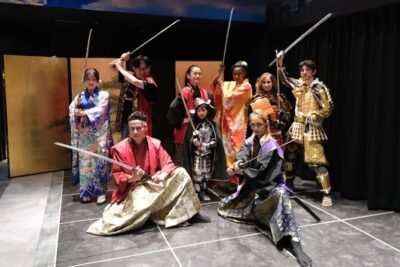
Samurai Show, Tea Ceremony, Japanese Traditional Activities
Read our review →
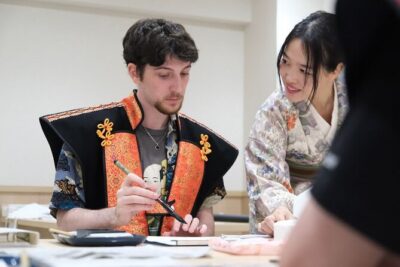
Premium Kimono Dressing, Tea Ceremony, Calligraphy, Samurai show
Read our review →
Agadir/Taghazout: Sandboarding & Sunset Tea with Fire Show
Read our review →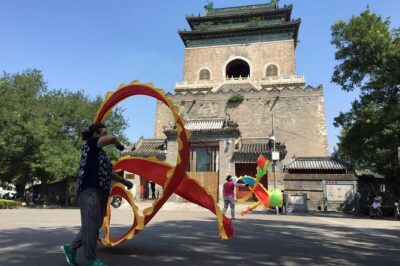
3-Hour Private Hutong Walking Tour with Drum Show at Drum Tower and Tea Tasting
Read our review →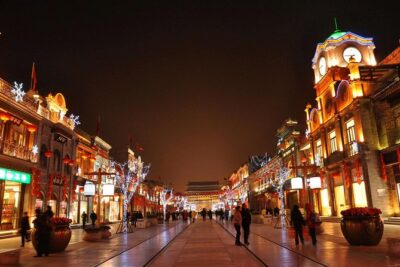
Private Tour: Tiananmen Area Night Walk with Lao She Teahouse Show
Read our review →Browse the lists this tour appears in