
Review · CHINA
Chongqing 1941 theatre: Tea Art Performance with Folk Art
The unusual treat here is not just a stage show. You sit with a gaiwan of Chongqing tea while performers move through Sichuan opera, music, magic, storytelling, and folk customs. I like the 1.2-meter long teapot routine, and I like that the short program gives you several traditional art forms in one sitting. The front row may even bring you into the action.
The main drawback is value. At $31, this is a compact 45-minute performance, and one booking report says the ticket can cost much less at the theatre. The audience may also be small, which can make the room feel quiet, though it lets the performers work directly with the people seated near the stage.
Key points at a glance
- Long-mouth teapot artistry: Watch tea being served with a remarkable 1.2-meter teapot.
- Five-style folk program: The show brings together opera, music, magic, storytelling, and folk customs.
- Tea and a snack included: You receive covered-bowl tea and a small snack, usually nuts and similar bites.
- Front-row interaction: Sitting close can mean direct contact with performers and a possible face-changing moment.
- Only 45 minutes: The compact length fits neatly into an evening in Chongqing.
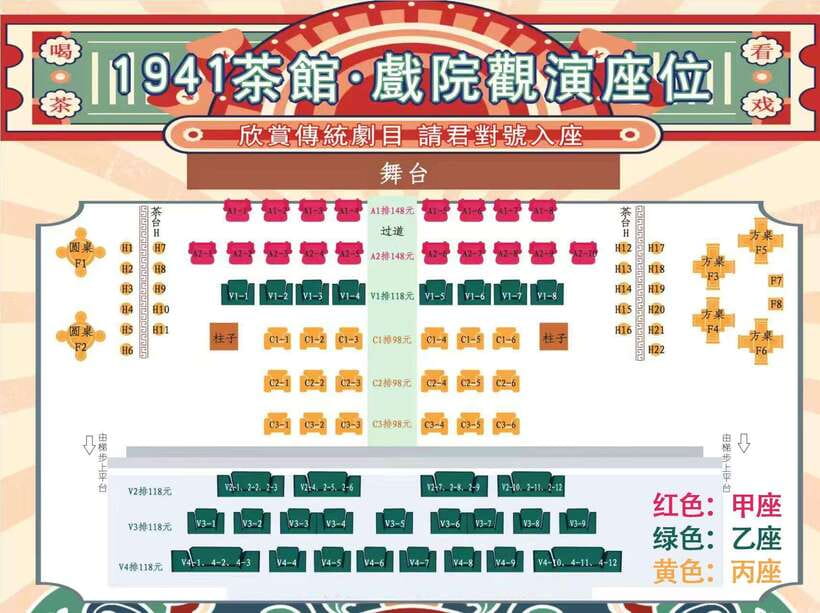
- Arrive early: Get to the Yutian Building garage entrance 30 minutes before the start, then take the time elevator to the eighth floor.
A short Chongqing stage show with plenty packed in
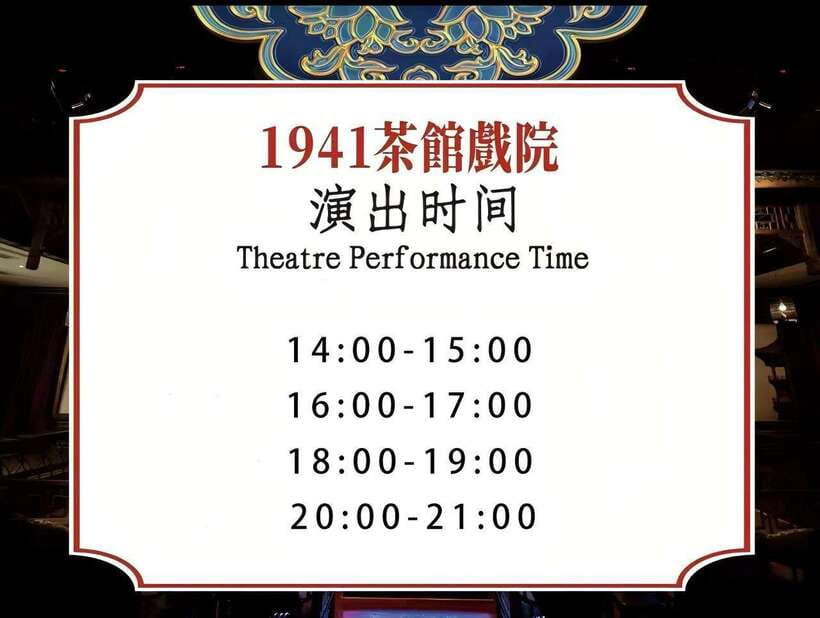
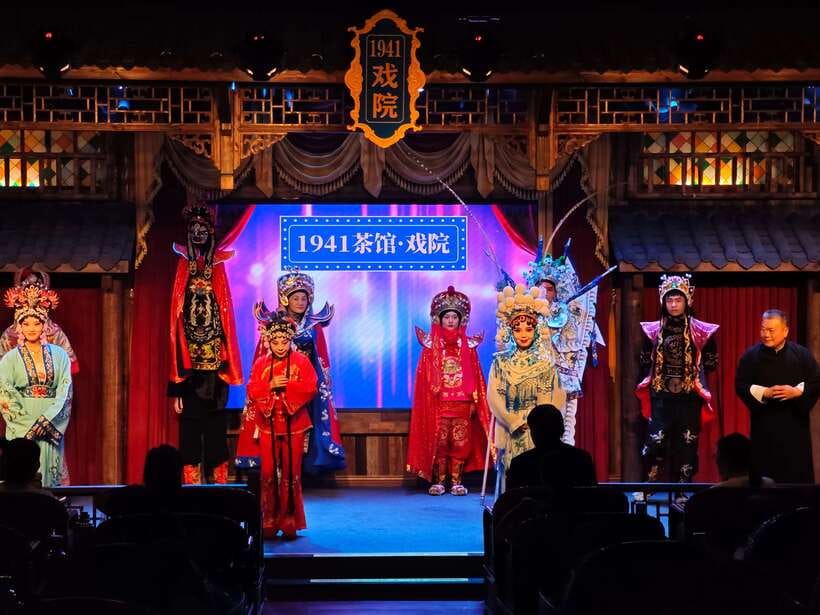
Chongqing 1941 Theatre offers a quick introduction to Chinese folk performance rather than a full theatrical production with one long plot. Over 45 minutes, you move from tea preparation to opera, instrumental music, magic, storytelling, and traditional customs.
That format works well if you want a cultural activity without giving up half a day. You get a sample of several art forms, and the Chinese language does not block every part of the experience. Physical comedy, movement, music, magic, and the visual drama of face changing can be understood without translation.
I would set your expectations correctly. This is a small folk-art program, not a grand opera house production. One booking was described as simple and short for its price, while another gave the show a top rating after being seated in the front and interacting with the performers throughout. Both views can be true. The program is modest in scale, but the close seating can make it feel personal.
A few more tea experiences around China worth a look
- One-Day Hangzhou Dragon Well Tea Culture & West Lake Private Tour
★ 5.0 · 98 reviews - Traditional Chinese Tea Ceremony Experience
★ 4.7 · 74 reviews - Beijing: Dumpling Making Workshop with Meal and Tea
★ 4.7 · 69 reviews
Finding the theatre and getting settled
The meeting point is the garage entrance of Yutian Building, next to the time elevator. From there, you go to the eighth floor. The directions are specific, so keep them handy rather than assuming the theatre will be obvious from the street.
You should arrive 30 minutes before the performance. That extra time matters because the show includes tea service, and tea is not provided if you arrive late. Early arrival also gives you a better chance of settling in without rushing into a dark room.
The activity takes place indoors and is wheelchair accessible. Transportation is not included, so you need to make your own way to the building and back. The host or greeter speaks Chinese, and the listed activity language is Chinese. You should not expect an English-speaking guide or a spoken explanation in English.
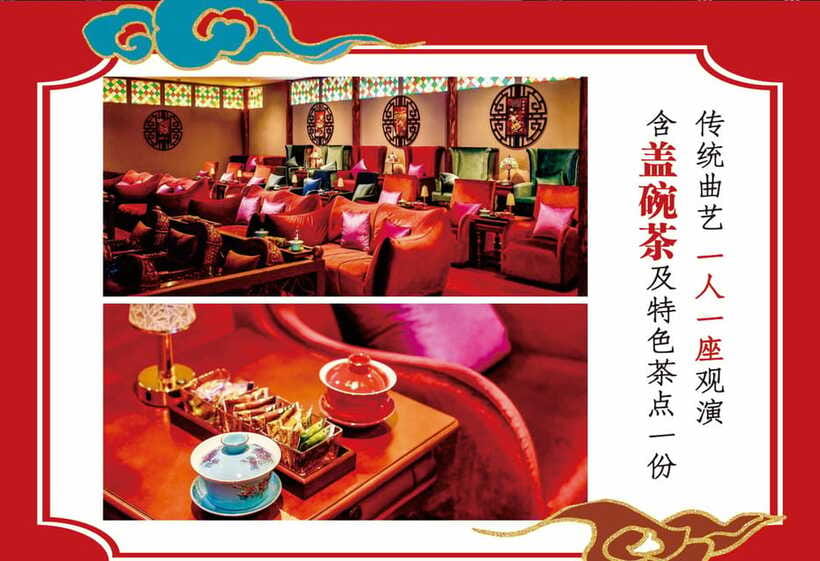
Once seated, you receive a covered bowl of tea and a special snack. The covered bowl, or gaiwan, is a traditional Chinese tea vessel with a lid used to hold back the leaves while drinking. It takes a little practice to use neatly, so watch how the staff handles it if this is new to you.
Tea service before the folk arts begin
The tea is more than a drink handed over as you enter. It helps set the tone for the performance and gives you a direct connection to a familiar part of Chinese daily culture. A booking report describes hot water being brought to the tea bowl, along with snacks that paired well with the drink.
The snack is small. You should think of it as a nibble, not a meal. Nuts and similar items have been served, so eat beforehand if you need something substantial. This is a useful detail for an evening plan, especially if you are booking the show around dinner.
The tea service also rewards punctuality. Since late arrivals do not receive the tea, arriving 30 minutes early is not just a suggestion. It protects one of the included parts of the experience.
Long-mouth teapot tea art
One of the most distinctive acts uses a teapot with a spout about 1.2 meters long. The performer handles it as a piece of stage equipment and pours tea from a distance, turning an ordinary serving task into a display of balance, timing, and control.
This is the kind of performance that works across language barriers. You do not need to follow dialogue to understand the challenge. The length of the pot makes the movement easy to see, even in a short show, and it gives the tea ceremony a playful theatrical edge.
I would pay close attention during this section. It is one of the few elements that feels particularly tied to the tea setting rather than simply being another stage act. The point is not just to drink tea, but to watch tea service treated as a traditional performance skill.
Same place, a different pot:
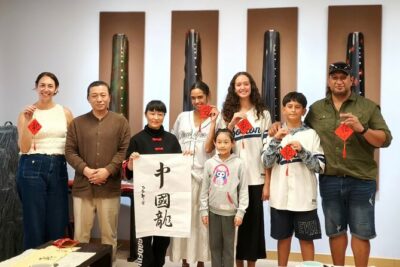
- Beijing Culture: Tea Ceremony, Heritage Instrument & Calligraphy
★ 5.0 · 57 reviews - Tea Tasting and Pairing Concept Workshop
★ 5.0 · 57 reviews - Biking Real Shanghai& Tea Tasting Experience
★ 4.5 · 45 reviews - Tea Village in lost Town and Buddha 1 day tour
★ 5.0 · 32 reviews
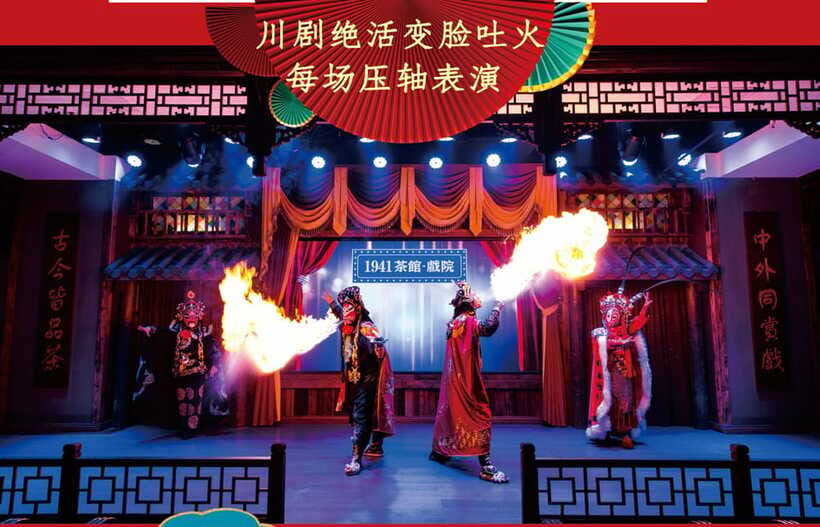
Sichuan opera, kung fu, and the face-changing moment
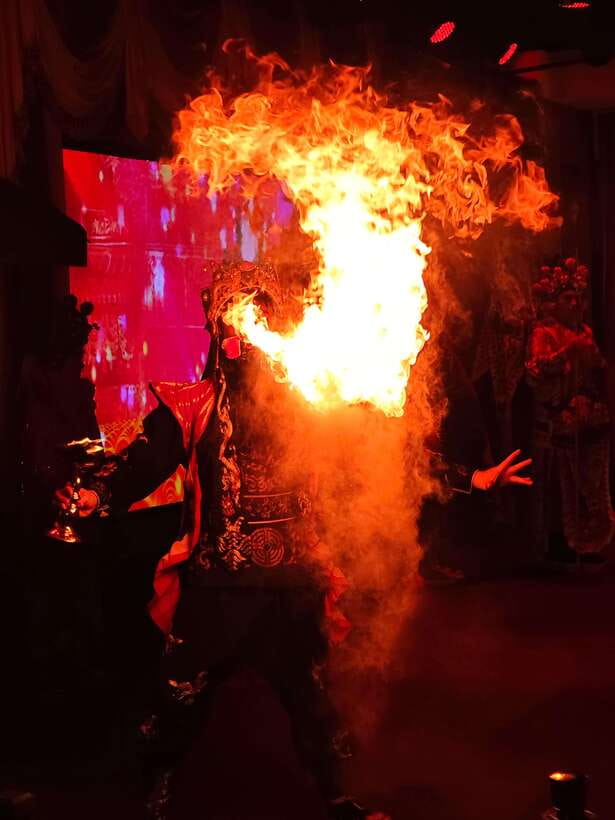
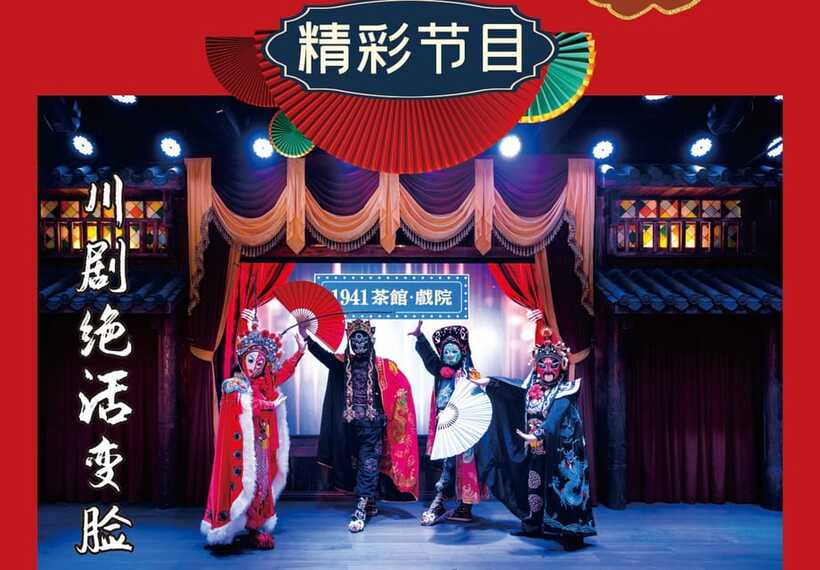
The program includes a Sichuan drama called Human Good, with kung fu. It also features unpredictable facial makeup changes, a famous part of Sichuan opera and one of the most visually striking moments in the program.
The face-changing act depends on speed, costume, gesture, and surprise. The show description says you can watch the changes up close, and a close seat may give you a chance to interact with the performer. One person singled out the possibility of touching the face of a face-changing performer as a personal highlight.
That possibility is not guaranteed, so do not book on the assumption that you will be chosen. Still, seating location appears to matter. A front-row booking led to frequent interaction with the performers, so ask about seating when you arrive if the staff allows it.
The kung fu element adds movement to the opera section. Together, the drama, martial arts, and makeup changes give the show a strong visual center. Even without Chinese, you can follow the broad action through expression and physical performance.
Pipa music and the sound of traditional instruments
The pipa performance brings a different mood. The pipa is a traditional Chinese string instrument, and the program describes its sound as beautiful and sonorous, with interwoven notes.
After the faster visual acts, a musical number can give the program some breathing room. You get to hear an instrument that is central to Chinese music rather than seeing only stage tricks. If you enjoy live music, this may be one of the more rewarding parts of the 45 minutes.
The performance is brief, so do not expect a long concert built around the pipa. It is one part of a compact variety show. That variety is the attraction, but it also means each act receives limited time.
Money-board singing and traditional storytelling
The quyi money-board performance combines singing and storytelling. Quyi refers to Chinese folk forms that use spoken or sung narrative, and the money board supplies rhythm and visual motion.
This act may be harder to follow if you do not understand Chinese. The show can still be enjoyable because the performer’s timing and gestures carry some meaning, but the verbal details will not be fully available to you. The same limitation applies to parts of the opera and folk storytelling.
I see this as a useful reminder about the type of experience you are booking. It is a chance to watch traditional performance forms in their home language, not a translated cultural lecture. If you are happy to enjoy sound, movement, costume, and stage skill without understanding every word, the language gap is manageable.
Magic, folk customs, and a changing pace
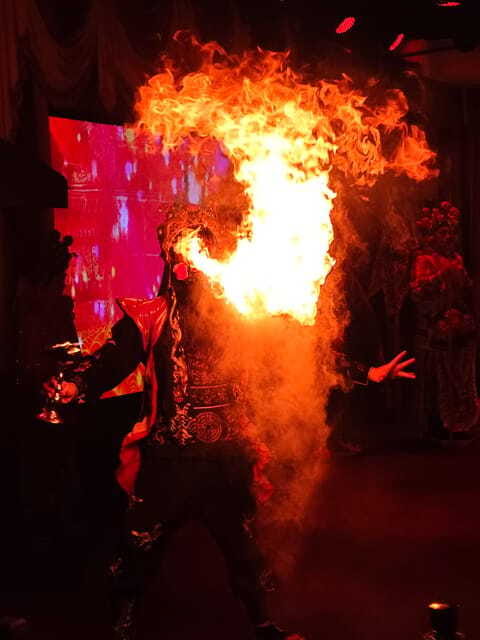
The program also includes magic and folk customs. These sections help keep the show moving and prevent the evening from feeling like one long opera excerpt.
The result is a small potpourri of classic Chinese entertainment. You may see the mood change several times in a few minutes: tea artistry, then instrumental music, then comic or magical action, then opera or storytelling. That quick change suits visitors who want a broad first look at Chinese folk arts.
The tradeoff is depth. You will not learn the background of every form in detail. The Chinese-speaking host or greeter may help with basic arrival arrangements, but the available information does not promise an English explanation during the show.
How much interaction should you expect?
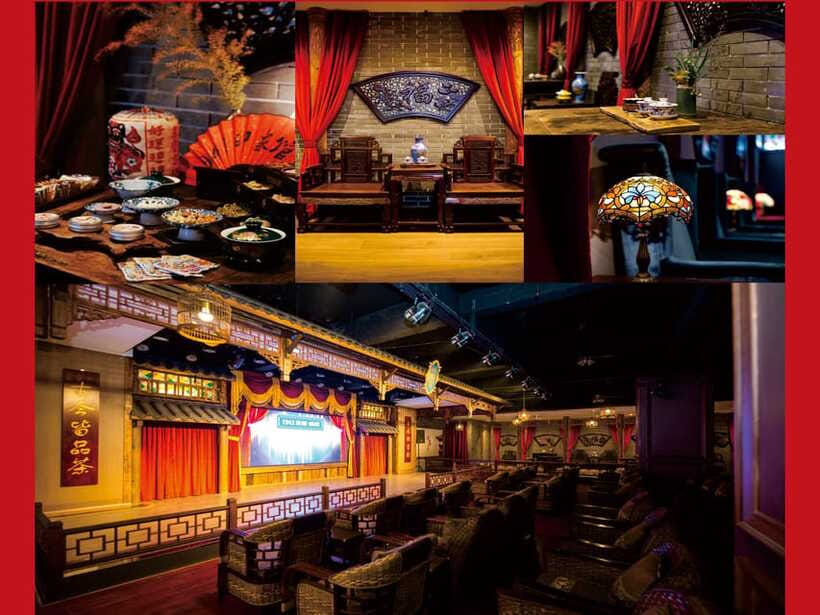
The room can feel more intimate than a major theatre. One high-rated booking described being greeted, seated, served tea, and placed in the very front, with regular interaction during the show. That suggests the performers may respond to the audience rather than simply presenting from a distant stage.
A small audience has two sides. It can reduce the sense of a big night out, and one booking described the audience as somewhat small. At the same time, fewer people may mean better visibility and more direct attention from the performers.
I would choose a front seat if you enjoy participation and surprises. If you prefer to observe quietly, sitting farther back may feel more comfortable. The exact seating arrangement is not specified, so treat this as a practical preference rather than a promise.
Is $31 a fair price?
The listed price is $31 per person. That includes the 45-minute traditional performance, covered-bowl tea, and a special snack. It does not include transportation, personal spending, or a meal.
The value depends on what you want from the evening. If you want a short cultural stop with tea and several types of folk entertainment, the price may feel reasonable. You are not paying for one single act. You are paying for a compact program that combines tea artistry, opera, kung fu, face changing, pipa music, money-board storytelling, magic, and folk customs.
If you judge the purchase by performance length alone, $31 can feel high. One booking specifically advised buying at the theatre because the local price may be much lower, with a claimed saving of about $45. That figure is an individual report, not a guaranteed difference, but it is important enough to check the direct price before booking online.
I would compare the theatre price, the convenience of advance booking, and the value of a flexible cancellation policy. The activity allows cancellation up to 24 hours before the start for a full refund, and reserve-now-pay-later booking is available. Those options can be useful if your Chongqing schedule is still changing.
Who will enjoy this most?
I would recommend this for you if you want a short, indoor cultural activity and prefer seeing several traditional forms rather than committing to a long opera. It also suits families and first-time visitors who want visual entertainment with a clear beginning and end.
It is a good fit if you enjoy live music, costume, magic, martial arts, or audience interaction. The tea and snack make it feel more like a cultural outing than a bare theatre ticket.
You may want to skip it if you need English commentary, expect a large polished production, or want a full meal with your tea. The program is in Chinese, lasts only 45 minutes, and the snack is small. You should also think twice if the local box-office price is far below the online rate.
Practical advice before you go
Arrive 30 minutes early and go to the Yutian Building garage entrance beside the time elevator. You then take the elevator to the eighth floor. Since late arrivals do not receive tea, punctuality has a direct effect on what is included.
Eat something before the show if you are hungry. The snack is described as nuts and similar small items, not a proper meal.
Keep the booking details available on your phone, since the meeting point is specific and the host speaks Chinese. If you want audience interaction, ask about a front seat on arrival. If you prefer a quieter experience, explain that before the performance begins.
The theatre is indoors and wheelchair accessible. Transportation is not included, so allow time to reach the building independently.
Should you book Chongqing 1941 Theatre?
Book it if you want a compact sampler of Chongqing and Chinese folk entertainment, especially if tea, face changing, pipa music, and small-scale audience interaction appeal to you. The best parts are the unusual long-mouth teapot, the range of acts, and the chance to sit close to the performers.
I would be more cautious at the full $31 price if you only want a brief show or if you need English explanation. Check the theatre price first, arrive early, and treat the snack as a light bite. With those points in mind, this can be a convenient and enjoyable 45-minute addition to a Chongqing evening.
FAQ
How long does the Chongqing 1941 Theatre experience last?
The performance lasts 45 minutes.
What is included in the ticket?
The ticket includes one traditional performance ticket, one covered-bowl tea, and one special snack per person.
Will tea be provided if I arrive late?
No. Tea will not be provided if you arrive late, so arrive 30 minutes before the activity begins.
Where is the meeting point?
Meet at the Yutian Building garage entrance next to the time elevator. The theatre is on the eighth floor.
What types of performances are included?
The program includes tea art, Sichuan drama, kung fu, pipa music, quyi money-board singing and storytelling, magic, folk customs, traditional music, and face-changing performance.
Is the activity conducted in English?
The host or greeter speaks Chinese, and the listed activity language is Chinese.
Is transportation included?
No. Transportation to and from the activity is not included.
Is the theatre wheelchair accessible?
Yes. The activity is listed as wheelchair accessible.
Is the performance indoors?
Yes. The activity takes place indoors.
Can I cancel for a refund?
You can cancel up to 24 hours in advance for a full refund. Reserve-now-pay-later booking is also available.
Just added around China
- Xi’an Chinese Calligraphy Workshop: Ink Art & Tea Tasting★ 5.0 · 4 reviews
- Half-day Tour: Largest Tea Plantation & Amazing Xianggong Hill★ 5.0 · 9 reviews
- Xi’an Noodle Making and Tea Tasting Experience★ 5.0 · 6 reviews
- Xi’an Calligraphy & Tea Ceremony – Dive into Ink & Brush Artistry★ 5.0 · 4 reviews
- Full-day Tour: Spectacular Sunrise, Tea Plantation & Sunset★ 5.0 · 3 reviews
- 3 hours Xi’an Mahjong Class with Local Tea★ 5.0 · 2 reviews
- Shanghai Mahjong Experience in Local Tea Bar★ 5.0 · 4 reviews
- Unlock Chinese Tea: Culture, Science, Tasting & Hands-on Brewing★ 5.0 · 12 reviews
China Tea Experiences, compared.
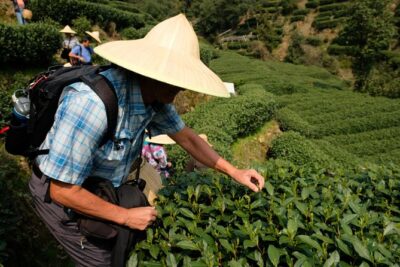
One-Day Hangzhou Dragon Well Tea Culture & West Lake Private Tour
Read our review →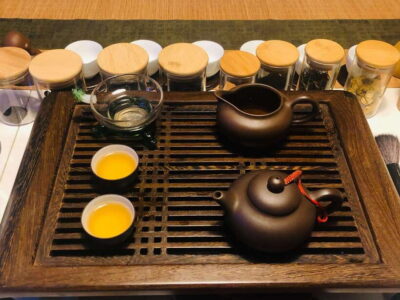
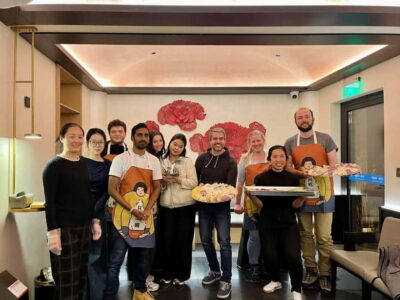
Beijing Culture: Tea Ceremony, Heritage Instrument & Calligraphy
Read our review →

Browse the lists this tour appears in