
Review · KANAZAWA
Kanazawa: Samurai, Matcha, Gardens and Geisha Full-Day Tour
Kanazawa is one of Japan’s best cities for seeing old neighborhoods without giving up the ease of a modern base. This full-day walk links samurai homes, castle grounds, a famous garden, and geisha houses in one well-planned day.
I like the matcha stop at Gyokusen-an, where kimono-clad staff serve tea and wagashi beside the castle walls. I also like the way the guides, including Mike, Akari, Lee, Gareth, Garrett, Daniel, and Mohammed on different departures, add context to places that can otherwise feel like pretty streets and empty rooms.
The catch is simple: this is a serious walking day. You may cover about 12 kilometers, and some people have recorded more than 27,000 steps. Rain, heat, snow, and icy sidewalks can make the day harder, so good shoes and proper clothing matter.
Key points to know before booking
- You walk through several centuries of Kanazawa in one day, from low-ranking samurai homes to an active-looking geisha district and a restored feudal castle.
- The matcha experience is a real highlight, with wagashi sweets, traditional manners, and a refined tea-house setting.
- Kenroku-en gets about 90 minutes, enough time to understand the garden’s design rather than simply snap a few photos.
- Shima geisha house is included, giving you an indoor look at tea-house architecture and entertainment traditions.
- Lunch is not included, but you get a break and can ask your guide for suggestions, including options around Omicho Market.
- Weather preparation is essential, especially in winter when temperatures can drop below freezing and snow or ice may cover the sidewalks.
Why this Kanazawa tour works so well
Kanazawa once belonged to one of Japan’s wealthiest feudal domains. That wealth helped preserve the city’s traditional neighborhoods, gardens, craft culture, and tea-house districts. The result is a place where you can walk from a quiet samurai lane to a grand castle gate, then finish among tall wooden tea houses.
I like this tour because the sights connect naturally. You are not simply checking off unrelated attractions. The samurai district explains the social order of the old domain. Oyama Shrine shows Japan changing in the 19th century. Kanazawa Castle and Kenroku-en reveal the power and taste of the ruling family. Higashi-chaya then shows how culture and entertainment developed outside the castle walls.
The English-speaking guide is the main reason to book rather than walk the same route alone. Guides such as Mike, Akari, Lee, Gareth, Garrett, Daniel, and Mohammed have been praised for explaining Japanese history and culture in clear, lively terms. They also adjust the pace, answer questions, and sometimes help with practical matters such as train tickets or onward travel.
The pace is active but not a race. You get free time at several stops, and guides can allow longer pauses when the group is interested. Still, you should arrive ready to walk all day, not expecting a sightseeing bus or a gentle half-day outing.
More Matcha Experiences in Japan:
- World Heritage Kyoto & Nara Uji Authentic Matcha Experience
★ 5.0 · 1,573 reviews - Kyoto: Arashiyama Bamboo Forest, Monkeys, Matcha & Temple Tour
★ 5.0 · 759 reviews - Matcha Making Class in Tokyo with Authentic Japanese Sweets Set
★ 5.0 · 744 reviews
Starting at Kanazawa Station and finding the guide
The meeting point is outside the Shinkansen ticket gates, in front of the information center. Look for the four large sumo wrestlers near the East Entrance. If you are already inside the station, the figures are easy to spot. Your guide wears a Snow Monkey Resorts tour tag.
The station itself gives you a quick introduction to Kanazawa. The large Tsuzumi-mon gate is a modern interpretation of a traditional drum shape and has become one of the city’s best-known symbols. It is a useful meeting landmark and an attractive first photograph before the walking begins.
From the station, you head on foot through side streets toward Nagamachi. The route takes about 30 minutes. Along the way, you pass local homes and occasional wooden temples, which helps you see that Kanazawa is not only a collection of preserved attractions. It is also a working city with traditional details tucked into ordinary neighborhoods.
Nagamachi, where samurai status becomes visible
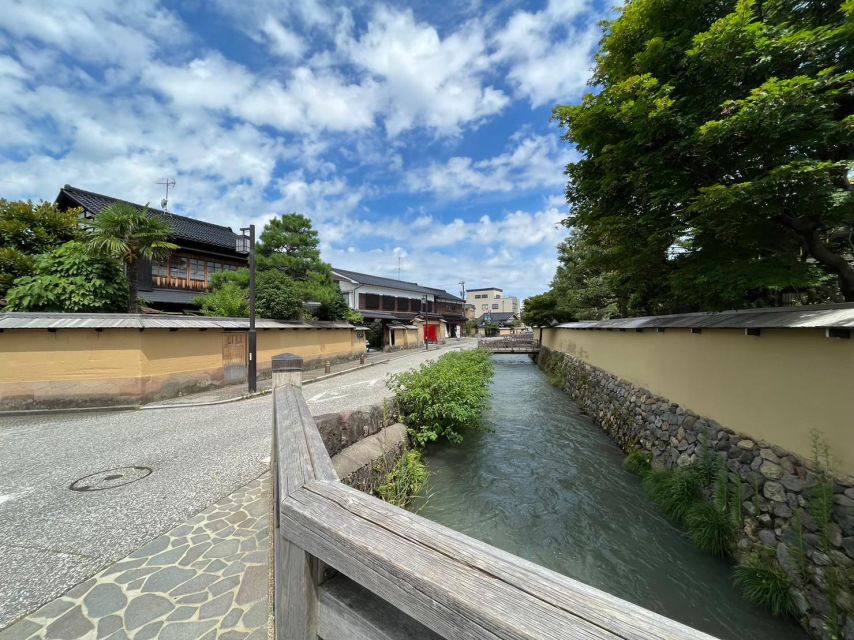
Nagamachi Samurai District is the emotional center of the morning. Its crooked streets, earthen walls, tiled roofs, and narrow lanes recall the age when samurai families lived close to the castle.
The tour also takes you into homes associated with lower-ranking samurai. This matters because popular images of samurai often focus on wealthy warriors and grand estates. These smaller residences show a more modest side of samurai life. You get a better sense of how status affected space, comfort, and daily routine.
Allow about 110 minutes for the Nagamachi portion, including guided touring and time to look around. You can browse local Kanazawa crafts and wares during free time, though shopping is not the central purpose of this stop.
I especially like having a guide here. Without explanation, a wall, courtyard, or small wooden room can be easy to glance at and forget. A good guide connects the house to the broader feudal system and explains what made one samurai family more important than another.
Oyama Shrine and the city’s changing identity
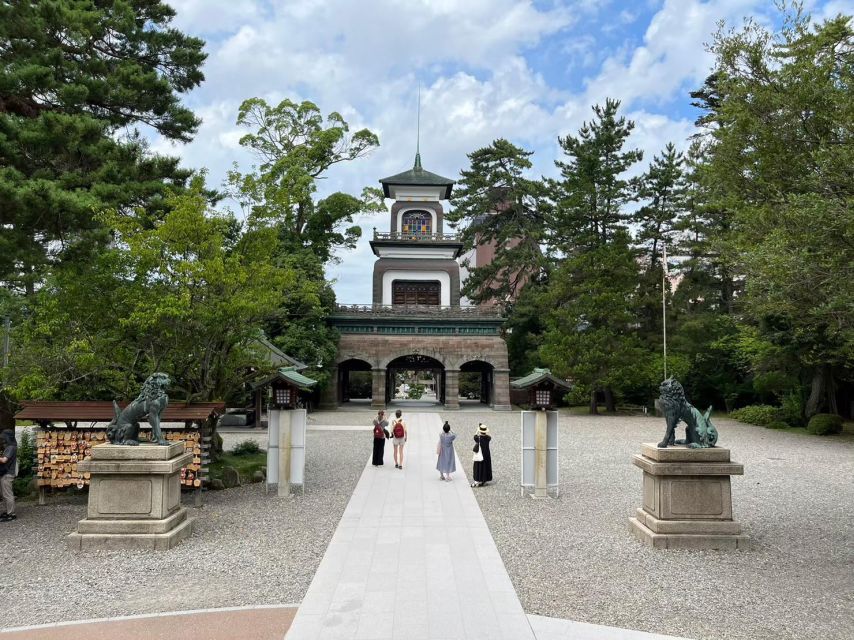
Oyama Shrine takes only about 10 minutes, but it gives the day a useful change of tone. Its unusual gate combines Japanese design with Western-style stained glass, reflecting the period when Japan was adapting to outside influence in the 19th century.
The shrine is more than a quick photo stop. Walk behind it to find a koi pond, a small garden, and a path leading toward a large wooden bridge. You then cross the bridge and pass through an impressive gate into the Kanazawa Castle grounds.
This short stretch is one of the tour’s clever details. Instead of taking you directly from one famous attraction to another, it uses a garden path and bridge to make the transition feel like a journey. You move from shrine grounds into the former domain of the castle lords without needing a long explanation to understand the change in scale.
More Full-Day Trips in Japan:
- Mt. Fuji & Lake Kawaguchiko Ropeway Panorama Full-Day Tour
★ 4.6 · 236 reviews - Tokyo: Full-Day Tour w/Tea Experience,Buffet Lunch & Cruise
★ 4.9 · 151 reviews - Full-Day Tour from Kanazawa: Samurai, Matcha, Gardens and Geisha
★ 5.0 · 68 reviews - Nara Deer Park, Uji Matcha, & Hot Spring Full-Day Tour from Osaka
★ 4.0 · 21 reviews
Matcha at Gyokusen-an beside the castle walls
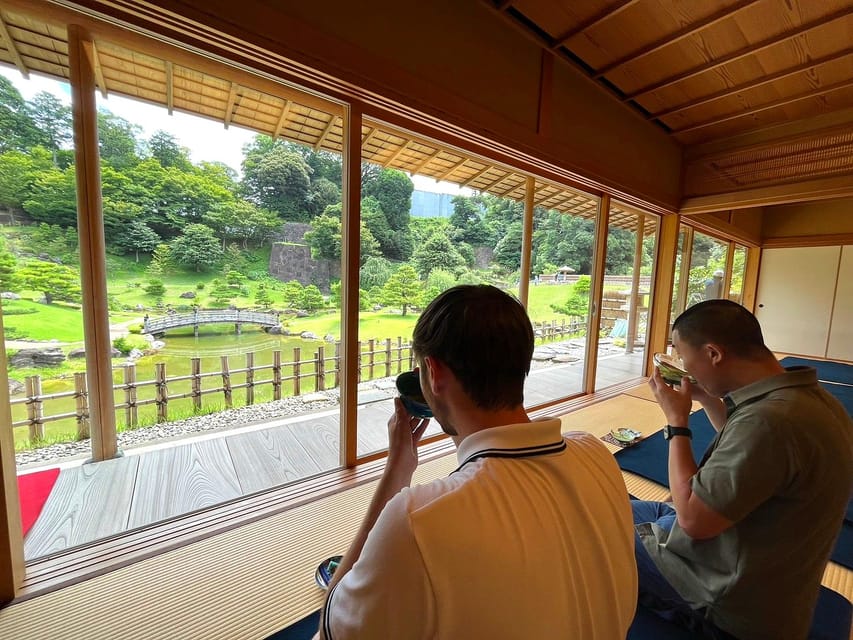
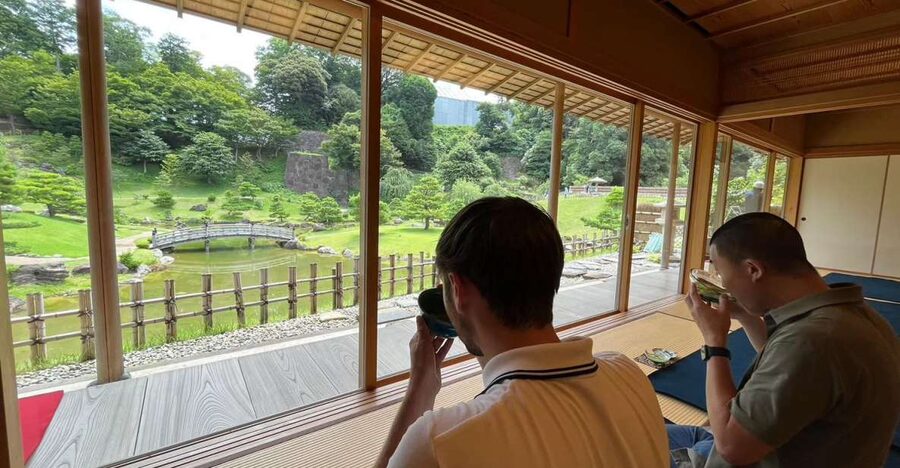
The matcha experience at Gyokusen-an is one of the best pauses in the day. You sit in a refined Japanese tea-house interior with views toward a carefully maintained garden at the base of Kanazawa Castle’s huge stone walls.
Kimono-clad staff serve matcha and artistic wagashi sweets. Your guide explains the proper way to drink the tea, so you are not left guessing about where to place your hands or what to do with the sweet. The sweets balance the bitter tea and add a small piece of seasonal Japanese presentation to the experience.
This is not a full tea ceremony lasting hours. It is a practical introduction that fits into a sightseeing day. I like that balance. You get the atmosphere and etiquette without needing specialist knowledge or a long formal sitting.
Special events are sometimes held at Gyokusen-an. When that happens, the matcha tasting moves to another location. The tea experience remains part of the day, but the exact setting may change.
Afterward, you get a lunch break nearby. Lunch is not included in the $156 price, so plan for that extra cost. Ask the guide for suggestions. Omicho Market is a particularly useful place to consider, and one account of the day singled out lunch there as a highlight.
Kanazawa Castle and the meaning of the grounds
The castle portion focuses on the grounds and gates rather than presenting a fully intact original castle interior. Parts of Kanazawa Castle have been restored, and the site gives you a clear idea of the scale and defensive importance of the old domain.
The route through the castle grounds follows the matcha stop and leads toward Kenroku-en. Your guide can explain how the castle, its walls, gardens, and administrative power fitted together. Look closely at the stonework and large wooden gates. They make the political strength of the Maeda domain easier to picture.
This section is best appreciated as part of the larger story. The castle is not an isolated museum display. It is the center around which samurai residences, gardens, religious sites, and tea districts developed.
Kenroku-en, one of Japan’s great strolling gardens
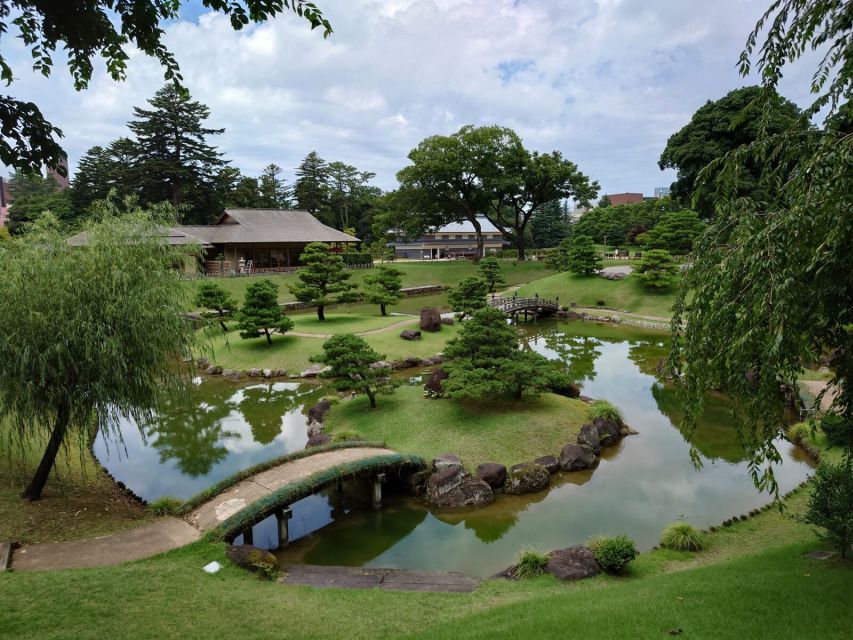
Kenroku-en receives about 90 minutes, which is enough for a proper walk rather than a hurried visit. The garden was developed over more than 200 years at the order of the lords of Kanazawa Castle.
Your guide explains how the garden was planned and maintained. The name Kenroku-en refers to the combination of qualities prized in a great Japanese garden, including space, seclusion, artificial design, antiquity, water features, and fine views. The value of the guided visit is that you begin noticing those choices instead of seeing only trees, ponds, and paths.
The garden changes sharply with the weather. In rain and mist, the castle walls and trees can look quiet and almost theatrical. In winter, snow and ice add beauty but also make walking more difficult. In warmer weather, the same amount of walking can feel tiring, particularly if the day is humid.
Wear shoes with good grip. The tour information specifically warns about snow and slippery sidewalks in winter. An umbrella or rain jacket is also sensible in every season because several hours take place outdoors.
Higashi-chaya and the world of tea houses
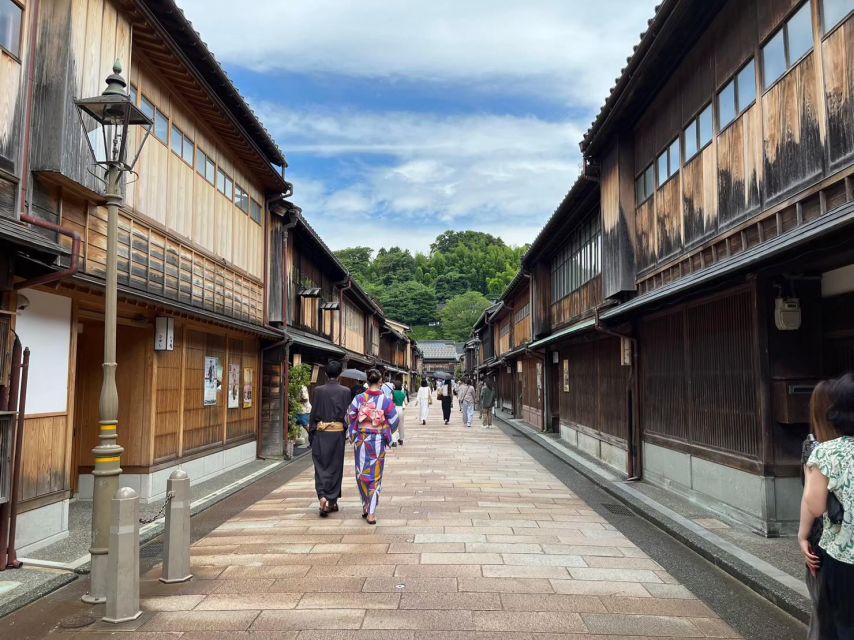
Higashi-chaya is Kanazawa’s most famous tea district and one of the clearest reminders that the city’s culture was not limited to samurai households. The streets are lined with tall, two-story wooden tea houses. Some have red-painted interiors or details, a design feature strongly associated with Kanazawa.
A tea house in this setting was not simply a place to drink tea. It was connected with music, conversation, entertainment, and the geisha tradition. Your guide can explain the customs and social role behind the architecture, giving the district more meaning than a walk down a photogenic street.
You get about 40 minutes for guided touring, free time, shopping, and photographs before continuing to Shima. This is a short window, so do not expect to explore every side street or browse every shop. Use the free time for the places that interest you most.
The tall wooden facades are particularly striking, but remember that this is also a neighborhood. Keep voices low, follow your guide’s advice about photography, and avoid treating the district like a stage set.
Inside Shima, a preserved geisha house
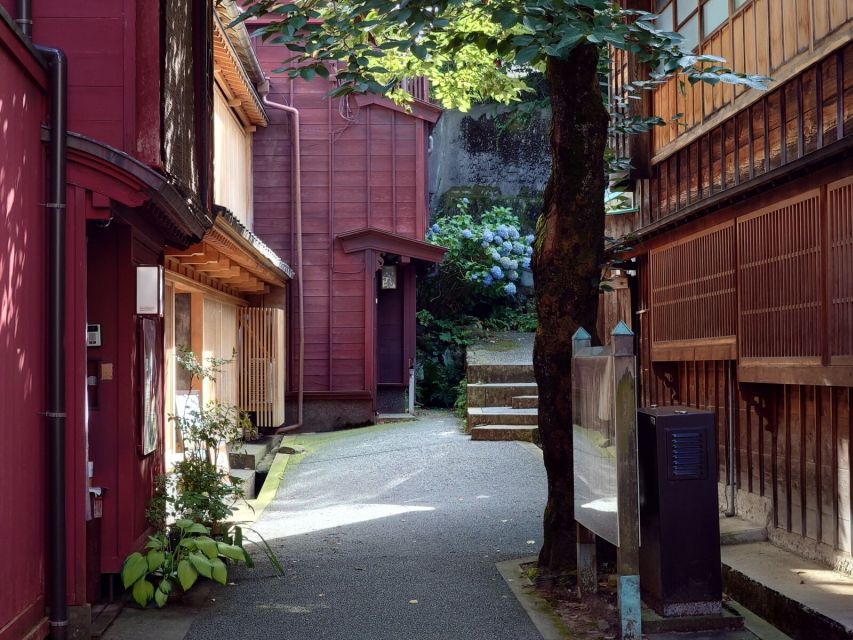
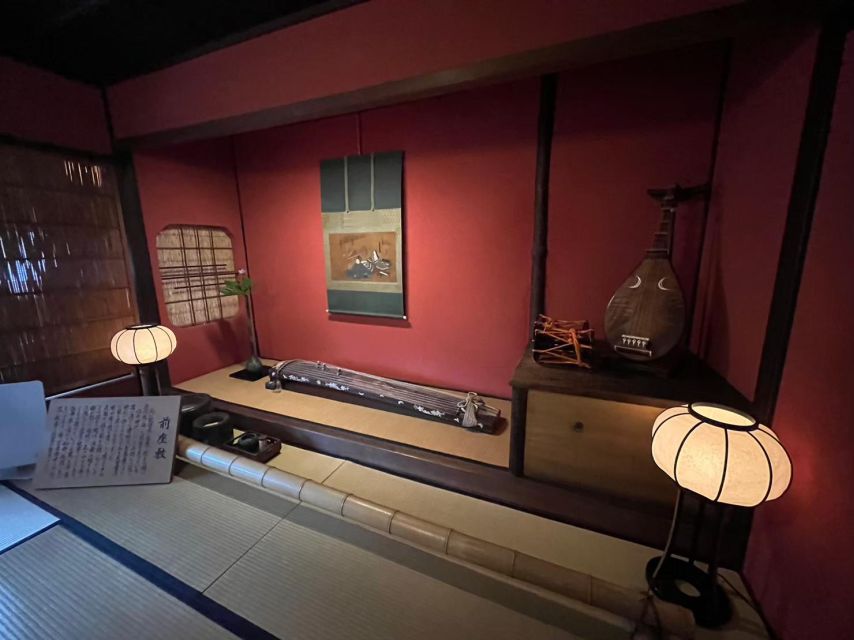
The visit to Shima adds an indoor experience to the outdoor walk. Shima is a preserved geisha house and heritage site with classic architecture. You can see the rooms and layout used for tea-house entertainment and learn how the space supported music, conversation, and performances.
The visit lasts about an hour, making it one of the more substantial stops of the afternoon. It also helps explain why Higashi-chaya is more than a row of attractive wooden buildings. The interiors reveal the careful design and social rules behind the district.
For many people, this is the most distinctive cultural stop after the matcha tasting. You are not only looking at an old building from the street. You are entering a place designed around traditional arts and formal hospitality.
The return through Kazue-machi
The walk back to Kanazawa Station takes about 30 minutes and passes through the maze-like backstreets of Kazue-machi. This final section is a pleasant contrast to the larger attractions. You get one last look at old wooden buildings and narrower lanes before returning to the modern station.
The tour ends where it began, at the meeting point. That makes it useful if you have a train later in the day, though you should allow extra time after the official end if you need to buy tickets or make a tight connection. Guides have sometimes helped with train arrangements, but you should not plan an extremely close connection after a full day of walking.
What the $156 price includes
At $156 per person, this is not the cheapest way to see Kanazawa. The price includes the English-speaking guide, entry to Kenroku-en, entry to Shima, and the matcha experience. Lunch, drinks beyond the included tea, and personal shopping are extra.
The value depends on how much help you want. If you are comfortable researching the city and navigating on your own, you can visit several of these places independently. But you would need to organize the route, confirm opening times, pay separate entry fees, and understand what you are seeing.
I think the price is reasonable for a first visit when you want cultural context rather than a list of addresses. The guide keeps the day moving, explains the samurai and geisha traditions, and brings smaller details into focus. The value is strongest for people with only one day in Kanazawa.
Who should book this full-day walk
This tour suits you if you want to see Kanazawa’s main historic districts in one day and prefer walking to public transport. It also works well for families and mixed-age groups when everyone can manage a long day on foot. One guide adjusted the pace for a family ranging from 11 to 70 years old.
It is a good choice for first-time visitors who want help understanding Japanese history, architecture, gardens, and customs. It is also useful for solo travelers who prefer company and an English-speaking guide.
You may want a different plan if you have limited mobility, dislike outdoor sightseeing in poor weather, or want a relaxed day with long café breaks. This tour covers a lot of ground. Even enthusiastic walkers should bring water, wear comfortable shoes, and keep an eye on the weather forecast.
My verdict: book it if you want context with your sightseeing
I would book this tour if Kanazawa is a one-day stop or if you want a strong introduction before exploring more on your own. The route covers the city’s essential historic districts, but its real strength is the connection between them.
The matcha at Gyokusen-an, the quiet samurai lanes, Kenroku-en, and the interior of Shima give the day variety. Guides such as Mike, Akari, Lee, Gareth, Garrett, Daniel, and Mohammed have also shown the value of having an informed, flexible person beside you.
Choose it with open eyes: you will walk for hours, lunch costs extra, and winter weather can be rough. If that sounds manageable, $156 buys a well-filled day that makes Kanazawa’s old neighborhoods easier to understand and far more rewarding to remember.
FAQ
Where does the Kanazawa tour begin?
Meet outside the Shinkansen ticket gates, in front of the information center at Kanazawa Station. Look for the four large sumo wrestlers near the East Entrance and a guide wearing a Snow Monkey Resorts tour tag.
Where does the tour end?
The tour ends back at the same Kanazawa Station meeting point.
How long does the tour last?
It is a full-day experience. The stated schedule begins at 9:00 AM, but you should check availability for the exact starting time when booking.
How much walking is involved?
Expect several hours of walking outdoors and roughly 12 kilometers overall. Some people have recorded more than 27,000 steps during the day.
Is lunch included?
No. Lunch is not included, but there is a break nearby and you can ask your guide for recommendations. Omicho Market is one possible place to eat.
Is the matcha experience included?
Yes. The tour includes matcha and wagashi sweets, with guidance on the proper way to drink the tea. The tasting is usually at Gyokusen-an, but it can move if a special event is taking place there.
Which entrance fees are included?
Entry to Kenroku-en Garden and Shima, the preserved geisha house, is included.
What language is the tour offered in?
The live guided tour is offered in English.
What should I wear and bring?
Wear comfortable shoes and weather-appropriate clothing. Bring rain gear or an umbrella when needed. In winter, use warm clothing and non-slippery shoes because temperatures can fall below freezing and snow or ice may cover roads and sidewalks.
Just added around Japan
- Yokohama : Tea Ceremony with Sweets and Souvenir★ 5.0 · 5 reviews
- Whisk Your Own Matcha: A Zen Matcha Experience at Temple★ 3.6 · 7 reviews
- Walking Tour: Yanaka,Nezu& Sendagi: Tea Ceremony & Old Tokyo★ 5.0 · 3 reviews
- Visit local home for music and tea ceremony near Disney★ 4.9 · 13 reviews
- Yokohama: Sushi & Gyoza Cooking with Matcha & GreenTea Experience★ 5.0 · 3 reviews
- Trip to Kamakura & Enoshima: Shrines, Seaside, Temples &Tea★ 5.0 · 11 reviews
- Uji: Private immersion into Kyoto’s tea and reglious culture★ 5.0 · 17 reviews
- Kyoto tea town for matcha lovers★ 5.0 · 16 reviews
Matcha Experiences, compared.
World Heritage Kyoto & Nara Uji Authentic Matcha Experience
Read our review →
Matcha Making Class in Tokyo with Authentic Japanese Sweets Set
Read our review →
Tea Museum Tickets and Matcha Grinding Experience
Read our review →
Matcha Making Class in Osaka with Authentic Japanese Sweets Set
Read our review →
Tea Ceremony Meditation – Make Matcha with Tea Master
Read our review →
Matcha Making Experience with Mochi Sweets in Asakusa
Read our review →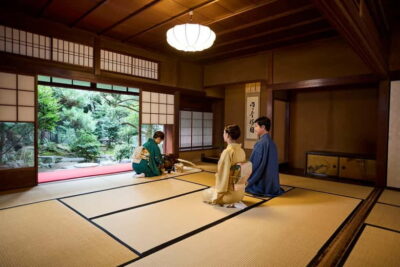
Browse the lists this tour appears in