
Review · KANAZAWA
Full-Day Tour from Kanazawa: Samurai, Matcha, Gardens and Geisha
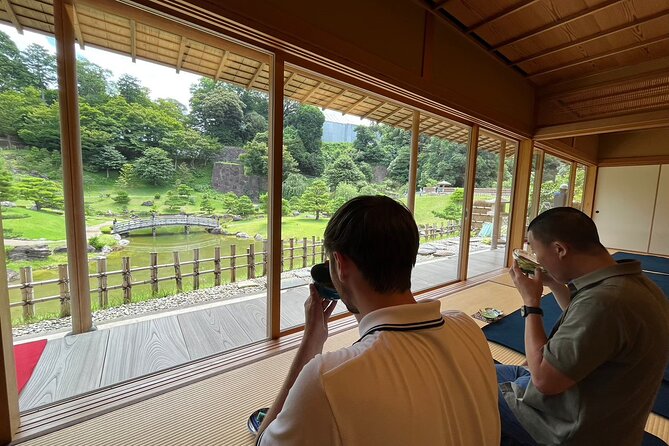
Kanazawa’s best sights are spread across town, and this tour links them into one long, rewarding day. You’ll move from quiet samurai lanes to castle grounds, a formal garden, and old geisha quarters without spending the day figuring out bus routes. The matcha stop at Gyokusen-an is a fine pause, with wagashi sweets and a garden view beside the castle grounds.
I like the small maximum of 15 people, which gives guides such as Mike, Garrett, Lee, Akari, Daniel, and others room to answer questions and adjust the pace. I also like the range of places covered, from low-ranking samurai homes to the ornate Shima Chaya. The catch is simple: this is a serious walking day, roughly 10 to 12 kilometers, and the pace can be hard in heat, rain, or for anyone with limited stamina.
Key details before you book
- Two original ashigaru homes: See how low-ranking samurai families lived, rather than only visiting grand warrior residences.
- Matcha beside a historic garden: Gyokusen-an includes tea, wagashi sweets, and time to sit with a view.
- Kenrokuen and Kanazawa Castle together: The route pairs two of the city’s major sights without making you plan the connection.
- A real geisha district visit: Higashi Chaya includes time to browse, followed by entry to the preserved Shima Chaya.
- Around 10 to 12 kilometers on foot: Comfortable shoes, water, and weather protection matter.
- Lunch is separate: You choose your own restaurant during the one-hour break, with recommendations from the guide.
A full day that gives Kanazawa a clear shape
The route works because it tells Kanazawa’s story in a sensible order. You begin with the samurai class, pass through religious and castle sites, relax over tea and gardens, then finish among the old entertainment districts along the river.
That sequence helps the city make sense. Kanazawa is often compared with Kyoto because of its preserved districts and traditional arts, but it feels more compact and less overloaded. A guide can explain how the city developed and point out details that are easy to miss when you are moving from sight to sight alone.
The tour starts at Kanazawa Station at 9:00 a.m. It ends back at the same meeting point. The advertised duration is about nine hours, including a one-hour lunch break, so you should expect about eight hours of active sightseeing and walking.
More Matcha Experiences in Japan:
- World Heritage Kyoto & Nara Uji Authentic Matcha Experience
★ 5.0 · 1,573 reviews - Kyoto: Arashiyama Bamboo Forest, Monkeys, Matcha & Temple Tour
★ 5.0 · 759 reviews - Matcha Making Class in Tokyo with Authentic Japanese Sweets Set
★ 5.0 · 744 reviews
Ashigaru Museum: seeing samurai life below the top rank
The first stop is the Ashigaru Museum, where you enter two homes once occupied by ashigaru families. Ashigaru were low-ranking samurai, and their houses offer a useful counterpoint to the grand image of the warrior class.
This is one of the more thoughtful parts of the day. You are not only looking at famous warriors or castle walls. You are seeing how status shaped ordinary domestic life within samurai society. The homes help put the later Nagamachi district into context.
You get about an hour here, and admission is included at no extra cost. The value of the stop comes less from a large collection and more from the setting and the guide’s explanation. Ask questions if you are curious about family roles, architecture, or the difference between high-ranking and low-ranking samurai life.
Nagamachi: quiet lanes in the old samurai district
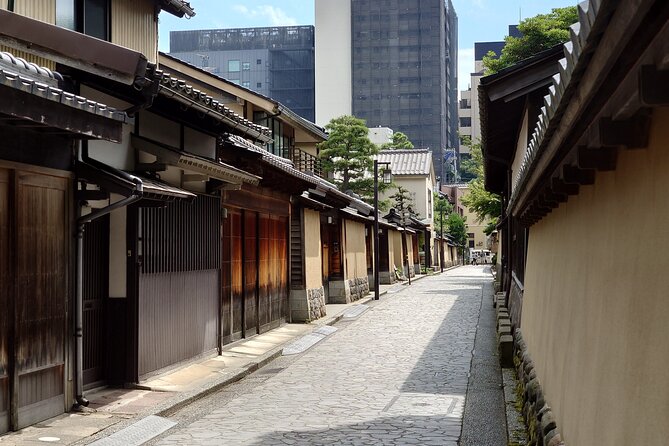
From the museum, the route continues through Nagamachi, the former samurai district. Its streets retain a handsome, traditional appearance, with walls and lanes that make the area feel removed from modern Kanazawa.
This is a place where walking really earns its keep. A bus could drop you near the district, but it would not give you the same feel for how the streets connect or how the neighborhood changes as you move through it. The guide can also explain the district instead of leaving you to admire the walls without context.
Plan on another hour here. There is no admission charge listed for the walk through the area. The main drawback is that the tour has already begun accumulating distance, and you still have most of the day ahead. If you need frequent rests, tell the guide early rather than waiting until the afternoon.
Oyama Shrine: an unusual gate on the way to the castle
Oyama Shrine takes about 40 minutes and offers a striking change from the samurai district. Its entrance gate is made of brick, an unusual choice compared with the more familiar wooden and stone shrine gates found across Japan.
The stop works well as a transition. You leave the quiet residential lanes of Nagamachi and move toward the castle grounds, while the shrine provides a short cultural pause along the way. Admission is free.
This is not the longest stop, and it is not meant to be the main event. I see it as a useful piece of the route, especially because it breaks up the walk before the tea experience and the larger garden sights.
More Full-Day Trips in Japan:
- Mt. Fuji & Lake Kawaguchiko Ropeway Panorama Full-Day Tour
★ 4.6 · 236 reviews - Tokyo: Full-Day Tour w/Tea Experience,Buffet Lunch & Cruise
★ 4.9 · 151 reviews - Kanazawa: Samurai, Matcha, Gardens and Geisha Full-Day Tour
★ 4.9 · 75 reviews - Nara Deer Park, Uji Matcha, & Hot Spring Full-Day Tour from Osaka
★ 4.0 · 21 reviews
Gyokusen-an: the day’s best chance to sit down
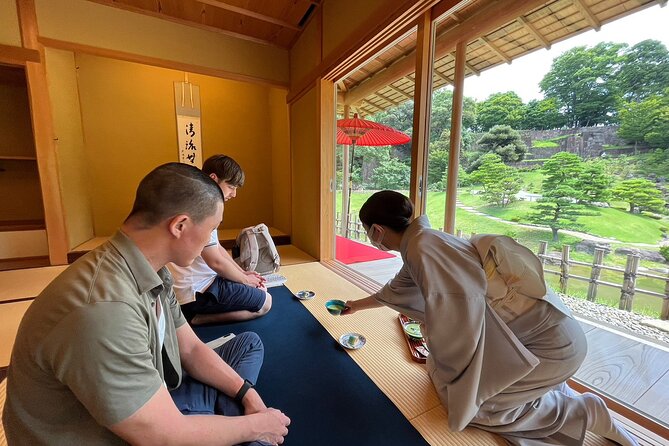
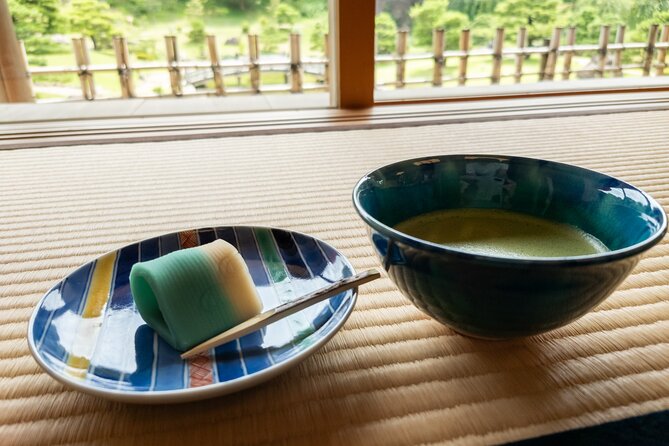
At Gyokusen-an, you have about an hour for matcha and wagashi sweets. The tea house looks toward an old garden beside the Kanazawa Castle area, giving you a quiet place to rest after the morning’s walking.
For me, this is one of the tour’s strongest details. Matcha is not treated as a quick drink grabbed between attractions. You have time to enjoy the setting and the traditional presentation, while the guide explains what you are having and why the tea house matters.
The matcha, sweets, and tea house entry are included. Lunch is not, so this is the main food-related inclusion in the price. Wagashi are usually small, carefully made Japanese sweets, and here they provide a pleasant counterpoint to the bitter tea.
If you are comparing this tour with a basic city sightseeing walk, this hour adds real value. It also gives your feet a needed break. Do not mistake that rest for the end of the physical effort, though. The afternoon still includes Kenrokuen and the eastern tea districts.
Kanazawa Castle: restored scale without a long castle tour
The route passes through Kanazawa Castle for about 20 minutes. You will see the restored buildings and broad grounds, with the castle structures rising over an expansive lawn.
This is a short visit, so you should not book the tour expecting a detailed, room-by-room castle experience. Instead, the castle acts as a visual link between Gyokusen-an and Kenrokuen Garden. The guide can point out the scale of the grounds and explain the castle’s place in Kanazawa’s story.
There is no separate admission charge listed for this portion. The brief timing keeps the tour moving, but anyone wanting a deep study of the castle may prefer to return independently for more time.
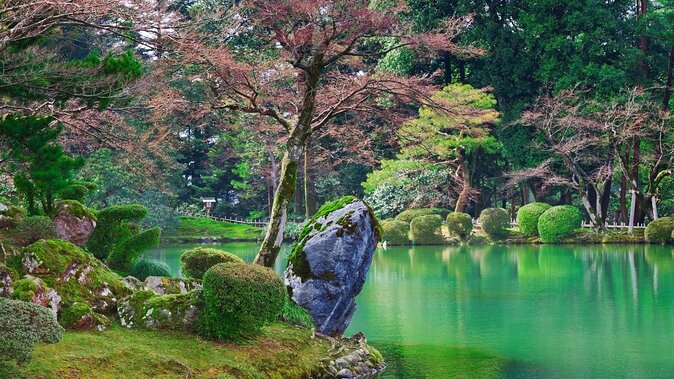
Kenrokuen Garden: the visual high point
Kenrokuen takes about 90 minutes and is the longest major sightseeing stop of the day. It is one of Japan’s celebrated traditional gardens, designed around classic ideas of beauty, balance, water, trees, and changing views.
You will stroll beside ponds, garden structures, trees, and carefully arranged spaces that reveal themselves gradually as you walk. The route also offers views over Kanazawa, and you may have time to enter one of the garden’s homes or tea buildings, depending on the schedule and availability.
I like that the tour gives Kenrokuen a substantial block of time. A rushed garden visit can become a checklist of ponds and bridges. Ninety minutes lets you slow down, take photographs, and listen to the guide without constantly watching the clock.
The garden entry is included. Weather makes a real difference here. In sunshine, the water and plantings can be especially pleasing, while rain may make the paths slippery and less comfortable. The operator notes that the experience requires good weather and may offer a different date or a full refund if poor conditions force cancellation.
Lunch: useful freedom, but budget separately
A one-hour lunch break is included in the nine-hour schedule, but lunch itself is not included in the price. You choose where to eat, and the guide provides recommendations.
I consider this a practical arrangement. You are not locked into a fixed menu or a restaurant that may not suit your appetite. It also gives you a chance to ask for local dishes or a quick meal if you want to keep the afternoon moving.
The tradeoff is that your final cost will be higher than the advertised tour price. Leave enough room in your budget for lunch, drinks, and any purchases in the tea districts. The guide’s recommendations can save time, particularly on a busy day.
Higashi Chaya: Kanazawa’s traditional tea district
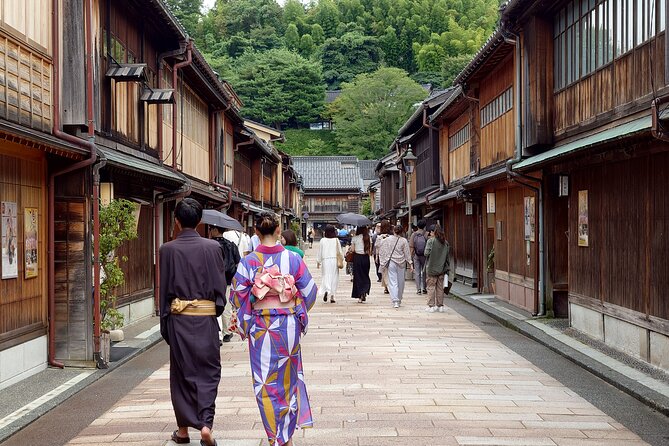
After the garden, the tour heads to Higashi Chaya for about an hour. The district is lined with old tea houses, eateries, and craft shops, and its streets offer another side of Kanazawa’s past.
This is where the earlier stops begin to connect. The samurai district showed one side of the old social order, while the tea district reflects the world of entertainment, wealthy patrons, music, and geisha culture. Your guide can explain the difference between a tea house and an ordinary café, along with the role these districts played in the city.
You have free time here, so you can browse at your own pace. Keep in mind that browsing and shopping are not the same as having a long, open-ended afternoon. The tour still has a scheduled visit to Shima Chaya and then a walk through Kazuemachi.
Shima Chaya: inside a preserved geisha house
The 30-minute visit to Ochaya Shima gives you entry to a tea house once used by geisha and wealthy patrons. Inside, colorful walls and musical instruments reveal the care and expense that went into these entertainment spaces.
This is a valuable stop because it lets you see the interior, not just the streets outside. The building gives physical form to the customs discussed in Higashi Chaya, and the instruments help you picture the performances that took place there.
Entry is included. Thirty minutes is enough for a focused visit, though it will feel short if you want to study every room or photograph every detail. The preserved house is one reason this tour offers more than a general walk through the district.
Kazuemachi Chayagai: a quieter final stretch
The route then passes through Kazuemachi Chayagai on the way back to the station. This tea district is less crowded than Higashi Chaya, and geisha still entertain customers here.
The quieter atmosphere makes it a good ending. After the larger garden and more visited tea district, Kazuemachi gives you a calmer look at the same tradition. If you are lucky, you may catch a glimpse of geisha, but that is not something the tour can promise.
You spend about 30 minutes here before returning to Kanazawa Station. The walk back is part of the tour, so do not expect a bus transfer to rescue tired feet.
Guide quality and group size
The strongest part of this experience is the guide-led storytelling. Guides named in guest feedback include Mike, Garrett, Lee, Akari, Daniel, Fadir, and Mohamed. The particular guide changes, but the tour depends heavily on having someone who can connect Japanese history, local culture, and the sites in front of you.
Garrett is repeatedly praised for explaining both old and modern Japan, adapting the pace, and adjusting the route for different ages. Mike is described as entertaining and well prepared, including on rainy days. Lee is noted for pacing the day to suit the group, while Akari is praised for explaining how Kanazawa developed as an alternative to Kyoto.
The maximum group size is 15. That is small enough for a more personal walk, though the actual group may be smaller. A very small group can make it easier to adjust the pace, stop for questions, or spend more time at a favorite site.
The walking question you should take seriously
This is not a bus tour with short walks between stops. It is entirely on foot, and the total distance may reach roughly 10 to 12 kilometers. One review puts the day at about 10 miles, which shows how much ground you can cover depending on the exact route and pace.
You should be comfortable walking for most of the day. Wear shoes with good support, bring water, and prepare for sun or rain. Older walkers have completed the route, but some found the distance tiring, especially on hot days.
The guide can adjust the pace, and there are places to sit at several stops. Still, you should not book this tour hoping that public transport will replace the longer stretches. One guide-led walking day can give you a stronger sense of Kanazawa, but it asks for real energy in return.
Is $151.30 a fair price?
At $151.30 per person, this is not the cheapest way to see Kanazawa. The price becomes easier to justify when you count the English-speaking guide, Kenrokuen entry, Shima Chaya entry, and the matcha and wagashi experience at Gyokusen-an.
You are also paying for route planning. The major sights are walkable, but they are not all next door to one another. A good guide saves you from losing time, explains what you are seeing, and handles the flow between samurai homes, castle grounds, gardens, and tea districts.
The value is best for a first visit, especially if you want one structured day to understand the city. It is less compelling if you prefer to spend hours at one garden, shop slowly, or use public transport to limit walking. Remember to add lunch to the final cost.
The tour has a 97 percent recommendation rate and a 4.9 rating from 68 reviews, but I would pay more attention to the consistent practical message: the guide quality is a major asset, and the walking distance is the main limitation.
Who should book this Kanazawa day?
I would choose this tour if you have one full day in Kanazawa and want a broad introduction to its traditional districts. It suits first-time visitors who value explanation as much as photographs, and it is especially useful if you do not want to plan several separate admissions and routes.
It also suits families or mixed-age groups when everyone can walk steadily. The guides have adapted the pace for different ages, but the distance remains the same basic challenge.
I would skip it if your priority is a slow, unstructured day or if you have difficulty walking 10 to 12 kilometers. In that case, visit Kenrokuen, one tea district, and the castle area independently, using transport where needed.
Free cancellation is available up to 24 hours before the 9:00 a.m. start for a full refund. Changes made inside that window are not accepted. Since poor weather can lead to a cancellation, check the forecast and keep a little flexibility in your schedule.
Should you book it?
Book this tour if you want Kanazawa explained as a connected story, not just a collection of famous stops. The samurai homes, matcha break, Kenrokuen, and geisha districts make a well-balanced day, and the small group gives the guide room to shape the experience.
Do not book it casually. The route is long, lunch costs extra, and the weather can affect the day. If you arrive with good shoes, water, and enough stamina, this is a strong way to get your bearings and see the city’s main cultural sights in one go.
FAQ
Where does the tour start?
The tour starts at Kanazawa Station at 9:00 a.m.
Where does the tour end?
The activity ends back at the Kanazawa Station meeting point.
How long does the tour last?
The posted duration is approximately nine hours, including a one-hour lunch break. Active sightseeing takes about eight hours.
How much walking is involved?
The tour is entirely on foot and may involve roughly 10 to 12 kilometers of walking. One detailed account describes the distance as about 10 miles.
Is lunch included?
No. Lunch is not included, but the one-hour break allows you to choose your own restaurant. The guide can provide recommendations.
Is the matcha experience included?
Yes. Matcha tea and wagashi sweets at the Gyokusen-an tea house are included.
Are the garden and geisha house admissions included?
Yes. Entry to Kenrokuen Garden and the preserved Shima Chaya geisha house is included.
What is the maximum group size?
The maximum group size is 15 people.
Can I cancel for a full refund?
Yes. You can cancel at least 24 hours before the local start time for a full refund. If poor weather causes the operator to cancel, you will be offered another date or a full refund.
Just added around Japan
- Yokohama : Tea Ceremony with Sweets and Souvenir★ 5.0 · 5 reviews
- Whisk Your Own Matcha: A Zen Matcha Experience at Temple★ 3.6 · 7 reviews
- Walking Tour: Yanaka,Nezu& Sendagi: Tea Ceremony & Old Tokyo★ 5.0 · 3 reviews
- Visit local home for music and tea ceremony near Disney★ 4.9 · 13 reviews
- Trip to Kamakura & Enoshima: Shrines, Seaside, Temples &Tea★ 5.0 · 11 reviews
- Yokohama: Sushi & Gyoza Cooking with Matcha & GreenTea Experience★ 5.0 · 3 reviews
- Kyoto tea town for matcha lovers★ 5.0 · 16 reviews
- Uji: Private immersion into Kyoto’s tea and reglious culture★ 5.0 · 17 reviews
Matcha Experiences, compared.
World Heritage Kyoto & Nara Uji Authentic Matcha Experience
Read our review →
Matcha Making Class in Tokyo with Authentic Japanese Sweets Set
Read our review →
Tea Museum Tickets and Matcha Grinding Experience
Read our review →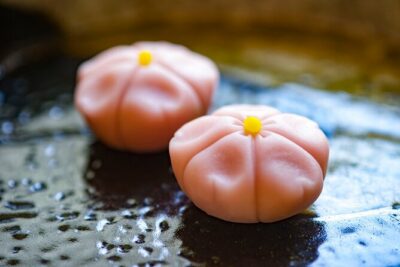
Matcha Making Class in Osaka with Authentic Japanese Sweets Set
Read our review →
Tea Ceremony Meditation – Make Matcha with Tea Master
Read our review →
Matcha Making Experience with Mochi Sweets in Asakusa
Read our review →
Browse the lists this tour appears in