
Review · TOKYO
EDOCCO Tea House–A Quick Dive into Japanese Traditional Culture
The most appealing thing about EDOCCO Tea House is its tight, one-hour introduction to several Japanese traditions. In one restored cultural setting, you prepare matcha, watch a geisha dance, wear a kimono, write a kanji character, and fold origami. It gives you a useful first look without taking half a day.
I like the friendly English guidance and the way the activities keep you involved rather than leaving you to watch from a chair. I also like the small-group format, which gives hosts such as Ori and Mr. Bambu time to help with brush strokes, tea preparation, and paper folding.
The main consideration is the pace. One hour goes quickly, and the dance performance may last less than 10 minutes. If you want a long tea ceremony or a full stage program, this is too brief. If you want a cheerful introduction to several customs, the compact format works well.
Key points to know before booking
- Four traditions in one hour: Matcha, dance, kimono, calligraphy, and origami are all included.
- Hands-on rather than purely theatrical: You prepare tea, write, fold paper, and dress for photos.
- English help is available: The hosts explain the customs and answer questions during the session.
- A good family activity: Children aged 8 and 11 were specifically reported to enjoy the tea, origami, calligraphy, and kimono portions.
- Maximum group size of 20: The group can be fairly full, though some departures may be much smaller.
- Convenient Tokyo location: EDOCCO is at 2-chome-16-2 Sotokanda in Chiyoda City, near public transportation.
A fast cultural welcome in Sotokanda
EDOCCO Tea House is in Sotokanda, a practical location for a Tokyo sightseeing day. You meet at EDOCCO Studio and finish at the same place, so there is no complicated transfer between activities.
The venue is designed around the meeting of old and new Japan. That matters here because the setting helps the activities feel connected. You are not simply moving between unrelated demonstrations. The tea, dance, clothing, writing, and paper craft all point toward different ways Japanese art values care, movement, form, and patience.
Still, keep the scale in mind. This is a short cultural sampler, not an all-day study session. You will get a taste of several traditions and some basic instruction, but you will not become an expert in matcha preparation or calligraphy in one visit.
The activity is generally booked about 17 days ahead, which is useful to know if your Tokyo schedule is fixed. Confirmation is normally provided when you book, though bookings made within one day of the start time are subject to availability and may take longer to confirm.
A few more tea experiences around Tokyo worth a look
- Kimono Tea Ceremony at Tokyo, Asakusa Maikoya
★ 5.0 · 638 reviews - Tokyo: Traditional Tea Ceremony with a Tea Master
★ 5.0 · 528 reviews - Dynamic Tokyo: Tokyo Tower, Tea Experience, Bay Cruise Day Tour
★ 4.5 · 521 reviews
Matcha and a Japanese sweet
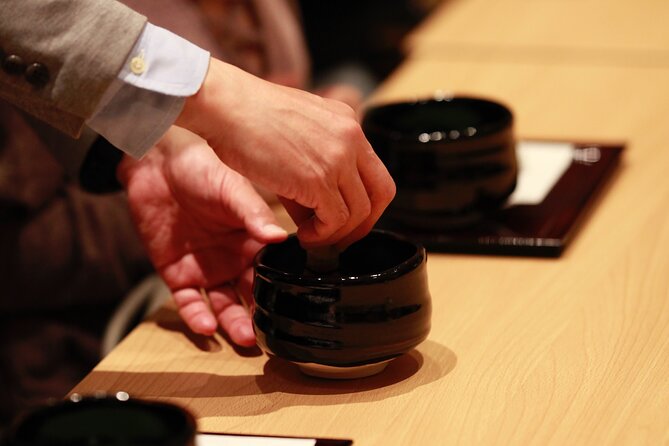
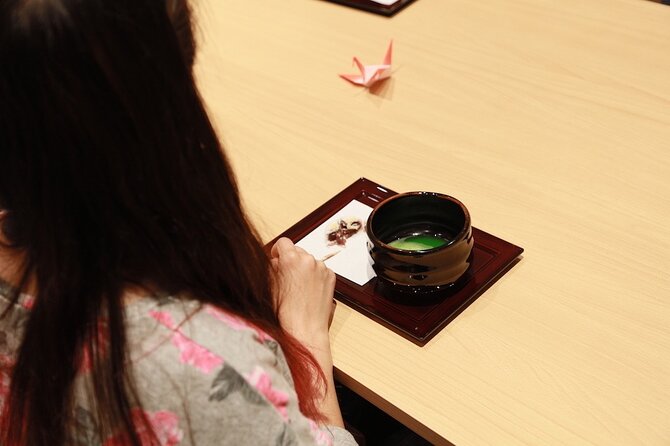
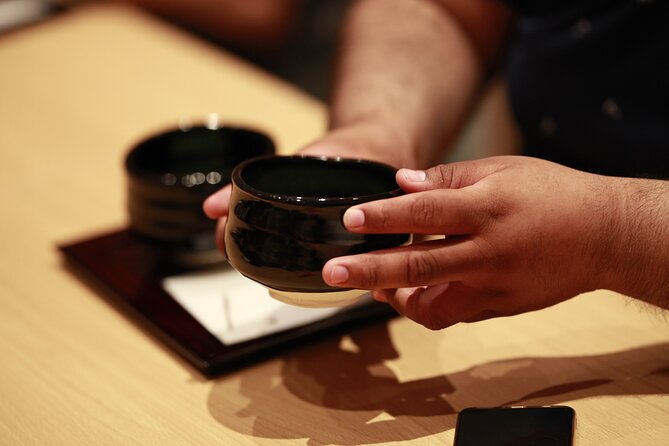
The tea portion begins with an introduction to matcha preparation. An instructor guides you through the basic steps of making and serving the powdered green tea, using the traditional bamboo whisk and bowl.
This is valuable because matcha is not just a drink in this setting. The preparation draws your attention to small movements, the order of each step, and the presentation of the tea. Even a short lesson helps you understand why Japanese tea practice is associated with calm and care.
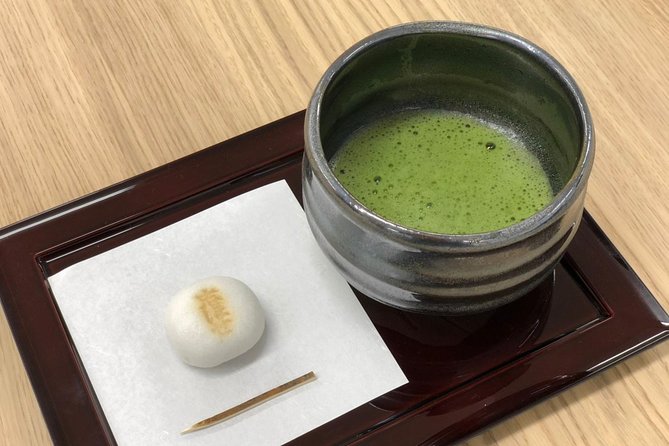
You receive a matcha and Japanese sweet snack set as part of the experience. The sweet is an important pairing, since its sugary flavor balances matcha’s stronger, grassy taste. For many first-time visitors, preparing the drink themselves makes the experience more memorable than simply being handed a cup.
You can also buy a matcha set containing a tea bowl, matcha powder, a bamboo whisk, and other tools. That purchase is not included in the ticket, so consider it an optional souvenir rather than part of the basic value.
Do not expect a long, highly formal tea ceremony with every traditional detail. The schedule must also allow room for the dance, kimono, calligraphy, and origami. Think of this as a guided practical lesson that gives you enough context to appreciate the ritual.
The short geisha dance performance
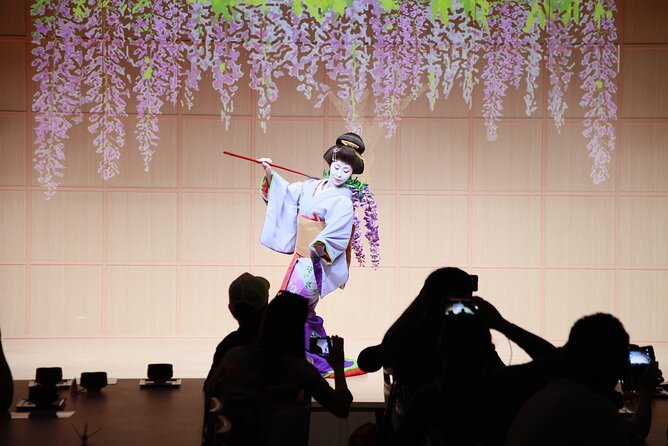
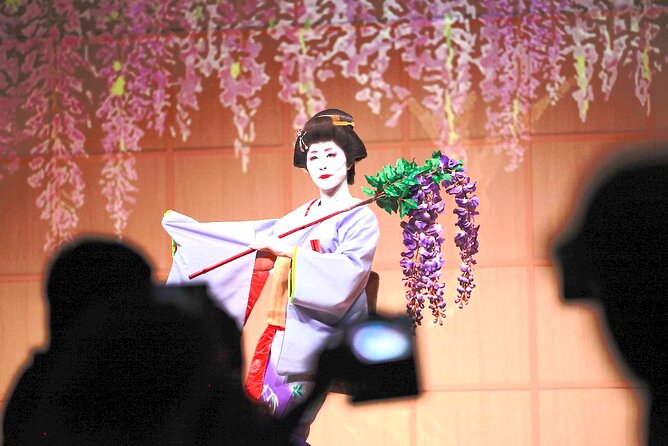
The Japanese dance show adds a welcome visual change after the tea activity. You watch a performer use controlled movements, traditional gestures, and a fan, while the English explanation helps you understand the meaning behind the dance.
The dance is one of the most memorable elements because it gives you something that is difficult to learn from a museum label. You see how posture, hand position, costume, and movement work together. The explanation also helps prevent the performance from becoming a pretty but puzzling interlude.
The limitation is length. The performance may be under 10 minutes, and that is too short for anyone hoping to study this form of dance in detail. I would treat it as a brief cultural presentation rather than the main event.
That short running time does have one benefit. Children and adults who might lose interest during a longer performance get a clear, focused introduction before moving on to the hands-on sections. The overall session stays active.
Wearing a kimono for an Edo-style photo
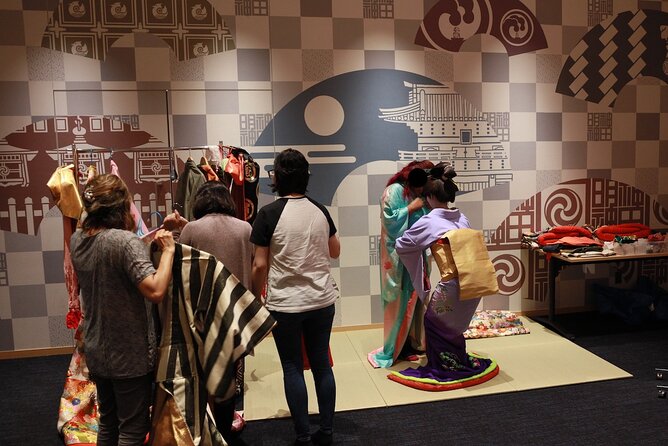
The kimono portion gives you a chance to put on Japanese traditional clothing and take photos in the setting. It is described as a cosplay experience, so you should view it as a temporary dress-up activity rather than a full, formal kimono fitting.
That distinction is useful. A professional kimono dressing appointment can take much longer and may involve several layers, careful tying, and a more elaborate presentation. Here, the goal is to let you feel the clothing, pose for photos, and connect with the atmosphere of the past without taking over the schedule.
For families, this can be the most immediately fun part. Children can see how clothing changes posture and movement, and the activity creates a visual souvenir beyond the written character or folded paper. Adults who prefer quieter cultural activities may find the dressing portion more playful than ceremonial.
The exact dressing process is not detailed, so do not book this expecting a specific kimono style, elaborate hair arrangement, or a long photo session. The useful question is whether you want a quick, accessible chance to wear traditional clothing. If so, it fits the visit well.
Same place, a different pot:
- Matcha Making Class in Tokyo with Authentic Japanese Sweets Set
★ 5.0 · 744 reviews - Tokyo: Matcha Making Experience with Mochi Sweets in Asakusa
★ 4.9 · 388 reviews - Asakusa Cultural Walk & Matcha Making Tour
★ 5.0 · 245 reviews - Mt. Fuji & Lake Kawaguchiko Ropeway Panorama Full-Day Tour
★ 4.6 · 236 reviews
Calligraphy that gives you a souvenir
The shodo lesson introduces Japanese brush calligraphy. You learn basic brush strokes under guidance and create your own character, giving you a small piece of work to remember the session.
Calligraphy is a good choice for a short activity because the basics are easy to demonstrate but still require concentration. The brush behaves differently from a pen, and the order, pressure, and direction of strokes matter. Even a simple character can make you slow down and pay attention.
The hosts are patient and willing to help beginners. That is especially useful if you have never held a calligraphy brush. You should not expect perfect lettering on your first try, but the point is to understand the discipline of the strokes and enjoy making something yourself.
The activity also adds balance to the more visual parts of the visit. You are not only watching a performance or trying on clothes. You are learning through movement and leaving with a handmade result.
Origami for all ages
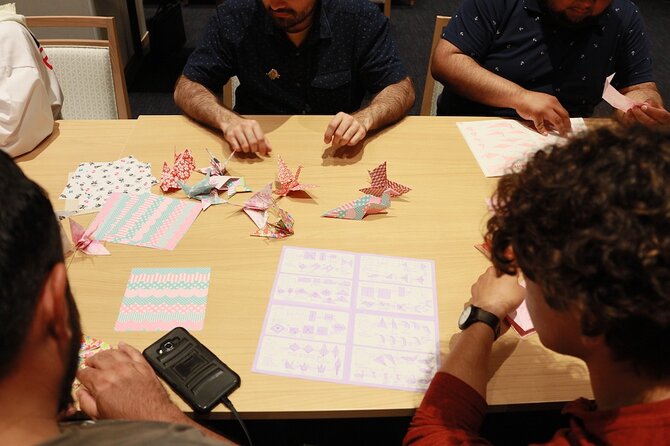
The origami workshop is another practical section, with instruction in folding paper into shapes ranging from simple cranes to more involved designs. The craft is accessible to children, but adults can find it surprisingly demanding once several folds must line up.
I like the way origami fits the short schedule. You can start with the basic logic of folding, receive help when the paper becomes confusing, and finish with a small object. It gives families something to work on together and gives solo visitors a quiet change of pace after the dance.
Do not expect a full craft class with many finished models. The available time is limited, and the session also includes four other cultural elements. The value is in learning the method and seeing how a flat sheet can become a recognizable form.
Why the one-hour format can be a good value
The listed price is $72.48 per person. That is not bargain-level pricing for a one-hour activity, but the ticket covers several parts: the matcha and sweet set, dance performance, calligraphy, origami, and Japanese dress-up experience.
I see the value most clearly for a first visit to Tokyo. Instead of paying separately for a tea activity, a cultural performance, a craft class, and a costume experience, you sample all four in one booking. The tradeoff is depth. You pay for variety, not extended instruction in one tradition.
The price also makes more sense if you value English support and personal help. Beginners can ask questions, get assistance with the brush or paper, and follow the cultural explanation without trying to decode a demonstration on their own.
For a family, the cost adds up quickly, so compare it with your interests. Children who enjoy making things and dressing up are likely to get more from it than children who prefer long performances or outdoor sightseeing. For an adult seeking a serious tea ceremony, a dedicated tea experience may offer better value.
Group size, language, and the feel of the session
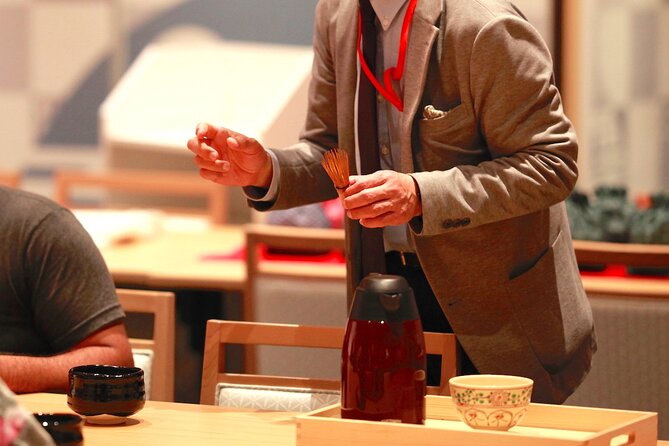
The maximum group size is 20 people. That is still small enough for a structured class, but the actual atmosphere can vary depending on the departure. Some sessions may have only a few participants, and one reported visit continued even with just two people.
A smaller group gives you more chances to ask questions and receive corrections. It can also make the kimono photos and calligraphy practice feel less hurried. A fuller group may create more energy, especially for families, but you should expect less individual time.
English explanations are available throughout the main activities. This is a major practical advantage because the value of the session depends on understanding why the customs matter, not just copying the motions.
The hosts are repeatedly described as warm, patient, and attentive. Ori and Mr. Bambu are names associated with especially strong instruction and hospitality. Their role matters because a short cultural activity can feel mechanical without a good guide. Here, the human explanation is a large part of what you are paying for.
Who will enjoy EDOCCO Tea House most
I would recommend this activity to first-time visitors who want a quick orientation to Japanese traditions. It is also a strong choice for families, couples, and solo visitors who prefer doing several small activities instead of sitting through one long presentation.
It suits you if you want:
- A practical introduction to matcha
- A short traditional dance performance
- A chance to wear a kimono
- A handmade calligraphy or origami souvenir
- English-language help
- A fixed one-hour activity that fits between Tokyo sightseeing stops
It may not suit you if you want a quiet, formal tea ceremony with long pauses and strict ritual. It is also not the best match if the dance is your main reason for booking, since that section is brief.
The activity is accessible in spirit because beginners do not need prior knowledge. You can arrive with no experience in tea preparation, brush writing, or origami and still take part.
Getting there and planning your visit
The meeting point is EDOCCO Studio, 2-chome-16-2 Sotokanda, Chiyoda City, Tokyo 101-0021. The venue is near public transportation, so it can be added to a day in central Tokyo without arranging a private transfer.
One detailed route used the Marunouchi Line to Ochanomizu Station, identified as M20, then continued across the road, up to a pedestrian bridge, left, and right at the first intersection. Treat this as a helpful route note, not a guarantee of the easiest route from your hotel. Check your map on the day and allow enough time to find the entrance.
You return to the meeting point at the end. Since the whole activity lasts about one hour, it works well before or after other plans in Chiyoda and nearby areas.
The mobile ticket keeps the booking simple. Free cancellation is available if you cancel at least 24 hours before the start time. Changes or cancellations inside that window are not accepted for a refund. The activity can also be moved or refunded if poor weather affects the session or if the minimum number of participants is not reached.
Should you book this Tokyo culture experience?
Book EDOCCO Tea House if you want a friendly, efficient introduction to several Japanese customs and do not need long lessons in any one of them. The strongest reasons are the hands-on format, English instruction, kind hosts, and the amount packed into one hour.
I would especially recommend it near the start of a Tokyo trip. The tea, dance, clothing, writing, and origami give you useful cultural reference points for the rest of your time in Japan.
Skip it if you want a formal tea ceremony, a long geisha performance, or a detailed kimono fitting. At $72.48, the value depends on enjoying variety. For the right audience, it is a lively first step into Japanese culture, with a sweet, a written character, and folded paper to carry away.
FAQ
How long does the EDOCCO Tea House experience last?
The activity lasts approximately one hour.
Where does the activity meet?
You meet at EDOCCO Studio, 2-chome-16-2 Sotokanda, Chiyoda City, Tokyo 101-0021, Japan.
Where does the activity finish?
It ends back at the meeting point.
Is food included?
A snack set with matcha and Japanese sweets is included.
Is a matcha-making set included?
No. A tea bowl, matcha powder, bamboo whisk, and other tools are available to purchase separately.
What activities are included?
The experience includes a matcha and sweet set, Japanese dance performance, calligraphy, origami, and Japanese dress-up.
What is the maximum group size?
The activity accepts a maximum of 20 participants.
Can I cancel for a refund?
You can cancel up to 24 hours before the start time for a full refund. Cancellations or changes made less than 24 hours before the start time are not refunded.
Just added around Tokyo
- Yokohama : Tea Ceremony with Sweets and Souvenir★ 5.0 · 5 reviews
- Walking Tour: Yanaka,Nezu& Sendagi: Tea Ceremony & Old Tokyo★ 5.0 · 3 reviews
- Private Kimono and tea ceremony at local home near Tokyo Disney★ 5.0 · 6 reviews
- Private Mochi・Matcha sweets Making Class Near Shibuya Area★ 5.0 · 22 reviews
- 2 Hours Mochi &Nerikiri Making & Matcha Class in Bunkyo★ 5.0 · 21 reviews
- Tokyo Sweets Tour: Hidden Gems & Matcha at an Old Tea House★ 5.0 · 6 reviews
- Giant Sushi Cooking Class: Make a 1.5m Sushi Roll in Tokyo★ 5.0 · 9 reviews
- Tokyo Tea Ceremony Class at a Traditional Tea Room★ 5.0 · 2 reviews
Tokyo Tea Experiences, compared.

Matcha Making Class in Tokyo with Authentic Japanese Sweets Set
Read our review →
Matcha Making Experience with Mochi Sweets in Asakusa
Read our review →

Mt. Fuji & Lake Kawaguchiko Ropeway Panorama Full-Day Tour
Read our review →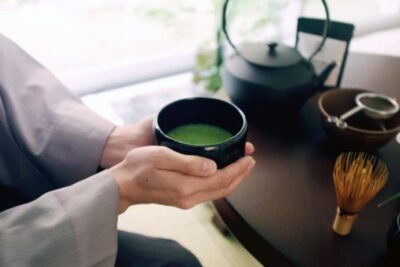
Tea Ceremony Workshop in Tokyo by the Experienced Instrucor
Read our review →Browse the lists this tour appears in