
Review · TOKYO
Tokyo Walking Tour : Sumo, Sushi, Tea, Temples and Tokyo Tower
Tokyo reveals its many sides on this long, carefully packed day: sumo practice, market food, a formal garden, Buddhist ritual, and Tokyo Tower. You begin at a training stable and finish high above the city, with public transport and your own feet doing most of the work.
I like the contrast between the stops. I also like the quiet moments built into the day, especially tea at Hama Rikyu Gardens and sutra copying at Zojoji Temple. The main catch is simple: this is an eight-hour outdoor walking tour, and the sumo visit can change or be canceled if training is not taking place.
Key points at a glance
- Watch real sumo training at Arashio Beya: This is an active training room, not a staged performance, so silence and careful behavior matter.
- Taste your way through Tsukiji Outer Market: The guide leads you through the food stalls, while you pay separately for anything you choose to eat.
- Take tea in Hama Rikyu Gardens: Your garden admission and traditional tea house experience are included.
- Copy a Buddhist sutra at Zojoji Temple: This adds a calm, hands-on pause to a busy Tokyo day.
- Finish at Tokyo Tower: The included ticket gives you a classic city view and a look at the tower’s retro design.
- Expect a real walking day: The group uses public transport, includes a train from Ningyocho Station to Tsukiji Station, and ends near Akabanebashi Station.
Why this Tokyo day works so well
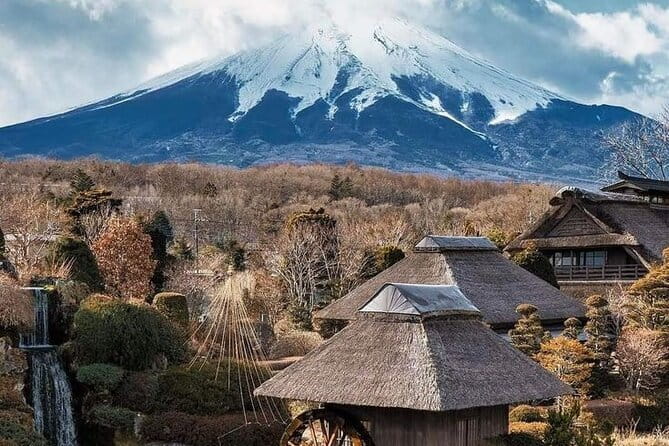
Many Tokyo tours gather famous sights into a rushed checklist. This one has a clearer idea: show you several parts of Japanese life and connect them by rail, foot, food, and ritual. You move from the disciplined world of sumo to the noisy food lanes of Tsukiji, then into a garden, temple, and observation tower.
That mix gives the day a useful rhythm. The morning begins with a focused cultural encounter. Tsukiji brings choice and movement. Hama Rikyu slows things down. Zojoji offers another quiet stretch, and Tokyo Tower gives you a broad view of the city you have just crossed.
The guide is important here. An English-speaking local guide explains the customs and history behind each stop, rather than leaving you to guess what you are seeing. One guide named Jade is specifically associated with warm personal anecdotes and Japanese history, a combination that can make the day feel more like a conversation than a lecture.
The group is capped at 15 people. That is small enough for questions and practical help at stations, but it is not a private tour. If you want a completely flexible pace, this will feel structured. If you want someone else to handle the route and connect the dots, the structure is a strength.
More Walking Tours in Tokyo:
- Asakusa Cultural Walk & Matcha Making Tour
★ 5.0 · 245 reviews - Walking Tour: Yanaka,Nezu& Sendagi: Tea Ceremony & Old Tokyo
★ 5.0 · 3 reviews - Great Ocean Road Tour Plus Koalas, Forest Walk and Morning Tea
★ 4.5 · 1,068 reviews
Arashio Beya and the rules of sumo training
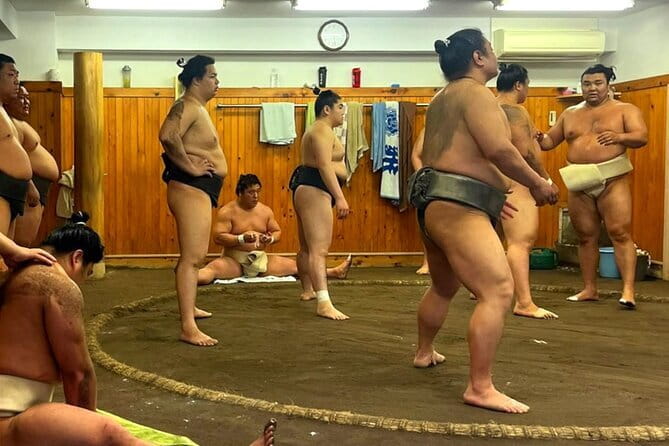
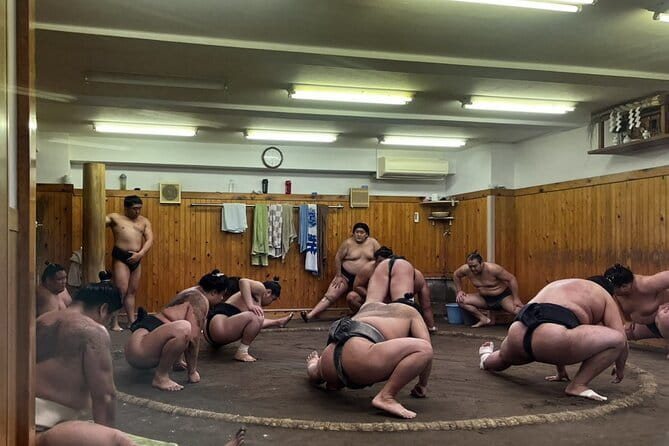
Your first stop is Arashio Beya, a traditional sumo training room. The appeal is its directness. You are not watching a polished stage show or a tournament ceremony. You are observing wrestlers practice.
That also means you must behave like a quiet observer. The wrestlers cannot be disturbed, and training times are not guaranteed. The schedule can change, and the stable may not be training when you arrive. During certain weeks in January, May, and September, training closes while the Grand Sumo Tournaments are being held.
This uncertainty is the most important point to understand before booking. The tour promises the opportunity to see sumo training, not a guaranteed session. If seeing wrestlers is the one reason you are booking, check the current schedule before you commit, then treat the visit as a valuable possibility rather than a sure thing.
The scheduled visit lasts about 1 hour and 10 minutes. That leaves enough time to understand the setting and watch for a while without turning the whole day into a sumo-only outing. The guide’s role is especially useful here because the etiquette is part of the experience. You will need to follow instructions, remain quiet, and avoid expecting interaction with the wrestlers.
Tsukiji Outer Market, where lunch becomes part of the tour
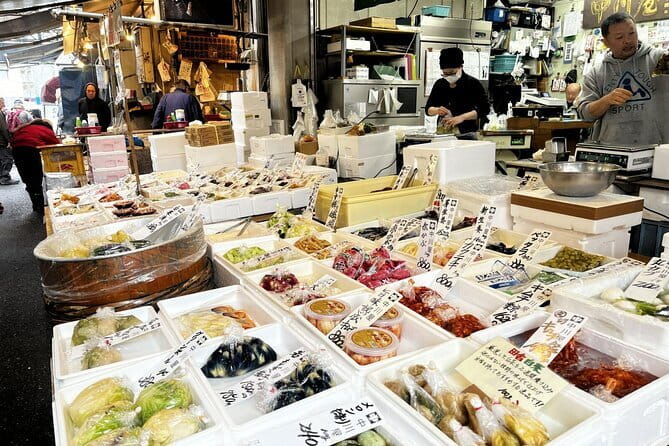
From sumo, the day moves to Tsukiji Outer Market for about 1 hour and 30 minutes. This is the most flexible food stop. Your guide takes you through the market and points out the many foods available, then you have free time to look, photograph, shop, and eat at your own pace.
Food is not included, so bring money for anything you want to sample. That may sound like a small detail, but it changes how you experience the stop. You can choose what appeals to you instead of being handed a fixed meal. It also means the final cost depends partly on your appetite.
I like this arrangement because markets are best explored with some freedom. One person may want a quick taste, while another may want to stop at several stalls. The guide provides a useful starting point, then you decide how much time and money to spend.
Do not expect a long sit-down lunch to be the focus. This is a market visit with sampling and free time, so your meal may come in several small bites rather than one formal plate. If you need a substantial lunch, plan your budget and pace accordingly.
The market also gives the tour a practical connection to Tokyo life. You are not simply looking at a famous district from the outside. You get time to study the food, watch how the market works, and make your own choices. Keep the group schedule in mind, though. Free time ends when the tour moves on.
Hama Rikyu Gardens and a proper tea pause
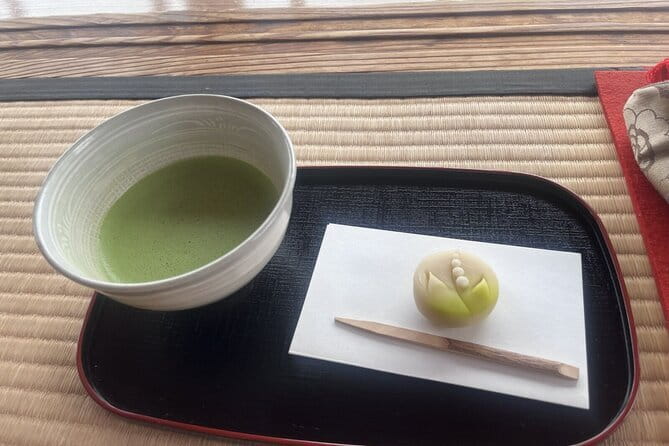
Hama Rikyu Gardens provides the day’s strongest change of pace. After the market, you enter a traditional Japanese garden and receive an introduction to its design and history from the guide. You then have free time before meeting at a tea house for tea and a sweet.
Admission to the gardens is included, as is the tea house experience. That makes this more than a quick photo stop. You have time to walk, notice the views, and let the morning settle before the next temple visit.
The tea experience is also a good cultural lesson because it rewards attention to small details and quiet conduct. You do not need to be an expert in Japanese tea customs. The value is in experiencing a traditional setting with guidance, then enjoying a sweet alongside the tea.
The stop lasts about 1 hour and 20 minutes. That is enough for an introduction, some independent garden time, and the tea house visit, but it is not an exhaustive garden tour. If gardens are your main interest, you may wish you had longer. For a full-day city tour, the balance is sensible.
The garden is a welcome outdoor setting, but it also adds to the walking total. Wear comfortable shoes and be ready for weather. This tour does not use a private vehicle, so you cannot count on sitting in air conditioning between stops.
A few more tea experiences around Tokyo worth a look
- Kimono Tea Ceremony at Tokyo, Asakusa Maikoya
★ 5.0 · 638 reviews - Tokyo: Traditional Tea Ceremony with a Tea Master
★ 5.0 · 528 reviews - Dynamic Tokyo: Tokyo Tower, Tea Experience, Bay Cruise Day Tour
★ 4.5 · 521 reviews - Tea Ceremony Workshop in Tokyo by the Experienced Instrucor
★ 5.0 · 189 reviews
Zojoji Temple and the quiet discipline of sutra copying

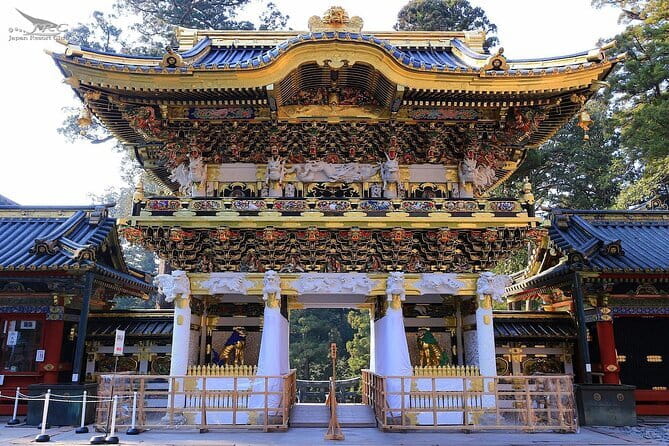
The next stop is Zojoji Temple, a Buddhist temple complex and park. The guide explains the temple and its history, then leads you through a sutra copying experience.
This is one of the tour’s most unusual inclusions. You are not only looking at architecture or taking photographs. You are given a calm activity that asks you to slow down and concentrate. You do not need to be religious to appreciate the break from Tokyo’s speed and noise.
The stop lasts about one hour. That is enough time for a temple introduction and the copying activity without making the day feel stalled. It also gives the itinerary a human scale. After food and public transport, you sit, focus, and take part in something connected to Buddhist practice.
As with the tea house, approach matters. This is a place of worship, so respectful behavior is expected. Follow the guide’s instructions, keep your voice low, and treat the activity as more than a novelty.
The temple and the tower also work well together. Zojoji offers a ground-level view of tradition and religion, while Tokyo Tower presents the city in its modern, high-rise form. Seeing both on the same afternoon gives the day a strong visual and cultural contrast.
Tokyo Tower, a classic finish above Minato

The final stop is Tokyo Tower, where you spend about 1 hour and 15 minutes. Your admission ticket is included, so you can go to the observation deck and take in Tokyo from above.
The tower is famous, but its appeal is not limited to the view. The tour also draws attention to its retro architectural feel. After a day of older customs, temple practice, and market traditions, the tower gives you an iconic piece of postwar-era Tokyo design.
This is a good final stop because you can look back at the city with some context. By this point, you have crossed several districts using public transport and walking routes. From the observation deck, Tokyo becomes easier to understand as one huge, connected city.
You finish near Akabanebashi Station, not back at the morning meeting point. The guide can help with questions about getting back to your hotel or continuing to your next destination. That is useful, especially if you are still learning Tokyo’s train system.
The walking, transport, and timing you need to accept
The tour starts at 8:15 a.m. at Hamacho Station and lasts about 8 hours and 15 minutes. It ends near Akabanebashi Station. You should plan your morning carefully and arrive at the stated meeting point with enough time to find the station exit and group.
Public transport is part of the experience. The included transport specifically covers the train from Ningyocho Station to Tsukiji Station. Trains and transport before and after the tour are not included, so you pay for your own journey to Hamacho and from Akabanebashi.
Several hours are spent walking outdoors. That affects who will enjoy this tour most. You should be comfortable standing, walking between stations and sights, and continuing through the day without a private vehicle. Comfortable shoes matter more than stylish ones here.
The tour is suitable for most people, but the length and pace deserve honest attention. This is not a relaxed hop-on, hop-off outing. You will cover several districts and keep to a schedule. Rain or heat could make the day more tiring, even though the exact weather is not part of the booking information.
At the same time, the transport plan is one of the tour’s practical benefits. Tokyo can feel confusing when you first arrive, especially when you are trying to connect several neighborhoods. A guide handles the route while you focus on the sights.
What the $166.85 price includes
At $166.85 per person, this is not a cheap walking tour. The value comes from the number of elements bundled into one day: an English-speaking guide, garden admission, tea house experience, sutra copying fee, Tokyo Tower ticket, and the specified train fare.
Food and drink are not included. You also pay for transportation before and after the tour. Add a realistic food budget for Tsukiji, plus any station or local transport costs outside the tour, when deciding if the price suits you.
I see the price as reasonable for visitors who want a planned cultural sampler rather than a simple guided walk. Buying separate admissions and arranging this route yourself would take time, and you would need to manage the station changes and scheduling. The included experiences at Hama Rikyu, Zojoji, and Tokyo Tower add real value.
The price is harder to justify if you mainly want Tsukiji Market or Tokyo Tower. You could visit those places independently for less. You are paying for the full combination, the guide’s explanations, and the convenience of moving through the city with a small group.
The tour is often booked around 81 days ahead, so it is wise to reserve early if your Tokyo dates are fixed. Free cancellation is available until 24 hours before the start time. Changes or cancellations inside that window are not accepted for a refund.
Who should book this Tokyo walking tour
I would choose this day if you are visiting Tokyo for the first time and want a strong introduction to several different sides of the city. It is especially useful if you prefer a local guide, enjoy trying small portions of food, and want cultural activities rather than only major photo stops.
It also suits people who like a full schedule. The day has few empty gaps, and each stop has a distinct purpose. You will see sumo, explore a market, walk through a garden, take tea, copy a sutra, and view Tokyo from a tower.
Families and mixed-interest groups may find the variety helpful, though the walking and long duration could tire younger children or anyone who needs frequent breaks. The group size of up to 15 people keeps it manageable, but you still need to stay with the schedule.
I would hesitate if you want guaranteed sumo training, a slow garden visit, or a private vehicle. I would also think twice if food is your main goal, since market purchases are extra and the stop is only 90 minutes.
Should you book it?
Book this tour if you want one well-organized day that connects traditional Japan with modern Tokyo. The tea house, sutra copying, and sumo training opportunity give it more character than a basic sightseeing route, while Tsukiji and Tokyo Tower keep the day familiar and accessible.
The two questions to ask yourself are simple: Are you ready for several hours of walking, and can you accept that sumo training may not take place? If the answer to both is yes, the $166.85 price buys a useful mix of admissions, guidance, transport help, and hands-on cultural moments. If not, choose a shorter or more focused Tokyo outing.
FAQ
How long does the Tokyo walking tour last?
The tour lasts approximately 8 hours and 15 minutes. It begins at 8:15 a.m. and includes several hours of outdoor walking.
Where does the tour start and finish?
The tour starts at Hamacho Station, at 2-chōme-59-3 Nihonbashihamachō in Chuo City. It finishes near Akabanebashi Station in Minato City.
Is transportation included?
The train from Ningyocho Station to Tsukiji Station is included. Transportation before the tour and after it ends is not included.
Is sumo training guaranteed?
No. The Arashio Beya schedule can change, and there may be no training session during your visit. Training also closes during certain weeks when the Grand Sumo Tournaments take place in January, May, and September.
Are food and drinks included?
No. The guided visit to Tsukiji Outer Market is included, but you pay separately for food and drinks you choose to buy.
What is included in the tour price?
The price includes an English-speaking local guide, the specified train fare, Hama Rikyu Gardens admission, the tea house experience, the sutra copying fee at Zojoji Temple, and the Tokyo Tower ticket.
Just added around Tokyo
- Yokohama : Tea Ceremony with Sweets and Souvenir★ 5.0 · 5 reviews
- Walking Tour: Yanaka,Nezu& Sendagi: Tea Ceremony & Old Tokyo★ 5.0 · 3 reviews
- 2 Hours Mochi &Nerikiri Making & Matcha Class in Bunkyo★ 5.0 · 21 reviews
- Private Kimono and tea ceremony at local home near Tokyo Disney★ 5.0 · 6 reviews
- Private Mochi・Matcha sweets Making Class Near Shibuya Area★ 5.0 · 22 reviews
- Tokyo Sweets Tour: Hidden Gems & Matcha at an Old Tea House★ 5.0 · 6 reviews
- Giant Sushi Cooking Class: Make a 1.5m Sushi Roll in Tokyo★ 5.0 · 9 reviews
- Tokyo Tea Ceremony Class at a Traditional Tea Room★ 5.0 · 2 reviews
Walking Tours, compared.
Kyoto Tea Ceremony & Kiyomizu-dera Temple Walking Tour
Read our review →
Tea planation walking In Munnar- (by Munnar Info)
Read our review →
Buckingham Palace Walk & Tea at Kensington Palace
Read our review →
The Way of Tea: Kyoto Crafts, Hidden Temples & Wabi-Sabi Walk
Read our review →
Antalya: Old Town Walking Tour incl. Turkish Tea and Baklava
Read our review →Browse the lists this tour appears in