
Review · JAPAN
Kagoshima: Matcha Making Experience
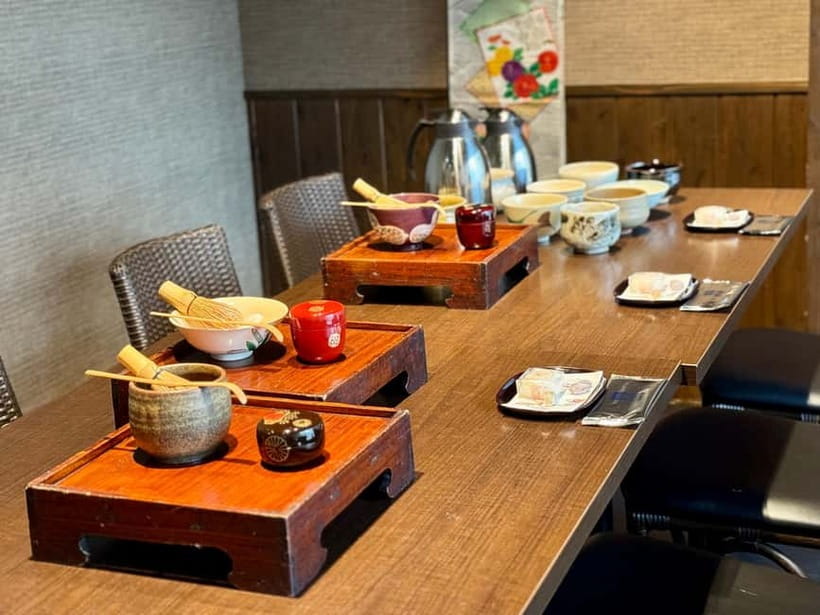
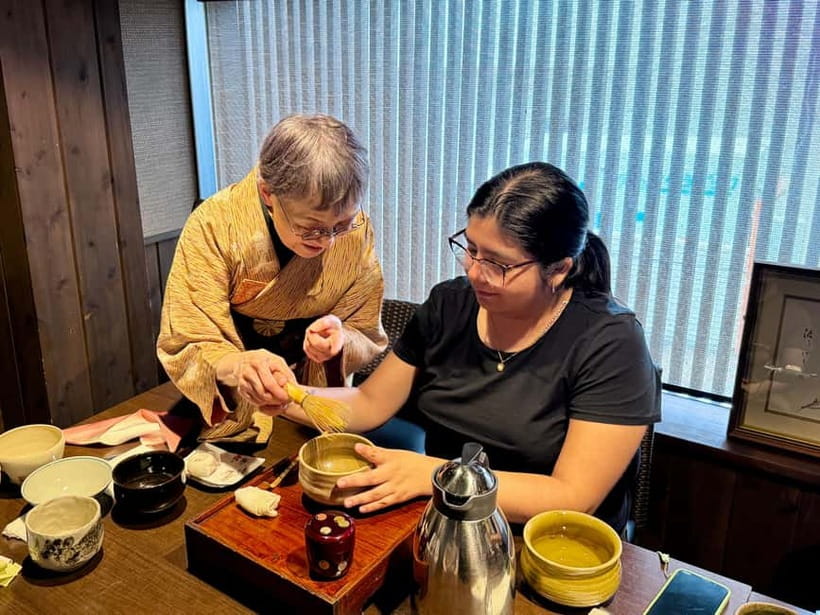
Making matcha here is less about sitting perfectly on a tatami mat and more about learning a skill you can use at home. You start with tea prepared by the instructor, taste a Kagoshima sweet, then whisk your own bowl in a comfortable room with ordinary tables and chairs.
I like the local Kagoshima matcha and confectionery, and I like the practical teaching. You learn what the utensils do, how to whisk, and a little about hospitality. The main consideration is that this is not a full formal tea ceremony, and the second-floor venue has no lift.
Key points to know before booking
- A hands-on lesson near Kagoshima-Chuo Station: The private room is about a five-minute walk from the station.
- A casual alternative to a formal tea ceremony: You sit at a table with chairs rather than on tatami.
- Local ingredients: Both the matcha powder and traditional sweets come from Kagoshima.
- A clear two-bowl format: First, enjoy tea prepared for you, then make a bowl yourself.
- Language support is available: The session is conducted in Japanese, with English or German assistance.
- Small groups can make it personal: Private and small-group options are available, and one booking was able to reserve just one day ahead.
A practical matcha lesson, not a staged tea ceremony
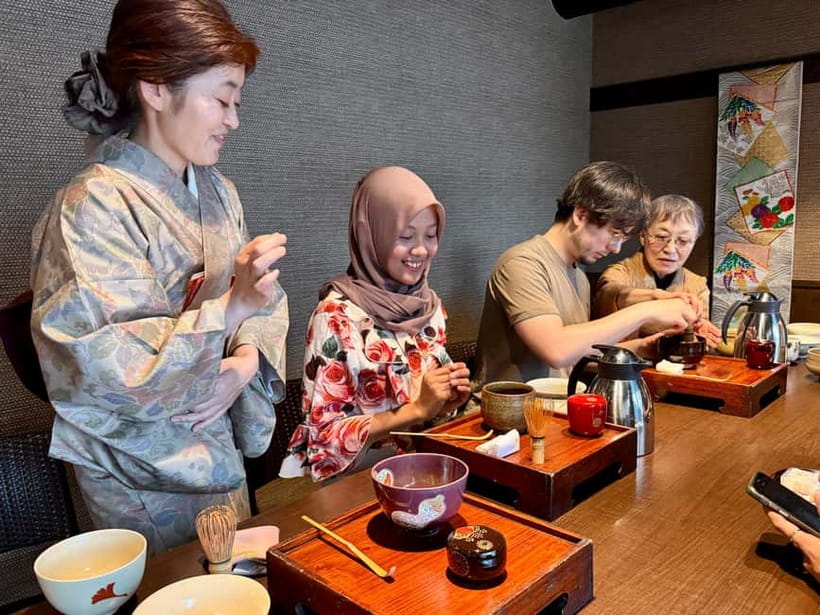
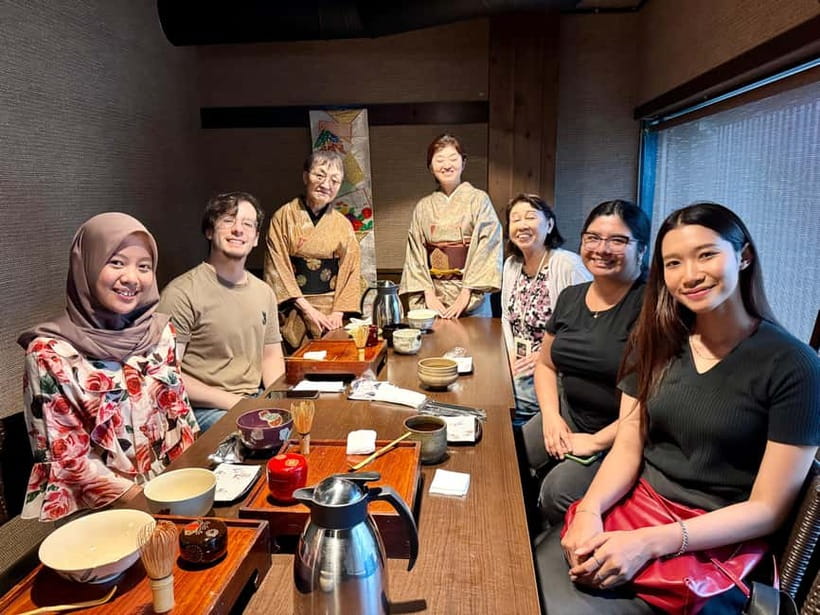
The appeal of this experience is its plain, friendly approach. You are not expected to know Japanese tea customs before you arrive, and you do not need to commit to a long ceremonial performance. Instead, an instructor walks you through the basic tools, the order of preparation, and the simple etiquette that helps you serve tea thoughtfully.
That makes this a good fit if you have seen matcha prepared in Japan but still do not know how to make it yourself. You get enough explanation to understand the process, then enough practice to try it with your own hands.
The class takes place in a private room inside a Japanese restaurant. This setting gives the workshop a local feel without making it formal or intimidating. You sit in a normal chair at a table, which is easier for many people than kneeling on tatami.
I especially like that the format gives you two bowls. The first is prepared by the instructor, so you can focus on the color, scent, texture, and taste. The second is for practice, so you can pay attention to the whisking and preparation without simply watching from the sidelines.
More Matcha Experiences in Japan:
- World Heritage Kyoto & Nara Uji Authentic Matcha Experience
★ 5.0 · 1,573 reviews - Kyoto: Arashiyama Bamboo Forest, Monkeys, Matcha & Temple Tour
★ 5.0 · 759 reviews - Matcha Making Class in Tokyo with Authentic Japanese Sweets Set
★ 5.0 · 744 reviews
What happens during the one-hour session
The exact order may vary slightly with the instructor and group, but the experience follows a clear pattern.
First taste: matcha prepared for you
The session begins with a bowl of matcha whisked by the instructor. This gives you a useful reference point before you try the process yourself. You can notice how the drink looks and feels, then compare it with the bowl you prepare later.
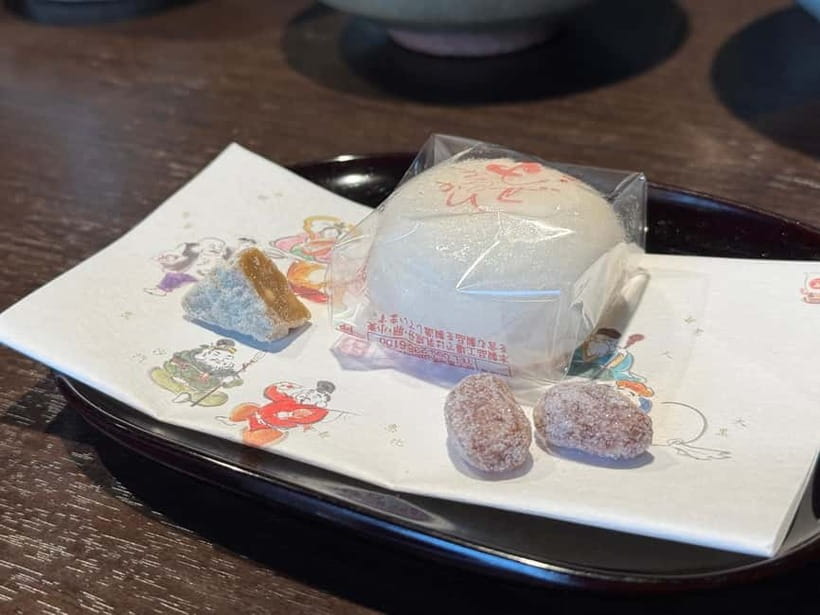
Your tea comes with a traditional confection from Kagoshima. Japanese sweets served with matcha are not just an extra snack. Their sweetness helps balance matcha’s earthy, slightly bitter flavor, and the pairing gives you a better sense of how the drink is traditionally enjoyed.
The sweet may contain ingredients such as sugar, eggs, yam, rice flour, or nuts. If you have an allergy or follow a specific diet, check before booking rather than waiting until you arrive.
Learning the utensils and their purpose
The instructor introduces the tools used to prepare matcha and explains what each one is for. The key value here is not simply learning the names of objects. You begin to understand why each step matters and how the tools work together.
You may also be able to choose your own cup or bowl for the experience. This small choice adds a personal touch and makes the practice bowl feel less like a demonstration prop and more like something you are handling yourself.
The lesson also covers basic hospitality etiquette. You are not only learning to make a drink. You are learning how matcha is offered to another person, how care is shown through preparation, and why the order of actions matters.
More Tea Making Classes in Japan:
- Matcha Making Class in Osaka with Authentic Japanese Sweets Set
★ 5.0 · 509 reviews - Tokyo: Matcha Making Experience with Mochi Sweets in Asakusa
★ 4.9 · 388 reviews - Asakusa Cultural Walk & Matcha Making Tour
★ 5.0 · 245 reviews - Osaka: Matcha Making Experience with Japanese Sweets
★ 5.0 · 146 reviews
Your turn with the whisk
Next comes the hands-on part. You prepare a bowl of matcha yourself, guided by the instructor. The point is not to produce a perfect bowl on the first try. It is to feel how the whisk moves and to learn the basic rhythm well enough to repeat it at home.
This is where the casual furniture helps. You can concentrate on the bowl and whisk without worrying about formal posture or a ceremonial room. If you have questions, ask them as you go. The session is designed to be approachable, and language support can be provided in English or German.
At the end, you have tasted matcha made by someone experienced and prepared one yourself. That contrast is useful. You can see that matcha is simple in principle, but small details in technique affect the result.
Why Kagoshima ingredients make the class more meaningful
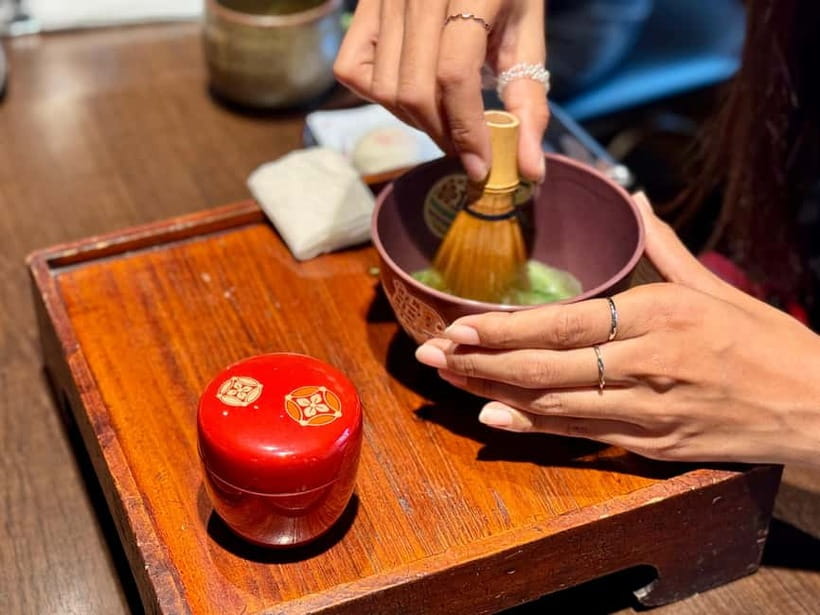
The workshop uses matcha powder and confectionery produced locally in Kagoshima. That matters because the class is not just a generic introduction to a famous Japanese drink. It connects the activity to the region you are visiting.
You get to taste local ingredients in a setting close to Kagoshima-Chuo Station, rather than treating Kagoshima as a backdrop for a lesson that could happen anywhere. The sweet gives you a second local taste alongside the tea, and the instructor can help explain the cultural side of the pairing.
You should not expect a long lecture about Kagoshima or a full food tour. The experience is only one hour, so its regional focus comes through the ingredients and the way the tea is presented. For a short activity, that is a sensible balance.
The relaxed setting works well for beginners
Formal tea ceremonies can be beautiful, but they can also feel hard to enter if you do not know the rules. This workshop removes much of that pressure.
You sit at a table and chair, ask questions, and practice with guidance. There is no need to rent a kimono, and kimono rental is not included or part of the activity. You also do not need to arrive with prior tea experience.
This relaxed setup is one of the strongest reasons to choose the class. You can focus on learning rather than worrying about whether you are kneeling correctly or performing every movement with ceremony-level precision.
The tradeoff is clear. If you want a formal tea ceremony in a traditional tatami tea room, this will not provide that. The experience introduces tea preparation and hospitality etiquette, but it does so in a casual restaurant room.
English and German assistance can make the lesson easier
The main workshop is conducted in Japanese, but an English- or German-speaking assistant can be provided. The listed language support includes Japanese, English, and German.
That arrangement is worth understanding before you reserve. The instructor may lead the demonstration in Japanese while an assistant helps explain the process or answer questions. If you want detailed cultural or historical discussion, confirm the language arrangement when booking.
A particularly helpful feature is the chance to ask questions about the culture and history of tea after the demonstration. English-speaking assistance was praised in the booking feedback, with two translators helping explain points beyond the physical steps of making matcha.
The instructors associated with one highly rated session were Junko and Ayako. If they are available for your date, you may find the lesson especially personal, but instructor assignment can vary.
Location and timing in Kagoshima
The venue is about a five-minute walk from Kagoshima-Chuo Station. That is a practical location for a short activity, especially if you are using the station as your base before or after exploring the city.
Because the workshop lasts only one hour, you can fit it into a morning or afternoon without giving up most of your day. Check the available starting times before booking, since the schedule depends on the date and option selected.
The meeting point may vary depending on the option you choose. Pay attention to the final meeting instructions, even though the general venue is described as a private room in a Japanese restaurant near the station.
The room is upstairs, on the second floor in the Japanese system, and there is no lift. This is important if stairs are difficult for you. The activity is not suitable for wheelchair users.
Is the $35 price good value?
At $35 per person, the class sits in the reasonable range for a one-hour cultural activity, particularly because it includes two bowls of matcha, a traditional Kagoshima sweet, instruction, and language assistance when arranged.
The value comes from the hands-on format. You are not only paying to watch someone prepare tea. You taste the instructor’s bowl, use the utensils, make your own bowl, and leave with a method you can repeat at home.
The local ingredients add another layer of value. You are tasting Kagoshima-produced matcha powder and confectionery rather than receiving an anonymous tea sample. The private or small-group format may also suit you better than a large demonstration where questions are limited.
Still, this is not a meal. The price does not include transportation, additional food, or kimono rental. If you want a substantial Japanese food experience, you will need to plan lunch or dinner separately.
Who will enjoy this experience most?
I would recommend it first to beginners who want a gentle introduction to matcha. You will get the most from the class if you are curious about Japanese customs but prefer practical instruction over a highly formal ceremony.
It also suits people passing through Kagoshima-Chuo Station who want a short activity with a clear local connection. The five-minute walk and one-hour length make it easy to fit between other plans.
The class can work well for couples, friends, or a small private group. A solo participant may also appreciate the intimate setting, especially if the class is not shared with a large crowd.
Children under seven are not permitted. Older children may need to follow the available booking rules, but the stated minimum age is seven. People who use wheelchairs should not book because of the stairs and lack of a lift.
Avoid strong perfume or other strong fragrances. Matcha has a delicate aroma, and the organizers ask you to leave heavy scents at home so everyone can smell the tea properly. Smoking and pets are not allowed.
Matcha contains caffeine. If you are sensitive to caffeine, take medication affected by it, or have a specific health condition, check ahead of time. The sweets may contain sugar, eggs, yam, rice flour, and nuts, so allergy questions should be handled before the session.
How this compares with a formal tea ceremony
This activity teaches elements of tea culture without presenting itself as a full traditional ceremony. That distinction matters when you make your choice.
You will not be in a tatami tea room, and you will not need to wear a kimono. Instead, you sit at a table, learn the purpose of the utensils, watch the preparation, taste the tea, and practice it yourself.
I see this as an advantage for most first-time visitors. The lesson gives you something useful to do and remember. You can return home and make matcha rather than simply recalling a quiet ritual that you watched once.
If your main goal is the visual formality of a tea ceremony, look for a tatami-based experience instead. If your goal is to understand the basics and take part without stress, this class is the better match.
Booking advice and small practical details
You can cancel up to 24 hours before the activity for a full refund. A reserve-now, pay-later option is also available, which helps if your Kagoshima schedule is still changing.
Private and small-group options are offered. A previous booking was made only one day ahead and ended up as a private class, though you should not assume that same arrangement will be available on your date.
Wear something comfortable for sitting at a table and working with tea. You do not need a kimono, and no clothing rental is included. Arrive without a strong fragrance, and make sure you know the exact meeting point for your selected option.
The strongest part of the experience is its combination of welcome and participation. You can ask questions, learn a little history and etiquette, and then make the tea yourself. The practical station-side location is a bonus, not the main reason to book.
Should you book the Kagoshima matcha class?
Book it if you want a short, friendly introduction to matcha that uses local Kagoshima ingredients and gives you real practice. The class is especially good for first-timers, curious food lovers, and anyone who wants to prepare matcha at home.
Skip it if you are specifically seeking a formal tatami tea ceremony, a full meal, or a step-free venue. For everyone else, the $35 price is fair for a small-scale cultural lesson with tea, sweets, instruction, and a chance to ask questions.
FAQ
How long does the Kagoshima matcha experience last?
The workshop lasts one hour. Available starting times depend on the date, so check the schedule when booking.
Is this a traditional tea ceremony in a tatami room?
No. The experience takes place in a private room at a Japanese restaurant, with tables and chairs. It teaches matcha preparation and basic hospitality etiquette in a casual setting.
What is included in the matcha workshop?
You receive a bowl of matcha prepared by the instructor, a bowl to practice making yourself, a traditional Kagoshima sweet, and the matcha preparation lesson. English or German assistance can also be provided.
Is the workshop available in English?
The workshop is conducted in Japanese, but an English- or German-speaking assistant can be provided. The listed languages are Japanese, English, and German.
Can children join the activity?
Children under seven years old are not permitted to participate.
Is the venue wheelchair accessible?
No. The venue is upstairs on the second floor in the Japanese system, there is no lift, and the activity is not suitable for wheelchair users.
Just added around Japan
- Yokohama : Tea Ceremony with Sweets and Souvenir★ 5.0 · 5 reviews
- Whisk Your Own Matcha: A Zen Matcha Experience at Temple★ 3.6 · 7 reviews
- Walking Tour: Yanaka,Nezu& Sendagi: Tea Ceremony & Old Tokyo★ 5.0 · 3 reviews
- Visit local home for music and tea ceremony near Disney★ 4.9 · 13 reviews
- Yokohama: Sushi & Gyoza Cooking with Matcha & GreenTea Experience★ 5.0 · 3 reviews
- Trip to Kamakura & Enoshima: Shrines, Seaside, Temples &Tea★ 5.0 · 11 reviews
- Uji: Private immersion into Kyoto’s tea and reglious culture★ 5.0 · 17 reviews
- Kyoto tea town for matcha lovers★ 5.0 · 16 reviews
Tea Making Classes, compared.

Matcha Making Class in Tokyo with Authentic Japanese Sweets Set
Read our review →
Traditional English Scone Making and Tea Workshop
Read our review →
Matcha Making Class in Osaka with Authentic Japanese Sweets Set
Read our review →
Matcha Making Experience with Mochi Sweets in Asakusa
Read our review →London Traditional English Scone Making and Tea Workshop
Read our review →
Nara:Authentic Tea Ceremony(Max 5 ppl) -Master Matcha Making
Read our review →Browse the lists this tour appears in