
Review · JAPAN
Ceramics and Green Tea Tour of Nagasaki and Saga Prefecture
The best part of this day is the way it links two crafts that shaped Kyushu: Arita porcelain and Ureshino green tea. You move from mountain villages and old quarry sites to tea producers, with rural scenery between each stop. It feels far removed from Fukuoka’s city streets.
I like the private format, especially for a group of up to three. You can spend more time shopping for ceramics, or shift attention toward tea without being tied to a large group’s schedule. I also like the practical comfort: lunch, snacks, bottled water, air-conditioning, onboard WiFi, parking, and private transport are all covered.
The main drawback is the long road day. About three of the 10 to 11 hours are spent driving, and several stops are brief. The price of $716.68 per group is easier to justify with three people than with one or two, so this works best when your party shares an interest in both crafts.
Key points to know
- Arita and Okawachiyama pottery: See working pottery districts, porcelain history, shops, shrines, and mountain scenery.
- Ureshino tea country: Learn about green tea at the Chaoshiru museum, a specialty producer, and the site linked to Japan’s first Ureshino tea.
- Private group of up to three: You can give more attention to ceramics or tea, depending on your interests.
- A full rural day from Fukuoka: Expect 10 to 11 hours overall, including roughly three hours of driving.
- Comforts included: Lunch, snacks, still and sparkling water, WiFi, air-conditioning, parking, and private transportation.
- Best for focused enthusiasts: The tour suits people who want context, shopping time, and countryside rather than a quick city outing.
Why this Fukuoka day trip is different
Many day trips from Fukuoka focus on major sights. This one takes you into Saga and nearby Nagasaki territory for a closer look at two regional traditions. Ceramics are not treated as a single museum topic. You see villages, raw material sites, religious buildings decorated with porcelain, a museum, shopping areas, and production-related attractions.
Tea receives the same treatment. You begin with background at the Ureshino Tea Exchange Museum, then meet a tea specialist at Tokunaga Seicha, and finish at a site connected to the first Ureshino tea. That progression matters. You are not just handed a cup and told it is good for you. You get a sense of place, process, and local history.
The private vehicle also changes the feel of the day. Shannon Lefebvre is the experience provider, and the tour is designed for only your group, up to three people. If one person wants more pottery time while another is more interested in tea, you have a better chance of shaping the day around both interests.
A few more tea experiences around Japan worth a look
- Kyoto: Tea Ceremony in a Traditional Tea House in Kiyomizu
★ 4.9 · 3,519 reviews - Kyoto: Tea Ceremony Ju-An at Jotokuji Temple
★ 4.9 · 3,207 reviews - Kyoto: 45-Minute Tea Ceremony Lesson Experience
★ 4.3 · 2,378 reviews
Okawachiyama Village and the mountain pottery setting
The first stop is Okawachiyama Village in the mountainous part of Imari Town, Saga Prefecture. This is one of the strongest openings because the setting tells you something before you even study a single plate or bowl. The village sits among hills, giving the pottery tradition a strong sense of place.
You have about an hour here. That is enough time to look around without turning the stop into a rushed photo break. The village is presented as a pottery center that remains less familiar to many international visitors, so it offers a different atmosphere from a standard urban shopping street.
I would use this stop to start thinking about what you actually like. Notice shapes, glazes, decoration, and scale. If you plan to buy ceramics later, this first look helps you compare styles instead of making a snap purchase at the first shop.
Izumiyama Quarry and the beginning of Japanese porcelain
At Izumiyama Quarry, you get a short but important piece of ceramic history. Around 1616, Korean potters led by Yi Sam Pyeong discovered porcelain stone here in Arita. Their work led to the first successful firing of porcelain in Japan.
The stop lasts about 20 minutes, so keep your expectations in check. This is not a long walking visit or a full museum presentation. Its value is context. Once you see where the key material came from, later displays and shops make more sense.
The quarry also helps explain why Arita became so important. Porcelain is not simply a decorative style. It depends on specific materials, technical skill, firing, and long experience. A short stop at the source gives the rest of the day a useful foundation.
Tozan Shrine, where porcelain reaches the sacred
Tozan Shrine offers one of the day’s most unusual visual details. In a region known for ceramics, even a shrine can feature porcelain designs. Religious buildings are usually associated with older, established forms, so the use of ceramic decoration here catches your eye.
You have about 20 minutes. That is enough for a focused look, but not enough for a long visit. I would pay attention to the contrast between the shrine’s traditional setting and the ceramic elements. It shows how central porcelain became to local identity.
This is also a good reminder that ceramics in Arita are not only tableware or souvenirs. They have a place in public, cultural, and religious life. That makes the stop more interesting than a simple pause beside another building.
Same place, a different pot:
- World Heritage Kyoto & Nara Uji Authentic Matcha Experience
★ 5.0 · 1,573 reviews - Osaka: Tea Ceremony Experience
★ 4.9 · 1,426 reviews - Kyoto: Table-Style Tea Ceremony at a Kyo-Machiya
★ 4.9 · 1,211 reviews - Kanazawa: Kenrokuen Tea Ceremony Experience
★ 4.8 · 1,139 reviews
The Kyushu Ceramic Museum adds needed context
The Kyushu Ceramic Museum is the main educational stop on the pottery side, with about 45 minutes inside. English information is available, which matters if you want more than a quick visual impression.
The museum helps connect the separate pieces of the day. You have seen a village, a material source, and a shrine. Here, you can spend time with the wider story of pottery in the region and examine details that are easy to miss outdoors.
Forty-five minutes is useful but limited. You probably will not have time to study every display at length. Still, the stop gives you enough background to make shopping later more informed. If you are new to Japanese ceramics, this may be the point where styles and techniques begin to feel less mysterious.
Arita Sera is the main shopping window
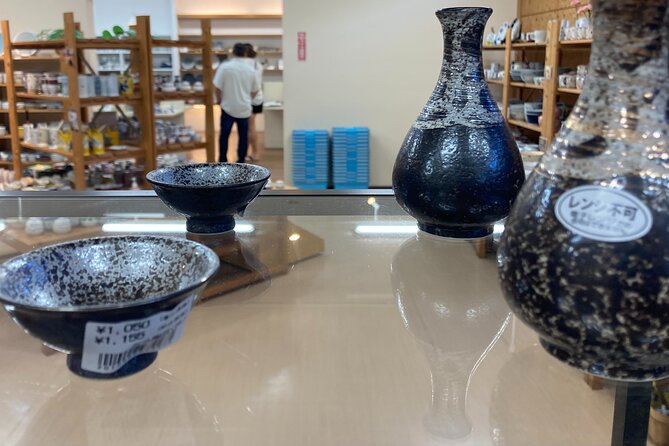
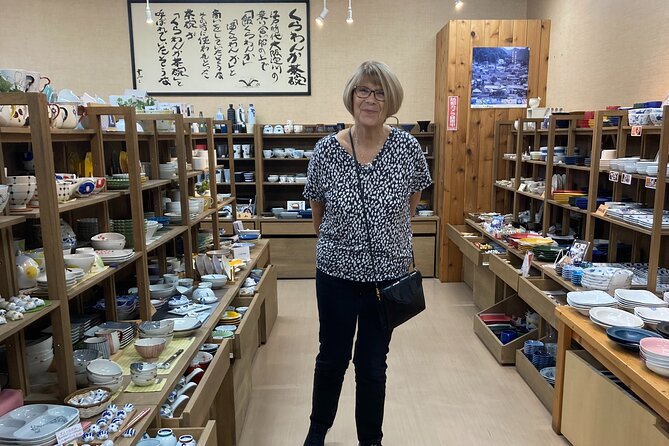
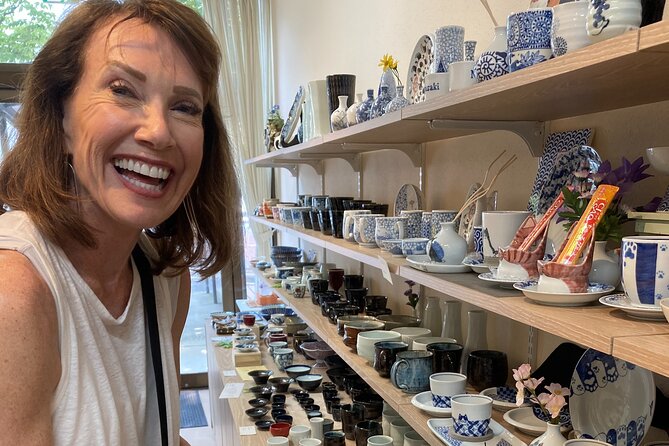
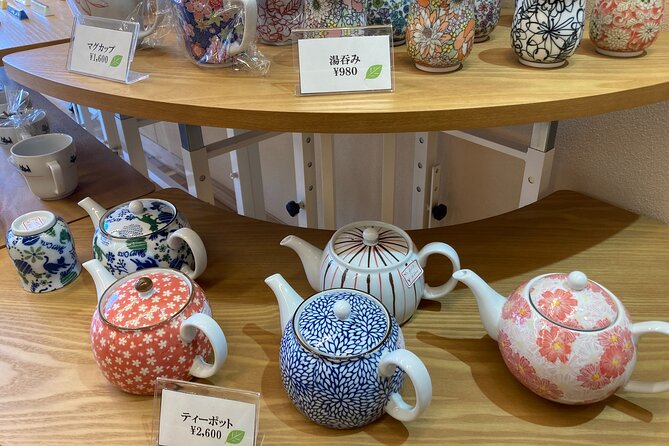
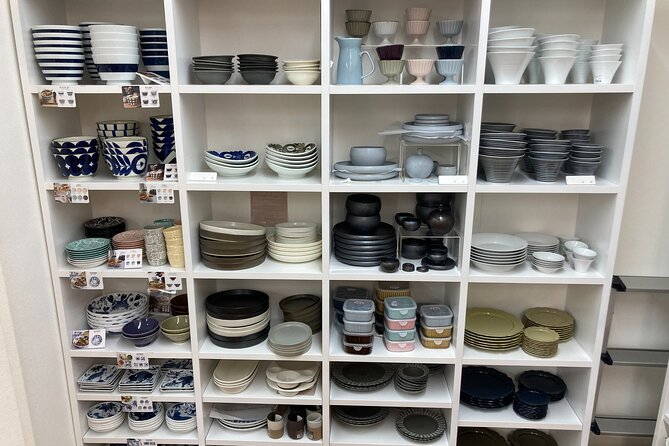
Arita Sera receives about two hours, making it the biggest single stop on the schedule. That generous block is important because ceramic shopping is rarely a five-minute task. You need time to compare pieces, consider prices, and decide what can fit safely in your luggage.
The range of ceramics can also make shopping confusing. Different people respond to different forms, colors, and levels of decoration. The tour is built to help match your interests with suitable porcelain shops, rather than sending you into a single store and hoping for the best.
If you already know you want plates, cups, serving pieces, or decorative work, this is where you will want to use your time well. Ask for help narrowing choices. You may find that a modest piece with a design you genuinely like gives you more pleasure than an expensive item bought only because it seems important.
The practical issue is luggage space. The more successful your shopping becomes, the more carefully you will need to pack. The tour provides transportation, but it does not remove the problem of getting fragile purchases home.
Arita Porcelain Park crosses the prefectural border
Arita Porcelain Park sits close to Nagasaki Prefecture, though it remains in Saga. The stop lasts about 45 minutes and gives you another look at the region’s porcelain culture in a setting that feels different from the village and museum.
The location is useful for understanding how close these areas are. A day that crosses between Saga and the edge of Nagasaki can still feel geographically focused, rather than scattered across a huge part of Kyushu.
With less than an hour here, treat it as a compact visit. You will have time to look around and get a sense of the site, but not necessarily to explore every corner. Its place in the route works well as a change of pace after the longer shopping stop at Arita Sera.
Hasami’s Ceramics Park brings in another pottery town
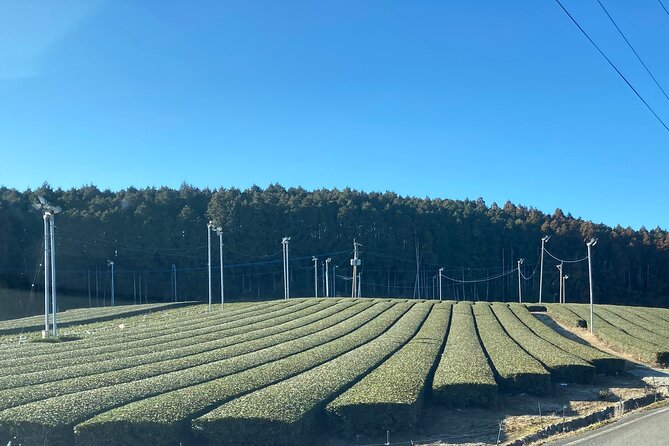
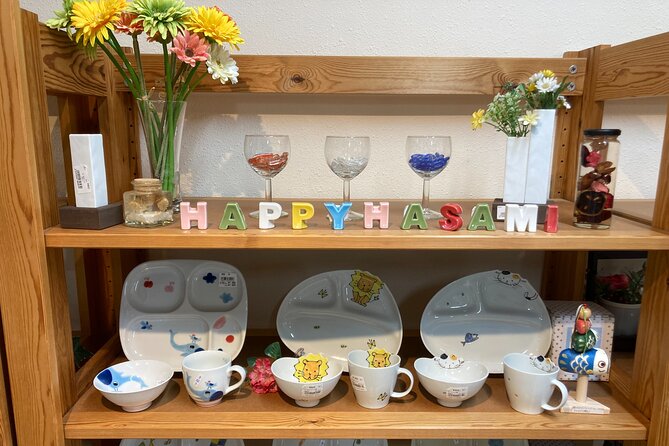
Ceramics Park, also called Yakimono Kouen, is in Hasami, a town of about 15,000 people surrounded by mountains and green hills. The visit lasts around 30 minutes.
Hasami adds another local perspective to the day. Arita is the main name in this route, but the wider area has several pottery traditions. Seeing another ceramics center keeps the tour from presenting Kyushu porcelain as one uniform style.
The short visit means you should focus on the setting and the broad picture. You might find this stop especially useful if you want to compare towns rather than spend the entire day inside shops. The surrounding hills also provide a welcome change after several indoor or built-up stops.
Chaoshiru explains Ureshino tea
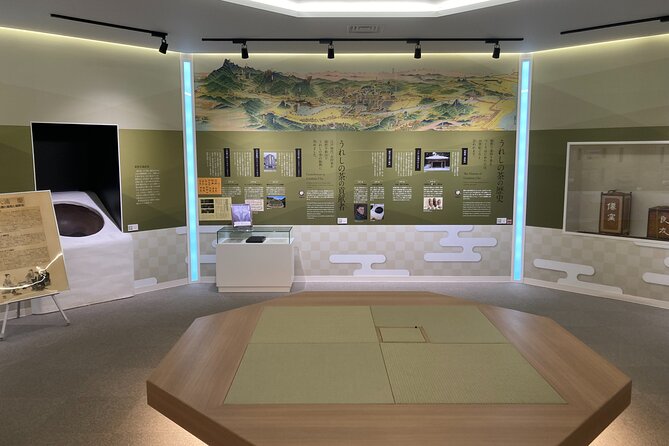
The tour then turns from fired clay to green leaves at the Ureshino Tea Exchange Museum, known as Chaoshiru. You have about 45 minutes here.
Green tea has become famous around the world for its links with digestion, alertness, and general well-being. The useful part of this stop is learning how those broad claims connect with a specific local tea culture. You are looking at Ureshino tea as a product of this area, not just as a generic health drink.
The museum also gives the tea portion some structure. Instead of rushing directly to a tasting or shop, you first receive background. That makes it easier to understand what you are being shown later by the producer.
Tokunaga Seicha offers a personal tea lesson
At Tokunaga Seicha, you meet the owner’s wife, a tea sommelier from Europe who now works professionally in the field. The visit lasts about 30 minutes.
Her background is an interesting part of the stop. She can connect European familiarity with tea to the details of Japanese green tea, giving you a useful bridge between cultures. The focus is on the fine points of tea, including the kind of distinctions that are easy to miss when you only buy a packet from a shop.
This is a short appointment, so do not expect a full tea school. Still, half an hour with a specialist can help you pay closer attention to aroma, flavor, preparation, and the differences between teas from the area.
The tea side is also a good counterweight to the ceramic shopping. One member of your group might be excited by porcelain while another is more interested in how tea is made and served. The private format makes that combination practical.
The giant tree and the first Ureshino tea
The final stop is the site associated with Japan’s first Ureshino tea. It is located in a rural part of Saga Prefecture and is connected with the giant tree of Ureshino.
You have only about 15 minutes here, so this is a brief historical pause rather than a long visit. Its importance comes from the link between a physical place, a local plant tradition, and the story of Ureshino tea.
Ending with the origin story gives the tea portion a clear finish. You have learned about the drink, met a specialist, and then reached a site tied to its beginnings. The stop is short, but it helps the day feel like a connected journey instead of a list of unrelated attractions.
The long drive is part of the experience
The total day runs about 10 to 11 hours, with roughly three hours spent traveling between attractions. That is a significant amount of road time, but it is not empty time. You can watch the countryside, listen to commentary, and use the onboard WiFi.
The air-conditioned vehicle matters in practical terms, especially on a full day with several stops. Bottled still and sparkling water is provided, along with extra snacks. Lunch is included, and you can have a sit-down meal or something on the go, with Japanese and Western options.
I would still approach the day with realistic energy levels. Ten hours is a long outing, and some stops are only 15 or 20 minutes. The reward is range: you see much more of the pottery and tea country than you could manage on foot or by trying to connect each place yourself.
Is $716.68 good value for up to three people?
The listed price is $716.68 per group, not per person. For three people, that works out to roughly $239 per person before considering the included lunch, snacks, water, parking, private vehicle, and WiFi.
For one person, the price is harder to defend unless you place a very high value on a private day and specialist access. For two people, it becomes more reasonable. For three, the cost is easier to balance against the amount of driving, the number of stops, and the convenience of having transportation arranged from Fukuoka.
You are also paying for focus. Public transport may get you to some of these towns, but connecting ten stops in one day would be difficult. You would need to manage routes, parking, timing, and the return journey. Here, those practical concerns are handled for you.
The value is strongest if you plan to buy ceramics, care about the story behind them, or have a serious interest in Japanese green tea. If you only want a general sightseeing day, the price and long schedule may feel excessive.
Who should book this day?
I would recommend it to a small group with a clear interest in pottery, porcelain, tea, or all three. It is especially useful for couples or friends who want to divide their attention between ceramics and tea without choosing only one theme.
It also suits repeat visitors to Japan who have already seen the main Fukuoka sights. The appeal here is the rural setting and the chance to see a specialized part of Kyushu culture.
I would think twice if you dislike shopping, have little interest in ceramics, or find long car journeys tiring. The route covers a lot, but it does so through a full day on the road. It is not a slow, single-site cultural visit.
The experience is non-refundable and cannot normally be changed after booking. Poor weather can lead to a new date or a full refund, but good weather is required for the tour to operate, so check the forecast before committing.
Should you book the Ceramics and Green Tea Tour?
Book this tour if you want to understand why Saga and nearby Nagasaki matter to Japanese ceramics and tea. The strongest parts are the two-hour Arita Sera stop, the clear porcelain story that begins at Izumiyama Quarry, and the tea sequence through Chaoshiru, Tokunaga Seicha, and the first Ureshino tea site.
Split the cost with two other people if possible. Bring enough room for purchases, and decide before departure how much time you want to give pottery versus tea. If that sounds like your kind of day, this private route offers a practical way to reach places that are difficult to combine independently.
FAQ
Where does the tour start?
The tour departs from Fukuoka, Japan.
How long does the tour last?
The experience takes approximately 10 to 11 hours.
How much time is spent traveling?
About three hours of the total tour time is spent traveling between attractions.
How many people can join the private tour?
The price covers one private group of up to three people.
Is pickup available?
Yes, pickup is offered.
Is lunch included?
Yes. Lunch is provided, with Japanese and Western options. You can have a sit-down meal or something on the go.
What else is included?
The tour includes snacks, bottled sparkling and still water, an air-conditioned vehicle, WiFi onboard, private transportation, and parking fees.
What ceramic locations are visited?
The route includes Okawachiyama Village, Izumiyama Quarry, Tozan Shrine, the Kyushu Ceramic Museum, Arita Sera, Arita Porcelain Park, and Ceramics Park in Hasami.
What tea locations are visited?
The tea stops include the Ureshino Tea Exchange Museum, also called Chaoshiru, Tokunaga Seicha, and the site associated with Japan’s first Ureshino tea.
Just added around Japan
- Yokohama : Tea Ceremony with Sweets and Souvenir★ 5.0 · 5 reviews
- Whisk Your Own Matcha: A Zen Matcha Experience at Temple★ 3.6 · 7 reviews
- Walking Tour: Yanaka,Nezu& Sendagi: Tea Ceremony & Old Tokyo★ 5.0 · 3 reviews
- Visit local home for music and tea ceremony near Disney★ 4.9 · 13 reviews
- Yokohama: Sushi & Gyoza Cooking with Matcha & GreenTea Experience★ 5.0 · 3 reviews
- Trip to Kamakura & Enoshima: Shrines, Seaside, Temples &Tea★ 5.0 · 11 reviews
- Kyoto tea town for matcha lovers★ 5.0 · 16 reviews
- Uji: Private immersion into Kyoto’s tea and reglious culture★ 5.0 · 17 reviews
Japan Tea Experiences, compared.
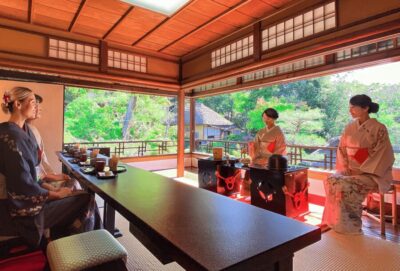
Tea Ceremony in a Traditional Tea House in Kiyomizu
Read our review →
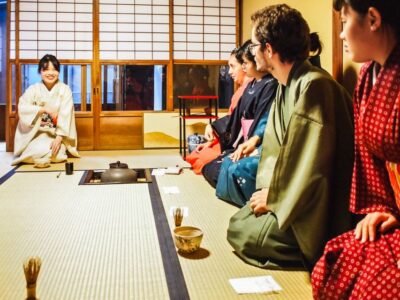
World Heritage Kyoto & Nara Uji Authentic Matcha Experience
Read our review →
Browse the lists this tour appears in