
Review · OSAKA
Osaka: Tea Ceremony Experience
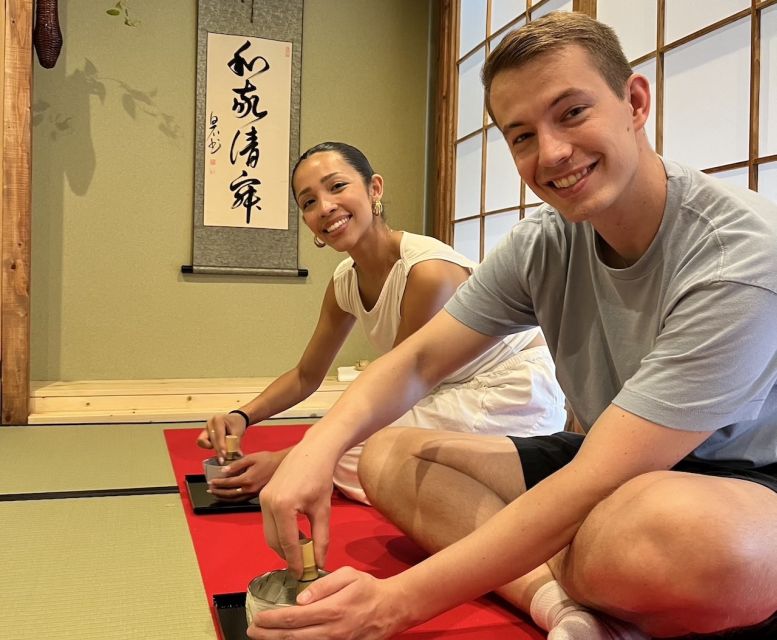
The best part of this Osaka tea ceremony is that you do more than watch. After a clear introduction and a graceful demonstration, you pick up the bamboo whisk and make your own bowl of matcha. It turns a formal Japanese custom into something you can understand with your hands.
I like the English instruction, which makes the ceremony approachable, and the quiet tatami-room setting, a welcome pause from Osaka’s busy streets. The price is also fair at $25 for 45 minutes, especially since matcha, sweets, and the entrance fee are included.
The main consideration is the meeting point. The second-floor venue near Dotonbori can be difficult to spot, and there is little room to wait outside, so arrive with enough time to find it, but not absurdly early.
Key points at a glance
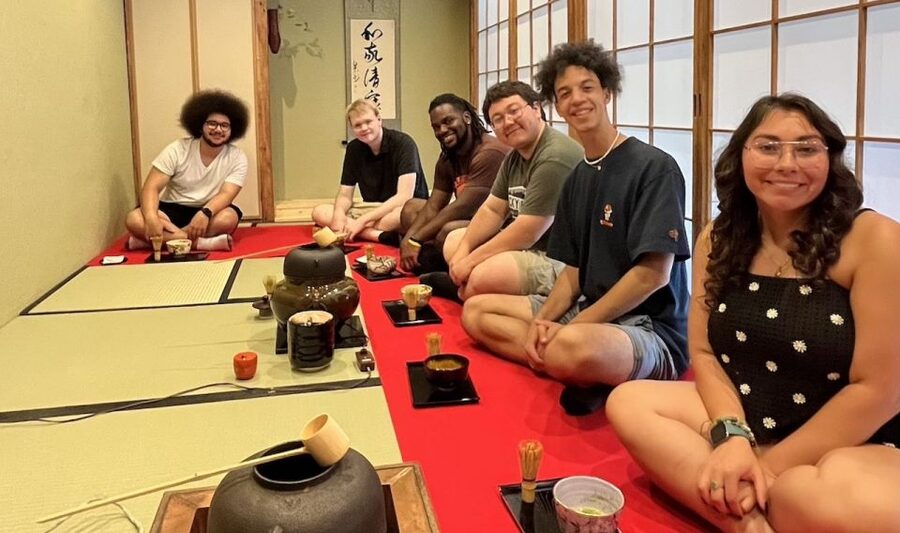
- You make your own matcha: Use traditional tea tools after watching the instructor prepare a bowl.
- English-speaking Japanese hosts: Instructors including Yuki, Akiko, Kazu, and Mayumi explain the ceremony in clear English.
- A calm tatami-room setting: Sit in a traditional Japanese room and learn the manners behind serving tea.
- Seasonal sweets are included: The small Japanese confections balance the earthy taste of matcha.
- Short and reasonably priced: The 45-minute format fits neatly between sightseeing stops, and the cost is $25 per person.
- Find the entrance carefully: The venue is on the second floor at 1-5-26 Dotonbori Higashi, Chuo Ward, Osaka.
Why this short tea ceremony works so well in Osaka
Osaka is famous for food, shopping, neon, and quick movement. This experience gives you a quieter 45 minutes without asking you to devote half a day to a formal cultural program.
The ceremony is designed as an introduction, not an advanced lesson in a particular tea school. You learn why the host handles each object with care, how the tea is served, and how guests respond. That makes it a good choice if you want cultural context but do not want a long lecture.
The teaching is also practical. You watch the host, then repeat the basic process yourself. By the end, you have not merely seen matcha prepared. You have whisked it, tasted it, and gained a better sense of why the ritual feels deliberate.
The experience has earned a 4.9 rating from 1,426 bookings, and the strongest pattern is easy to spot: visitors praise the hosts for being warm, patient, and clear in English. Names that appear in the sessions include Yuki, Akiko, Kazu, Mayumi, Kana, and Hise, though your instructor will depend on the date and schedule.
More Tea Ceremony Experiences in Osaka:
- Tea Ceremony Experience in Osaka Doutonbori
★ 5.0 · 754 reviews - Osaka: Tea Ceremony, Calligraphy, and Kimono Experience
★ 4.9 · 130 reviews - Osaka: Japanese Traditional Sweets Making and Tea Ceremony
★ 4.7 · 118 reviews
Entering the tatami room
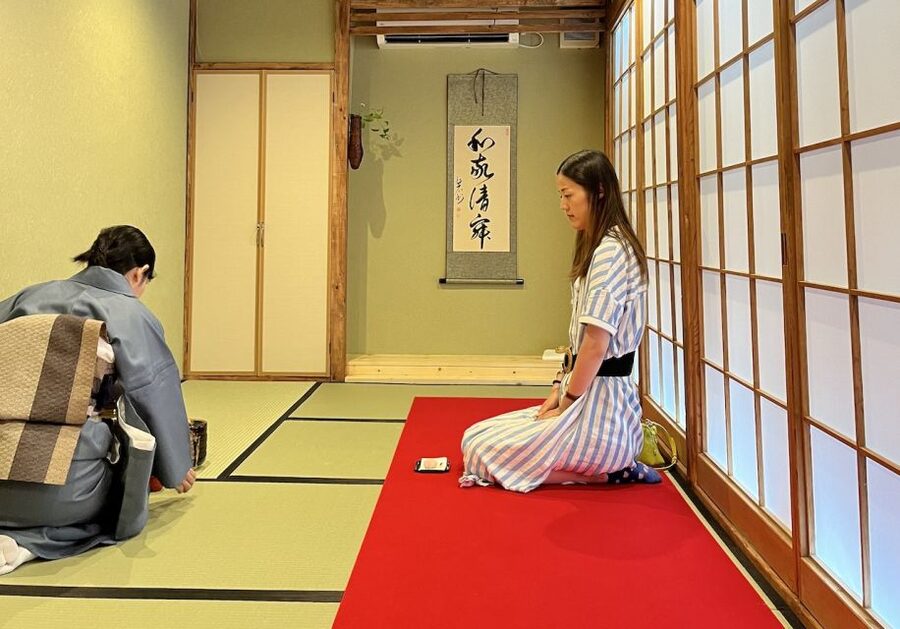
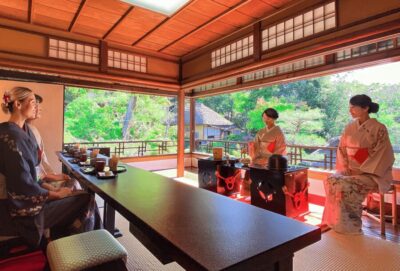
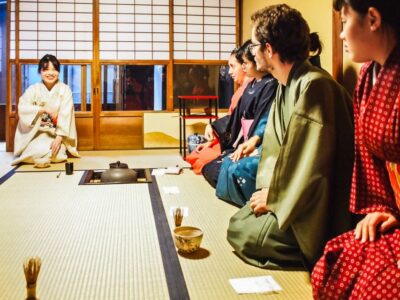
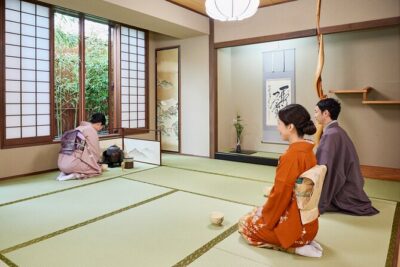
The welcome takes place in a traditional Japanese room with tatami flooring. Your host greets you, introduces the basic idea of tea ceremony, and gives some background on its meaning and development in Japan.
The room matters. A tea ceremony can feel like a staged demonstration in an ordinary activity room, but tatami, kimono, tea bowls, and the quiet arrangement of the space help you understand that the setting is part of the lesson. You are not simply drinking green tea. You are learning how space, movement, objects, and hospitality fit together.
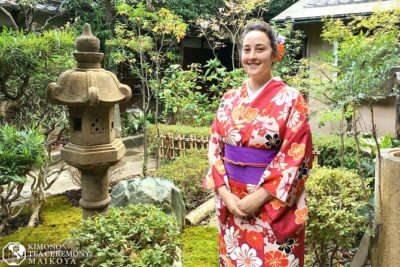
The hosts wear traditional kimono, which adds visual interest without turning the session into a costume show. The focus remains on the ceremony and the explanation of each step.
You will sit on the floor for much of the experience. One visitor specifically noted that the seating lasts around an hour, even though the stated duration is 45 minutes. If sitting on tatami is uncomfortable for you, this is worth considering before booking.
The welcome lesson: meaning before manners
The instructor begins by explaining the history and meaning of the tea ceremony. You learn that the movements are not random gestures. The way tea is presented, received, and prepared reflects care, attention, and respect between host and guest.
This opening is especially useful if Japanese tea ceremony seems mysterious or overly formal. The host explains the basic manners in plain English, so you can follow the demonstration without worrying that you will make a serious cultural mistake.
The tone is generally gentle rather than strict. Hosts such as Kazu and Mayumi are praised for taking time with questions, while Yuki is noted for being kind and pleasant. That personal approach suits first-time visitors. You can ask what a bowl means, why a tool is used in a certain way, or how the guest should respond.
The lesson is not a full study of Japanese tea schools, and you should not expect an expert course in tea production. In 45 minutes, the goal is a thoughtful introduction. For most visitors, that is the right amount of information before trying the tea themselves.
Watching the host prepare matcha
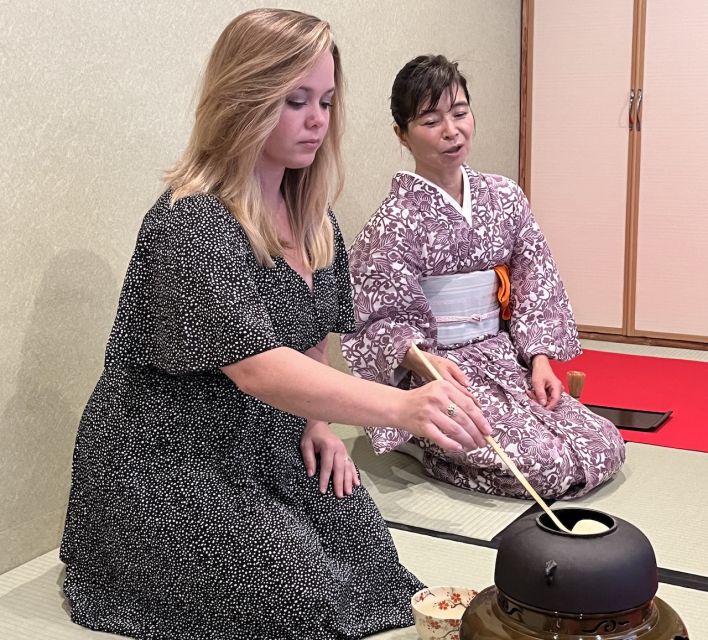
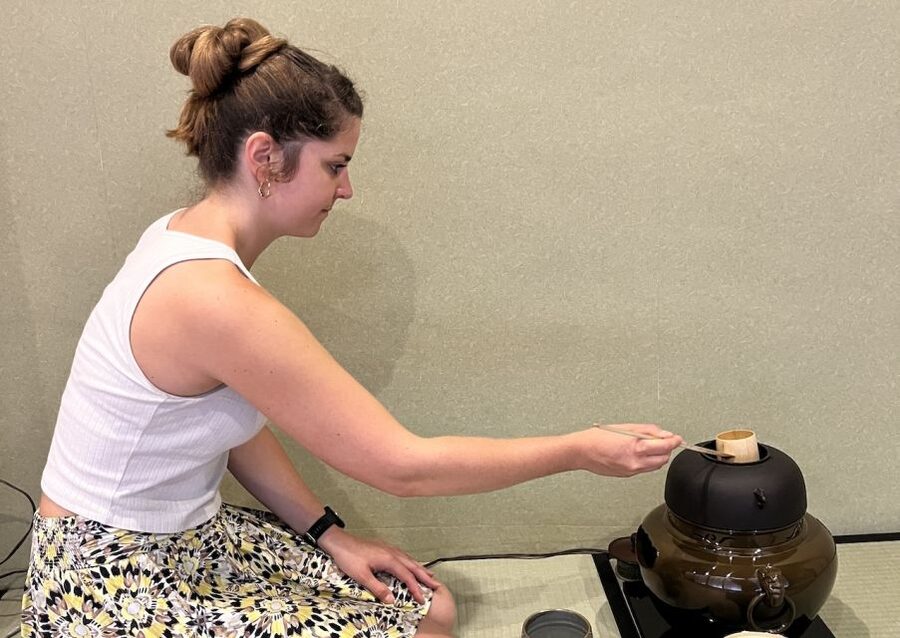
Next comes the demonstration. The instructor uses the traditional tea tools and performs the basic sequence at an unhurried pace.
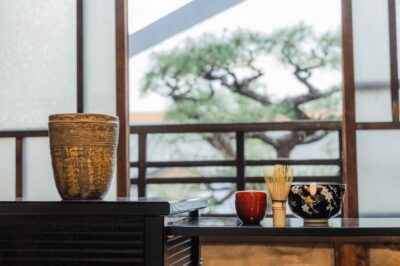
Watch the small details. The host handles the bowl, scoop, whisk, and other utensils with care. The ceremony is appealing partly because ordinary actions, adding powdered tea and water, whisking, presenting the bowl, and cleaning the tools, become a series of meaningful motions.
The demonstration also gives you a chance to see the correct technique before your turn. Matcha is not brewed like a teabag. The powdered tea is whisked into the water, creating a frothy drink with a distinctive grassy and slightly bitter taste.
The host explains the manners of tea serving as the demonstration continues. You are shown how the bowl is handled and how to approach the drink respectfully. The instructions are clear enough for beginners, and the atmosphere remains relaxed even when the ritual itself looks precise.
For me, this is where the experience moves beyond a photo opportunity. You begin to see why the tea ceremony is about hospitality and concentration, not just the drink in the bowl.
A few more tea experiences around Osaka worth a look
- Samurai Show, Tea Ceremony, Japanese Traditional Activities
★ 5.0 · 56 reviews - Osaka: Private Tea Ceremony and Calligraphy Experience
★ 5.0 · 50 reviews - Osaka; Japanese Tea ceremony experience, Macha and Sencha
★ 4.9 · 29 reviews - Samurai dress-up and shows, plus Tea Ceremony & Calligraphy
★ 5.0 · 27 reviews
Making your own bowl of matcha
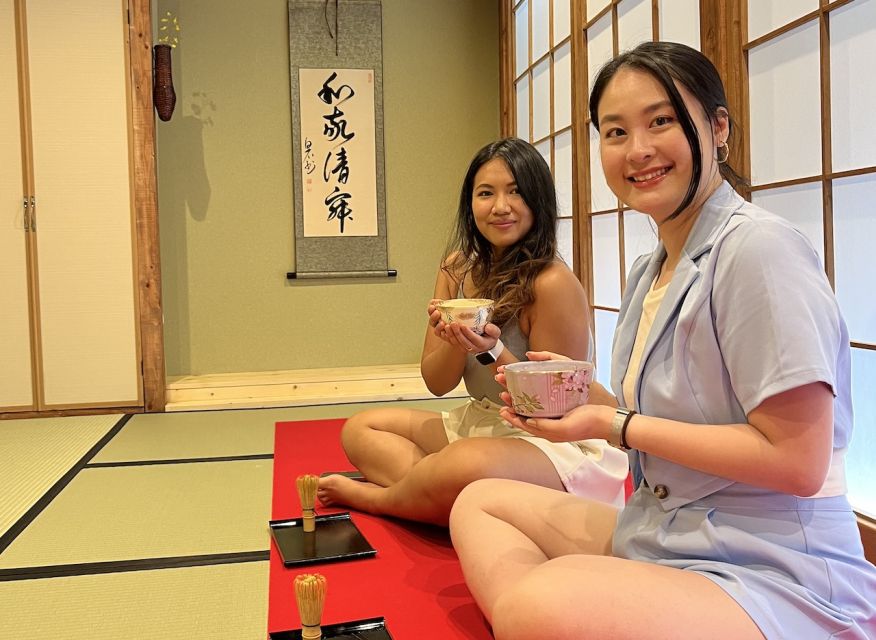
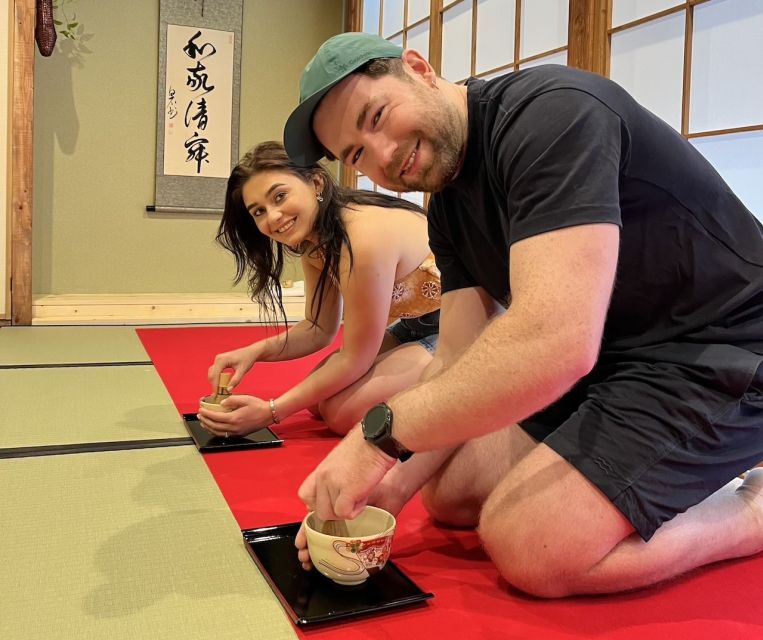
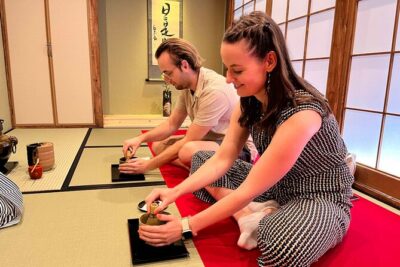
The hands-on portion is the heart of the session. You receive the tools and prepare your own matcha with guidance from the instructor.
This is a simple activity, but it gives you a real connection to the ceremony. You feel the movement of the whisk, see the powder change texture, and taste the result. Your first bowl may not look exactly like the instructor’s, and that is part of the fun.
The host stays nearby to explain what to do and answer questions. The teaching style is encouraging rather than intimidating. Several sessions are praised for giving clear instructions while allowing each person to participate at a comfortable pace.
You will then drink the matcha you prepared. Some sessions also include a second taste of matcha prepared by the host, so the exact flow may vary slightly. One important point is that matcha has a strong, earthy flavor. If you prefer sweetened tea, you may find it intense. The sweet served alongside it helps soften the bitterness.
This hands-on step makes the $25 fee easier to justify. You are paying for instruction, a cultural setting, the tea, the confection, and the chance to use the tools yourself rather than simply watching a performance.
Seasonal sweets and the balance of flavors
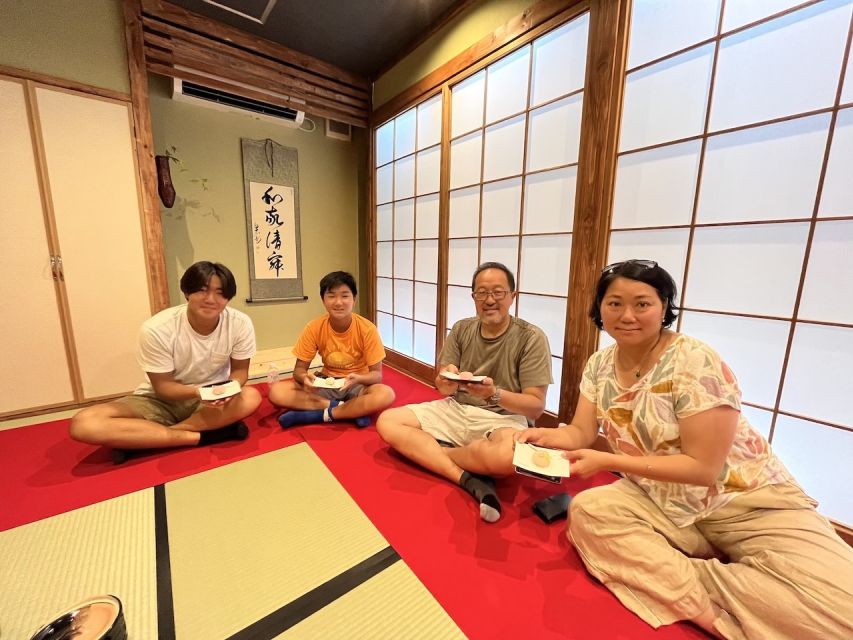
The seasonal Japanese sweet is a small but important part of the experience. It is served with the matcha and provides a sweet contrast to the tea’s vegetal, slightly bitter flavor.
The confections are often singled out as a highlight. They are described as delicate and delicious, and some visitors enjoyed eating the sweet before drinking the tea. The exact item can change with the season, so do not expect one fixed dessert.
These sweets also show how Japanese tea service considers the whole tasting experience. The confection is not just an extra snack. It prepares your palate for the matcha and makes the drink easier to appreciate.
Food is included, but outside food is not allowed. This is a small, quiet tasting rather than a meal, so plan to eat elsewhere if you arrive hungry.
A peaceful pause near Dotonbori
The location gives this activity extra appeal. The venue is at 1-5-26 Dotonbori Higashi, Chuo Ward, Osaka, on the second floor. Its coordinates are 34.6688508, 135.5063291.
Dotonbori is a busy part of Osaka, so the contrast between the streets outside and the quiet room inside is useful. You can place the session between shopping, food stops, and sightseeing without losing much time.
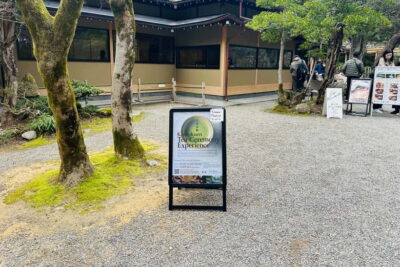
The meeting point needs care. Search Google Maps for tea ceremony osaka the osaka and check the address before setting out. The entrance may not be obvious, and one visitor found it difficult to locate. Arrive early enough to avoid missing the start, since late arrival can disrupt a ceremony.
Do not arrive extremely early, though. There is reportedly nowhere comfortable to sit while waiting. A few extra minutes for navigation is sensible. Twenty or thirty minutes of spare waiting time is less useful.
Who will enjoy this experience most
This is a strong choice for a first visit to Japan. You receive enough context to understand the ceremony, but the session stays short and active.
It also suits people who enjoy cultural activities with a hands-on element. If you like watching a craft and then trying it yourself, you will probably get more from this than from a demonstration where you remain seated throughout.
Families should read the age rules carefully. The supplied information says children under five are not allowed, while also stating that children aged five and above need their own tickets. It also advises contacting the provider in advance if you are traveling with a child under four. Because the wording is inconsistent, contact the provider directly before booking for a young child.
The session may be less suitable for anyone who dislikes sitting on the floor, strongly dislikes matcha, or wants a long and highly academic study of tea ceremony. It is an introductory experience, not a full-day cultural course.
Strollers and baby carriages are not allowed. Jumping, loud noise, and bringing food are also prohibited, which fits the quiet nature of the room.
How the $25 price compares
At $25 per person, this is reasonably priced for Osaka. The fee includes entrance, matcha, and Japanese confections, so you do not need to pay extra for the central parts of the activity.
The best value comes from the combination of instruction and participation. You watch an experienced host, learn the basic etiquette, prepare the tea, and taste a seasonal sweet. The instructors are described as having more than ten years of tea ceremony experience, which adds substance to the demonstration.
You should not compare this price with a private, extended tea ceremony led by a specialist in one particular school. That would be a different product. Here, you are buying a concise cultural introduction that fits into a sightseeing day.
The reserve-now, pay-later option can help if your Osaka schedule is still shifting. Free cancellation is available up to 24 hours before the activity for a full refund. Check the available start times when booking, since the session lasts 45 minutes and timing may shape the rest of your day.
Practical advice before you book
Use Google Maps and verify the Japanese address before leaving your hotel. The address is 大阪市中央区道頓堀1丁目東5-26, and the room is on the second floor.
Wear clothing that lets you sit comfortably on the floor. You do not need to bring tea equipment, food, or special supplies. The tea tools, matcha, sweets, and instruction are provided.
Give yourself enough time to find the entrance, but do not plan to wait inside for a long period. If you have questions about a young child, contact the provider before paying.
The activity is offered in English, with an English-speaking host or greeter and an English audio guide listed as included. The exact instructor may vary, but hosts such as Yuki, Akiko, Kazu, Mayumi, Kana, and Hise have led sessions praised for careful explanations and warm instruction.
Should you book the Osaka tea ceremony?
Book it if you want a short, reasonably priced introduction to Japanese culture that lets you participate rather than simply watch. The calm room, kimono-clad hosts, seasonal sweets, and chance to whisk your own matcha create a pleasant break from Osaka’s louder attractions.
Skip it if floor seating is a serious problem, if you need a fully private experience, or if you are looking for an advanced lesson in tea ceremony. For most first-time visitors, though, the 45-minute format is a strength. You learn the essentials, taste the tea, and leave with a better understanding of a Japanese tradition without giving up a whole afternoon.
FAQ
How long does the Osaka tea ceremony last?
The stated duration is 45 minutes. Some descriptions and personal accounts refer to spending close to an hour at the venue, so allow a little extra time around the scheduled session.
How much does the experience cost?
The price is $25 per person. The entrance fee, matcha, and confections are included.
Is the tea ceremony conducted in English?
Yes. The activity is offered in English, with an English-speaking host or greeter and an English audio guide included.
Do I get to make matcha myself?
Yes. After watching the instructor demonstrate the ceremony, you use traditional tea tools to prepare your own bowl of matcha and drink it.
Are Japanese sweets included?
Yes. Seasonal Japanese confections are included and are served with the matcha.
Where is the meeting point?
The venue is on the second floor at 大阪市中央区道頓堀1丁目東5-26, Chuo Ward, Osaka. The listed coordinates are 34.6688508, 135.5063291.
Are young children allowed to participate?
Children under five are not allowed according to the provided information, while children aged five and above need their own tickets. The instructions also advise contacting the provider in advance if you are accompanied by a child under four. Because the age wording is inconsistent, confirm directly before booking.
Can I cancel the booking?
You can cancel up to 24 hours in advance for a full refund. A reserve-now, pay-later option is also available.
Just added around Osaka
- Osaka: Tea Ceremony, Calligraphy, and Kimono Experience★ 5.0 · 6 reviews
- Osaka: Nara, Todaiji, Uji Matcha, and Hot Spring Tour★ 4.0 · 7 reviews
- Nara Deer Park, Uji Matcha, & Hot Spring Full-Day Tour from Osaka★ 4.0 · 21 reviews
- Osaka:Zen Tea Ceremony and Foot Bath Experience<45min>★ 5.0 · 7 reviews
- Premium Kimono Dressing, Tea Ceremony, Calligraphy, Samurai show★ 5.0 · 18 reviews
- Osaka Japanese Cooking And Matcha Class near Osaka Castle★ 5.0 · 22 reviews
- ZEN therapy | Shiatsu-style massage, EnergyTherapy & Japanese Tea★ 5.0 · 5 reviews
- Discover Japanese Tea Blending Techniques in Osaka★ 5.0 · 19 reviews
Tea Ceremony Experiences, compared.
Tea Ceremony in a Traditional Tea House in Kiyomizu
Read our review →
Browse the lists this tour appears in