
Review · BEIJING
Chinese Tea ceremony in Beijing Hutong courtyard
Chinese tea is not simply poured into a cup here. You learn how water, timing, tea leaves, hand movements, and manners shape the drink. The setting makes the lesson especially appealing: a small hutong courtyard only a short walk from the Forbidden City, where old Beijing life still brushes against the city’s grand imperial sights.
I like the small group of no more than four people, which gives the hosts room to answer questions and let you try the ceremony yourself. I also like the chance to meet local residents, including Limeng, and hear about Beijing’s hutongs from a family with roots in the neighborhood. The main drawback is price: at $31 per person, plus a stated 100 RMB per-person charge, this is not the cheapest one-hour activity for a family.
Key points at a glance
- Tea near the Forbidden City: The courtyard is described as about 150 meters from the Forbidden City’s east gate, with another direction note placing it 800 meters west of the exit gate. Confirm the exact meeting point before setting out.
- Four tea styles to choose from: You can select green, black, wulong, or Pu’Er tea, depending on what appeals to you.
- Hands-on brewing lesson: You learn why simply pouring boiling water over tea and waiting three minutes is not the whole story.
- A real hutong setting: The experience takes place in a courtyard surrounded by old Beijing lanes and nearby historic sites.
- Personal contact: Limeng and the hosts explain tea customs, Beijing life, and local history in English.
- Short, flexible addition to sightseeing: The ceremony lasts one hour and fits neatly before or after the Forbidden City.
A quiet courtyard beside Beijing’s imperial center
The best feature here is the contrast. Step away from the crowds around the Forbidden City, and within minutes you are discussing tea in a traditional hutong courtyard. Beijing’s imperial center is close enough to shape the atmosphere, but the activity is about ordinary local life rather than palace rooms and grand monuments.
The location is listed as roughly 150 meters from the east gate of the Forbidden City. Another meeting note describes it as 800 meters west of the Forbidden City exit gate. Those details may refer to different walking approaches, so I would not rely on a quick map search alone. Use the booking instructions and confirm the exact gate or pickup point before you go.
That small bit of planning matters in central Beijing. The Forbidden City has several gates and a visit there can leave you tired, turned around, or short on time. If you book this tea session after sightseeing, allow enough time to leave the palace complex and reach the courtyard without rushing.
The surrounding area adds value. Pudusi inheritance and the Imperial Ancestral Temple are among the historic places nearby. You may also take a short walk through a quieter hutong after the tea, an excellent way to see how Beijing’s old residential lanes sit beside the capital’s most famous sights.
More Tea Ceremony Experiences in Beijing:
- Traditional Chinese Tea Ceremony Experience
★ 4.7 · 74 reviews - Beijing Culture: Tea Ceremony, Heritage Instrument & Calligraphy
★ 5.0 · 57 reviews - Beijing Culture Event: Tradition Music, Tea Ceremony, Calligraphy
★ 5.0 · 11 reviews
What happens during the one-hour ceremony
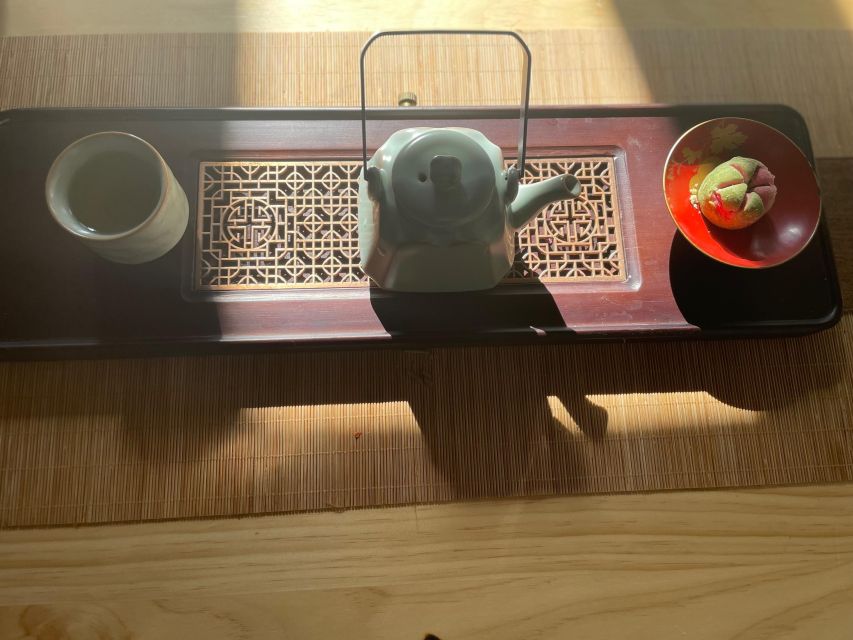
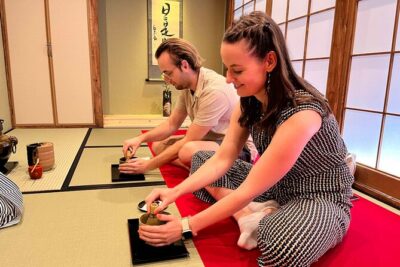
This is a compact experience, not a long formal ritual with many stages. You sit with the hosts, choose a tea, listen to an explanation of Chinese tea culture, and watch the preparation. You then have the chance to taste the tea and try parts of the process yourself.
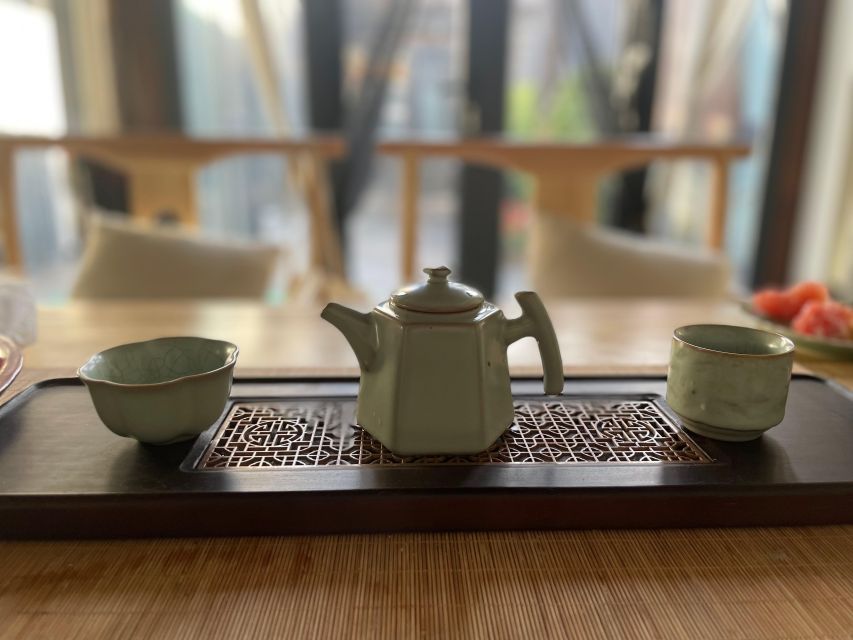
The available choices include green tea, black tea, wulong tea, and Pu’Er tea. These are not interchangeable cups of hot liquid. Each type has its own flavor, preparation style, and place in Chinese tea culture. If you are unsure what to choose, ask the host to guide you based on taste.
Several people particularly enjoyed learning how tea preparation affects flavor. You may be shown why water temperature, steeping time, the amount of leaf, and repeated brewing matter. The useful lesson is simple: good tea does not come from treating every leaf in exactly the same way.
The ceremony also covers how to hold the cup and drink with grace. This may sound like a small detail, but it helps you understand that tea is tied to manners and social exchange, not just refreshment. You are not expected to arrive with prior knowledge. The instruction is in English and the format is designed for participation.
Tea snacks are included. They give you something small to eat between tastings and help complete the traditional tea-table setting. Do not expect a meal, though. If you are hungry, eat before or after the session.
Green, black, wulong, or Pu’Er
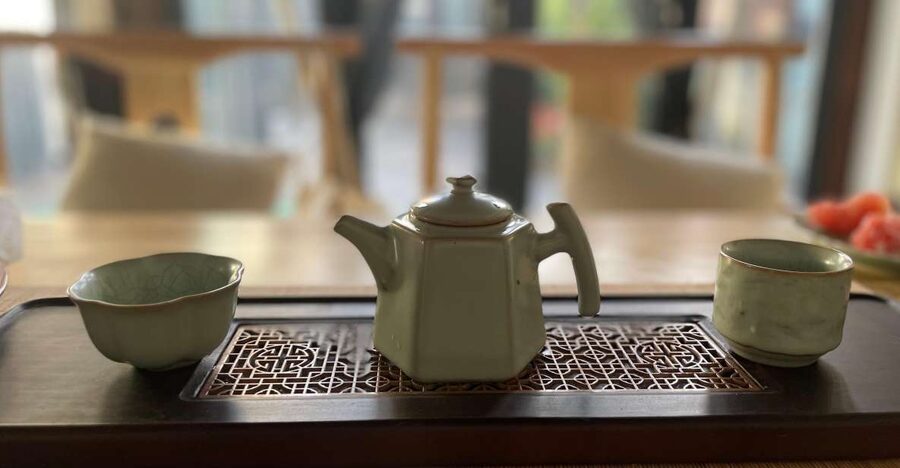
The four tea categories give the hour some variety, even though you receive one pot of tea. The description allows you to choose the type, and some sessions may include the chance to taste two distinctive teas. Ask at the start what is available that day and how many teas are part of your booking.
Green tea is often a good starting point if you prefer a lighter, fresher taste. Black tea generally gives you a fuller cup. Wulong sits between broad categories and can offer more complex flavors, while Pu’Er is a sensible pick if you want to try something closely connected with Chinese tea tradition.
The hosts also explain seasonal drinking habits and how different teas are thought to affect the body. Treat this as cultural context rather than medical advice. The useful point is that tea choices can reflect weather, food, personal taste, and custom.
You do not need to be a serious tea drinker to enjoy the session. One participant who did not consider themselves a tea lover still found the tea tasty and valued the conversation most. That is a good guide to the experience: the tea is the doorway, but the social exchange is a large part of the appeal.
Meeting Limeng and local Beijing hosts
The people make this more than a standard tasting. Limeng is named as a host in several accounts, and she is praised for her friendly manner, clear English, and ability to explain both tea and Beijing’s hutongs. The activity also involves local hosts whose family has lived in the courtyard area for generations.
That family connection gives the conversation a useful angle. You can ask about daily life in a hutong, how the old neighborhoods have changed, or how tea fits into Chinese homes and social occasions. The experience does not promise a full oral history of Beijing, but the setting gives you a personal link to the city that a palace tour cannot provide.
The small group limit of four is important here. With only a few people, you can ask direct questions and take part without being lost in a crowd. It also keeps the mood closer to a visit with a local host than a staged show.
English is provided by the instructor and hosts. The activity is intended for international visitors, and the English communication has been praised as clear. If you want to talk about food, local neighborhoods, or what to see next, this is also a natural place to ask. One host helped a participant find a less tourist-focused place for Beijing duck, though that kind of extra advice should be treated as a pleasant bonus rather than a formal part of the tour.
A few more tea experiences around Beijing worth a look
- Beijing: Dumpling Making Workshop with Meal and Tea
★ 4.7 · 69 reviews - Beijing: Mutianyu Great Wall and Tea House Private Tour
★ 5.0 · 11 reviews - Beijing: Temple Of Heaven+Tai Chi Class+Tea Ceremony
★ 5.0 · 8 reviews - Traditional Chinese Tea Ceremony Experience
★ 5.0 · 7 reviews
The hutong setting matters
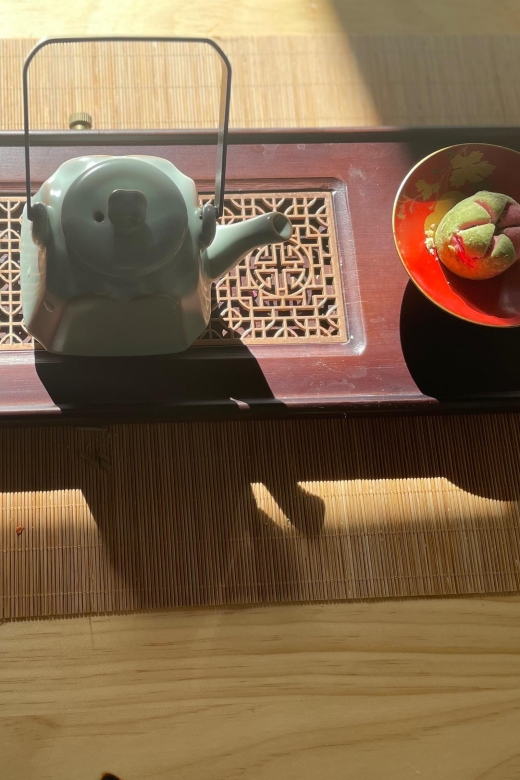
Beijing’s hutongs are old residential lanes built around courtyards. You do not need a long lecture to see why they matter. The scale is intimate, and the lanes give you a view of city life that is very different from Tiananmen Square, the Forbidden City, or a large modern shopping street.
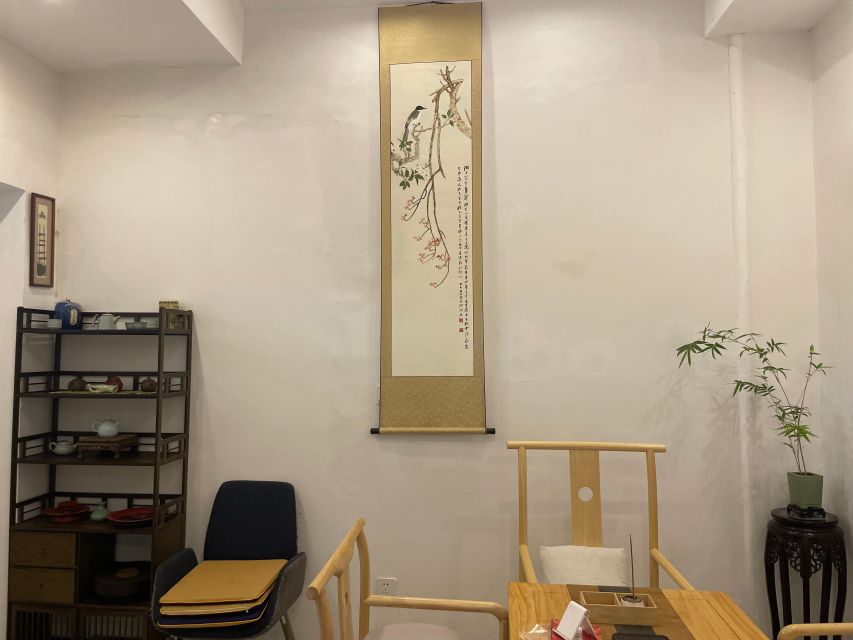
The courtyard is the experience’s visual anchor. You sit in a residential setting rather than a hotel conference room or a large commercial teahouse. That does not make the activity completely untouched or free from tourism, but it does give the tea lesson a stronger sense of place.
The short walk afterward can be just as useful as the tea itself. A quiet hutong only steps from the Forbidden City helps you notice how imperial Beijing and residential Beijing occupy the same central area. If you have already spent hours looking at monumental architecture, this change of scale can be refreshing.
The tradeoff is that hutongs are working neighborhoods, not museum sets. You should behave respectfully, keep your voice down, and avoid treating private doorways or residents as photo props. The value of the setting depends on remembering that people live there.
Is $31 per person good value?
At $31 per person, this is reasonably priced for a private-feeling cultural activity, but the value depends on what you want from the hour. You are paying for tea, snacks, English instruction, a small group, a central location, and conversation with local hosts. You are not paying for a full meal, a long sightseeing tour, or transportation around Beijing.
For one or two people who care about tea and local contact, the price can make sense. The central location also saves time. You can pair the session with the Forbidden City, Imperial Ancestral Temple, or nearby hutongs instead of spending part of your day crossing the city.
For a family of four, the cost adds up quickly. One family found the price steep despite feeling that the experience delivered. I agree with that assessment: the activity can be worthwhile, but it is less of a bargain for a larger group.
There is also a stated 100 RMB per-person charge that is not included. The supplied details do not explain exactly what this fee covers, so confirm the final total before booking. That extra charge could change your view of the value, especially if you are comparing this with a longer tea tasting or a meal-based cultural activity.
Best ways to fit it into your Beijing day
The obvious pairing is the Forbidden City. Book the ceremony before entering if you want a calm introduction to Chinese tea culture, or schedule it afterward if you want to rest and talk through what you have seen.
If you visit the Forbidden City first, remember that the palace complex is large and timed entry arrangements can affect your pace. Do not place the tea session so close to your palace admission time that a delayed walk becomes stressful.
You can also combine the hour with nearby historic spots such as Pudusi inheritance and the Imperial Ancestral Temple. The activity itself is short enough to leave room for a museum, a meal, or a hutong walk. It works best as one thoughtful stop in a day, not as the main event.
Pickup is included, with instructions to wait in your hotel lobby 10 minutes before the scheduled time. Since the activity is listed near the Forbidden City, check how the pickup connects with the courtyard meeting point. The exact arrangement may affect how much time you need in the morning.
Who will enjoy this most?
I would recommend it to you if you want a human-scale introduction to Chinese customs. It suits first-time visitors who want more than monument photographs, couples who enjoy conversation, and solo visitors who appreciate a small group.
Tea enthusiasts will get the most direct benefit. You can compare types, learn brewing methods, and ask about seasonal choices. Still, you do not need to know the difference between wulong and Pu’Er before arriving.
It also suits people who like food and culture experiences with room for questions. The snacks are a small part of the hour, but the talk may lead to useful suggestions about Beijing dishes and neighborhoods.
You may want to skip it if you want a fast-moving sightseeing tour, a large formal performance, or a substantial meal. The pace is calm, and much of the value comes from listening and talking. If your schedule is packed with major sights, you may prefer to spend the hour inside the Forbidden City or at another landmark.
Practical details before you book
The activity lasts one hour, and the group is limited to four participants. That small size is one of its strongest features, but it also means you should reserve ahead if your Beijing dates are fixed.
The instructor language is English. Wheelchair access is listed, which is helpful, though the details do not specify every surface or restroom arrangement in the hutong courtyard. If you need particular accessibility features, ask before booking.
Free cancellation is available up to 24 hours in advance for a full refund. You can also reserve now and pay later, which is useful when you are still arranging a multi-day Beijing schedule.
The experience has an overall rating of 4.7 from 26 ratings, with most of the praise focused on the hosts, the tea instruction, the intimate setting, and the chance to learn local customs. The one clear caution is cost, especially for four people and especially after accounting for the stated 100 RMB charge.
Should you book the tea ceremony?
Book it if you want a quiet, personal hour near the Forbidden City and you are curious about how tea fits into Chinese life. The strongest reasons are the tiny group, the hands-on brewing lesson, Limeng’s friendly English hosting, and the chance to speak with a family connected to the hutong for generations.
I would be less certain if you are mainly looking for a low-cost tasting or a major sightseeing attraction. The activity is short, and the extra 100 RMB per-person charge needs clarification. For the right person, though, it turns a familiar cup of tea into a useful lesson in manners, taste, and Beijing life.
FAQ
How long does the Chinese tea ceremony last?
The experience lasts one hour.
Where does the tea ceremony take place?
It takes place in a traditional hutong courtyard near the Forbidden City. The workshop is described as about 150 meters from the Forbidden City’s east gate, while another direction note places it 800 meters west of the exit gate. Confirm the exact meeting point before you go.
What types of tea can I choose from?
The available choices include green tea, black tea, wulong tea, and Pu’Er tea.
Is food included?
Complimentary snacks are included with the tea. The activity does not describe a full meal.
Is the experience conducted in English?
Yes. The instructor and hosts provide the experience in English.
How many people are in the group?
The group is limited to four participants.
Is hotel pickup included?
Yes. Pickup is included, and you should wait in your hotel lobby 10 minutes before the scheduled pickup time.
Can I cancel for a full refund?
Yes. You can cancel up to 24 hours in advance for a full refund. You can also reserve now and pay later.
Just added around Beijing
- Traditional Chinese Tea Ceremony Experience★ 5.0 · 7 reviews
- Beijing: Mutianyu Great Wall and Tea House Private Tour★ 5.0 · 11 reviews
- Private Beijing Spiritual Tour with Lunch and Tea Ceremony★ 5.0 · 2 reviews
- Private Tour: Tiananmen Area Night Walk with Lao She Teahouse Show★ 5.0 · 3 reviews
- Beijing Culture Event: Tradition Music, Tea Ceremony, Calligraphy★ 5.0 · 11 reviews
- Temple of Heaven Private Tour and Tea Tasting at Maliandao Tea Street★ 5.0 · 2 reviews
- Private Tour to the Temple of Heaven and Tea tasting at the Maliandao Tea city★ 5.0 · 3 reviews
- 3-hour Morning/Afternoon Tea Tasting on Maliandao Street & Dimsum★ 5.0 · 7 reviews
Tea Ceremony Experiences, compared.
Tea Ceremony in a Traditional Tea House in Kiyomizu
Read our review →
Browse the lists this tour appears in