
Review · OSAKA
Tea Ceremony Experience in Osaka Doutonbori
The best part of this Osaka experience is the sharp change of pace: outside, Dotonbori is loud and busy, while upstairs you sit quietly, learn tea etiquette, and whisk matcha by hand. I like the small-group format, which gives you time to ask questions, and the chance to both watch the ceremony and make your own bowl.
I also like the family-friendly approach, including caffeine-free matcha milk for children. The main consideration is the short 45-minute schedule. It gives you a clear introduction rather than a long, formal tea gathering, and children under five may not be accepted even with an adult ticket.
Key things to know
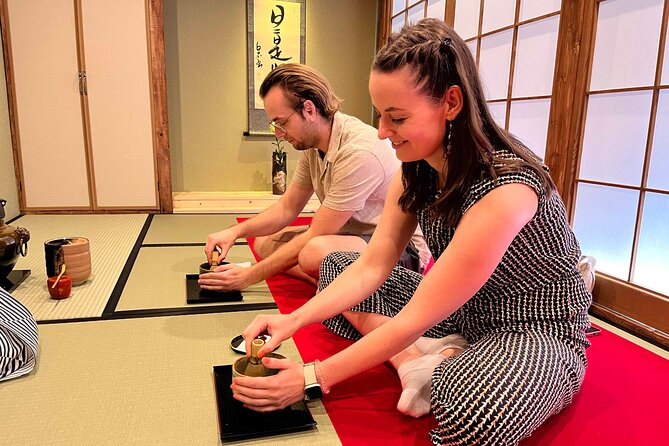
- You make your own matcha: Watch the host prepare tea, then whisk and drink your own bowl.
- The setting is near Dotonbori: A quiet tea lesson takes place close to one of Osaka’s busiest streets.
- Expect a small group: The maximum is 15 people, with many sessions running with fewer participants.
- Guides explain the meaning behind the ritual: Kazu, Mai, Soda, and other hosts have been praised for friendly, clear instruction.
- Children have a caffeine-free option: Matcha milk is available for children, but contact the provider about anyone under five.
- The price is modest: At $20.69 per person, you get a cultural activity, prepared tea, sweets, and hands-on practice.
A quiet tea room beside Dotonbori
Osaka is famous for food, neon signs, comedy, and late-night energy. Dotonbori is right at the center of that action. This tea ceremony offers a useful counterpoint: a short, calm lesson in Japanese culture in the middle of the city.
You meet at Tea Ceremony Osaka The Osaka, on the second floor of Dotonbori Building at 1-chome Higashi-5-26 in Chuo Ward. The activity begins and ends at the same location. That makes it easy to fit between meals, shopping, or a visit to the nearby canal and entertainment streets.
I like the location because you do not need to spend half a day reaching a traditional district. You can combine this with other central Osaka sights without losing much sightseeing time. The tradeoff is that this is an urban classroom rather than a remote temple or countryside tea house. If you want elaborate gardens, kimono dressing, or a full formal ceremony lasting several hours, this is not that experience.
More Tea Ceremony Experiences in Osaka:
- Osaka: Tea Ceremony Experience
★ 4.9 · 1,426 reviews - Osaka: Tea Ceremony, Calligraphy, and Kimono Experience
★ 4.9 · 130 reviews - Osaka: Japanese Traditional Sweets Making and Tea Ceremony
★ 4.7 · 118 reviews
What happens during the 45-minute class
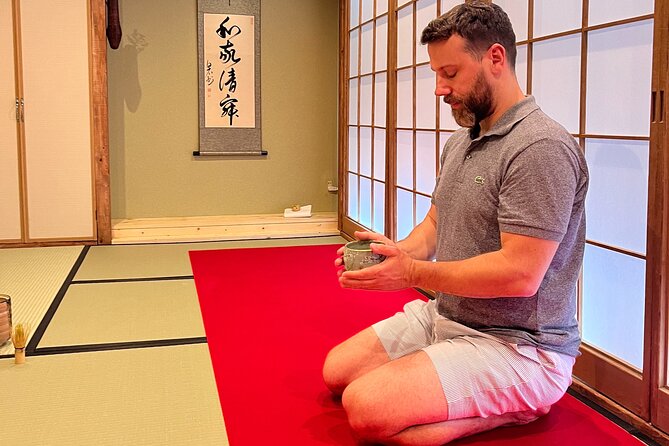
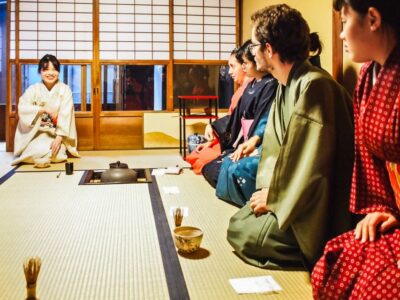
The session begins with an explanation of Japanese tea culture, the origins of the ceremony, and the etiquette that shapes it. You learn why the host moves carefully, how tea is served, and how guests receive and drink it.
This background matters. Without it, a tea ceremony can look like a series of precise hand movements. With a little context, you begin to see the purpose behind the quiet pace, the respect shown to the guest, and the care given to each object.
The host then demonstrates the preparation. You watch the tea being measured, mixed, and whisked, followed by the proper way to present and drink it. Traditional Japanese sweets are served with the tea. These are not just a snack, since sweetness helps balance the strong, grassy taste of matcha.
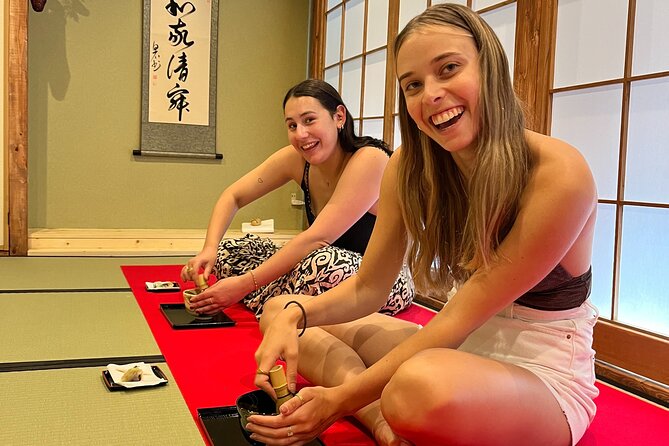
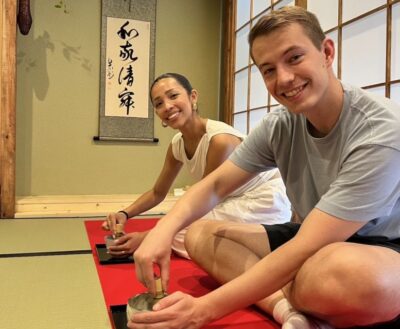
After watching, you get to prepare your own bowl. This hands-on portion is the reason I would choose this activity over a ceremony where you only sit and observe. You can try the whisking technique yourself, then drink what you made in the traditional way.
The class is informal enough for first-time visitors. Several hosts, including Kazu and Mai, are described as warm, patient, and clear in English. Soda has also led sessions that combine an explanation, a demonstration, and personal instruction. The exact host can vary, so book this for the format rather than for a guaranteed named instructor.
Why the demonstration and hands-on practice work well together
A purely formal ceremony can be beautiful, but it can also leave you unsure about what you just saw. Here, the demonstration gives you a model, and the practice lets you understand the technique through your own hands.
You learn that tea preparation is not simply stirring green powder into hot water. The bowl, whisk, movements, serving order, and gestures all have a place. You also learn how to receive and drink the tea respectfully, which adds meaning to what might otherwise feel like a quick tasting.
The activity has a gentle rhythm. It begins with explanation, moves into observation, then ends with participation. That progression suits people who want both cultural context and something practical to do.
There is also room for small human moments. One host has been praised for using light humor while explaining the traditional foot-shuffling movement and ceremonial sounds. That helps keep the class from feeling stiff. The tone is respectful, but not so serious that children or first-time visitors feel uncomfortable.
Tea ceremony traditions in plain language
Japanese tea ceremony developed as a formal art in the 16th century. Its focus is not just the beverage. The ceremony brings attention to preparation, hospitality, manners, and the shared moment between host and guest.
The class also introduces the social role of tea. Tea gatherings could give people a calm setting for conversation, including members of the samurai class. The ceremony encouraged participants to meet with a sense of equality, at least within the tea room.
You do not need prior knowledge of Japanese customs. The teacher explains the basic etiquette as you go. That is important because some details may feel unfamiliar, such as how to handle the bowl or when to drink. The goal is not to test you. It is to help you participate with respect.
I especially like this kind of cultural lesson early in a Japan trip. It gives later experiences more meaning. You may notice tea tools, matcha desserts, seasonal sweets, and quiet service rituals differently after this class.
A few more tea experiences around Osaka worth a look
- Samurai Show, Tea Ceremony, Japanese Traditional Activities
★ 5.0 · 56 reviews - Osaka: Private Tea Ceremony and Calligraphy Experience
★ 5.0 · 50 reviews - Osaka; Japanese Tea ceremony experience, Macha and Sencha
★ 4.9 · 29 reviews - Samurai dress-up and shows, plus Tea Ceremony & Calligraphy
★ 5.0 · 27 reviews
The sweets and the matcha
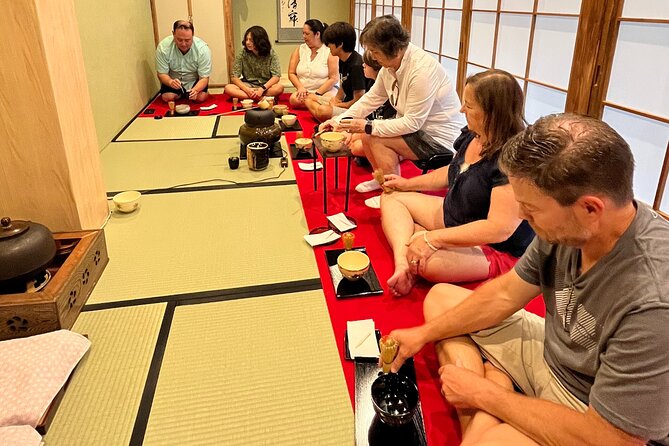
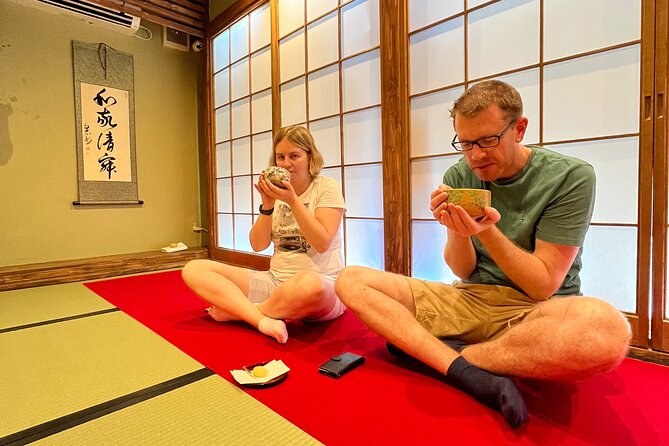
The experience includes matcha green tea and Japanese sweets. The sweets are chosen to accompany the tea, and sessions may feature treats connected to the season. You should expect matcha’s distinctive flavor: grassy, earthy, and slightly bitter rather than sweet like a café latte.
The tea is prepared for you first, so you can taste a properly made bowl before attempting your own. Then you make matcha under the host’s direction. That comparison is useful. It lets you see how whisking and proportions affect the final drink.
Children are not left out. The provider offers caffeine-free matcha milk for children. This makes the class easier to recommend to families, although the experience still includes formal movements and quiet listening. Very young children may find the pace difficult, and anyone under five may not be allowed to join the regular plan. Contact the provider before booking for a child under five.
Group size, pace, and personal attention
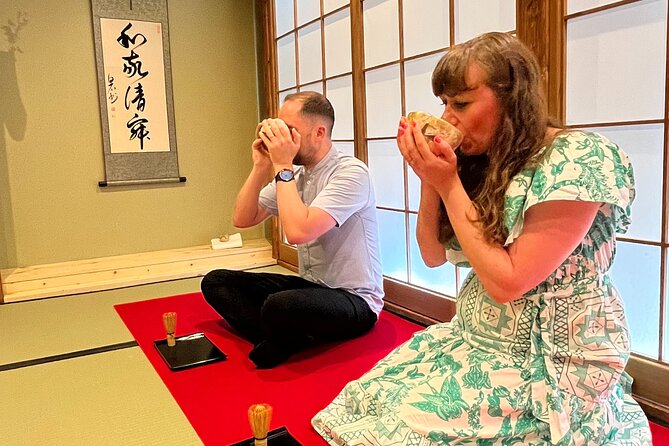
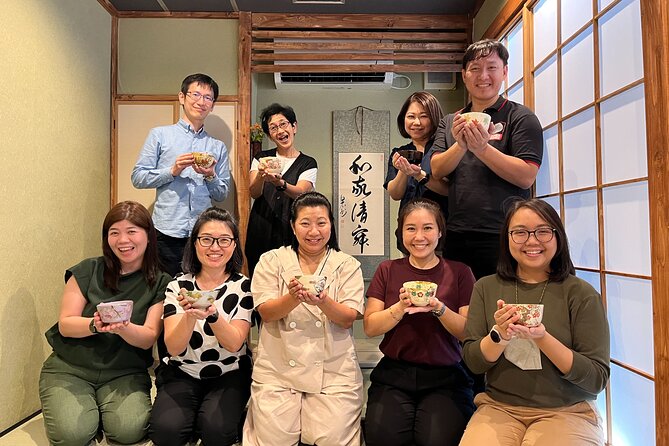
The maximum group size is 15 people. That is still large enough to feel social, but far smaller than a major sightseeing tour. The sessions described in the supplied information often had six people or only two couples, which gives you a good chance of receiving direct guidance.
A smaller group also makes the etiquette portion easier to follow. You can see the host’s hand movements and ask questions without trying to compete with a crowd. If you are nervous about making a mistake, the teacher can correct you without making the moment uncomfortable.
The class is not designed as a private ceremony. The Share Plan is for participants joining with other people. If you want complete privacy, confirm the available booking option before paying. For most people, the shared setting is part of the appeal. You learn alongside others, then compare your first attempts at whisking matcha.
The 45-minute length is another practical point. I see it as an advantage for a busy Osaka schedule. It is long enough to cover the basics and let you make tea, but short enough to fit before lunch or dinner. It may feel brief if you want a slow, highly formal ceremony with extensive instruction.
Finding the meeting point in Dotonbori
The address requires care. Search Google Maps for tea ceremony osaka the osaka rather than relying on the map link supplied during booking. The provider warns that the automatic map location can point somewhere else.
Use the full address: 1-chome Higashi-5-26, Dotonbori Building, second floor, Osaka, 542-0077. The word Higashi, meaning east, is important. The common mistake is entering 1-5-26 and missing the correct building.
This is a mobile-ticket activity, and confirmation is provided when you book. Public transportation is nearby. Since the activity ends where it begins, you do not need to arrange a separate pickup or navigate to a second location afterward.
Give yourself time to find the building, especially if you are coming from a crowded street or arriving close to the start time. Dotonbori can be confusing, and a precise address is more useful here than simply searching for Dotonbori.
Is $20.69 good value?
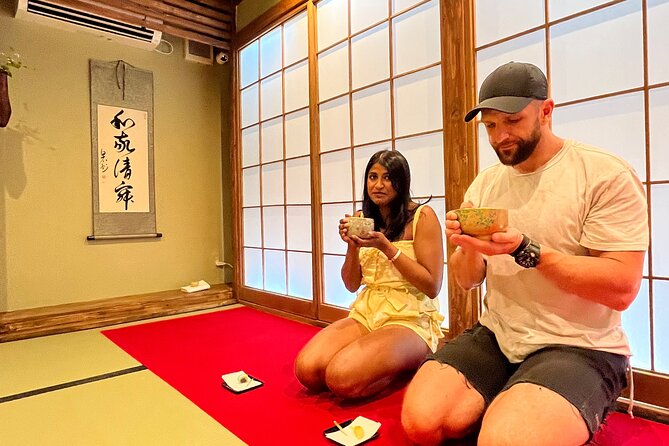
At $20.69 per person, this is an affordable way to add a cultural activity to an Osaka itinerary. The price covers instruction, a tea demonstration, matcha for tasting, your own preparation, and traditional sweets. You are paying for participation and explanation, not only for a drink.
I consider it good value for first-time visitors who want a short introduction to Japanese customs. A café visit would cost less, but it would not explain tea etiquette or show you how to prepare matcha. A longer private ceremony would likely offer more time and privacy, but this class keeps the cost and commitment low.
The value is strongest when you use the location well. Schedule it around Dotonbori sightseeing, then continue exploring on foot. You get a cultural pause without spending a full morning or afternoon away from Osaka’s main attractions.
One small extra-cost detail is worth noting. A participant mentioned bringing extra cash for items available for purchase. No specific products or prices are provided, so treat that as optional rather than part of the tour.
Who should book this experience?
I would recommend it to first-time visitors to Japan, couples, families with older children, and anyone curious about matcha but unsure how a tea ceremony works. You do not need to know Japanese customs before arriving.
It also suits people who like learning by doing. Watching a ceremony has value, but whisking your own tea gives you a stronger memory of the visit. The informal teaching style makes it approachable for people who might feel intimidated by strict ceremony rules.
This is a good choice for a final day in Japan, too. The quiet setting gives you a calm cultural experience before heading home, and the 45-minute schedule does not consume your entire last day.
I would be more cautious about booking if you want traditional clothing, a temple garden, an elaborate seasonal ceremony, or a long private session. Those features are not included in the provided details. The strength here is simple: an accessible, hands-on introduction in central Osaka.
Free cancellation is available up to 24 hours before the start time for a full refund. Changes or cancellations made within 24 hours are not accepted, and the cut-off follows local Osaka time.
Should you book the Dotonbori tea ceremony?
Book this if you want a short, affordable cultural lesson that lets you do more than take pictures. The combination of history, etiquette, demonstration, matcha, sweets, and hands-on practice makes the $20.69 price sensible.
I would especially choose it for a family or small group that wants a low-pressure introduction. Search the meeting point carefully, check the age rule for young children, and allow time to find the second-floor location. If you want a grand, formal tea gathering, choose a longer and more traditional setting. For a friendly first taste of tea culture in Osaka, this class is a practical choice.
FAQ
How long does the tea ceremony experience last?
The experience lasts approximately 45 minutes.
Where does the activity begin and end?
It begins and ends at Tea Ceremony Osaka The Osaka, at Dotonbori Building, second floor, 1-chome Higashi-5-26, Chuo Ward, Osaka, 542-0077.
Can children take part?
Children can take part, and caffeine-free matcha milk is available for them. Contact the provider in advance if you are bringing a child under five, since children in that age group may not be accepted on the regular plan.
How many people can join the activity?
The maximum group size is 15 people. The Share Plan is a shared activity with other participants.
Do I get to make my own matcha?
Yes. The teacher demonstrates the preparation, then guides you as you make and drink your own matcha. The experience also includes prepared matcha and Japanese sweets.
What happens if I need to cancel?
You can cancel at least 24 hours before the start time for a full refund. Cancellations or changes made less than 24 hours before the start time are not accepted for a refund.
Just added around Osaka
- Osaka: Tea Ceremony, Calligraphy, and Kimono Experience★ 5.0 · 6 reviews
- Osaka: Nara, Todaiji, Uji Matcha, and Hot Spring Tour★ 4.0 · 7 reviews
- Nara Deer Park, Uji Matcha, & Hot Spring Full-Day Tour from Osaka★ 4.0 · 21 reviews
- Osaka:Zen Tea Ceremony and Foot Bath Experience<45min>★ 5.0 · 7 reviews
- Premium Kimono Dressing, Tea Ceremony, Calligraphy, Samurai show★ 5.0 · 18 reviews
- Osaka Japanese Cooking And Matcha Class near Osaka Castle★ 5.0 · 22 reviews
- Discover Japanese Tea Blending Techniques in Osaka★ 5.0 · 19 reviews
- ZEN therapy | Shiatsu-style massage, EnergyTherapy & Japanese Tea★ 5.0 · 5 reviews
Tea Ceremony Experiences, compared.
Tea Ceremony in a Traditional Tea House in Kiyomizu
Read our review →
Browse the lists this tour appears in