
Review · KYOTO
KYOTO Tea Ceremony with kimono near by Imamiya Jinjya Shrine
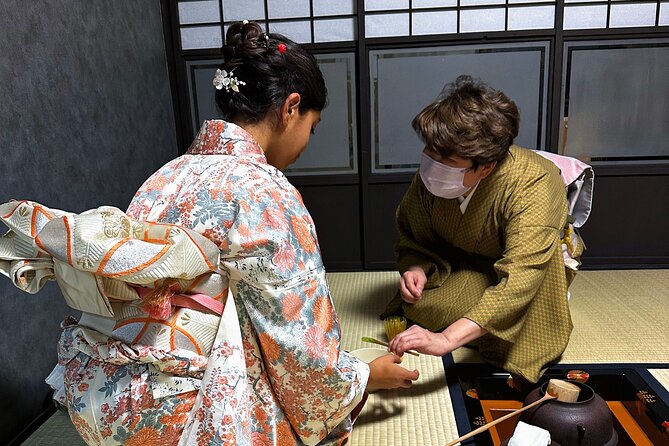
Putting on a Kyoto kimono is more than slipping into a pretty outfit. You are wrapped in several layers, with careful attention to the pattern, sash, hair, and final fit. Then, in a three-generation tea room near Daitoku-ji, a tea master demonstrates the measured steps of the ceremony before you try them yourself.
I like the hands-on format, especially the chance to prepare tea for another person instead of only watching. I also like the staff’s attention to photos and presentation, with hair styling and help posing in your kimono. The main consideration is time: the ceremony lasts about 90 minutes, and the dressing process can feel busy if everyone arrives at once.
Key points to know before booking
- Choose from Nishijin kimono patterns: You select your preferred color and design before dressing.
- Hair styling is included: Staff help prepare your hair before the kimono goes on.
- A 30-year tea master leads the ceremony: You watch a formal demonstration, then learn the etiquette and history behind it.
- You make your own matcha: The experience includes a chance to prepare tea for someone else.
- The setting is near Daitoku-ji and Imamiya Shrine: This area has a strong connection with Kyoto’s tea culture.
- Small-group format: The activity allows a maximum of 12 people, with the experience ending where it begins.
Why this Kyoto tea ceremony feels more complete than a photo session
Many kimono activities are mainly about getting dressed and taking pictures. This one adds a proper cultural lesson, which gives the costume a reason to be there. You learn how the kimono is assembled, how its patterns carry meaning, and how the tea ceremony works as a form of hospitality and concentration.
That combination matters. Once you understand why the tea is prepared with such care, the clothing feels less like a costume and more like part of the setting. You are not simply posing in front of a backdrop. You are sitting down to take part in a formal custom, with a tea master showing you what to do.
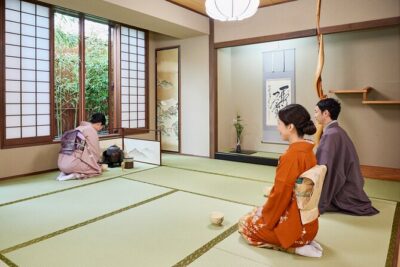
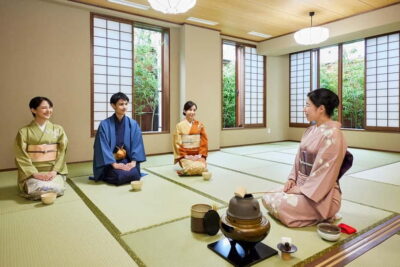
The experience takes place near Daitoku-ji Temple, in an area associated with Japanese tea culture. The tea room itself has been used for three generations. It is described as somewhat old, so do not expect a polished modern studio. For many people, that is part of the appeal. The room gives the ceremony a sense of continuity, though anyone looking for a sleek, theatrical production may find it modest.
More Kimono Tea Ceremonies in Kyoto:
- Kimono Tea Ceremony at Kyoto Maikoya, NISHIKI
★ 5.0 · 911 reviews - Kyoto: Kimono Tea Ceremony at Orizuruya Gion
★ 4.9 · 618 reviews - Kyoto: Kimono and Tea Ceremony Experience at Cultural Asset
★ 4.3 · 306 reviews
Choosing a Nishijin kimono and getting dressed
The first step is choosing a kimono from a broad collection connected with Nishijin, Kyoto’s famous textile district. You select a color and pattern, and the staff then help with your hair before dressing you.
The dressing is not a quick costume change. It involves several layers and careful adjustment, which helps you understand why traditional kimono dressing is a skilled job. One useful tip is to think about the colors you prefer before you arrive. The selection process moves quickly, especially when several people are being prepared at the same time.
The staff dress both men and women. Women can also have their hair arranged, adding to the finished look. This is one of the experience’s strongest features because you do not need to work out the complicated layers yourself. The dressing team handles the practical details while you choose the overall look.
Allow yourself patience during this stage. If you arrive early, the staff have more room to prepare you without a rush. When a full group arrives together, the room can feel hectic. That is not a serious problem, but it is worth knowing if you prefer a quiet, slow start.
A kimono can also feel restrictive compared with ordinary sightseeing clothes. You will want to keep that in mind when planning the rest of your day. The program lasts about an hour and a half, but the clothing may affect how comfortable you feel before and after the ceremony.
Photos before the tea room
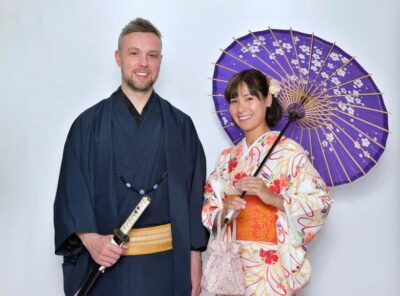
Once everyone is dressed, there is a simple photo session. Staff help you pose and take pictures, so you do not have to depend only on quick phone snapshots.
I like this part because the kimono is carefully arranged for the camera. Staff can adjust your posture, show you how to hold yourself, and make sure the sleeves and sash are visible. The photos also give you a record of the details you might miss while concentrating on the ceremony.
The photo session is not described as a long professional shoot, so set your expectations accordingly. It is a useful portion of the program, not a separate portrait package. You will have a chance to take pictures and may receive help with poses, but the central point remains the tea lesson.
If you are traveling with family, this stage works well for group pictures. The activity has been enjoyed by families, couples, solo participants, and teenagers. Solo visitors are also included in the ceremony rather than left on the sidelines. One solo participant was given the chance to prepare tea, which is a good sign for anyone booking alone.
Watching a tea master with 30 years of practice
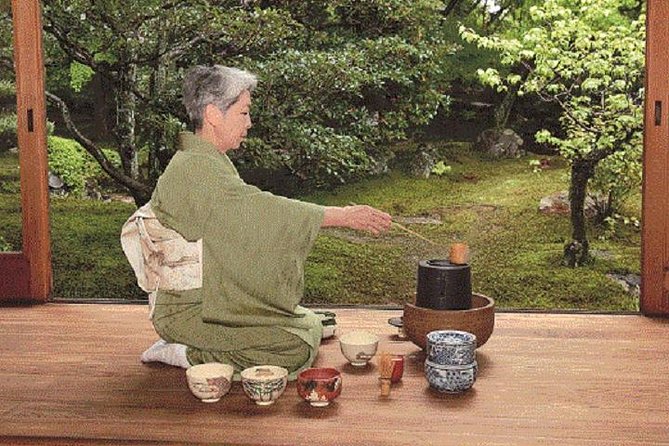
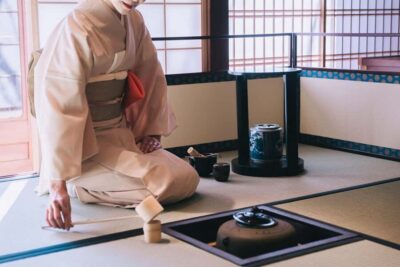
The ceremony begins with a demonstration by a tea master who has studied tea ceremony for 30 years. Watch closely as the master prepares tea using controlled movements and careful manners.
The pace is deliberate. That can feel very different from a standard sightseeing stop, where you move quickly from one sight to the next. Here, the quiet pauses are part of the lesson. You learn to notice the order of the actions, the handling of the utensils, and the way the tea is offered.
You also receive an explanation of tea ceremony history and etiquette. The interpreter helps make the Japanese presentation accessible, and Akira has been praised for explaining customs, answering questions, and helping with photographs. Having interpretation matters because many gestures in the ceremony are easy to miss if you only watch without context.
The tea is served with seasonal sweets. This small pairing gives you a clearer sense of the ceremony as a complete act of hospitality, rather than just a method for making a drink. The sweetness also balances the bitter, grassy flavor of matcha.
Do not expect a large tasting menu or a long tea class. The focus is one traditional ceremony, one cup of tea, seasonal sweets, and an opportunity to practice. That makes the experience approachable for first-time visitors.
More Tea Ceremony Experiences in Kyoto:
- Kyoto: Tea Ceremony in a Traditional Tea House in Kiyomizu
★ 4.9 · 3,519 reviews - Kyoto: Tea Ceremony Ju-An at Jotokuji Temple
★ 4.9 · 3,207 reviews - Kyoto: 45-Minute Tea Ceremony Lesson Experience
★ 4.3 · 2,378 reviews - Kyoto: Table-Style Tea Ceremony at a Kyo-Machiya
★ 4.9 · 1,211 reviews
Making your own matcha
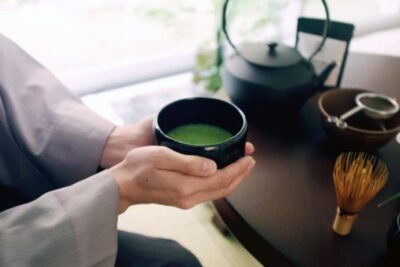
After watching the demonstration and learning the basic manners, you get to prepare tea yourself. This is the point where the experience becomes personal.
You may find the movements less easy than they look. Tea ceremony depends on sequence, posture, and restraint, so a first attempt will not be perfect. That is fine. The staff guide you through the process, and the activity is designed to teach rather than test you.
The chance to make tea for another person is especially useful. It turns the ceremony from a performance into an exchange. You are practicing the host’s role, while someone else receives the tea and follows the proper etiquette.
This hands-on part also helps families and mixed-age groups. Children and teenagers may not care about a long historical talk, but they have a clear task to follow. Adults can appreciate the cultural meaning, while younger participants get something active to do.
The experience is still formal, so it is not a casual matcha workshop. You should be willing to sit quietly, listen to instructions, and treat the ceremony with respect. The staff keep the tone welcoming, but the custom itself is more measured than a typical cooking class.
The setting near Daitoku-ji and Imamiya Shrine
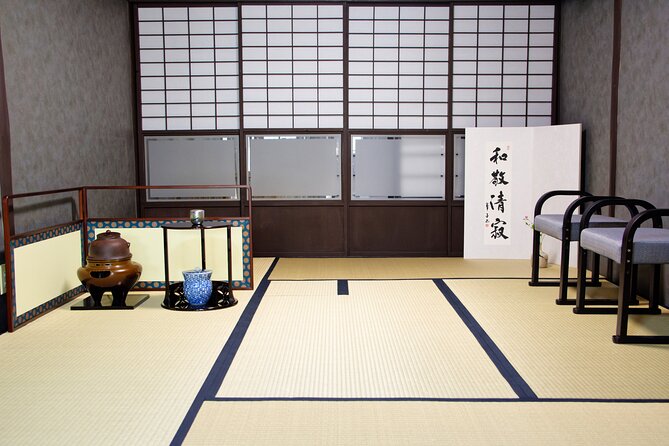
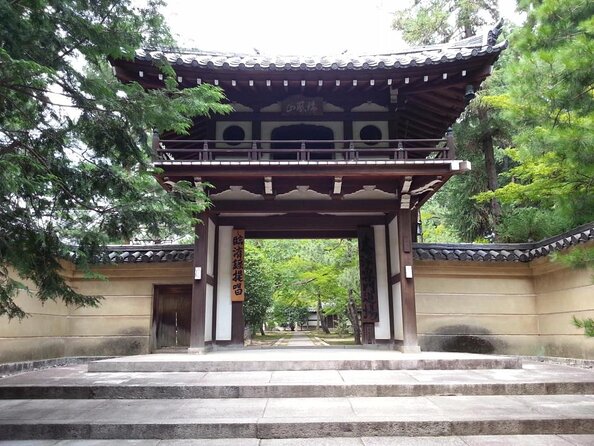
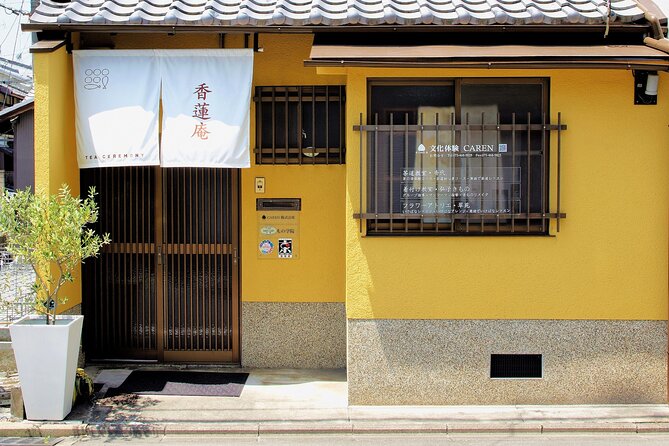
The meeting point is Tea Ceremony Caren at 74-4 Murasakino Daitokujicho, in Kyoto’s Kita Ward. The activity is described as near Daitoku-ji Temple and Imamiya Jinjya Shrine, both useful landmarks when planning your day.
No private transportation is included. The meeting point is near public transportation, but you will need to arrange your own route. Check the address carefully and leave enough time to arrive, especially if you are also visiting temples in northern Kyoto.
The location is useful for building a day around the area. You can pair the ceremony with Daitoku-ji or Imamiya Shrine, but do not assume the tea activity itself includes temple admission, a guided temple visit, or transport between sights. The program starts and ends at the meeting point.
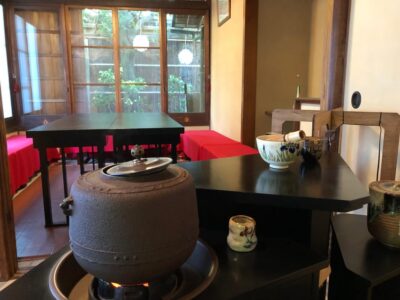
The tea room has an older character and has been used for three generations. That may appeal to you if you prefer a working cultural setting over a purpose-built attraction. On the other hand, anyone expecting a large formal hall or elaborate stage production should picture a more intimate room.
How much value you get for $99.49
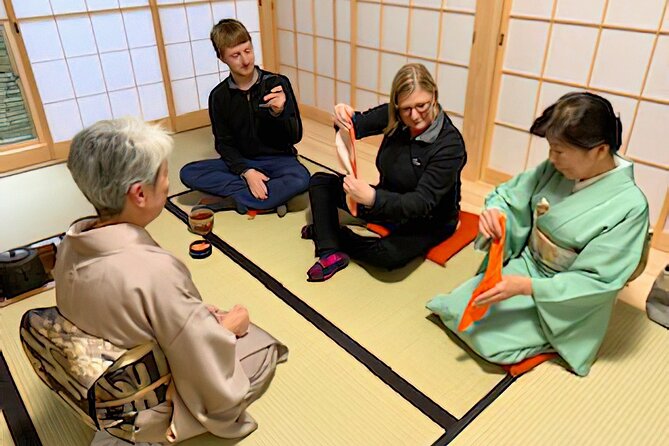
At $99.49 per person, this is not the cheapest way to rent a kimono for photographs. The price makes more sense if you want several elements in one booking: kimono selection, dressing, hair styling, photos, tea history, a formal demonstration, seasonal sweets, and hands-on practice.
You are also paying for staff time. Dressing a group in layered clothing takes care, and the tea ceremony depends on an instructor who has spent decades studying the tradition. A simpler photo rental may cost less, but it will not offer the same guided lesson.
The small-group limit of 12 helps protect the experience from becoming a huge class. It is not a private ceremony, and the room may include other people, but the group size is still manageable. You can meet people from different countries while taking part in the same activity.
The value is strongest for a first visit to Japan. If you already know tea ceremony well or have attended several formal demonstrations, the basic instruction may feel familiar. If this is your first time wearing a kimono and making matcha, the program gives you a useful introduction without requiring a full day.
Who should book this experience
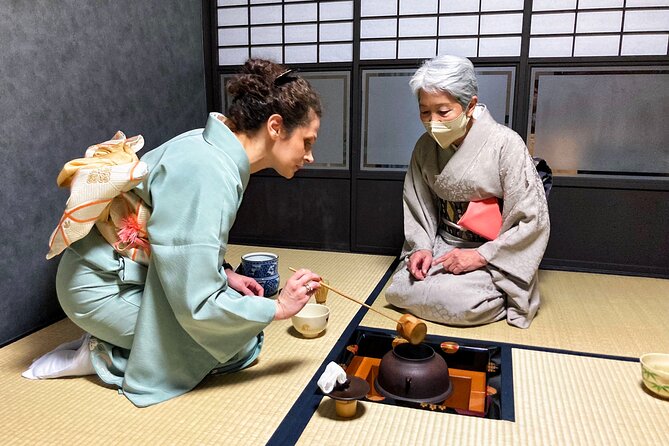
I would recommend it to you if you want a cultural activity that is both visual and participatory. Couples can take photographs together, families can share the dressing and tea-making stages, and solo participants are included in the practical parts.
It is also a good fit if you are curious about Japanese manners but do not want an advanced class. The guide explains the history and etiquette in a way that first-time participants can follow.
You may want to skip it if you dislike formal clothing, sitting through a quiet demonstration, or being photographed. The kimono is central to the experience, not an optional extra. You also should not book it if your schedule is so tight that a late start or a longer dressing period would cause stress.
The activity is capped at 12 people, but it is not advertised as private. If you want one-on-one instruction throughout, ask before booking. The tea master leads the ceremony, with staff and an interpreter helping the group.
Practical details that can affect your day
The activity lasts approximately 90 minutes and ends back at the meeting point. Confirmation is provided at booking, and the ticket is mobile, so you can keep it on your phone.
Free cancellation is available if you cancel at least 24 hours before the local start time. Changes or cancellations within 24 hours are not accepted for a refund. The activity may also be canceled if poor weather affects the program or if the minimum number of participants is not met. In those cases, you are offered another date, another experience, or a full refund.
The supplied information does not list an exact minimum age, a detailed accessibility plan, or a specific dress code. If any of those points matter to you, contact the provider before reserving. The experience is near public transportation, but private transportation is not included.
Should you book the Kyoto kimono tea ceremony?
Book it if you want more than a quick kimono photograph. The strongest reason to choose this activity is the full sequence: select your clothing, have your hair arranged, learn why the ceremony matters, watch a highly experienced tea master, taste matcha with seasonal sweets, and prepare tea yourself.
The main tradeoff is that the setting is traditional and somewhat old, the dressing process can be busy, and the activity follows a formal rhythm. For many people, those qualities make it feel less like a staged attraction and more like a genuine cultural lesson.
At $99.49, I think the experience offers fair value for a first-time visitor who wants a compact introduction to kimono and tea ceremony. Plan to arrive with enough time, keep your schedule afterward flexible, and book this as a focused cultural moment rather than a quick photo stop.
FAQ
How long does the Kyoto kimono tea ceremony last?
The activity lasts approximately 1 hour and 30 minutes.
Where does the experience take place?
It begins and ends at Tea Ceremony Caren, 74-4 Murasakino Daitokujicho, Kita Ward, Kyoto, 603-8231, Japan.
Is the tea ceremony near Daitoku-ji Temple?
Yes. The tea room is located near Daitoku-ji Temple, an area associated with Japanese tea culture. The meeting information also identifies the experience as being near Imamiya Jinjya Shrine.
Is kimono rental included?
Yes. You choose a kimono from the collection and receive assistance putting it on.
Is hair styling included?
Yes. The staff help set your hair before you put on the kimono.
Will I be able to take photographs?
Yes. The program includes a simple photo session, and staff help take pictures and suggest poses.
Do I get to make tea myself?
Yes. After watching the tea master and learning the etiquette, you have the chance to prepare your own tea.
What is the maximum group size?
The activity allows a maximum of 12 participants.
Can I cancel for a full refund?
Yes, if you cancel at least 24 hours before the experience start time. Cancellations or changes made within 24 hours are not refunded or accepted.
Just added around Kyoto
- Whisk Your Own Matcha: A Zen Matcha Experience at Temple★ 3.6 · 7 reviews
- Uji Walking Tour – Byodo-in temple and Tea Ceremony from Kyoto★ 3.5 · 3 reviews
- Kyoto: Authentic Tea Ceremony in a Small Group★ 5.0 · 7 reviews
- Tea ceremony at Kyoto’s Zen Temple Teahouse★ 5.0 · 2 reviews
- Traditional Tea Ceremony in Kyoto★ 4.5 · 3 reviews
- Tea Ceremony in 150 Years Old Townhouse with Tables and Chairs★ 5.0 · 22 reviews
- Silent Beauty of Kyoto Zen Walk and Tea Experience★ 5.0 · 2 reviews
- Tea Ceremony Experience in Traditional Kyoto Townhouse★ 5.0 · 19 reviews
Kimono & Tea Ceremonies, compared.
Kimono and Tea Ceremony Experience at Cultural Asset
Read our review →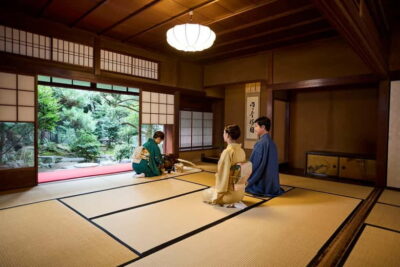
Asakusa: Kimono Tea Ceremony with Matcha and Sweet
Read our review →Browse the lists this tour appears in