
Review · TOKYO
Tokyo: Asakusa Kimono Dressing and Matcha Experience
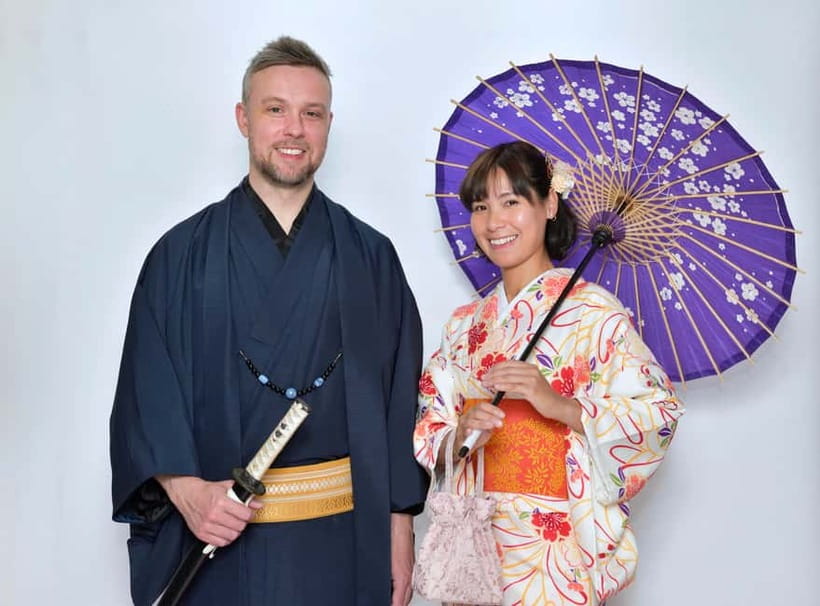
Asakusa is at its most memorable when you are dressed for the setting. At Kimono Rental Shop YUI, four minutes from Asakusa Station and two minutes from Kaminarimon Gate, you choose a kimono or yukata, have your hair arranged, and walk out into one of Tokyo’s oldest districts. I especially like the large choice of styles and sizes, plus the chance to keep the outfit until 5:30 pm rather than rushing straight back to the shop. The short matcha lesson, led by Tsuyoshi, adds a cultural touch instead of making this only a costume rental.
I also like the kind, patient service, especially for families and visitors who may worry about hair styling or finding a comfortable fit. The main drawback is time: dressing and hair can take 45 to 70 minutes, and the layers can feel warm in summer. This is not a full tea ceremony, either. It is a brief lesson in matcha and tea etiquette, with sweets.
Key points to know before booking
- Choose your outfit near Kaminarimon Gate: YUI offers adults’ and children’s kimonos, summer yukatas, men’s outfits, and selected traditional styles at an extra cost.
- Plan for a long fitting: Dressing and hairstyling take 45 to 70 minutes, followed by about 15 minutes for the matcha lesson.
- Walk freely around Asakusa: You can explore near Sensoji Temple and the Sumida River, then return the outfit by 5:30 pm.
- Add professional photographs if you want a finished souvenir: The optional session lasts 60 minutes, with edited images sent within a week.
- Expect thoughtful help with hair and accessories: Staff provide a hairstyle, hair ornaments, geta sandals, and a traditional handbag.
- Good for families and wheelchair users: Children are welcome, the shop is wheelchair accessible, and English assistance is available.
Why dressing as a local makes Asakusa more memorable
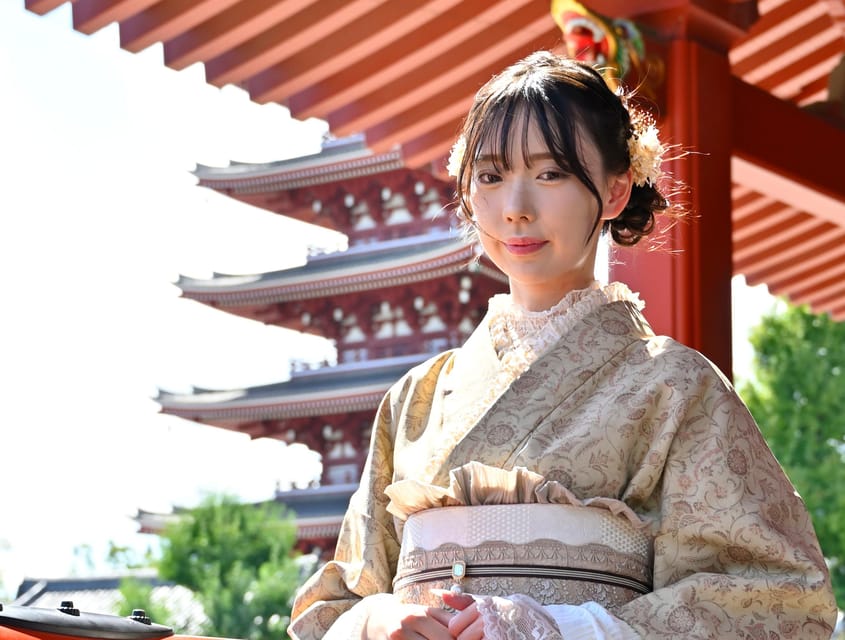
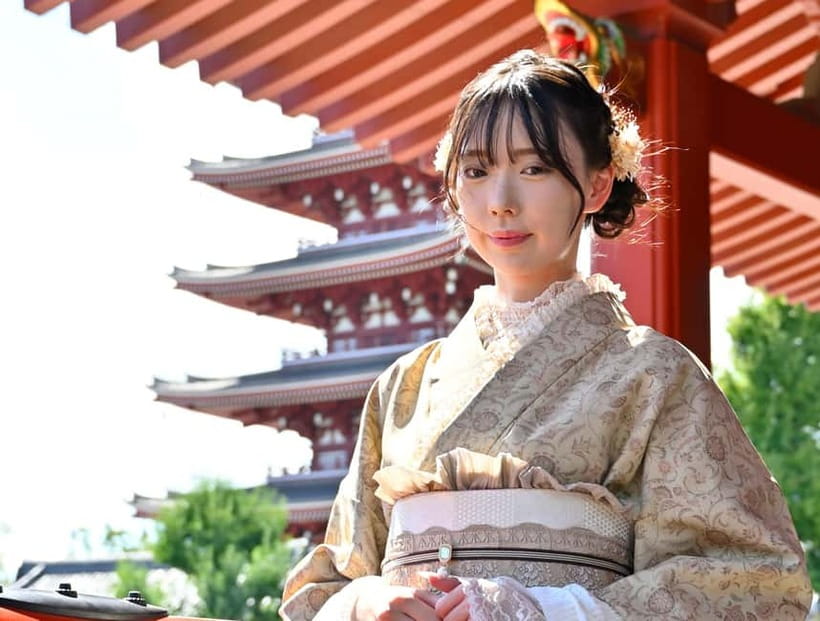
Many Tokyo visitors pass through Asakusa, photograph Kaminarimon, visit Sensoji Temple, and move on. A kimono rental changes the pace. Instead of treating the district as a quick sightseeing stop, you spend several hours noticing its smaller streets, temple approaches, shops, and river views while dressed in a traditional style.
The experience begins at Kimono Rental Shop YUI, on the second floor of its building. The location is practical. You are only a short walk from Asakusa Station and Kaminarimon Gate, so it fits neatly into a morning or afternoon in the district.
The staff help you select from a broad range of kimonos and yukatas. A light kimono is easier for walking and casual photographs, while a more formal silk kimono gives the outing a dressier feel. Summer yukatas are usually the sensible choice in hot weather, though even a lighter outfit includes layers and a sash.
You are not simply handed a garment and left to manage it. Staff dress you carefully, arrange the layers, and finish the outfit with traditional wooden geta sandals and a small handbag. Hair styling and accessories are included, which makes the price more useful than a basic rental alone.
The selection includes children’s clothing, and the staff have shown patience with young children during fittings. That matters because the process is not instant. A three-year-old may need reassurance, breaks, or a little extra attention before the family is ready to head outside.
More Kimono Tea Ceremonies in Tokyo:
- Kimono Tea Ceremony at Tokyo, Asakusa Maikoya
★ 5.0 · 638 reviews - Tokyo: Matcha and Kimono Experience
★ 4.7 · 219 reviews - Asakusa: Kimono Tea Ceremony with Matcha and Sweet
★ 4.9 · 153 reviews
Choosing between a kimono and a summer yukata
Your choice affects comfort, appearance, and how long you will want to walk. A yukata is the lighter option and makes the most sense during Tokyo’s warm months. It is still traditional, but less formal than a silk kimono.
A standard street kimono gives you the classic Asakusa look without necessarily requiring the cost or formality of the most elaborate garments. If you are mainly interested in photographs and a stroll around Sensoji, this is likely the best balance.
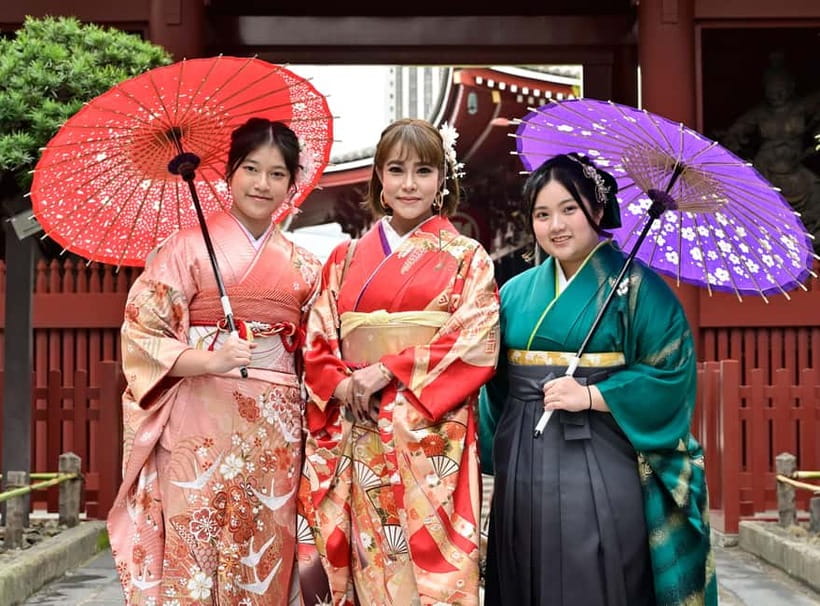
YUI also has lace kimonos, silk kimonos, haori hakama, and furisode for an additional fee. These upgrades may suit a special occasion, a couple’s session, or someone who wants a more formal portrait. Ask about the extra charge before choosing one.
Men and children have options, too. The selection is not limited to women’s outfits, and the shop can dress different members of a family or group in coordinated traditional clothing. Plus-size visitors should also feel comfortable asking for help with available choices. The important point is to allow enough time for fitting rather than arriving with a packed sightseeing schedule.
Hair, accessories, and the practical comfort test
The hair arrangement is one of the strongest parts of the package. Staff create a suitable style and add ornaments, then let you complete the look with a traditional handbag and geta. You do not need to book a separate hair appointment.
This service has also worked well for visitors with curly or Afro-textured hair. Staff have made a genuine effort to style different hair types with care, though you should still arrive with realistic expectations. This is a traditional hairstyle service, not a full salon appointment, and makeup is not included.
The outfit itself deserves a practical warning. Kimono dressing involves layers, a firm sash, and careful tucking. That gives the clothing its shape, but it can feel restrictive, especially when sitting or walking for a long time. One useful tip is to wear simple, comfortable clothing underneath and avoid bringing large luggage. Large bags cannot be stored free of charge.
Hot weather is the biggest comfort issue. Several layers can feel warm under the Tokyo sun, even in a yukata. On rainy days, staff may have umbrellas available, but you should still take care around wet pavement in geta sandals. The wooden footwear looks right with the outfit, yet it takes a little care on steps and uneven streets.
Pregnant women should not book this activity. The tight layers and dressing process are not suitable.
The 15-minute matcha lesson
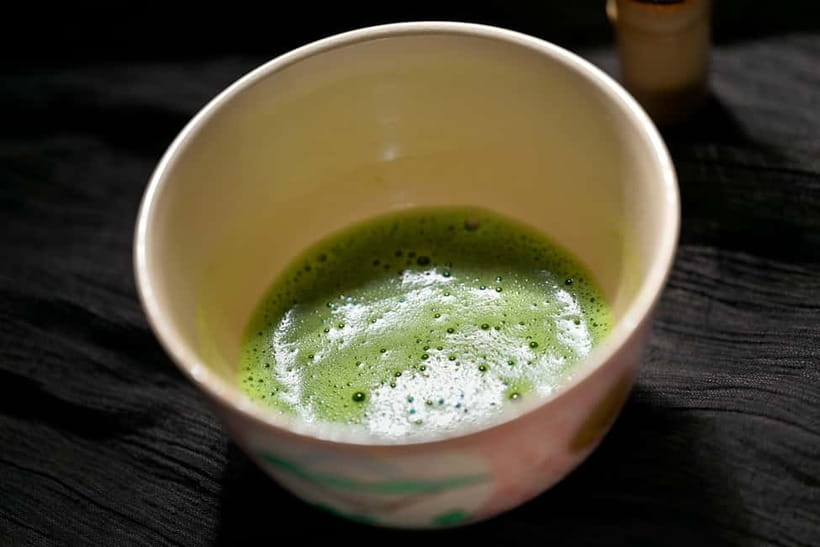
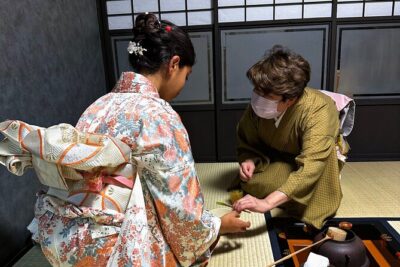
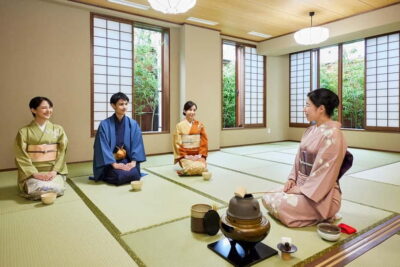
After dressing, you receive matcha and Japanese sweets, along with a short explanation of how to drink the tea according to Japanese custom. Tsuyoshi, also known as Yoshi in the shop, practices tea ceremony and leads the lesson in English.
This part lasts about 15 minutes, so keep your expectations in check. You are not signing up for a full formal tea ceremony. Instead, you receive a compact introduction to the gestures, etiquette, and meaning behind drinking matcha.
That short format works well for a sightseeing day. You learn enough to understand what you are doing, but you are not committed to a long, silent ritual. The explanation also gives context to an ingredient many visitors know only as a sweet green drink.
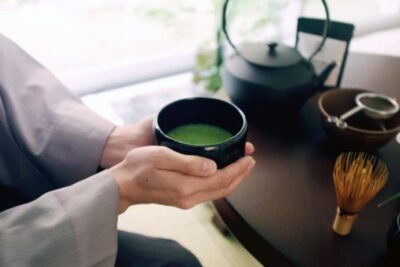
The matcha comes with sweets, which provide a pleasant contrast to the tea’s earthy, slightly bitter taste. If you have never tried matcha, this is a gentle first introduction. The lesson is especially useful for children and first-time visitors because it explains the proper way to take part rather than expecting you to copy unfamiliar movements.
The tea component adds value to the rental. Without it, the activity would be mainly dress-up and photographs. With it, you get a small but meaningful connection to a Japanese tradition.
More Matcha Experiences in Tokyo:
- Matcha Making Class in Tokyo with Authentic Japanese Sweets Set
★ 5.0 · 744 reviews - Tokyo: Matcha Making Experience with Mochi Sweets in Asakusa
★ 4.9 · 388 reviews - Asakusa Cultural Walk & Matcha Making Tour
★ 5.0 · 245 reviews - Make Traditional Nerikiri Sweets & Matcha experience in Shibuya
★ 5.0 · 130 reviews
Exploring Sensoji and the Sumida River
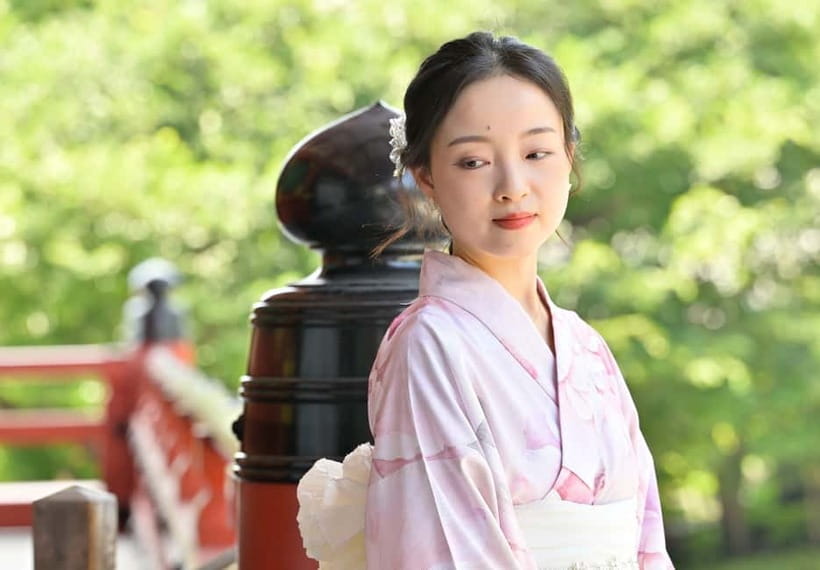
Once your hair and outfit are finished, you are free to explore Asakusa until 5:30 pm. That gives you far more flexibility than a fixed walking tour. You can visit Sensoji Temple, return to Kaminarimon, browse the streets around the temple, or walk toward the Sumida River at your own speed.
You will want to allow time for photographs. The back streets near Sensoji offer a calmer setting than the main approach, while the temple grounds provide the instantly recognizable Asakusa backdrop. The Sumida River adds open views and a different feel from the narrow streets around the shopping lanes.
Remember that you are walking in traditional footwear and clothing. Keep the outing relaxed. The best plan is a small loop rather than an ambitious cross-town sightseeing day. You will enjoy the kimono more if you are not hurrying to catch a train or climb long flights of stairs.
You may also attract attention and receive compliments. That can be part of the fun, but the clothing makes you more visible than usual. If you prefer a quieter outing, choose less crowded side streets and visit the main temple area outside the busiest periods.
You must return the outfit by 5:30 pm. Next-day return is available for an added fee, but it is not part of the standard price. Confirm that option before booking if you want an evening walk or a late dinner in costume.
Is the photo session worth adding?
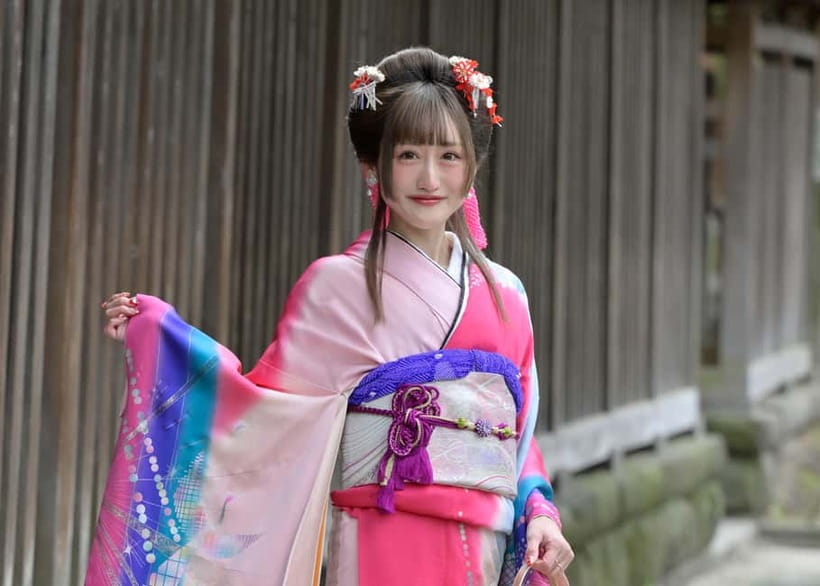
The private photo session is a useful upgrade if you want more than phone snapshots. A professional photographer accompanies you for 60 minutes and leads you to photogenic spots around Sensoji Temple and the Sumida River.
This matters because posing in a kimono is not always obvious. The photographer can suggest positions and help you feel more comfortable, particularly if you are traveling alone or normally avoid formal photographs. The session can also save you from asking strangers to take pictures or relying on hurried selfies.
Edited photo data is sent for download within a week. That delay is worth remembering if you are leaving Japan immediately. You will not necessarily receive the finished images before the end of your trip.
The add-on is most useful for couples, families, solo visitors, and anyone marking a birthday or major trip. If you already have a confident photographer in your group, the standard experience may be enough. Staff are also willing to take occasional photos on your phone, but that is different from a dedicated 60-minute session.
The photo session also changes the shape of the afternoon. Instead of wandering first and photographing whenever a good background appears, you have a focused hour with someone who knows the area. That makes the extra cost easier to justify for visitors who care about portraits.
What the $56 price includes
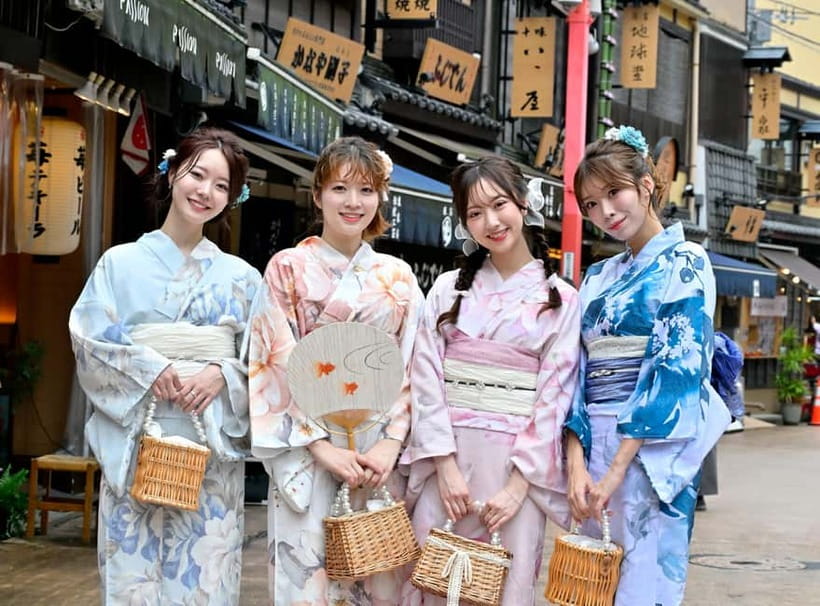
At $56 per person, the standard package includes the kimono or yukata, dressing, hairstyle, hair accessories, geta, handbag, matcha, and sweets. It also gives you several hours to walk around Asakusa after the fitting.
That is a fair value if you planned to rent traditional clothing anyway. A basic rental may look cheaper at first, but the included hair styling and accessories make this package more complete. The matcha lesson also gives you something to do during the shop visit rather than treating the appointment as a clothing pickup.
Budget extra for upgrades. Lace and silk kimonos, haori hakama, furisode, large-luggage storage, and next-day return all cost more. The professional photo session is also an add-on, and makeup is not included.
The experience is particularly good value for a half-day plan in Asakusa. You combine dressing, a cultural lesson, photographs, and independent sightseeing in one compact booking. It is less attractive if you dislike formal clothing, have limited walking comfort, or want a fully guided tour with constant historical commentary.
Timing, access, and who will enjoy it most
Allow at least two hours at the shop for the advertised experience, with 45 to 70 minutes for dressing and hair and about 15 minutes for matcha. If you add the photo session, set aside another 60 minutes.
The shop operates from 9:30 am to 5:30 pm, and the kimono must be returned by closing time. Check the available start times before booking so you have enough daylight and sightseeing time afterward.
English assistance is available, and private or small-group arrangements can be booked. The activity is wheelchair accessible, which makes it more flexible than many traditional dressing experiences. You should still discuss any specific mobility needs in advance because kimono layers and geta may affect comfort.
I would recommend it most strongly to:
- Couples wanting distinctive Tokyo photographs
- Families seeking an activity that includes children
- Solo visitors who want a professional portrait session
- First-time visitors curious about matcha and Japanese clothing
- Anyone planning a relaxed half-day around Sensoji Temple
I would be more cautious if you dislike heat, tight clothing, or walking in wooden sandals. The fitting is careful, but it is not a quick change of clothes.
Should you book the Asakusa kimono experience?
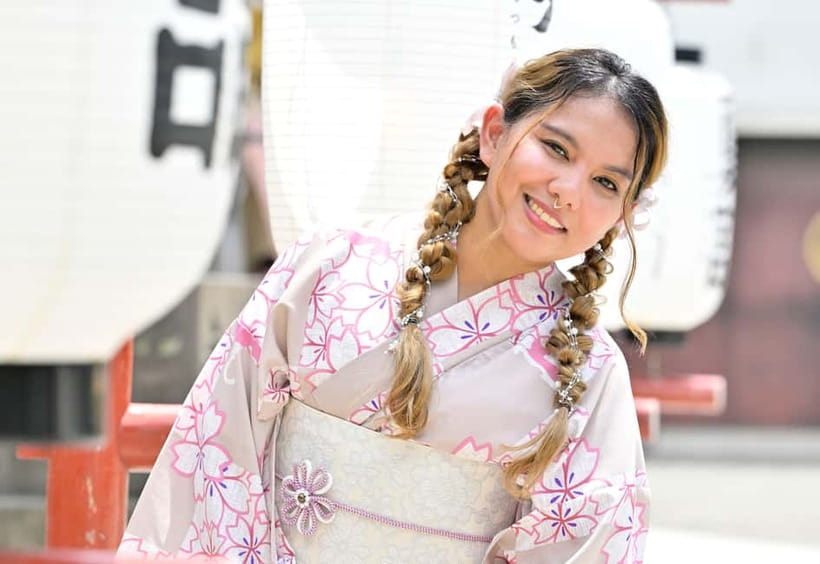
Book it if you want an activity that combines appearance, culture, and free time. The staff’s patience is a major part of the experience, and the service works especially well for families, first-time kimono wearers, and visitors who feel unsure about hairstyles or posing.
Choose the photo session if the images matter to you. Skip it if your group already takes strong photographs and you would rather spend the hour exploring.
The best booking plan is an early or midmorning start, followed by Sensoji, the surrounding streets, and the Sumida River. Wear comfortable clothes underneath, avoid large luggage, and leave room in your schedule for the fitting. At $56, this is not the cheapest way to see Asakusa, but it offers more than a rental: you get help with the full look, a matcha lesson, and several hours to enjoy Tokyo in traditional dress.
FAQ
Where is the kimono rental shop located?
Kimono Rental Shop YUI is about a four-minute walk from Asakusa Station and two minutes from Kaminarimon Gate. Take the elevator to the second floor of the building.
How long does the experience take?
The listed experience lasts two hours. Dressing and hairstyling usually take 45 to 70 minutes, and the matcha lesson takes about 15 minutes. Add another 60 minutes if you book the optional photo session.
How late can I keep the kimono?
You may explore Asakusa in the outfit until 5:30 pm. The kimono must be returned no later than that time unless you pay for next-day return service.
Is a full tea ceremony included?
No. The package includes matcha, sweets, and a short lesson on how to drink matcha according to Japanese tradition. A full tea ceremony is not included.
Are children allowed to participate?
Yes. Kimono and yukata rentals are available for children as well as adults. The activity is described as suitable for children.
Is the experience wheelchair accessible?
Yes, the activity is wheelchair accessible.
Is makeup included?
No. Hairstyling, hair accessories, footwear, and a traditional handbag are included, but makeup is not.
Can I cancel the booking?
You can cancel up to 24 hours in advance for a full refund. The reserve-now, pay-later option is also available.
Just added around Tokyo
- Yokohama : Tea Ceremony with Sweets and Souvenir★ 5.0 · 5 reviews
- Walking Tour: Yanaka,Nezu& Sendagi: Tea Ceremony & Old Tokyo★ 5.0 · 3 reviews
- 2 Hours Mochi &Nerikiri Making & Matcha Class in Bunkyo★ 5.0 · 21 reviews
- Private Kimono and tea ceremony at local home near Tokyo Disney★ 5.0 · 6 reviews
- Private Mochi・Matcha sweets Making Class Near Shibuya Area★ 5.0 · 22 reviews
- Tokyo Sweets Tour: Hidden Gems & Matcha at an Old Tea House★ 5.0 · 6 reviews
- Giant Sushi Cooking Class: Make a 1.5m Sushi Roll in Tokyo★ 5.0 · 9 reviews
- Tokyo Tea Ceremony Class at a Traditional Tea Room★ 5.0 · 2 reviews
Kimono & Tea Ceremonies, compared.
KYOTO Tea Ceremony with kimono near by Imamiya Jinjya Shrine
Read our review →
Kimono and Tea Ceremony Experience at Cultural Asset
Read our review →
Asakusa: Kimono Tea Ceremony with Matcha and Sweet
Read our review →Browse the lists this tour appears in