
Review · CHINA
Tea Tasting and Pairing Concept Workshop
The clever part of this workshop is that tea is not treated as a drink alone. You taste four Chinese teas, then match them with dried nuts, chocolate, and flower honey toast to see how food changes the cup. The session also includes a hands-on lesson in gongfu-style brewing, using traditional tea ware.
I like the mix of practical skill and playful tasting. You learn how to steep and pour tea properly, and you get to examine tea leaves before and after brewing. I also like Vivian’s warm, personal teaching style, which has helped families and first-time tea drinkers feel at ease.
The main drawback is the location in Chai Wan, away from Hong Kong’s best-known sightseeing districts. At about $65.60 per person for 90 minutes, it is fair value for a focused class, but less appealing if you want a quick tea stop close to Central or Tsim Sha Tsui.
Key points at a glance
- Four tea styles in one sitting: Taste green, scented green, red, and oolong teas from selected premium categories.
- Traditional brewing practice: Use Chinese tea ware and learn the gongfu method of steeping and pouring.
- Food pairing is part of the lesson: Compare tea with dried nuts, chocolate, and flower honey toast.
- Vivian leads the session: Her teaching combines tea facts, demonstrations, humor, and hands-on guidance.
- Family-friendly option: Children can join the workshop, making it a useful indoor activity for families.
- Small maximum group: The class is limited to 20 people, so it has more room for participation than a large tasting event.
Four teas, three snacks, and a hands-on lesson
This is a compact workshop with a clear purpose: help you understand how tea tastes, how it is prepared, and how food can change your impression of it. The session lasts about 1 hour and 30 minutes, long enough for instruction and tasting without taking over your day in Hong Kong.
You work through four tea categories: green, scented green, red, and oolong. The word red refers to the Chinese tea category often called black tea in English-speaking markets. That distinction is useful because tea names can vary between shops, books, and countries.
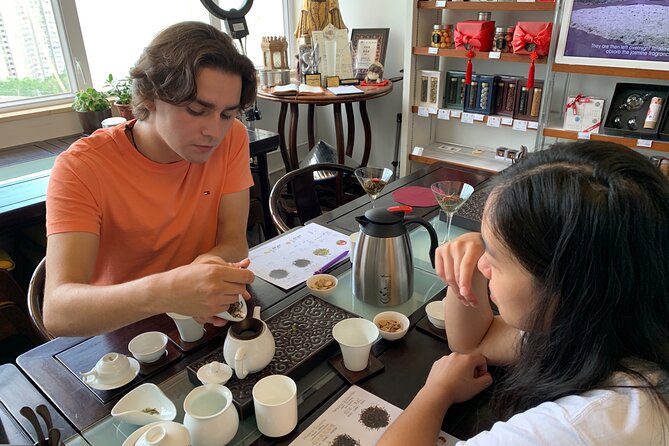
The tasting is not just a lineup of cups. You use your senses to compare the teas, and you can examine the leaves before and after steeping. That simple before-and-after look gives you a better sense of how dry leaves open, soften, and release flavor.
The food pairings add another layer. Dried nuts, chocolate, and flower honey toast give you different levels of sweetness, texture, and richness to compare against the tea. You may find that a tea you dislike on its own works better with a particular snack, or that a food makes a tea taste sharper or softer.
This is the sort of lesson that gives you a useful habit for later tea shopping: taste first, then ask what you want to pair with the tea. It is more helpful than memorizing a list of tea names.
More Tea Tastings in China:
- Biking Real Shanghai& Tea Tasting Experience
★ 4.5 · 45 reviews - Shanghai 3-Hour Afternoon Tea Tasting and Dessert Tour
★ 4.9 · 15 reviews - Private Shanghai City and Zhujiajiao Combo Tour with Boating, Tea Tasting, Lunch
★ 5.0 · 15 reviews
Learning the gongfu method with Vivian
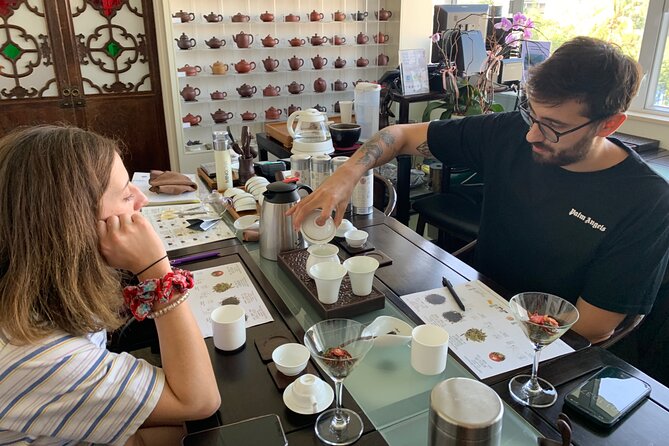
The practical heart of the experience is the brewing lesson. You use traditional tea ware and practice the gongfu approach, a Chinese tea method that uses a small brewing vessel, measured amounts of leaf, and short steeps. The supplied details describe this as a hands-on experience, so you should expect more than watching Vivian prepare every cup.
You learn how to steep and pour properly, with attention to the rhythm of the process. This matters because brewing time and handling can change the balance of a tea. A cup can taste light, bitter, fragrant, or flat depending on how it is prepared.
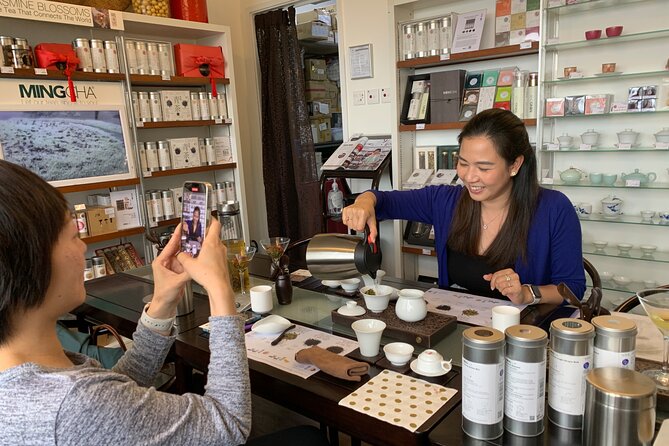
Vivian is the tea master named in the experience details, and her style is a major part of what makes the class approachable. Her teaching has been described as friendly, funny, passionate, and clear. She also appears to adjust well to families and different levels of tea experience.
That personal attention is especially useful if you are new to Chinese tea. You do not need to arrive knowing the difference between oolong and green tea. You can ask basic questions, handle the tea ware, and learn by tasting rather than trying to absorb a lecture.
The class also has a light social side. One family described the workshop as fun and engaging, while another praised Vivian for helping arrange a taxi and waiting until it arrived. That kind of practical kindness matters if you are unfamiliar with Chai Wan or finishing the session late in your day.
Why the tea leaf experiment matters
Many tastings hand you a finished cup and ask you to identify its flavor. This workshop adds a more concrete lesson by letting you examine the leaves before and after brewing.
Dry tea leaves can look small and tightly formed. After contact with water, they may open and reveal more about their shape, color, and preparation. You do not need specialist training to appreciate the change. It gives you a visual clue that tea is a processed leaf, not a powdered flavoring.
That experiment also keeps the class active. You are not simply sitting while someone talks. You look, smell, taste, and handle the brewing equipment. The five-senses approach suits children and adults who learn better through direct experience.
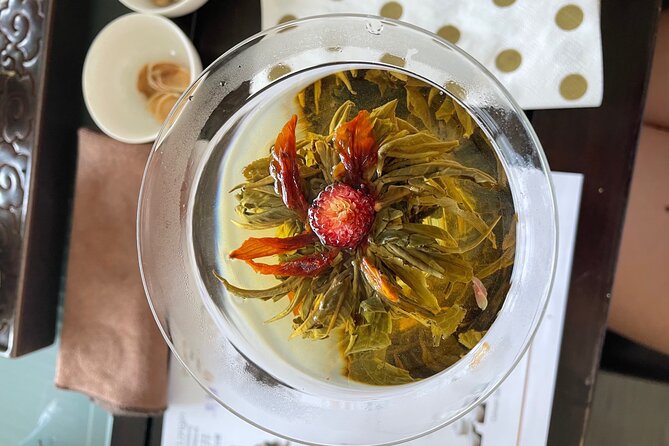
The workshop includes a special jasmine blossom presentation as well. The flower opens in the water and creates a striking display. This appears to be one of the memorable moments of the session, and it also explains why the experience can appeal to people who enjoy presentation as much as flavor.
If you love photographic food and drink experiences, the jasmine blossom may be the most visually appealing part of the class. Still, the main value is not the picture. It is the chance to see how scented tea can combine aroma, appearance, and taste in one serving.
Pairing tea with chocolate and honey toast
The food is not a full meal, so plan to arrive having already eaten if you need substantial food. The pairings are tasting portions designed to show how different flavors interact with tea.
Dried nuts bring a firm texture and a toasted, savory quality. Chocolate supplies sweetness and a deeper flavor. Flower honey toast adds another type of sweetness, with a lighter floral note. Together, the three foods give you enough contrast to notice how the teas behave around food.
This is valuable because tea is often served with snacks, yet many people choose pairings at random. A tea that tastes delicate by itself may disappear beside chocolate. A stronger tea may hold its character better. The workshop lets you compare these effects directly instead of relying on general rules.
You can also use the lesson later in your trip. If you buy tea in Hong Kong, you will have a better idea of what to drink with breakfast, dessert, or a savory snack. The workshop does not promise to turn you into a tea expert in 90 minutes, but it can make you a more confident buyer and brewer.
The pairing segment also gives children a reason to stay engaged. Younger participants may care less about tea categories, but they can compare the snacks, smell the leaves, and watch the flower open.
More Food and Drink Tours in China:
- Unlock Chinese Tea: Culture, Science, Tasting & Hands-on Brewing
★ 5.0 · 12 reviews - Tea Tasting & Brewing Experience
★ 5.0 · 10 reviews - 3-hour Morning/Afternoon Tea Tasting on Maliandao Street & Dimsum
★ 5.0 · 7 reviews - Puer Tea Picking and Tasting | 6 Hour Morning Trip
★ 5.0 · 7 reviews
Getting to MingCha Tea House in Chai Wan
The meeting point is MingCha Tea House, B2, 15/F, Fortune Factory Building Block B, 40 Lee Chung Street, Chai Wan, Hong Kong. The activity ends at the same location.
This address requires more attention than a meeting point in a major tourist square. Chai Wan is not usually the first district visitors choose for sightseeing, so allow time to find the building and reach the correct floor. The information provided says the site is near public transportation, but it does not give a specific station, route, or walking time.
A mobile ticket is provided, which is handy if you are moving around Hong Kong without printing paperwork. Keep the booking details easy to access on your phone, especially when looking for an industrial or commercial building rather than a famous landmark.
The location is part of the experience’s tradeoff. You spend time reaching Chai Wan, but you also get a more local side of Hong Kong than the usual waterfront and shopping areas. If you already plan to visit the eastern side of Hong Kong Island, the workshop fits more naturally into your schedule.
I would not book this as a last-minute stop between attractions in Central. The class has two start times, but the exact times are not supplied here, so check the available choice before planning connections on the same day.
Is $65.60 a fair price?
At $65.60 per person, this is not a cheap cup of tea. It is priced as a guided class, tasting, pairing session, and practical demonstration rather than a café visit.
The value is strongest if you want instruction. You taste four tea categories, use traditional equipment, handle the leaves, learn brewing steps, and sample three types of food. A private tea purchase or casual drink might cost much less, but it would not give you the same structured comparison.
The price also includes access to Vivian’s teaching and the chance to ask questions during the session. That personal exchange is important because tea preparation can be hard to understand from a written description alone.
The value is weaker if you already know how to brew gongfu-style tea or mainly want a large meal. The snacks are pairings, not a full afternoon tea spread. You are paying for a focused educational experience, not quantity.
The maximum group size is 20 people. That is not an intimate private lesson, but it is still limited enough to keep the session manageable. The hands-on format makes the group size relevant, since you will want a clear view of the demonstration and enough opportunity to participate.
A good choice for families and curious beginners
The family-friendly option makes this one of the easier tea experiences to share with children. The combination of snacks, flower tea, visible leaf changes, and hands-on pouring gives younger participants something to do.
Adults who already drink tea will have more reason to focus on processing styles, brewing technique, and pairing. Beginners can simply follow the tasting and learn the basic differences between the four categories.
I would also recommend it for couples, friends, and solo visitors who want a quieter cultural activity. The class creates a natural way to meet other people without requiring a long meal or a full-day tour.
It is less suitable for anyone seeking a grand tea ceremony in a historic setting. The provided details focus on instruction, tasting, and preparation at MingCha Tea House. You should book it for the learning and interaction, not for a large performance or sightseeing tour.
The experience also works well on a day when you want a break from Hong Kong’s crowded shopping streets. Just remember that Chai Wan is a destination in its own right, not a central neighborhood you can casually pass through.
What to know before booking
Confirmation arrives within 48 hours, subject to availability. If your Hong Kong schedule is tight, book well ahead. The activity is booked an average of 34 days in advance, which suggests that leaving it until the day before may not be wise.
You can cancel for a full refund up to 24 hours before the start time. Changes made less than 24 hours before the activity are not accepted, and late cancellations are not refunded. The cut-off uses Hong Kong local time.
The supplied information says the activity requires good weather. If poor weather causes cancellation, you will be offered another date or a full refund. Since the workshop takes place indoors, this condition is worth confirming when you book if weather may affect your plans.
There are two start times, giving you some flexibility. Exact times are not provided, so compare them with your hotel plans, transport connections, and other reservations before choosing.
The experience is available with a mobile ticket and has a maximum of 20 people. No specific accessibility details are provided, so contact MingCha Tea House before booking if you have mobility or other access needs.
Should you book the tea workshop?
Book it if you want to understand Chinese tea through tasting and practice rather than a simple demonstration. The four tea categories, leaf comparison, gongfu brewing, food pairings, and jasmine blossom presentation give you plenty to do in 90 minutes.
I would especially choose it if you are traveling with children, enjoy food pairing, or want a practical cultural activity away from Hong Kong’s main tourist zones. Vivian’s friendly teaching style adds a personal touch, and the taxi assistance described after one session suggests careful attention to guests’ needs.
Think twice if Chai Wan is far from your plans, if you want a full meal, or if you already have strong tea-brewing skills. For everyone else, the $65.60 price is reasonable when you treat it as a compact class with tastings and snacks, not as an ordinary tea break.
FAQ
Where does the tea workshop take place?
It takes place at MingCha Tea House, B2, 15/F, Fortune Factory Building Block B, 40 Lee Chung Street, Chai Wan, Hong Kong.
Where does the activity end?
The workshop ends back at the MingCha Tea House meeting point.
How long does the workshop last?
The experience lasts approximately 1 hour and 30 minutes.
How much does the workshop cost?
The listed price is $65.60 per person.
Which teas will I taste?
You will taste four premium teas from selected categories: green, scented green, red, and oolong.
What food is included with the tea?
The tasting includes dried nuts, chocolate, and flower honey toast.
Will I practice making tea?
Yes. The workshop includes hands-on brewing in the gongfu style with traditional tea ware, along with instruction on steeping and pouring.
Is the activity suitable for children?
A family-friendly option is available, so children can join the workshop.
How many people can join the activity?
The maximum group size is 20 people.
Is cancellation free?
You can cancel for a full refund up to 24 hours before the start time. Cancellations or changes made less than 24 hours before the start time are not accepted for a refund.
What happens if bad weather cancels the workshop?
If the activity is canceled because of poor weather, you will be offered a different date or a full refund.
More Workshops in China
- Beijing: Dumpling Making Workshop with Meal and Tea
★ 4.7 · 69 reviews - Beijing: Temple Of Heaven+Tai Chi Class+Tea Ceremony
★ 5.0 · 8 reviews - Beijing Hands-On Culture Tour: Tea, Instrument, Calligraphy
★ 5.0 · 6 reviews - Xi’an Chinese Calligraphy Workshop: Ink Art & Tea Tasting
★ 5.0 · 4 reviews
Just added around China
- Xi’an Chinese Calligraphy Workshop: Ink Art & Tea Tasting★ 5.0 · 4 reviews
- Xi’an Noodle Making and Tea Tasting Experience★ 5.0 · 6 reviews
- Half-day Tour: Largest Tea Plantation & Amazing Xianggong Hill★ 5.0 · 9 reviews
- Xi’an Calligraphy & Tea Ceremony – Dive into Ink & Brush Artistry★ 5.0 · 4 reviews
- Full-day Tour: Spectacular Sunrise, Tea Plantation & Sunset★ 5.0 · 3 reviews
- 3 hours Xi’an Mahjong Class with Local Tea★ 5.0 · 2 reviews
- Shanghai Mahjong Experience in Local Tea Bar★ 5.0 · 4 reviews
- Unlock Chinese Tea: Culture, Science, Tasting & Hands-on Brewing★ 5.0 · 12 reviews
Tea Tastings, compared.
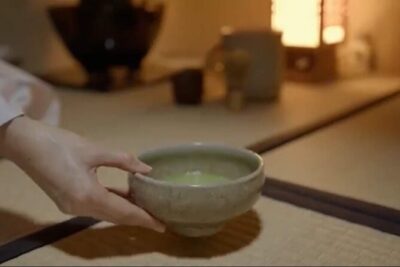
Private Tea Ceremony and Sake Tasting in Kyoto Samurai House
Read our review →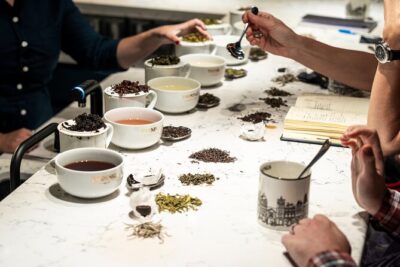
Twinings 2-Hour Tea Tasting Masterclass in London
Read our review →
Wadmalaw Island Wine Tasting and Tea Garden Trip
Read our review →
Matcha Experience with of Japanese Tea Tasting in Tokyo
Read our review →
World Teas & Turkish Tea Brewing, Tasting Workshop
Read our review →
Browse the lists this tour appears in