
Review · KYOTO
Tea ceremony by the tea master in Kyoto SHIUN AN
Kyoto’s SHIUN AN tea ceremony is more than a quick cup of matcha. In a quiet house near Daitoku-ji Temple, you watch a formal tea service, learn why the room is arranged as it is, and then make your own bowl. The setting is small, traditional, and personal.
I like the small group size, usually no more than six people, and the fact that you receive two bowls of matcha and two Japanese sweets. I also like the English interpretation, which helps explain the precise movements instead of leaving you to simply watch in silence.
The main drawback is the location. SHIUN AN is not in central Gion, and the house can be tricky to find. You may also need to sit on the floor and manage stairs, so plan extra time and mention any mobility concerns before booking.
Key points to know before booking
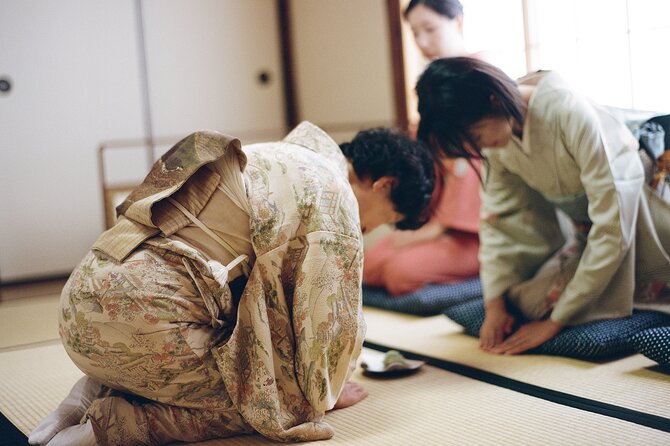
- A formal tea setting near Daitoku-ji: The ceremony takes place in a traditional home in a quiet residential area of northern Kyoto.
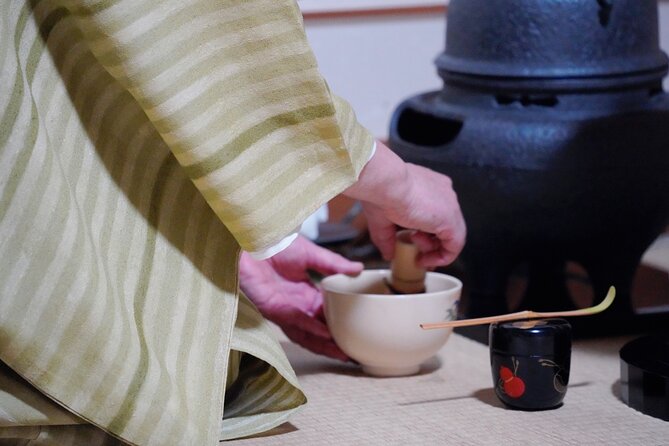
- Hands-on matcha preparation: You watch the tea master first, then use a bowl, scoop, container, and whisk to prepare your own tea.
- Two bowls of tea and two sweets: The price includes the served matcha, your own bowl, and seasonal Japanese confections.
- Small sessions: Groups normally have a maximum of six people, rising to eight during peak periods.
- English help is available: An interpreter explains the ceremony, utensils, history, and answers questions.
- Allow time for the address: The experience starts and ends at 955-1 Idacho, Kamigyo Ward, with no pickup or drop-off.
A traditional Kyoto tea ceremony in a quiet neighborhood
SHIUN AN offers a compact introduction to chanoyu, the Japanese tea ceremony. The point is not simply to drink matcha. The ceremony links tea, movement, seasonal decoration, hospitality, and attention to the present moment.
The setting matters. You are near Daitoku-ji, a major Zen Buddhist temple complex with a long connection to tea culture. The Golden Pavilion, Kinkaku-ji, is also four bus stops away, so this ceremony can fit well into a northern Kyoto sightseeing day.
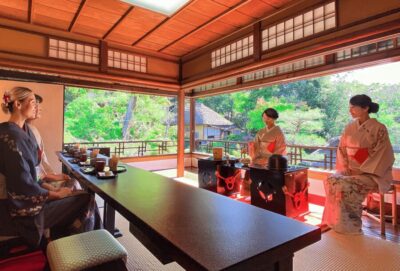
The tea room is in a small house rather than a large tourist venue. That gives the experience a calm feel, but it also means the surroundings are more residential and less obvious than a central Kyoto attraction. I would not book this expecting a grand entrance or a polished museum-style exhibit. The appeal is the intimate setting and the chance to see the ritual at close range.
The session lasts about 45 minutes, though some descriptions and past schedules have made it feel closer to an hour. You should allow more time than the advertised duration for finding the house, settling in, and getting back to your route.
More Tea Ceremony Experiences in Kyoto:
- Kyoto: Tea Ceremony in a Traditional Tea House in Kiyomizu
★ 4.9 · 3,519 reviews - Kyoto: Tea Ceremony Ju-An at Jotokuji Temple
★ 4.9 · 3,207 reviews - Kyoto: 45-Minute Tea Ceremony Lesson Experience
★ 4.3 · 2,378 reviews
What happens when you arrive at SHIUN AN
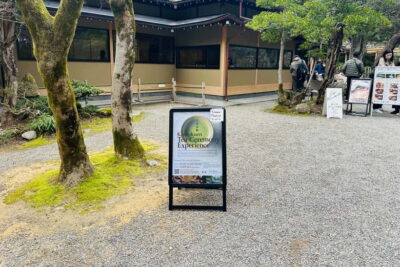
You meet at 955-1 Idacho, Kamigyo Ward, Kyoto, 602-8302. There is no hotel pickup, so you are responsible for reaching the house. Public transportation serves the area, but the final approach can be less simple than a visit to a major temple entrance.
Use a reliable map and leave early. The address is in a residential neighborhood, and one of the most useful practical lessons is not to cut the timing close. A missed turn or a slow bus can make a short walk feel stressful when you should be arriving quietly for the ceremony.
Once inside, you receive white socks and a folding fan. The socks are useful on tatami, while the fan forms part of the formal etiquette of the setting. Tea bowls, tea containers, scoops, and whisks are supplied, so you do not need to bring equipment.
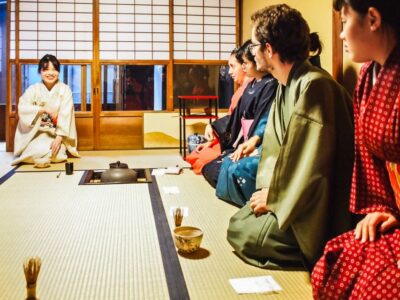
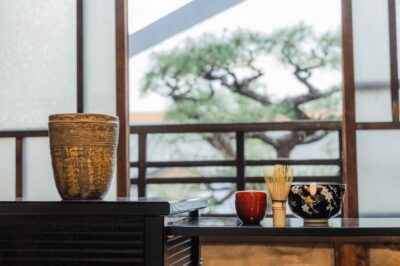
The tea master first brings you into the tea room. Before the tea is served, you have time to notice the hanging scroll, flowers, utensils, and the way the room is arranged. These details are not random decoration. They help mark the season and create the tone of the meeting.
Watching the tea master prepare matcha
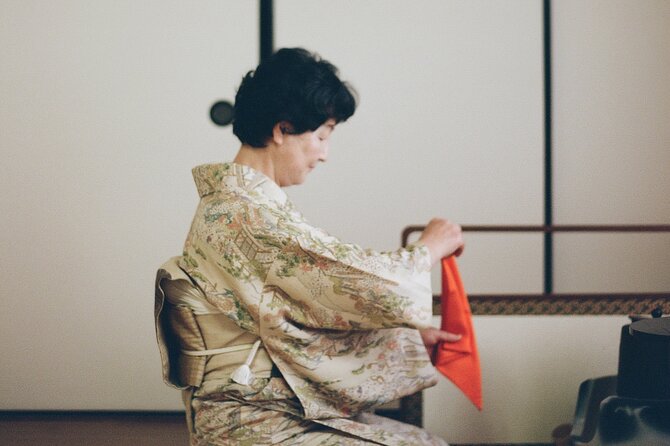
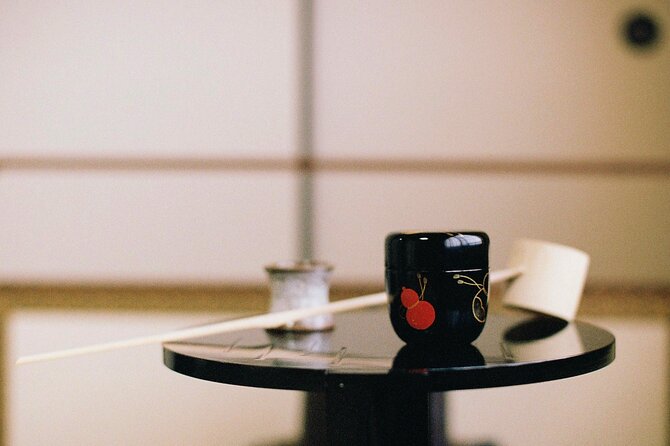
The demonstration is the heart of the first half. The tea master handles each item with care, from the tea container to the bamboo scoop and whisk. The movements may look simple at first, but the order, pace, and placement of every object have meaning.
An English interpreter helps explain what is happening. That support is especially important if you have never attended a Japanese tea ceremony. Without it, you might admire the grace of the movements but miss why the host turns a bowl, how the utensils are treated, or why the room’s layout matters.
The tea masters hold a formal Tea Name, described as a full professor qualification within the tea tradition. That does not make the ceremony a lecture. The tone remains welcoming, and you have time to ask questions after the demonstration and during the hands-on part.
You receive a Japanese sweet with the served matcha. The sweet is meant to be eaten before the tea, balancing the tea’s bitter edge. Two types of Japanese sweets are included during the experience, and the food is a pleasant part of the lesson rather than an afterthought.
Making your own bowl of matcha
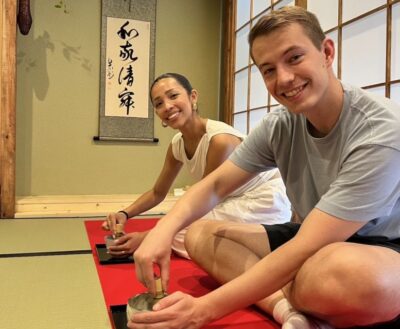
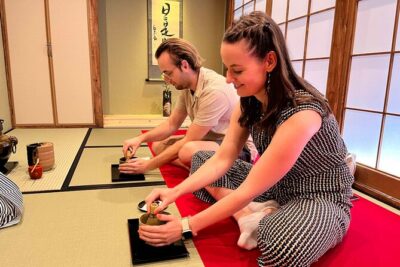
After watching the tea master, you prepare your own bowl. You learn how to use the tea scoop, add matcha and water, and whisk the mixture into a smooth drink. The instructions cover the basics, so you do not need previous experience.
This is where the ceremony becomes more memorable. Watching someone who has practiced for years is very different from trying to coordinate the bowl and whisk yourself. Your tea may not have the same foam or balance as the tea master’s, but that is part of the fun.
You receive two bowls of matcha in total. One is served to you, and one is made through your own practice. You also receive two kinds of Japanese sweets. For the price, this gives you both a cultural explanation and a practical activity, rather than a short demonstration with one sample drink.
The tea may taste stronger and more bitter than the sweetened green tea served in many cafés. That is normal. Matcha is whisked from powdered tea, so you drink the whole leaf rather than steeping and removing it. If you already enjoy matcha, you will appreciate the chance to compare your preparation with the tea master’s.
A few more tea experiences around Kyoto worth a look
- Kyoto: Table-Style Tea Ceremony at a Kyo-Machiya
★ 4.9 · 1,211 reviews - Kimono Tea Ceremony at Kyoto Maikoya, NISHIKI
★ 5.0 · 911 reviews - Kyoto: Kimono Tea Ceremony at Orizuruya Gion
★ 4.9 · 618 reviews - Kyoto: Tea Ceremony in 100-year-old Kyo-Machiya Townhouse
★ 4.8 · 546 reviews
Why Daitoku-ji adds meaning to the experience
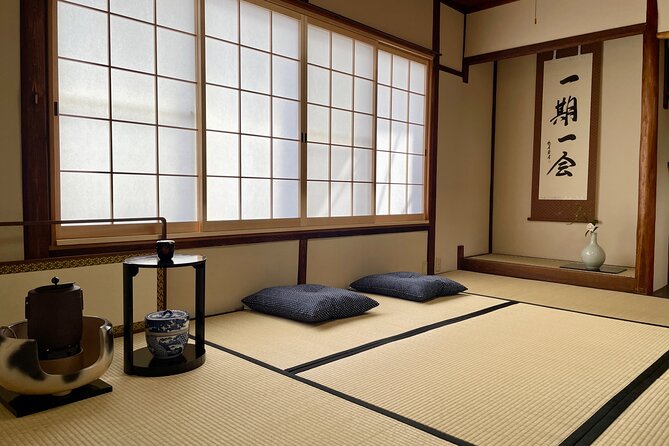
Daitoku-ji is not just a nearby landmark used to fill out the description. The temple complex has a close relationship with Zen Buddhism and tea culture. Famous priests studied there, and its traditions helped shape the world in which the tea ceremony developed.
The ceremony’s connection with Zen is presented as a path toward awareness and self-discovery. You do not need to approach the activity as a religious practice. Still, the quiet pace makes more sense when you understand that the tea ceremony values careful attention, humility, and respect for the moment.
This context gives the 45 minutes more weight. You are not only learning how to whisk a drink. You are seeing how a small room, seasonal flowers, a scroll, sweets, utensils, and a host’s movements work together to create a complete experience.
I particularly like this aspect for a first visit to Kyoto. Temples can sometimes become a rapid sequence of gates, gardens, and photographs. Here, you slow down and look closely at objects that might otherwise pass unnoticed.
Group size, atmosphere, and the pace of the session
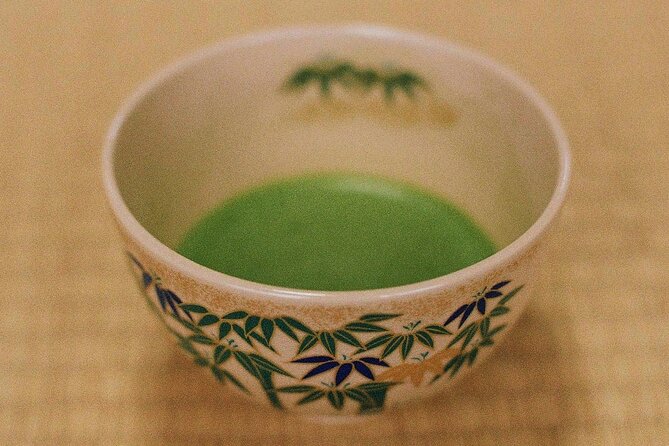
The normal maximum is six people, which is a strong feature for this type of activity. A smaller group makes it easier to see the demonstration, ask questions, and receive help with your own tea. During peak seasons, the group can increase to eight, so the experience may feel slightly less intimate at busy times.
Some sessions may be even smaller. That can make the room feel especially peaceful, but it also means the atmosphere may vary from one booking time to another. The ceremony itself remains structured, so you are not left to guess what to do.
The setting is quiet and personal rather than theatrical. The hosts wear traditional clothing, and the ceremony follows formal steps. At the same time, the English interpreter helps keep the experience open to people unfamiliar with Japanese etiquette.
If you are looking for a lively activity with constant conversation, this may feel slow. If you want a break from Kyoto’s packed sightseeing schedule, the measured pace is a benefit. I would place it after a busy temple morning rather than before an appointment you cannot miss.
Sitting on tatami and practical comfort
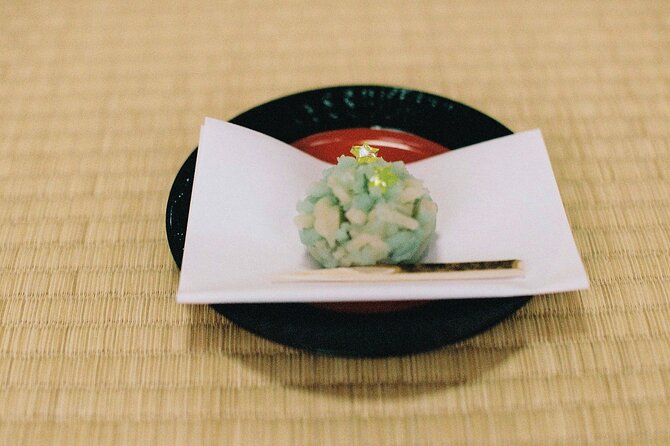
You should be prepared to sit on the floor for at least part of the ceremony. One past participant who could no longer sit in the preferred position was made comfortable and included, but you should still communicate mobility needs ahead of time instead of assuming every seating arrangement will work for you.
The location also includes stairs, which can be difficult for some people. The activity allows service animals and is near public transportation, but the available information does not describe it as fully step-free or wheelchair accessible.
Wear clothing that lets you sit comfortably. Loose, practical clothes are a better choice than anything restrictive. The provided white socks are helpful on tatami, and the folding fan is supplied as part of the ceremony.
Food allergies should be reported in advance. Japanese sweets are included, and the provider specifically asks you to share allergy information before the session.
Getting there from Kyoto’s main sights
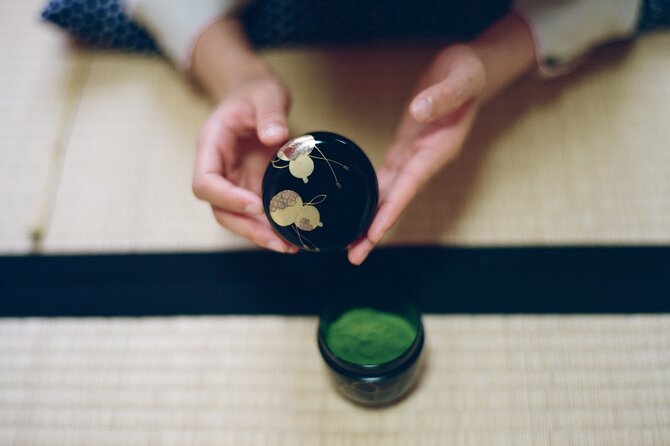
SHIUN AN is not near Gion, and that is the most common planning issue. The experience is close to Daitoku-ji and within reach of Kinkaku-ji, but it is not a quick walk from Kyoto Station or the central sightseeing streets.
Local buses can get you toward the area. One practical option mentioned by past participants is to use public transportation to the nearest station or area, then take a taxi or Uber for the final stretch. The final taxi ride may be inexpensive, but the exact cost depends on where you start and current traffic.
Do not rely on a last-minute arrival. Check the route the day before, save the address, and allow time to identify the house. Since the activity starts and ends at the same meeting point, you can continue to Daitoku-ji or Kinkaku-ji afterward, but leave enough time for the ceremony itself and the journey out.
The location is a weakness if you are trying to pack several central Kyoto attractions into one tight block. It is a strength if you want to combine the tea ceremony with northern Kyoto’s temples and avoid another crowded commercial venue.
Is the 33-dollar price good value?
At about $33.03 per person, SHIUN AN is reasonably priced for what is included. You receive the demonstration, interpretation, two bowls of matcha, two Japanese sweets, use of the tea equipment, white socks, and a folding fan.
The best value comes from the instruction. A café may sell you matcha, and a larger cultural show may demonstrate a ceremony, but this experience lets you prepare tea yourself and ask questions. That hands-on step gives the price more purpose.
The cost does not include transportation, so include bus or taxi fares in your budget. You are paying for the tea session only, not a guided visit to Daitoku-ji or Kinkaku-ji. Still, combining this with nearby temple sightseeing can make the trip more efficient.
The experience has a 4.8 rating from 76 reviews, with 96 percent recommending it. More important than the numbers is the pattern of praise: the warm hosts, clear translation, quiet setting, historical explanation, and chance to make matcha yourself are repeatedly valued.
Who will enjoy SHIUN AN most?
I would recommend this ceremony to you if you want cultural context instead of a quick photo opportunity. It works especially well for first-time visitors who want to understand the basic structure of tea ceremony without committing to a long formal course.
It is also a good choice for matcha fans, couples, families with older children, and anyone who enjoys careful craft. A young child may need help staying quiet and seated, but the practical whisking portion gives the experience a clear focus.
You may want to choose another activity if you need step-free access, dislike sitting on the floor, or have only a narrow gap between major Kyoto sights. The location requires planning, and the ceremony rewards patience rather than speed.
I would also avoid treating the session as a full training course. You learn the fundamentals and gain a sense of the etiquette, but mastering tea ceremony takes much longer. The value lies in gaining a respectful introduction and trying the basic movements yourself.
Booking, cancellation, and final advice
You receive confirmation when you book, and the ticket is mobile. Free cancellation is available up to 24 hours before the start time. Cancellations or changes made less than 24 hours before the session are not refundable, and the activity requires a minimum number of bookings. If the provider cancels because that minimum is not met, you are offered another date or a full refund.
I would book SHIUN AN if you want a small, traditional setting, clear interpretation, and hands-on matcha practice. Plan the route carefully, allow for stairs and floor seating, and tell the provider about allergies or mobility needs.
I would skip it only if your Kyoto schedule is already overloaded or if getting to a residential neighborhood feels like too much work. For most visitors interested in Japanese culture, the combination of a qualified tea master, seasonal sweets, two bowls of tea, and a chance to whisk your own makes this a thoughtful use of 45 minutes.
FAQ
Where does the tea ceremony take place?
The meeting point is 955-1 Idacho, Kamigyo Ward, Kyoto, 602-8302, Japan. The ceremony takes place in a small house in a quiet residential neighborhood near Daitoku-ji Temple.
How long does the experience last?
The stated duration is approximately 45 minutes. You should allow extra time to find the address and arrive before the start time.
How many people attend each session?
The usual maximum is six people. During peak seasons, the group may increase to a maximum of eight.
What is included in the price?
The experience includes tea bowls, tea containers, tea scoops, tea whisks, white socks, a folding fan, matcha tea, and two kinds of Japanese sweets.
Do I make my own matcha?
Yes. The tea master first demonstrates the ceremony and explains the utensils and steps. Each participant then has the opportunity to prepare a bowl of matcha.
Can I cancel for a refund?
You can cancel for a full refund up to 24 hours before the experience starts. Cancellations or changes made less than 24 hours before the start time are not refunded.
Just added around Kyoto
- Whisk Your Own Matcha: A Zen Matcha Experience at Temple★ 3.6 · 7 reviews
- Uji Walking Tour – Byodo-in temple and Tea Ceremony from Kyoto★ 3.5 · 3 reviews
- Traditional Tea Ceremony in Kyoto★ 4.5 · 3 reviews
- Kyoto: Authentic Tea Ceremony in a Small Group★ 5.0 · 7 reviews
- Tea ceremony at Kyoto’s Zen Temple Teahouse★ 5.0 · 2 reviews
- Tea Ceremony in 150 Years Old Townhouse with Tables and Chairs★ 5.0 · 22 reviews
- Silent Beauty of Kyoto Zen Walk and Tea Experience★ 5.0 · 2 reviews
- Tea Ceremony Experience in Traditional Kyoto Townhouse★ 5.0 · 19 reviews
Tea Ceremony Experiences, compared.
Tea Ceremony in a Traditional Tea House in Kiyomizu
Read our review →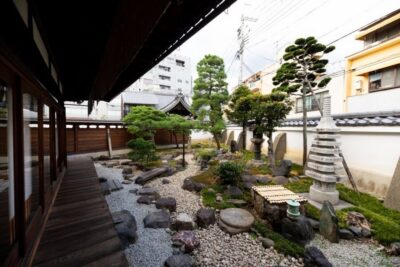
Browse the lists this tour appears in