
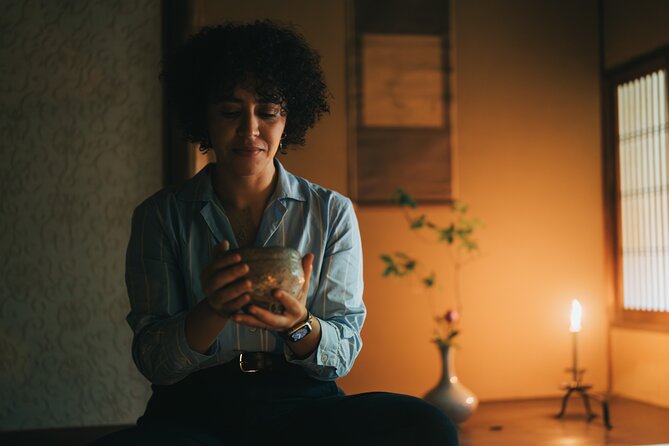
Review · KYOTO
Oboro | Mindful Tea Ceremony in a 100-Year-Old Kyoto Teahouse
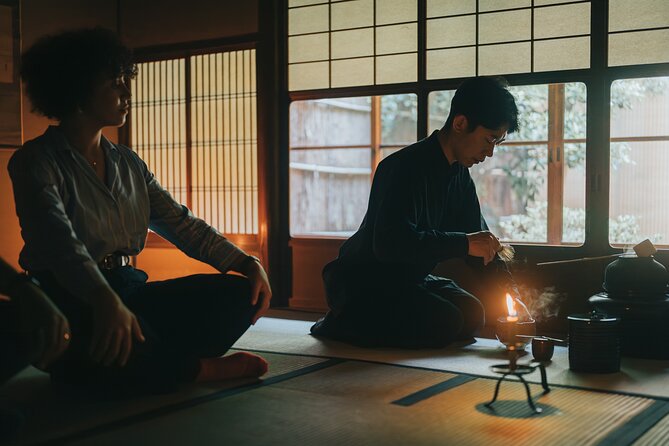
Oboro’s tea ceremony is less about drinking a quick bowl of matcha and more about watching a carefully paced ritual unfold. In a 100-year-old Kyoto teahouse, candlelight, quiet sounds, and simple decoration create a peaceful setting far removed from a busy café.
I especially like the small maximum of eight people and the English translation, which lets you follow the meaning behind the gestures instead of merely watching them. The ceremony also includes welcome tea, sweets, organic green tea, and a small handmade candle to take home. The main consideration is timing: arriving more than 10 minutes late means you cannot join.
Key details before you book
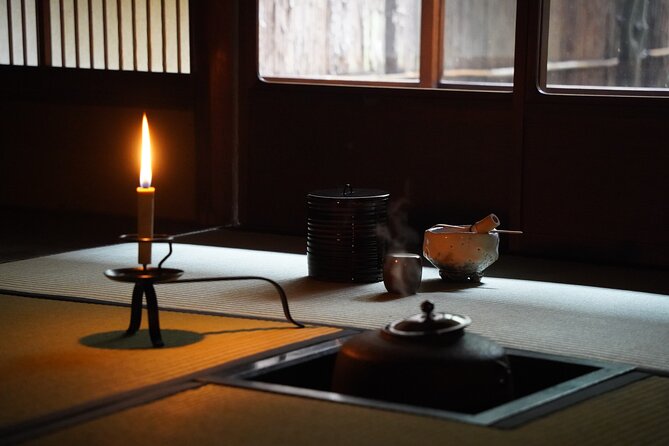
- Candlelit setting: The ceremony takes place in a softly lit, minimally decorated teahouse rather than a modern restaurant.
- English guidance: An English-speaking host explains the ritual and translates, with hosts including Taku and Naoki named in the experience details.
- Small group size: The maximum is eight people, making it easier to see the utensils and ask questions.
- A 50-minute introduction: You get a focused cultural experience without giving up half a day of sightseeing.
- More than matcha: The visit includes welcome tea, sweets, a bowl of freshly whisked tea, and a handmade candle.
- Strict arrival rule: If you arrive more than 10 minutes after the start, you cannot take part.
Entering Oboro’s candlelit teahouse
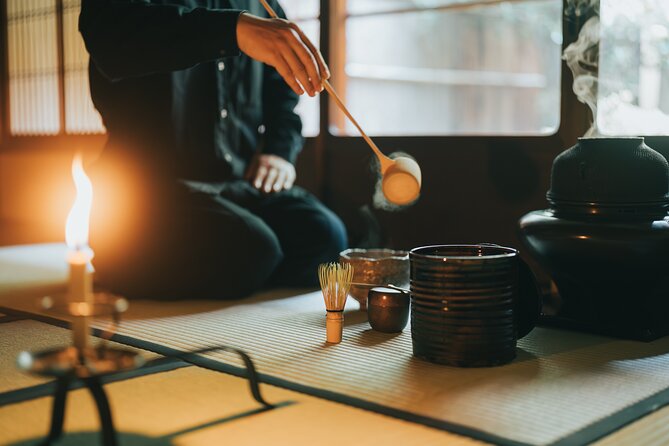
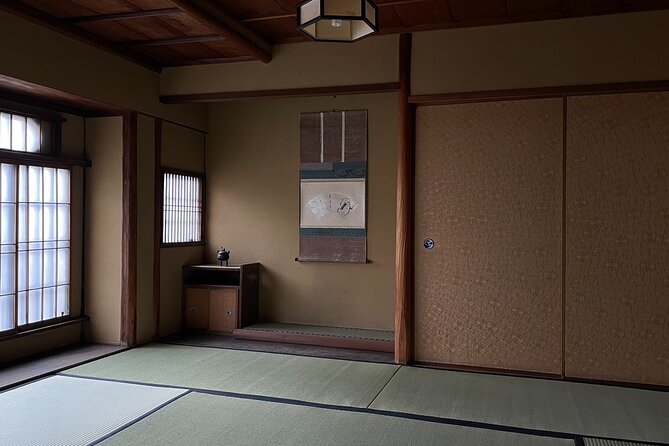
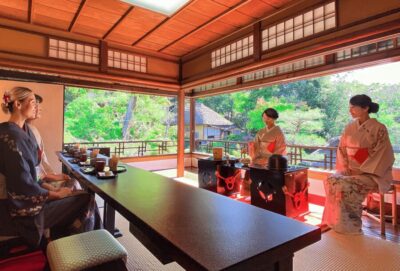
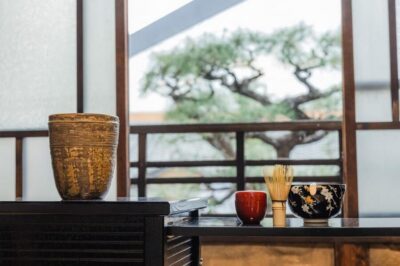
The first thing you notice here is the mood. Oboro is designed as a quiet pause in the middle of Kyoto, with handmade candles and little decoration competing for your attention. That simplicity matters because Japanese tea ceremony is built around careful observation: the bowl, the utensils, the sound of water, and the movements of the host.
You begin with a welcome tea and sweets. This is not just a snack before the main event. It gives you time to settle down, leave the day’s rush behind, and start paying attention to small details. The sweets also balance the taste of green tea, which can be grassy or slightly bitter if you are not used to it.
The teahouse is described as roughly a century old, and the old-house setting adds something a café cannot. You are not simply being served matcha in a convenient cup. You are sitting in a place arranged for a slower form of hospitality.
The décor is intentionally spare. If you want a bright room, lots of photographs, and a lively demonstration, this may feel too restrained. If you like quiet spaces and cultural experiences that ask you to slow down, the setting is one of the strongest reasons to book.
More Tea Ceremony Experiences in Kyoto:
- Kyoto: Tea Ceremony in a Traditional Tea House in Kiyomizu
★ 4.9 · 3,519 reviews - Kyoto: Tea Ceremony Ju-An at Jotokuji Temple
★ 4.9 · 3,207 reviews - Kyoto: 45-Minute Tea Ceremony Lesson Experience
★ 4.3 · 2,378 reviews
Watching the utensils become part of the ritual
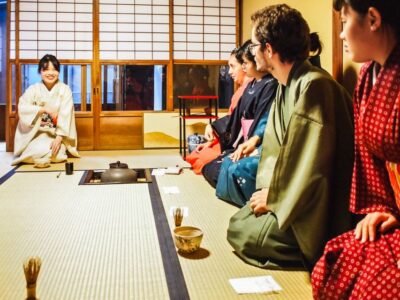
Once you move into the tearoom, the host cleans and prepares the utensils. This is where the experience becomes more than a lesson in making a drink. Each object has a role, and each movement is deliberate.
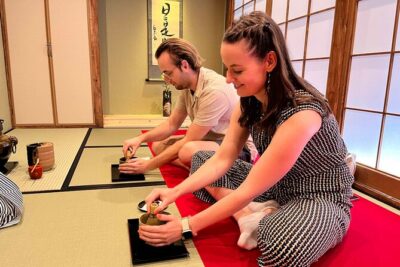
You will see the host prepare the tools before whisking the tea. The care given to this preparation is one of the parts that is rarely shown in a casual restaurant matcha service. In a restaurant, you usually receive the finished drink. Here, you see the order, rhythm, and concentration that give the ceremony its meaning.
The host serves the tea one bowl at a time. That pace helps you focus on what is happening in front of you. It also means the group is not rushing through a large batch of tea at once.
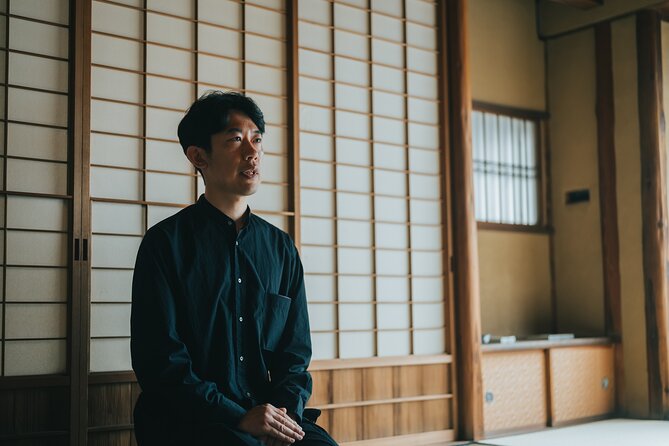
English explanations remove much of the guesswork. Taku has been praised for speaking excellent English and for explaining the cultural meaning of the ceremony in a clear, entertaining way. Naoki is described as a soft-spoken tea master, a good match for the reflective tone of the session. The exact host may vary, but an English-speaking guide is included.
You should still expect a cultural demonstration rather than a hands-on class. The supplied details focus on watching the preparation, tasting the tea, and asking questions. If you want to make your own bowl from start to finish, confirm that point before booking.
Tasting organic matcha, black tea, and sweets
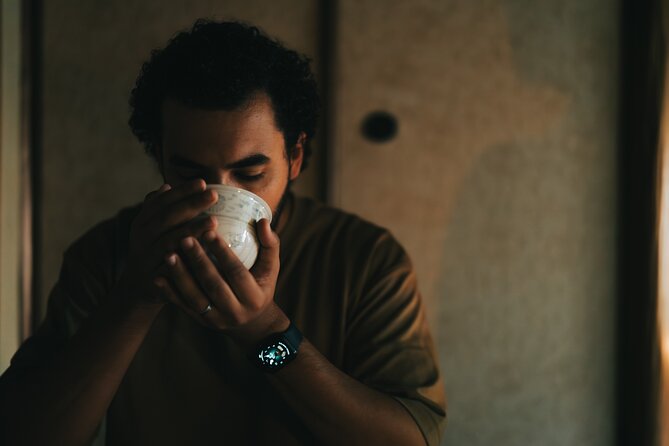
The main tea is a rare organic green tea prepared and whisked by the host. You receive it in a bowl, one person at a time, and the ceremony encourages you to notice more than the flavor.
Pay attention to the warmth of the bowl in your hands, the texture of the tea, and the way the taste changes after the sweet. The point is not to gulp it down. You are given a reason to pause and notice the connection between the tea, the bowl, the room, and the movement of the person who prepared it.
Matcha is not for everyone. One person in the supplied feedback said they preferred black tea while their daughter enjoyed the matcha. That is useful to know if you are booking for a mixed group. The experience is still worthwhile if you are not devoted to green tea, because the ceremony and the setting matter as much as the drink.
The descriptions also mention locally made tea and a dessert treat. The exact tea options may depend on the session, so do not assume every participant receives the same alternative. The important point is that the experience is not built around forcing every person to love matcha.
A small handmade candle is given at the end. It is a simple souvenir, but it fits the theme better than a generic gift shop item. You can use it later as a reminder of the calm, attentive mood of the ceremony.
Why the small group matters
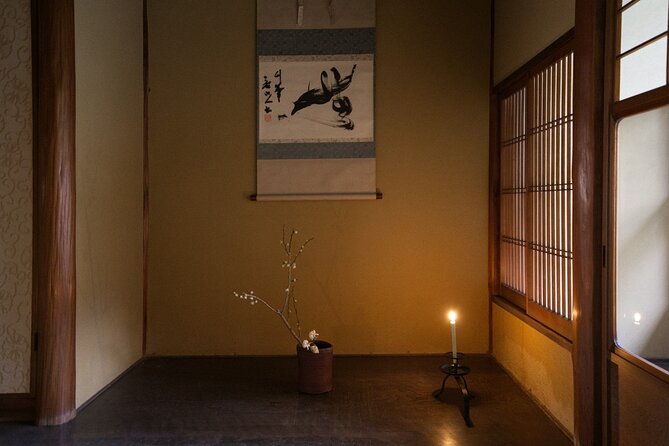
Oboro accepts a maximum of eight people. That number is small enough for you to see the preparation without peering over a crowd. It also keeps the room quiet, which is essential to the experience.
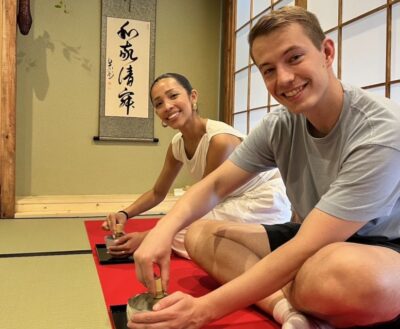
A group of six has been described as comfortable and intimate. With a small group, you have a better chance to hear the explanations and ask questions. The host can also maintain the steady pace that would be harder in a large tour.
The trade-off is that the mood depends partly on the people booked for your session. A quiet group will suit the ceremony best. If everyone asks many questions, the balance may shift toward a more conversational lesson. That is not a problem, but it can make the session feel less meditative.
This format suits solo visitors, couples, friends, and families with an interest in Japanese culture. One review specifically describes a daughter enjoying the matcha while another family member chose black tea, suggesting that the experience can work for mixed preferences.
A few more tea experiences around Kyoto worth a look
- Kyoto: Table-Style Tea Ceremony at a Kyo-Machiya
★ 4.9 · 1,211 reviews - Kimono Tea Ceremony at Kyoto Maikoya, NISHIKI
★ 5.0 · 911 reviews - Kyoto: Kimono Tea Ceremony at Orizuruya Gion
★ 4.9 · 618 reviews - Kyoto: Tea Ceremony in 100-year-old Kyo-Machiya Townhouse
★ 4.8 · 546 reviews
A cultural lesson without a language barrier
Tea ceremony has many rules and small gestures that are easy to miss if you watch without explanation. Why are the utensils cleaned in that order? Why is the bowl handled so carefully? What should you notice before taking a sip?
An English-speaking host helps connect those actions to the wider idea of mindfulness and hospitality. You are not expected to understand Japanese etiquette by instinct. You can watch first, listen to the translation, then decide how closely you want to follow the formal customs.
This is particularly helpful for a first tea ceremony. Several details can seem mysterious if nobody explains them. Taku is described as both informative and entertaining, while the hosts are praised for patience and clear answers to questions.
The experience does not appear to demand strict perfection from you. Its tone is based on shared respect rather than making visitors nervous about doing something wrong. You can observe, listen, taste, and take part at a comfortable level.
That makes Oboro a good first introduction, but it may be less satisfying for someone who already studies tea ceremony and wants advanced instruction. The session lasts about 50 minutes, so it offers an accessible window into the tradition rather than a full course.
The value of 50 minutes and $45.98
At $45.98 per person, Oboro is not the cheapest way to drink matcha in Kyoto. You can find tea for far less at a café. The price makes more sense when you compare it with what you are actually buying: access to an old teahouse, a guided ceremony, English explanation, sweets, tea, a small group, and a handmade candle.
The short duration is part of the value. You can fit this into a sightseeing day without sacrificing an entire afternoon. Fifty minutes is long enough to create a change of pace, yet short enough to suit visitors with packed Kyoto schedules.
I would consider the price fair if you want cultural context and atmosphere rather than only a beverage. The cost is harder to justify if you mainly want to sample matcha or take photographs. Oboro is selling the ritual and the setting, not just the tea.
The 4.9 rating from 19 reviews and the 100 percent recommendation figure suggest a very strong response, though the sample is small. The praise centers on the calm room, kind hosts, clear explanations, and beautiful preparation. One four-star account still found the ritual impressive and hypnotic, while describing it as a collected experience rather than a casual drink.
Getting to the meeting point in Kyoto
The meeting point is at 237 Nakaogawacho, Kamigyo Ward, Kyoto, postal code 602-0053. The location is near public transportation, and one direct account describes it as easy to find.
You receive a mobile ticket, which is useful when you are moving around Kyoto and do not want to print a voucher. Still, I would plan to arrive early. The rule is strict: arriving more than 10 minutes after the start means you cannot participate.
That policy matters more here than on a flexible sightseeing walk. The ceremony depends on a quiet beginning and a prepared room. A late arrival would interrupt the ritual, and there is no indication that late entry is allowed.
The activity ends back at the meeting point. Since the session lasts about 50 minutes, you can pair it with nearby sightseeing or use it as a calm break between larger Kyoto attractions. The supplied information does not name a specific station or provide detailed route instructions, so use the full address and allow extra time for navigation.
Who will enjoy this tea ceremony most
I would choose Oboro for you if you want to understand the atmosphere and purpose of tea ceremony without committing to a long formal lesson. It is particularly suitable for first-time visitors, couples, families with older children, and anyone who wants a quiet cultural activity.
It also suits people who do not usually like tea. One strong recommendation specifically says the experience is worthwhile even if you are not a tea drinker. That makes sense because the ceremony is visual and cultural as well as culinary.
You may want to choose another activity if you prefer a hands-on workshop, a large social group, or a fast, informal tasting. The room is meant to be calm, and the ceremony asks you to give your attention to small actions.
People who dislike bitter or grassy flavors should not assume matcha will be a favorite. Ask about alternatives when you arrive, as black tea has been available for at least one session. The experience includes coffee and/or tea in its inclusions, but the ceremony centers on green tea.
Practical details that affect your visit
Confirmation is provided at booking, and the mobile ticket makes entry simple. Tips and gratuities are not included, so plan for that separately if you choose to tip.
Free cancellation is available up to 24 hours before the start time for a full refund. Changes or cancellations made less than 24 hours before the start are not accepted and are not refunded.
The activity requires a minimum number of participants. If that number is not reached, you are offered another date or experience, or a full refund. It also has a weather requirement. If poor weather causes cancellation, you are offered a different date or a full refund.
That weather rule may seem unusual for an indoor tea ceremony, but it is part of the booking conditions. Read the final confirmation carefully, especially if this is scheduled close to the end of your Kyoto trip.
Should you book Oboro?
I would book this experience if you want a quiet, well-explained introduction to Japanese tea ceremony in a setting that feels more thoughtful than a restaurant. The small group, English translation, old teahouse, candlelight, and careful preparation give it a clear identity.
The strongest reason to go is not simply the matcha. It is the chance to watch a host turn ordinary objects and measured movements into a shared moment of attention. Taku, Naoki, and the other hosts appear to bring warmth and patience to that process, while the 50-minute format keeps the commitment manageable.
Skip it if you want to make tea yourself, dislike quiet settings, or are only looking for a cheap cup of matcha. For everyone else, especially first-time visitors seeking a peaceful cultural experience, $45.98 is a reasonable price for the setting, guidance, and ritual.
FAQ
Where does the Oboro tea ceremony take place?
It takes place at 237 Nakaogawacho, Kamigyo Ward, Kyoto, Japan, postal code 602-0053.
How long does the tea ceremony last?
The experience lasts approximately 50 minutes.
How much does the experience cost?
The listed price is $45.98 per person.
How many people can join?
The activity has a maximum group size of eight people.
Is an English-speaking guide included?
Yes. An English-speaking guide is included to translate and explain the ceremony.
Who are the hosts?
The experience details identify Taku Okamoto as the provider. The descriptions also name Taku and Naoki as hosts connected with the ceremony, and Ryoko is mentioned in connection with one session.
What tea will I taste?
The ceremony includes a rare organic green tea prepared and whisked by the host. Black tea has also been available for at least one participant, but the central focus is matcha and green tea.
Are sweets included?
Yes. The experience begins with welcome tea and sweets, and the ceremony includes a dessert treat.
What happens if I arrive late?
You cannot take part if you arrive more than 10 minutes after the start time.
Can I cancel for a refund?
You can cancel at least 24 hours before the start time for a full refund. Cancellations or changes made less than 24 hours before the start are not accepted and are not refunded.
Just added around Kyoto
- Whisk Your Own Matcha: A Zen Matcha Experience at Temple★ 3.6 · 7 reviews
- Uji Walking Tour – Byodo-in temple and Tea Ceremony from Kyoto★ 3.5 · 3 reviews
- Traditional Tea Ceremony in Kyoto★ 4.5 · 3 reviews
- Kyoto: Authentic Tea Ceremony in a Small Group★ 5.0 · 7 reviews
- Tea ceremony at Kyoto’s Zen Temple Teahouse★ 5.0 · 2 reviews
- Tea Ceremony in 150 Years Old Townhouse with Tables and Chairs★ 5.0 · 22 reviews
- Tea Ceremony Experience in Traditional Kyoto Townhouse★ 5.0 · 19 reviews
- Silent Beauty of Kyoto Zen Walk and Tea Experience★ 5.0 · 2 reviews
Tea Ceremony Experiences, compared.
Tea Ceremony in a Traditional Tea House in Kiyomizu
Read our review →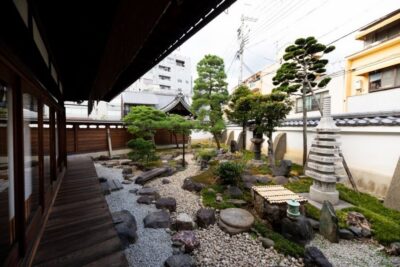
Browse the lists this tour appears in