
Review · KYOTO
Elegant Tea Ceremony While Wearing Kimono Experience in Kyoto
Kyoto’s Nishiki Orizuruya gives you more than a cup of matcha. You dress in a kimono, have your hair styled if you’re a woman, learn the steps of a formal tea ceremony, and then make the experience your own with calligraphy, gold leaf, or a Nishiki Market walk.
I like the generous time for photos, and I like that you may keep the kimono on until 6 p.m. The staff work carefully with different sizes, and a chair can be provided if sitting on the floor is difficult. The main drawback is that the ceremony can feel brief on background and meaning if your tea master focuses more on the actions than the history.
Key details at a glance
- One-minute location: Nishiki Orizuruya is just a short walk from Kyoto’s Nishiki Market, making it easy to pair with food stalls and nearby shrines.
- Three add-on choices: Pick calligraphy, a gold leaf plate, or a guided walk through Nishiki Market and the surrounding streets.
- English instruction: The tea ceremony is guided in English, with Ruriko and Lina among the staff praised for clear explanations and friendly care.
- Small group setting: The maximum group size is 10 people, with three instructors mentioned for one group activity.
- Family-friendly format: Children aged 5 and older may join, though there is no child discount.
- Strict booking terms: The experience costs about $50.58 per person and is non-refundable, so check your plans carefully before paying.
Kimono first, tea ceremony second
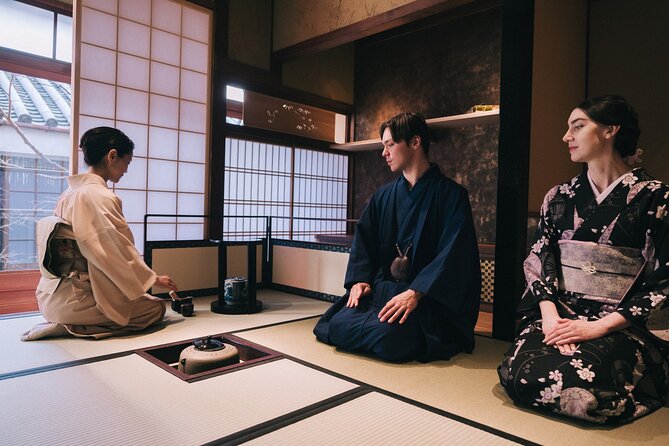
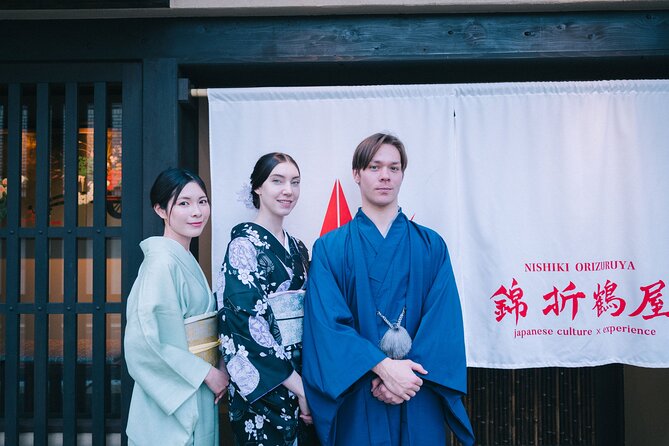
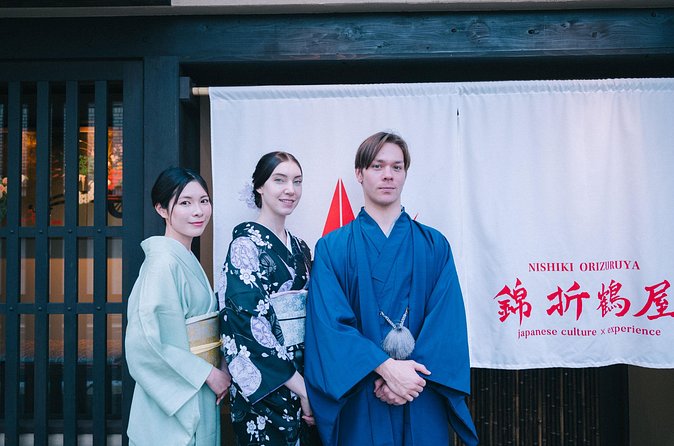
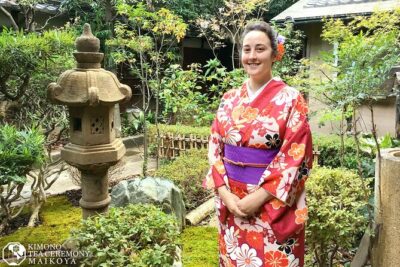
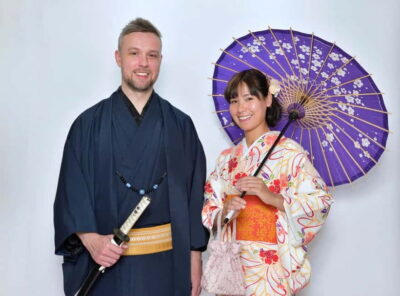
The experience begins with the visual transformation. You choose a kimono and accessories, then staff help you dress properly. Women receive free hairstyling, with hair decorations added to complete the look.
This is not a rushed costume rental where you grab a robe and head out. The staff dress you and pay attention to fit and detail. The available selection appears especially strong for women. Men can participate, though the range may feel less exciting.
Allow time before the ceremony for dressing, styling, and photographs. This part is a major reason to book the experience. You get the pleasure of wearing Kyoto clothing in a traditional setting, rather than simply watching someone else perform an old custom.
The staff are also prepared to accommodate different body sizes. One participant who could not sit on the floor was given a chair, which is useful because the usual tea-room posture can be hard on knees, hips, or backs.
You may also be allowed to keep the kimono on until 6 p.m. That turns the activity into more than a two-hour indoor visit. You can walk around the nearby streets in your formal clothing and take photographs before returning it. Confirm the exact arrangement at the venue, but this is one of the experience’s most useful extras.
More Kimono Tea Ceremonies in Kyoto:
- Kimono Tea Ceremony at Kyoto Maikoya, NISHIKI
★ 5.0 · 911 reviews - Kyoto: Kimono Tea Ceremony at Orizuruya Gion
★ 4.9 · 618 reviews - KYOTO Tea Ceremony with kimono near by Imamiya Jinjya Shrine
★ 5.0 · 343 reviews
What the 90-minute tea ceremony includes
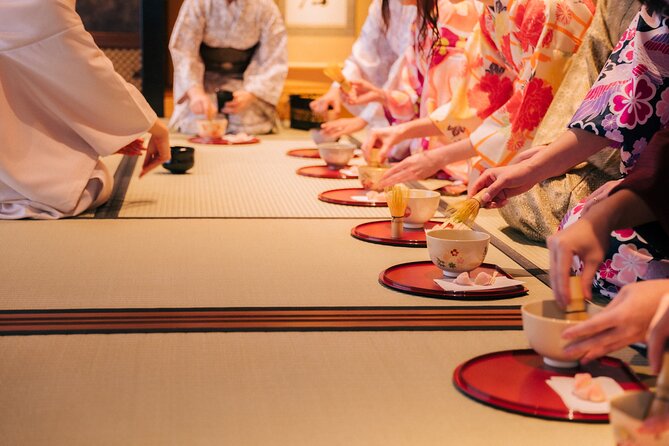
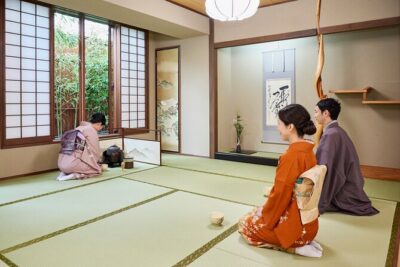
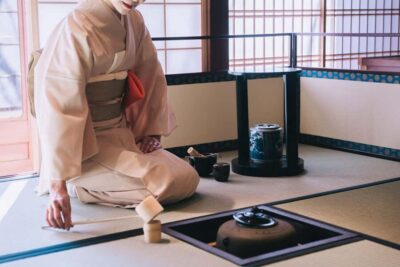
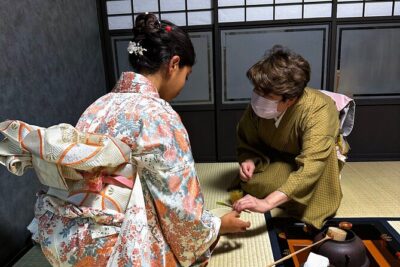
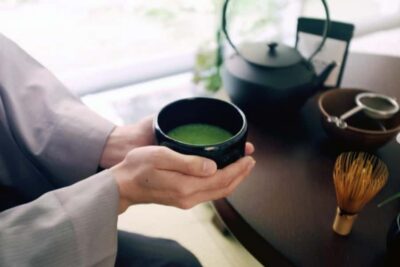
The core tea ceremony lasts about 90 minutes. A professional tea master demonstrates the process, explains the customs in English, and then gives you a chance to prepare your own matcha with a bamboo whisk.
The point is not simply to drink green tea. The ceremony asks you to slow down and notice the order of each action: how the tea is prepared, how it is served, and how it is received. Even a short session gives you a practical sense of the care built into Japanese tea culture.
Your matcha is paired with seasonal wagashi, traditional Japanese sweets. These are supplied by a confectionery with 100 years of history, adding a small but worthwhile link to Kyoto’s food traditions. If you have allergies, tell the staff in advance. The experience has accommodated allergies to the sweets and tea, but arrangements should be confirmed before arrival.
The English explanations are a key part of the value. Ruriko is specifically praised for explaining the meaning behind the ceremony, and another tea host is described as both informative and very comfortable speaking English. The quality of the explanation may depend on which host leads your session.
Here is the fair warning: this is a hands-on cultural introduction, not an academic lecture. One session was described as pleasant but light on the history and significance of each step. If you want a long discussion of tea philosophy, utensils, schools, and religious tradition, you may find this format too simple. If you want to understand the basic flow and take part yourself, it is a good fit.
Choosing between calligraphy, gold leaf, and Nishiki Market
The activity becomes more personal after the tea ceremony. You choose an add-on when booking, so read the option carefully rather than assuming every package includes everything.
Calligraphy and a personal keepsake
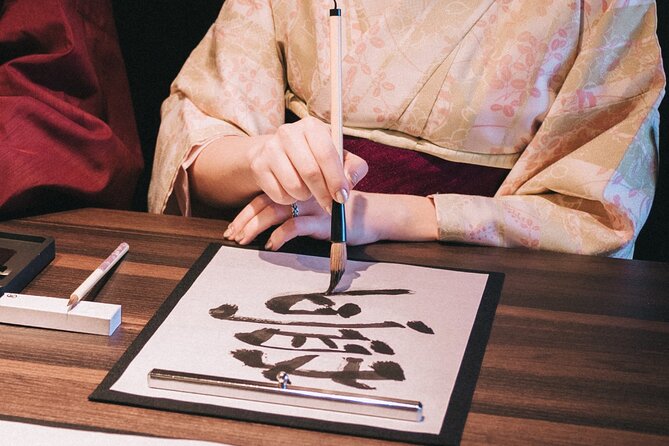
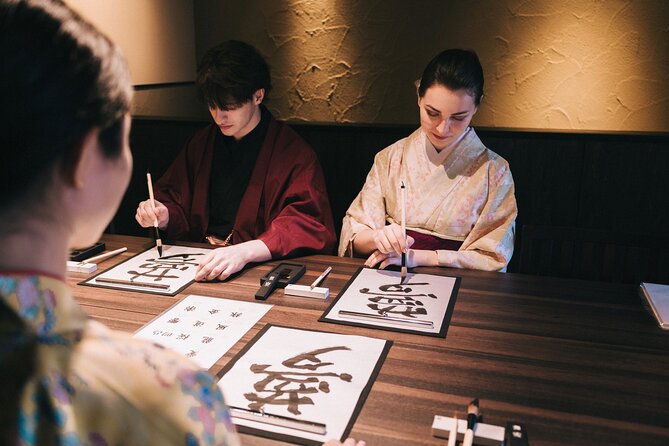
The calligraphy option teaches you to use a brush and ink to write a favorite kanji on washi paper. This is a strong choice if you want something connected to Japanese writing and a souvenir you make yourself.
The appeal is that you are not only watching a demonstration. You hold the brush, work with ink, and create a piece to take home. The finished sheet may have more personal meaning than a shop-bought souvenir, especially if you choose a character linked to a name, value, or memory.
This option suits families well. Children who are old enough to follow simple instructions can enjoy the brush work, and adults get a quiet creative activity after the formal ceremony. The tea ceremony and calligraphy also make a balanced pair: one teaches you how to participate in a ritual, the other lets you produce something tangible.
More Tea Ceremony Experiences in Kyoto:
- Kyoto: Tea Ceremony in a Traditional Tea House in Kiyomizu
★ 4.9 · 3,519 reviews - Kyoto: Tea Ceremony Ju-An at Jotokuji Temple
★ 4.9 · 3,207 reviews - Kyoto: 45-Minute Tea Ceremony Lesson Experience
★ 4.3 · 2,378 reviews - Kyoto: Table-Style Tea Ceremony at a Kyo-Machiya
★ 4.9 · 1,211 reviews
Gold leaf art and a decorated plate
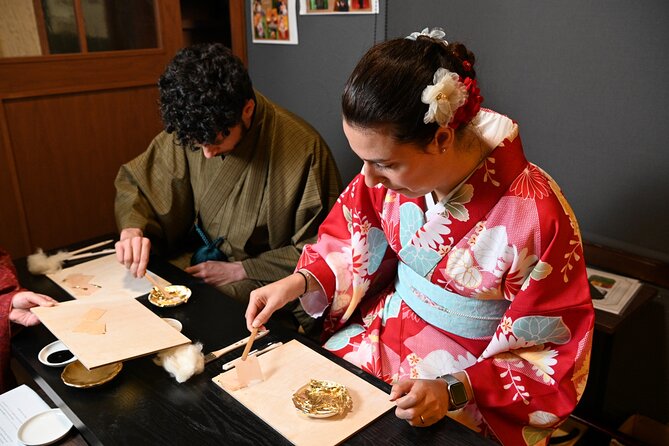
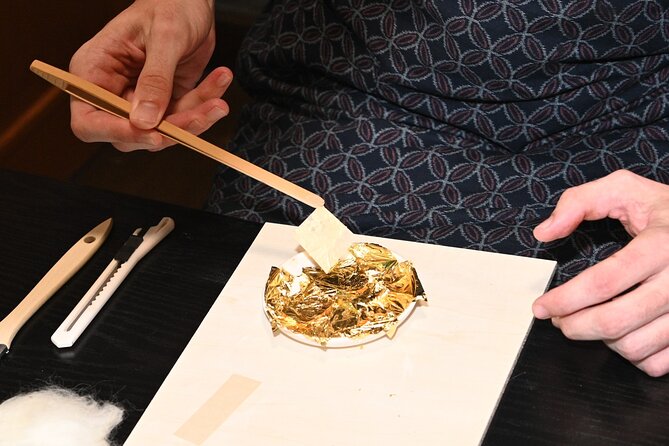
The gold leaf option lasts about 130 minutes in total. After making matcha, you join a hands-on workshop and decorate a small plate with high-purity gold leaf.
This is probably the best choice if you want a sturdy souvenir rather than a sheet of paper. The work is practical and visual, and the plate gives you a reminder of Kyoto that can be used or displayed at home.
Gold leaf is delicate, so expect a careful activity rather than a fast craft. The available information does not specify the design choices, plate size beyond being small, or the exact process, so do not book it expecting a large art class. You are paying for a short cultural workshop attached to the tea ceremony.
Nishiki Market and the local streets
The Nishiki option takes about 150 minutes and adds an English-guided walk after the tea ceremony. Nishiki Market is known as Kyoto’s Kitchen, and the route includes local food culture, nearby shrines, historic shops, and shopping streets.
This is the most practical option if you are new to central Kyoto. The venue is only about a minute from the market, so you do not lose time getting between the tea house and the tour. A guide such as Lina can help explain what you are seeing instead of leaving you to push through the market without context.
Choose this option if you want to connect the tea ceremony with everyday Kyoto. The market is not only a place for snacks. It shows how food, small shops, local religious sites, and daily commerce fit together in the city.
The trade-off is that a walking tour may feel less peaceful than calligraphy or gold leaf. Nishiki can become crowded on weekends, holidays, and during special events. If you prefer a calm, seated afternoon, choose one of the craft options instead.
Why the location works well for a Kyoto day
Nishiki Orizuruya is at 452 Jūmonjichō in Nakagyo Ward, close to public transportation and just one minute from Nishiki Market. The central location makes it easy to place this experience between other Kyoto sights.
The meeting point and ending point are the same. That is useful because you do not need to find a second location after changing back into regular clothing or finishing the market walk.
The market setting also gives the experience a better sense of place. A tea ceremony in an isolated venue can feel disconnected from the city around it. Here, you can combine formal tea customs with Kyoto’s food streets, shrines, and older shops.
Arrive at least 10 minutes early. The appointment begins with dressing, and late arrival could make the start stressful. Keep valuables under control because you are responsible for your own belongings.
A good fit for families, couples, and first-time visitors
This is a particularly easy introduction to Japanese culture for families. Children aged 5 and older can join, and the kimono, hairstyle, sweets, and brush work give younger participants several things to enjoy. There is no child discount, so compare the full per-person cost with your family budget.
The experience also works well for a birthday or a special day. One family booked it for a 30th birthday, and the combination of formal dress, photographs, tea, and a keepsake gives the occasion a clear sense of ceremony.
Couples and friends may prefer the photo opportunities and the chance to walk through Kyoto in kimono afterward. The staff are ready to take pictures while you are dressed, which matters if you want group photographs without relying entirely on a phone timer.
For solo visitors, the small maximum group of 10 keeps the activity more personal than a large cultural show. You will still be part of a group, but the format allows direct instruction and help with the kimono.
The experience may be less suitable if you dislike dressing up, sitting through a formal demonstration, or making a firm non-refundable booking. It is also not the right choice if your main goal is an advanced tea-school lesson.
Is $50.58 a fair price?
At about $50.58 per person, the price covers more than the tea itself. You receive kimono rental, women’s hairstyling, the tea ceremony, matcha, traditional sweets, English guidance, and one selected follow-up activity.
The price looks strongest when you make use of the full package. Choose the kimono carefully, take photographs, ask questions during the ceremony, and use the time afterward if you are allowed to keep the clothing until 6 p.m. The Nishiki walk gives you the most sightseeing for the money, while calligraphy and gold leaf give you a personal item to take home.
It is less of a bargain if you only want to sip matcha. Kyoto has other tea experiences, and this one charges partly for dressing, styling, staff assistance, and the setting. The value comes from the complete cultural activity.
The high satisfaction level and 100 percent recommendation rate suggest that the experience delivers well on its central promise. Still, keep expectations sensible. You are buying a polished introduction to tea culture, not a full day of traditional arts.
Timing, comfort, and practical limits
The basic tea ceremony lasts about 90 minutes. The gold leaf plan lasts around 130 minutes, and the Nishiki Market plan about 150 minutes. Add time before the ceremony for kimono dressing, hair styling, and photos.
Weekend and holiday sessions may feel crowded. The group maximum is 10, but the market itself can be much busier than the tea room. The Nishiki walk is best on a day when you are comfortable with crowds and extra walking.
Kimono can restrict movement, and traditional tea rooms may use floor seating. Ask for a chair if needed. Staff have provided one for a participant who could not sit on the floor, so it is worth raising the issue before the ceremony begins.
Severe weather or a natural disaster such as a typhoon can cause cancellation with a full refund. Ordinary cancellations or changes are different: the experience is non-refundable and cannot be amended for any reason. This is important. Do not book until your schedule is firm.
Confirmation is sent within 48 hours, subject to availability. The ticket is mobile, and the activity begins and ends at Nishiki Orizuruya.
Should you book the Nishiki Orizuruya experience?
I would book this if you want a friendly, photo-ready introduction to Kyoto culture with real participation. The strongest parts are the careful kimono dressing, complimentary hairstyling for women, hands-on matcha preparation, and the choice of a creative or walking activity afterward.
Choose calligraphy for a personal paper keepsake, gold leaf for a decorated plate, or Nishiki Market for the best connection to central Kyoto. Families, first-time visitors, and anyone planning a special occasion are likely to get the most from it.
I would pause if you want a highly detailed lesson in tea history or if you cannot commit to a non-refundable reservation. The ceremony may not explain every custom at length. For most visitors, though, the combination of dress, tea, sweets, instruction, and a short cultural activity offers solid value at $50.58.
FAQ
Where does the kimono tea ceremony take place?
It takes place at Nishiki Orizuruya, 452 Jūmonjichō, Nakagyo Ward, Kyoto. The venue is about a one-minute walk from Nishiki Market and is near public transportation.
How long does the experience last?
The tea ceremony plan lasts about 90 minutes. The tea ceremony and gold leaf plan lasts about 130 minutes, while the tea ceremony and Nishiki Market walk lasts about 150 minutes. Allow extra time for dressing, hairstyling, and photographs.
What is included in the kimono portion?
All plans include kimono rental. Women receive free hairstyling, and staff help you dress and choose accessories. The available information does not state that hairstyling is included for men.
Can children join the activity?
Children aged 5 and older may participate. There is no child discount.
Which follow-up activities can I choose?
You can choose Japanese calligraphy, a gold leaf workshop, or an English-guided walk through Nishiki Market and the nearby area. The selected option affects the total duration.
What happens if I need to cancel?
The activity is non-refundable and cannot be changed for any reason. If severe weather or a natural disaster such as a typhoon causes the operator to cancel, the amount paid is fully refunded.
Just added around Kyoto
- Whisk Your Own Matcha: A Zen Matcha Experience at Temple★ 3.6 · 7 reviews
- Uji Walking Tour – Byodo-in temple and Tea Ceremony from Kyoto★ 3.5 · 3 reviews
- Traditional Tea Ceremony in Kyoto★ 4.5 · 3 reviews
- Kyoto: Authentic Tea Ceremony in a Small Group★ 5.0 · 7 reviews
- Tea ceremony at Kyoto’s Zen Temple Teahouse★ 5.0 · 2 reviews
- Tea Ceremony in 150 Years Old Townhouse with Tables and Chairs★ 5.0 · 22 reviews
- Tea Ceremony Experience in Traditional Kyoto Townhouse★ 5.0 · 19 reviews
- Silent Beauty of Kyoto Zen Walk and Tea Experience★ 5.0 · 2 reviews
Kimono & Tea Ceremonies, compared.
KYOTO Tea Ceremony with kimono near by Imamiya Jinjya Shrine
Read our review →
Kimono and Tea Ceremony Experience at Cultural Asset
Read our review →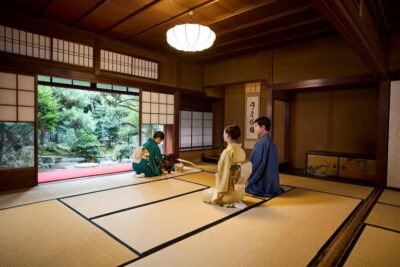
Browse the lists this tour appears in