
Review · KYOTO
Kimono Tea Ceremony at Kyoto Maikoya, NISHIKI
Putting on a kimono and preparing matcha gives this Kyoto activity more substance than a quick photo stop. At Maikoya Nishiki, you learn why the tea ceremony moves slowly, how the utensils are used, and how small gestures show respect. Hosts such as Sono guide the ceremony in clear, friendly English.
I especially like the all-in-one format: you do not need to arrange a kimono rental, hair appointment, and tea ceremony separately. I also like the chance to make your own matcha, since you are not only watching a demonstration. The main consideration is the seating: the ceremony takes place on a tatami floor, and the full experience may include more people than the two-person booking limit suggests.
Key points at a glance
- Choose your kimono first: Staff help you dress properly and add accessories, with simple hairstyling included for women.
- Learn by doing: You watch the tea master, then prepare your own matcha using traditional utensils.
- A compact Kyoto activity: The experience lasts about 90 minutes, making it easy to fit around sightseeing in central Kyoto.
- Expect a shared ceremony: A booking may cover up to two people, but other bookings can join the same session.
- Photos are part of the fun: You have time to take pictures in your kimono, including in the traditional setting and garden area when available.
- Taste wagashi with matcha: Japanese sweets balance the tea’s sharp, grassy flavor.
Why the kimono and tea ceremony work so well together
Kyoto offers many ways to see traditional Japanese culture, but this activity links two customs that are often experienced separately. The kimono changes how you move and sit, while the tea ceremony explains a set of actions that can otherwise seem mysterious.
You are not simply handed a cup of matcha. First, the host introduces the background and purpose of the ceremony. Then you learn how to handle the bowl, use the whisk, and follow the proper sequence. That structure gives the experience a clear beginning, middle, and end.
I like this because the ceremony becomes easier to understand once you are dressed for it. The kimono is not just a costume for pictures. It helps create the feeling of entering a formal cultural setting, even though the teaching style remains relaxed and welcoming.
The activity takes place at Kimono Tea Ceremony Maikoya Nishiki, at 329 Ebiyacho on Gokomachi-dori, just south of Sanjo. It is near public transportation and in a central part of Kyoto, so you can combine it with time around Nishiki Market and the surrounding shopping streets. Transportation to the venue is not included, and you make your own way there.
More Kimono Tea Ceremonies in Kyoto:
- Kyoto: Kimono Tea Ceremony at Orizuruya Gion
★ 4.9 · 618 reviews - KYOTO Tea Ceremony with kimono near by Imamiya Jinjya Shrine
★ 5.0 · 343 reviews - Kyoto: Kimono and Tea Ceremony Experience at Cultural Asset
★ 4.3 · 306 reviews
Choosing a kimono at Maikoya Nishiki
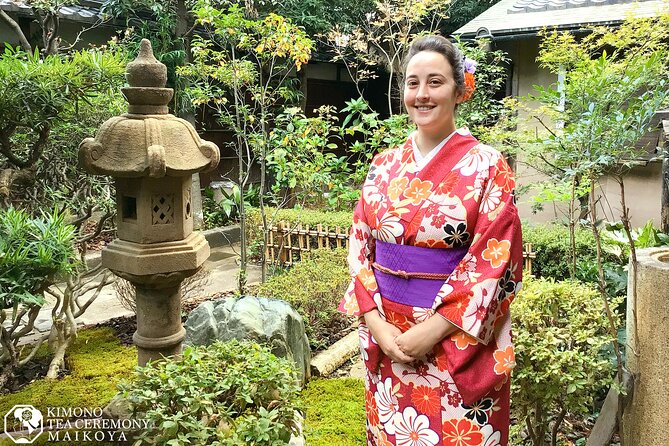
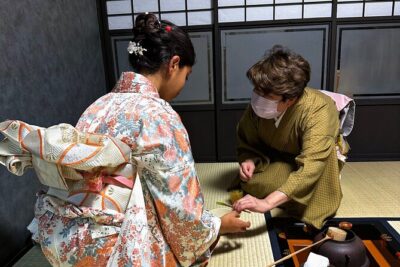
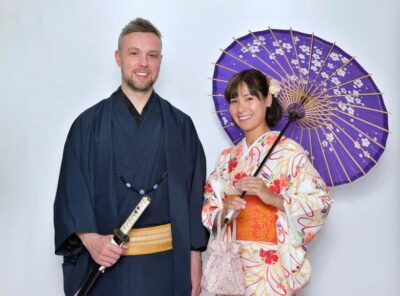
The first part is often the most playful. You choose from a selection of kimonos, then staff help you put the clothing on correctly. The process is more involved than slipping on a robe, since the layers, belt, and accessories need to sit in the right places.
Several accounts describe the staff as friendly and helpful during dressing. That matters because a kimono can feel unfamiliar, especially if you have never worn one before. You do not need to know how to tie anything yourself. The staff handle the practical work while you choose the colors and style you prefer.
Women receive simple hairstyling to match the kimono. Floral hair accessories are also part of the styling, giving the finished look a clear Japanese character. A small purse is provided for valuables, which is useful since you may not want to keep a larger bag beside you during the ceremony.
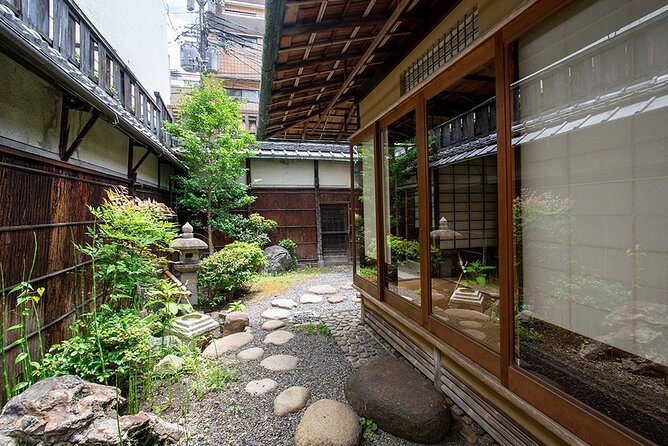
This portion also gives you time for photographs. You can take pictures before the tea begins, and the traditional room and garden area provide a more fitting background than an ordinary shopfront. Bring a phone with enough battery, since the photo opportunities are one of the strongest parts of the activity.
The dressing process does take time. If you are hoping to spend most of the 90 minutes watching tea preparation, remember that some of your visit is devoted to clothing and hair. That is not a flaw, but it is important to understand what you are paying for.
Sitting on tatami and learning the ceremony
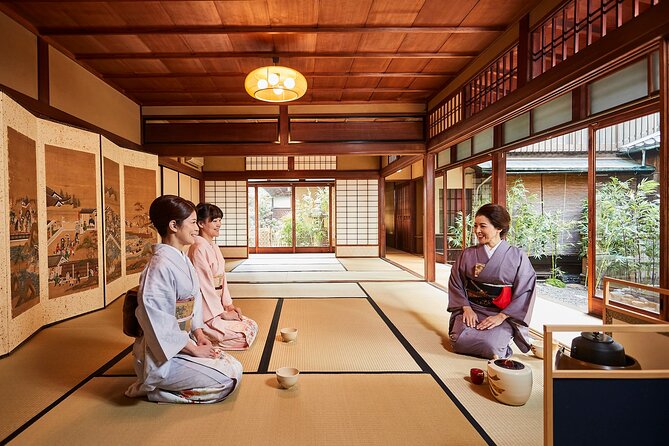
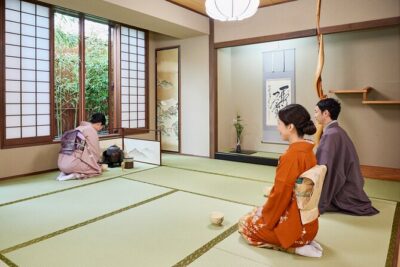
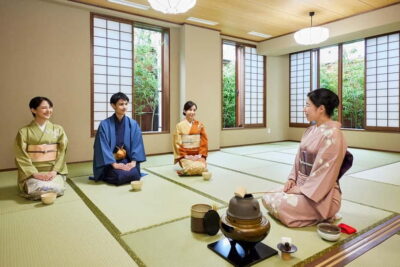
Once you are dressed, you sit Japanese-style on tatami flooring for the tea ceremony. The host explains the customs, history, utensils, and gestures as the ceremony unfolds.
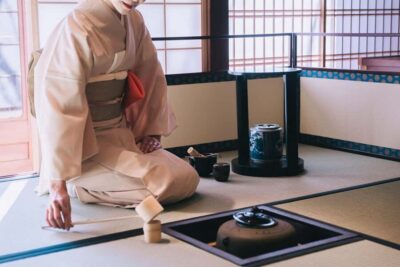
The pace is intentionally calm. The host shows how each item is handled and explains the meaning behind the movements. The teaching may include a short meditation period, which adds a quiet pause before the practical tea-making begins.
The ceremony is often led in an engaging style rather than as a stiff lecture. Sono, named in one of the sessions, is described as funny and easy to understand. Other hosts are praised for explaining Kyoto and the background of tea culture while keeping the group involved.
You should not expect a private ceremony in a silent tea house. The format is designed for small groups, but the actual number can vary because other bookings may be combined. One account describes around eight people, while another places the group closer to 10 or 12. That is still a manageable size for questions, but it may feel less intimate than a one-on-one lesson.
The room itself is decorated in a traditional style, which helps the ceremony feel more grounded. You are not learning the ritual in a generic classroom. The tatami, kimono, utensils, and tea room work together to create a setting that supports the lesson.
Making your own matcha
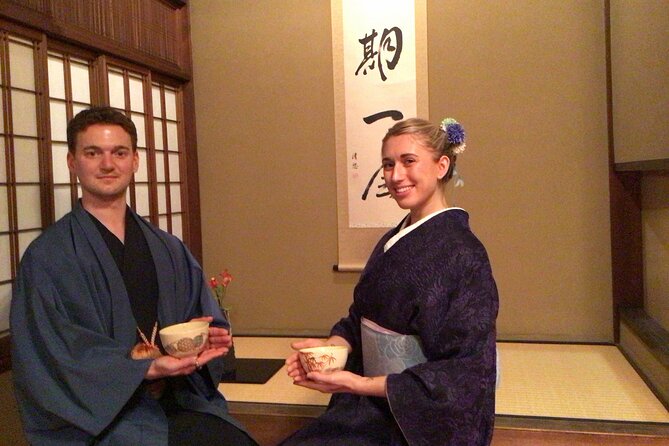
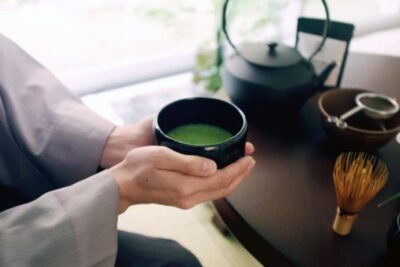
The most hands-on part comes when you prepare the matcha yourself. The host demonstrates the correct steps, then gives you a chance to mix the powdered tea using the traditional utensils.
Matcha has a distinct flavor. It is grassy, slightly bitter, and much stronger than the sweetened green tea served in many restaurants. The wagashi sweets are served alongside it to provide a small, delicate counterpoint. The snack is modest, but it is an important part of the ceremony rather than an afterthought.
I find this practical lesson more memorable than simply watching a tea master work. You learn that the ritual is not only about producing a drink. The preparation, presentation, and care given to the bowl all form part of the experience.
The host also explains the concepts behind the actions, so you can understand why the ceremony values attention, courtesy, and quiet focus. You do not need prior knowledge of Japanese customs. The instructions are designed for first-time participants.
The amount of tea and sweets is small. This is a cultural tasting, not a meal. Plan to eat before or after if you need lunch or a substantial snack.
More Tea Ceremony Experiences in Kyoto:
- Kyoto: Tea Ceremony in a Traditional Tea House in Kiyomizu
★ 4.9 · 3,519 reviews - Kyoto: Tea Ceremony Ju-An at Jotokuji Temple
★ 4.9 · 3,207 reviews - Kyoto: 45-Minute Tea Ceremony Lesson Experience
★ 4.3 · 2,378 reviews - Kyoto: Table-Style Tea Ceremony at a Kyo-Machiya
★ 4.9 · 1,211 reviews
What the 90-minute schedule feels like
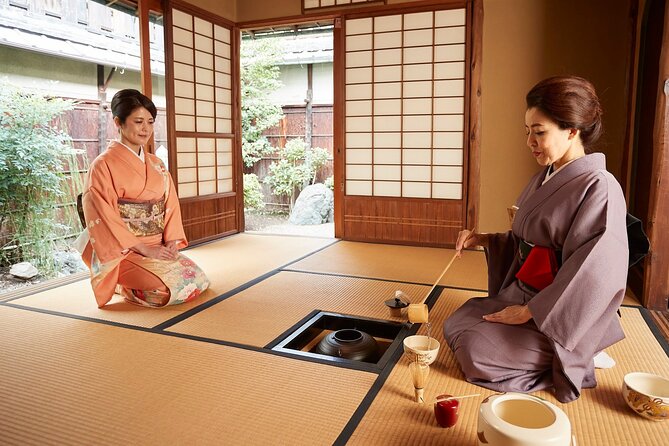
At about an hour and a half, this is a compact activity. The time usually includes arrival, kimono selection, dressing, hair styling, photographs, the tea lesson, your own matcha preparation, and wagashi.
That makes it easy to place in a Kyoto sightseeing day. A morning session leaves the afternoon open for central Kyoto, while an afternoon session can follow temple visits or shopping. The fixed length also suits families and first-time visitors who want a cultural activity without committing to a half-day tour.
The schedule does require you to arrive at the correct meeting point. There is no hotel pickup or drop-off, so allow enough time to find 329 Ebiyacho, Gokomachi-dori Sanjo sagaru. Your confirmation is supplied at booking, and the mobile ticket makes the entry process straightforward.
Because dressing is part of the experience, arriving rushed would take away from the fun. Give yourself a little extra time for the walk from public transportation and finding the building. The activity ends back at the same meeting point.
Price and what you receive for $65.66
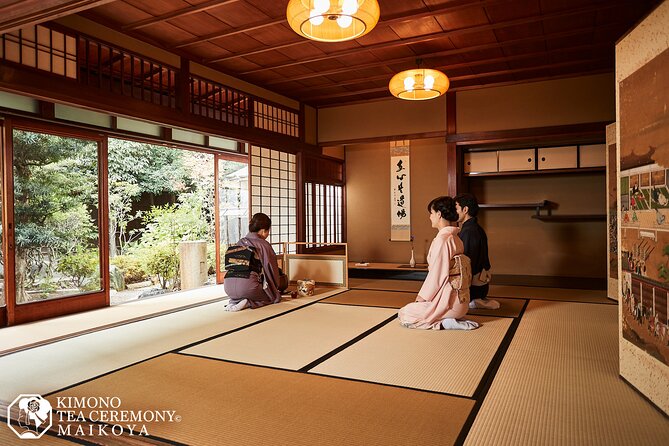
At $65.66 per person, this is not the cheapest way to drink matcha in Kyoto. You can find tea in cafés for far less. The value here comes from the combined service: kimono costume, dressing help, simple hairstyling, traditional utensils, instruction, matcha, sweets, and time for photographs.
Booking these elements separately would take more planning. You would need to locate a kimono rental shop, arrange hair styling if wanted, return the clothing, and then find a tea ceremony. Maikoya puts those pieces into one scheduled visit.
The price makes the most sense if you want the full visual and cultural experience. If you care only about learning tea preparation, the kimono portion may feel like an unnecessary extra. If you want memorable photographs and a clear introduction to Japanese customs, the combined format offers better value.
The high rating and 96 percent recommendation indicate strong satisfaction overall, but you should still match the activity to your expectations. This is an introductory ceremony for international visitors, not an advanced lesson in tea-school practice. You receive context, guidance, and participation in a polished setting.
Who will enjoy this Kyoto experience most
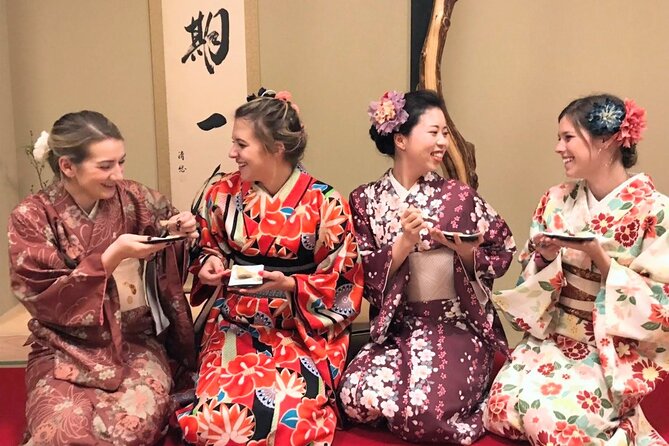
This activity suits first-time visitors who want a simple introduction to Japanese customs. You do not need to know anything about tea ceremony or kimono dressing before arriving.
It is also a good choice for families with older children. Children under seven cannot enter the venue, but one 10-year-old participant enjoyed the history lesson, tea preparation, and short meditation. If anyone in your party is under seven, the booking cannot be made for the group.
Couples, friends, and solo visitors can all fit the format. The photo element works especially well for couples and families, while the tea lesson gives solo participants a structured way to meet others from different countries.
You may want to choose another activity if you dislike sitting on the floor, wearing formal clothing, or following a set ritual. The kimono can feel restrictive, and the ceremony asks you to remain attentive and still for part of the visit.
A few practical points before booking
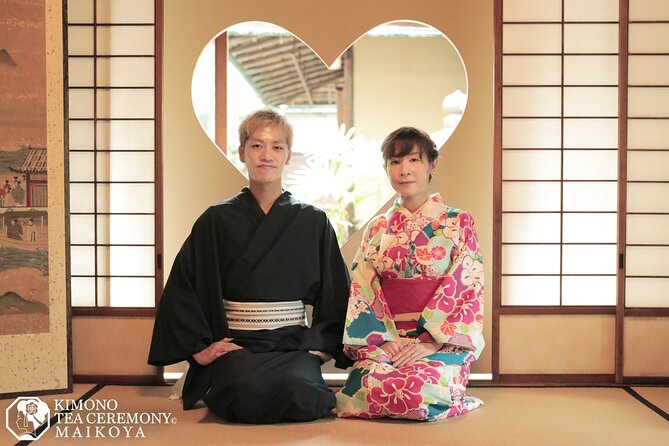
Morning and afternoon times are available, so choose based on your Kyoto plans rather than assuming one session is better. The activity is near public transportation and centrally placed, but transportation itself is not included.
The experience requires good weather. If poor weather causes cancellation, you are offered another date or a full refund. For your own cancellation, you can receive a full refund if you cancel at least 24 hours before the start time. Changes or cancellations inside that window are not accepted.
A booking through Viator can cover a maximum of two people, but the ceremony may include additional participants booked elsewhere. If you want the quietest possible atmosphere, ask about the expected group size before confirming. The stated activity limit is small, yet the actual ceremony can reach roughly eight to 12 people.
Wear clothing that is comfortable under a kimono. Staff provide the costume, but you still need to be comfortable sitting on tatami and remaining in place during the ceremony. Keep your schedule flexible enough that you do not have to rush out immediately afterward.
Should you book the Maikoya Nishiki tea ceremony?
I would book this if you want an approachable Kyoto activity that combines dressing up, photographs, a short cultural lesson, and hands-on tea preparation. The strongest feature is the convenience: one location handles the kimono, hair, ceremony, matcha, and sweets.
I would be more cautious if your main goal is a private or highly formal tea ceremony. The group may be larger than expected, and the 90-minute schedule gives you an introduction rather than a long, specialist study of tea practice.
For most first-time visitors, the balance is good. You leave with a better sense of how the ceremony works, a few useful cultural details, and photographs in traditional clothing. At $65.66, it earns its price when you value the full package rather than the tea alone.
FAQ
Where does the kimono tea ceremony take place?
It takes place at Kimono Tea Ceremony Maikoya Nishiki, 329 Ebiyacho, Gokomachi-dori Sanjo sagaru, Kyoto, Japan. The activity ends at the same meeting point.
How long does the experience last?
The tea ceremony and kimono experience last approximately one hour and 30 minutes.
Is transportation included?
No. You make your own way to the Nishiki location, and hotel pickup and drop-off are not included.
What is included in the price?
The experience includes a kimono costume, green tea, traditional utensils, simple hairstyling, and snacks.
Can children attend?
Children under seven cannot enter the tea ceremony venue. If someone under seven is in your party, you cannot reserve this experience.
Can I choose a morning or afternoon session?
Yes. Morning and afternoon timings are available.
What happens if I need to cancel?
You can cancel at least 24 hours before the experience start time for a full refund. Cancellations or changes made less than 24 hours before the start time are not accepted. If poor weather causes the activity to be canceled, you are offered another date or a full refund.
Just added around Kyoto
- Whisk Your Own Matcha: A Zen Matcha Experience at Temple★ 3.6 · 7 reviews
- Uji Walking Tour – Byodo-in temple and Tea Ceremony from Kyoto★ 3.5 · 3 reviews
- Kyoto: Authentic Tea Ceremony in a Small Group★ 5.0 · 7 reviews
- Tea ceremony at Kyoto’s Zen Temple Teahouse★ 5.0 · 2 reviews
- Traditional Tea Ceremony in Kyoto★ 4.5 · 3 reviews
- Tea Ceremony in 150 Years Old Townhouse with Tables and Chairs★ 5.0 · 22 reviews
- Silent Beauty of Kyoto Zen Walk and Tea Experience★ 5.0 · 2 reviews
- Tea Ceremony Experience in Traditional Kyoto Townhouse★ 5.0 · 19 reviews
Kimono & Tea Ceremonies, compared.
KYOTO Tea Ceremony with kimono near by Imamiya Jinjya Shrine
Read our review →
Kimono and Tea Ceremony Experience at Cultural Asset
Read our review →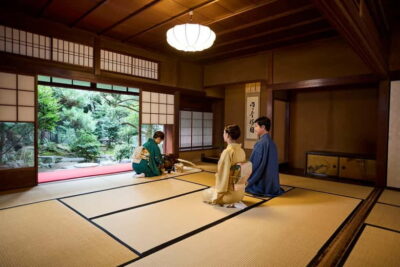
Asakusa: Kimono Tea Ceremony with Matcha and Sweet
Read our review →Browse the lists this tour appears in