
Review · KYOTO
Kyoto Newly Opened Tea Ceremony – Sanjo Chasuian
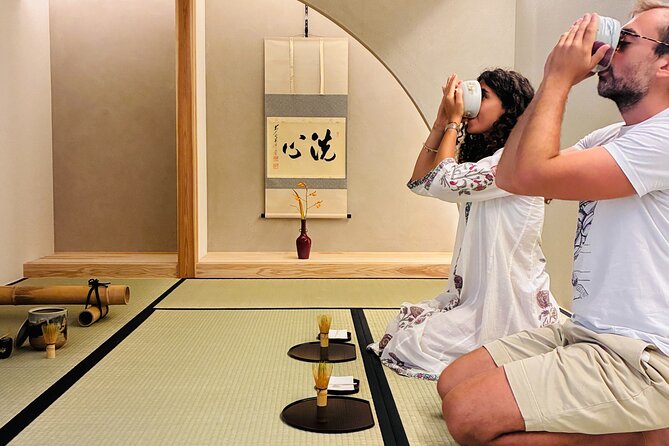
Kyoto tea is not just a drink here. It is a carefully paced lesson in attention, courtesy, and restraint, held in a small tea room at Sanjo Chasuian. You watch a host prepare matcha, then choose a bowl and whisk your own cup. The nijiriguchi, a low crawl-in entrance, adds a genuine traditional touch.
I like two things especially: you receive two bowls of matcha, one made for you and one you prepare yourself, and the seasonal sweets come from a Kyoto shop with more than a century of history. The main caution is timing. Entry stops when the session begins, and even arriving one minute late means no admission or refund.
Key points to know before booking
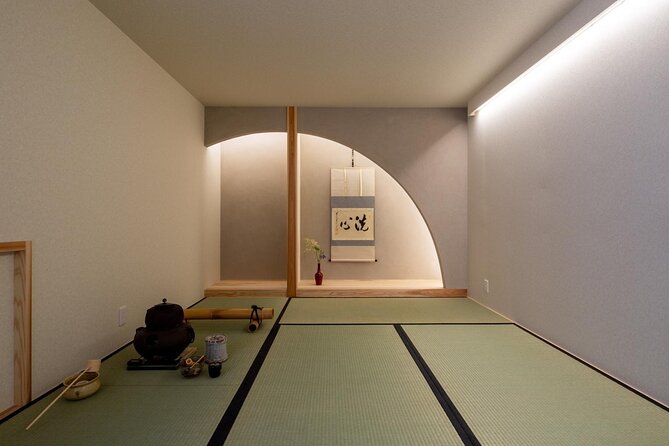
- Two matcha servings: The host prepares one bowl, then you make a second with hands-on guidance.
- A real tea-room detail: The low nijiriguchi entrance gives the room a traditional sense of arrival.
- Seasonal Kyoto sweets: Beautiful Japanese confectionery is included with the tea.
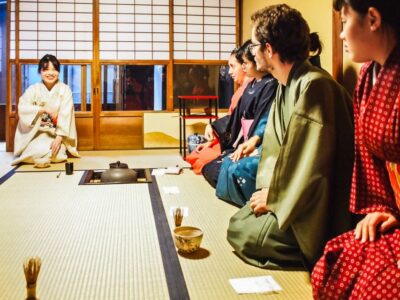
- Small groups: The maximum is 10 people, so questions and instruction are manageable.
- Quiet and structured: The ceremony takes place in a serene setting, with explanations of the customs and their meaning.
- Strict start time: You may enter five minutes early, but late arrival is not accepted.
A one-hour introduction to matcha and Japanese etiquette
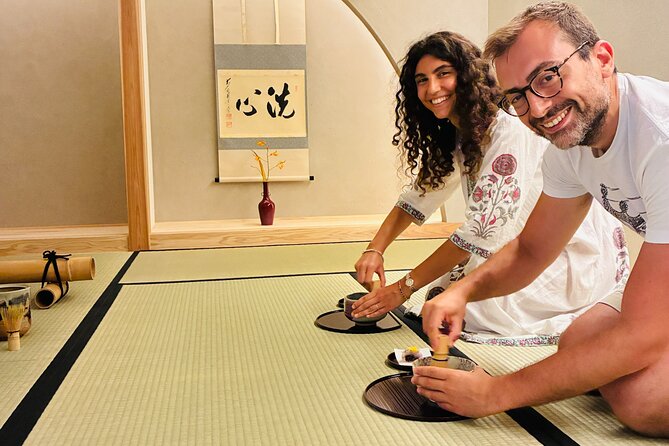
This experience is built for people who want more than a quick cup of green tea. In about an hour, you see the ritual performed, learn why the steps matter, and take part yourself.
The host explains the background of the tea ceremony before beginning the formal preparation. That context matters. Without it, the movements can look fussy or mysterious. With it, you begin to see the purpose behind the careful handling of the bowl, whisk, tea, and sweets.
The explanations are given in English. Several sessions have been led by Yuko, who is described as warm, patient, and clear when explaining both the practical method and the cultural meaning. English ability can vary slightly by host, but the structure is hands-on, so you are not relying on words alone.
You are not expected to know the rules in advance. Watch first, follow the instructions, and ask questions when invited. The tone is serious enough to respect the tradition but relaxed enough for first-time visitors and families.
More Tea Ceremony Experiences in Kyoto:
- Kyoto: Tea Ceremony in a Traditional Tea House in Kiyomizu
★ 4.9 · 3,519 reviews - Kyoto: Tea Ceremony Ju-An at Jotokuji Temple
★ 4.9 · 3,207 reviews - Kyoto: 45-Minute Tea Ceremony Lesson Experience
★ 4.3 · 2,378 reviews
Entering through the nijiriguchi
One of the most interesting details is the nijiriguchi, the small entrance associated with a traditional tea room. You enter low to the ground, leaving the ordinary outside world behind as you step into the ceremony space.
It is a symbolic feature, not simply a quirky doorway. The entrance encourages humility and changes your posture before the tea begins. You do not stride into the room as if arriving at a restaurant. You pause, adjust, and pay attention.
The tea room itself is described as clean, new-looking, and carefully maintained. Chairs are available, which is useful if sitting on the floor is uncomfortable. Still, you should expect a floor-based setting for much of the ceremony. One practical tip is to wear or bring socks, as requested by the venue.
The room is quiet by design. This is not a loud demonstration with constant chatter or a photo stop every few minutes. The calm setting is part of the experience, though it may feel too formal if you want a fast, casual introduction to matcha.
Watching the host prepare the first bowl
The first bowl is made by the host. This is your chance to watch without worrying about your own technique.
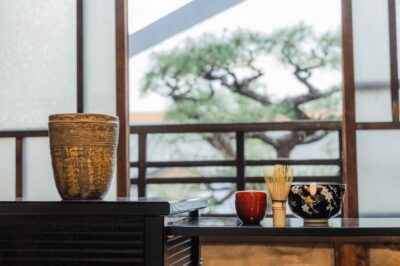
You will see the traditional utensils used in a controlled sequence. The tea bowl, bamboo whisk, and other selected items are not treated as ordinary kitchen tools. The host explains what is happening and why, helping you notice the movements rather than simply waiting for the drink.
The ceremony also introduces the idea of mindfulness through action. The point is not speed. The bowl is handled with care, the whisk is used in a particular way, and the presentation follows a set rhythm.
After the tea is prepared, you drink it with a traditional Japanese sweet. The sweet is not merely a dessert added to the booking. In the tea setting, it balances the bitterness of matcha and gives you a better sense of how the two are enjoyed together.
For someone trying matcha for the first time, this first bowl is helpful because it removes guesswork. You can observe the texture and flavor before making your own.
Choosing a bowl and whisking your own matcha
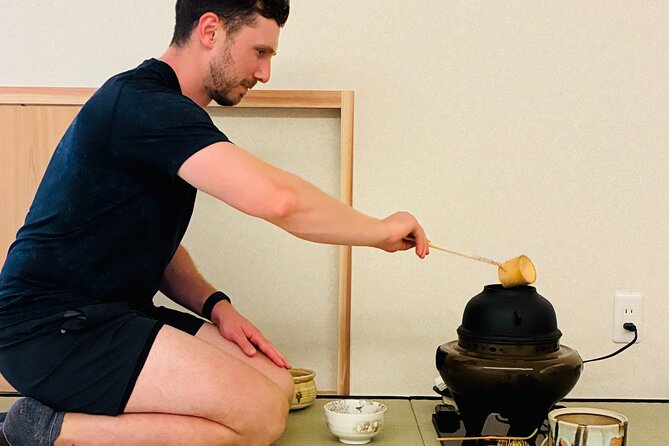
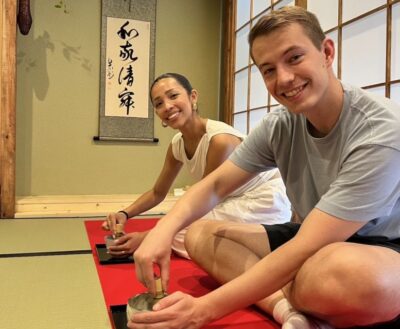
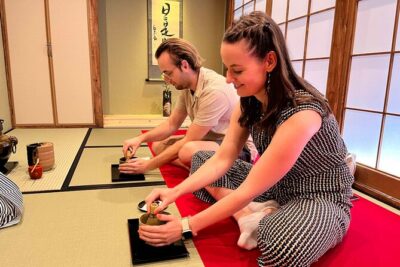
The hands-on portion is the heart of the experience. You choose a tea bowl and whisk your own matcha, either by yourself or with a companion.
This is more useful than watching a perfect demonstration alone. You quickly discover that making matcha involves more than stirring powder into water. The whisking movement, pace, and pressure affect the result, and the host can guide you as you work.
Do not worry about producing a flawless bowl. The activity is designed as instruction, not an examination. You copy the host’s movements, receive practical help, and then taste the result.
You receive two servings in total: one made by the host and one made by you. That is good value compared with a ceremony that only asks you to sit and watch. You also leave with a basic method you can recreate at home if you later buy matcha and a bamboo whisk.
The activity suits families particularly well because it gives each person something to do. Adults can focus on the customs and presentation, while younger participants have a clear task. The quiet atmosphere still requires reasonable patience, so it may not suit very restless children.
A few more tea experiences around Kyoto worth a look
- Kyoto: Table-Style Tea Ceremony at a Kyo-Machiya
★ 4.9 · 1,211 reviews - Kimono Tea Ceremony at Kyoto Maikoya, NISHIKI
★ 5.0 · 911 reviews - Kyoto: Kimono Tea Ceremony at Orizuruya Gion
★ 4.9 · 618 reviews - Kyoto: Tea Ceremony in 100-year-old Kyo-Machiya Townhouse
★ 4.8 · 546 reviews
Seasonal sweets from a long-running Kyoto shop
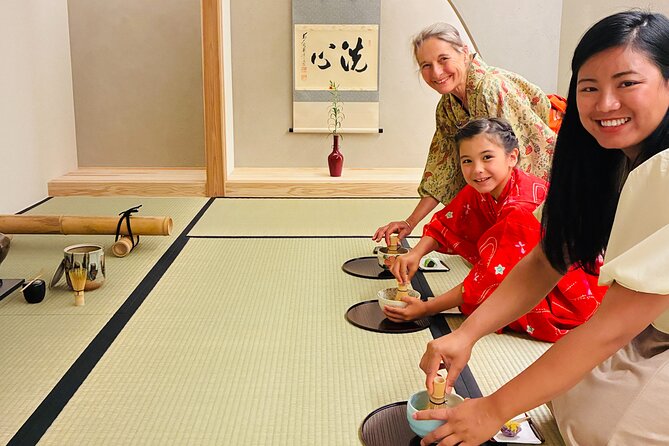
The included confectionery is one of the small details that gives the session more character. You receive traditional seasonal Japanese sweets from a Kyoto sweet shop with more than 100 years of history.
These sweets are made to be admired as well as eaten. Their appearance changes with the season, and their delicate style fits the ceremony’s attention to place and time.
Expect a refined Japanese confection rather than a large snack. The portion is meant to accompany the matcha, not replace a meal. If you have a strong sweet tooth, you may wish there were more, but the pairing is appropriate for a one-hour cultural activity.
The sweets also help first-time visitors understand the flavor balance. Matcha can be grassy, bitter, or pleasantly smooth depending on how it is prepared. The confection adds sweetness before or alongside the tea, making the drink easier to appreciate.
What the group size means in practice
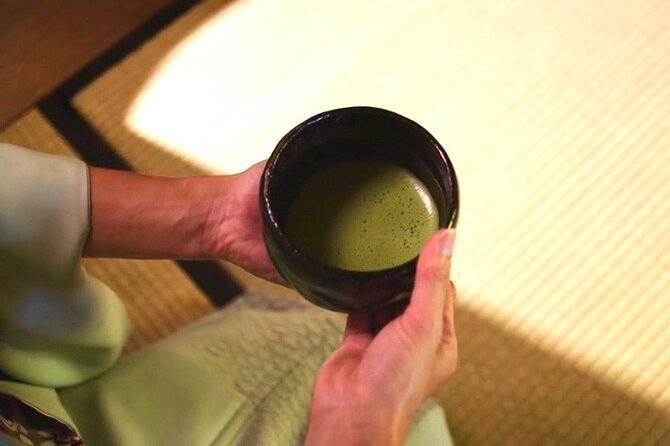
The maximum group size is 10 people. That is small enough for the host to demonstrate at close range and answer questions without turning the ceremony into a crowded class.
A small group also protects the quiet mood. You can concentrate on the host’s movements and your own bowl instead of trying to see over a large audience.
The exact feel depends on how many people are booked for your time. A full group will still be shared rather than private, and the experience is not advertised as an exclusive ceremony. If you want a personal session with no other participants, this is not the right choice.
For most people, the group limit is a sensible balance. You get the social ease of a shared activity while keeping enough space for individual instruction.
Location, timing, and finding the entrance
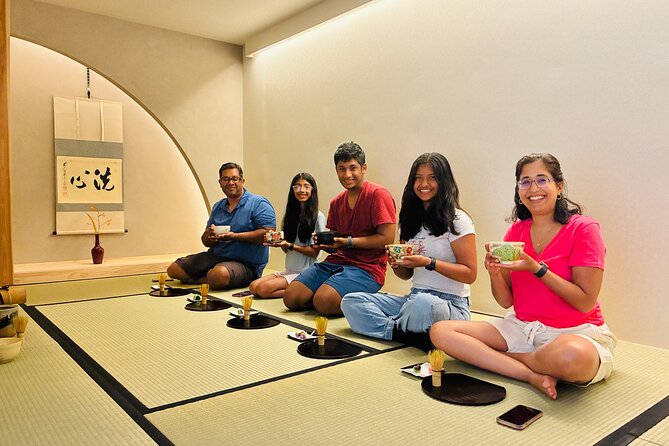
The meeting point is Tea Ceremony & Sake Tasting Kyoto, Sanjo Chasuian, at 324-2 Sanjōchō in Nakagyo Ward. It is near public transportation, and the activity returns to the same location rather than ending elsewhere.
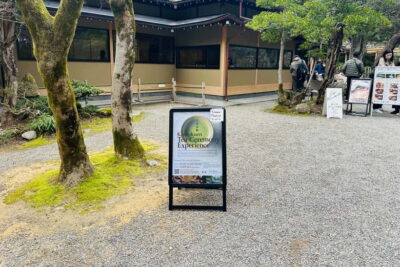
Allow time to find the door. Google Maps may guide you toward a smaller street at the corner. A useful landmark is the green matcha ice cream cone in front of the venue. Stay on the main street and look for that sign instead of following the map blindly to the side street.
You may enter from five minutes before the scheduled start. Once the session begins, the door is locked. This rule is unusually strict, but it protects the silence and order of the ceremony. Plan to arrive early, especially if you are coming from another sightseeing stop or need time to locate the entrance.
The one-hour length fits neatly into a Kyoto day. You can place it between visits to nearby central Kyoto sights without giving up half a day. It also provides a calm break from walking and sightseeing.
Is $32.77 a fair price?
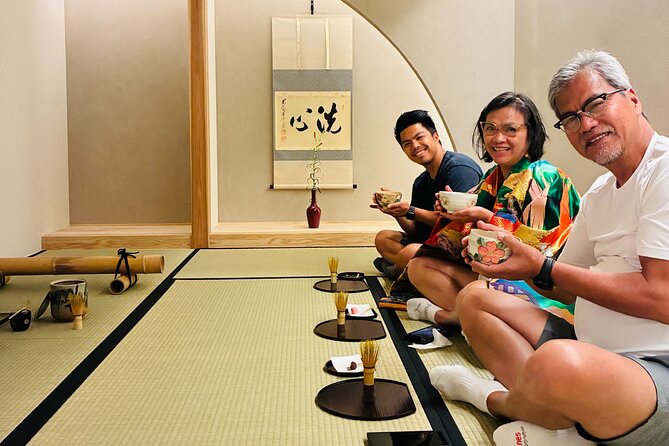
At $32.77 per person, the price is reasonable for a one-hour cultural activity in Kyoto. You are not paying only for a beverage. The cost includes instruction, a formal demonstration, two bowls of matcha, seasonal confectionery, use of the tea utensils, and access to a purpose-built tea room.
The second bowl makes the value stronger. Many short tea experiences give you a prepared cup and a brief explanation. Here, you also take part in the preparation, which turns the event into a lesson rather than a performance.
The price is less attractive if you only want to taste matcha or take photographs. You are paying for quiet, ritual, and guided participation. If those elements matter to you, the cost is modest. If you prefer a casual café visit, a matcha drink elsewhere will cost less and take less time.
Mobile tickets make arrival simple, but they do not change the strict late-entry rule. Keep the booking information ready and treat the start time as firm.
Who will enjoy this most?
I would choose this for a first tea ceremony in Kyoto, especially if you want clear explanations in English and a chance to participate. It is also a strong pick for families with older children or teenagers, couples, and anyone curious about Japanese etiquette.
It suits people who appreciate detail. You will hear about the history and customs, learn the meaning behind the steps, and see how the utensils are used. The host also answers questions, so you can ask about the parts that interest you most.
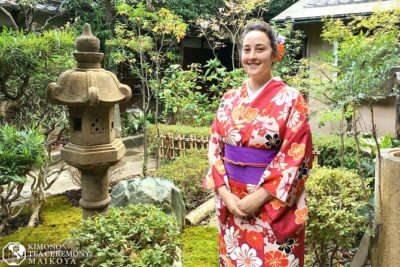
The session may not suit anyone who dislikes sitting on the floor, though chairs are available. It may also disappoint visitors who expect elaborate costumes or a long formal ceremony. There is an option to wear a striking uchikake, a formal traditional coat, but it is not presented as the central part of the booking.
Some people combine the tea activity with an informal sake tasting afterward at the same venue, but that is separate from the included experience. The tea price covers the two matcha servings and the seasonal sweet, not private transportation or hotel pickup.
Should you book Sanjo Chasuian?
Book it if you want a compact, thoughtful introduction to Kyoto tea culture with real participation. The strongest reasons are the two bowls of matcha, the seasonal sweets, the low tea-room entrance, and the host’s step-by-step teaching.
I would skip it if you want a completely private ceremony, dislike quiet formal settings, or cannot arrive early. For everyone else, this is a well-priced way to slow down for an hour, learn what you are seeing, and make a bowl of matcha with your own hands.
Free cancellation is available up to 24 hours before the local start time. Inside that window, cancellations and changes are not accepted and the payment is not refunded.
FAQ
How long does the tea ceremony last?
The experience lasts approximately one hour.
How much does the experience cost?
The listed price is $32.77 per person.
How many bowls of matcha do I receive?
You receive two bowls of matcha. The host prepares one, and you prepare the second yourself or with a companion.
Are Japanese sweets included?
Yes. Traditional seasonal Japanese confectionery is included.
Can I make my own matcha?
Yes. You choose a tea bowl and whisk your own matcha with guidance from the host.
How large is the group?
The activity has a maximum of 10 participants.
Do I need to wear socks?
You should bring or wear socks during the experience.
What happens if I arrive late?
Entry is allowed from five minutes before the start. Once the session begins, the door is locked. Even arriving one minute late means you cannot join, and no refund is given.
Just added around Kyoto
- Whisk Your Own Matcha: A Zen Matcha Experience at Temple★ 3.6 · 7 reviews
- Uji Walking Tour – Byodo-in temple and Tea Ceremony from Kyoto★ 3.5 · 3 reviews
- Traditional Tea Ceremony in Kyoto★ 4.5 · 3 reviews
- Kyoto: Authentic Tea Ceremony in a Small Group★ 5.0 · 7 reviews
- Tea ceremony at Kyoto’s Zen Temple Teahouse★ 5.0 · 2 reviews
- Tea Ceremony in 150 Years Old Townhouse with Tables and Chairs★ 5.0 · 22 reviews
- Silent Beauty of Kyoto Zen Walk and Tea Experience★ 5.0 · 2 reviews
- Tea Ceremony Experience in Traditional Kyoto Townhouse★ 5.0 · 19 reviews
Tea Ceremony Experiences, compared.
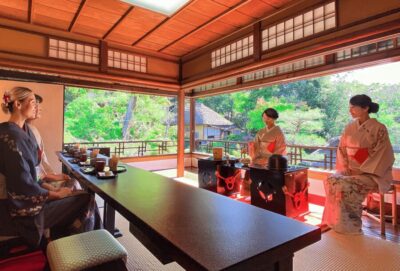
Tea Ceremony in a Traditional Tea House in Kiyomizu
Read our review →
Browse the lists this tour appears in