
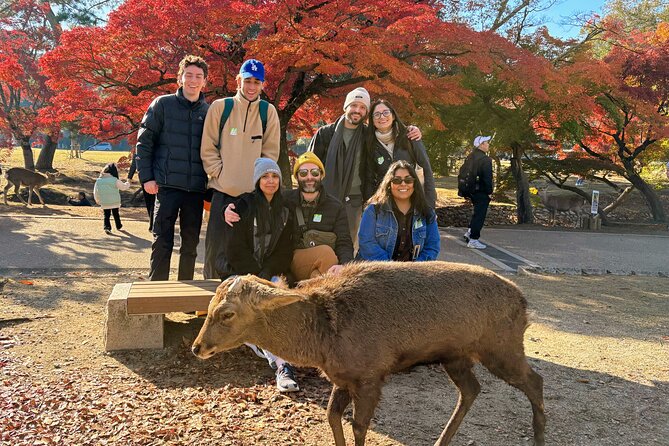
Review · NARA
World Heritage Kyoto & Nara Uji Authentic Matcha Experience
Nara’s great appeal is packed into this day: friendly deer, giant temple halls, sacred shrines, and a hands-on tea stop in Uji. You get the famous sights without piecing together several trains, buses, temple tickets, and restaurant plans.
I like the smart pairing of Nara and Uji. I also like the balance between guided history and time to wander, especially when guides such as Nanami, Yuta, Mai, At-Chan, and Ciel are leading the group. The main drawback is the pace: eight and a half hours, several long walks, stairs, hills, and as many as 38 people can make a hot day tiring.
Key points to know before booking
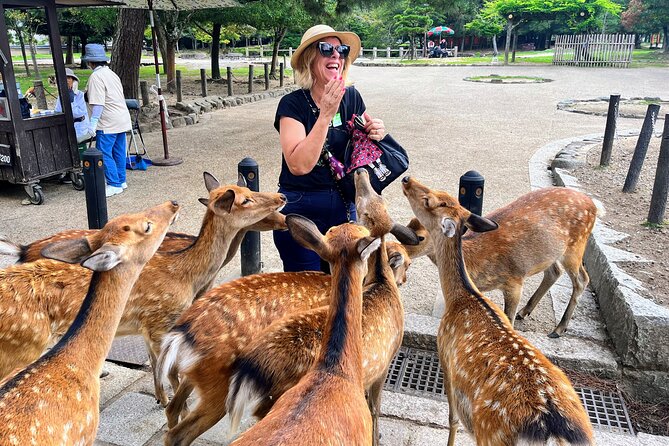
- Feed Nara’s deer, but keep your hands moving: The deer are accustomed to visitors and may gently pinch clothing or skin when you hold biscuits too long.
- See Todai-ji with admission included: The temple houses Nara’s Great Buddha inside one of the world’s largest wooden buildings.
- Make matcha in historic Uji: You prepare your own bowl and learn the traditional way to drink it at a tea shop with more than 500 years of tradition.
- Lunch is optional: Choose the Japanese-style set meal if you want a simple, organized midday break, and request a vegetarian meal at least two days ahead.
- The coach saves time: Air conditioning, onboard WiFi, multilingual audio guidance, and an English-speaking guide make this easier than arranging Nara and Uji independently.
- Be ready at 7:50 am: Late arrivals cannot join midway, and the tour returns to the Kyoto meeting point.
Why this Kyoto day trip works
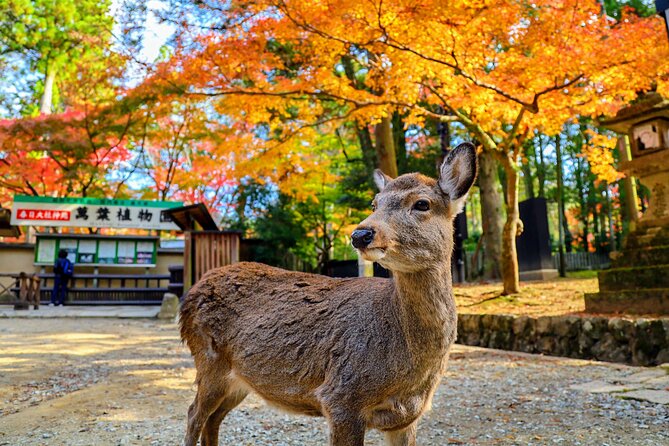
This is a full-day coach tour from Kyoto that combines two areas with very different moods. Nara gives you imperial-era temples, shrine paths, and free-roaming deer. Uji brings riverside scenery, Byodoin Temple, tea shops, and Japan’s matcha culture.
That combination is the strongest reason to book. You do not spend the day seeing one temple after another with little change of pace. Instead, the day moves from open parkland to major religious sites, then to lunch and a practical tea lesson.
The $129.25 price is reasonable if you value convenience. The fee includes transportation, the English-speaking guide, Todai-ji admission, Byodoin Temple admission, and matcha making. Lunch costs extra if you do not select it, and snacks or deer crackers are also your responsibility.
You could spend less using public transportation, but you would need to manage the Kyoto to Nara journey, local transfers, admission fees, lunch, and the trip onward to Uji. This tour makes the most sense for a first visit, a short stay, or anyone who wants to see the headline sights without transport planning.
More Matcha Experiences in Japan:
- Kyoto: Arashiyama Bamboo Forest, Monkeys, Matcha & Temple Tour
★ 5.0 · 759 reviews - Matcha Making Class in Tokyo with Authentic Japanese Sweets Set
★ 5.0 · 744 reviews - Kyoto: Tea Museum Tickets and Matcha Grinding Experience
★ 4.9 · 739 reviews
Starting from Kyoto at 7:50 am
The meeting point is Tully’s Coffee on the first floor of Kyoto Avanti, near Kyoto Station. The early start is not glamorous, but it gives you a useful head start before the day becomes crowded and helps fit both Nara and Uji into one outing.
The activity lasts about eight hours and 30 minutes, ending back at the same meeting point. There is no hotel pickup or drop-off, so allow enough time to reach Kyoto Avanti on your own.
The air-conditioned vehicle matters here. Nara’s main sites involve outdoor walking, and the bus gives you a place to cool down between stops. Onboard WiFi is included, and multilingual audio guidance is available in English, Spanish, French, Italian, German, Portuguese, and Ukrainian. The live guide speaks English, so you can ask questions and get help with the day’s schedule.
The group may include up to 38 people. That is not an intimate private tour, but it is a practical size for a coach trip. Stay alert when the guide gives the meeting time and place at each stop. One serious complaint involved a guest becoming separated from the group, so do not assume the coach will wait if you wander beyond the agreed meeting point.
Kasuga Taisha and Nara Park
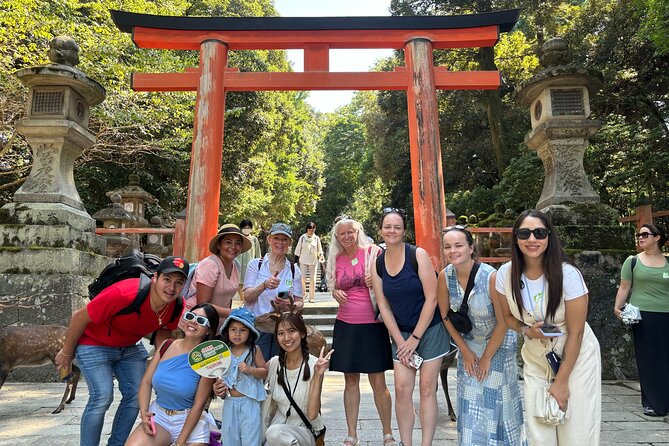
The first main stop is Kasuga Grand Shrine, Nara’s best-known Shinto shrine. You have about 30 minutes here, enough to take in the approach, see the shrine setting, and hear the basic customs and history from your guide.
This is a good opening stop because it feels different from Todai-ji. Kasuga Taisha is associated with long shrine paths, stone lanterns, and a quieter religious atmosphere. The visit is short, so do not expect to inspect every corner. Use the guide’s explanation to understand what you are seeing, then save your longer wandering time for Nara Park.
Nara Park is home to roughly 1,400 deer. You get another 30 minutes here, and this is often the most playful part of the day. Deer crackers can be purchased locally, but food is not included, so carry some yen if you want to feed them.
The deer are usually calm, but they are not stuffed animals. If you show a biscuit and then stop feeding, one may tug at your clothes or give your hand a firm little pinch. Feed one cracker at a time, keep your hands visible, and give a small bow when the deer bow to you. The interaction is simple, funny, and memorable when you treat the animals with care.
The time can feel tight if you want both photos and feeding. Keep an eye on your watch. The coach cannot wait for a long final photo session.
Nandaimon and Todai-ji’s Great Buddha
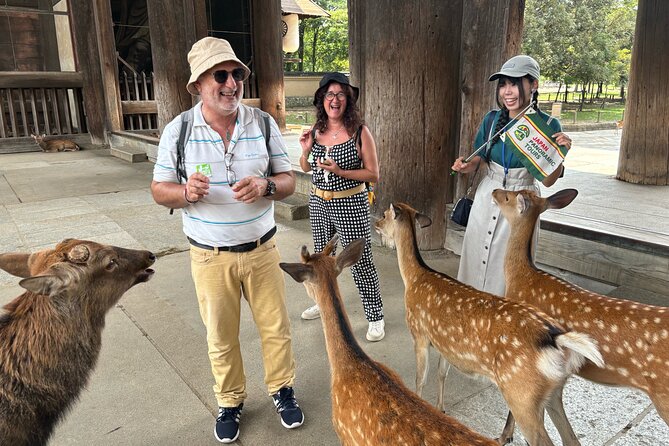
The five-minute stop at Nandaimon, or Great South Gate, is brief but worthwhile. The gate is a striking example of traditional Japanese construction and serves as the grand entrance to the Todai-ji area.
The important practical detail is that the bus parking area and the major sights are not always right beside each other. You may walk more than 15 minutes between the vehicle and the historic sites, depending on the route and parking arrangements. Add uneven ground, stairs, and hills, and you can see why comfortable shoes matter.
Todai-ji is the heavyweight sight of the Nara portion. Admission is included, and the temple houses the Great Buddha, a huge bronze image inside a vast wooden hall. The building’s scale is the point. Even before you focus on the statue, the hall makes you look up and slow down.
You have about 40 minutes at Todai-ji. That allows time for the main hall, the Buddha, photographs where permitted, and a little independent exploring. It does not allow a careful study of every building in the temple grounds, so listen closely when the guide gives the key facts.
The visit also explains why a guided stop helps. The structure, statue, and religious setting are impressive on their own, but a clear explanation adds meaning. Guides such as Yuta, Nanami, Mai, and At-Chan have been praised for making the history easier to follow without filling every minute with talk.
More Heritage Tours in Japan:
- Uji: UNESCO Heritage & Tea Ceremony Walking Tour
★ 4.6 · 54 reviews - Slow Cycling Tour at Uji’s Matcha Green Tea Fields and Heritage
★ 5.0 · 25 reviews - Uji Tea Ceremony and UNESCO Heritage Walking Tour
★ 5.0 · 20 reviews - Cycling Tour at Uji’s Matcha Green Tea Fields and Heritage
★ 5.0 · 10 reviews
Heijo Palace from the coach route
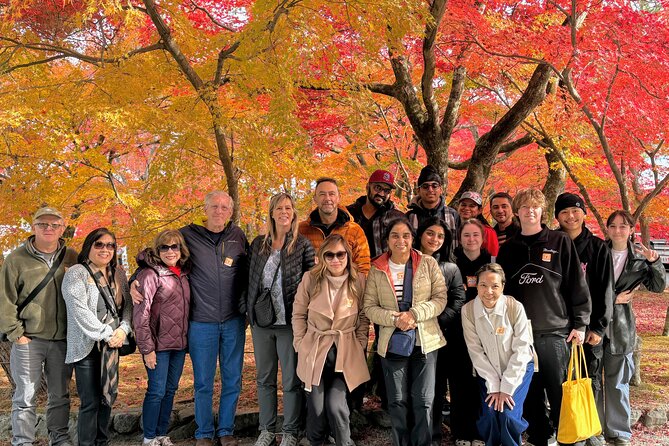
The day also passes the Heijo Palace site, connected with Nara’s place as a World Heritage destination. The supplied schedule does not give this stop a set walking time, so treat it as a sight viewed along the route rather than a full palace visit.
The same applies to Fushimi Castle, which you pass before reaching Nara. These drive-by sights add context, but you should not book this tour expecting extended exploration of either location.
That distinction is useful when comparing day trips. This experience is built around a handful of major stops, not a slow archaeological tour. You see more in one day, but some places receive only a quick look.
Lunch beside the Uji River
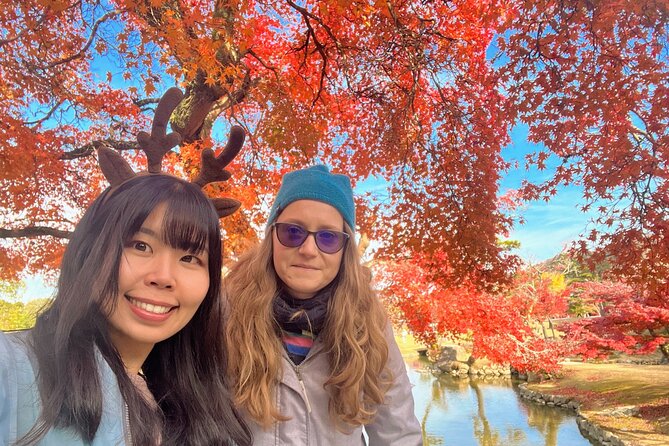
Lunch is offered in Uji at a restaurant near the river. If selected, it is a Japanese-style set meal, with a vegetarian option available when arranged at least two days before the tour date.
I would choose the lunch if you prefer a fixed meal and do not want to spend valuable Uji time finding a restaurant. A set meal also lets you sample several small parts of a Japanese lunch in one sitting. One included meal has been described as an artistic bento-style presentation, which fits the traditional feel of this stop.
If you book close to the departure date, vegetarian arrangements may not be possible, and the regular meal will be provided. The restaurant can also change for operational reasons. Pack a small snack if you tend to need food between meals, since food and drinks are not generally included beyond the selected lunch.
Uji is a pleasant change after the busy Nara sights. The river setting gives you a little breathing room, though the schedule still keeps moving. The lunch stop lasts about 50 minutes, so it is a proper break but not a leisurely afternoon meal.
Byodoin Temple and the 10-yen coin
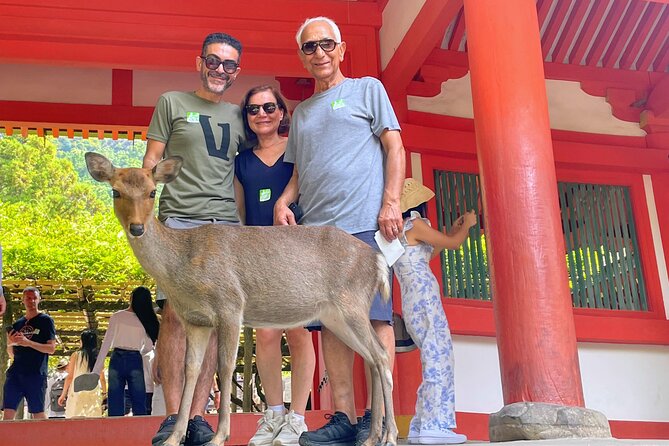
Byodoin Temple is one of Uji’s signature sights. Admission is included, and you have about 40 minutes to see the grounds and the famous Phoenix Hall.
The hall is depicted on Japan’s 10-yen coin, a small detail that makes the visit easy to remember. Look at the coin before or during the visit if you have one. The connection gives you a useful visual reference and makes the building feel less like an anonymous old temple.
The stop is well placed after lunch. You are not rushing straight from Nara’s deer and Great Buddha into another major temple. Instead, Uji begins with a calmer religious site before shifting into its tea traditions.
As with Todai-ji, the allocated time is enough for the main feature but not every corner of the property. Follow the guide’s timing and save extra shopping for the final walk along Byodoin Omotesando.
Making matcha at a 500-year-old tea shop
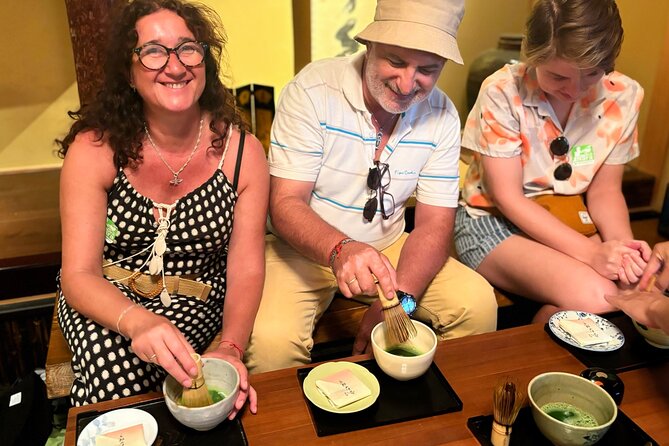
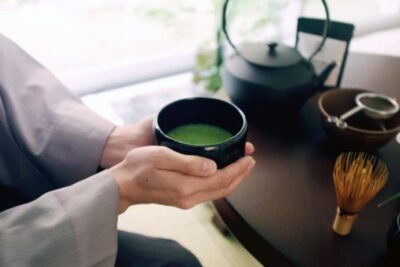
The matcha-making session is the most distinctive part of the day. At a historic tea shop with more than 500 years of tradition, you prepare your own bowl of matcha and learn the proper traditional way to drink it.
This is more useful than simply being handed a cup. You see the whisking process, take part in the preparation, and gain a little understanding of the care behind the drink. You do not need prior tea knowledge. The guide and tea staff provide the instruction.
The session lasts about 30 minutes. It is long enough to make the tea and taste it, but not a full formal tea ceremony. That is worth understanding before you book. The activity is hands-on and cultural, yet it remains one stop in a busy sightseeing day.
The atmosphere also depends on the staff and guide. One tea-shop owner has been singled out for a good sense of humor, while guides have helped make the lesson relaxed for families and first-time visitors. Children can take part, though the group still needs to keep to the schedule.
Matcha has a strong, grassy bitterness that may surprise you. The experience is valuable even if it does not become your favorite drink. You are learning a traditional preparation method, not ordering a sweet café latte.
Walking Byodoin Omotesando
The final Uji stop is a 30-minute walk along Byodoin Omotesando. This is the place for matcha sweets, small purchases, and a last look at Uji’s tea identity.
Do not expect a long shopping session. Thirty minutes goes quickly, especially if you want to compare sweets or browse several shops. It works best as a relaxed finish after the structured temple and tea stops.
The combination of making matcha and then walking through a tea-centered shopping street gives Uji more depth than a single temple visit. You learn about the drink, taste it, and then see how it appears in local sweets and everyday products.
Guides, pacing, and group comfort
The guide can shape the day more than any single temple. The strongest guide feedback has named Nanami, Yuta, Mai, At-Chan, Ciel, Den, Harry, Tommy, and Keigo. The qualities repeatedly connected with these guides are clear explanations, friendly energy, good timekeeping, and a useful balance between information and free time.
That balance matters. You do not want a guide talking nonstop while you miss your chance to take photographs or feed the deer. You also do not want to wander through Nara without understanding why the sites matter.
The tour requires moderate physical fitness. You will walk between coach parking and attractions, climb stairs, handle hills, and spend much of the day on your feet. An 80-year-old participant found the distance difficult on a hot, humid day, which is a fair warning for anyone with limited mobility.
Wear supportive shoes, carry water, and use the air-conditioned coach as a chance to rest. The tour is not recommended for anyone who cannot walk long distances.
Who should book this Nara and Uji tour?
I would choose this tour if you have limited time in Kyoto and want a broad introduction to Nara and Uji in one day. It suits first-time visitors, families who prefer organized transport, and anyone who would rather spend the day seeing major sights than studying train schedules.
Families can do well here. Children usually have an obvious point of interest in the deer, and the matcha session adds a practical activity after several historic sites. Keep in mind that young children still need to manage the walking and stairs.
You may prefer an independent visit if you want to linger at one temple, spend more time shopping in Uji, or move at a slow pace. The coach schedule cannot wait for extended photography or a long café stop.
Weather and traffic can also change the day. The order of stops may shift, and poor weather, traffic, or an operational closure can prevent some activities. The operator may substitute another place or provide a gift, but there are no refunds for these changes.
Should you book it?
Book this tour if convenience and variety matter most. For $129.25, you get transportation, two major temple admissions, a live English-speaking guide, the matcha session, and the option of an organized Japanese lunch. That is solid value when you account for the time saved.
Skip it if long walks, heat, fixed schedules, or a group of up to 38 people sound frustrating. Arrive at Kyoto Avanti before the 7:50 am departure, listen carefully to meeting instructions, and expect a busy day rather than a slow spiritual retreat.
For most first visits, the Nara deer, Todai-ji, and hands-on Uji tea lesson make this a well-rounded choice. The day asks for stamina, but it gives you a lot in return.
FAQ
Where does the tour start?
It starts at Tully’s Coffee on the first floor of Kyoto Avanti in Kyoto’s Minami Ward, near Kyoto Station.
What time does the tour start?
The meeting time is 7:50 am.
Where does the tour end?
The tour ends back at the original meeting point.
Is hotel pickup included?
No. Hotel pickup and drop-off are not included, and no extra pickup or drop-off service is supplied.
How long does the experience last?
The tour lasts approximately eight hours and 30 minutes.
Is lunch included?
Lunch is included only if you select that option when booking. The meal is a Japanese-style set meal served at a restaurant near the Uji River.
Can I request a vegetarian lunch?
Yes. Vegetarian meal arrangements can be made up to two days before the tour date. Last-minute bookings receive the regular meal.
Are temple admissions included?
Admission to Todai-ji and Byodoin Temple is included.
Is the matcha-making activity included?
Yes. The Uji matcha-making experience is included, and you prepare and sample your own bowl of matcha.
How much walking is involved?
The tour involves substantial walking, stairs, and hills. It is not recommended for people who cannot walk long distances, and a moderate level of physical fitness is required.
Just added around Japan
- Yokohama : Tea Ceremony with Sweets and Souvenir★ 5.0 · 5 reviews
- Whisk Your Own Matcha: A Zen Matcha Experience at Temple★ 3.6 · 7 reviews
- Walking Tour: Yanaka,Nezu& Sendagi: Tea Ceremony & Old Tokyo★ 5.0 · 3 reviews
- Visit local home for music and tea ceremony near Disney★ 4.9 · 13 reviews
- Yokohama: Sushi & Gyoza Cooking with Matcha & GreenTea Experience★ 5.0 · 3 reviews
- Trip to Kamakura & Enoshima: Shrines, Seaside, Temples &Tea★ 5.0 · 11 reviews
- Kyoto tea town for matcha lovers★ 5.0 · 16 reviews
- Uji: Private immersion into Kyoto’s tea and reglious culture★ 5.0 · 17 reviews
Matcha Experiences, compared.

Matcha Making Class in Tokyo with Authentic Japanese Sweets Set
Read our review →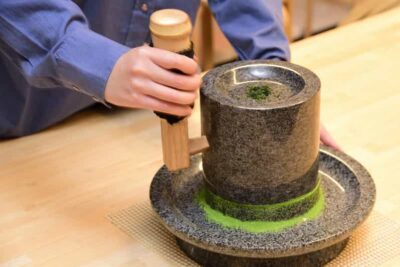
Tea Museum Tickets and Matcha Grinding Experience
Read our review →
Matcha Making Class in Osaka with Authentic Japanese Sweets Set
Read our review →
Tea Ceremony Meditation – Make Matcha with Tea Master
Read our review →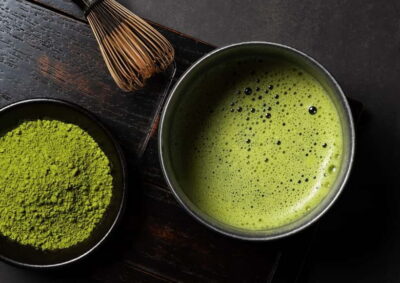
Matcha Making Experience with Mochi Sweets in Asakusa
Read our review →
Browse the lists this tour appears in